Archive

Crime/Mystery

I recently devoured Quentin Tarantino‘s Cinema Speculations, wherein he recounts his childhood and the succession of films his mother’s boyfriends would take him to see when he was a kid. Most of the films he discusses are ones you probably shouldn’t take a kid to see.

When my mother and father got divorced, I was six years old and my father was supposed to take us every other weekend for two nights. That arrangement became a little less frequent over the years, and by later grade school, he was taking me and my brother on a Saturday day and an overnight. We would spend the weekend with him at his apartment and pretty much do the same thing every time: go shopping, do his errands, look for stereo equipment, maybe spend an hour or two at his law office, go Putt Putt golfing, and then to Shakey’s Pizza in Rockville or The Charcoal Grille in Bethesda. Dinner was from Swanson’s, so you got a entree’, two sides, and a dessert.

And movies. We went out to the movies a lot. Or, we stayed in Dad’s apartment, where he had a special key that was hooked up to some kind of internal cable system, and we could watch close to first-run movies there instead of going out. Or just catch what was on TV.

My father loved movies, he loved to talk about movies, he lived for movies. So much so that he would go through a certain kabuki with me where he would let me take a look at The Washington Post and ask what I wanted to see. I would pick a Herbie the Love Bug and he would say, “Nah. I heard about this good movie.” And then, like Quentin Tarantino with his mother’s boyfriends, you went to see a lot of dark, heavy, violent flicks, like The Laughing Policeman, The Silent Partner, Death Wish, or The Taking of of Pelham One Two Three. Or the remake of Farewell My Lovely, Night Moves, or The Eiger Sanction.

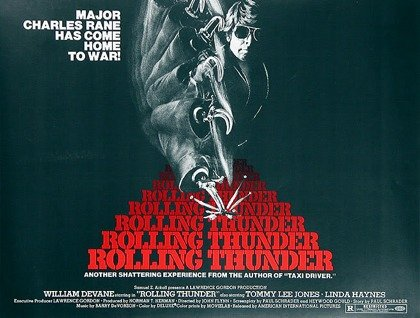
And Rolling Thunder. Which I noticed was available, and, as I couldn’t sleep anyway, I watched last night

Tarantino’s book has an entire chapter on the film, one of Paul Schrader’s first screenplays after Taxi Driver. Major Charlie Rane (William Devane) and Sergeant Johnny Vohden (Tommy Lee Jones) return to Texas after seven years of brutal captivity in a North Vietnamese prison camp. The adjustment is fraught, and even greater tortures are brought to bear on Devane, who is being treated by an Air Force psychiatrist (the just recently deceased Dabney Coleman) in his attempt to readjust. Tragedy ensues. Devane snaps. What follows is a classic 70s revenge flick.

The film travels wonderfully. There is a crisp foreboding to Devane’s return. While San Antonio welcomes him with marching bands and celebrations, and he is reunited with his long suffering and loving wife and the son who he last saw as a baby, Devane is damaged, and beneath the cheery gleam of a welcoming Texas, there is rot and danger. His son has anxiety issues. His wife has found another man (Devane says to her evenly, “you’re not wearing a brassiere” to which she replies, “oh, no one wears them anymore”). He cannot sleep in the house, preferring a cot in the garage.

So much is done well in the lead-up to the Death Wish-ian payoff, it goes unnoticed because, after all, this is a shoot ’em up, just desserts pic. Per Tarantino: ““This opening thirty minutes is a grippingly detailed character study, and by the time it’s over the audience doesn’t just sympathize with Charlie Rane, we really do understand him. Apparently better than anybody else in the film. It’s a much deeper depiction of the casualties of war than the [other movies of that era].”

I remember watching the film with my father. It is engrossing, both subtle and visceral, like a lot of pictures we saw together. It is also wildly inappropriate, also like a lot of pictures we saw together. I had trouble wrapping my head around something horrible that happens to Devane; not a spinning, vomiting Linda Blair kind of visual, but a brutality so smartly connected to a mundane part of the household, it just traveled with me, and probably not in a good way. Even last night, I fast-forwarded.

But on Sundays, when we were dropped off, I would not tell my mother about any of these movies, because I felt me and my Dad had this thing, this bond, and it was cemented in our little secret, Jujufruits and Junior Mints in hand.  And perhaps we did, although I’m probably mythologizing it. After all, my father needed to have something to talk to me about. Or at a minimum, just a two hour break from my babbling.

The picture is currently on Amazon Prime. Nostalgic for me but it really holds up.

A man falls from a window and dies. Was he pushed?

Like HBO’s The Staircase, this is a courtroom drama about one spouse accused of murdering the other, but this film is like nothing you’ve likely ever seen before, simply because half of it is in a French courtroom, where as near as I can tell, a criminal trial is-

  • Nothing but a series of closing arguments between the prosecutor and defense counsel.
  • A venue where they let anything in as evidence, including absolute, groundless conjecture.
  • A therapy session.     

As someone steeped in both American and British procedurals, the picture is fascinating. Think about a prosecutor who elicits, “Well, I think she did it because I was the victim’s therapist” from a witness, and then the prosecutor turns to the defendant and basically says, “Well??? What say you to that!” And all other witnesses get to hang out and watch.

Also, if there were ever a cautionary tale that French and German people should not marry, this is the one.

This is edge of your seat stuff, a film that jams in a flashback of a fight between the spouses on the day before the murder, an exchange that far eclipses the tension of the courtroom.

I am somewhat burdened by the “whodunnit?” aspect of the picture to get deep into analysis, so I’ll focus on the performances, which are stellar.  Sandra Huller has the misfortune of coming up against Lily Gladstone (Killers of the Flower Moon) and Emma Stone (Poor Things), so, no chance. But her turn as the accused is riveting.    

It’s a bit long, and ambiguity has its limits, but a great picture nonetheless.

David Fincher could grippingly film a Frosted Flakes commercial.

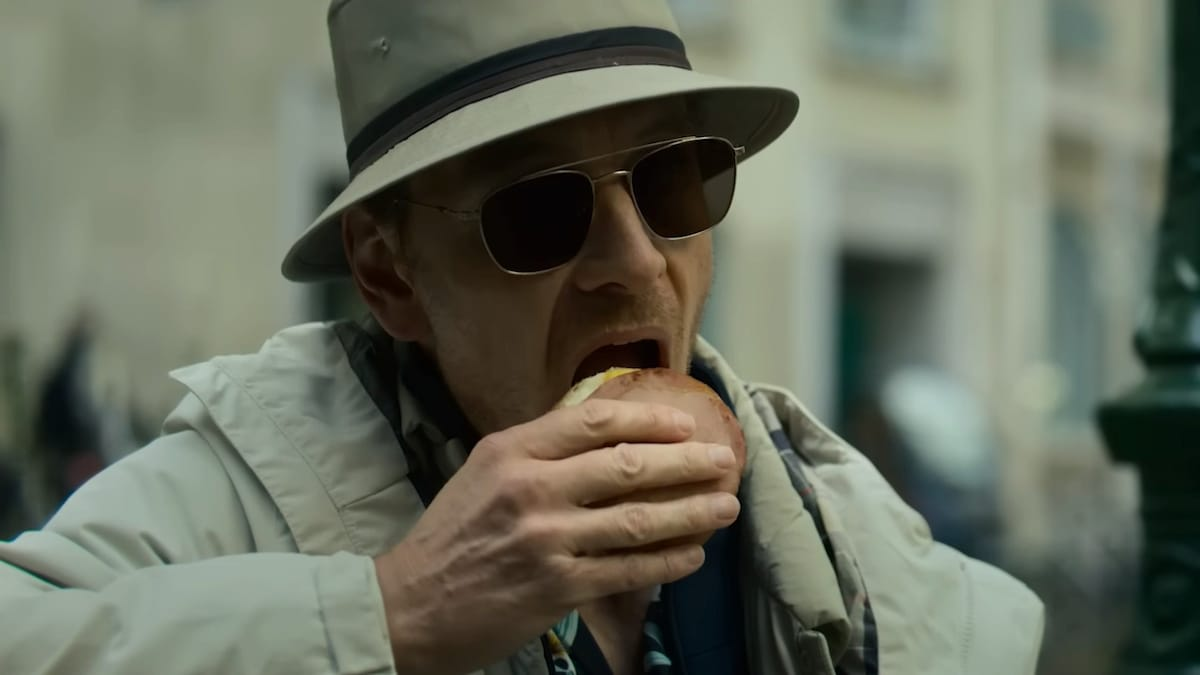
Fortunately, he has more to work with here, with Michael Fassbender as a lonely, meditative, assassin embarking on his own city-to-city retribution against his employers and their henchpeople.

We learn about the business, a grim primer without the dark humor of Grosse Pointe Blank, the panache of the John Wick franchise, or the earnestness of The Accountant. The work is drudgery and rote, until it isn’t, and things go tits up. Even then, though, there is no glamour. Just the racking up of air miles that cannot be utilized, the eating of fast food on stakeouts of dumps, and boring trips to any number of storage units.

Fincher’s picture is very easy and assured, occasionally inventive, never stalling, and yet, the endeavor feels beneath his gifts. The comedy is often too dark to resonate. Though the ending is refreshingly, thought-provokingly anticlimactic.

On Netflix.

I took my 93 year old mother to see this flick, thinking it was up her alley. As it stands, the picture is beautiful, the presentation slick, and the intrigue, such as it is, acceptable. But the acting is very weak. In the end, for an Agatha Christie, you know the “reveal” is in the offing and it may or may not be ingenious. It is the dramatization getting to the reveal that is most of the fun.

As Poirot, Kenneth Branagh is overly reliant of the gravitas of the character as played by others.  As played (and directed) by him, he’s bored, even diffident.  If Poirot doesn’t seem roused or energized, why should I be?

As an Agatha Christie mystery writer on the downslope, Tina Fey is her normal self – blasé’, genderless, and snarky. Liz Lemon and “Weekend Update” were her pinnacles.

As for the rest of the cast, they all seem to be straining for airtime, each more bombastic than the next when given the baton. Jamie Dornan and Kyle Allen take the cake in histrionics.

At its worst, the acting is community theatre-esque. At best, it is tolerable.

I asked Mom if she liked it after a week (we are unscientifically testing her memory).  She said she had no real recollection of the picture, so the results are inconclusive.

On the plus side, it’s very pretty. 

A WWII thriller and a staple on the Channel 7 four o’clock movie growing up, Steven Spielberg once named it as his all-time favorite war movie. I don’t know about that, but as a kid, I was pretty jazzed.

Richard Burton and Clint Eastwood lead a group of commandos dropped behind enemy lines in Bavaria – where the barmaids are buxom and the enemy plentiful – to kill an American general who has been captured by the Nazis. They must get to the general before the Germans extract critical information from him.

The picture is more than competent (though overlong at nearly 2.5 hours; in the 70s, on TV, it was cut to 90 minutes, and did not suffer for it). The movie is also smart, as much a whodunit as war thriller, and uber-violent to boot. 

One major problem, however, is the setup. The American general is held in a castle fortress accessible only by cable car. Putting aside the suspension of belief necessary to accept ingress and egress, which is right and proper, the castle also houses hundreds of soldiers, heavy equipment, a barracks, a helicopter pad, a radio room, and enough ammo and explosives to blow itself up. All, of which, apparently, was ferried up in two cable cars that hold 8 people a piece. 

Another problem is just a terrible cheat. In The Dirty Dozen, Lee Marvin and Charles Bronson, dressed as German officers, must mingle with the Nazis in the chateau they plan to blow up. The fact that only Bronson knows how to speak German amps up the dread, leaving Marvin to play it stern and taciturn whenever a real Nazi speaks to him at a pre-all-hell-breaks-loose soiree’. Quentin Tarantino does the same thing with Brad Pitt at the film premiere in Inglorious Basterds , though he plays a bit more comic. But Tarantino also utilizes the speaking of German, or, rather, the sign language of a German, to brilliant, suspenseful effect, when Michael Fassbender makes a critical error and is thus found out, which was presaged in The Great Escape:

But I digress. 

Here, as Burton and Eastwood approach a checkpoint, where their papers are to be reviewed, you wonder which one is going to speak German.  I assumed Burton.  Then again, I never assumed Eastwood would sing in a musical, but Lord Almighty, that’s him singing Gold Fever in Paint Your Wagon:

So, who knows, right?  Well, it turns out, neither of them speak German.  Instead, they speak English LOUDLY, and the guards figure they don’t want to interrupt two German officers speaking loudly. Translated? Neither actor wanted to learn a little German, so we are left to believe that the guards heard German, even though we did not. Very lame.

On the plus side, Eastwood is Eastwood cool and he conservatively, single-handedly, kills at least 100 Nazis. At 10 years of age, I was sold. There’s also a fair amount on double-crosses (the picture is written by Alistair MacLean), and while I can’t prove it, I suspect Tarantino saw the picture and it informed his unparalleled French cellar bar shootout in Basterds.

On HBO Max.  

P.S. After writing my suspicions about Tarantino, I Googled a bit and now claim semi-vindication. Tarantino has lauded the picture on numerous occasions, particularly during his promotion of Basterds

Filmvetter has gaps. Many gaps. Truffaut, Godard, and Bergman come to mind.

And, until now, John Cassavetes.

I knew that Cassavetes was an influential filmmaker. Martin Scorsese credits two films that most informed his career: Orson Welles’ Citizen Kane and Cassavetes’ Shadows.  Quentin Tarantino also cites Cassavetes, which is strange, for, as one writer observed, Tarantino makes films “in which almost no element comes from life,” whereas Cassavetes’ work is infused with realism. Others who refer to his work include Jim Jarmusch, Hal Hartley, and the aforementioned Godard.

But to me, Cassavetes was the nasty, cynical guy in The Dirty Dozen and the husband in Rosemary’s Baby

Until I saw this picture, currently available as part of the Criterion Collection on HBO Max.

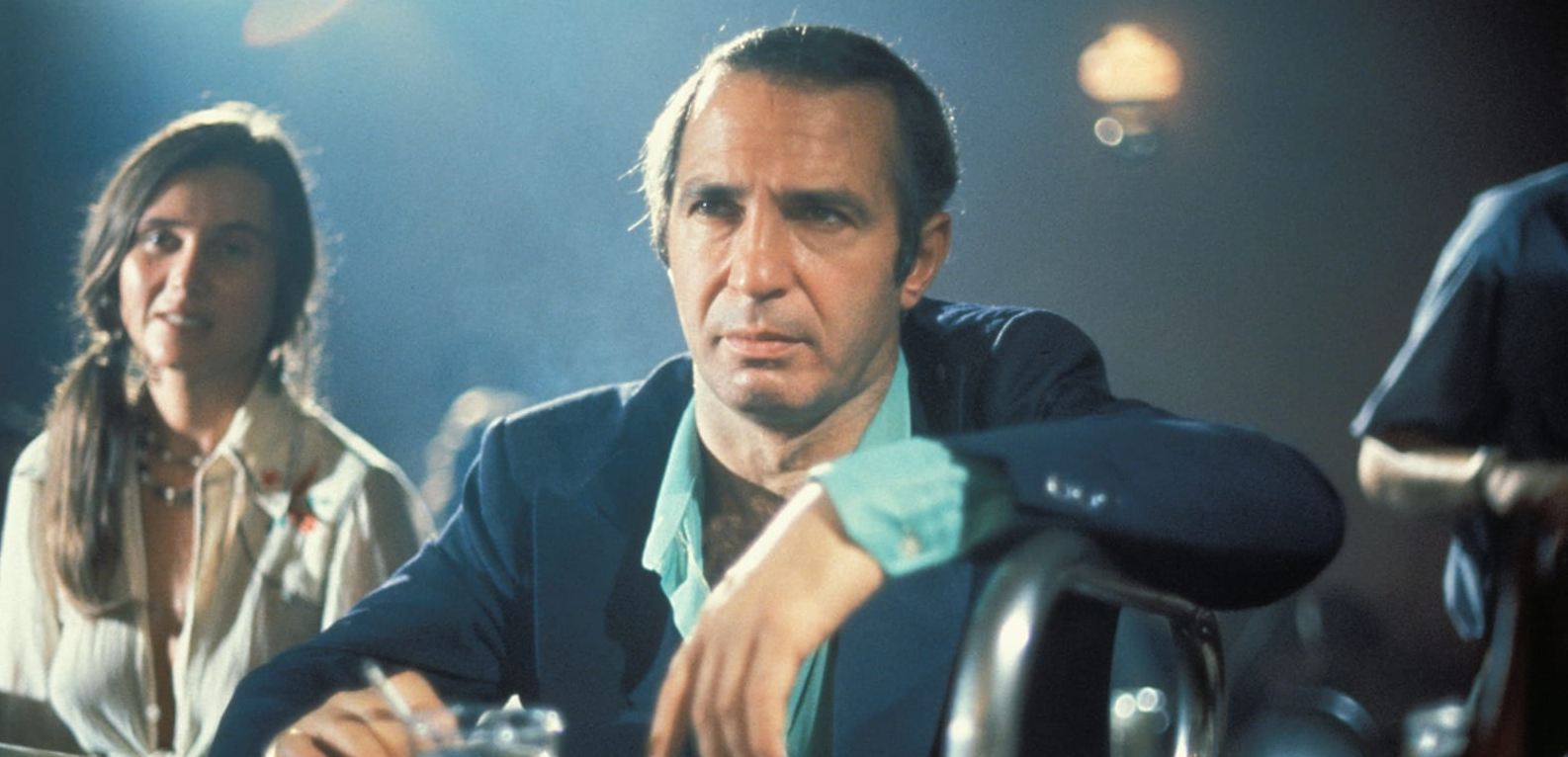
Ben Gazzara (“Cosmo”) plays a strip club/cabaret owner in Los Angeles, when showing some thigh and breast still required the trappings of a “show”. His stage girls are his children, and he is a small fish in a big pond. He just doesn’t know it. Until his big shot routine results in a sizable gambling debt to the local mob, who decide to absolve him of the “loan” in exchange for lethal services.

The film is visceral and immediate yet leisurely.  Cassavetes brings you right in on the actors, often letting the dialogue of others register on the one. I was reminded of Boogie Nights and the long take on Mark Wahlberg right before the drug heist, but while that was showy, if effective, Cassavetes’ style is anything but. Instead, it feels natural, almost a controlled improv. Cassavetes gave his actors maximum room, eschewing the Strasberg Method as tired and narcissistic.  Per Matt Zoller Seitz, reviewing Ray Carney’s Cassavetes on Cassavetes: “Among other things, Cassavetes hoped to offer young actors an alternative to the Method, a sensory- and memory-centered approach that was taught, in personalized form, by Actors Studio founder Lee Strasberg (whose students included James Dean, Robert Duvall, Robert De Niro, Elia Kazan, Shelley Winters and many others). Variants of the Method encouraged actors to draw heavily on their own experiences and feelings, and to treat hesitancy and inarticulateness as gateways to truth rather than obstacles to clear expression. A number of Method actors personalized this approach and had great success. But Cassavetes felt that the Method, and Strasberg’s Studio in particular, had become a different sort of factory, and he was ‘…resentful about the power the Studio exerted over casting directors, which he felt was what had held him back early in his career,’ Carney writes. ‘He was scornful of what he called the guru aspects of the Studio and pointedly described his and Lane’s school as anti-guru. He felt that the Method was more a form of psychotherapy than acting, and believed that although figures like (Montgomery) Clift, (Marlon) Brando and Dean had had a salutary effect on acting in the late ’40s and early ’50s, by the mid-’50s the Method had hardened into a received style that was as rigid, unimaginative and boring as the styles it had replaced ten years earlier. The slouch, shuffle, furrow and stammer had been turned into recipes for profundity. The actor filled the character up with his own self-indulgent emotions and narcissistic fantasies…Normal, healthy, extroverted social and sexual expression between men and women dropped out of drama. Inward-turning neuroticism became equated with truth. The result was lazy, sentimental acting.’”

There is none of that in this film, which feels so authentic as to be revolutionary. The picture is riveting, grounded, and wholly personal, with an L.A. devoid of the well-know landmarks, not purposefully omitted but rather, naturalistically absent. Cassavetes sets up a noir-ish crime pic, but perhaps bored with the endeavor, detours repeatedly into Cosmo’s crisis of identity.

Gazzara is captivating. Cassavetes trains in on Cosmo’s every conceit when playing the big man. Cosmo’s descendant is none other than Burt Reynolds’ Jack Horner in Boogie Nights, a semi-proficient pornographer who makes himself father to the talent and creates his own world, one where he is Fellini. Similarly, Cosmo treats his girls like perpetual prom dates and tells the patrons in his seedy club, “I’m the owner of this joint. I choose the numbers, I direct them, I arrange them. You have any complaints you just come to me and I’ll throw you right out on your ass.”

When his powerlessness is revealed, Cassavetes lingers on Cosmo’s doubt and his insistence on maintaining the veneer of control and aplomb reveals a hollowness that progressively evinces during the film. But there is also decency and honor, one that becomes difficult for even the mobsters to ignore.

Savaged by the critics at the time, a classic.

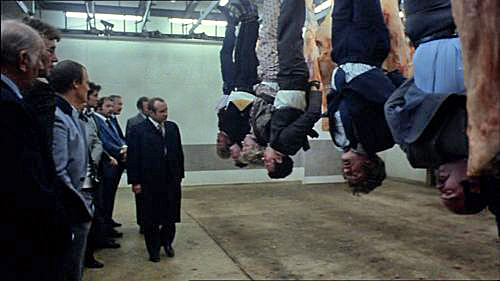
Taut, rich crime drama about the not very good day of London crime boss Harold Shand (Bob Hoskins). When we meet him, Shand is on the cusp of branching out to global semi-legitimacy. He’s even hosting his would-be U.S. partner when his entire organization comes under assault. Key associates are dispatched and an unknown enemy is blowing up his establishments, and just when he thought he was getting out, they pull him back in.

Hoskins is ferocious, at once charming and gregarious and then lethal, but palpably human throughout. You really root for him but sense that his time may have passed, especially as he waxes on about the greatness of the Brits and attempts to connect his own rise to the glory days of his homeland, which doesn’t seem all that glorious as depicted by director John Mackenzie. His London is grimy, gray, and decidedly tired, like Harold’s organization, and is starkly juxtaposed against Shand’s fantasies.

The film is also slyly funny. Shand, for example, scolds his spooked American partners about empire and declares, “we’re in the common market now, I’m going into business with the Germans, yes the bleedin’ Krauts!” And even in the midst of their potential destruction, Shand and his gang share knowing, even juvenile laughs that speak to their intimacy.

Helen Mirren is his devoted wife, desperately trying to keep him grounded, and his entire crew feels more like a disintegrating family than a dangerous group of cutthroats. As it all goes bad, Shand’s hubris, parochialism, and self-satisfaction conspire against him, but the strongest theme is just how hard it is to keep “family” together. One of Shand’s more endearing qualities is his patience with underlings who disappoint him like wayward sons. He’s always in between slugging and hugging them.

The film works as a character study and, for a time, a whodunit (or, “who is doing this?”). Occasionally, it is a bit arty, and weighted down by a strange, synthy 80s score, but for the most part, it is riveting.

On HBO Max.

For a film about the investigative reporting of a very big story, this picture is about as interesting as assembly line work.

Some may say, “but Filmvetter, this is the reality of the job.” Alas, so is banging out fenders and they don’t make movies about that.

$34 million brought in $5 million domestic, justifiably so.  The film is a didactic, repetitive, undramatic, boring 2+ hours of drudgery acted by rote with a sprinkle of washed out dread.

I presumed the picture was a financial flop because of #MeToo fatigue, the lack of a present villain (in the movie, Harvey Weinstein is just a voice on boring phone calls and the back of a head – the most riveting part of the film by miles is the short clip of the actual vicious brute threatening a woman), a lack of stars, and the fact that a movie about reporters, especially in the digital age, would be static.  But its problems go deeper. This is less a picture than homework.  The great reportorial films (All The President’s Men, Spotlight) place their journalist protagonists in the areas of doubt, indecision and lack of assuredness. Even if they think they have the story cold, they are intrepid, skeptical, tough on each other. They make mistakes. They catch breaks.  They are drawn in.

Here, the reporters are emotionally invested in a matter that is a foregone conclusion from the outset. Beyond the sympathy they communicate is a barely contained outrage. Therapeutic enabling takes the place of inquiry, skepticism and the remove of professionalism. They just get a name, make a call or visit, sit down with an emotional, reluctant, and/or scared victim and report back to editors (Patricia Clarkson, Andre Braugher) who support them unreservedly, listening intently as the duo relay facts so elemental you weep for the descent of The New York Times. The newsroom is thus reduced to church and rally (“Let’s interrogate the whole system”).  Thank you, oh thank you, the reporters hug and cry when a source confirms. They do this three times.  

The two leads (Carrie Mulligan, Zoe Kazan) are as flat as both the material and the portentous strings and piano score. Kazan overlays her dullness with sophomoric earnestness. It also doesn’t help anyone that the film regularly proclaims it is about women at the expense of its female cardboard characters.

The picture is also brutally unsubtle. On numerous occasions, the film has a woman clunkily just pop in and do a solid for women writ large or a creepy man being an oaf or a pig. Discussions between Kazan and her young daughter on the nature of her work and “rape” are so forced and artificial as to be embarrassing. A character actually looks into the mirror to search his soul.

Finally, for what aspires to be a brave expose’, the movie pulls a few punches, ignoring or soft-pedaling some of the great institutional protectors of Weinstein (NBC, scores of Hollywood folk who knew for sure Weinstein was sexually abusive) while highlighting easier targets. Weinstein was Jeffrey Epstein and everyone wanted to be at his party, but we don’t get much on the partygoers.  

The film can be moving on occasion. A few of the interviews of Weinstein’s victims have the crackle of the scenes of abuse survivors in Spotlight. But the genuine moments are few and far between in this long, edifying slog, where post-partum depression is the most compelling aspect.

On Peacock.

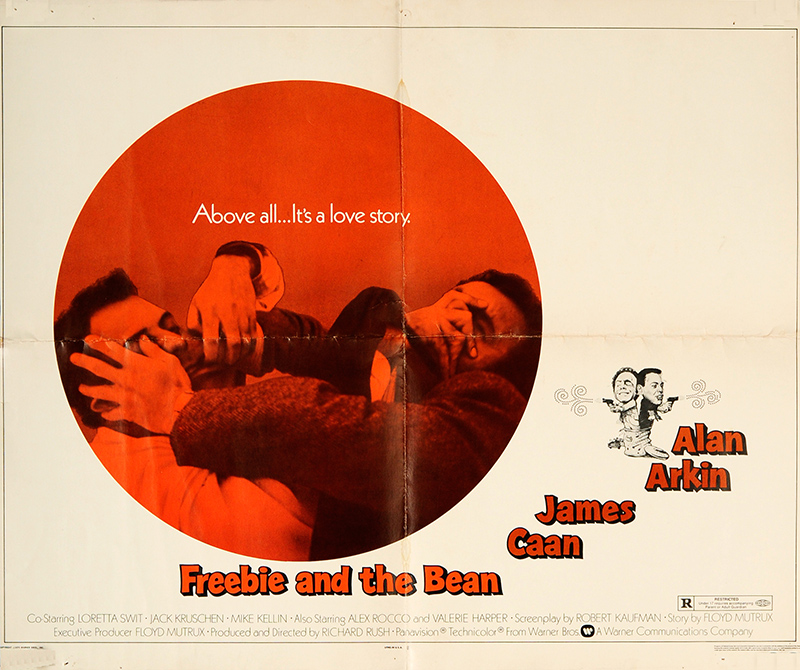
Another of the 70s flicks my Dad took me to when I was probably way too young  I remember being so jazzed at the back-and-forth between the manic Alan Arkin and wisecracking, nattily dressed James Caan, two San Francisco detectives trying to take down a mob boss. To make things cooler for a 9 year old, the violence was hilarious yet brutal, the dialogue scabrous, and the car chases relentless and in great supply.

Would it hold up 50 years later?

Yes, and how. Quentin Tarantino has raved, “nothing short of a masterpiece…absolutely brutal…part of the way the film worked was for you to laugh at the brutal violence and then feel bad about yourself for laughing.”  That is too much praise, but not by much. Caan and Arkin are a scream, very natural, yet way, way out there in terms of chemistry, perhaps riffing before it became standard, but fully committed, never lazy. I remember cracking up with Dad in the theater and after paying $2.36 for the rental on Amazon this weekend, I laughed out loud a half dozen times and smiled throughout.

It’s a strange duck of a picture, a flimsy cynical story giving way to an entertaining buddy cop yarn (clearly echoing The Odd Couple). Director-writer Richard Rush allows for very long takes of Arkin and Caan needling each other and then, there’s absolute chaos, followed by sweet scenes between Caan and his gal and Arkin and his wife. You get the sense that tonally, no one is steering the ship, and Arkin has remarked that he never really knew what kind of movie Rush was trying to make. Still, Rush makes it more seamless than it has a right to be. Good fun through and through, and The Nice Guys owes a lot to this picture.

Also, wildly offensive. For those keeping count, Arkin of European Jewish descent plays Hispanic (he is “the Bean” – get it?), as does Valerie Harper (“Rhoda”). The script is littered with politically-incorrect jibes that would likely result in a campus protest these days, and the treatment of the villain would require the calling in of the National Guard. So, gird your loins.

On Amazon Prime.

There is no rhyme or reason to William Friedken’s (The French Connection, The Exorcist) serial killer flick, which plays clumsily with both timeline and identity. While the killings are unique, in that gay men in New York City’s S&M scene are the prey, Friedken’s execution is non-existent and the picture is a tiresome. muddled mess. 

The year is 1980. Foot patrolman Al Pacino, who we know absolutely nothing about, is brought in by Police Captain Edelson (Paul Sorvino) to go undercover and smoke out a serial killer plaguing the BDSM community in the Meatpacking District. Pacino is chosen solely because he bears a physical  resemblance to other victims. That’s it, and when he’s told where he’ll be working, he shows little reticence. You see, he’s bucking for detective. 

Pacino is clearly too long in the tooth for the role.  In 1980, he was 40, not a very convincing ambitious beat cop. Hell, Pacino was pushing it a bit in 1973, when he was a 33-year-old rookie in Serpico. Friedken would have done better with Richard Gere, his first choice and 10 years younger.  

After his perfunctory selection and acceptance, Pacino just goes from club to club, bar to bar, pick up spot to pick up spot, cruising. Pacino is less acting the role of a man than being a worm on a hook. Not a lot of heavy lifting and given no motivation or backstory, Pacino seems particularly disinterested. It is clear the actor has no idea how to convey whatever is happening to him internally. 

With barely a story and zero character development, Friedken focuses on the grimy, fetishistic world of leather and sweat, so much so that when word of the picture got around, many in the gay community were outraged to the point of protest against what they thought was a demeaning and offensive portrait of their community. Indeed, the picture had to have its audio almost totally redubbed due to protestors on scene screaming to screw up the sound production.

They need not have worried so much. The movie is a bore and rather than being misled, most audiences likely shrugged.
Not that the bones of a good flick aren’t there. There’s a promising subplot of two police officers who are forcing hustlers to dole out sexual favors. Unexplored. There’s a nice friendship that a develops between Pacino and his gay neighbor. Dropped. And there is little done with the pressure on Pacino and girlfriend Karen Allen (the whole of it is that the more he becomes immersed in the lifestyle, if only as a voyeur, the less he wants to be intimate with her).

Is he gay? Is he curious? Shockingly, you don’t care, and neither does the director.  Friedken just wants to get to the next dank cellar where the testosterone-soaked steam is rising.

Sure, there is some obligatory, “I’m in too deep” dialogue. But nothing more. Fleshing out the relationship between Pacino and the gay neighbor would have been the smart way to explore whatever was happening internally, allowing Pacino to search and inquire, maybe even to test.

No dice.

The film is also hobbled by a pretty elemental impediment. Pacino is, seemingly, straight.  So, it seems less and less possible that he’s ever gonna’ get close to the killer, who murders all of his victims in the process of or after sex. 

The whole thing is draggy and confused and more than a little gutless. 

If you sally forth, look for a very a young James Remar, Ed O’Neill, and Powers Boothe. 

On HBOMax.