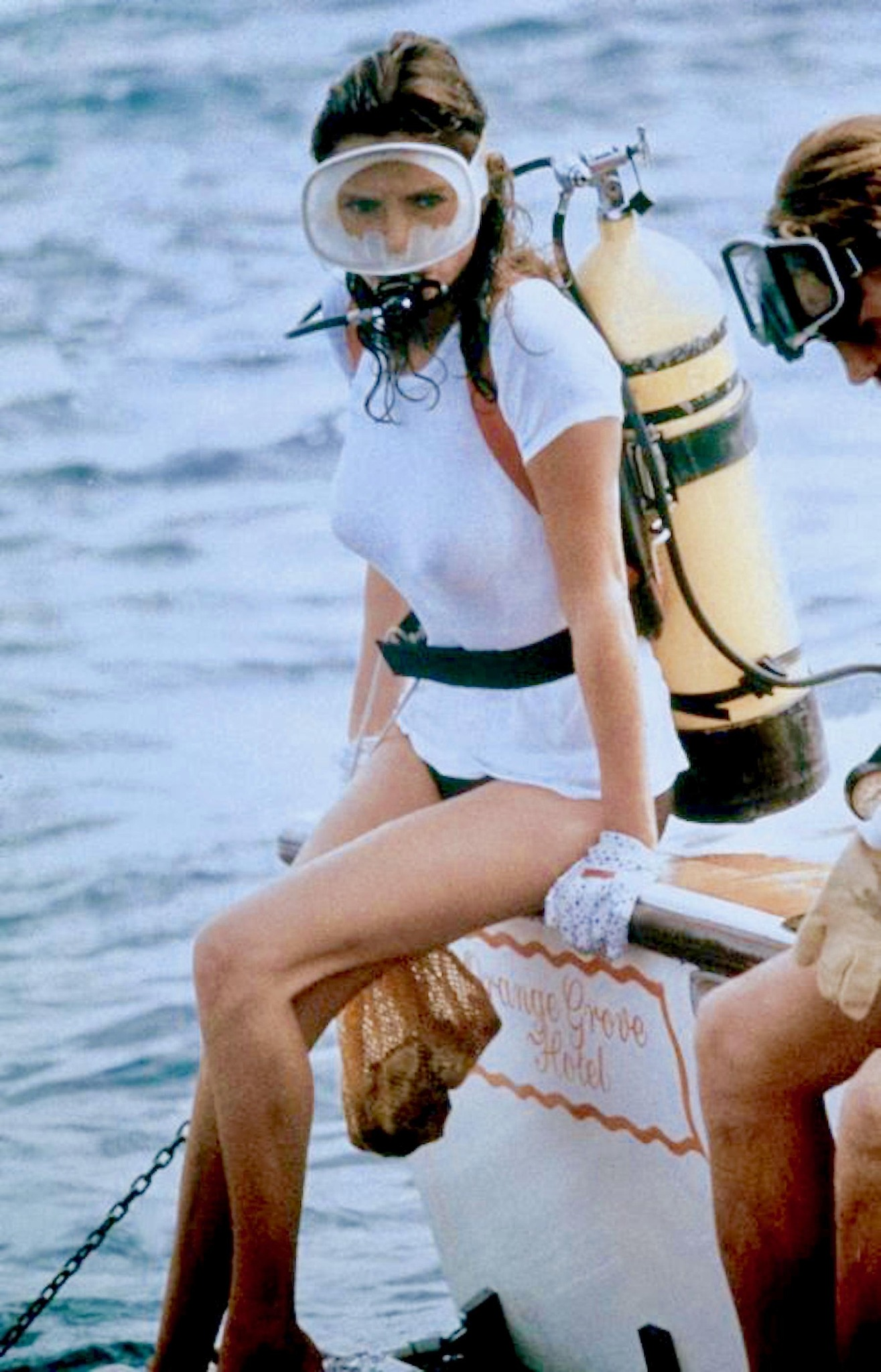
I signed up for Tubi because it has a lot of older movies that don’t get run on some of the other streaming services. This very competent Peter Yates (Bullitt) flick from 1977 beguiled me as a young teen for a couple of reasons. First, it was a Peter Benchley, post Jaws vehicle, with Robert Shaw as yet another boat captain, though this time his quarry is treasure, not a shark.
Second, well … I was 13 years old, Jacqueline Bisset, enough said.
My prurient childhood fascination aside, this is a pretty solid picture. Two tourists (Nick Nolte and Bisset) happen upon two collided shipwrecks while snorkeling. They cross a local drug lord (Louis Gossett) who also has an interest in what they’ve found (tens of thousands of vials of morphine from an old WWII medical ship) and must enlist a wily old diver and antiquity collector (Robert Shaw) to help them find treasure from the other vessel, deliver the drugs, and otherwise negotiate their way out of the mess.
Nolte exudes charisma as the thrill seeker captivated by the jewels of the sea. Shaw is Shaw, commanding and interesting even when he is probably phoning it in. Gossett is oozily charming as a lethal Haitian trafficker interested not in treasure, but in the drugs, until he learns of the treasure and gets greedy.
Bisset is every bit as alluring as she was when I was 13, and it turns out, now that I can focus, she can act. She is menaced throughout the picture and her terror is palpable.
The film gets balky when Gossett inexplicably harasses the trio even though they are working on his behalf, and the ending is the cheesiest finale in movie history. But otherwise, sexy and solid.
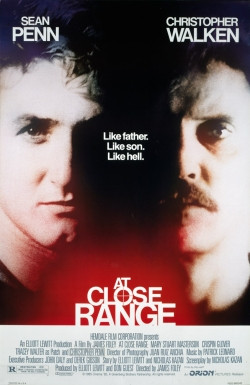
James Foley’s (After Dark, My Sweet) film never really decides what it wants to be, a family drama or a crime picture. Foley eventually throws up his hands and cedes everything to the captivating Christopher Walken.
Not the worst of decisions. Walken plays a minor rural Pennsylvania crime kingpin. He skippers a crew that includes his two brothers and a few other hardened locals. They do heists, car thefts, drugs, and, if necessary, murder, a lethal but merry band of crooks.
Walken’s estranged son, Sean Penn, is a townie still living at home with his mother and grandmother. The women smoke, glare at the TV and otherwise exude the hopelessness of abandonment and near poverty. Penn, seeking something more, falls in at-first-sight love with Mary Stuart Masterson, who looks his way as he cruises at night around the town square. It is for her that he joins up with his father’s crew, to “get out while we’re young … ’cause tramps like us …”
When Penn realizes murder is part of the gig, he splits from Walken, gets arrested working his own “baby” crew (which includes his brother Chris and a very young Crispin Glover and Kiefer Sutherland), and is incarcerated. There, the cops work on him to fink on his father.
Here, the film becomes ridiculous. Walken, paranoid Penn will flip on him, kills nearly every one of the kids working with Penn, even though Foley does not show them to be integral enough to his operation to be much of a threat. He also rapes Stuart Masterson, which makes even less sense if the plan is to bring Penn back into the fold. Penn comes out of jail, tries to make a run for it with his gal, fails, and in a rushed, abrupt ending, testifies against his father (for 30 seconds).
That’s that. Lights up.
None of it makes much sense, but the thematic indecision is worsened by gross character underdevelopment. Walken is a charming sociopath, but how did he get here? No clue. We even have his ex-wife moping about, warily eying the establishment of a relationship between Walken and Penn. Foley, however, suffices to use her as a sad totem, so we don’t get any insight into Walken from her. Similarly, Penn needs a Daddy. Then, on a dime, he doesn’t. As he is near mute for most of the picture, we are left to guess as to what he has missed and the basis for his immediate and strong moral stand. Stuart Masterson is looking for something, but as she and Penn prepare to light out for the territories, leaving her house, she is clearly from money. So why is she hanging with these lowlifes? Unexplored.
The film has its strengths. Foley’s feel for rural Pennsylvania is strong. The fields and woods are spooky and forbidding at night. During the day, the crappy cars and houses, the dead-end bars, they all contribute to Penn’s lust for some way to get out. Foley shows just how big and cold this country can be, the kind of place that swallows you up and tells no tales or grinds you down little by little. The murder spree is indelible.
As noted, Walken is the picture, and in every scene, he is riveting. Penn, however, goes low to Walken’s high, and the effect is somnambulant. He’s in with Daddy, then immediately out, then annoyingly internal until his final nose-to-nose with Daddy, all to the conclusion that he needed a better Daddy.
Another note – at the time of the picture, Penn was married to Madonna. She had a song for the picture which then became extended to the soundtrack. It is synthy, mid-80s fare, better suited to Vision Quest or even Risky Business. It has no business being near this gritty movie. Sure, I joked about Springsteen above, but his music would have been pitch perfect to the film.
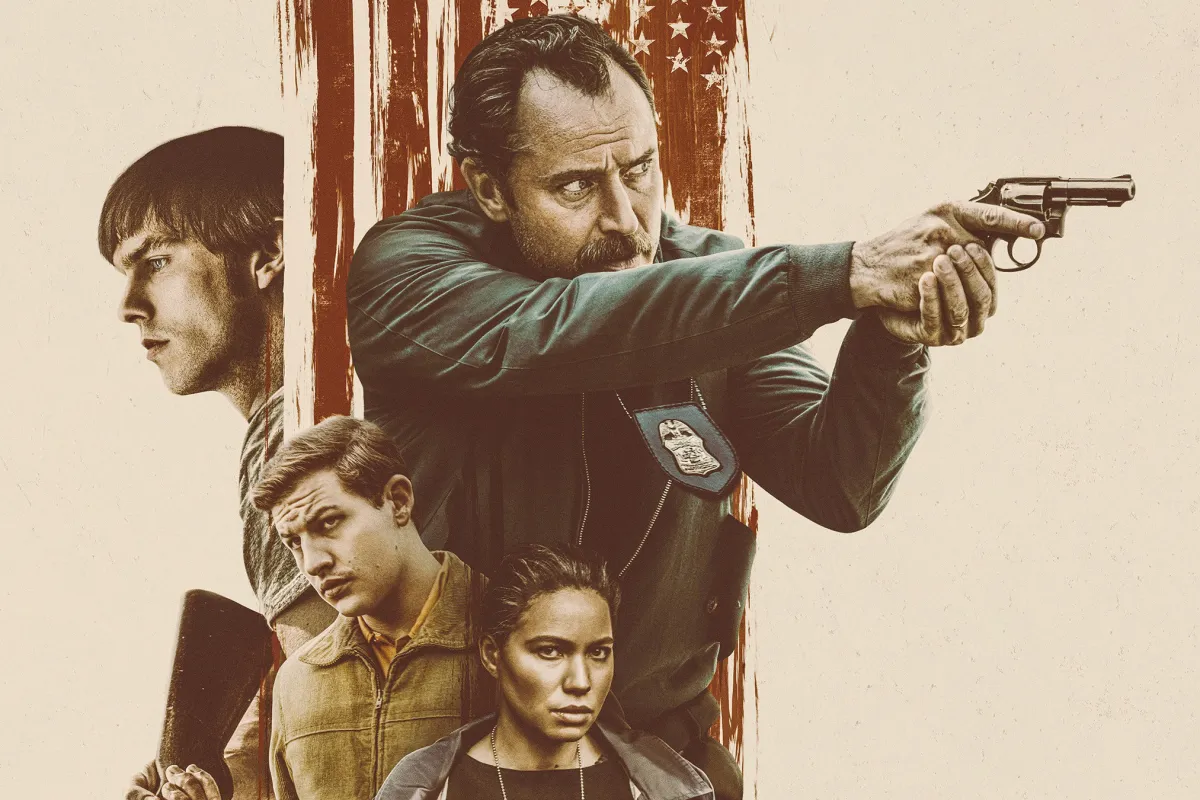
A straightforward procedural based on a true story, broke-down and ailing FBI agent Terry Husk (Jude Law, as unpretty as you’ll find him) arrives at his new desk in Idaho only to stumble upon the rise of The Order, an “action, not words” offshoot of The Aryan Nations in the early 1980s. The Order is led by the charismatic Bob Matthews (Nicholas Hoult), who guides it from counterfeiting to bank robbery to assassination to planned insurrection. As Matthews rises, Husk and the Feds close in, amidst a backdrop of the majestic and haunting Pacific Northwest.
There is nothing new here save for restraint, but restraint is in awful short supply these days. The pace is taut, the acting largely superb, and the photography memorable. In the hands of a lesser director or writer, the temptation to weigh in on the philosophy of The Order, and to jam it into whatever current bugaboo is in fashion, would be too much to resist. Here, writer Zach Baylin shows you what The Order believes and how, attenuated or not, those beliefs are connected to their criminal endeavors. To Law, who we learn has worked undercover on cases from The Klan to The Mob, the “the” doesn’t really matter. They’re all the same. And that keeps the story from stalling on the anticipated wordy handwringing that you expect.
As one article observed, “Ultimately, the hope of slipping an unsparing portrayal of domestic extremism—produced outside of the Hollywood studio system—into the December award season is to reintroduce a discussion of radicalization to American society. ‘If you don’t learn from history, you’re doomed to repeat it—how a guy that, in the way Nick depicted him, could live down anybody’s street,’ says Haas. ‘There are lots of people right now who are hurting and struggling and looking for answers.'”
Thankfully, this kind of easy, didactic tripe is little found in the actual picture.
We also aren’t loaded down with Law’s past. There is a medical issue and familial distress, but Baylin explains just enough to give you a sense as to their effect on Law’s nature and psyche. Husk is not out here for redemption or revenge. Even his obligatory “Let me tell you about this one horrible thing” speech is muted, his explanation almost perfunctory. Much like the father of one of the young men who joined The Order, a man who resignedly tells Husk, basically, “you do the best you can with your kids, but it’s a crapshoot.”
The film could have used a little more exposition (particularly with the doomed local deputy, Tye Sheridan), the tough gal FBI supervisor (Jurnee Smollett) is hackneyed even with the gender change, and maybe there should have been one more turn before reaching resolution.
But otherwise, very solid, entertaining crime flick. Reminded me of the equally impressive Under The Banner of Heaven.
My dive into the crime films of Amazon Prime gets deeper.
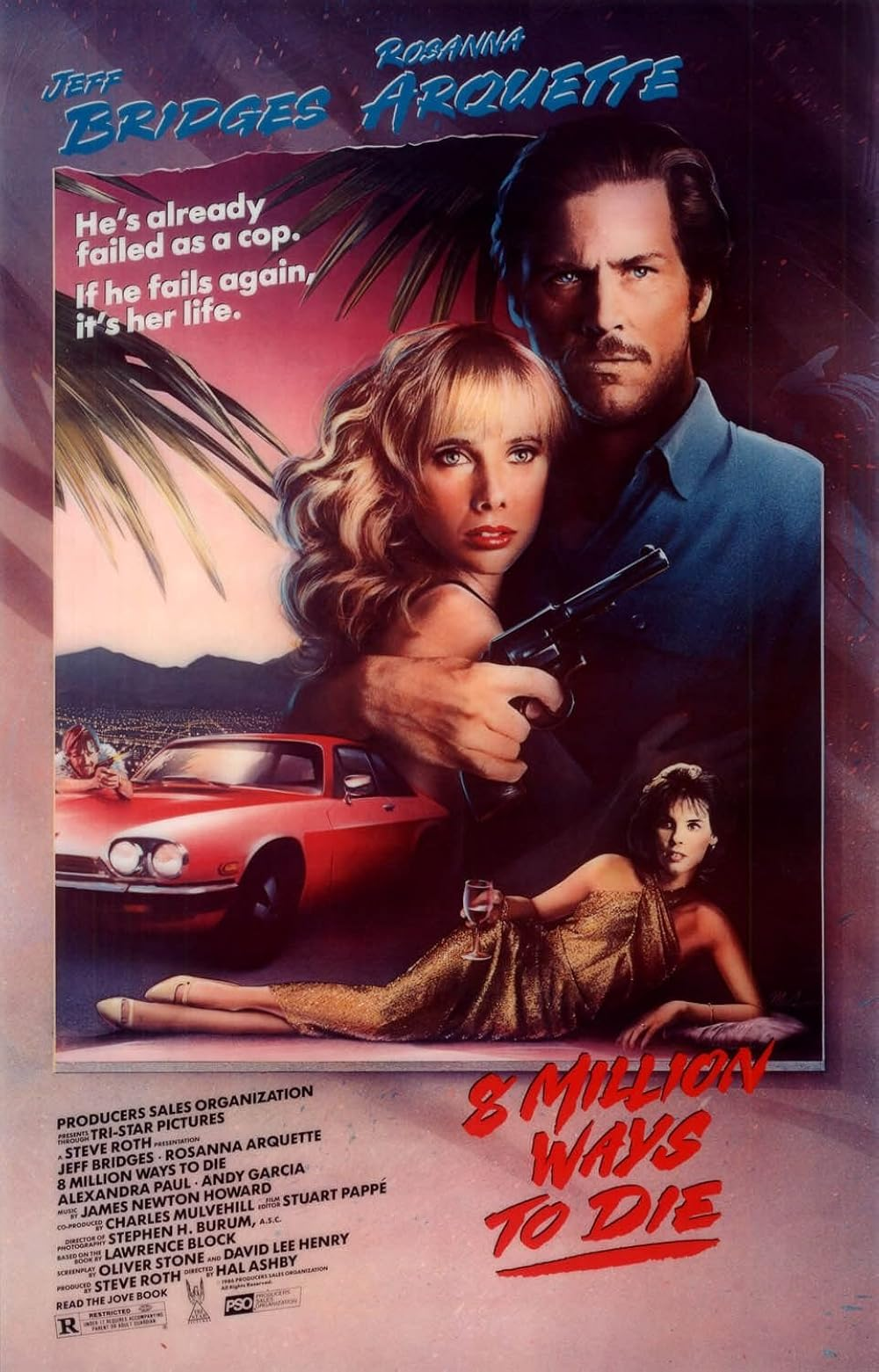
I was intrigued by this flick because I like Jeff Bridges, the movie was an early Oliver Stone screenplay (a co-write), and it was one of last films directed by Hal Ashby (Shampoo, Being There, Coming Home).
I don’t have 8 million reasons to hate this film, but I have 8.
Stone’s writing is garish and ridiculous. In an attempt at modern noir, we actually hear Bridges say, in voiceover, “Yeah, there are eight million stories in the naked city. Remember that old TV show? What we have in this town is eight million ways to die.” A high-priced call girl ups the retch factor, cooing to Bridges, “the streetlight makes my pussy hair glow in the dark. Cotton candy,” as she lays out ala’ Ms. March 1978. Maybe these gems were penned in the source novel by Lawrence Block. I don’t know. It doesn’t land here.
Hal Ashby knows about as much about film action as I do taxidermy. It’s not like Coming Home’s Jon Voight was doing wheelies in his chair. This picture, which involves blackmail and cocaine and kidnapping and gunplay, is as flat and unimaginative as professional bowling.
As the alcoholic ex-cop, Bridges seems as confused by the script as the viewer. There are times you feel, his eyes alone, Bridges is communicating, “What the hell is this thing about, again?” When he’s involved in a bad shooting, and guns down a man in front of his family, he says, “Shit.” Like when you don’t get a good score in Skee Ball. And then, “Fuck,” like when you leave home without your iPhone.
Bridges is also forced to play an alcoholic who relapses; he does this by reprising his role in Thunderbolt & Lightfoot, after he was thunked on the head.
The plot is inane. Bridges is lured into the entire mess because the girl with the cotton candy pubic hair heard his name from the friend of a friend.
Roseanna Arquette is terribly miscast as the sultry, misunderstood, cynical call girl with a heart of gold. Arquette is cute best friend, quirky neighbor. She ain’t this.
The supporting turns are execrable. Andy Garcia is so over the top (see below), it’s hard to stop laughing, as if he saw Scarface and said, “Hmmmm. Pacino seems a bit muted.” Another actor, Randy Brooks, nemesis to Garcia, is also near-lunatic. Brooks scurried off to TV after this flick, only to return as the worst actor in Reservoir Dogs six years later. The cotton candy girl is the badly miscast Alexandra Paul. She is the girl next door. Here, she’s over-the-top coquettish, as erotic and worldly as Georgette in The Mary Tyler Moore show. To be fair, this may not all rest on the actors. From the analysis below, “Ashby’s style of directing, according to Block, involved letting the actors do takes where they exaggerated their emotions, before reining them back in for subsequent takes. Since Ashby did not have final cut, some of these ‘dialed up’ takes were used in the film.” Seems like all of them were.
Scenes are interminable. The characters scream the same thing at each other ad nauseum or endlessly posture. Behold, the longest, loudest, most idiotic confrontation scene in film history:
Amazon Prime is loaded with old crime pictures and though it pains me to categorize a 1990 flick as an “old crime picture,” there you have it.
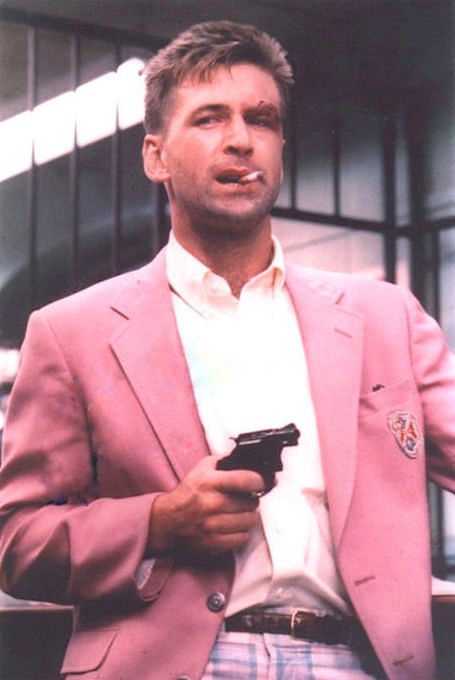
George Armitage (Grosse Pointe Blank) directs an adaptation of a Charles Willeford Detective Hoke Mosely novel (Willeford is a Florida crime novelist less heralded and a lot better than Carl Hiaasen). Alec Baldwin is a quirky thug just out of prison who lands in Miami, accidentally kills a Hari Krishna at the airport, and lands with small town and just starting out call girl Jennifer Jason Leigh. He evades arrest by Detective Mosely (Fred Ward), who is investigating the death of the Hare Krishna, and in the process, steals Mosely’s gun, badge, and dentures, thereafter ripping people off with the imprimatur of authority. The movie is absurdist and light, Armitage’s direction is workmanlike and industrious, and the result is more soft than hard boiled, a fun jaunt through weird 80s Miami. Enjoyable and mostly forgettable.
Mostly. Baldwin is so talented, loose and committed, his weirdo ex-con is fascinating and often gut-splitting. Literally every time he flashes Mosely’s badge, it is laugh out loud. As everyone he tries to hoodwink responds with a weary “ya’ gotta’ be kidding me,” Baldwin amps up his TV cop persona and the result is even funnier. These were early days for Baldwin, a hell of a dramatic actor but stellar in comedies. His choices are brazen and risky, and they all hit. The performance screams “star.”
To complement him, Jason Leigh as the hooker with a heart of gold is so earnest (she is saving up to start a fast food franchise) she actually moves you. Baldwin matches her with a crazy sweetness as they play house (until Mosely closes in).
An unheralded gem, powered by the stellar performances of Robert De Niro and Robert Duvall, as brothers Dez and Tom Spellacy. De Niro is a rising monsignor in post-WWII Los Angeles, archbishopship on the horizon. Duvall is a tainted LA homicide cop. De Niro is ambitious and technocratically capable but fast becoming disillusioned with the moral elasticity necessary to keep the church afloat, including being chummy with the likes of a scumbag real estate mogul (Charles Durning, who seeks the church as beard for his corruption and literally sweats menace). Duvall is trying to make up for his past as a bagman. A Black Dahlia-esque murder connects them, and as De Niro wrestles with his faith and station, Duvall agonizes over his past crimes and his attempt to make amends by going after Durning, damage to his brother be damned. We learn about their secrets and upbringing in an L.A. that has a Chinatown-vibe.
One of my favorite fiction authors, John Gregory Dunne, wrote the screenplay with his wife Joan Didion, and it exudes verisimilitude and deftness. The script allows De Niro and Duvall significant space and what they do with the quiet moments is poignant. There is always tension, but also, always an intimacy and a shorthand that speaks to shared happier, or unhappier, times. Their exchange on their uber-Catholic mother is emblematic:
Tom Spellacy: How’s ma? Is she still eating with her fingers?
Des Spellacy: Well, she says the early Christian martyrs didn’t have spoons.
Tom Spellacy: Tell her they didn’t have Instant Cream of Wheat, either.
It’s a cheat to cite a review within a review, but Vincent Canby’s is so dead on and conclusive, I’ll transgress: the film is a “tough, marvelously well-acted screen version of John Gregory Dunne’s novel, adapted by him and Joan Didion and directed by Ulu Grosbard who, with this film, becomes a major American film maker. Quite simply it’s one of the most entertaining, most intelligent and most thoroughly satisfying commercial American films in a very long time.”
If there is a problem, it is third act, which could have used a few more moves to get to the ultimate revelation. But I’m hesitant even in that criticism for fear that any nod to beefing up the procedural would have taken away from Grosbard’s patience and care with the characters. The film not only showcases De Niro and Duvall, but takes time to establish real connections between De Niro and an older priest (Burgess Meredith), who De Niro puts out to pasture because of the latter’s interference and sermonizing (“I’m not a man of the cloth, I’m a man of the people”); Duvall and a whorehouse madame (Rose Gregorio) with whom he had some sort of ragged relationship until she took the fall for his crookedness and did a stint in jail (“I need you like I need another fuck,” she spits at him); and Duvall and his partner, Kenneth McMillan, who shakes down Chinese restaurants for his retirement motel and tries to keep Duvall out of trouble (“You know who we’re going to pull in on this one? Panty sniffers, weenie flashers, guys who fall in love with their shoes, guys who beat their hog on the number 43 bus. What? Do you think I’m gonna lose any sleep over who took this broad out?”). The blunt and cynical nature of the dialogue aside, Dunne and Didion never stoop to hackneyed tough guy patter, and they counterbalance with real tenderness. The train station scene where the parents of the murdered girl meet with Duvall to take their dead daughter home is one memorably piercing example.
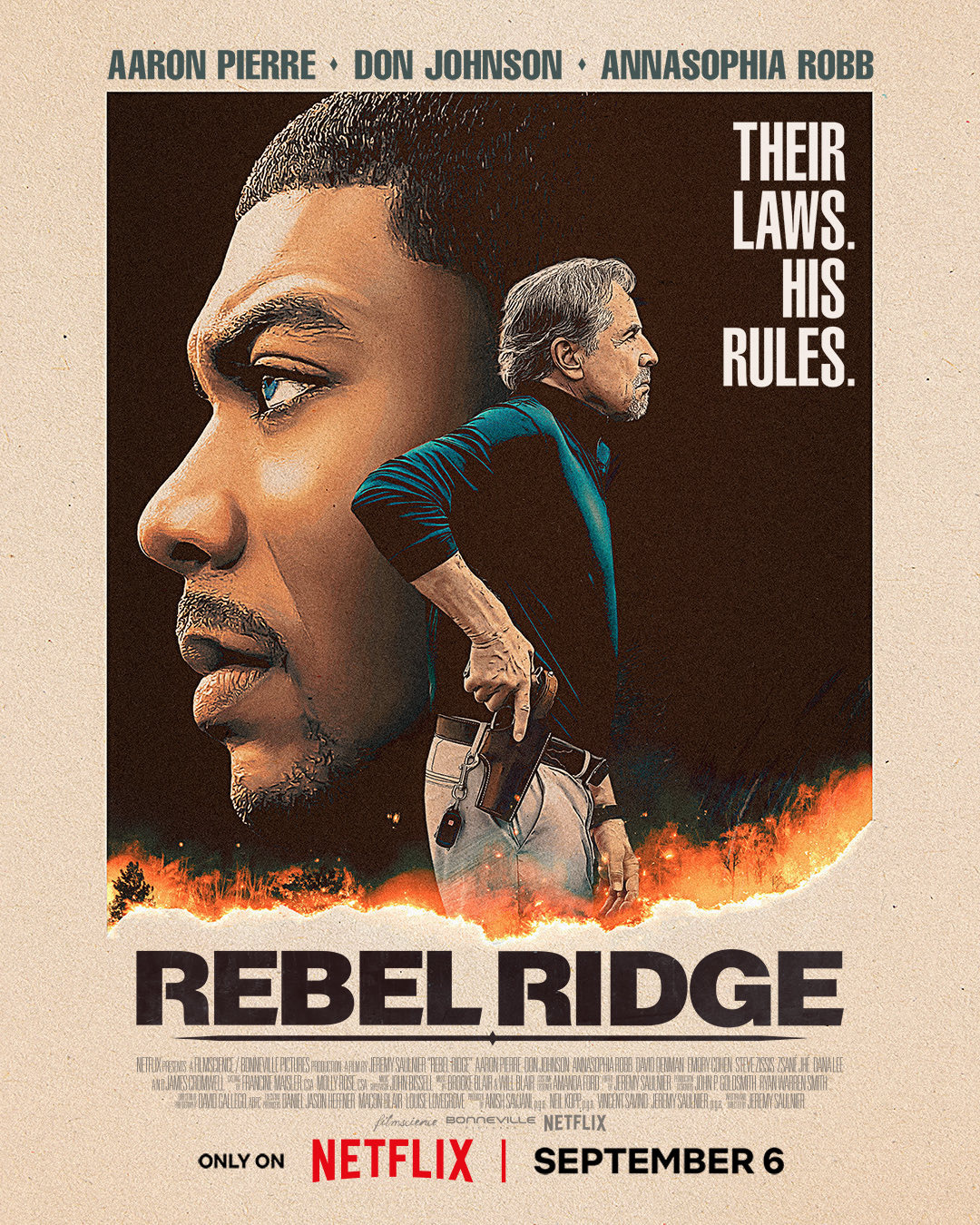
Writer-director Jeremy Saulnier’s Blue Ruin, an earthy, dark meditation on the messy and corroding influence of family blood oath and violence in rural Virginia, was such an assured debut, I was blown away. He followed up with the canny, creepy Green Room – where a band gets the worst gig ever playing for skinheads in the Upper Northwest – a commercial failure, perhaps because it was such a grounded horror film. No unstoppable evil or chop-licking psychos, just nasty, human, unregulated criminals with Swastikas and 12 packs who dig punk rock and live in the deep, deep woods.
Rebel Ridge again showcases the director’s dead-on familiarity with small town America. No Chevy Truck “backbone of the USA” schmaltz or easy tropes of the rural downtrodden being done in by “the man’s system.” Saulnier understands that most people are in some form or fashion paid by “the man’s system” and that system is what keeps mortgages current, power boats afloat, and Carnival cruises filled. In the small Southern hamlet that is our setting, graft, skimming, and railroading drifters end up just being part of the fabric, the next logical step for a speed trap town.
What follows is a gripping, subtle melange of liberal fear of cops and conservative “power of the deep state” fear of the government, good old fashioned small town Walking Tall corruption via asset forfeiture and … Rambo: First Blood.
No preening, no speeches, a lot of surprises, and a boffo, visceral, satisfying revenge fantasy ending, powered by Aaron Pierce’s reserved, steely leading turn.
In spots, a bit ragged for Saulnier, and there is an underdeveloped relationship between Pierce and a plucky court clerk (AnnaSophia Robb), but those are nits.
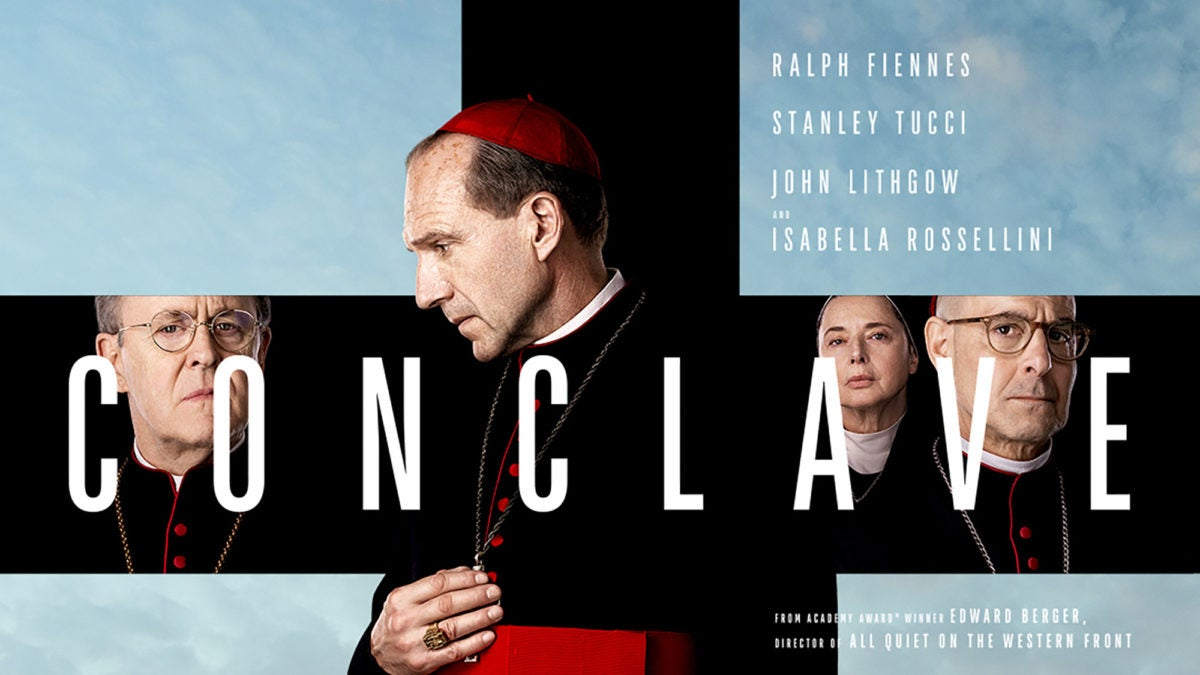
A movie that works beautifully on several levels. First, if you ever wanted an “inside” look at how a pope is selected, someone did their homework. Just like William Peter Blatty’s research into the ritual seemed so authentic in The Exorcist, and the hierarchy of a late 60s parochial school was nailed by John Patrick Shanley in Doubt, the convening of the cardinals to pick the next pontiff exudes legitimacy. Based on a Robert Harris novel, screenwriter Peter Straughn has a solid feel that comes from some religious experience and curiosity (“It was a world I was interested in. I was brought up Catholic. I was an altar boy, and I went to a Catholic school, so, in some ways it felt like home territory, even though I’m no longer a believer. I had one foot in the world and one foot out, so that interested me”).
Second, and I can’t write much on this, there is a satisfying Sixth Sensian reveal that is confident enough to leave it at that, without delving into the machinations of the ultimate selection. I was concerned we’d recap with a Murder on the Orient Express flashback diagram, but the picture is less about how we got to the selection than what it meant to get there and what it means. Better, the end is the kind of reveal that could have been wielded like a sledgehammer, but Straughn and Director Edward Berger (All Quiet on the Western Front) celebrate subtlety over all else.
Third, the film is a feast for the actors. Ralph Fiennes is masterful in his portrayal of the manager of the conclave, fighting his own ambition and anger at his designation as a mere facilitator rather than a spiritual leader. Fiennes is ably supported by John Lithgow, Stanley Tucci, Lucian Msamati, Sergio Castellitto, and Carlos Diehz, who represent different future paths for the papacy while vying for the top slot. Isabella Rossellini plays her own game as the sister who, for lack of better title, is the site manager for the election. Her hand may be well hidden and guiding, but given her near vow of silence in the world of men, even though her face tells so much more by necessity, nothing is confirmed. Nominations will be accorded generously and she is a shoo-in.
Last, the Catholic Church comes out well in this. In and of itself, not necessarily a recommendation, but the movie offers a different view of an institution so maligned of late that another broadside would just feel hackneyed. Sure, there are shenanigans and skullduggery, but there is also great deference to the awesomeness of the task, the mysticism and seriousness of the process, and the weight placed on the jurors. The debate between the “new” and more traditional Church is also given a fair airing and ultimately, without taking a side, the picture elevates a philosophical point to a logical, if arguably heretical conclusion.
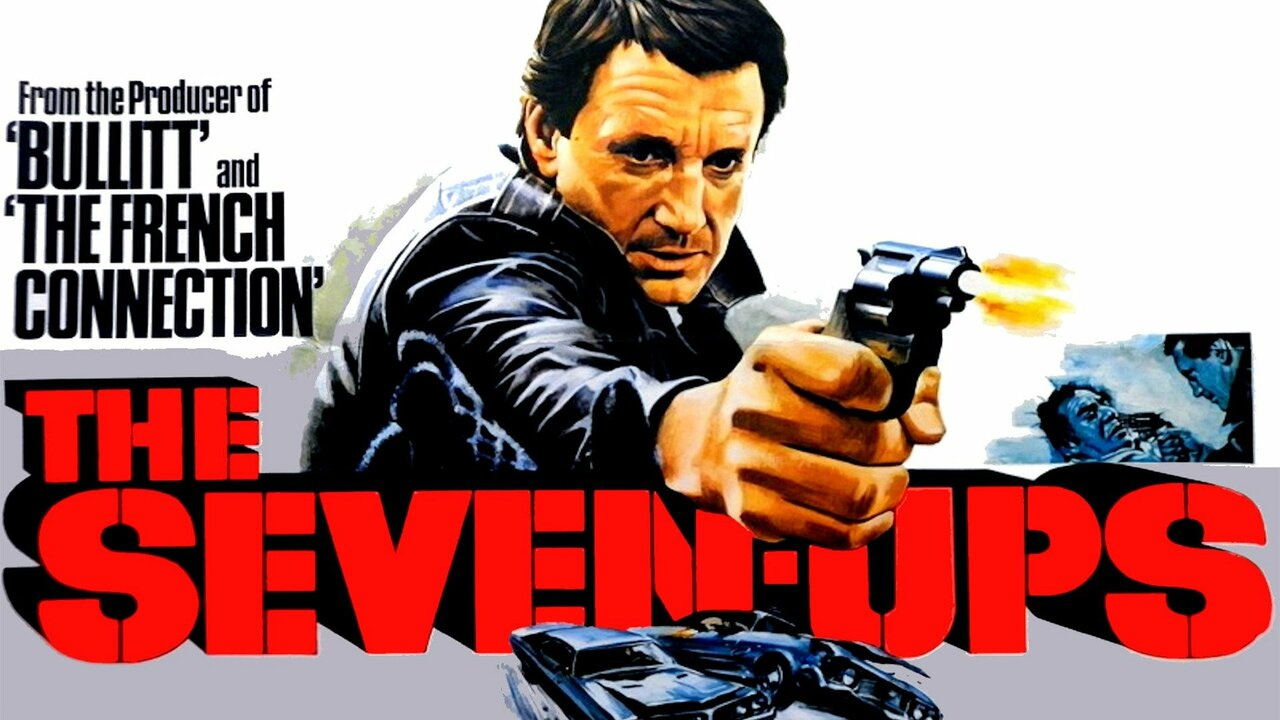
Director Phil D’Antoni produced The French Connection, and he struck while the iron was hot in this gritty, noir follow-up. The pictures seem familiar, sometimes distractingly so. There is no Gene Hackman as Popeye Doyle, but in his stead is Doyle’s partner, Roy Scheider, a New York City detective heading up a specialized team, untethered from bureaucracy, with its sights on the mob. Scheider has a mole (Tony LoBianco), a connected guy and childhood pal, who gives him tips. We see some stakeouts and takedowns, a lot of steamy subway grates and bleak streets, the Big Apple as hellscape.
D’Antoni also produced Bullitt, and stayed true to what he knows again, inserting a boffo car chase very reminiscent of McQueen’s ride through and to the outskirts of San Francisco.
But Scheider is no McQueen or Hackman. McQueen had the gravitas that told you everything you needed to know and more about his character, even as he wordlessly dined with the stunning Jackie Bisset or loaded up on TV dinners at the corner market. He had depth and heft. Hackman as Doyle was even more fleshed out, a driven, bigoted, brutal thug, the kind of guy who doesn’t stop chasing you even after he accidentally shoots a cop.
Here, Scheider just isn’t given anything. His relationship with LoBianco is seminal, but we learn little through their clandestine meets. D’Antoni must have realized the problem, as he has a scene of Scheider walking through his old neighborhood, but it feels perfunctory. We don’t know who he is or what makes him tick and that’s a problem.
But not an insurmountable one. Solid, no-nonsense, brisk flick, good nostalgia.
I took my cat to the vet yesterday and had that strange interregnum – too late to go back to work and too early to have a drink. So I flipped on the TV and lo and behold, Dog Day Afternoon was starting.
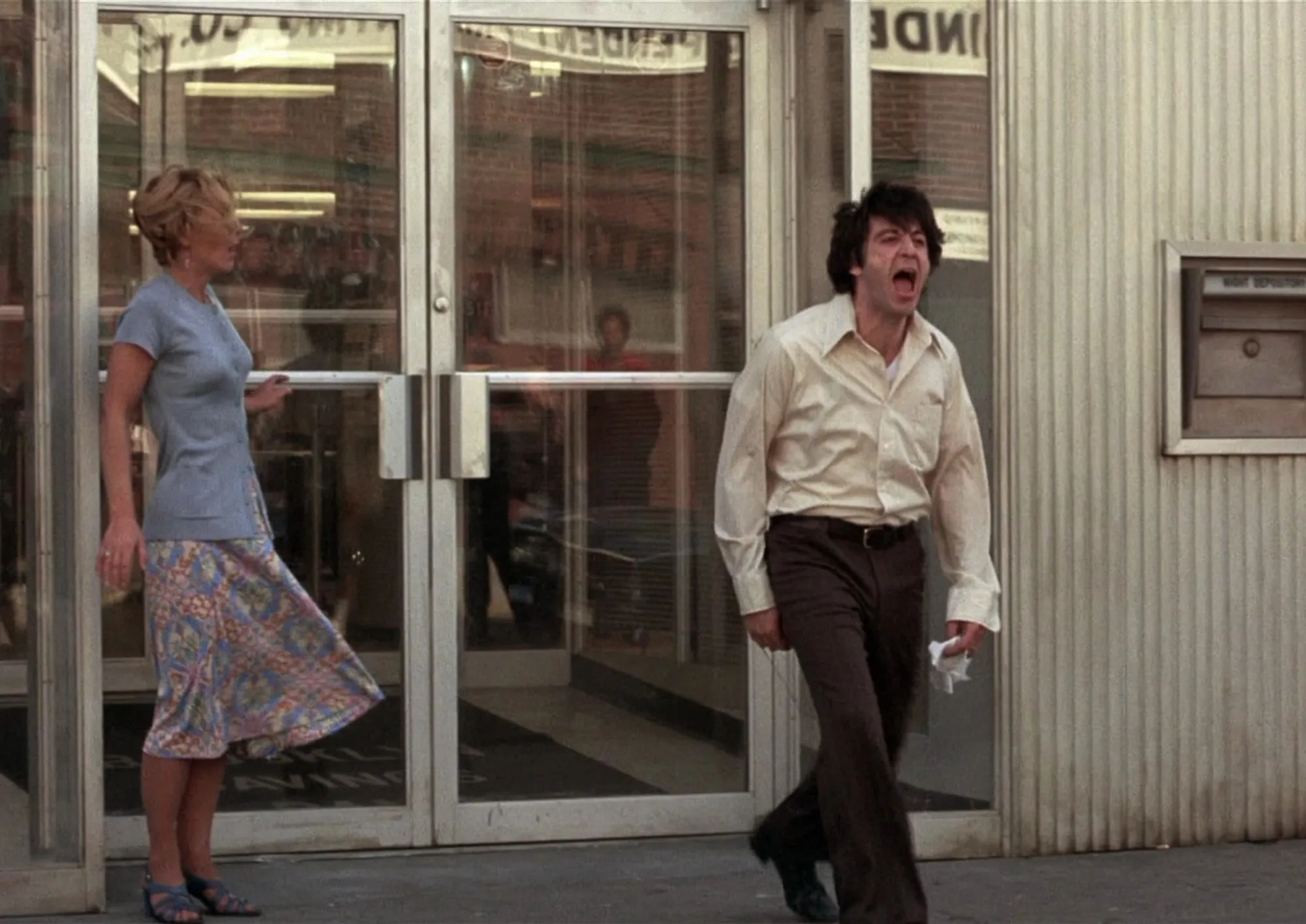
“Prescient” doesn’t even begin to capture Sidney Lumet’s masterpiece. Sonny (Al Pacino) and Sal (John Cazale) rob a bank in Brooklyn and before you know it, everything goes to shit, it’s a hostage situation, and they are surrounded by 100 cops, led by the overmatched and harried Charles Durning.
This is one of those 70s “New York City seems like hell” flicks. The robbery occurs on a sweltering summer day, and the police seem itching to gun down Pacino if only to get out of the heat. But soon, the TV cameras roll in, the crowds arrive, and before you know it, Pacino is a street-performer, not negotiating so much as whipping everyone up, screaming, “Attica! Attica!” and otherwise savoring the moment and, for lack of a better phrase, sticking it to “the Man.” His rage and theatrics are infectious. The crowd bays, bystanders want “in”, the hostages (plucky New Yorkers all) play-act and become featured cast members, and soon, the cops are the ones being led by the nose. Everybody has their 15 minutes.
But Sonny’s ride must end. Sal is a dimwit (when Pacino asks him what country they should fly to in escape, Cazale responds, “Wyoming”). The origins of the heist – to get money for Sonny’s boyfriend Chris Sarandon’s sex change – become public when Sarandon is sprung from a suicide attempt at Bellevue to come talk some sense into Pacino. The hostages start to lose the fun of it as well, and Cazale’s biggest worry becomes the fact that the networks are reporting “two homosexuals” in the bank. When Pacino is put on the line with his wife, you can see how he could be driven to such extremes and also what an awful person he has been to her. His mantra is, “I’m dying.” He is, in front of us, in slo-motion, but we sense we’ve missed a lot of the decline.
There is a great scene where the manager, having suffered a diabetic episode, is tended to by a doctor, gets his shot and chooses to stay with his employees:
As Sonny grabs him to try to help him up, Mulvaney wrenches
away. A little physical here.
SONNY
Hey! I’m tryin’ to help you.
MULVANEY
I stay here. Damn it. I just neededthe insulin. I’m used to it.
Go on. Go on.
SONNY
(to Doctor)
You tell me. Is he endangering his
health, because if you tell me he
is, I’ll get him out.
MULVANEY
I’ll be God damned if you will.
SONNY
Oh, Jesus! You want to be a martyr
or a hero or what?
MULVANEY
I don’t wanta be either, I just want
to be left alone. You understand
that? I wish the fuck you never
came in my bank, that’s all, don’t
try to act like you’re some angel of
human kindness!
You can see Pacino’s hurt. As if maybe he really thought this would work out and that he is a good man.
But soon, the FBI take over, and they are helluva lot more together than poor Durning and company.
Pacino is riveting, alternately electric and doomed, eliciting your scorn and then sympathy. He’s all furtive energy minus the excess and “hoo ah!” You know this had to go bad, and so does he, and it’s depressing to see him hope, just for a minute, and then know he’s a loser and finished. Sarandon is fantastic (he was nominated for supporting actor), ridiculous and yet, affecting in his affectations, as if he knows he’s absurd but can’t shake the affliction.
It won an Oscar for Frank Pierson’s (Presumed Innocent, Cool Hand Luke) original screenplay, which doesn’t have a false note in it.


 filmvetter