Archive

Action/Disaster


The follow-up replicates many of the good things about Star Trek.  The characters are fresh and in keeping with the personas of their forebears; the action is brisk and the banter clever; the special effects are impressive; and the balance of fun and serious is just right.  It even has a better villain (Benedict Cumberbatch).

There are, however, weaknesses.  First, it suffers from Avengers-itis.  There are just too many set piece action sequences, including a tedious one where the Enterprise is plummeting in a death spiral that Kirk and company manage to get around easily enough.

The politics are also pinko.  The joy of Peter Weller as a Starfleet admiral is lessened given he is a predictable warmonger bent on starting a war with the Klingons, and modern Starfleet feels almost pacifistic (basing Starfleet in San Francisco took its ideological toll).

It is also a little sloppy.  Two of the security “red shirts” sent on a shore party are forgotten in a shoot ’em up melee with the Klingons; JJ Abrams decided their fate was not even worth memorializing.

And why “kill” Kirk when only a monkey would accept his demise as permanent?  The picture is already an overlong 2 hours and 12 minutes.

The crew has also taken on a new science/weapons officer (Alice Eve), one so slight and dull that Abrams cheats to keep us interested.

The Last Stand is as formulaic as they come and is strangely populated by 5 characters sporting near-incomprehensible accents: Arnold Schwarzenegger (born in Thal, Styria, Austria), as a retired LA narcotics detective who is the sheriff of a small town on the Mexican border; Forest Whittaker (born in Longview, Texas), as the out-of-breath, over-salivating, beleaguered FBI agent who has lost a major cartel figure in an attempt to transfer him from Las Vegas to a super max prison; Eduardo Noriega (born in Santander, Cantabria, Spain), as that cartel figure, who is hurtling at 200 MPH in a tricked-out sports car, hoping to make the border; Peter Stormare (born in Arbrå, Gävleborgs län, Sweden), Noriega’s henchman, who is clearing the path for Noriega’s arrival by trying to kill Schwarzenegger and his motley crew of small town defenders (Stormare’s southern accent is hilarious, half ABBA, half Foghorn Leghorn); and Rodrigo Santoro (born in Rio de Janeiro, Brazil), one of those defenders, an Iraq and Afghanistan war veteran locked up on a drunk and disorderly, deputized to assist Schwarzenegger.

Since you can’t understand what most of the people are saying, the pedestrian script is mooted, leaving you free to enjoy director Kim Jee-Woon’s (born in Seoul, South Korea) impressive chase scenes and shoot ’em ups.

I’ve seen worse, and Schwarzegger maintains an irrepressible likeability that makes for an enjoyable ride.

George Miller’s frenetic, creepy vision of a future where a version of The Wild Ones terrorizes the roads is a confident, distinctive picture made all the more impressive by its paltry $400,000 budget. Miller went on to make The Road Warrior, cementing Mel Gibson as the most bankable of stars, but in Mad Max, Gibson barely resonates until he is transformed, ala’ Charles Bronson in Death Wish, into a silent, dispenser of retributive violence. His payback is gripping, played out on a widescreen lens at high speeds on the desolate roads of Australia. Still, the picture stops dead in its tracks halfway through as we wait for the brutal thugs of the road to incur Gibson’s rage. It is also the worst scored film in the history of movies, a blaring and bizarre Bernard Hermann knock-off.


After taking my boy to Django Unchained, we started a concerted effort to watch the Tarantino catalogue. When he asked about the Kill Bills, I told him they were films made primarily for children, but were so violent, if cartoonishly so, that children probably shouldn’t be allowed to watch them. Of course, Tarantino is a visionary, having anticipated an audience of children of a wider breadth than I could have imagined, scads of 24 to 36 year old slacker geeks, still living in Mom’s basement, deathly terrified of footballs and baseballs and supervisors and real women, banking retirement on mint condition comic books, their only meaningful relationships having been 2 to 3 minute internet trysts with the various Jenna Jamesons cranked out of the San Fernando Valley with increasingly worrisome regularity.

This is their crack cocaine.

Volume 1 is stylish, meticulous, occasionally funny and inventive but a mostly tiresome abscess of a picture. As if any enjoyment derived from the first picture required penance, Volume 2 is that contrition.

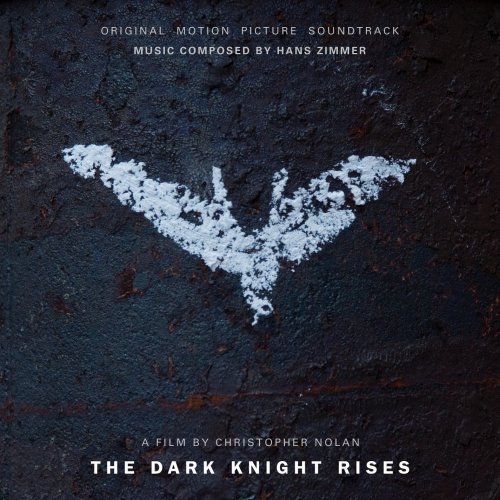
Christopher Nolan’s last entry to his Batman trilogy closes the story out in satisfying fashion and even leaves room for the rise of Robin (Joseph Gordon-Levitt) should Warner Brothers need a fiscal stimulus in the future. The story is the same as the prior two pictures. A reluctant Bruce Wayne/Batman (Christian Bale) is drawn back into the fray when his beloved Gotham City is threatened. This time, the threat comes from Bane (Tom Hardy), a muscular beast who wears a mask not unlike a greyhound. Much like The Joker, Bane seeks to test the mettle and morals of Gotham.  Bane’s appeal is Occupy Wall Street on steroids. The city is shut down and isolated by a moving nuclear device controlled by Bane, and as its time runs out, the new masters judge the rich and powerful (the villain Scarecrow plays Robespierre) while Bane’s henchmen and at least a certain portion of the citizenry pillage their apartments.

This is actually the most interesting part of the movie, begging the question, “Why does Batman dig this fickle town so much?” Unfortunately, less time is devoted to the occupation’s class warfare and the internal de-evolution of Gotham and too much to Batman’s angst, Alfred’s (Michael Caine) regret that Bruce did not have a normal life, and some corporate skullduggery that is . . . eh. The movie is also a bit too solemn. I applaud the darker, starker vision of Batman and his story, but we are, in the end, talking about a man who dresses up like a bat. With the exception of a few smart quips from Catwoman (a lithe Ann Hathaway), the movie is largely humorless.

Still, the action is first-rate and the big finish does not disappoint.

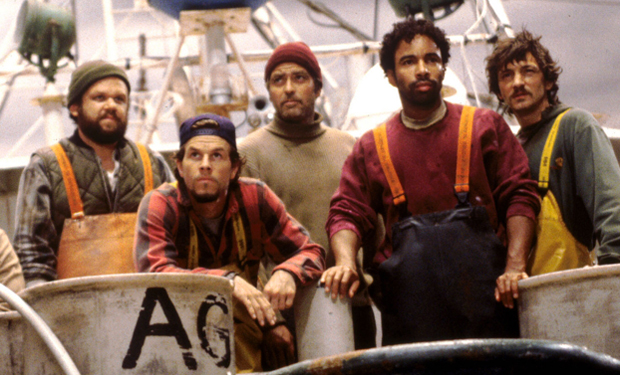
Image result for The Perfect Storm crew

A Gloucester fishing boat captained by George Clooney goes out to get some fish and is soon in “the perfect storm.” Based on Sebastian Junger’s best-selling book about the fate of the Andrea Gail, the visuals are occasionally impressive but this is no Captain’s Courageous. The characters have a working class look but not the feel, and Clooney, who normally chooses well, is too damn dreamy to be the salty sea dog (he would have been better as the telegenic and wide-eyed meteorologist who captures the storm on his Doppler).

A better skipper would have been John Hawkes, the crewman furthest to the right above, who was nominated for an Oscar for Winter’s Bone and should be nominated again this year for The Sessions.

Junger’s book delved deeply into the precarious, brutal and chancy world of commercial fishing, but the script elects to show hard drinkin’, hard lovin’, misunderstood men of the sea while on land, and on the water, a boring band of brothers. The screenplay is either hackneyed or just plain dull.

Here’s a taste.

This is the the moment of truth”

“Billy, you’re not gonna’ like this but I’m gonna’ say it anyway.  You be careful.”

“I always find the fish.  Always.”

“Last night was worth it. There’s nothin like sleepin’ with you… just sleepin’… lyin next to you… all warm and sweet… Me wishin’ the mornin’ would never end.”

“You just caught me on a good night. I’m doing what I was made to do – and I’ve got a feeling I’m going to do it even better this time.”

And when crew member John C. Reilly is about to drown, he doesn’t scream or panic. Instead,  being a man of the sea, he says to no one in particular, “This is gonna be hard on my little boy.”

Hard on the audience as well, John.

There’s also a lot of forlorn women looking out the window for these good men of the sea (Diane Lane is completely wasted). Old Spice commercials are filled with greater verisimilitude.

Director Wolfgang Peterson made it to Hollywood on the strength of his gripping U boat drama Das Boot, but since then, he’s gone to sea twice, with The Perfect Storm and the even worse Poseidon.

He needs to stay on land.


Quentin Tarantino’s Achilles heel is his immaturity and obsession with genre.  Be it Japanese ninja films or 70s drive-in schlock, his bad pictures (and the Kill Bills and his contribution to Grindhouse are bad pictures, “fear of not being hip” critical acclaim notwithstanding) are foreordained by his choice of an homage to shit, which merely produces higher caliber shit.

Hence, my trepidation walking into Django Unchained.  Fortunately, spaghetti westerns are stronger source material than Japanese ninja crap and American drive-in crap, and Tarantino doesn’t become engulfed by this particular genre.  Sergio Leone is ever present, but the picture does not attempt to ape or glorify his work.  Tarantino also adds humor with a very modern sensibility.  Finally, Christoph Waltz, who electrified Inglorious Basterds and collected a well-earned supporting actor Oscar for his work, and Leonardo DiCaprio, who embodies oily, smooth charm and venom, elevate the material, so much so that when they are absent from the film, you can hear it leaking air.

Django (Jamie Foxx) is a slave freed by a bounty hunter (Waltz) who needs Django to identify some targets.   A partnership develops and soon, the duo endeavor to retrieve Django’s wife (Kerry Washington) from Mississippi slavemaster DiCaprio and his conniving house master (Samuel L. Jackson).  Cartoonish, bloody, often wildly funny, and fast-paced, Django would have scored higher save for a tacked-on ending that adds a wholly unnecessary 25 minutes to a film that was satisfyingly concluded.  Worse, it is in these 25 minutes that Tarantino the actor appears, with a befuddling Aussie accent, to jerk the picture to a standstill.  From there, surreal becomes outrageous and outrageous becomes boring.

Still, what precedes the unsatisfying ending is a blast, part blaxploitation revenge fantasy, part loving tribute to Italian westerns, and part sly, broad comedy (the scene where a posse of pre-Klan night riders argue over the utility of their white sheet hoods is more Blazing Saddles than Once Upon a Time in the West).  Best, professional scold and Knicks fan Spike Lee, who I understand used to have something to do with filmmaking, is not amused by the melding of a slave story and a western  When Lee is up in arms, it is a strong endorsement indeed.  Lee’s criticism is almost as stupid as the Village Voice‘s defense of Tarantino’s use of the word “nigger” (over 100 times) on the grounds of historical accuracy.  Even if that word hadn’t been used in the Mississippi of 1858, Tarantino would have used it nonetheless, for two reasons.  First, he loves that word, and he loves it most when uttered by Samuel L. Jackson.  Second, just to spite Spike.

Liam Neeson works in Alaska as a sniper protecting workers from wolves.  He’s at the end of his tether, trapped in a faraway hell where all around him, the dregs do the hard work in a barren wasteland, drinking, drugging and fighting at night.  Near suicidal, Neeson grabs a flight to Anchorage, which goes down in a part of the frozen tundra controlled by a marauding wolf pack. Neeson leads a group of men in their attempt to survive the elements and the wolves.

At first blush, The Grey seems a drearier, heavier The Edge, without the sharpness of a Mamet script or the tension born of a romantic entanglement.  Surprisingly, given the director’s track record, this story of men turns out to be a great deal more than a thriller.  We learn a little about each of the survivors, and Neeson, who was ready to throw his life away, draws purpose from and provides comfort to men suddenly facing death.  There is a beautiful scene after the crash, where Neeson consoles a gravely injured passenger, tells the man he is dying and asks him to think of one he loves to walk him out of this world.  What follows is indeed very thrilling, but also deep and even elegiac.  As characters meet their fate, you find yourself empathizing strongly with them, not only because of their plight but because you have invested in them.

Neeson is strong as a lost man reconnected to humanity through this nightmare. He should be nominated for an Oscar, but given the vehicle, it cannot be. The ensemble cast is also formidable, with special mention to Frank Grillo as an ex-con survivor who naturally resists Neeson’s leadership.

The Grey was directed and co-written by Joe Carnahan, who helmed the excessive and stupid Smokin’ Aces and The A Team, so things are looking up.

Writer/director James Cameron’s blockbuster is lovingly grand and its atmospherics and visuals breathtaking.  But a single scene exemplifies the failure of the picture.

The moment before the lookouts spot the iceberg that would seal their fates, they’re dicking around watching Rose (Kate Winslet) and Jack (Leonardo DiCaprio) smooching on the foredeck.  As a result, a plausible argument can be made that the two leads sank both the ship as well as the film, because their insipid teen love affair is at the heart of this movie.

Rose is unhappily slotted for a marriage to a well-heeled snob (Billy Zane).  She intends to fling herself off the ship, but she is saved by and falls for roustabout Jack.  As the ship continues its doomed voyage, these two chuckleheads moon at each other, while blithely noticing things that are important:

Andrews leads the group back from the bridge along the boat deck.

                                   ROSE
Mr. Andrews, I did the sum in my head, and with the number of lifeboats
times the capacity you mentioned… forgive me, but it seems that there are
not enough for everyone aboard.

                                  ANDREWS
About half, actually. Rose, you miss nothing, do you? In fact, I put in
these new type davits, which can take an extra row of boats here.

                        (he gestures along the eck)

But it was thought… by some… that the deck would look too cluttered. So
I was overruled.

                                    CAL
                       (slapping the side of a boat)
Waste of deck space as it is, on an unsinkable ship!

                              ANDREWS
Sleep soundly, young Rose. I have built you a good ship, strong and true.
She’s all the lifeboat you need.

Not enough lifeboats, you say?

Soon, Rose is posing nude for Jack (he is a portraitist) and shortly thereafter, they’re going at it hot and heavy.  Zane is infuriated and sets his goon (David Warner) on Jack, leading to an implausible  cat-and-mouse chase through the ship while it is going under (Warner is truly Employee of the Century).

There are many, many other problems.  DiCaprio could not be more wrong for the part.  He looks as if he just started shaving, so his turn as a man-of-the-world is laughable.  It’s an Aidan Quinn role given to a near pre-pubescent.
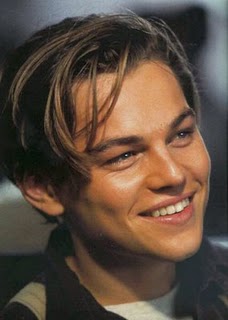
 Rose, did you see where I put my Bubble Yum?

Cameron’s script is also unbearably overt.  He trusts his audience not, as early exposition demonstrates:

HAROLD BRIDE, the 21 year old Junior Wireless Operator, hustles in and
skirts around Andrews’ tour group to hand a Marconigram to Captain Smith.

                                   BRIDE
Another ice warning, sir. This one from the “Baltic”.

                                   SMITH
Thank you, Sparks.

Smith glances at the message then nonchalantly puts it in his pocket. He
nods reassuringly to Rose and the group.

                                   SMITH
Not to worry, it’s quite normal for this time of year. In fact, we’re

speeding up. I’ve just ordered the last boilers lit.

Andrews scowls slightly before motioning the group toward the door. They
exit just as SECOND OFFICER CHARLES HERBERT LIGHTOLLER comes out of the
chartroom, stopping next to First Officer Murdoch.

                                LIGHTOLLER
Did we ever find those binoculars for the lookouts?

                           FIRST OFFICER MURDOCH
Haven’t seen them since Southampton.

Iceberg, speeding up, and no binoculars?  Uh oh.

The film unravels at the end.  The idiocy of Warner hunting Jack and Rose as the ship nears its final peril can no longer be ignored.  Meanwhile, Cameron becomes enamored of what he can do on his broad canvas.  Tragedy becomes an action caper as the director starts bouncing hapless victims off of fantails.

In the final scene, an aged Rose (Gloria Fisher) looks longingly into the icy waters that took her Jack, and throws a massive jewel in.  Leaving your last thought as, “That damned thing could have fed Sub-Saharan Africa for a few months.  What a selfish old hag!”

https://i0.wp.com/3.bp.blogspot.com/-mFvHmYCWyDo/T-NFPL6w4pI/AAAAAAAACmk/W1uhlxULVuA/s1600/Abraham-Lincoln-Vampire-Hunter.jpg

Spielberg’s film was more authentic, but not as much fun.  The plot is simple.  Abe’s mom is killed by a vampire, he vows revenge, is tutored by a vampire hunter, and thereafter lives a double life, rising to power in the day while hunting vampires at night.

It’s a big, flashy, superficial comic book, but it moves, and when Lincoln’s political ambitions intersect with the battle against the undead, the Lincoln story gets going.  If there is to be a war over slavery, it will be brutal and vicious, because, in the words of Lincoln’s mentor, the blood of the slaves “is the only thing that has kept [the vampires] sated for this long.”  Their feed stock threatened, the vampires step up the game, kill Willie (Mary Todd’s insanity is better explained) and bolster the ranks of the Confederates.  Lincoln, however, shows great ingenuity and the tide is turned.

I saw this film’s lead blow the crowd away in Broadway’s “Bloody, Bloody Andrew Jackson” and in his second turn as an American president, Benjamin Walker remains compelling. But this is a broad action pic, heavy on CGI.  The actors aren’t pressed.

The film is also the appropriate length.  Whereas The Avengers has the temerity to run 2 hours and 35 minutes, this popcorn flick is a swift 1.45, which is still a tad long but fine.

It falters when it approaches seriousness.  The writing can also be pedestrian and it lacks a needed sense of humor.  The picture also steals its ending from The Road Warrior.  But when Abe starts swinging that axe, it regains its footing.