Archive

Decade

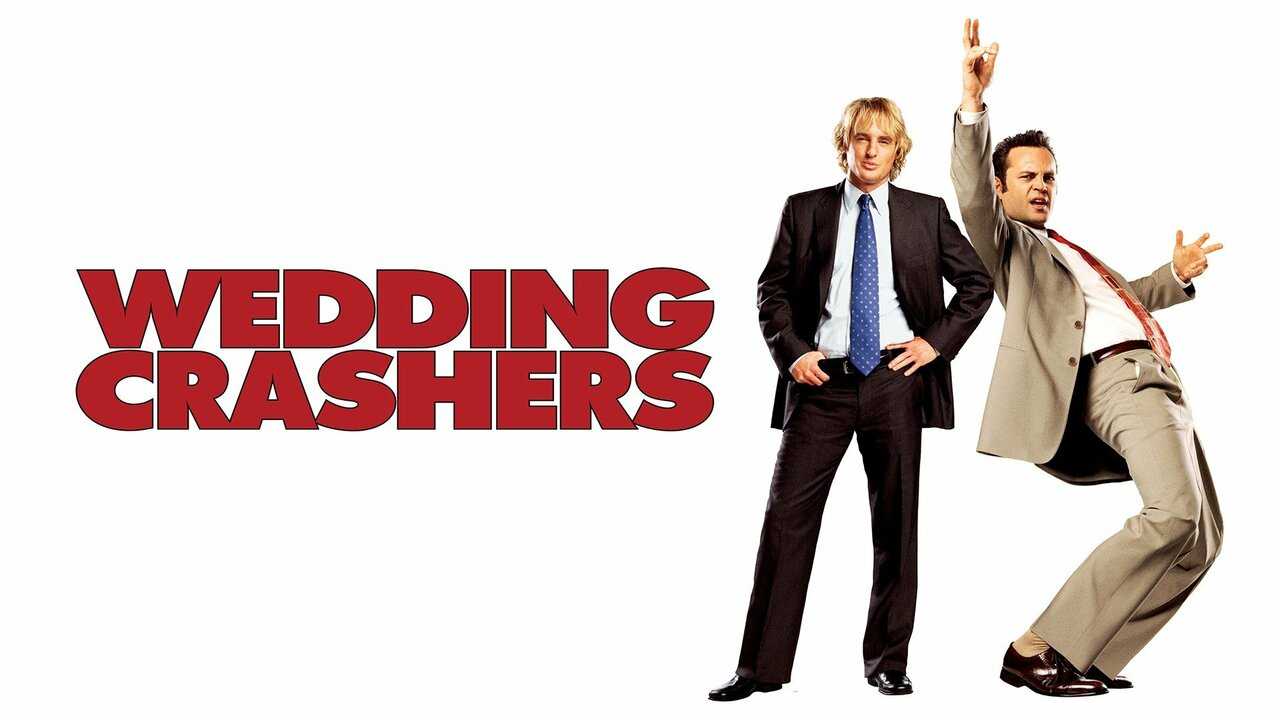
Sunday was a lazy day, watching whatever came on and doing squat. I dusted off the serious tone of Doubt with one of the funniest romantic comedies I’ve ever seen. The nucleus of the hilarity is the relationship between Owen Wilson and Vince Vaughn, two domestic relations mediators who crash weddings, and thereby, rather effortlessly bed the bridesmaids and other female guests with their practiced charms. Sure, the sex is good, but watching them savor the mini-crab cakes, woo the kiddies with balloon animals or cut the rug with granny, feels like an equivalent joy. The moves are practiced, the aim morally questionable, but the love of it all is there.  

They crash the mother of all weddings, that of a daughter of the secretary of the Treasury (Christopher Walken), where Wilson falls head over heels for another daughter (Rachel McAdams) while the third (Isla Fisher, who is somewhere between effervescent and lunacy) takes a shine to Vaughn. Wilson and McAdams flirt madly, and he saves her from a “too-snarky by a million” wedding toast. Vaughn and Fisher expedite matters, as he seemingly deflowers her at a secluded cove near the reception (which, if memory serves, was the Inn at Perry Cabin in St. Michaels, MD). Naturally, Vaughn wants to flee (one of the bazillion rules of wedding crashing is that there be no emotional involvement or connection after the reception), but out of loyalty to his fellow crasher and in their deception as distant family members, both are invited and go to the secretary’s Eastern Maryland home for the weekend. Hijinks ensue.

Wilson and McAdams are really quite convincing and warm. Chemistry goes a long way and they have it in spades. But the real love story is that of Vaughn and Wilson, who have such a genuine and easy connection that their banter elevates above the normal bro’ babble – these guys really love each other, and their interplay is always very funny and strangely moving. My favorite scene:

They elevate an incredibly hilarious and smart comedy where even without their intimacy, it would be hard to pick the scene that makes you laugh the most, be it the over the top family touch football game (Wilson’s nemesis is a young Bradley Cooper, who exerted stardom even then as the eco-friendly, psychotic heavy) or Wilson, having fallen out with Vaughn, hooking up with the Edison of wedding crashing, Chaz (Will Ferrell), who lives with his Mom and has moved on to funerals.

Whenever I see Vaughn in this flick, I think of my oldest and dearest friend, 40 odd years now, my own big guy who wants to bring it in with the big paws and the hug, Leo

Total blast. And a great montage song straight out of the rom-com bin

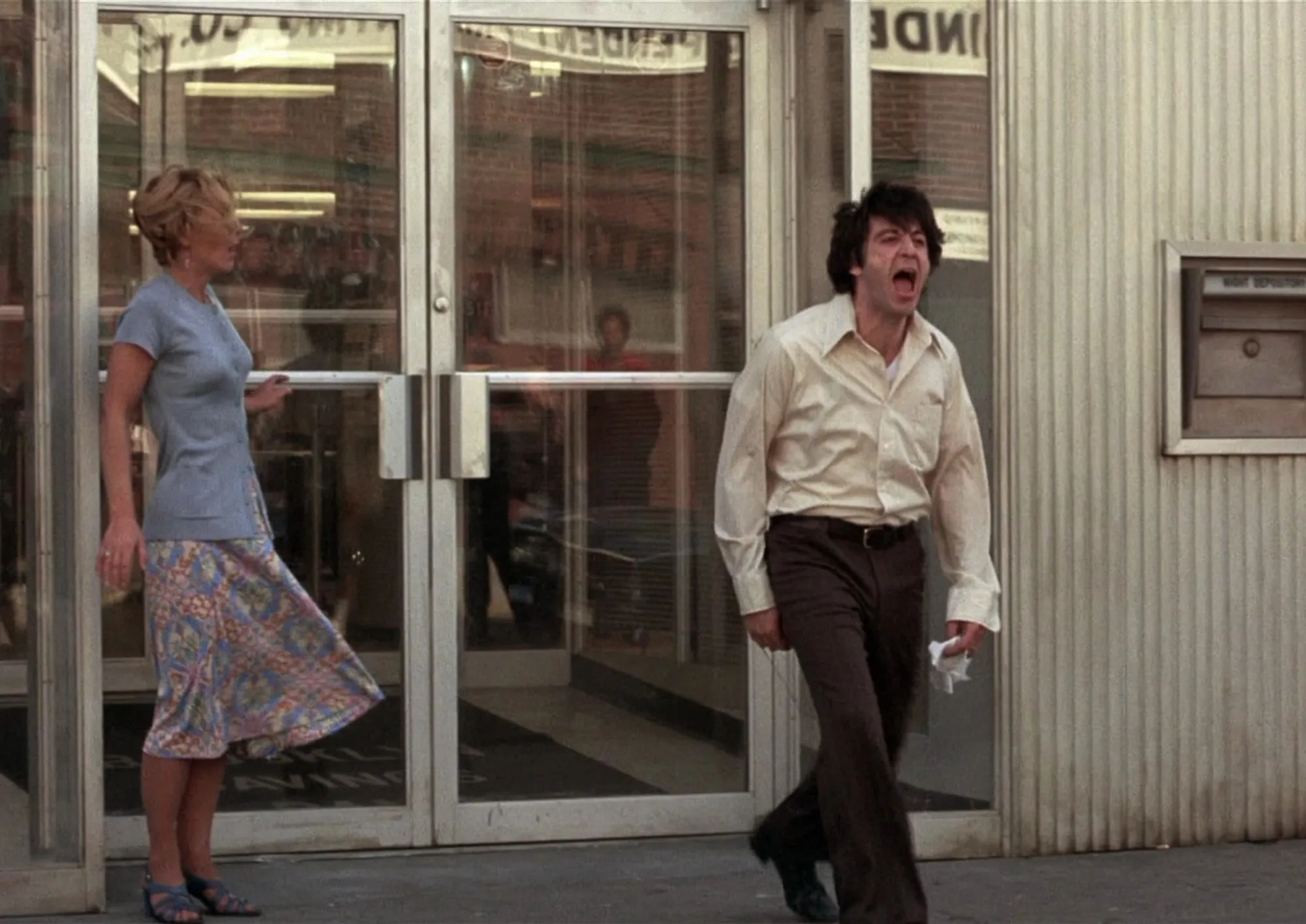
I took my cat to the vet yesterday and had that strange interregnum – too late to go back to work and too early to have a drink. So I flipped on the TV and lo and behold, Dog Day Afternoon was starting.

“Prescient” doesn’t even begin to capture Sidney Lumet’s masterpiece. Sonny (Al Pacino) and Sal (John Cazale) rob a bank in Brooklyn and before you know it, everything goes to shit, it’s a hostage situation, and they are surrounded by 100 cops, led by the overmatched and harried Charles Durning.

This is one of those 70s “New York City seems like hell” flicks. The robbery occurs on a sweltering summer day, and the police seem itching to gun down Pacino if only to get out of the heat. But soon, the TV cameras roll in, the crowds arrive, and before you know it, Pacino is a street-performer, not negotiating so much as whipping everyone up, screaming, “Attica! Attica!” and otherwise savoring the moment and, for lack of a better phrase, sticking it to “the Man.” His rage and theatrics are infectious. The crowd bays, bystanders want “in”, the hostages (plucky New Yorkers all) play-act and become featured cast members, and soon, the cops are the ones being led by the nose. Everybody has their 15 minutes.

But Sonny’s ride must end. Sal is a dimwit (when Pacino asks him what country they should fly to in escape, Cazale responds, “Wyoming”). The origins of the heist – to get money for Sonny’s boyfriend Chris Sarandon’s sex change – become public when Sarandon is sprung from a suicide attempt at Bellevue to come talk some sense into Pacino. The hostages start to lose the fun of it as well, and Cazale’s biggest worry becomes the fact that the networks are reporting “two homosexuals” in the bank. When Pacino is put on the line with his wife, you can see how he could be driven to such extremes and also what an awful person he has been to her. His mantra is, “I’m dying.” He is, in front of us, in slo-motion, but we sense we’ve missed a lot of the decline.

There is a great scene where the manager, having suffered a diabetic episode, is tended to by a doctor, gets his shot and chooses to stay with his employees:

               As Sonny grabs him to try to help him up, Mulvaney wrenches

               away.  A little physical here.

                                     SONNY

                         Hey!  I’m tryin’ to help you.

                                     MULVANEY

                         I stay here.  Damn it.  I just needed the insulin.  I’m used to it.

                         Go on.  Go on.

                                     SONNY

                              (to Doctor)

                         You tell me.  Is he endangering his

                         health, because if you tell me he

                         is, I’ll get him out.

                                     MULVANEY

                         I’ll be God damned if you will.

                                     SONNY

                         Oh, Jesus!  You want to be a martyr

                         or a hero or what?

                                    MULVANEY

                         I don’t wanta be either, I just want

                         to be left alone.  You understand

                         that?  I wish the fuck you never

                         came in my bank, that’s all, don’t

                         try to act like you’re some angel of

                         human kindness!

You can see Pacino’s hurt.  As if maybe he really thought this would work out and that he is a good man.

But soon, the FBI take over, and they are helluva lot more together than poor Durning and company.

Pacino is riveting,  alternately electric and doomed, eliciting your scorn and then sympathy. He’s all furtive energy minus the excess and “hoo ah!” You know this had to go bad, and so does he, and it’s depressing to see him hope, just for a minute, and then know he’s a loser and finished. Sarandon is fantastic (he was nominated for supporting actor), ridiculous and yet, affecting in his affectations, as if he knows he’s absurd but can’t shake the affliction.

It won an Oscar for Frank Pierson’s (Presumed Innocent, Cool Hand Luke) original screenplay, which doesn’t have a false note in it.

Crisp and taut work by the reliable Alan Pakula (Klute, The Parallax View, All the President’s Men), expert enough that you don’t think about the silliness of it all until the end.

And boy is it silly.

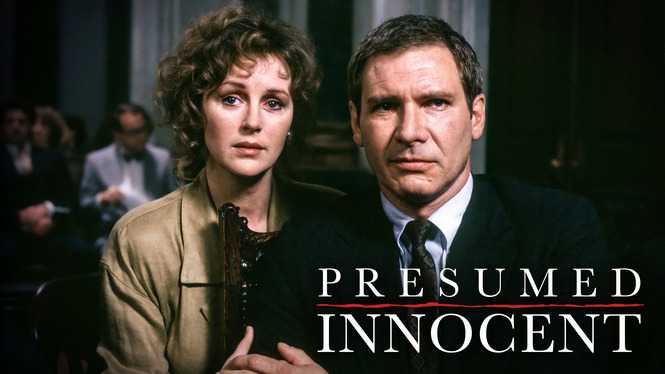
Harrison Ford, with a bad haircut, plays a deputy prosecutor (Rusty Sabich) who has an affair with a subordinate colleague, Greta Shacchi. She is young, exciting, a risk taker, and sexually promiscuous/irresistible.

Rusty, however, is a family man with a loving Plain Jane wife (Bonnie Bedelia), a nice suburban brick house, and a lot to lose. When Scacchi is brutally murdered, Rusty is given the task of prosecuting the killer. But the evidence implicates Ford and soon, he is fighting for his life, enlisting top flight defense lawyer Sandy Stern (Raoul Julia) to defend him. Turns out Scacchi slept with pretty much everybody in the entire judiciary system. Rusty just wasn’t all that special and she was no wide-eyed ingenue, despite his own obsession with his young charge.

Then the twist. [SPOILERS ON A 34 YEAR OLD MOVIE FOLLOW]

Bedelia, sensing the younger woman’s threat to her own family, is the killer! But it’s not enough for her to eliminate the competition, she must teach Rusty a lesson, tame him. So she not only killed his lover, but, per Wikipedia, “left enough evidence for Rusty to know that she committed the crime but did not anticipate him being charged.”

How?

She secreted Rusty’s semen and put it in the dead woman!

Jiminey Christmas! That’ll teach him.

[Side note – how depressing – Rusty and wife are clearly past child-bearing age and what, they’re still using condoms? I mean, I supposed she could have saved it another way, but that seems even more diabolically comical].

Thankfully, for Rusty, Stern is a capable defense attorney, the coroner misplaced the semen sample, a mug with Rusty’s prints found at the scene was disappeared by his investigator pal and even better, Scacchi also slept with the judge (Paul Winfield), for whom she was soliciting bribes.

Case Dismissed.

Maybe one of the dumbest whodunnits ever, the flick came on the heels of Fatal Attraction, the lesson of both being, “Don’t cheat on your wife. Seriously. Don’t.”

Still, it was plenty entertaining as long as you didn’t think too much about it.

Or perhaps think about it at all.

They just released a remake of this on Apple with Jake Gyllenhaal playing the role of Ford. We tuned in for the first episode, which was not good. Gyllenhaal is too young, too emotional, and borderline oafish, and the set-up is wearyingly predictable. Plus, the key to Scott Turow’s novel and the first picture is that Rusty is kind of ordinary schlub entranced by a sexpot. Jake Gyllenhaal is no ordinary schlub and can’t play one. Worse, Gyllenhaal’s Rusty is so into the Scacchi character, even post-mortem, he’s in therapy. Which we get to see. Which sucks.

If it is any consolation, apparently, they have taken care of any import of slut-shaming the Scaachi character. Which is kind of dumb, because Scaachi wasn’t slut-shamed in the original. Rather, she was just breezily promiscuous, manipulative, ambitious, and corrupt. Per Vanity Fair, now, she “cares” for Rusty – blech – a fact I don’t have the time or inclination to confirm.

I recently devoured Quentin Tarantino‘s Cinema Speculations, wherein he recounts his childhood and the succession of films his mother’s boyfriends would take him to see when he was a kid. Most of the films he discusses are ones you probably shouldn’t take a kid to see.

When my mother and father got divorced, I was six years old and my father was supposed to take us every other weekend for two nights. That arrangement became a little less frequent over the years, and by later grade school, he was taking me and my brother on a Saturday day and an overnight. We would spend the weekend with him at his apartment and pretty much do the same thing every time: go shopping, do his errands, look for stereo equipment, maybe spend an hour or two at his law office, go Putt Putt golfing, and then to Shakey’s Pizza in Rockville or The Charcoal Grille in Bethesda. Dinner was from Swanson’s, so you got a entree’, two sides, and a dessert.

And movies. We went out to the movies a lot. Or, we stayed in Dad’s apartment, where he had a special key that was hooked up to some kind of internal cable system, and we could watch close to first-run movies there instead of going out. Or just catch what was on TV.

My father loved movies, he loved to talk about movies, he lived for movies. So much so that he would go through a certain kabuki with me where he would let me take a look at The Washington Post and ask what I wanted to see. I would pick a Herbie the Love Bug and he would say, “Nah. I heard about this good movie.” And then, like Quentin Tarantino with his mother’s boyfriends, you went to see a lot of dark, heavy, violent flicks, like The Laughing Policeman, The Silent Partner, Death Wish, or The Taking of of Pelham One Two Three. Or the remake of Farewell My Lovely, Night Moves, or The Eiger Sanction.

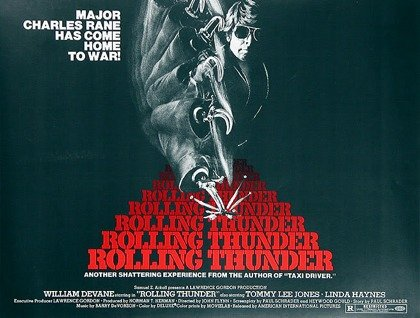
And Rolling Thunder. Which I noticed was available, and, as I couldn’t sleep anyway, I watched last night

Tarantino’s book has an entire chapter on the film, one of Paul Schrader’s first screenplays after Taxi Driver. Major Charlie Rane (William Devane) and Sergeant Johnny Vohden (Tommy Lee Jones) return to Texas after seven years of brutal captivity in a North Vietnamese prison camp. The adjustment is fraught, and even greater tortures are brought to bear on Devane, who is being treated by an Air Force psychiatrist (the just recently deceased Dabney Coleman) in his attempt to readjust. Tragedy ensues. Devane snaps. What follows is a classic 70s revenge flick.

The film travels wonderfully. There is a crisp foreboding to Devane’s return. While San Antonio welcomes him with marching bands and celebrations, and he is reunited with his long suffering and loving wife and the son who he last saw as a baby, Devane is damaged, and beneath the cheery gleam of a welcoming Texas, there is rot and danger. His son has anxiety issues. His wife has found another man (Devane says to her evenly, “you’re not wearing a brassiere” to which she replies, “oh, no one wears them anymore”). He cannot sleep in the house, preferring a cot in the garage.

So much is done well in the lead-up to the Death Wish-ian payoff, it goes unnoticed because, after all, this is a shoot ’em up, just desserts pic. Per Tarantino: ““This opening thirty minutes is a grippingly detailed character study, and by the time it’s over the audience doesn’t just sympathize with Charlie Rane, we really do understand him. Apparently better than anybody else in the film. It’s a much deeper depiction of the casualties of war than the [other movies of that era].”

I remember watching the film with my father. It is engrossing, both subtle and visceral, like a lot of pictures we saw together. It is also wildly inappropriate, also like a lot of pictures we saw together. I had trouble wrapping my head around something horrible that happens to Devane; not a spinning, vomiting Linda Blair kind of visual, but a brutality so smartly connected to a mundane part of the household, it just traveled with me, and probably not in a good way. Even last night, I fast-forwarded.

But on Sundays, when we were dropped off, I would not tell my mother about any of these movies, because I felt me and my Dad had this thing, this bond, and it was cemented in our little secret, Jujufruits and Junior Mints in hand.  And perhaps we did, although I’m probably mythologizing it. After all, my father needed to have something to talk to me about. Or at a minimum, just a two hour break from my babbling.

The picture is currently on Amazon Prime. Nostalgic for me but it really holds up.

As a social experiment, I would like to run this movie at Oberlin or Brown during Pride Week. In preparation, it would probably be best to stock up on smelling salts, fainting couches, and emergency room personnel. 

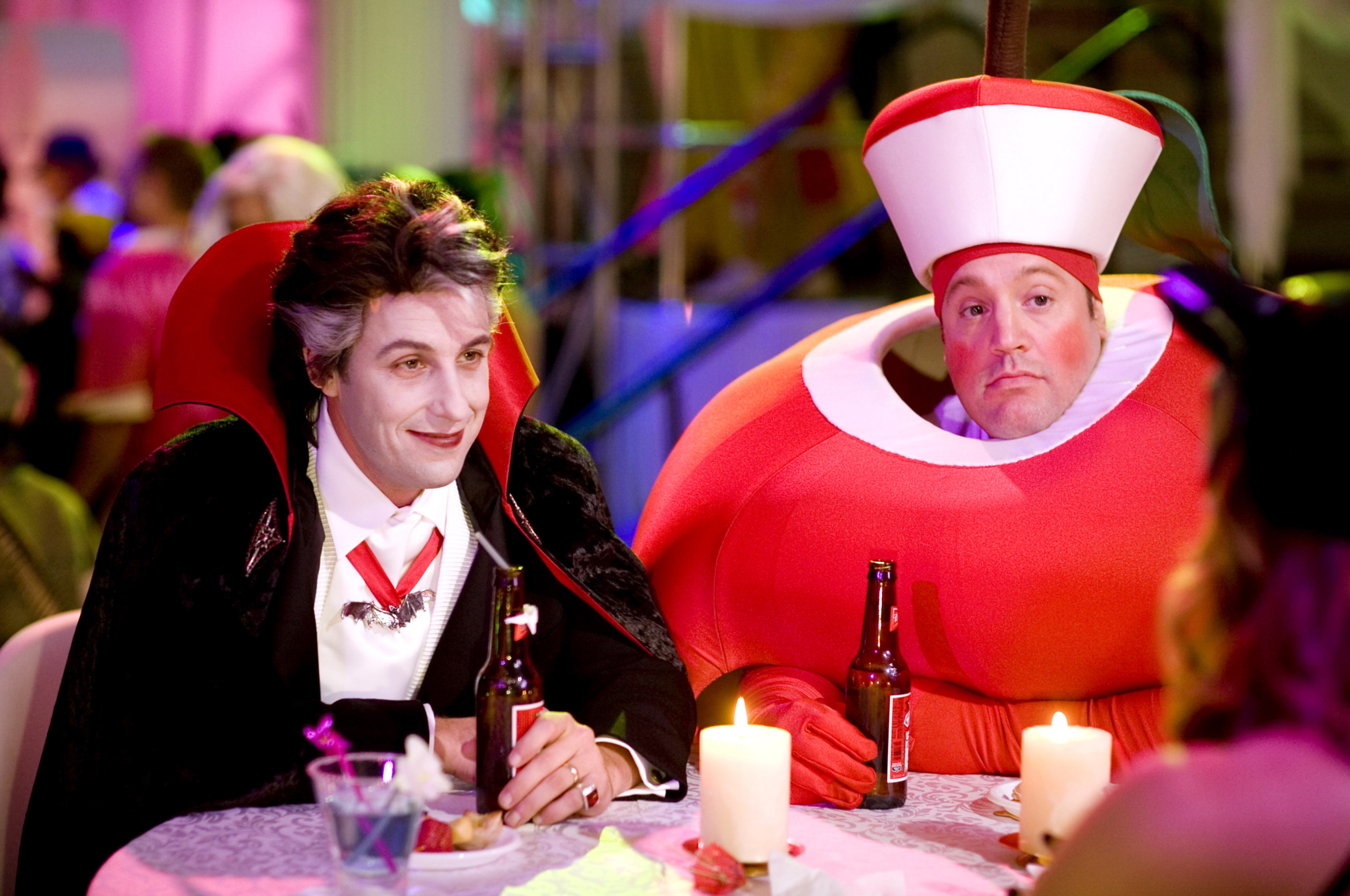
The set-up is standard Sandler. Two best friends and Brooklyn firefighters (Adam Sandler and Kevin James) pretend to be gay so they can establish a domestic partnership which will ensure benefits for James’ children. James is a widower. Sandler is a cocksman, bedding Hooters gals 5 at a time.

But then the city gets wind of the potential fraud, they must retain a beautiful lawyer (Jessica Biel) for whom Sandler falls, they become a cause celebre’, and hijinks ensue.

On the one hand, there’s scads of ass, tits, fart, balls, dick, poop, and pee jokes, overweight people are mercilessly skewered, and racial and ethnic stereotypes abound. No matter the subject or target, the Sandler brand is respected.

Indeed, this is the kind of landmine film that would normally result in serious reputational damage, like blackface. A few nuggets:

  • Rob Schneider plays gay and Asian. And by Asian, I mean, Bucktooth, Charlie Chan, as stereotypically offensive as it gets Asian. 
  • Dave Matthews plays in a wordless cameo where he mincingly makes eyes at Sandler. One can assume that his desire to make it to the big screen obliterated all judgment. 
  • When James goes to his child’s bring your father to school day, the following exchange occurs-

“Student:
Mr. Valentine, you said you’re a fireman.

Larry
Valentine: Yes, that is correct.

Student
Do you have two jobs? Because my dad said that you’re also a butt pirate.”

  • Dan Ackroyd plays their fire chief. His admonition? 

“Gentlemen, I have a very simple policy. What you shove up your ass is your own business.”

  • And when Larry springs his scheme on Chuck?

Larry
Valentine: Domestic partnership.

Chuck
Levine: Domestic partnership? You mean like faggots?

Larry
Valentine: No, I mean yeah but, no, not us. Obviously. Just on paper.

Chuck
Levine: Paper faggots?

Larry
Valentine: Well, the accepted vernacular is “gay”… but yes.

I mean, if Gone with the Wind requires a warning, this thing should come with a signed waiver. 

So, how did anyone who had anything to do with this film remain unscathed? I have thoughts.

First, the consistency of the folks with the torches and pitchforks has never been their strong suit. Some people get eviscerated, others get a pass. Here, everybody seems to have gotten a pass, which is to the good. I suspect the body count would have simply been too high.

Second, for all of its excess, the picture is “up-with-people, we-are-the-world” inclusive.  While the film luxuriates in its offensive stereotypes, it offers redemptions (unlike, say, Animal House, which is similarly politically incorrect yet doggedly cynical).  At the end, Ackroyd provides the necessary immunity:

No matter whom we choose to love, be they heterosexual, homosexual, asexual, bisexual, trisexual, quadrisexual, pansexual, transexual, omnisexual or that thing where the chick ties the belt around your neck and tinkles on a balloon, it has absolutely nothing to do with who we are as people.”

The fist of stereotype encased in the velvet glove of love.

Third, it is also not terrible. Like with Get Hard, I laughed more than I expected to and was impressed by the sheer gusto of James and Sandler. A solid A for effort if not execution. 

Fourth, the anti-gay bigots get a comeuppance (which is a word that, were it to be in the script, would soon be followed by “ass” or “butt”). Sandler even gets to play Harrison Ford amongst the Amish in Witness, because, as everyone knows, gay people don’t punch their tormentors, they only sass them. 

Finally, the picture was fortunate to precede the most recent spate of witch trials (see Bradley Cooper’s insensitive Jewish nose in the new Leonard Bernstein endeavor).  This is 2007, which seems modern, but it is almost a quarter of a century ago. 

Watch it.  It’s worth the time for historiographic purposes. And the ass, tits, fart, balls, dick, poop, and pee jokes.

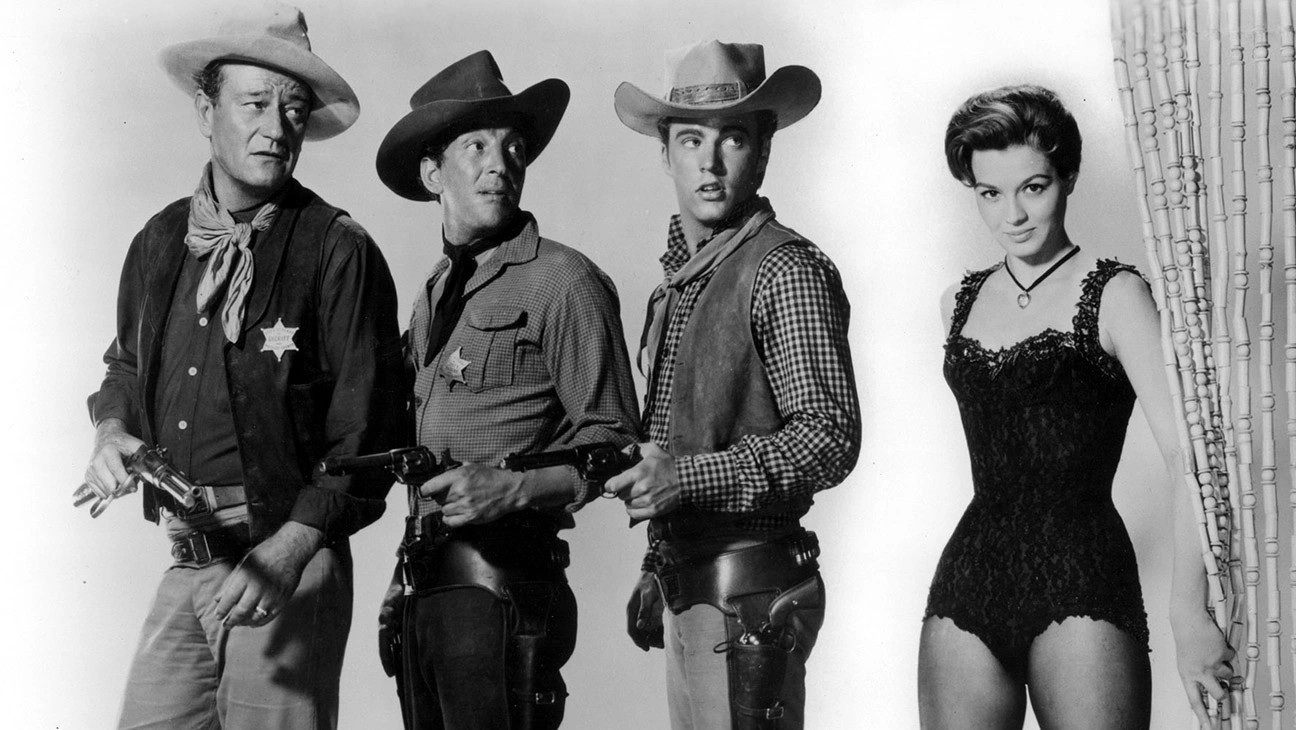
Howard Hawks’ western is competent, light, entertaining, and currently on MAX. The film also sports a few surprises, the most enjoyable of which is the performance of Dean Martin as the shaky alcoholic deputy trying to go cold turkey. It’s a hell of a dark and moving turn from a guy who you normally think is all easy-breezy, no heavy lifting.

Other notes.

1) If you have Dean Martin and Ricky Nelson in a movie, they’re going to sing, and while it’s a little bit clunky when they do, the tunes are still a lot of fun. It would’ve been better if they just had Nelson playing guitar and Martin and Nelson singing together in the live shoot, but I presume the sound obstacles were too great, so they used a studio track and lip-synched instead. The dissonance between the music and the normal soundtrack is dramatic, but I imagine audiences in 1959 didn’t give two hoots.

2) I laud Martin’s performance, but Nelson is pretty damn good too as a youthful medium cool gun hand. He’s not asked to do much, but what tasks are given, he fulfills well.

3) Wayne made the picture in part as a rebuttal to the more cynical High Noon. Per Wayne, “A whole city of people that have come across the plains and suffered all kinds of hardships are suddenly afraid to help out a sheriff because three men are coming into the town that are tough. I don’t think that ever happens in the United States.”

4) Other than The Quiet Man, this is the only film I can remember where John Wayne is a romantic lead. It half works. Wayne smartly plays flummoxed, and Angie Dickinson’s magnetic performance nearly carries the day (when she kisses Wayne the first time, and he is stunned, they kiss again, and she says to him, “it’s even better when two people do it”).  Romance works a little better in The Quiet Man, because Wayne was not asked to woo Maureen O’Hara so much tame her, an endeavor that seemed a lot like breaking a colt.

5) If my recollection is correct, Kevin Spacey modeled his performance in L.A. Confidential on Martin’s here. You can see it. 

6) Trigger warning. Back to Angie Dickinson – va va voom! 

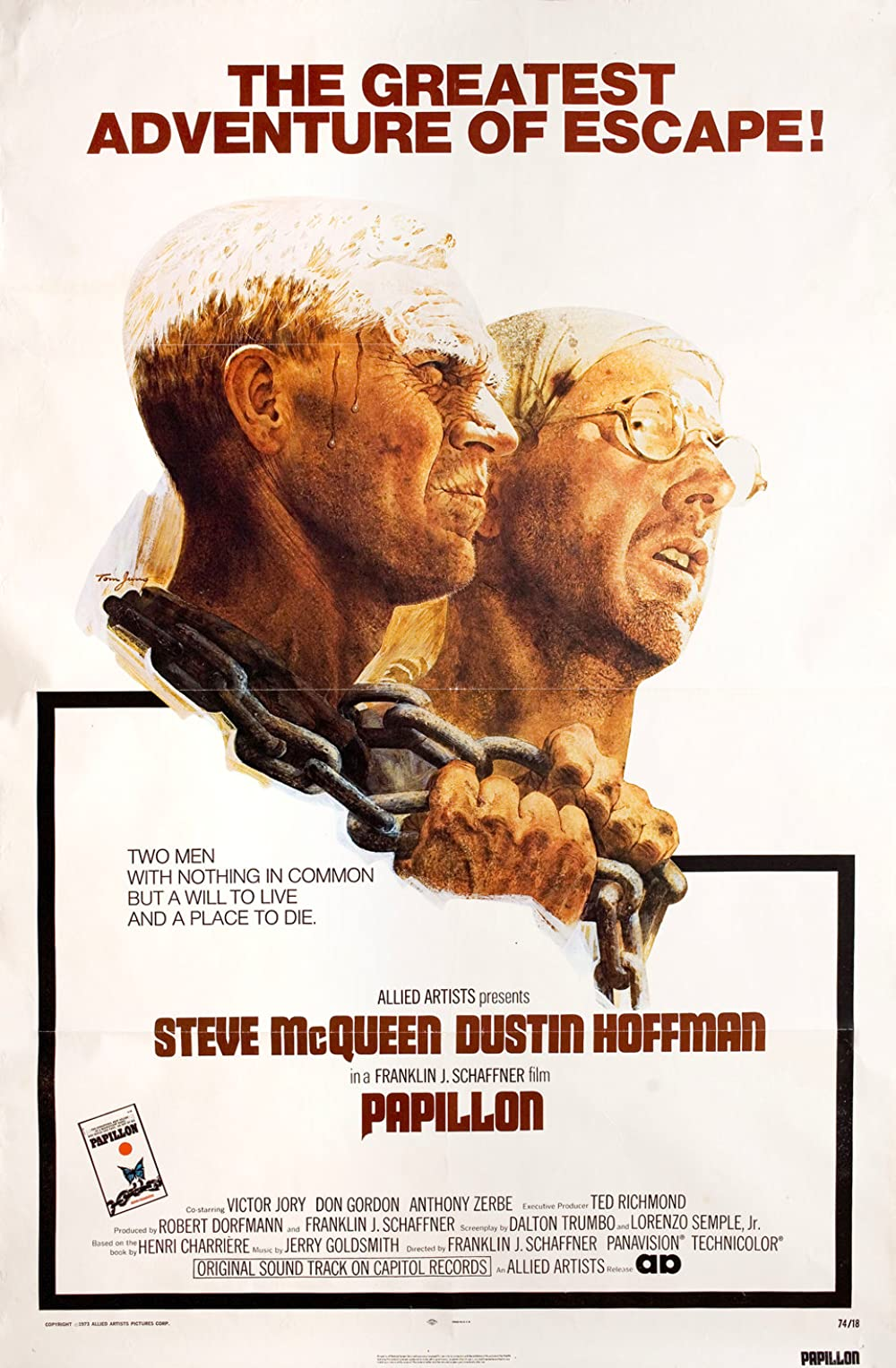
Franklin Schaffner’s (Patton) big-budget adventure/escape flick is competent, professional, well-acted (even if Steve McQueen and Dustin Hoffman have no interest in playing French people) and occasionally imaginative, particularly McQueen’s dream sequences as he fights solitary confinement and near-starvation. McQueen is the title character, sent to French Guiana for killing a pimp, where he meets the bespectacled Hoffman, a forger whose only protection is the ability to bribe officials. Their relationship deepens as McQueen, the Cooler King of The Great Escape, naturally attempts escape again and again here.

You may like the flick or not, but it is noteworthy for one scene, below. That crocodile has its snout wired shut and sure, it is drugged to the gills, but those are two massively bankable stars messing with a real crocodile. Nuts!


On MAX (formerly HBO Max).

I’ve seen this film, conservatively, a dozen times. I cannot turn it off. It is flawless, and I never tire of watching. It is not just an exemplary historical drama and period piece, which would appeal to me more than others, but it is one of the finest films ever made. 

Based on a Patrick O’Brian novel, it is 1805, the time of the Napoleonic wars, and we travel with Captain “Lucky Jack“ Aubrey (Russell Crowe), a protégé of Lord Admiral Nelson. Aubrey’s ship, The HMS Surprise, is hunted by, and then pursues, a French privateer with twice her guns and speed. As Aubrey drives his crew and spars with his more humanistic friend and subordinate, ship surgeon Stephen Maturin (Paul Bettany), we are immersed in the customs, allegiances and frailties of the crew.  Director Peter Weir (Witness) provides the feel of an early 19th-century war vessel, a routinized machine held together by the lash, grog, duty, honor, deep-seated universal superstition, and a shared sense of oneness with the sea.

The action sequences are jaw-dropping. The final sea battle is the most effective and stunning rendition of combat on film, save for the opening scene of Saving Private Ryan.  Weir is expert at close quarter action and translating the ebb and flow of a battle that has been explained in its strategy at the outset. What follows is a stunning, intelligible melee’, and the only respite is a brief, awesome aerial tracking shot to provide scope and a quick catch of breath. And then, Weir dives right back in.  The scene is even more impressive given the film’s commitment to authenticity.  As with Spielberg’s triumph, Weir has made, in the opinion of one reviewer, “one of the most historically accurate movies of this century”. 

Yet for all its visual delights and precision, the film is also memorable in its depiction of numerous secondary characters. Yes, the philosophical interplay between Aubrey and Maturin is well-honed, and both actors more than occupy the roles – their engagement is both familial and genuine, with a constant pull between friendship and chain-of-command. But the midshipmen, some as young as 12, and the salty crew, are the true stars. To see the former in such distress, under such pressure, and in the midst of terror and violence is heart rending. When one (Max Pirkis) must have his arm amputated, it is hard to choke back tears, such is his strength and vulnerability (if you have a son, it is doubly difficult). The mental breakdown of another young sailor is equally poignant. These boys, thrown into carnage, still do their duty, and Weir goes to great lengths to portray their bravery in tandem with their innocence. 

The film is also unreservedly old fashioned in its championing not only of manly camaraderie, but valor, pluck, and devotion to country. Most war films follow a certain post-Vietnam philosophy, often clumsily injected into period pieces of prior times. The combatants’ first devotion is to each other and then to the goal, and they are guided by training and solidarity. When the training fails and/or the goal is revealed as corrupt, or bleakness eclipses all, things break down, and atrocity normally follows. Which is all very modern and ignores any sense of longing for the sting of battle or patriotic instinct, both generally derided or characterized as the province of dimwits and cannon-fodder. It is always the smart guy anti-hero who says, “This is hell, we need to get out alive and with our souls intact, and [for the less cynical] the only thing that matters is the man next to you”’ or some such trope. 

Not here, as Weir flatly rejects anachronism save for a few moments with the good ship doctor, but even Maturin’s more liberal stances are suited to his position.  To put a finer point on it, there is a wonderful scene where one of the young midshipman, Calamy, implores Aubrey to share a tale of his service under the great Nelson. At first, Aubrey parries the request with a joke (Nelson once asked him to pass the salt, he laughs). The boy’s disappointment is palpable, and then Aubrey obliges:

Capt. Jack Aubrey The second time… The second time he told me a story… about how someone offered him a boat cloak on a cold night. And he said no, he didn’t need it. That he was quite warm. His zeal for his king and country kept him warm.

[Maturin sighs] 

Capt. Jack Aubrey I know it sounds absurb, and were it from another man, you’d cry out “Oh, what pitiful stuff” and dismiss it as mere enthusiasm. But with Nelson… you felt your heart glow.

[him and Calamy share a smile] 

Capt. Jack Aubrey Wouldn’t you say, Mr. Pullings?

1st Lt. Tom Pullings [sincerely]  You did indeed, sir.

As fewer people know or cherish history, it will become a less desirable vehicle for entertainment. And that just ain’t going to change.  But there will be this film and a few others that stand the test of time. Huzzah!

On HBO Max. 

A WWII thriller and a staple on the Channel 7 four o’clock movie growing up, Steven Spielberg once named it as his all-time favorite war movie. I don’t know about that, but as a kid, I was pretty jazzed.

Richard Burton and Clint Eastwood lead a group of commandos dropped behind enemy lines in Bavaria – where the barmaids are buxom and the enemy plentiful – to kill an American general who has been captured by the Nazis. They must get to the general before the Germans extract critical information from him.

The picture is more than competent (though overlong at nearly 2.5 hours; in the 70s, on TV, it was cut to 90 minutes, and did not suffer for it). The movie is also smart, as much a whodunit as war thriller, and uber-violent to boot. 

One major problem, however, is the setup. The American general is held in a castle fortress accessible only by cable car. Putting aside the suspension of belief necessary to accept ingress and egress, which is right and proper, the castle also houses hundreds of soldiers, heavy equipment, a barracks, a helicopter pad, a radio room, and enough ammo and explosives to blow itself up. All, of which, apparently, was ferried up in two cable cars that hold 8 people a piece. 

Another problem is just a terrible cheat. In The Dirty Dozen, Lee Marvin and Charles Bronson, dressed as German officers, must mingle with the Nazis in the chateau they plan to blow up. The fact that only Bronson knows how to speak German amps up the dread, leaving Marvin to play it stern and taciturn whenever a real Nazi speaks to him at a pre-all-hell-breaks-loose soiree’. Quentin Tarantino does the same thing with Brad Pitt at the film premiere in Inglorious Basterds , though he plays a bit more comic. But Tarantino also utilizes the speaking of German, or, rather, the sign language of a German, to brilliant, suspenseful effect, when Michael Fassbender makes a critical error and is thus found out, which was presaged in The Great Escape:

But I digress. 

Here, as Burton and Eastwood approach a checkpoint, where their papers are to be reviewed, you wonder which one is going to speak German.  I assumed Burton.  Then again, I never assumed Eastwood would sing in a musical, but Lord Almighty, that’s him singing Gold Fever in Paint Your Wagon:

So, who knows, right?  Well, it turns out, neither of them speak German.  Instead, they speak English LOUDLY, and the guards figure they don’t want to interrupt two German officers speaking loudly. Translated? Neither actor wanted to learn a little German, so we are left to believe that the guards heard German, even though we did not. Very lame.

On the plus side, Eastwood is Eastwood cool and he conservatively, single-handedly, kills at least 100 Nazis. At 10 years of age, I was sold. There’s also a fair amount on double-crosses (the picture is written by Alistair MacLean), and while I can’t prove it, I suspect Tarantino saw the picture and it informed his unparalleled French cellar bar shootout in Basterds.

On HBO Max.  

P.S. After writing my suspicions about Tarantino, I Googled a bit and now claim semi-vindication. Tarantino has lauded the picture on numerous occasions, particularly during his promotion of Basterds

Filmvetter has gaps. Many gaps. Truffaut, Godard, and Bergman come to mind.

And, until now, John Cassavetes.

I knew that Cassavetes was an influential filmmaker. Martin Scorsese credits two films that most informed his career: Orson Welles’ Citizen Kane and Cassavetes’ Shadows.  Quentin Tarantino also cites Cassavetes, which is strange, for, as one writer observed, Tarantino makes films “in which almost no element comes from life,” whereas Cassavetes’ work is infused with realism. Others who refer to his work include Jim Jarmusch, Hal Hartley, and the aforementioned Godard.

But to me, Cassavetes was the nasty, cynical guy in The Dirty Dozen and the husband in Rosemary’s Baby

Until I saw this picture, currently available as part of the Criterion Collection on HBO Max.

Ben Gazzara (“Cosmo”) plays a strip club/cabaret owner in Los Angeles, when showing some thigh and breast still required the trappings of a “show”. His stage girls are his children, and he is a small fish in a big pond. He just doesn’t know it. Until his big shot routine results in a sizable gambling debt to the local mob, who decide to absolve him of the “loan” in exchange for lethal services.

The film is visceral and immediate yet leisurely.  Cassavetes brings you right in on the actors, often letting the dialogue of others register on the one. I was reminded of Boogie Nights and the long take on Mark Wahlberg right before the drug heist, but while that was showy, if effective, Cassavetes’ style is anything but. Instead, it feels natural, almost a controlled improv. Cassavetes gave his actors maximum room, eschewing the Strasberg Method as tired and narcissistic.  Per Matt Zoller Seitz, reviewing Ray Carney’s Cassavetes on Cassavetes: “Among other things, Cassavetes hoped to offer young actors an alternative to the Method, a sensory- and memory-centered approach that was taught, in personalized form, by Actors Studio founder Lee Strasberg (whose students included James Dean, Robert Duvall, Robert De Niro, Elia Kazan, Shelley Winters and many others). Variants of the Method encouraged actors to draw heavily on their own experiences and feelings, and to treat hesitancy and inarticulateness as gateways to truth rather than obstacles to clear expression. A number of Method actors personalized this approach and had great success. But Cassavetes felt that the Method, and Strasberg’s Studio in particular, had become a different sort of factory, and he was ‘…resentful about the power the Studio exerted over casting directors, which he felt was what had held him back early in his career,’ Carney writes. ‘He was scornful of what he called the guru aspects of the Studio and pointedly described his and Lane’s school as anti-guru. He felt that the Method was more a form of psychotherapy than acting, and believed that although figures like (Montgomery) Clift, (Marlon) Brando and Dean had had a salutary effect on acting in the late ’40s and early ’50s, by the mid-’50s the Method had hardened into a received style that was as rigid, unimaginative and boring as the styles it had replaced ten years earlier. The slouch, shuffle, furrow and stammer had been turned into recipes for profundity. The actor filled the character up with his own self-indulgent emotions and narcissistic fantasies…Normal, healthy, extroverted social and sexual expression between men and women dropped out of drama. Inward-turning neuroticism became equated with truth. The result was lazy, sentimental acting.’”

There is none of that in this film, which feels so authentic as to be revolutionary. The picture is riveting, grounded, and wholly personal, with an L.A. devoid of the well-know landmarks, not purposefully omitted but rather, naturalistically absent. Cassavetes sets up a noir-ish crime pic, but perhaps bored with the endeavor, detours repeatedly into Cosmo’s crisis of identity.

Gazzara is captivating. Cassavetes trains in on Cosmo’s every conceit when playing the big man. Cosmo’s descendant is none other than Burt Reynolds’ Jack Horner in Boogie Nights, a semi-proficient pornographer who makes himself father to the talent and creates his own world, one where he is Fellini. Similarly, Cosmo treats his girls like perpetual prom dates and tells the patrons in his seedy club, “I’m the owner of this joint. I choose the numbers, I direct them, I arrange them. You have any complaints you just come to me and I’ll throw you right out on your ass.”

When his powerlessness is revealed, Cassavetes lingers on Cosmo’s doubt and his insistence on maintaining the veneer of control and aplomb reveals a hollowness that progressively evinces during the film. But there is also decency and honor, one that becomes difficult for even the mobsters to ignore.

Savaged by the critics at the time, a classic.