Archive

2018

Image result for Private life

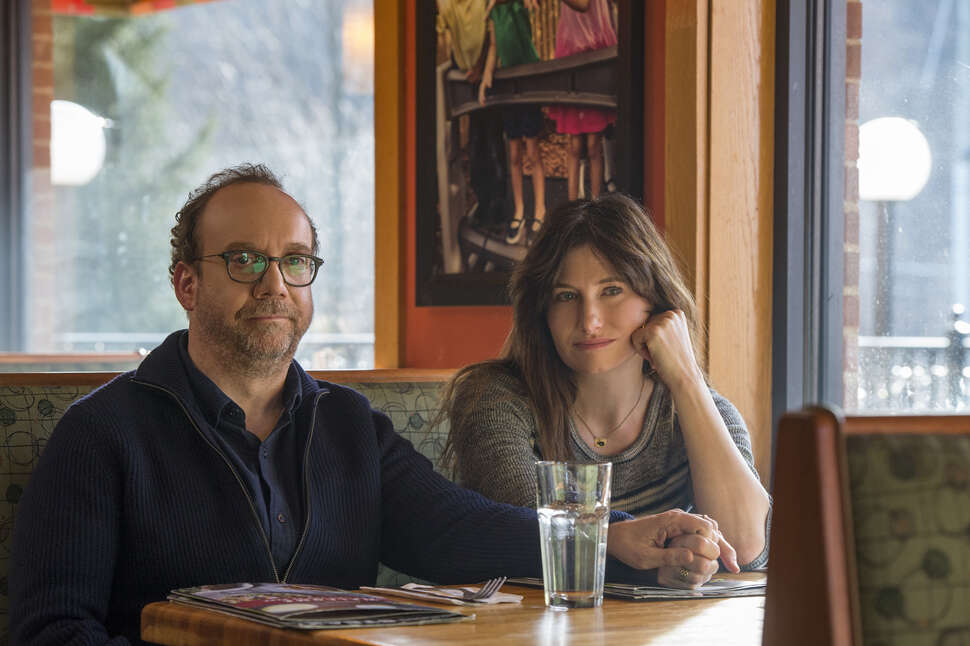
Writer-director Tamara Jenkins’ (The Savages, Slums of Beverly Hills) story of a driven couple (Kathryn Hahn and Paul Giamatti) struggling to have a child of their own is alternately heartbreaking and frustrating.  We see the two put through the wringer of in-vitro fertilization and surrogate scams, poked and prodded in clinics while investigated as to suitability for placement, and all of it voluntary,  a critical focus of the film, because rather than a “poor us” weeper, we see them as in many ways masochistic.

The couple is often unsympathetic, as their singular desire creates a fair amount of collateral damage.   They also suffer bouts of self-loathing as the fabric of their relationship is torn (a scene where Giamatti broaches whether he even wants a baby is piercing).  But when it gets bad for the two, Jenkins gives us a glimpse of who they were – and perhaps still can be – before their primal quest.

Eventually, the intercession of a sweet and guileless niece (Kayli Carter, who has the same commanding presence as Shailene Woodley in The Descendants and Jennifer Lawrence in Winter’s Bone) helps to remind them of the wages of their desperation.

Sometimes a tad talky and quaint, but for the most part, very strong.  On Netflix.

Image result for Operation Finale

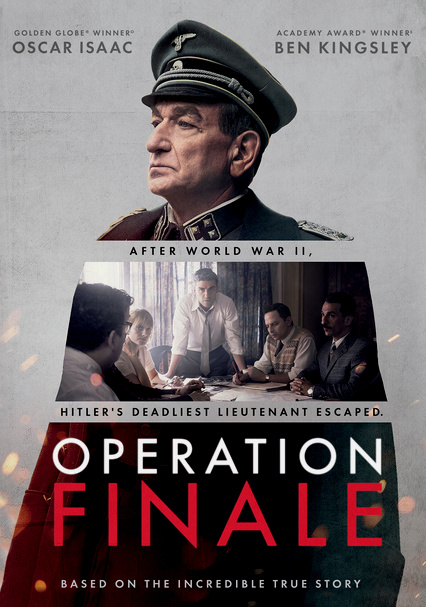
Chris Weitz’s (About a Boy) largely faithful recreation of the capture of Adolph Eichmann is sober, competent and a little dull.  Peter Malkin (Oscar Isaac) is the focus of a several member Israeli infiltration team sent to grab Eichmann (Ben Kingsley) from Argentina and covertly spirit him away to Israel for trial.  All well and good, even if the film drags until they actually get to South America.  When on the ground, the film picks up, but there really isn’t much to the operation.  They jump Eichmann at night as he gets off his bus and keep him in a safe house, where his removal is delayed for several days, thus allowing Isaac (whose sister, niece and nephew were killed in the Holocaust, which we see in flashback) to engage the monster in an effort to get his signed consent to extradition.  The best part of the picture is Kingsley, who conveys Eichmann’s urbane precision and amorality in equal parts.  But there isn’t much to the exchange.   Isaac seems too much the professional to be flustered by the engagement, and Weitz is too cautious in the opportunity.

Perhaps sensing the film’s lethargy, Weitz adds a fictional Argo-like race to the airport, but it lacks any real punch.

A perfectly inoffensive picture.  Wait until it’s free and you have little in the way of alternative entertainment options


D63D4F6A-7EC1-493E-A2E0-52D923FCE904

I had the misfortune of catching half of Cate Blanchett’s fun, sumptuous and engaging Elizabeth recently. The comparison makes this turdfest even more unbearable.

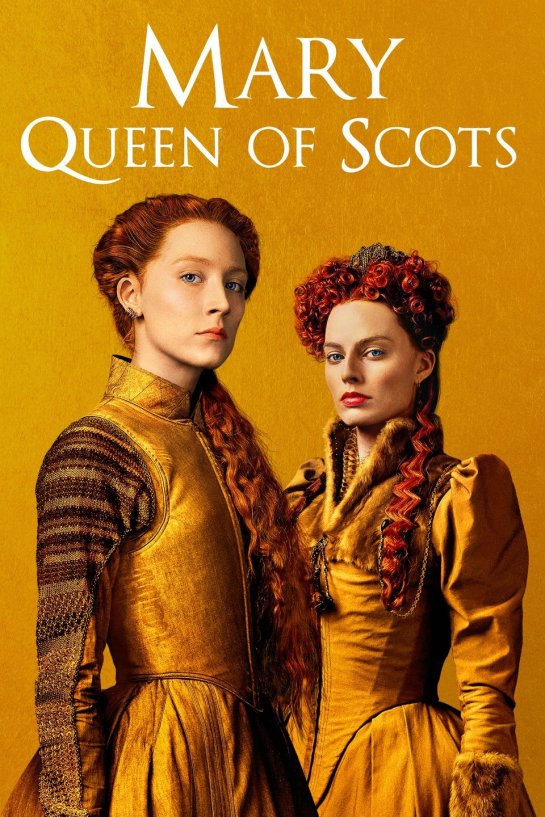
Sairose Ronan is fiery, wild eyed, and indignant as Mary Queen of Scots, perpetually perturbed and always speechifying.  Margot Robbie is her nemesis Elizabeth, but Robbie appears way out her depth. She acts like she’s in a high school production.

The performances, however, are the least of this picture’s woes.

The script is charmless and dull. Intrigue has no deftness. People just argue briefly, declare and then act.

The lone battle scene is so badly handled, you don’t know what the hell is happening.  It presents like kids playing war in the backyard.

The script is also obsessed with its feminist hot take, particularly with Mary, who is put-upon by a man’s world and way ahead of the curve.  Mary’s ladies in waiting are like The View, and Mary is forced to rape her homosexual husband (very unconvincingly) to have an heir.  John Knox inveighs against Mary, not because she was a Catholic, but because she was a damnable woman who enjoyed sins of the flesh (he calls her “whore of Babylon”, “strumpet” and “harlot” in one speech).  We even get to see Mary menstruate.

Elizabeth gets in on the act as well, hectoring her male advisors with “we could do well worse” than Mary as queen and bemoaning Mary’s fate with “How cruel men are.”

Girl power, apparently, trumps Power power.

Indeed, when they eventually meet, there is no enmity. Just a couple of gals dishing on inequity, the glass ceiling and the unfairness of it all.

Until Mary gets wild-eyed and entitled and the girl power card loses its oomph.

Then, bitches get stitches and Mary is locked away, eventually to be beheaded.

The writer secures revenge in the post-script, however, lording Mary’s fertility over Elizabeth’s mere 44 year reign.

Modernity infects this dog in many other ways. When Mary’s gay attendant stops just short of breaking into a show tune, and pulls himself up short, the modern and reformed Catholic soothes him with a “be whoever you wish to be with us” (when he sleeps with Mary’s husband, kneels before her and begs for forgiveness, she soothes him again – “you have not betrayed your nature”).  Before battle, she assures one of her Protestant soldiers that should they die, they will all see the same God.

Best line. “I will not become a lady Henry VIII dispensing husbands as he did wives.“

A massive bag of crap. And no fun!

1BE80664-A59C-438D-94BE-1558746C7053

Finally got a chance to see this. It’s bad. Green Book bad.

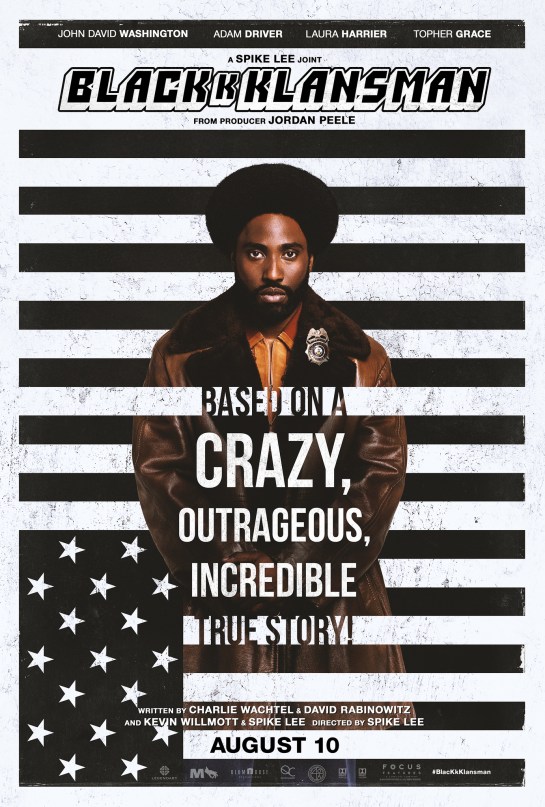
It starts as a mildly amusing, slick sit-comish comedy structured on a ridiculous premise – in the 1970s, black Colorado cop Ron Stallworth (John David Washington) calls the KKK to join up, and they are eager to have him, so after first contact, he has to use his white partner (Adam Driver) for face-to-face meetings, which creates unnecessarily close shaves.

Why not have Driver simply make the calls and handle the meets?

The answer is – wacky hijinx!  And there’s plenty of that.

Eventually, the funny gets less funny and the picture lapses into an absurdist procedural punctuated by overt, earnest philosophical discussions that would make kids in an Oberlin coffee house roll their eyes.  

Perhaps sensing the lightness of the fare and his own elapsing clock, Lee goes heavy at the end, utilizing actual footage from the Nazi rally in Charlottesville.  It’s like appending pictures of James Meredith’s shooting at the end of a poignant Different Strokes.

It’s a cheap ploy that seeks to elevate the zany caper that preceded it to serious statement.  Worse, as pointed out by Boots Riley, director of the infinitely better Sorry to Bother You, Lee’s film is based on a true story, and a less convenient aspect of that story might be that the real Stallworth was infiltrating black organizations to their detriment.

Ah well.  

You gotta’ give it to Lee, though. He knows his audience and he oversauced this goose good. Heck, he almost pulled it off. 

Alas, Oscar found another cheesy race fable to take home the gold. 

Curses!

Related image

This is a confounding but worthwhile picture.  It tries to be many things.   A heist caper.  A feminist tract.  A racial observance.  A cynical statement on corruption.  A twist flick.  It fails to be complete in any of these pursuits, but that doesn’t make it unenjoyable, just vexing.

Steve McQueen (Shame, Twelve Years of Slave) brings his meditative touch to Chicago, where the widows of a group of professional criminals (think the gang in Heat; in fact, the widows pick up a driver on the fly just like in that flick) must pick up where their flawed husbands have left off.  Their pursuit is intertwined with romantic, political, and familial entanglements.

There’s a lot here, but eventually, the film falters because it takes on way too much.  This is a mini-series sized saga, and given how well McQueen does with various scenes, you’re eventually frustrated at the truncated resolutions.  Still, the performances are stellar.  In particular, Viola Davis, even saddled with an ever-present and ridiculous West Highland White Terrier, is penetrating, and as villains go, Daniel Kaluuya (Get Out) is a top ten.

In post-WWII Poland, a pianist and an ingénue he has selected for the national cultural ensemble fall in love.  He escapes through Berlin on a concert tour, but she is hesitant, and they are separated.  They see each other every few years, and eventually, they are reunited in Paris, free.  But they cannot make a go of it, she retreats back to Poland, and in what is supposed to be a grand gesture of everlasting devotion, he admits his sin against the state, returns to his native country and does 15 years hard labor, which, coupled with torture, destroys his fingers.

I suppose this was supposed to connect as a moody, timeless, passionate yet doomed romance.  But the two leads, who alternately smolder and pout, are so childish and impetuous, it’s hard to gin up much sympathy.  Indeed, when she makes it to Paris, they bicker like children, she constantly kvetching about his prior lover and Western ambition, he inexplicably distant (in fact, he often looks as if he knows he made a very big mistake in working so hard to be with her but can’t bring himself to admit it).

Neither character acts in a manner showing any deference to their good fortune.  These aren’t lovers separated by culture or prior marriages or obligation, but rather, an iron curtain where, to be on the wrong side of it, you lose your freedom and you can get your delicate pianist fingers mangled by 15 years of forced labor and torture.  And they surmount that curtain!  So, when they chuck it for seemingly pedestrian reasons, and he insists on his grotesque punishment, you don’t care.  Well, maybe you will.  The movie is very well regarded.  But I didn’t.

On the plus side, the movie is beautifully shot and blessedly short at under an hour-and-a-half.

Nominated for Best Director, Best Foreign Film and Best Cinematography and available on Amazon.

7C9B9607-6014-41E4-8234-36FA8FCA7AC5

A filmmaker who can communicate his vision entirely is a rare thing, even if the vision is too reliant on cruelty.  Yorgos Lanthimos’ The Lobster was as original as it gets, but also sterile, unfeeling and unpleasant. The Favourite, a period piece of court intrigue, is more traditional but it shares The Lobster‘s iciness.

Rachel Weisz and Emma Stone attend court and vie for the attentions and favor of Queen Anne (Olivia Coleman). Weisz wants power, Stone security. They share a weary, dim view of their male dominated world; the men are for the most part fops, suck-ups, and/or brutes, and it is amusing to watch Weisz and Stone endure them.  And while their war has its moments, their single-minded pursuit of the upper hand is rooted solely in the base instincts of survival, so it’s hard to gin up any empathy. You’re detached from their fates, and the accompanying pain. They flash as human, but they don’t really seem it.

The performances, however, are stellar.  Coleman’s turn as the mercurial and insecure queen, for which she won the Oscar, is a masterful blend of the sympathetic and comic. She is the ultimate tormentor, but ironically, she’s the only one you feel bad for.

It’s a technically adept yet a frigid and un-involving picture.  Lanthimos (who reminds me of Darren Aronofsky in his penchant for brutalization) also has a morbid fascination with bodily functions, which doesn’t help.

Image result for Solo movie

The crossover movie that speaks to kids and adults is a tough trick.  Guardians of the Galaxy is the model.  The characters have to be winning, It has to be smart but not obtuse, and what can be mutually enjoyed (action, wise-crackery) must be primo.

Solo fails all of these prerequisites.  At the outset, we get “Long ago, in a galaxy far far away . . . “  Followed by several more paragraphs setting the scene and presenting the quest, which in this case, is the obtainment of everlasting life and power enough to challenge evil in the galaxy.

I’m fucking with you.  The quest is for fuel.  Yup.  Fuel.  I mean, not as bad as one of the Lucas pictures (1, or 4, who knows?), where, if memory serves, the primary issue was taxes.  But still, pretty bad.

The dull goal is matched by duller characters.  Young Han Solo (Alden Ehrenreich) apes the original via the sole utilization of a smirk.  He’s a better choice for a young Paul Rudd, not Harrison Ford.  He’s not as bad as Hayden Christenson as Darth Vader the teen, but he’s close.  After him, bad guy Paul Bettany, well, his thing is that he gets angry.  And then there is Woody Harrelson, the grizzled smuggler and thief, who keeps telling Han, “Don’t trust anybody.”  Then he pulls him close, points to his own head, snaps a Polaroid, waves it, blows on it, shoves it in Han’s pocket, and says “Anybody!”

After these dolts, it’s just a bunch of facsimiles of all the weird variations one can find in the galaxy.  “Hey look, it’s clarinet head!”  “And there’s suckhole face!”  “And does he have 5 arms?”  “Ah, I get it!  That’s why they called him ‘handy’ a minute ago.”

And then there are the droids.  In the first picture, we had the gold guy who spoke with a British accent and was amusing, like having a character from Downton Abbey in the future.  He said things like “Goodness!  Oh my!” and “My heavens!” whenever someone shot a laser near him.  I could see a droid maker coming up with such a program, a little pizzazz in the automaton that normally performs light-dusting and household repairs.

Now, however, all droids have been imbued with feelings and opinions and agency.  Who the hell wants a droid that may start a wage strike?  The writers, that’s who.  It’s too ridiculous, even for this pretty ridiculous vehicle.

The script itself is similarly idiotic.  The characters just bounce from place to place for small and uninteresting reasons.   “Who is that?” Is generally followed by a long definitional response.  “That was close!” elicits “Not as close as the parseck gleep glop on Miki Roo Roo!”  Characters say banal things to Solo throughout, followed by or including “kid”, as in “You got moxie, kid!” Or “I’ll give you this.  The kid’s got guts.”

That leaves the action sequences, which are required to dazzle.  They don’t.  They’re rote and uninspired, delivered in a look dark as dishwater.  Worse, the soundtrack is phoned in, as if the John Williams score was presented as Muzak on an AM radio in Harrelson’s pocket.

This entire picture feels like a 4-D Disney ride that would be fun for 7 minutes.

But trapped in it for over 2 hours? Excruciating.

And you know Han and Chewy make it. They have to. So, there’s no drama. Nothing hangs in the balance.

Donald Glover does a decent young Billy Dee Williams and Emilia Clarke (Game of Thrones) lends some gravitas to the endeavor.

On Netflix.



EFDFA64D-0815-48BE-B103-65A482CB8851

When Spike Lee acted like a petulant fool after BlackKKlansman lost Best Picture to Green Book, it seemed silly, and given the mediocrity of his own picture, a sad stunt.  But I get it Spike. I apologize.

The story of classical pianist Dr. Don Shirley (Mahersheela Ali) who enlists Italian bouncer Tony Lip from New Yawk (Viggo Mortenson) for a Southern swing of concerts in 1962 is so chock full of cliche’, it borders on spoof.  Ten minutes in, you know that the hotheaded Tony will hit a cracker cop, the cultured Shirley will play boogie woogie in a honkey tonk, and they will teach each other, oh, so many things.

Sadly, it is not a spoof.

This picture is atrocious. Simplistic, repetitive, nonsensical, and boring.  It has no idea what it wants to be. A civil rights era Odd Couple?  A moral tract about role reversal and rejection by one’s own race?  A road movie?  It does none of it well.

But it has a white guy teaching a black guy the joys of fried chicken, so, there’s that.

The characters lack any consistency. When black men perform repairs at his apartment, Tony throws away the glasses the men drink water from, such is the viral nature of their cooties. But in the blink of an eye, he is driving a black man around, comfortable not only with his boss’s skin color, but his homosexuality.

’Cause he’s been around nightclubs, and tings, day get, complicated. Mangia, manigot, caprese, spumoni, to da’ moon, Sbarro!

And while Shirley is supposedly working the southern swing in solidarity with Nat King Cole, who was beaten years earlier for playing white music, he also inexplicably plays private affairs at the homes of cartoon bigots. For what, I don’t know. Cash?  Self flagellation?  And when rich Southerners have a cultured pianist perform at their homes and eat dinner at their table, he is still sent to the wooden outhouse to pee.  Jesus, even in The Help, the bathroom had plumbing.

Making matters worse, Viggo Mortenson’s tough guy driver from da’ Bronx is so broad, so exaggerated, you can’t believe what you’re seeing. He’s half Joey from Friends, half The Fonz. He actually says Ba Fongool.  Or Ba Fon Goo. Or whatever they say in Chef Boyardee commercials.  He’s brutal to watch, yet, a thing to behold.

It ends sweet and there is charm in its insouciance as to its own plausibility or depth, but that gets you exactly one star.

Oscar?  Fuggedaboutit!!!

Image result for Studio 54 documentary

This received an 89% on Rottentomatoes.  I can’t imagine why, unless the answer can be found in the desire for heartfelt tributes to other trivialities, like Luke Perry.  Or Silly String.

The film is mundane, there is nothing new to learn (“oh look, Andy Warhol . . .oh look, Truman Capote”), and ultimately, the story of a disco nightclub open for less than three years can only be so compelling.  Of course, when the various interviewees fix the heyday of that nightclub into the fabric of our times and who we are as a people, all the coke, sex and disco balls in the world can’t erase that blot.

I will give it this:  I laughed when one of the employees explained that Mick and Keith could get in for free but the rest of the Stones had to pay the cover.

Currently available on Netflix.