I’m not a big fan of the super hero flicks, and now that they are mixing and matching and packaging ad infinitum, I’m even less enamored. For the most part, they are CGI Dramamine, and in the wrong hands (like those of Zach Snyder), they add a seriousness that is self-parody (the preview for the new Superman v. Batman, or whatever the heck it is called, is so dour you almost brighten up when Wonder Woman is inexplicably thrown in the mix).
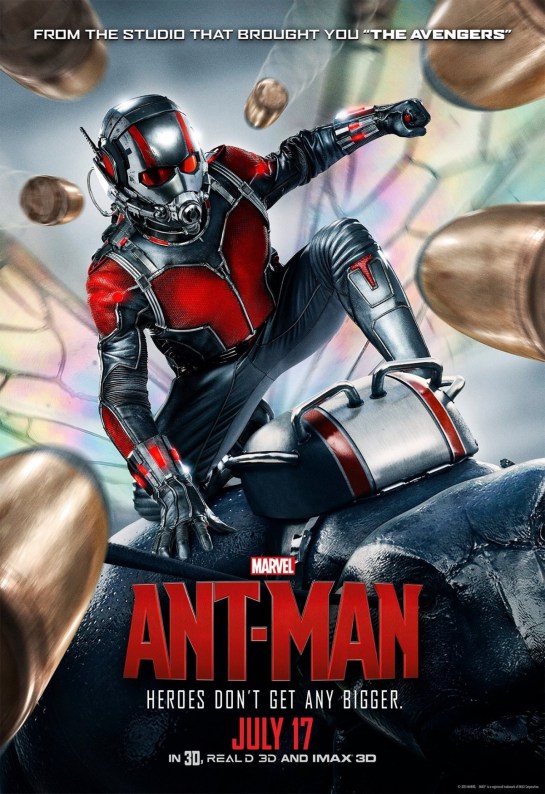
And yes, they are going to pigeonhole Ant Man (Paul Rudd) into the franchise, which will mean we have another wiseacre to compete with Tony Stark, but still . . . I liked this movie very much. Rudd is charming as an ex-Robin Hood con who is used by Michael Douglas to get miniaturizing technology out of the hands of his evil protégé (Corey Stoll) and the CGI for the transformation is both nifty and ladled out sparingly. Ant Man seems a nice fella’, as if you dropped an Apatow character into a super hero guise, and he’s aided by a hilarious trio of bumblers, one of whom (Michael Pena) made me laugh out loud repeatedly.
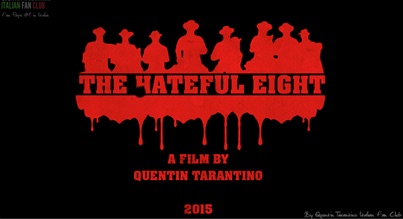
Key Largo melded with Quentin Tarantino’s bravura scenes in Inglorious Basterds and his crackling dialogue in Reservoir Dogs. I had the pleasure of watching this picture on Christmas Day in 70mm at the AFI Silver Theater, complete with an overture and an intermission. The latter occurred after 1:46 minutes, and I remarked to my son that the film was flying by, particularly so because almost all that had occurred was conversation. Obviously, a Tarantino film cannot subsist on talk alone, but when the violence occurs, it is supported by the rich, if broad, characters developed beforehand (unlike in Django, where the carnage at the end felt like an indulgent spasm, revealing an insecurity at what came before).
It’s one of the best films of the year and it’s also one that should not be in any way spoiled by a plot summary or any other commentary that could lessen the fun. Accordingly, I’ll make my review brief and non-specific in the form of a few notes.
First, Spike Lee once disrespected Samuel L. Jackson when the latter was a working character actor and the former was the auteur du jour. Lee is also made apoplectic by Tarantino, who wades into race with a daring and incisiveness that obliterates Lee’s rote and easy observations. As it turns out, Lee and Jackson have achieved a rapprochement (they do commercials together), but any rift between Lee and Tarantino is settled by Jackson (“Spike saying, ‘I’m not going to see Django because it’s an insult to my ancestors’? It’s fine if you think that, but then you have nothing else to say about the movie, period, because you don’t know if Quentin insulted your ancestors or not,”).
Also, Jackson should receive an honorary Oscar for this alone:
This is an ensemble picture but it’s Jackson’s picture (though costars Walter Goggins and Jennifer Jason Leigh give him a run for his money).
Second, Tarantino masterfully blends genre, history, comic books and violence, but sometimes, it is to the detriment of his narrative. Not here. When the necessary resolution explodes, it’s almost a disappointment because you know there will be less talk. Tarantino’s script is razor-sharp, hilarious, suspenseful and a brilliant mix of modern pop culture and historical grievance. It’s really something.
Third, I generally do not read any reviews or commentary about a film before seeing it or writing my own review, and I did not do so here. But I presume there is the same hullabaloo about Tarantino’s liberal use of racial and sexist insults. All I can say is that he uses them beautifully, like David Milch in Deadwood. This is how you would expect low, dangerous comic book characters who steal and murder to parlay. Any objection is likely coming from the same humorless prigs or their progeny who objected to the hyenas in The Lion King because they were villains voiced by minorities. In fact, in creating a movie depicting a roomful of lethal people who must sleep with one eye open as they brave a blizzard and their own treachery, opprobrium aside, it’s one of the most egalitarian rooms you’ll find in film.
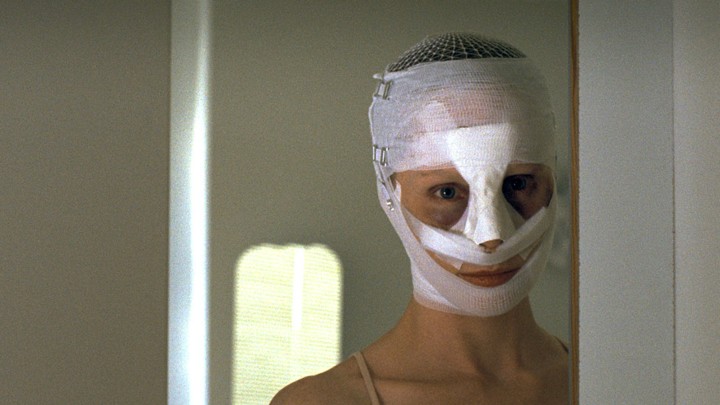
A psychological thriller from Austria that pits two young boys against their mother, who has been in a car accident, undergone facial reconstruction surgery and who, as time passes and the bandages come off, they suspect is not their mother. The critics hailed this (82% on rottentomatoes.com) as rising above genre, both terrifying and revolutionary, but the audience, who scored it at 67%, is closer to the mark. The film starts intriguing (if a bit obvious in it’s The Sixth Sense twist), but soon becomes monotonous, artily sterile, and then simply cruel. I turned it off.
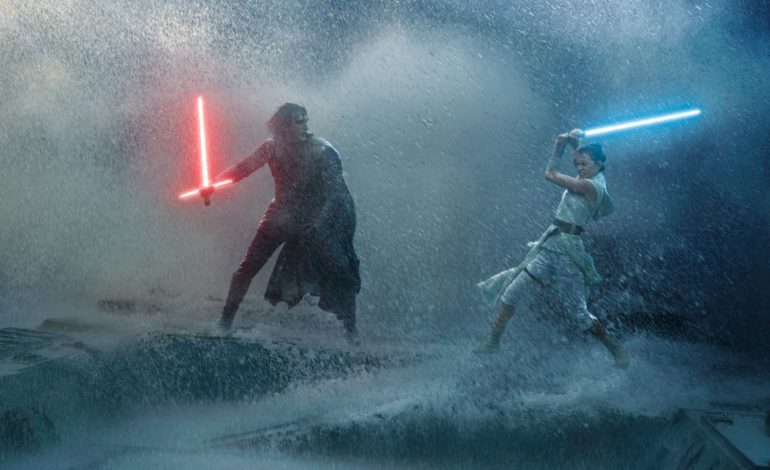
J.J. Abrams pulled off a neat trick with this picture. First, he purged from our filmic consciousness the abominations that were George Lucas’ middle three Star Wars films, which were bloated, antiseptic stories populated by green screen zombies and seemingly produced for the sole purpose of reinvigorating the merchandising arm of his global empire. For more on this, see Red Letter Media’s brutal takedown of those films and The People versus George Lucas.
Second, Abrams eased into it, essentially hewing to the first film in both style and story. There is nothing new or even particularly daring here, but Abrams is wisely more interested in establishing his bona fides and recreating the feel of the first three films. This one is a mix of action, fun and nostalgia, self-referential but not so self-referential as to be lazy.
Third, he strongly established four different new characters – three of whom have true motivations that emanate from a backstory – for the franchise to rely upon going forth.
It’s not perfect. Some of the self-reference is a little haggard, and the plot at the end is a little thin, pat and hurried. Yet, Abrams needed to exorcise the franchise of its demon menace, Lucas the bloodless toy purveyor, and he has done so in a movie that can reconnect new viewers to the wonders of the first pictures.
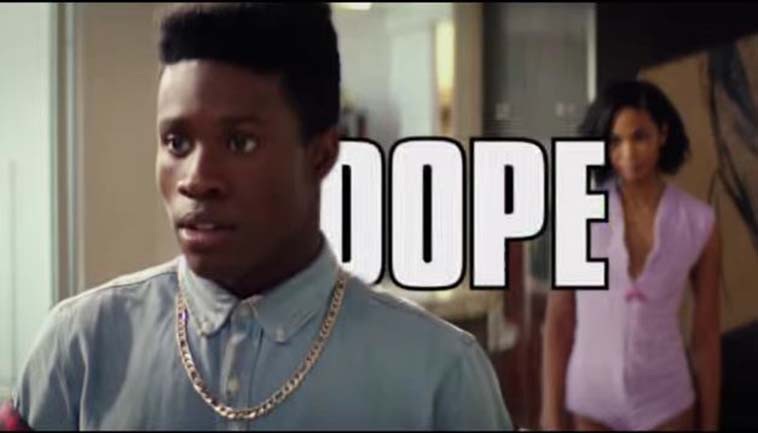
A smart, kinetic re-imagining of Risky Business, except instead of Joel from the tony suburbs of Chicago, we get Malcolm, a geek from the decidedly tougher “the Bottoms” of Inglewood. A lot of good laughs and a few inspired set pieces. Unfortunately, it shoots itself in the foot at the end with some clunky, preachy Spike Lee homily. Shame.
This documentary chronicles the rise of William F. Buckley and Gore Vidal – two highly esteemed public intellectuals and failed political candidates from distinct ideological poles – culminating in their televised debates during the Republican and Democratic conventions in 1968. It was at one of these debates that they got into it, bigly.
There is so much that is absolutely riveting about this exchange: Buckley’s barely contained fury, Vidal’s delight at having gotten under Buckley’s skin, its utter authenticity. The documentarians do an excellent job at placing these debates in the proper contexts, including the rise of Buckley as a conservative founding father and Vidal as a brilliant novelist and libertine, and the effect on these two combatants. Vidal almost fetishized the exchange, having guests view the debates at his villa in Italy in a Norma Desmond-like manner, and saying of Buckley upon his death “I thought hell is bound to be a livelier place, as he joins forever those whom he served in life, applauding their prejudices and fanning their hatred.” Conversely, Buckley was horrified at his loss of control and regretted it for the rest of his life.
The documentary also chronicles how the debate changed television coverage for conventions (no longer would there be gavel-to-gavel coverage) and alludes to the debate’s impact on televised political discussion thenceforth, but, thankfully, doesn’t attempt to press home a full argument. It is enough to watch the sewer that is political commentary on FOX, MSNBC, CNN juxtaposed with the clips of Buckley and Vidal, even at their worst, to get the point. Best, the documentary utilizes individuals who were present at the debates as well as authors and commentators like Christopher Hitchens, Sam Tanenhaus and Dick Cavett, all of whom have very interesting rather than obvious observations.
The documentary is, however, a little thin. In particular, it glosses over the post-debate exchange the two men had in Esquire magazine, where Vidal cut as deep as he could, suggesting a calumny about the Buckley family that does not bear repeating here. This more so than the exchange engendered litigation, as Buckley sued Vidal and Esquire. That suit was settled, under the following terms: Esquire would publish a statement in its November issue disavowing “the most vivid statements” of the Vidal article, calling Buckley “racist, anti-black, anti-Semitic and a pro-crypto Nazi”, and the magazine paid $115,000 for Buckley’s legal expenses. Buckley said of Vidal, “Let his own unreimbursed legal expenses, estimated at $75,000, teach him to observe the laws of libel.” Interestingly, in 1995, Esquire re-published Vidal’s essay in an anthology, Buckley again sued for libel, and Esquire again settled for $55,000 in attorney’s fees and $10,000 in personal damages to Buckley.
Great time capsule piece. Available on Netflix streaming.
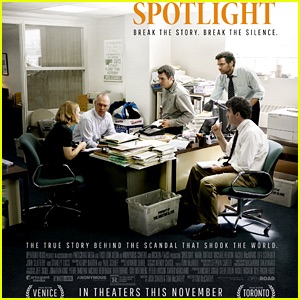
This is a gripping but measured film, a reportorial procedural and a meditation on the impact of the sexual abuse scandal that rocked the Catholic church in Boston, as reported on by The Boston Globe in 2002. “Spotlight” refers to an investigative team of the paper (Michael Keaton, Mark Ruffalo, Rachel McAdams, Brian d’Arcy James) who, under the direction of a new editor (Liev Schreiber) takes on the case. As they dig deeper, the breadth of the scandal widens (the number of culpable priests balloons from 13 to 87) and the institutional protections surrounding the church become more evident and intrusive. The story also takes its toll on the team, all some form of Catholic (cultural, lapsed, etc . . . ) at the time of the investigation.
The film is economical and direct and it stubbornly avoids cliche’ and histrionics. It is also a rare “based on true events” movie that feels authentic throughout, not jumped up or glamorized. It is very similar to A Civil Action, another Boston based movie that tackles a legal case (water contamination in Woburn) by analyzing the city and its institutions. Like that film, Spotlight packs its biggest punch during scenes of interviews with the survivors of abuse, which are nothing short of heartrending.
If you want a gripping movie about the mechanics of taking on a story like this, this is it, and if you want a companion piece that shows exactly how an individual molester operates, I recommend Doubt. Watching this film, as with Doubt, stirred my own memories on the subject, having been educated by the Catholic church for eight years of grade school and by the Jesuits for four years of high school. I saw the picture with my kids and tried to explain how what is now an indelible black mark on the church wasn’t exactly a deep, dark secret by the time I reached high school, yet somehow, was not a full-fledged scandal. I explained that we had a religion teacher who was very charismatic, but who you just kind of knew not to be around. Why? It’s hard to say. It could have been my own sense of it, or the fact that my brother or his friends imparted some decent advice, or the fact that after gym, when you were showering, he could sometimes inexplicably be seen in the locker room.
Whatever the impetus, you learned not be around Father Bradley, but I guess I just assumed that all boys shared the same sense of something being off and were similarly self-protective. That wasn’t the case, and in 2007, I was one of thousands of recipients of a mass email detailing the misdeeds of this priest at our high school, and at other places where he taught afterwards, encouraging us to report if in fact we had any knowledge of his abuse. Without the work of The Boston Globe on the story, that email may never have come to be. In that manner, this film is a testament to solid, door-knocking, pavement pounding reporting.
If you’re interested in the priest who plagued my school, the story is here. The original Boston Globe story can be found here.
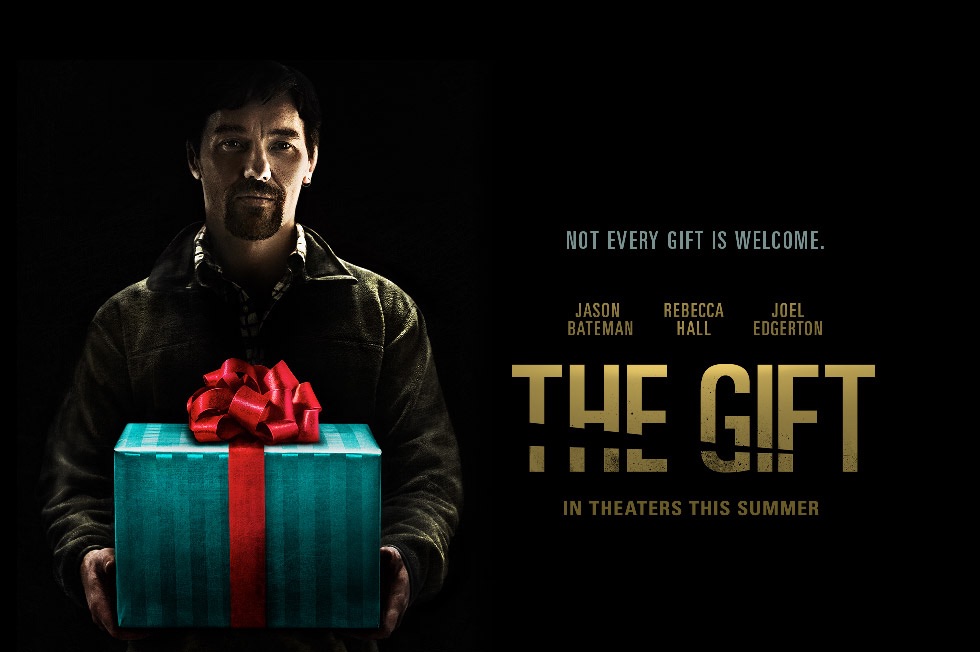
Nicely done, but ultimately plagued by some clunkiness and a fair amount of inexplicable behavior by the couple (Rebecca Hall and Jason Bateman) who are terrorized by a stranger from Bateman’s past (Joel Edgerton). Otherwise, this is a classier Lakeview Terrace, Unlawful Entry, or Pacific Heights, movies about California rich people haunted by a weirdo, but with a reverse Gone Girl twist. A note on Bateman, normally a light, Ben Stilleresque comedian: he’s really good as a man trying to exorcise his worst instincts while continuing to profit from them.
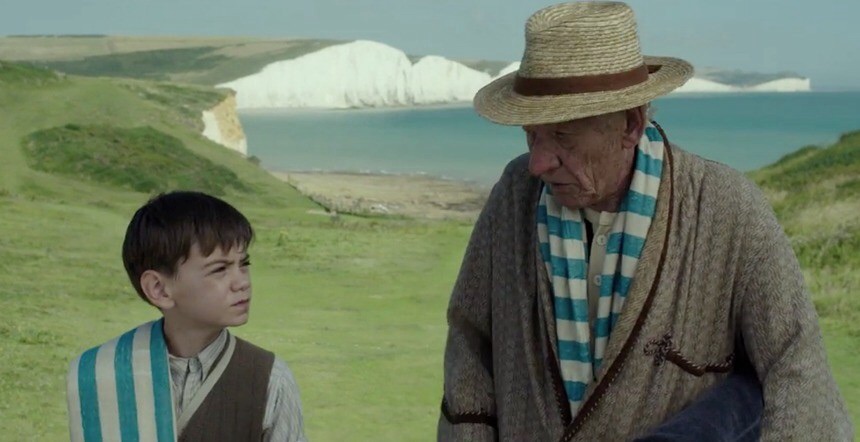
Sherlock Holmes (Ian McKellen) has been in retirement for decades, forced there by the traumatic events of his last case, a case he has increasing trouble remembering as senility does its damage. With Watson long gone, Holmes relies on the son (Milo Parker) of his caretaker (Laura Linney) to assist him in his daily activities and serve as a bridge to younger, healthier and more lucid days. Holmes is soon entwined in the hostile relationship between the working class mother and her clearly clever yet condescending son, and he confronts the mistakes of his past while engaging, reluctantly, in their very pedestrian domestic drama. This is Holmes adrift, vulnerable and shorn of the cock-sure bravado of his younger years.
It’s hard not to over-praise McKellen’s performance. Too much Gandolf has fixed him as caricature, but here, he deftly injects Holmes’s withering intellect and emotional shortcomings with a plaintive frailty. Director Bill Condon has experience with McKellen – their work in Gods and Monsterswas similarly touching, restrained and intelligent and also garnered McKellen a Best Actor nod. The film is also blessed by a strong turn by Parker. If I’ve said it once, I’ve said it a thousand times, as in life, you warm to a child who is genuine as opposed to precocious, natural instead of stagey. Parker is just right.
Occasionally, the movie is a little dragging, but this is still one of my favorite films this year.
Melissa McCarthy blew the doors off of Bridesmaids, and that was in a very strong ensemble. Since that time, she’s taken several whacks at a lead or co-lead role (Identity Thief, Tammy, The Heat) and the results have been blah. In the first two of those movies, McCarthy played up the grotesque, as if to say, “Yes, I know I’m fat, but wait until you see me fat and disgusting and humiliated.” It was a complete reversal from her character in Bridesmaids, who acted as if her weight was an advantage, an intriguing sexy charm, only to reveal to a self-pitying Kristen Wiig that her arrival at such self-confidence was no easy road. In this, McCarthy was hilarious and touching. In Tammy and Identity Thief, she was gross, charmless and, unsurprisingly, not funny.
McCarthy should thank the stars for writer-director Paul Feig, who also directed Bridesmaids, because he leads her back to her strengths. As CIA office minder for the James Bondian Bradley Fine (Jude Law), her secret agent exploits are limited to getting Fine out of jams while talking in his earpiece. Of course, she’s in love with him, a love that is unrequited but deep nonetheless. When Fine is killed, McCarthy goes out into the field to avenge him, tangling with a fellow agent who is dismissive of her skills (a very funny Jason Statham), a horny Italian liaison on the ground (Peter Serafinowicz, who damn near steals the movie), and the arch villain Rayna Boyanov (Rose Byrne, who may be the hardest working woman in show biz). For each of these characters, Feig writes very clever bits, and McCarthy plays off of their barbs beautifully. The result is a bit of Austin Powers and a bit of Bond at its most campy, consistently interspersed with crisp and amusing banter and a few laugh-out-loud set pieces. It’s all held together because you like McCarthy and instead of reveling in her misfortune, she exhibits wit and pluck and you root for her to rise above each indignity (the worst of which are the increasingly disparaging “undercover” personalities she is assigned). Great fun.