Archive

Year


Sofia Coppola’s fourth feature is a return to the lackadaisical moodiness of her breakout film Lost in Translation, but instead of a disconnected and lonely established actor (Bill Murray) in Tokyo, we get a young Hollywood star (Stephen Dorff) when he is not working, every bit as disconnected. He lives in the Chateau Marmont, beds beautiful women regularly, spends time with his daughter (Ellie Fanning), and fights ennui. Unlike Lost in Translation, however, Dorff and Coppola don’t have jet lag or the outsider in a foreign land to explain or sustain the languid pace and feel. Dorff is also no Bill Murray. The latter registered pathos and bemusement in an understated manner, while Dorff (Blood and Wine, City of Industry, Feardotcom), who normally plays the heavy, lacks the chops and just seems tired.  He is not aided by Fanning, who seems adrift, and the two fail to convey any familial connection.

The result?  Coppola has made a film about a bored person that is boring. While the director is intrigued by long repetitive scenes (identical twin strippers who perform for Dorff, Dorff’s daughter performing a routine on ice, lots of freeway driving), the feeling is not mutual, and the scenes play interminably. Most others just feel like your own day if you were a dull Hollywood actor.

This doesn’t even work as the anti-Entourage. Mood pieces can be nice, but you need some meat on that bone, and Coppola’s paltry output (4 features in 11 years) is perhaps explained by the fact she has little to say.

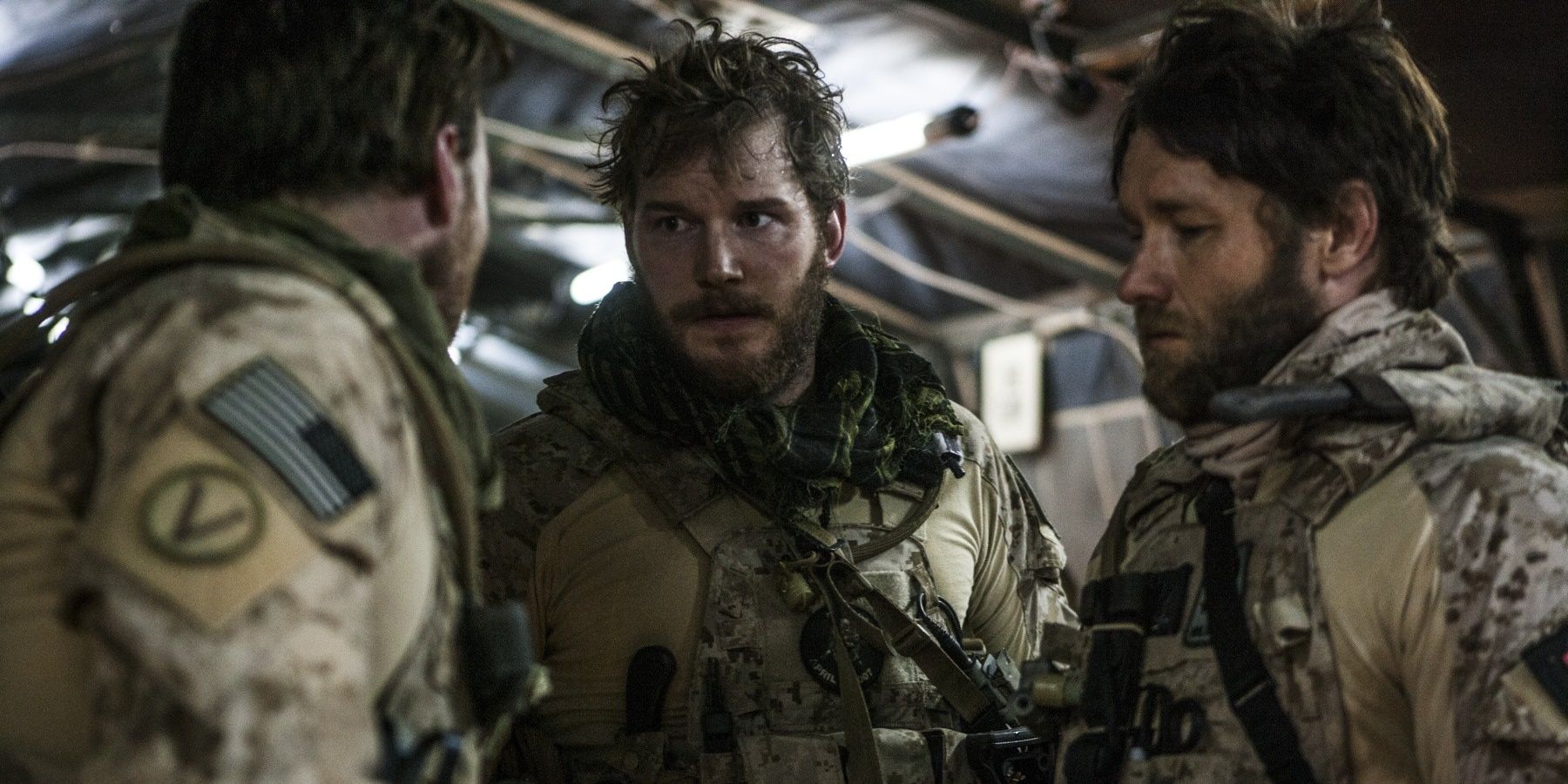
Zero Dark Thirty True Story: Everything The Movie Changed & Left Out

In The Hurt Locker, Kathryn Bigelow exhibited an expert feel for the milieu of a bomb disposal team in early post-Saddam Iraq. While her depiction of the mechanics of the team was the subject of debate, the desolation and immediacy of her scenarios was spot on, evoking the overburdened and overwhelmed sensibility of better-equipped invading/liberating armies since the time of the Romans. What kept The Hurt Locker from being a great film was the simplistic protagonist, Jeremy Renner, a danger freak and little more, with whom we were required to spend too much time.

In Zero Dark Thirty, Bigelow again utilizes a simplistic heroine, CIA officer Jessica Chastain, whose entire persona is a relentless “get bin Laden” zeal. Fortunately, the story Bigelow is telling is an intricate intelligence bureaucracy procedural and Chastain is progressively morphed from the driver of the story to an observer. To her credit, she remains disciplined and does not stray from the confines of her role. Chastain is emblematic of the effort and the desire to fight al Qaeda and eliminate its leader, and the film has refreshingly little interest in what makes her tick, her relationship with men, etc . . . the story is quite enough. This film is much like United 93, authentic, thoughtful, and gripping, even though we know the end.

Two other aspects make this picture extraordinary. First, it deals with politics in a subtle yet effective manner, opening with a clutter of 911 calls on 9-11, which creates the urgency necessary to begin the story, and acknowledging certain political realities (the failure of the CIA on WMD, the changing domestic political tenor on enhanced interrogation, and the Obama administration’s moves with regard to same) without gettng bogged down in their import or advocating for any particular position.

Second, of some controversy, Bigelow shows torture.  Torture assuredly occurred and was also assuredly of value in the war against al Qaeda. Just ask new National Security Advisor John Brennan: “There has been a lot of information that has come out from these interrogation procedures that the agency has in fact used against the real hard-core terrorists. It has saved lives.” The histrionic attacks on Bigelow’s film because it merely shows torture demonstrate the exact false and forced narrative that Zero Dark Thirty eschews. It is depressing that Bigelow had to actually say, “”Experts disagree sharply on the facts and particulars of the intelligence hunt, and doubtlessly that debate will continue. As for what I personally believe, which has been the subject of inquiries, accusations and speculation, I think Usama bin Laden was found due to ingenious detective work. Torture was, however, as we all know, employed in the early years of the hunt. That doesn’t mean it was the key to finding bin Laden. It means it is a part of the story we couldn’t ignore.”

Bigelow’s statement is echoed by Mark Bowden, author of Black Hawk Down: “Torture may be morally wrong, and it may not be the best way to obtain information from detainees, but it played a role in America’s messy, decade-long pursuit of Osama bin Laden, and Zero Dark Thirty is right to portray that fact.”

Juxtapose the statements of Bigelow and Bowden with the criticism of actor and activist David Clennon (“Torture is an appalling crime under any circumstances. ‘Zero’ never acknowledges that torture is immoral and criminal”) and you have the difference between Zero Dark Thirty and the spate of shit message movies that Hollywood churns out every year to show us the right path. The Clennons are terrified. By showing that torture may have gotten certain results, sweet Lord Almighty, we have endorsed torture, which we cannot hope to condemn unless we show it was a masochistic folly of absolutely no intelligence value.

Perhaps we can delete the great line where one interrogator tells Chastain to be careful because the domestic political winds are shifting and she doesn’t want to be “the last one holding a dog collar” and substitute it with, “you know, upon reflection, this stuff we’ve been doing . . . It’s just morally wrong and maybe even criminal.”


A 6 year old girl, Hushpuppy (Quvenzhané Wallis) lives in functional squalor in a poor, bayou fishing community – The Bathtub – cut off by a levee in Louisiana. What passes for the comminity’s teacher tells her that one day, the ice caps will melt, the Bathtub will be swamped by water, and prehistoric beasts will roam the earth. As a storm comes, most of the inhabitants evacuate, except for Hushpuppy, her disturbed father, and some boozing stragglers and abandoned kids. They create a floating bar, a drunken, drifting haven, but their world is dying around them.

This is a mystical, beautiful picture, told primarily through the eyes of the girl, who speaks to her dead mother and imagines beasts marauding her world. The breakdown of her surroundngs after the flood, the fevers of her own imagination, and her introduction to civilization (they are forcibly evacuated) is gorgeous and moving and Wallis’s fierce maturity is captivating.

This is a real life fable (“a passionate and unruly explosion of Americana”, per A.O. Scott) with barely a semblance of a plot, so beware – it does meander. But it is rightly nominated for a Best Picture Oscar, as is Wallis for Best Actress. Her confident, self-possessed performance is one of the strongest child turns I’ve ever seen. The non professional actor Dwight Henry (he’s a New Orleans baker who read for the part during down time and reluctantly took it because he was starting a new business) is also noteworthy, giving a raw, jarring performance. Filmed on location, the film’s rendering of nature reminded me of Terence Malick, but unlike Malick, first- time director Benh Zeitlin connects with actors as well as his surroundings. I’ve never seen a film quite like it.

Okay, technically, this BBC production is not a film, but I have watched both seasons, the second of which is currently on demand on the BBC channel, and they merit a good recommendation.

The competition to theater releases from television series, mini-series and films is stiff.  My unscientific list, just from HBO, demonstrates that as a “studio” it is as prolific and successful as any —

SERIES OR MINI-SERIES
The Sopranos
Rome
John Adams
Deadwood
Angels in America
Game of Thrones
The Wire
Boardwalk Empire

FILMS
Taking Chance
Barbarians at the Gate
Too Big to Fail
Into the Storm
Path to War
61*
Wit

If I haven’t listed an HBO series, mini-series or film, it is not that I made an omission – it means that some of what HBO puts out, like Treme and Hung and Carnivale, isn’t all that great.  But the network’s hit-to-miss ratio is impressive.

BBC’s output is similarly strong and pre-dated HBO’s reign. The Hour is a lovingly detailed show depicting the creation of a BBC television news program in 1956.  In season 1, we were introduced to producer Bel Rowley (Romola Garai), anchor Hector Madden (Dominic West of The Wire) and reporter Freddie Lyon (Ben Whishaw, James Bond’s new Q) as they developed the program while investigating Cold war intrigue. Season 2 brings us police corruption intersecting with a high-level blackmail scheme. The look is very time-specific and classic, and because of that, The Hour has been favorably compared to Mad Men, but it is much more story-driven and deliberate.

I realize television viewing time is limited by so many strong options. Much to the consternation of many folks who have highly recommended certain shows, I haven’t been able to tackle Homeland, Breaking Bad, or Justified, having committed to Downton Abbey, Sherlock and, for a time, The Walking Dead. If you can fit The Hour into the schedule, you won’t regret it.

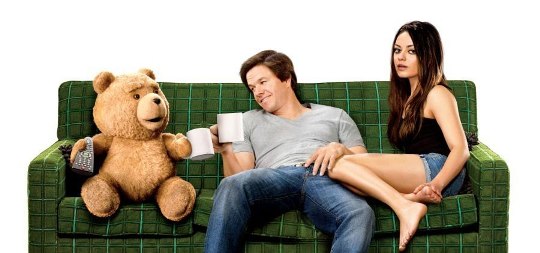
Ted Movie Review – New Bedford Guide

For better or worse, Seth MacFarlane is our Academy Award host this year. It almost has to be better given Billy Crystal’s snooze-inducing Borscht Belt performance last year and the train wreck that was stoner James Franco and clueless ingenue Anne Hathaway the year before. MacFarlane is the force behind numerous animated television shows, the best of which is the occasionally funny but mainly awful Family Guy, an outlet for easy shots and pro forma crudity still outclassed by the tired old Simpsons and never, ever near the same class as the brilliant South Park. So, I’m no fan. But I am hopeful. MacFarlane is a gifted mimic and I watched him on a recent Saturday Night Live. He was surprisingly deft and his impression of swimmer Ryan Lochte was nothing short of brilliant.

Ted is MacFarlane’s creation, a live teddy bear wished for by a young Mark Wahlberg. Wahlberg is all grown up and he and Ted remain roomies, even as Wahlberg hits year four with his luminous girlfriend, Mila Kunis. Kunis wants commitment and maturity, Ted and Wahlberg smoke dope all day and watch TV, and things come to a head when, after an anniversary dinner, the live couple come home to find Ted with a passel of hookers.

There are a few clunker lines, but for the most part, this is a very funny, very crude (Ted’s come-on to a grocery store checker is waaaaay over the top) and surprisingly sweet story of a boy and his childhood pal. I say “surprisingly” because I would have expected MacFarlane to be a little more daring. He comes close, such as a scene in the end where, after Ted has gone through a harrowing ordeal and appears to have died, he wakes up but appears to be impaired. Is Ted going to come back as a mentally disabled stuffed bear?

That’s MacFarlane – and Ted – in a nutshell.

Hitman Joseph Gordon-Levitt seemingly has the simplest job in the world.  A crime syndicate in the future sends bound targets back in time to a field, where “loopers” like Gordon-Levitt kill and dispose of them.  The loopers get paid in silver until one day, an older version of a looper is sent back to be killed by his younger self.  Strapped to that older version is a pile of gold, the final reward.  When the older Gordon-Levitt is sent back, he is Bruce Willis, and not unexpectedly, Willis thwarts his own execution, and the fun begins.

A blast of a movie, and upon scrutiny, for a time travel film, it does pretty well from a logic standpoint (though some disagree). What matters, however, is that the logic holds up well enough to allow you to be carried away by writer/director Rian Johnson’s fresh and intricate script and his nifty vision of two futures.  The Terminator, for example, was so riveting, you didn’t have the chance to think, “Hey.  Why didn’t Skynet send the Terminator back in time to the hospital where John Connor was born?  Aren’t babies easier to track down and execute?”

Gordon-Levitt is uncanny as a young Willis (they’ve even altered the contours of his face to cement paternity), Willis is gruff Willis, and Emily Blunt (the Brit fashionista assistant in The Devil Wears Prada) is surprisingly convincing in a tough gal role.  Jeff Daniels is a good choice as an off-beat heavy, and Noah Seegan and Garret Dillahunt impress in small roles as the men tasked to hunt Gordon-Levitt and Willis down.  The standout performance, however, belongs to child actor Pierce Gagnon, who manages to be terrifying and then sympathetic.

Johnson’s 2005 noir high California school flick – Brick – was similarly inventive.  Johnson is not exactly prolifiic, but if Looper is the norm, I can wait.

Christopher Nolan’s last entry to his Batman trilogy closes the story out in satisfying fashion and even leaves room for the rise of Robin (Joseph Gordon-Levitt) should Warner Brothers need a fiscal stimulus in the future. The story is the same as the prior two pictures. A reluctant Bruce Wayne/Batman (Christian Bale) is drawn back into the fray when his beloved Gotham City is threatened. This time, the threat comes from Bane (Tom Hardy), a muscular beast who wears a mask not unlike a greyhound. Much like The Joker, Bane seeks to test the mettle and morals of Gotham.  Bane’s appeal is Occupy Wall Street on steroids. The city is shut down and isolated by a moving nuclear device controlled by Bane, and as its time runs out, the new masters judge the rich and powerful (the villain Scarecrow plays Robespierre) while Bane’s henchmen and at least a certain portion of the citizenry pillage their apartments.

This is actually the most interesting part of the movie, begging the question, “Why does Batman dig this fickle town so much?” Unfortunately, less time is devoted to the occupation’s class warfare and the internal de-evolution of Gotham and too much to Batman’s angst, Alfred’s (Michael Caine) regret that Bruce did not have a normal life, and some corporate skullduggery that is . . . eh. The movie is also a bit too solemn. I applaud the darker, starker vision of Batman and his story, but we are, in the end, talking about a man who dresses up like a bat. With the exception of a few smart quips from Catwoman (a lithe Ann Hathaway), the movie is largely humorless.

Still, the action is first-rate and the big finish does not disappoint.


I could only bear 20 or so minutes of this student picture.  Written and directed by Mark and Jay Duplass, this is a movie that represents the dark side of “independent” film.  Jason Segal plays a 30 year old stoner who . . . lives at home. Ed Helms plays his brother in exactly the same style as his Andy character on The Office. Their mother, Susan Sarandon, suffers them both as they are tasked to buy her wood glue.

Alas, she suffered them longer than I. The script is pretentious, the set-up uninviting, the direction (the Duplasses are addicted to an ostentatious jump zoom) self-indulgent and the plot random, all sins that cannot be expiated by deeming it “quirky.”

The Queen of Versailles (2012) - IMDb

The gaudy nouveau riche feel, stately-meets-Glamour Shot portraits on the wall, grotesque adornment (including a gold throne), spoiled kids with Filipino nannies and a house staff of 19, stuffed dogs, fake tits, boasts of having gotten George W. Bush elected by illegal means (wink, wink), all presented within the framework of a family who wants to move from a 16 bathroom mansion to a Florida Versailles, well . . .  you cannot wait for the fall of this cretinous couple, Jackie and David Siegel, the latter self-titled The Time Share King.

But as you watch them lose it all after the 2008 market crash, it is hard not to root for them.  There is something endearing about Jackie’s limo ride to McDonalds, and there is a down-to-earth quality about the family, as well as a toughness in the adversity.  But when the staff is downsized, and the house goes to shit (even the tropical fish and pet lizard die), and Jackie actually says, “I never would have had so many kids without a nanny,” well, the schadenfreude returns.

This documentary says a few things about resilience, greed, the American dream, status (Jackie’s take on TARP – “I thought it was supposed to go to the common people . . . You know . . . us” – is priceless) and excess, but it doesn’t preach or instruct, which is its greatest strength (so many documentarians force what they capture into a desired narrative).  It is content to record a fascinating story about one very unique American family caught from their zenith to a fall (which didn’t last long).