Archive

2011

This critically-acclaimed 2011 release purports to be a psychological study of its protagonist, Martha (Elizabeth Olsen), who becomes a member of an upstate New York commune/cult led by the charismatic John Hawkes (nominated for an Academy Award for his role in Winter’s Bone).   The film opens with Martha’s escaping the collective farm, though Hawkes and the other members of the commune (a motley assortment of women who serve him and a few young men) don’t do very much to stop her flight.  Martha ends up 3 hours away, at the Connecticut lake home of her wealthy sister and her new husband.  There, we learn of her ordeal through flashback (sexual abuse, violence, co-opting and subordination to the whole) while she struggles to adapt to life outside the cult.  She provides tension to her sister’s household as she brings bad habits from the commune with her (swimming nude, curling up in the bed of her sister and brother-in-law while they are having sex, condescending to them about their lifestyle) and undergoes post-traumatic stress that manifests itself in panic attacks, wetting herself and refusal to discuss what happened.

All of which makes for a frustratingly monotone of a movie.  Martha is treated with such sensitivity by her sister that you sympathize most with the husband, who has to endure a recalcitrant, moody weirdo in his midst without anyone ever saying, “What the hell happened?”  Worse, while it is clear that Martha undergoes trauma, her behavior after she endures it suggests a person who was under the sway of the commune since childhood.  In fact, Martha was there for two years.  Also, the key to a psychological study is an explication of why Martha was lured into the life, but we get no clue as to what Martha was looking for when she voluntarily allowed herself to be part of Hawkes’ crew and scant information on what the cult is really about.  Martha seemed shallow and dull in flashback and during present-day, she seems shallow, dull and jittery.  Moreover, Martha says some very terrible things about and to her sister (“You’re going to be a terrible mother”), who has the patience of Job, suggesting she was a first-class turd even before she went to the commune.  This is not conducive to empathy.  Finally, the picture reveals a Manson-esque quality to Hawkes very late, which is awkward and unconvincing.

Another problem is Olsen’s performance.  Yes, she does better work than her sisters ever did on television’s “Full House”, but it is still a one-note, amateurish turn.

I watched Thor with my son on Father’s Day (we trolled Netflix streaming for choices).  Thor (Chris Hemsworth) is cast from the heavens, in part for his hubris and in part due to the machinations of his conniving, “why does Daddy love you more?” brother Loki (Tom Hiddleston).  Thor ends up near Area 51 sans power, and while here on earth, gets shamelessly mooned over by Natalie Portman (she’s supposed to be the geeky, withdrawn scientist type – riiiiiiiiight), learns the meaning of humility and heads back to the heavens to settle somie scores and show some sacrifice.  I should have seen this before The Avengers for absolute continuity but no matter – neither film suffered for my error.   The action sequences are brisk but not  so overhwelming as to cause fatigue and there are some good lines.  Portman is ridiculous in her portrayal of a women of science made weak in the knees.  She positively swoons.  Still, It was good, clean, mindless fun.   

Of course, Thor has some issues with protocol here on Earth:

I did that last night at dinner with my water but it wasn’t as funny.  Father’s Day can only forgive so much.


This documentary is directed by Carl Colby, the son of the subject, former CIA Director William Colby. In all likelihood, therein lies the problem. Carl is torn as to which themes to stress, much as he is torn by the legacy of his father.  He settles on three.  First is a straight up documentary about a clandestine Cold Warrior who saved Italy from Communism and was critical to the Phoenix Program, eventually rising to the directorship of the CIA, where he was battered by Congress’s withering post-Watergate assault on the Agency.  Footage from Italy, Vietnam, and congressional hearings is provided, along with interviews of numerous members of the American power structure at the time, including Donald Rumsfeld, Bob Kerry, Bud McFarlane.  Bob Woodward and many others. This part is occasionally interesting, but since critical emphasis is placed elsewhere, the historical report lacks any real depth.

Carl Colby also presents a portrait of his family, with the strict and moralistic William Colby at the head, his wife Barbara at his side, as they were stationed from post to post. The interviews with Barbara Colby are affecting as she explains how her husband worked and the impact of Catholicism on his personality, and there are some charming vignettes, but we don’t get much of a sense as to how Colby interacted with anyone in the family.  Occasionally, Carl’s voiceover expresses disappointment about his father’s secretive nature, but there are no real insights.  Carl drops hints of various issues (an epileptic and anorexic sister, a late in life divorce), but they are only given the most cursory treatment (we never learn that, in fact, the sister died in 1973).  For a man “nobody knew,” secrets are to be expected, but we should get better from a son. 

Carl offers a third, more personal theme – the effect of having such a mysterious and enigmatic father. This aspect of the film is the weakest and most awkward. Very abruptly at the end, we’re informed that in 1996, Colby took a canoe from his Southern Maryland home after dinner and was found days later, dead.  The coroner concluded that Colby drowned after a stroke or heart attack. Carl does not provide an alternative theory though he strongly suggests the miserable, guilty William Colby did himself in, after some wine and clams(?)  Carl has been quoted as saying, “Call it whatever you like. I think he’d had enough of this life.”

Carl tells us – as he has in some form or fashion throughout the documentary – that Daddy wasn’t there for him, intoning, “I’m not sure he ever loved anyone and I’m not sure I ever heard him say anything heartfelt.”   Given the limited presentation, and in particular the absence of remembrances from William Colby’s other 3 children and his second wife, Carl’s view strikes me as unique.  Indeed, Carl told The Washington Post “I preferred the old dad, not the new . . . The old dad taught me how to sacrifice. The new dad . . . was just an ordinary guy with ordinary desires.”  That says a lot.  It is as if Carl has settled on his father as a dark, tortured soul and the coda to his life – a love affair with another woman that lasted 13 years that was by all accounts happy – didn’t fit his meme, so he ignored it.

Matthew McConaughey plays a smarmy, slick, charming southern lawyer . . . in every single movie he makes.  He does it again here, inexplicably drawling his way through a role as a hotshot Los Angeles criminal attorney retained to defend Ryan Phillipe, a rich boy accused of a brutal rape.

The entire film rests on selling you the real possibility that Phillipe is innocent.  And there is not one moment when you believe that Phillipe is innocent.

Look at him.  Guilty, guilty, guilty.

Now that the story is hosed, we’re left with McConaughey’s schtick, a motley crew of character actors without character (dewy-eyed Marisa Tomei, as McConaughey’s ex-wife prosecutor; tough old cop Bryan Cranston; hippie P.I. William H. Macy; and the peripatetic bondsman John Leguizamo) and “twists” so implausible that Director Brad Furman must have assumed the audience had checked out by the time of the reveals.

I cover the first two pictures here: www.filmvetter.com/2012/04/30/paranormal-activityparanormal-activity-2-4-stars/

Nothing new to report, except that installment three is even scarier.  One particular trick of note:  while trying to capture the “ghost” on videotape and cover two rooms, our hero puts a camera on an oscillating fan, so it goes from left to right and back again slowly.  Brilliant.  Everytime you get that vantage point, you’re terrified of what will be in frame.

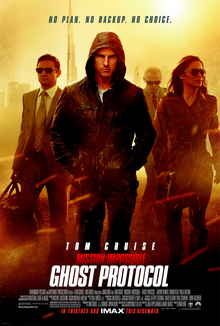
Cruise is BACK!  But is it likely you missed him?  His super spy Ethan Hunt is doggedly disinteresting.  So, fantastic action set pieces (a breakout from a Russian prison, a break-in and demolition of the Kremlin, a car chase in a sandstorm, a finale in a modern multi-story parking garage) are made less exciting because you’re not invested  The action sequences are first-class, especially a high wire act outside the Burj Khalifa, but if you don’t care if Cruise falls, does it matter?

Cruise spends huge chunks of this picture running really fast and very far (it’s more The Gods Must Be Crazy than Casino Royale).  Endurance becomes the primary facet of his character.  Moreover, 2/3 of his team (Paula Patton and Jeremy Renner) are very dull (Simon Pegg, as the technical wizard, is not and provides most of the laughs).

EXCLUSIVE: Here's An ATTACK THE BLOCK 2 Update, Straight From Joe Cornish

An alien drops into the middle of a South London mugging (5 public housing thugs are dispossessing a young woman of her belongings).  The alien is a cross between a wolf and Gollum.  The boys chase it down and kill it.  Apparently, it was well-thought of, because shortly thereafter, a whole bunch of these things come from space for revenge.  Good, scary fun, a few good lines, and tense action sequences, not terribly marred by some unnecessary suggestions of the poor plight of London’s youth, forced to mug and terrorize by the inequities of an uncaring society.

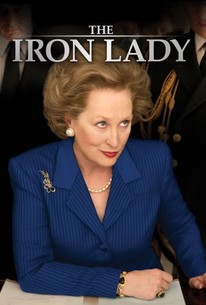
The Iron Lady (2011) - Rotten Tomatoes

First, I really have no idea as to the historical accuracy of the movie. To the extent there are historical nits to pick, I concede.

Second, this is two films.  One, very personal and touching, speaking to the loss of a loved one and an individual’s weakening ability to remember, a great thinker’s capacity to articulate and rationalize.   Meryl Streep’s turn as a woman infected by Alzheimer’s is frightening, poignant and moving.

Third, it works less well as a political biography.  The young Thatcher is a simplistic spouter of conservative bromides.   As prime minister, she’s almost ridiculously “iron” with the men about her always clucking like nervous nellies.  Worse, particular challenges are handled via music video montages and newsreel footage. It lends a certain cheap and easy feel to the endeavor.  During The Falklands War in particular, she is the lone Joan of Arc amidst jelly bellies. Speech follows speech, with great, grand pronouncement. It gets silly.  We even have the obligatory review of the casualty figures and the personal letter-writing histrionics.

Fourth, Streep is beyond convincing in the role and when assessing the body of her work, the idea that she is not the finest actress in the history of film is laughable.  There is no Magic Johnson to her Michael Jordan. It’s not even close. And she only gets better.  As the nun in Doubt, she completely captured the nuns of my early education, and as Julia Child in Julia and Julia, a role that like Thatcher could have been hammy and overt, she is vibrant and real.

This is a charming first love story, different in that the first love is Marilyn Monroe and her suitor is a third assistant director (a glorified gofer) on her 1957 picture The Prince and the Showgirl.  The picture co-starred and was directed by Laurence Olivier, who is played by Kenneth Branagh.  Branagh was fine and nominated, though I’m not sure deservedly so.  His primary posture is one of exasperation.

It is Monroe who exasperates Olivier, because she is tardy, skittish, unprofessional and seemingly over-handled by her method acting coach and her business manager.  Pills are used to control her.  Thus, she seeks companionship and escape with the gofer, played with wide-eyed innocence but occasional steel by Eddie Redmayne (Redmayne is a little distracting – he has lips that rival the collagen-induced monstrosities of Barbara Hershey, Meg Ryan, at al.)

Williams was nominated and deservedly so.  She’s a perfect confluence of beauty, sensuality, naivete’ and whore.  At times, she was so stunning that you could understand the entire Monroe worship.

Best, the story is sweet but not sugary, and economical.  It also has a great sense of time and sports some nice supporting turns by Dominic Cooper and Toby Jones as her weasel management and especially Julia Ormond as Olivier’s aging and jealous wife at the time, Vivien Leigh.  Leigh is obviously wary of Olivier working with Monroe which results in a great exchange with the smitten gofer:

VIVIEN

Of course, Larry would never leave me. (Pause) But, if anything were to happen, you would let me know, wouldn’t you?

COLIN

I’m sure he loves you very much.

There is a flash of sudden anger in her expression.

VIVIEN

Oh, don’t be such a boy!

COLIN looks shaken and she touches his hand in contrition.

VIVIEN (cont’d)

At least you still adore me, don’t you?

COLIN

Of course. Everyone does.

There is a wintry bleakness in her face for a second.

VIVIEN

I’m 43, darling. No one will love me for much longer. Not even you.

To the extent there is a weakness in the picture, however, it is implicit in the character of Monroe and not the film.  Monroe is so iconic as to be both beguiling and ridiculous.  Her end was tragic and elicits the syrup ladled out by Elton John’s “Candle in the Wind” (which can be dusted off and updated for a Princess Di and had Elton and she been friends, probably Anna Nicole Smith).  Luckily, we are spared the cruelties that lay in store for Marilyn, but the film does take for granted her absolute boundless and radiating talent.

It’s a tough sell.  Monroe was beautiful and seductive and had the ditzy blond bit down pat.  But had she not been such a notorious pain in the and piece of ass, vexing Olivier and Gable and bedding DiMaggio, Miller and two Kennedys, would she be the goddess of today or . . . Anna Farris?

Our Idiot Brother movie review (2011) | Roger Ebert

A ridiculous feel good comedy about a sweet, trusting stoner (Paul Rudd, so open he sells marijuana to a uniformed policeman who professes to having a bad week) forced to live at home with his mother and then with his witches brew of sisters (Emily Watson, Parkey Posey and Zooey Deschanel).  Hijinks and family drama ensue.

Admittedly, not a great sell job for this picture.  But the movie is carried by Rudd, whose innocence and good-naturedness are both attractive and believable.  There are also some pretty amusing scenes.  The drug bust is deft, and Rudd’s meetings with his jaded parole officer are also funny.  Deschanel, who plays the artistic sister who wants to be some sort or stand-up comic, is winning, and her performances in what appear to be a NYC basement bar have a real authentic feel (she is not funny and the crowd of 7 people watching her is 85% family).   Adam Scott, as the love interest of Posey, is also excellent.  I’m not sure there is a funnier guy in formulaic comedies than Scott (his asshole brother in Step Brothers is legend).

Unfortunately, Posey, as the unscrupulous celebrity interviewer (yet again, high strung) and Watson as the earth mother sister whose husband (an unpleasant Steve Coogan) is cheating on her are tedious cartoons, but once Rudd re-enters the movie, all is well again.

The film, however, is stolen by T.J. Miller as a stoner who replaced Rudd by taking up with his woman when Rudd went to jail.  Miller is a gentle soul, just like Rudd, and that they pair up at the end of the picture to start a candle making business is not a spoiler.  It just had to be.