A timely watch, as I recently finished Nuclear War, A Scenario, an eye-opening, cautionary theoretical which envisions North Korea lobbing several nuclear warheads at the United States, thereby testing decades- old protocols from all major powers and igniting a nuclear Armageddon.
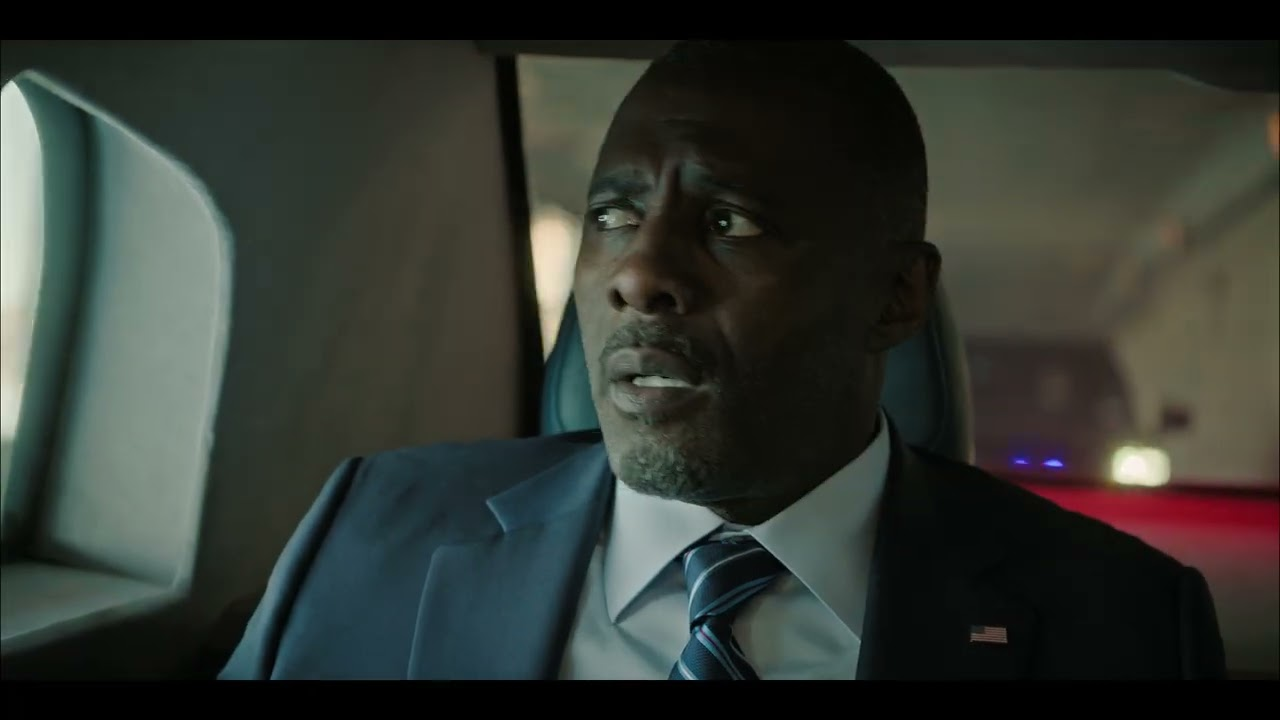
Here, Kathryn Bigelow (Zero Dark Thirty) dramatizes the story via three timelines, all ending at the moment of decision as to response. Just as the attack is reported, after which we have 16 minutes before detonation, President Idris Elba, harkening back to George W. Bush reading to little kids when informed of the terror strikes of 9-11, is shooting hoops at a basketball camp run by Angel Reese.
And … there goes another minute.
Heart-pounding, riveting, and expertly paced, I was most reminded of Paul Greengrass’ United 93, a picture that elevated the professionals and non-professionals in a nightmare scenario, finding bravery, competence, and no matter the outcome of their particular hell that day, a rise to the occasion, with beautiful moments of humanity and humility. Bigelow’s characters are authentic, capable, and thus, all the more engrossing, and she does not neglect them in a film primarily about process and protocol. We learn but tidbits about who they are and what they do. With 16 minutes, there is not time enough, but Bigelow’s economical explication is superb.
On Netflix, one of the better flicks of the year.
*SPOILERS*
There is one major hole. In the book, the scenario had more than one missile coming and they were definitively from North Korea, which truly made the decision as to retaliate more salient. Were more coming? If so, now may well be the time to counterstrike to ensure they were interdicted, even if it meant destabilizing Russia and/or China and inviting a counterstrike based on their misapprehension.
Here, by using a single missile, and making the striking of Chicago a foregone conclusion, on reflection, the response, for which we are all obviously waiting on pins and needles, is not really in doubt.
You would wait on the single missile to hit, see if it detonated, and then wait to see if any more were launched. Nothing that you could do two minutes before the missile hit, you could not do after the missile hit.
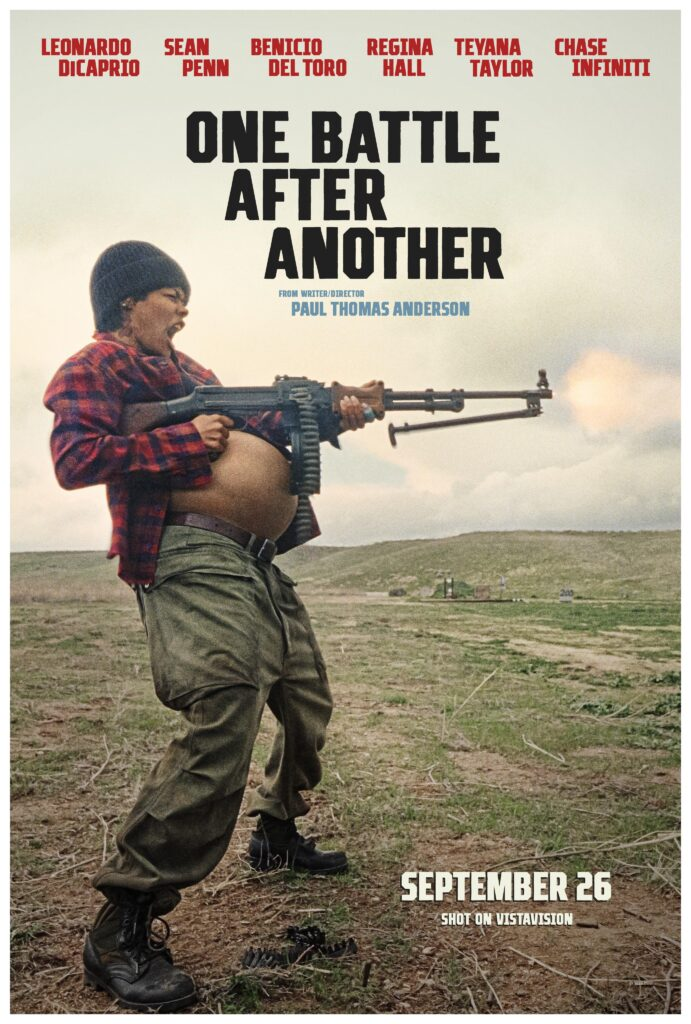
A wild, screwball thrill ride, Paul Thomas Anderson infuses adrenaline with wit and a surprising knack for action sequencing. Leonardo DiCaprio, after Once Upon a Time In Hollywood again demonstrating he is our most accomplished dramatic/comedic actor, plays Bob, a former American domestic revolutionary. Think Weathermen, or Symbionese Liberation Organization, but hyper-charged with comic book pizzazz. Bob got out of the game when he had a daughter, Willa (Chase Infiniti). When Willa is endangered by the past, DiCaprio must save her from a dangerous man on a mission, the government, and a white supremacist society that feels like a mix of Eddie Bauer and SPECTRE. If you wish to stop the review here, as this is a current release, no worries. Enjoy and come back. This is one of the better flicks of the year.
*MINOR SPOILERS FOLLOW*
DiCaprio’s wife, Perfidia Beverly Hills (Teyana Taylor), is a mix of Coffy and Angela Davis. After Willa is born, Perfidia cannot quit the rush of the struggle or face the yoke of motherhood, so she abandons the family, continues to participate in robberies and bombings, and is eventually captured. Her kick-ass bravado exposed, Perfidia squeals on her fellow compatriots, leaving DiCaprio vulnerable and forced to lam it with infant Willa. Bob gives up the life and settles in a quiet town a fat happy stoner, where Willa’s safety is priority number one. 15 years later, a loose end from the past, Sean Penn as Colonel Lockjaw (yes, this is indeed a comic book), needs the daughter, DiCaprio must rouse his flabby mind and body to save her, and the giddy, hilarious chase and race are on.
**MAJOR SPOILERS FOLLOW** On the minus side, and the basis for deductions.
The film is overlong. Penn is offed twice, to no good end in a film nearing 3 hours. Anderson also tacks on a sop, Willa reading a “Fight the Power!” letter from Perfidia, which, if you do not see it coming means you do not watch many movies.
Penn is also problematic, some of it his fault, some not. He is well-developed as a rigid, top-of-food-chain guy who is so sexually attracted to Perfidia (and she to him) his obsession seems genuine and all-encompassing. They are warriors, on opposite sides, feral, carnal, battle junkies. But when Perfidia is gone, and 15 years pass, Penn’s fixation stems from a funny cartoon creation. “The man,” as in white supremacist corporatist types in a suburban star chamber, come calling for Penn and offer him entree’ to their racial purification club. To enter this august body, however, Penn must erase the fact of his mixed-race daughter. If Anderson had expeditiously grounded Penn’s desires for acceptance and/or the roots of his racial enmity as well as he did his hunger for Perfidia, the film would have been stitched tighter, and Penn’s dilemma would have been more interesting.
Penn himself is also over-the-top at times, which is sometimes called for (Mystic River) and sometimes not (his William Holden in Anderson’s Licorice Pizza was a masterclass in cool understatement, but he still has the sin of Casualties of War for which he must atone). Given that we spend so much time on Penn’s fate, he needed to be better fleshed out and ratcheted back.
There is also the matter of the film’s politics. While the revolutionary group opposes all forms of classist, misogynist, racial establishment dominance, ICE-like deportation raids are at the center of the story. Indeed, DiCaprio is ensconced in a sanctuary city. Naturally, this has raised the hackles of observers on the right, another sad development in a world where you can’t even eat a Chick-Fil-A sandwich or drink a Bud Lite without a political colonoscopy. Nonetheless, Anderson is not interested in proselytizing. He wants action, slowing only to have a little fun, such as when DiCaprio forgets a password and must deal with a punctilious comrade much as we all have to deal with help desks and call centers:
Bob: I need this rendezvous point, you understand what I’m saying? I need it.
Comrade Josh: I understand and the question is “What time is it?”
Bob: Fuck! If you don’t give me the rendezvous point, I swear to God I will hunt you down and stick a loaded, fuckin’ hot piece of dynamite right up your fuckin’ asshole.
Comrade Josh: Okay, this doesn’t feel safe. You’re violating my space right now.
Bob: Violating your space? Man, come on – what kind of revolutionary are you, brother? We’re not even in the same room here. We’re talking on the phone, like, man!
Comrade Josh: Okay, there’s no need to shout. This is a violation of my space to me. These are noise triggers.
Bob: Fuckin’ noise triggers? Listen, I wanna know something. I wanna know one thing when this is all said and done: what is your name? I need to know your name.
Bob: Comrade Joshua? Get a better name. “Comrade Josh” – that’s a fuckin’ ridiculous name for a revolutionary. First off. Second off, I want to know your coordinates. I want to know your location right now. What is it?
Comrade Josh: I’m in a secure location somewhere between the stolen land of the Wabanaki and the stolen land of the Chumash.
Bob: You’re fuckin’ intolerable, man. You’re really intolerable. This is not the way revolutionaries do shit. Do you know how hard you are to talk to? Do you know the information I’m trying to give you? You’re a little nitpicking prick! That’s what you are: a little nitpicking prick. And do you know what I’m gonna do to nitpicking pricks? I’m gonna call in a Greyhawk 10.
Bob: I’m calling in a Greyhawk 10, all right? I want you to get your supervisor on the phone right now, because I know you’ve got one. I know you’ve got one, Comrade Josh. All right, I’m going way over your fuckin’ head. Way over your head, all right? Put your commanding officer on the phone now!
Comrade Josh: Cause you’re calling in a Greyhawk 10?
The interlude is a reminder that this is a trip, not a treatise, and the revolutionaries and their adversaries on the ground are presented as professionals or cogs rather than ideological heroes or villains. They never veer too far from a wink and a nod.
Ultimately, I think liberal audiences will love the flick no matter their artistic sensibilities. As I feel the excitement of conservative retributive justice (rights be damned!) in a Dirty Harry or Equalizer movie, this flick is the fantasy of glorified gutsy, cool, strutting anti-fascists who possess skill, discipline, and smarts. As opposed to their meh real-life counterparts, living in their mother’s basement, contributing to the revolution one bag of Cheetos and social media post at a time.
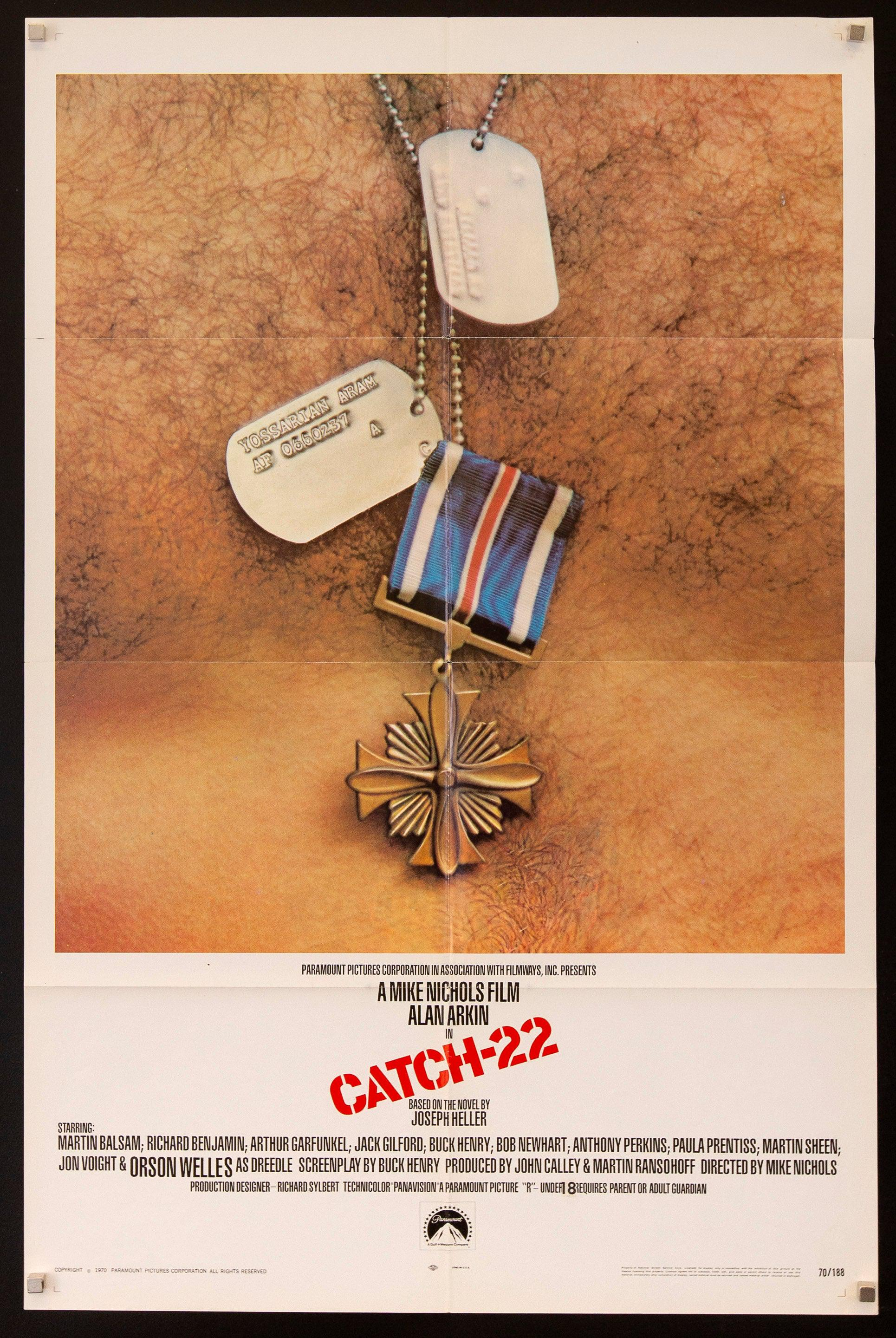
Mike Nichols’ adaptation of Joseph Heller’s dark comic novel is energetically brisk and sometimes entertaining. Tonally, however, the film is an uneven mess, a pointless downer playing bleakness for laughs.
As the original Corporal Klinger, Alan Arkin’s Captain Yossarian is the engine of the picture, a bombardier stationed in Italy who is losing his nerve and wits. His superiors (Bob Newhart, Buck Henry, and Martin Balsam) vex him by upping the number of bombing missions necessary for a ticket home to curry favor with their commanding officer (Orson Welles). Yossarian’s fellow fliers (including Martin Sheen, Richard Benjamin, Anthony Perkins, Charles Grodin, Bob Balaban, Jon Voight, Art Garfunkel, Jack Gilford and Norman Fell ) all suffer under the same yoke, but with cheerful acceptance or apathy rather than the indignation of Arkin’s whirling dervish. How the Academy overlooked Arkin astonishes me; whatever the flaws of the picture, his commitment and on-the-edge turn requiring an actor’s entire skill set is unforgettable.
The film’s main problem is rooted in the see-sawing expanse of the endeavor. Yes, war is FUBAR, and aspects of it are both craven and bizarre. In the world of Nichols and Heller, the poor bombers are riddled with asinine and unctuous leadership, wackadoodle stir-crazy types, suicidal loons, sex-crazed fiends, one murderer, and one uber-capitalist who trades parachutes for commodities on the open market.
When played for laughs, the picture is solid, and no one is begging for verisimilitude. However, when pathos is introduced, such as truly tragic deaths of compatriots (including a particularly brutal death of a young flier) and civilians, the film feels incongruously cruel.
Worse, the picture is more than anti-war. It is anti-American, maybe even anti-everything. As nothing matters, there is no investment in the fates of anyone. A fair juxtaposition is Robert Altman’s M*A*S*H, in which the madness of the endeavor is clear but even in that madness, the professionalism of the medical staff is unquestioned and laudable, the loss of life truly sad. Nichols himself felt M*A*S*H did his picture in: “We were waylaid by MASH, which was fresher and more alive, improvisational, and funnier than Catch-22. It just cut us off at the knees.” All of which is true. But M*A*S*H also had heart and a respect for the craft of combat surgery. Here, there is no respect for anything or anyone and the characters seem more from Looney Tunes than Heller’s book.
Indeed, every hallmark of the American ethos is there for Nichols to malign. The military leaders are insecure dolts, silly and moronic, who care not a whit for the men. The fliers are chumps or burn outs, pawns in the great game, either oblivious or devious in their plans to get out and shirk. Everyone is also an automaton, caring for nothing, even each other. The goal and aim of the war, and this is World War II we are talking about, is at best corrupt and ultimately criminal, as we bomb not only towns with no military significance, but, in a perversion of capitalism, we allow the Germans to bomb our own base for profit. The Italians are victims of the Americans, just as they were victims of the Germans, because, you see, there is no difference between the two. By the end of the picture, the genius behind the corporate conglomerate, Jon Voight, is now close to full Nazi in regalia and trappings.
Hell, even parents who come to Italy to see their dying son are treated as props for a goof.
Yes, yes. None of this is to be taken literally in a “war is madness” story, and the film is a black comedy grossly overgeneralizing for the laughs. Still, it’s the kind of smart set entertainment that fairly encapsulates the philosophy of the sophisticate, a sneering besmirchment that puts the last torpedo into a sinking ship.
I wonder what Heller made of the movie’s iciness. Obviously, his book was a cynical send-up (I read it in high school, along with Vonnegut’s SlaughterHouse-Five), but Heller also flew 60 combat missions as a B-25 bombardier during the war.
There are many many fine war films, but to a near fault, the pictures are accompanied by moving scores and dialogue that seeks to translate the madness into something articulable as a broader goal. The characters negotiate their horror, sometimes in a simplistic, overly cynical or patriotic manner, often anachronistically. A common fault is too much explication. Think Eric Bana telling Josh Hartnett in Black Hawk Down that the only thing that matters is the man next to you, after which he poetically slips away to do more of God’s work in Mogadishu. Or the often trying banter of Spielberg’s platoon, looking for Private Ryan, with their hopes and dreams too much on their sleeves. Or Charlie Sheen’s overt “what are we doing here, who am I?” voiceovers in Platoon.
Then there’s the misery and degradation in all its forms, seen on Spielberg’s Omaha Beach or in the trench hell of the most recent remake of All Quiet on the Western Front. Hamburger Hill, We Were Soldiers, Hacksaw Ridge, Flags of Our Fathers, and dozens of other combat flicks, all which show us the meat and the grinder and the indomitable or broken spirit of those who survive or die in its gears.
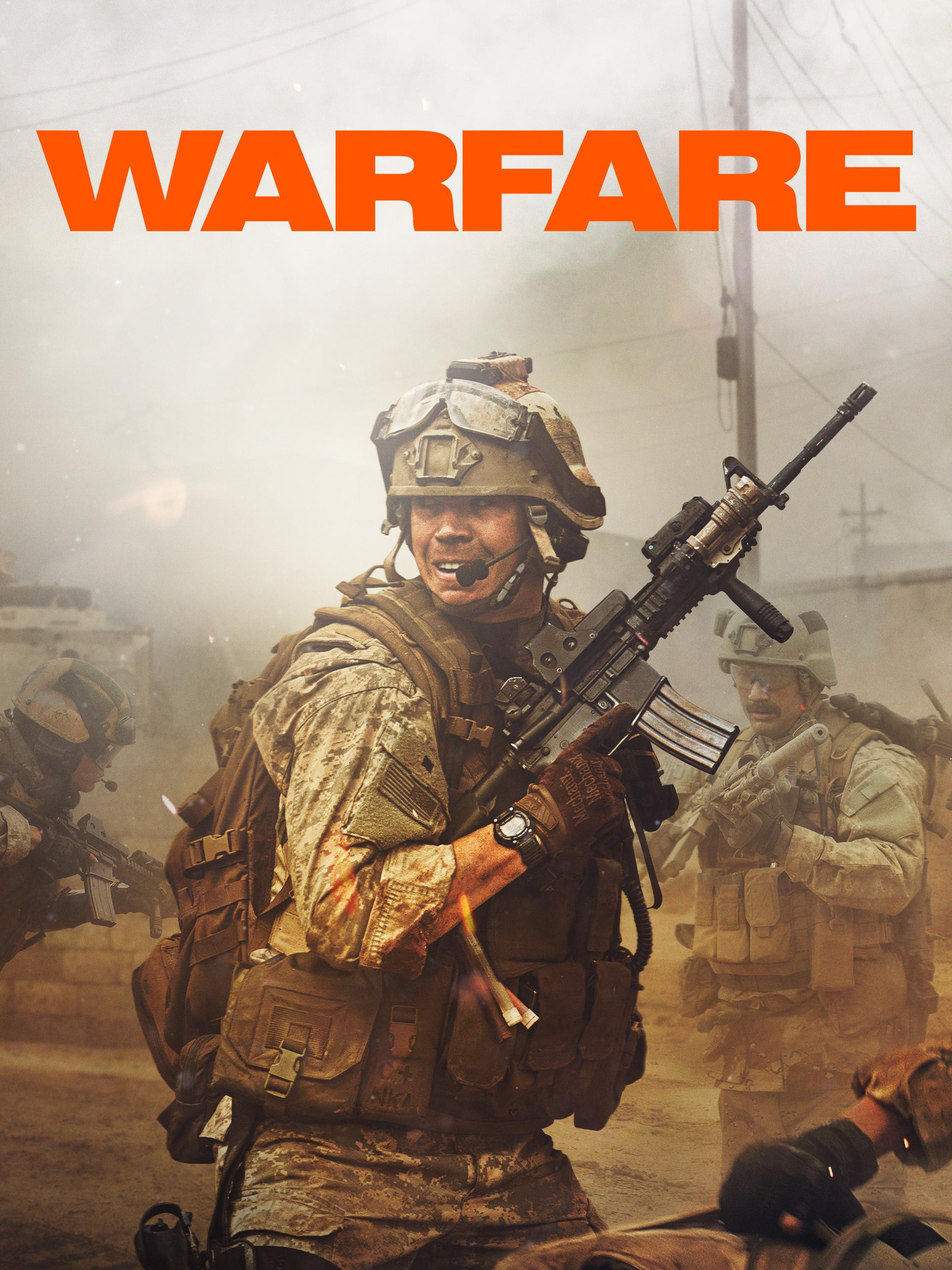
Warfare, directed by Alex Garland (Ex Machina, Civil War, 28 Years Later) and Navy Seal Ray Mendoza, a veteran who served during the action depicted, is like none of these films. A platoon on a observational mission in 2006 Iraq after the Battle of Ramadi soon becomes the quarry. What ensues is a riveting recreation of their fate as they are besieged on all sides. What is revealed is a professionalism in a real time pressure cooker, less heroism than necessity. There are no speeches, no mournful strings, no hoo-rah. No soul searching or leather strap biting (well, a little, but for before morphine is administered, it is a terrible, pitched screaming).
In the place of such war film hallmarks, there is increasing tension and isolation. As the fear and confusion mount, it is met with collaboration, spine, and ingenuity, all hampered by human foible under great stress. Mistakes are made but they are almost built into the scenario and they are not dwelled upon. Terror abounds but it is revealed subtly. The soldiers, pinned down in an Iraqi home for the entirety of the film, have every weapon and gadget American fighting ingenuity can provision. They have surveillance from above, as well as the ability to call in armor or air support. Yet, the unit seems near overmatched by the persistence of their foes, which enhances a secondary threat, the possibility of panic and loss of discipline. There are no dramatic explosions, not unit uprising, no philosophical meanderings. There is hesitation, the glance of doubt, the zoning out to cope, the “are you fucking serious?” look, the nano-second wait for someone else to step up, the grudging assumption of the task when they do not, and the missteps that would occur in any such maelstrom.
There is a beautifully rendered scene where the besieged platoon is reinforced. The first platoon’s lieutenant says to his newly arrived counterpart, “I’m fucked up.” He is not injured, though concussed and disoriented, but he is spent and incapable of command. His near wordless relinquishment, met by acknowledgement, dawning and the assumption of responsibility, is poignant.
The film is really about the business of war, and the exercise of it as craft when literally and figuratively all is crashing down about you. It’s an original work of art in the genre.
I’ll add one contemporary observation. There has been much talk of late as to the physical standards necessary for combat. This film will educate you as to a basic requirement. If you can’t pull a wounded man from harm’s way, you have no business being in the business.
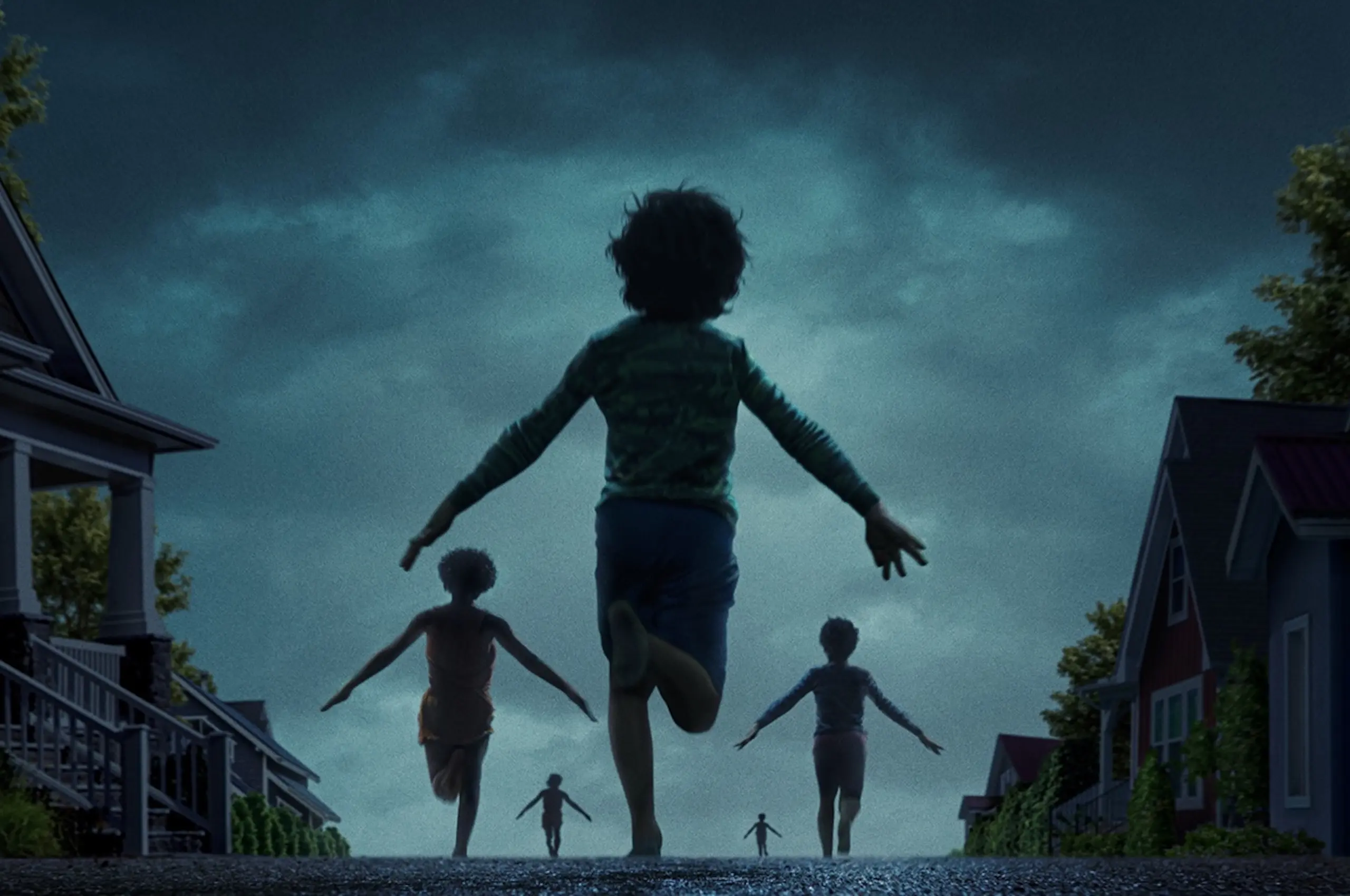
At the outset, you are entranced. Like a scary campfire story, a child’s voiceover explains the disappearance of a group of grade school children in a mid-size Pennsylvania town. One night, they alight from their beds simultaneously, leave their houses, and simply … disappear. All to George Harrison’s Beware of Darkness, a haunting, beautiful tune, pitch perfect to the moment, reminding you just how important good music is to a movie. It is one of the more impressive film openings I’ve seen.
As I mentioned in an earlier review, I suffered from night terrors as a child, which were, unsurprisingly, terrifying. But I also had spates of sleepwalking, and as I saw the children rise and go off into the night, it brought back the visceral feel I had of being that age and traipsing in bitter cold around the block, barefoot, impelled without any autonomy, until I simply drifted back in my house, or that of a neighbor, and went back to a bed, feet dirtied and maybe a bit bloodied, but otherwise not worse for wear.
The children here are worse for wear, and on that, I can say no more. But we learn their fates through an ingenious approach. Writer-director Zach Cregger (Barbarian) recapitulates the event through the lens of six people – the schoolteacher, a father of one of the children, the school principal, a town police officer, a homeless criminal/drug addict and the one child from the class who did not disappear, offering clues and different vantage points that enhance the story.
I was impressed by Barbarian, and as in that picture, Cregger captures the spooky qualities of the mundane. There, it was decrepit Detroit. Here, it is a hamlet in Pennsylvania, though it could be any town USA exurb. Without being showy, Cregger can make a convenience store, a non-descript alley or even gas station pumps vaguely threatening.
Cregger also has a way of writing like people speak. Stephen King film fare is generally situated in small town venues much like this, and almost always accompanied by dialogue so painfully obvious and hackneyed – be it from the town drunk or floozie or sadistic bully or chummy mayor – you shudder, not from fear, but embarrassment. Cregger is comfortable with the natural exchanges of colleagues, lovers, neighbors, and enemies. His dialogue between the principal and the teacher is an apt example, as he expresses his frustrations with and care for her, and she manipulates him all the same.
Nor has Cregger lost the sharp sense of humor from Barbarian, which is interwoven in the everyday patter of the characters. His final scene is a melange of unbridled terror and tension-cutting, roller coaster ride slapstick.
The performances are solid. Josh Brolin is moving as a bewildered father who yearns for his son and just can’t wrap his head around it. As the teacher, Julia Garner is unnerved yet refreshingly feisty, not just willing to lay down and be the town’s sacrificial lamb. She’s no angel either, a bit of an unlikeable pain in the ass, which adds heft to her persona. There is also a bravura turn from a near-unrecognizable Amy Madigan (kudos to me for sussing out that under quite heavy makeup, sure enough, that was Uncle Buck’s girlfriend, Chanise).
So, why the half point deduction?
I am not going to call the picture out on a Longlegs critique, a film that was all feel and little sense. Weapons does not strain credulity to the point of eye-rolling. For the most part, Cregger circles the squares, and he maintains such a taut, engrossing pace you don’t dwell on impracticalities. Nor is the town one where kids are disappearing on a regular basis, yet people keep populating it and settling down, as in King’s It. This is a one-time event.
That said, there is a glaring hole, and please stop here and return to read later if you intend to see the movie.
**SPOILERS”
It’s not just a few kids who go missing. It is 17, all from one classroom, in one night, at 2:17 a.m. When we arrive on the scene, the crime is still fresh, having occurred a mere month or two prior. While Cregger nods to a town in upset, as well as a comprehensive police investigation that, to date, has found nothing. this case would have been bigger than the Lindbergh kidnapping, and the den of the malefactor would have been torn to pieces in a New York minute. Even if nothing was found, the place would have been surveilled 24/7 by anyone from the feds to local p.d. to state police to investigators hired by the parents to the National Guard.
Cregger should have dropped the number to 3 or 4 kids, ala’ Picnic at Hanging Rock and extended the time period between the event and the resolution. A reward poster for a paltry $50,000, is a bad moment, but not as bad as when the weary police chief acts sympathetically but put out by Brolin’s badgering about the case.
Had Cregger set this film pre-internet, at a time of more rudimentary forensics and no Ring cameras, a lot of the film’s troubles are solved. But no one asked me.
Eh, ignore my kvetching. It’s a really great flick.
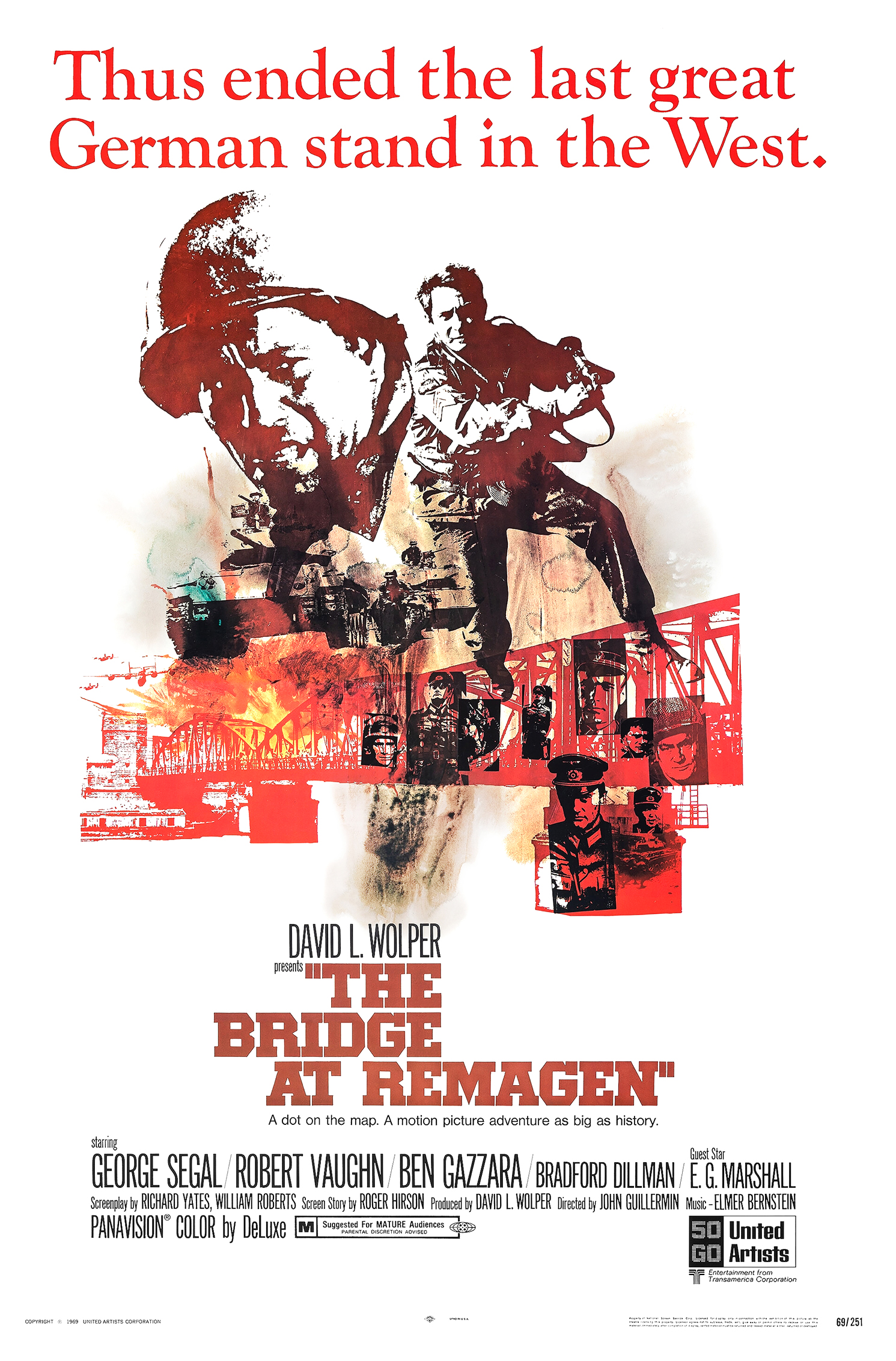
Another war flick I watched in grade school with my Dad. Cynical Lieutenant George Segal is being ridden by gung ho Major Bradford Dillman to save or blow (the mission changes) the last bridge across the Rhine in the waning months of World War II. Segal in turn rides Sergeant Ben Gazzara, who eclipses Segal’s cynicism (he’s a looter of the dead) and then some. On the other side, cynical German Major Robert Vaughn is sent by his superior officer to save or blow (the mission changes) the bridge. All the subordinates are let down by their superiors, and they wear their hard-bitten sensibilities on the bedraggled sleeves of their fatigues (or in the case of Vaughn, his snappy leather trench coat).
The picture is competent if forgettable, with a few interesting facets. This is one of several World War II pictures that carry a Vietnam mentality, where the mission is FUBAR, the line of authority weak, the sense of duty subordinated to the futility and the carnage. Even the coda – that the bridge collapsed 10 days after Segal’s unit gave so much blood to take it – is steeped in Hamburger Hill pointlessness (the filmmakers leave out that in those 10 days, 25,000 American troops crossed and three tactical bridges above and below Remagen were built). The picture is also notable for the introduction of the sympathetic Nazi. Here, it is Vaughn, juxtaposed with the evil SS officers in impeccably tailored outfits who are busily shooting civilians and deserters. The same dichotomy can be found in Peckinpah’s Cross of Iron (James Coburn), as well as The Eagle Has Landed (Michael Caine). The phenomenon petered out (along with WWII films) until years later, in Band of Brothers (the surrender scene and subsequent speech by a German general to his defeated troops), Land of Mine, Das Boot, Stalingrad, and, later, more controversially, Downfall, which rankled many given Bruno Ganz’s commanding performance, which elicited some innate sympathy. Per one reviewer, “the very thought of humanizing Hitler makes me queasy. If he had a good side, I don’t want to know about it.”
Historical note: when the movie was near complete, the Soviets invaded Czechoslovakia, where it was being filmed. Most of cast and crew decamped to a hotel in Prague, where they voted on whether to split or stick it out. They split, to Germany, in a long wagon train of cars, until things simmered down.
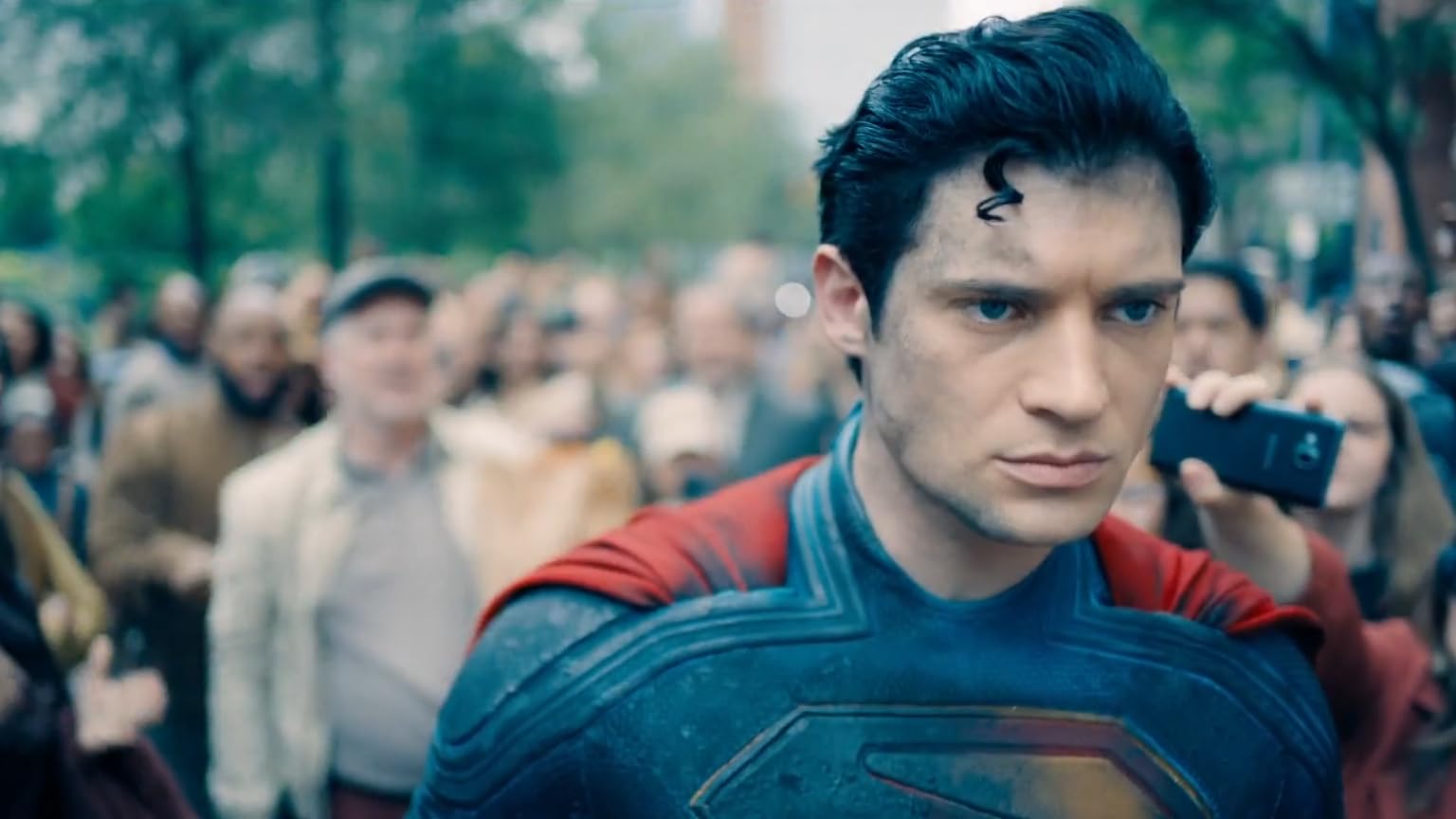
Great fun. The new Superman is nothing short of winning (his recent angst has been jettisoned for an earnestness that cannot even countenance the needless death of a squirrel); director James Gunn (the Guardians of the Galaxy movies) has no pretensions beyond that of making a smart summer popcorn flick; the villain, Nicholas Hoult, is both interesting and funny; Krypto the unruly super dog is a great bonus for the kids; and Lois Lane (Rachel Brosnahan) and Superman have real sexual chemistry. Ultimately, what I loved most about the film was that it was for kids but elevated enough that adults are also entertained, rather than some hideous transmogrification of a kid’s comic dirtied up, made noir, or otherwise infused with big serious themes, because a bunch of 41 year old fat asses sitting in their parents’ basement need to justify their childhood fetishes.
The nits are minor. A few characters get short shrift, a foray into something called a pocket galaxy is a bit long, and the last second introduction of an obnoxious Supergirl feels Something Wicked This Way Comes (next summer).
A big, flashy, visually overwhelming nirvana for speed junkies. But when cars are not going vroom vroom around the cinematic coliseums of the Formula 1 race tour, the film is unoriginal, dull, sexless, and stupid. It is also badly acted (Brad Pitt excepted, as he doesn’t act so much as pose).
Pitt is a journeyman racer, much like Tom Cruise’s Cole Trickle in Days of Thunder, though Cruise was silly as an old “I can race anything with wheels” hand given his youth in that picture. Pitt is more plausible as a man who can race anything, be it in NASCAR, Lemans, Formula One, Baja, or, the Sahara, on a camel. But he’s still silly as a a man looking for something transcendent and elusive, like Kwai Chang Caine in Kung Fu. When Pitt’s old chum Javier Bardem arrives to offer him a spot on his flailing Formula One team, Pitt can’t say no even if it interrupts his quest.
The old timer Pitt joins the team and runs into a hotshot younger driver teammate (Damson Idris). Idris is resistant to the grizzled interloper. He makes his mark on social media more than on the track.
Pitt teaches him maturity, discipline and self-respect.
Pitt also runs into team car design guru Kerry Condon.
Condon teaches Pitt how to be a good teammate.
They also sleep together.
Pitt has not had very good on-screen chemistry with women since Thelma and Louise. The trend continues Here, he is a stoic, and in return, Condon musters all the heat of a flagging sterno cup. With a strongly established “older brother, younger sister” vibe, they have what can only be envisioned as some of the worst sex in history.
Just when you are nodding off, another race will start. You will perk up, because the spectacle is kinetic and exciting. But you can only watch so much racing. These people will have to start talking again, and when they do, it is drivel.
The plot then begins to echo that of a much better racing film – Talladega Nights. There is corporate skullduggery in the form of Tobias Menzies, who wants control of the entire racing team and schemes to depose and supplant Bardem. Like Ricky Bobby, Pitt must not enter the final race for Menzies’ machinations to succeed.
Pitt, of course, enters the final race and saves the day.
In a withering coup de grace, Pitt texts Menzies an emoji.
It is the finger.
Now, we have just spent an entire film trying to establish that Pitt is a simple, grounded, live-in-your camper, shut-out all of the noise enigma.
Yet, in declaration of his own worth and independence, he texts an emoji.
Yeesh.
The movie is terrible when characters talk, impressive when wheels are turning, a bit of a conundrum, because I can’t imagine it would transfer as well at home.
Use your best judgment. Knowing what I know now, I believe mine would have been to forgo the film and watch the vastly superior Rush.
A sweet, bumbling but well-meaning widower (Tim Key) pays a hefty sum for a reunion concert of a busted-up (professionally and romantically) folk duo (Tom Basden and Cary Mulligan) at his home, a remote island off Wales, without telling one that the other will be attending. Funny, charming but never saccharine, smart, short, restrained, and not bound by the prerequisite of tying it all up in a bow. Felt like one of my favorite flicks, Local Hero. One of the best I have seen this year. Streaming everywhere for $9, free on Peacock.




 filmvetter