Archive

4 stars


Obviously, I am overwhelmingly pleased to see a three hour film about a historical figure (and to think, Ridley Scott’s next picture is … Napoleon!) Just the other night, I was having drinks with younger colleagues (I am the last year of the baby boom, I estimate that these folks are late 20s), who were excited to see the movie.  I took a pull from my pipe and asked them, “what do you know about Oppenheimer?“ One answered, “the atomic bomb.“ Then I thumbed my tweed jacket and said, “what else do you know about Oppenheimer?“ Neither knew anything further, which makes sense. Yet due to the cachet of Christopher Nolan and the buzz about the film, they couldn’t wait to go see it. One was teaming it up with Barbie for a Barbenheimer, which sounds both intriguing and daunting. But to each their own. 

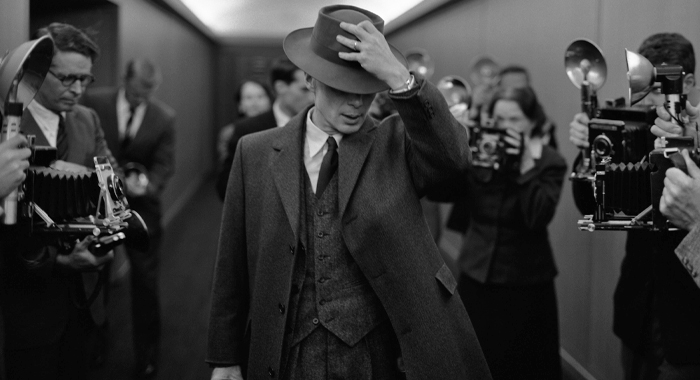
They should not be disappointed. Nolan’s first two acts are so fully realized and lovingly shot, they are nothing less than stunning. And his narrative-hopping from time period to time period is not just for show. Nolan captures the important vignettes that underscore what you will see later. His rendition of the first atomic test is gripping and fraught. I was on the edge of my seat knowing full well that for the denizens of Hiroshima and Nagasaki, it was not a good day.

Alas, the third act is a bit clunky. In the end, a bureaucratic and personal feud between Oppenheimer and Robert Downey, Jr. eclipses some of the larger themes of the picture. It just struck me as a little bit beneath what preceded it, as if Oppenheimer’s undoing stemmed from a mere misunderstanding or snit. 

I read the book upon which the film was premised, American Prometheus, years ago (and had the honor of being taught a course entitled “Nuclear War Crises” by the book’s co-author, Martin Sherwin). The real Oppenheimer was a bit of a mess. His views on the efficacy, wisdom and impact of the bomb matured, but also wavered, and he could speak with confident enthusiasm and also wary trepidation. He could be thoughtful and also, cooly lethal (he once rejected a poisoning scheme with, “I think we should not attempt a plan unless we can poison food sufficient to kill a half a million men, since there is no doubt that the actual number affected will, because of non-uniform distribution, be much smaller than this”).

Cillian Murphy does a beautiful job of working it out in front of us with an internal, searching performance. We see him struggle, not by soliloquy, but by discussion and quiet deduction. Murphy is, rightfully, a lock for best actor (if the Oscars are still a thing next year). 

Murphy is ably complemented by Emily Blunt (wife), Florence Pugh (lover), Matt Damon (the glue guy, still Hollywood’s best and least heralded actor, as General Groves), and a slew of others, all solid (Josh Hartnett? Yes, Josh Hartnett has grown up) and of whom you invariably remark, “Damn. Where have I seen him?”

As Oppenheimer’s bureaucratic nemesis, Downey Jr. crackles, though, as mentioned, he is seminal to the weakest aspect of the movie. 

Talky, meticulous, massive, yet chock full of the little things, Nolan has made a grand, intelligent epic. I hope it spawns more to come.

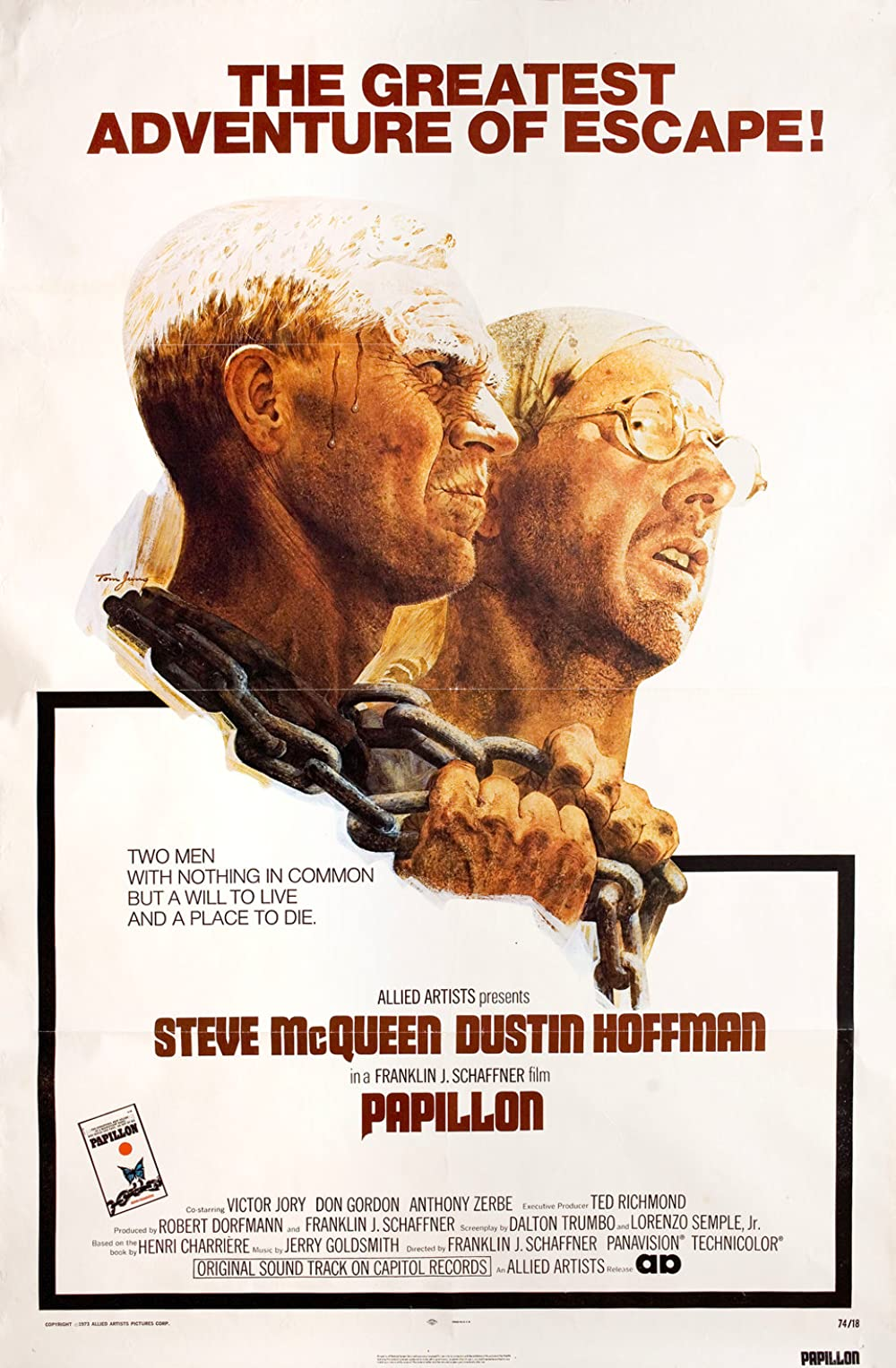
Franklin Schaffner’s (Patton) big-budget adventure/escape flick is competent, professional, well-acted (even if Steve McQueen and Dustin Hoffman have no interest in playing French people) and occasionally imaginative, particularly McQueen’s dream sequences as he fights solitary confinement and near-starvation. McQueen is the title character, sent to French Guiana for killing a pimp, where he meets the bespectacled Hoffman, a forger whose only protection is the ability to bribe officials. Their relationship deepens as McQueen, the Cooler King of The Great Escape, naturally attempts escape again and again here.

You may like the flick or not, but it is noteworthy for one scene, below. That crocodile has its snout wired shut and sure, it is drugged to the gills, but those are two massively bankable stars messing with a real crocodile. Nuts!


On MAX (formerly HBO Max).

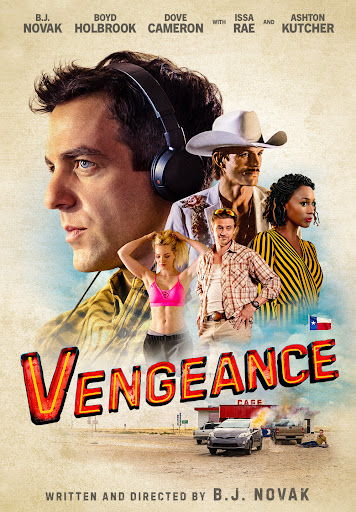
BJ Novak‘s black comedy nicely straddles the line between laugh-out loud funny and acerbically insightful. Ultimately, a culture class vehicle, the film also hits every one of its marks in blue and red America.

Ben Manalowitz (Novak) is a NYC writer who longs to host a hot transformative podcast, a vessel for his views of America. When we meet him, he is so hiply ironic and up his own butt, there’s not a lot to root for. But we do, because he seems adrift and in struggle for meaning. Once you get past all his posturing, he also seems decent, if weak.

Novak’s Ben reminds me of Lena Dunham’s Hannah Horvath in Girls, a clearly unsympathetic protagonist shown in an unflattering light who still manages to elicit empathy. Novak skewers himself mercilessly (shout out to John Mayer, whose one scene with Novak is a hilarious, ostentatious riff between two “bro’s” that introduces Ben and what he is about with economical precision), but stops short of the cartoonish, offering a balanced portrayal of a narcissistic guy with bite-sized intellectual pretensions who also wants to be a good dude.

When Ben gets a call from a distraught man in Texas telling him that his sister and Ben’s girlfriend Abilene is dead, it takes Ben a minute to realize that she was just one of his many occasional hookups, one who must have told her family that he was her steady boyfriend back in the city.  Ben takes an extra beat to see a trip to Texas for Abilene’s funeral as an opportunity to immerse himself in some of the America he waxes so philosophically about. Upon arrival, a hot podcast is born.

Ben is the quintessential fish-out-of-water, and in lesser hands, the film would have had little to say about the cultural divide while maximizing the pratfalls and faux pas of a NYC Jew in shitkicker county. Or, the picture would have jettisoned the funny for deep intonement about the state of our current national fracture, such as it is. 

Novak smartly balances both elements while crafting a genuine connection he makes with Abilene’s family.  A scene where Ben attends a rodeo is gut-busting, another where he interviews Abilene’s record producer (an impressively soulful Ashton Kutcher) is thought-provoking and intelligent, and the deeper his dive into fly-over country, the funnier and more meaningful the picture becomes. Novak takes hard, amusing, and accurate shots at everyone’s station with a humility that elevates the movie.   

The picture suffers just a bit at the end from repetition (a little Ashton Kutcher goes a long way) and a discordant, implausible cherry on the top, but no matter.  Very sharp, very tight, highly recommended.                   

On Amazon Prime.

Taut, rich crime drama about the not very good day of London crime boss Harold Shand (Bob Hoskins). When we meet him, Shand is on the cusp of branching out to global semi-legitimacy. He’s even hosting his would-be U.S. partner when his entire organization comes under assault. Key associates are dispatched and an unknown enemy is blowing up his establishments, and just when he thought he was getting out, they pull him back in.

Hoskins is ferocious, at once charming and gregarious and then lethal, but palpably human throughout. You really root for him but sense that his time may have passed, especially as he waxes on about the greatness of the Brits and attempts to connect his own rise to the glory days of his homeland, which doesn’t seem all that glorious as depicted by director John Mackenzie. His London is grimy, gray, and decidedly tired, like Harold’s organization, and is starkly juxtaposed against Shand’s fantasies.

The film is also slyly funny. Shand, for example, scolds his spooked American partners about empire and declares, “we’re in the common market now, I’m going into business with the Germans, yes the bleedin’ Krauts!” And even in the midst of their potential destruction, Shand and his gang share knowing, even juvenile laughs that speak to their intimacy.

Helen Mirren is his devoted wife, desperately trying to keep him grounded, and his entire crew feels more like a disintegrating family than a dangerous group of cutthroats. As it all goes bad, Shand’s hubris, parochialism, and self-satisfaction conspire against him, but the strongest theme is just how hard it is to keep “family” together. One of Shand’s more endearing qualities is his patience with underlings who disappoint him like wayward sons. He’s always in between slugging and hugging them.

The film works as a character study and, for a time, a whodunit (or, “who is doing this?”). Occasionally, it is a bit arty, and weighted down by a strange, synthy 80s score, but for the most part, it is riveting.

On HBO Max.

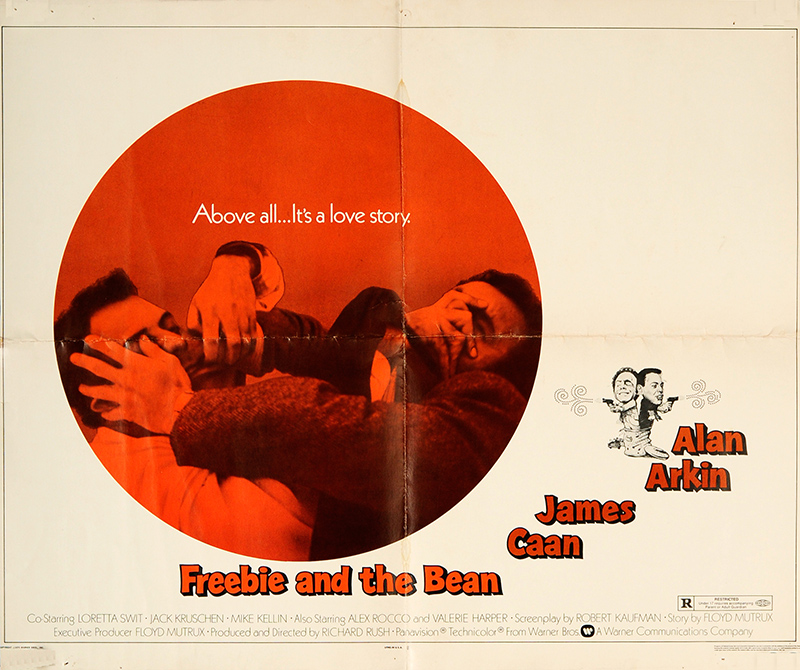
Another of the 70s flicks my Dad took me to when I was probably way too young  I remember being so jazzed at the back-and-forth between the manic Alan Arkin and wisecracking, nattily dressed James Caan, two San Francisco detectives trying to take down a mob boss. To make things cooler for a 9 year old, the violence was hilarious yet brutal, the dialogue scabrous, and the car chases relentless and in great supply.

Would it hold up 50 years later?

Yes, and how. Quentin Tarantino has raved, “nothing short of a masterpiece…absolutely brutal…part of the way the film worked was for you to laugh at the brutal violence and then feel bad about yourself for laughing.”  That is too much praise, but not by much. Caan and Arkin are a scream, very natural, yet way, way out there in terms of chemistry, perhaps riffing before it became standard, but fully committed, never lazy. I remember cracking up with Dad in the theater and after paying $2.36 for the rental on Amazon this weekend, I laughed out loud a half dozen times and smiled throughout.

It’s a strange duck of a picture, a flimsy cynical story giving way to an entertaining buddy cop yarn (clearly echoing The Odd Couple). Director-writer Richard Rush allows for very long takes of Arkin and Caan needling each other and then, there’s absolute chaos, followed by sweet scenes between Caan and his gal and Arkin and his wife. You get the sense that tonally, no one is steering the ship, and Arkin has remarked that he never really knew what kind of movie Rush was trying to make. Still, Rush makes it more seamless than it has a right to be. Good fun through and through, and The Nice Guys owes a lot to this picture.

Also, wildly offensive. For those keeping count, Arkin of European Jewish descent plays Hispanic (he is “the Bean” – get it?), as does Valerie Harper (“Rhoda”). The script is littered with politically-incorrect jibes that would likely result in a campus protest these days, and the treatment of the villain would require the calling in of the National Guard. So, gird your loins.

On Amazon Prime.

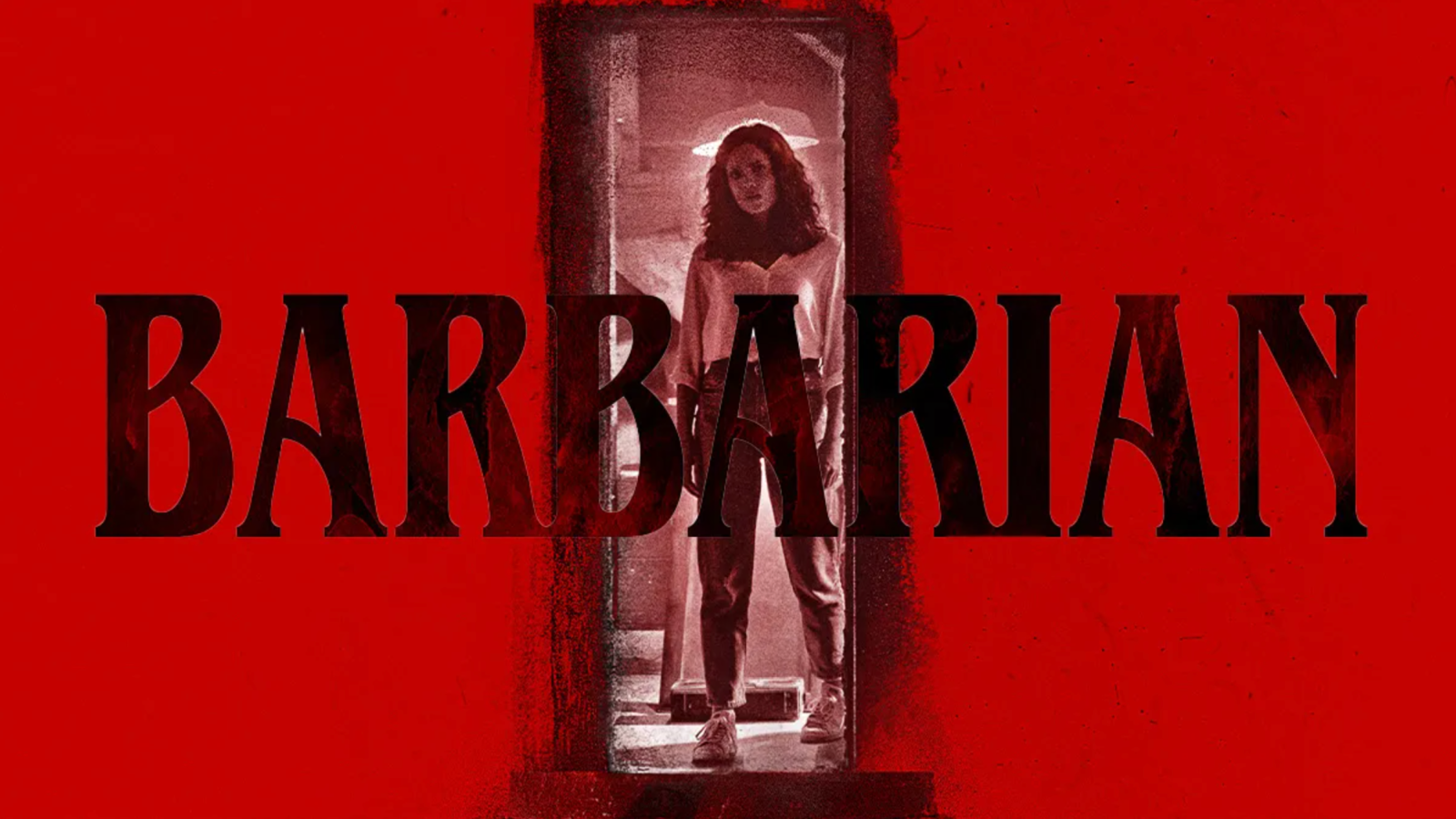
Very clever and funny thriller/horror flick, currently on HBO Max. I’m reticent to say too much and spoil the fun, but can pass on the following–

1) This is a “horror” movie for folks who may not be predisposed to them. The gore is minimal, though the tension is high, and the levity is in abundance.

2) Everyone is good. Justin Long steals the show.

3) Perfect length at 1 hour, 42 minutes.

4) Detroit is a scary place.

5) A surprisingly sweet ending.

6) One reviewer wrote, “it’s ‘about’ stuff — gentrification, abuse, toxic masculinity, taking responsibility”, which, thankfully, is a ludicrous amplification of some elements, but it is a smart picture.  

7) It got knocked down to a 4 because of over-reliance on the charity and goodness of one character, a necessity to keep the freight train running, but lazy all the same.

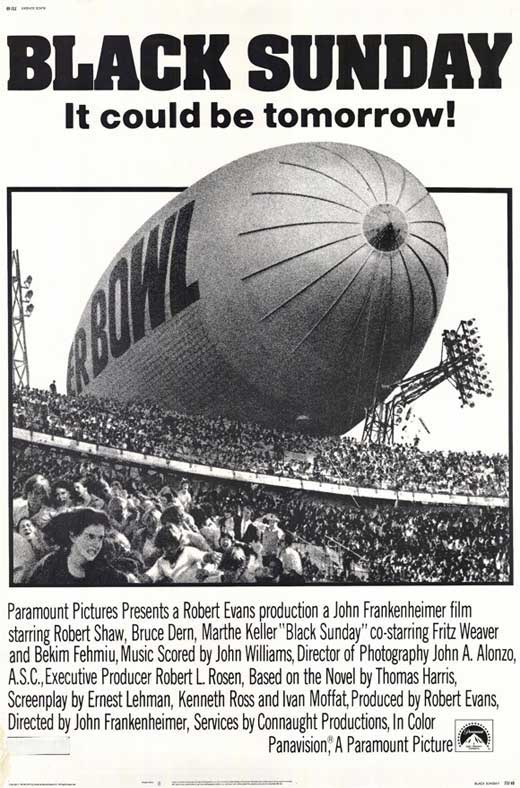
John Frankenheimer (The Manchurian Candidate, Ronin) handles this thriller with crisp professionalism. Proof? My wife, who loathes 70s films, came in for the last 25 minutes and was riveted. I even had to pause to get her up to speed on who was who and what was going on.

Granted, Frankenheimer has some pretty ingenious material to work with – Palestinian terrorists intend to fly the Goodyear blimp into the Super Bowl where they will detonate a massive bomb that will disperse shards of metal for maximum carnage (the film is adapted from Thomas Harris’ only non-Hannibal Lecter book).

The driven mastermind is Martha Keller (so driven because the Israelis have destroyed her entire family) and the psychologically impaired stooge is Bruce Dern (a former POW flyer in Vietnam, stripped of rank for “breaking”, now working for Goodyear flying the blimp). Robert Shaw is the relentless Mossad agent hot on their heels, guilt-ridden because he had a shot at Keller but let emotions engender mercy.

There is a little too much Dern and Keller relationship stuff, and in particular, Dern and his mental breakdowns/quirks, and the film could’ve been cut easily by 20 minutes.  But there is much to like here, and in particular, Frankenheimer does the madness of public violence great justice.  His insistence in showing just how many innocent people actually get killed if criminals and cops decide they’re gonna’ shoot it out in the streets is welcome, as evidenced by a thrilling Miami Beach sequence.

But the coolest facet is the fact that the NFL let them film the movie at the actual 1977 Super Bowl between the Dallas Cowboys and the Pittsburgh Steelers, and the Goodyear people let them use the actual blimps, almost otherworldly in these days of image consciousness, risk-aversion, and fear of offense. Frankenheimer may have had Goodyear over a barrell. In one of his biographies, Frankenheimer recounted that he helped persuade Goodyear to let him use its blimps because if not, the production would rent a large blimp, paint it silver-and-black, and people would think it was the Goodyear blimp anyway.

The impact truly heightens the tension when we see Shaw and FBI Man Fritz Weaver running around the Orange Bowl past Tom Landry, Franco Harris and even this guy…

Okay, not the real Jimmy Carter, but this is the only shot of him in the film, and though it’s very quick, it is a testament to Frankenheimer’s desire for verisimilitude.

Solid. On a subset of Prime, MGM+.

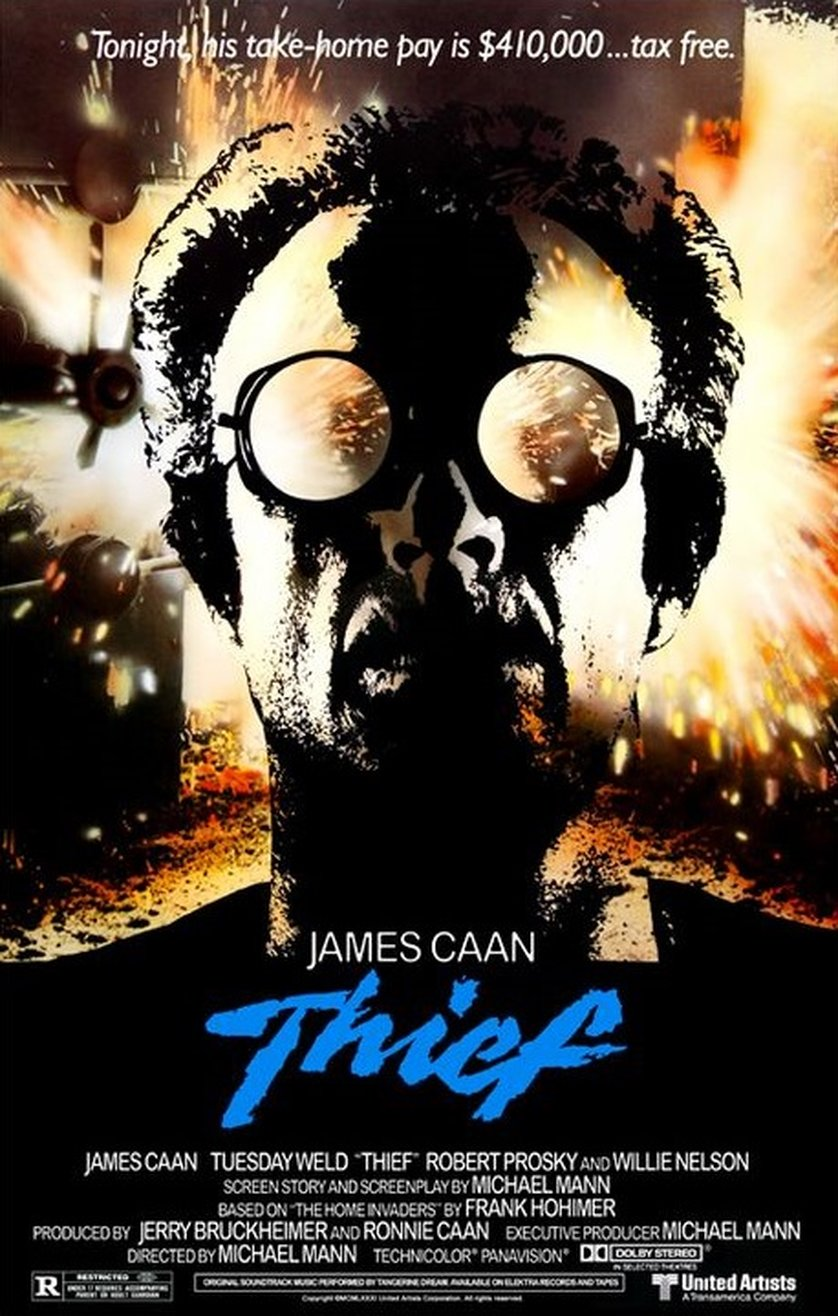
I started watching Michael Mann’s Tokyo Vice on HBO Max, which is excellent, and then I noticed that his big screen directorial debut was on Amazon Prime for free (Mann also wrote the picture).

I remember Thief primarily because the bad guy was Robert Prosky, a then-legend in D.C. theater (I went to high school with two of his sons, both theater kids). As a seemingly civilized crime boss branching out into legitimate investment, Prosky does not disappoint. He’s a sharp mix of warmly urbane and brutal and is at his best when wooing the uber-independent professional thief Frank (James Caan) to join up with his outfit. Prosky offers Caan all the tools necessary for big heists – including the materials, targets and dental – all the while “respecting” Caan’s ability to opt out of the game at his whim.  Simultaneously, Caan is wooing diner hostess Tuesday Weld, dreaming of that last score and getting out.       

Mann’s stylish sequences make great use of a perpetually wet, gray and grimy 1980 Chicago, and the industrial score by Tangerine Dream (an edgier Vangelis, who just died) adds to the noir-ish moodiness.

Sure, it is a little dated. The slo-mo shootout at the end, in particular, does not travel well. But the heist scenes are exciting, and there is a real chemistry between Caan and the several-times-around-the block Weld (their momentous date over coffee, which becomes a lifelong bond, is credible, no mean feat). Caan is riveting as a distrustful loner frantically trying to wrap it all up and get free. He plays Frank at a slow simmer, a man for whom control is so seminal, it devours him.        

Willie Nelson has a very strong turn – one scene – as a desperate convict, and you can also spot Chicago regulars Dennis Farina and William Peterson in small roles (and Jim Belushi in a larger one).   

Beautifully acted and well-executed, it is nice to see “little” films like this make a big splash for awards season, but CODA‘s inclusion also points up the dilution of the value of a best picture nomination. When you can have 10 nominees, you not only get crap (Don’t Look Up) but perfectly good films that are not extraordinary (Belfast, King Richard and this).

A high school girl (Amelia Jones) who wants to sing is hemmed in by her situation; she is the only speaking member of an all deaf family and she’s also forced to be their interpreter, diplomat, business manager, and even inspiration.  She suffers the indignity of peer mocking, familial over-reliance, and shyness, all the while guided and supported by her music teacher, who sees something in her . . . something special.

So, there’s nothing new here. But what is delivered, however familiar, is heartfelt, never overwrought (Jones infuses an attractive resignation and world-weariness into her character), and only occasionally cloying. The picture’s major misstep lies with the hip deaf parents – Troy Kotsur and Marlee Matlin – who are sometimes crudely overdrawn. For example, they flaunt their sexuality even as their poor daughter is enlisted to interpret their doctor’s advice that they refrain from coitus (because of jock itch), and their “birds and bees” discussion with her in front of a high school crush is excruciating in its falsity and manipulation of the audience. These are cringeworthy scenes meant to point up Jones’s burden, but they are also cartoonish and cheap.

That aside, the film is stirring and heartwarming and ultimately, it delivers. Have a hankie nearby, especially when Kotsur asks to “hear” his daughter sing.

Another feather in its cap – Jones does her own singing, is British but plays American, and learned sign language for the role.

Streaming on Apple TV.

In 2016, Janicza Bravo wrote and directed one of the better entries for the TV series Atlanta, where the two black protagonists must negotiate their fraught relationship while enduring a bizarre Juneteenth party thrown by a wealthy couple, he, white and cluelessly solicitous, she black and protective of her status.

The party is unsurprisingly surreal.

The episode is bitterly funny and arch, but Bravo is hemmed in by the room, one that gets more claustrophobic as the tenuous couple try to hold it together.

With Zola, Bravo is unrestrained, and the result is a dizzying, frenetic, trippy After Hours-esque black comedy nightmare, one based on a real life 148-tweet thread about a trip a Detroit stripper took to Florida with another stripper named Jessica.

Opening line” “Y’all wanna hear a story about why me & this bitch here fell out? It’s kind of long but full of suspense.”

The film is about feel, specifically, the texture of an ill-advised road trip that has gone horribly wrong.  The characters are hilarious, but they are as much pinballs as people (one of the few weaknesses; it’s easier not to care about their plight). In Bravo’s hands, the curves and jolts just keep coming, though she occasionally slows the action so the main stripper and poorest of the decision makers (Taylour Paige) can almost get her bearings. Bravo is so technically adept, these parts of the film play exactly like the part of a rollercoaster where the car deaccelerates on a curve, and then, zoom. You’re off again.

The film sports an innovative montage sequence, strange local rituals (her Florida is the land of “Florida Man” without even mentioning him), and the cellphone as arteries, veins and lungs to modern dimwits. I feel like I missed half of it and want to take the ride again. But what I saw was totally engrossing and I often laughed out loud for as long as I had time.

Bravo’s talent is undeniable and will likely be expended on the next Marvel franchise, Dr. WeirdButt of the Multiverse.

On Hulu.