Archive

2 stars

In post-WWII Poland, a pianist and an ingénue he has selected for the national cultural ensemble fall in love.  He escapes through Berlin on a concert tour, but she is hesitant, and they are separated.  They see each other every few years, and eventually, they are reunited in Paris, free.  But they cannot make a go of it, she retreats back to Poland, and in what is supposed to be a grand gesture of everlasting devotion, he admits his sin against the state, returns to his native country and does 15 years hard labor, which, coupled with torture, destroys his fingers.

I suppose this was supposed to connect as a moody, timeless, passionate yet doomed romance.  But the two leads, who alternately smolder and pout, are so childish and impetuous, it’s hard to gin up much sympathy.  Indeed, when she makes it to Paris, they bicker like children, she constantly kvetching about his prior lover and Western ambition, he inexplicably distant (in fact, he often looks as if he knows he made a very big mistake in working so hard to be with her but can’t bring himself to admit it).

Neither character acts in a manner showing any deference to their good fortune.  These aren’t lovers separated by culture or prior marriages or obligation, but rather, an iron curtain where, to be on the wrong side of it, you lose your freedom and you can get your delicate pianist fingers mangled by 15 years of forced labor and torture.  And they surmount that curtain!  So, when they chuck it for seemingly pedestrian reasons, and he insists on his grotesque punishment, you don’t care.  Well, maybe you will.  The movie is very well regarded.  But I didn’t.

On the plus side, the movie is beautifully shot and blessedly short at under an hour-and-a-half.

Nominated for Best Director, Best Foreign Film and Best Cinematography and available on Amazon.

FDEE7D08-09FB-462C-859E-80CC4A421583

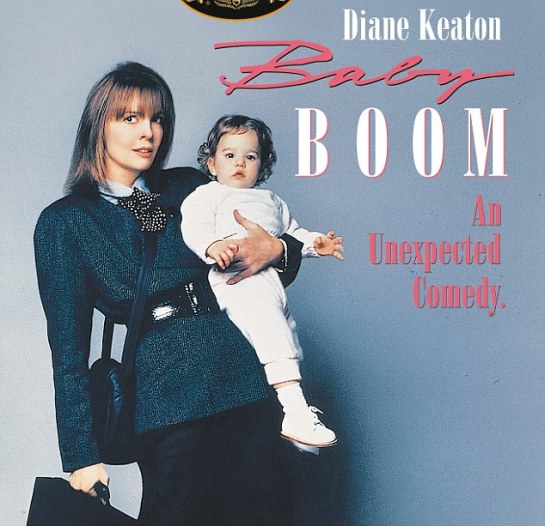
We always loved Baby Boom because the toddler reminded us so much of our daughter, in that she was adorable. I concede, one’s own daughter is always adorable. But our daughter was and is, objectively, adorable.

I digress.

Baby Boom is currently on the Showtime rotation and in watching to see the facsimile of our daughter, we caught the entire picture. The little girl is still cute. The 1987 film, however, does not travel as well as the kid.

Diane Keaton is the go-go Manhattan executive on an upward trajectory when a long lost and recently deceased relative delivers her a beautiful little girl via will.

It’s a broad comedy.  I can accept that a baby would be delivered at the airport at the mere stroke of a pen. I can accept that the cutest baby in the world would almost be transferred from a Manhattan agency to a cold, poor, backward Iowa couple. I can accept that James Spader in a suit is a villain. Well, that last one is a requirement for 1980s films.

But after Keaton keeps the baby, she is so inept – as demonstrated by numerous silly vignettes of a Weekend at Bernie’s stripe –  it becomes unfunny.  She deposits the baby at a coat check. She can’t negotiate a disposable diaper. She feeds the doll pasta and red sauce.  Hilarity does not ensue

It’s just easy, schlocky and weak. And when she is jettisoned by her company, you don’t have the sympathy for her that you should.

After getting demoted, Keaton takes the baby to Vermont, buys a dream house that is actually falling apart, meets rustic veterinarian Sam Shepard, fights with him until he forcibly kisses her, then has rewarding and fulfilling sex with him, and then starts her own successful baby food chain, all to the standard twinkly saxophone and Kimball organ score of the time. Whereupon, the corporate heels call her back to offer her the moon for her little company.

She declines, delivering a confused declaration of independence, a stemwinder announcing that 1) she should not have to choose between family and work; 2) she should not have to move operations from quaint Vermont to Cleveland; 3) James Spader is a rat; 4) she may just take her baby food company national herself; and 5) oh, she’s having rewarding sex with Sam Shepherd.

Except 1) they offered her $3 million and a COO job at nearly $1 million per, but it was the opening offer and she could have asked double, while getting a ceremonial board seat or do-nothing exec slot with an ample salary; 2) they said at the outset the move to Cleveland was negotiable; 3) she could have insisted Spader work the account and tormented him unmercifully, or she could have asked for his head to seal the deal; 4) there is no way she could take this company national; she can’t operate a pair of Pampers; and 5) swooning, with an actual sigh, about Sam Shepherd in a business meeting reinforces a lot of the stereotypes the stemwinder was supposed to rebut.

But the baby is adorable.

Image result for Studio 54 documentary

This received an 89% on Rottentomatoes.  I can’t imagine why, unless the answer can be found in the desire for heartfelt tributes to other trivialities, like Luke Perry.  Or Silly String.

The film is mundane, there is nothing new to learn (“oh look, Andy Warhol . . .oh look, Truman Capote”), and ultimately, the story of a disco nightclub open for less than three years can only be so compelling.  Of course, when the various interviewees fix the heyday of that nightclub into the fabric of our times and who we are as a people, all the coke, sex and disco balls in the world can’t erase that blot.

I will give it this:  I laughed when one of the employees explained that Mick and Keith could get in for free but the rest of the Stones had to pay the cover.

Currently available on Netflix.


190D5A0E-F567-4FE3-ABF0-126B8A846388

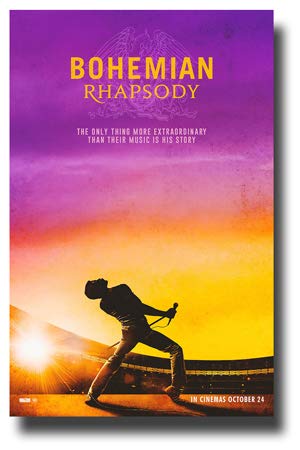
I always thought Queen was camp, a goof, and their primary contribution was “We are the Champions” and “We Will Rock You” which you sang in the bleachers during CYO basketball games. When I realized some people thought they were a great band, I was surprised. So, I walked into this as if it were a biopic of Emerson Lake & Palmer. Or Kansas.

Still, a great movie does not have to be about a great band. This, however, is not a great movie. It is cookie cutter, inoffensive, as risk-averse a biopic as you’ll find (it’s clear why Sacha Baron Cohen was jettisoned from the project), but well-paced and energized by the erstwhile Bryan Singer and made a little more interesting by Rami Malek’s weird, lizard-like performance (he’s just this side of Bela Lugosi, you never know if he’s just about to bite someone on the neck).  To be fair, Malek is also very moving towards the end.

The scenes of the band playing live and in studio are silly. The scenes of the band talking about the music and themselves are like a slightly more serious episode of the Monkees.  The rendition of the creative process is hilarious.

The primary feeling you’re left with is foreordained watching any story sanctioned by its subjects (the band had script approval) – it’s pleasant.  Rock and roll, drugs, cats and AIDS, brought to you by Disney.  It’s formulaic, harmless and overlong at two hours and fifteen (ending with an extended scene of their set at Live Aid, which is dull in that Malek is lip-synching), but not unentertaining.

C69F2668-7D2E-4686-AF37-4725FE485E36

Starts out strong, a big, sweeping saga, great chemistry, starry and charming. There is even a real connection on stage.  Twenty minutes in, I thought I was in for a treat, and I was enthused to see an old fashioned big star Hollywood love story instead of a tired rom-com with an ugly dude, snark and irony

And then it just drags, with nothing occurring you don’t expect to occur, and what you do expect is very humdrum in the way it occurs.  Lady Gaga is not godawful but she is not good.  She is too raw, too one-note, and has no real feel for the moment, just doe-eyed insistence.  Bradley Cooper is effective as a haunted guy in a stupor with the biggest Daddy issue ever, but it ain’t heavy lifting, just a lot of looking down and slurring.

As the relationship goes longer, you realize, not only are they banal, but so are their circumstances.  She’s a bit of a petulant dummy and he’s an underdeveloped weakling.  One would think the glitzy world they inhabit would be treacherous and exciting, loaded with landmines and seductions.   One would be wrong.  They spend most of the time in bathrooms or in front of dining room or coffee tables, warbling on about nothing.

When not boring, the script is just a jumble of cliche’.  They have the same damn argument and Gaga gets worse as it goes on, more Snooki than Streisand.

It is also poorly edited. Scenes just abruptly and jarringly end. There is no flow.

This is not a good movie. It was good to see Andrew Dice Clay (as her father), though.

image

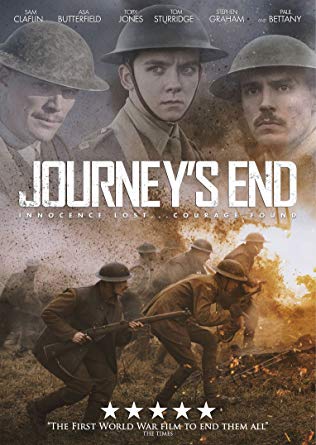
Grim. Dreary and grim. As grim as any trench in World War I, where the entire film is set. We spend four days with a British unit about to be overrun by the Germans in the spring 1918 offensive.   There is no story arc, just the pitiful and doomed interplay between several officers.  War remains hell.

Mostly well acted, and in particular, Paul Bettany stands out as a doomed and comforting older officer, but that’s about it. This is a hard slog, though, mercifully short.

Mary Poppins Returns (2018) - Trivia - IMDb

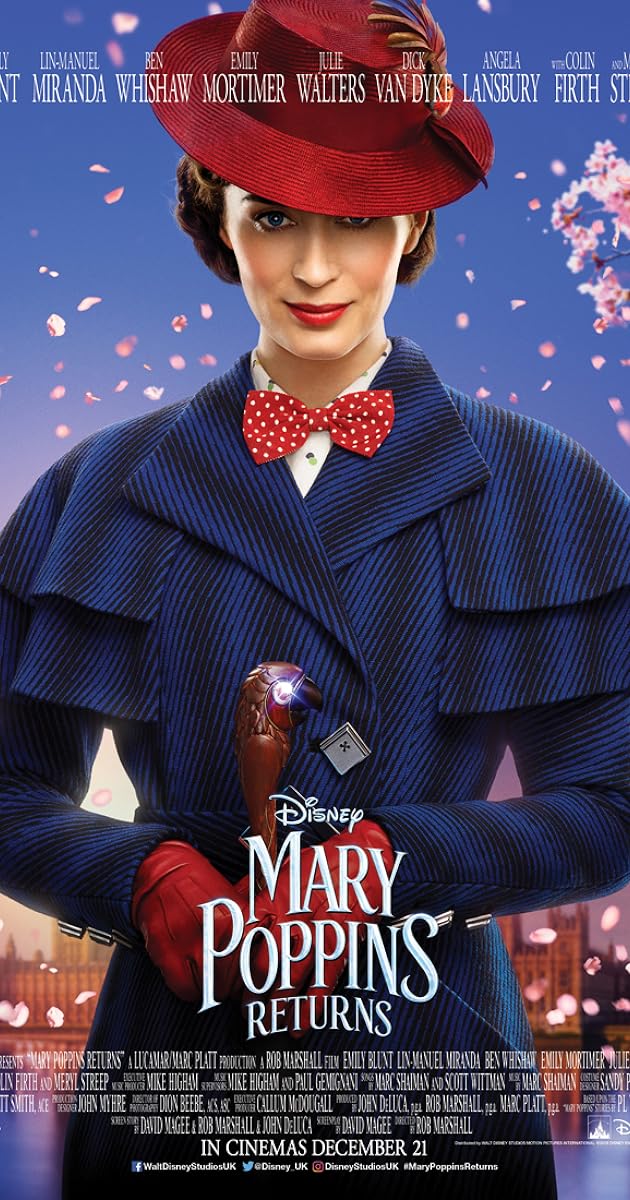
What is good:  the song-and-dance numbers are assured and fun, the melding of animation and reality is deft, and it is for the most part very pleasant.

What is bad:  you don’t remember one of the tunes upon exiting the theater; it is very long and the plot, such as it is, is ragged; Mary Poppins (Emily Blunt) comes off as kind of bitchy, with no real affection for the family; the father (Ben Whishaw) is a pitiful whiner; Lin Manuel-Miranda would have been better off writing the musical numbers rather than offering his version of the cockney lamplighter (that version has said lamplighter on MDMA with an accent rivaling that of Kevin Costner in Robin Hood for authenticity); and Meryl Streep is shoehorned into the picture as a gypsy, replete with her own hammy, endless, obnoxious number.

For the life of me, I cannot understand why Kenneth Branagh re-made this film, at least in the way he chose to do so.  As Hercule Poirot, he is excellent.  Quirky, brilliant, and droll.  But this picturesque, stagey fluff needs an entire carload of scene chewers, not just the one, and though Michele Pfeiffer tries gamely, everyone else appears, like the victim, to have been dosed with barbital.  Johnny Depp plays it low and gravelly, Penelope Cruz low and gravely.  Willem Dafoe is dour. Derek Jacobi is restrained.

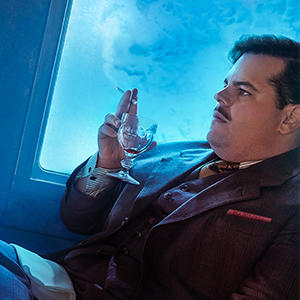
And I don’t know anyone else on the train, save for Josh Gad:

Josh Gad - Agatha Christie

And he has no business being on this train.

Compare and contrast with the 1974 film: Albert Finney, Lauren Bacall, Martin Balsam, Ingrid Bergman, Jaqueline Bisset, Sean Connery, John Gielgud, Anthony Perkins, Vanessa Redgrave, Richard Widmark and Michael York!

I mean . . .  Josh Gadzooks!

image

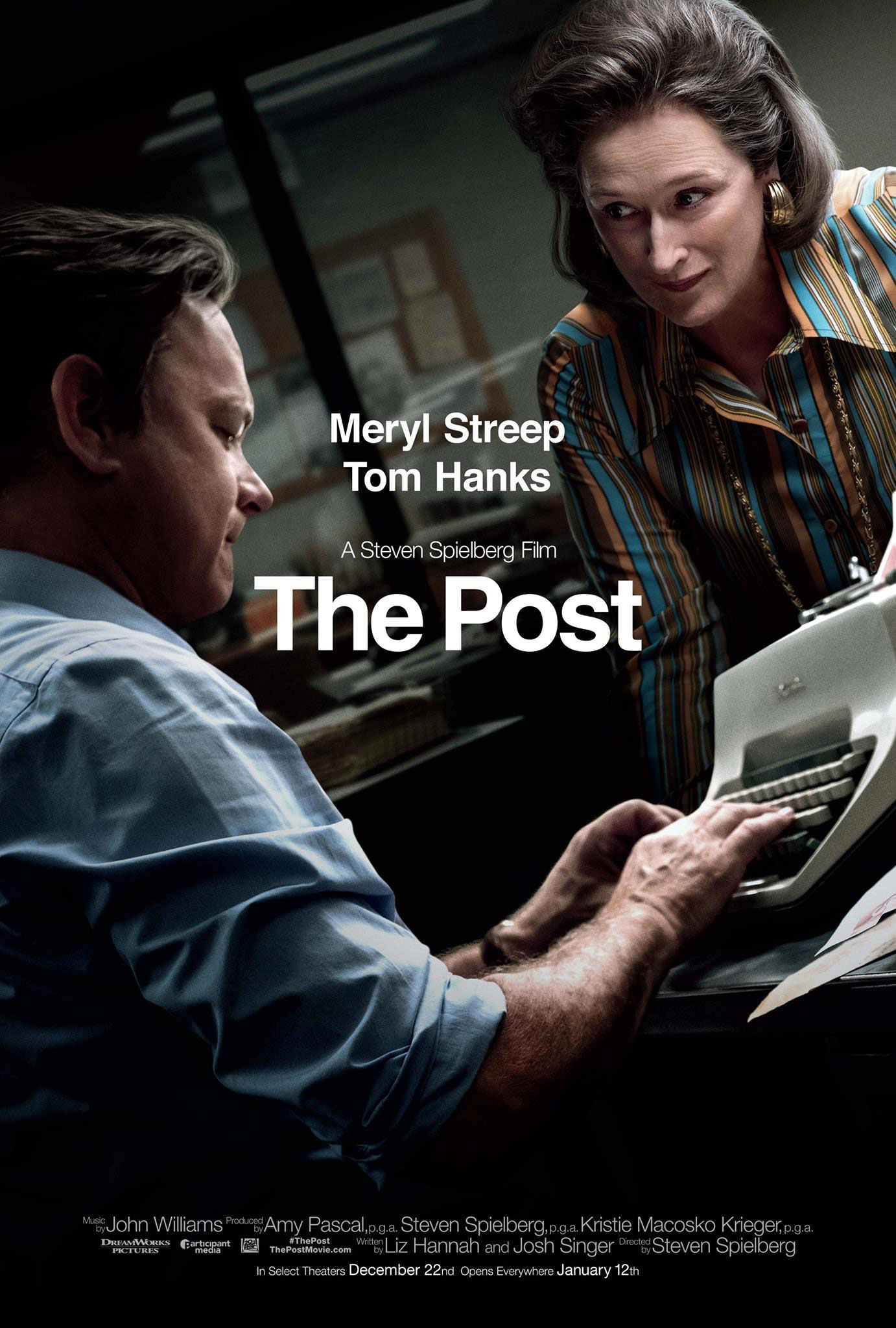
There are things to like about this film, but most of them occur in the first half. The script is smart and economical, delivered by a cast with an exceedingly high percentage of “where have I seen him/her before?” types. And Meryl Streep again absolutely captivates as the insecure publisher of The Washington Post, negotiating her new role as a corporate leader in a male-dominated world, where her father and husband (prior publishers) are not there to protect or assist her.

The look is also spot on. Primarily set in 1971 Washington DC, it felt like a a tour of every Northwest Washington den and kitchen I inhabited and, necessarily, every living room and dining room I avoided.

But I should have been warned as to the coming danger when the first scene, which occurs in Vietnam, featured the music of Creedence Clearwater Revival, such a trope that whenever I hear John Fogerty, I assume the sound of helicopter blades will follow.

As minor as that hackneyed facet appears, it is a fissure that later becomes a chasm. After all of the fantastic work Streep does to subtly and movingly depict the stakes from a personal and political vantage point, and they are large (her family newspaper is betting its future in publishing top secret documents that indict four administrations), Spielberg just doesn’t trust you to get it. “This is big,”you can hear him thinking. “I’m afraid that the audience won’t understand that it was hard to be a woman in 1971, that Nixon was bad, and that a free press is really, really important.”

So, out comes the Louisville slugger, and the director proceeds to bashing all of the important points into the heads of the audience, rendering it senseless.

Two scenes with Streep and her fiery editor, Ben Bradlee (Tom Hanks) are illustrative. In the first, when Hanks condescends to Streep by suggesting she is covering up for her good society friend Robert McNamara, she deftly parries his thrust with the observation that when he was close friends with President Kennedy, surely he must have “pulled some punches.” Later, however, when Hanks comes to Streep again to acknowledge his prior failures, we get a moist, awkward and unconvincing speech about how reporters can no longer be clubby with politicians going forward because, you know, Vietnam.

We had it, dummy.

Speaking of Vietnam, Spielberg’s rendition of it is so simplistic as to be offensive.  In his mind, The Pentagon Papers catalogued a multi-administration conspiracy almost wholly bent on killing innocents and saving face.  One can fault U.S. engagement in Vietnam until the cows come home, but when Spielberg distills it to such a childishly elemental basis, you can almost hear Ken Burns sighing, “I guess I didn’t need nine of those ten episodes.”

Spielberg‘s handling of the feminist theme is even more egregious. Everything Meryl Streep does in her performance makes superfluous the film’s later choices when dealing with the issue. Nonetheless, again, because Spielberg trusts no one, we are forced to endure a speech from Hanks‘s wife (Sarah Paulsen) that it sure has to be tough for Streep, because she is a woman; another woman approaches Streep at the Supreme Court, solely to thank her for her selfless sacrifice on behalf of her brother who is in, wait for it . . . Vietnam; and then, as Streep leaves the Supreme Court, in a scene that would have returned my breakfast had I had one, we see her walking down the steps of the building, cutting a line through throng of women, all of whom beam at their idol. DeMille’s parting of the Red Sea in The Ten Commandments was more understated. This is not to mention the penultimate and final scenes, where a Post editor reads out the first line of the Supreme Court decision exonerating the paper in a manner that would only be appropriate for “The only thing we have to fear is fear itself” and then, a security guard calling in a break-in at a little place called the Watergate. Because, can you believe it? This Nixon went on to be even more troublesome. Nuts, right?

You may feel good after you leave this movie, but take heed.   The feeling is akin to the immediate euphoria one receives from eating a whole carton of ice cream. Soon, you will feel sick and/or shame. It is a testament to all of the other good things about the movie that the final excesses did not render a zero star rating. But really, if you want to see a great movie about a newspaper, re-watch Spotlight or All the President’s Men.

 

image

A movie only an Irishman could love. I don’t know what to say. John Ford’s classic starts off as a cartoon, with Irish folk so spritely and impish you half expect a pot o’ gold around every corner. They are there to welcome Yank John Wayne, who comes to the land of his birth and immediately falls for spinster Maureen O’Hara. I expect she was supposed to play as a fiery and obstinate redhead, but really, she’s the first truly bipolar heroine in American film. At no point is she satisfied, and poor Wayne has to subjugate himself again and again for this loon. To the point he is labeled a spineless coward, primarily due to O’Hara’s chemical imbalance.

Wayne’s reticence is borne of a dark secret (the flashback provides the few memorable, even iconic, images in Ford’s film). And Wayne is surprisingly good in the role. But he’s stuck in a film with so many bizarre caricatures, it seems especially cruel to see him work.

There’s humor here, and some sweetness, but the picture doesn’t travel well, unlike other films that seem out of time, like Gone With the Wind. There’s also a strange mix of lush photography of the countryside and just awful soundstage footage too clumsy for its year (1952).

The lesson is also a little peculiar.  Let your harridan of a psychotic wife drive you to violence, with an entire drunk and backward town offering a stick to beat her with, and she’ll finally have sex with you.  Actually, that’s really the best part of the picture, and for all its faults, what makes it kitschy fun.

Good to see a young Jack MacGowran, the director Burke Dennings (the one who got his head twisted completely around) in The Exorcist.