Archive

2 stars

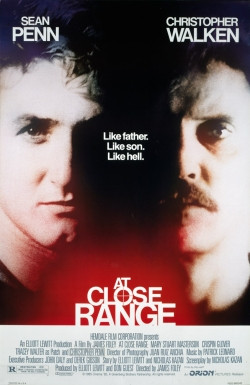
James Foley’s (After Dark, My Sweet) film never really decides what it wants to be, a family drama or a crime picture. Foley eventually throws up his hands and cedes everything to the captivating Christopher Walken.

Not the worst of decisions. Walken plays a minor rural Pennsylvania crime kingpin. He skippers a crew that includes his two brothers and a few other hardened locals. They do heists, car thefts, drugs, and, if necessary, murder, a lethal but merry band of crooks.

Walken’s estranged son, Sean Penn, is a townie still living at home with his mother and grandmother. The women smoke, glare at the TV and otherwise exude the hopelessness of abandonment and near poverty. Penn, seeking something more, falls in at-first-sight love with Mary Stuart Masterson, who looks his way as he cruises at night around the town square. It is for her that he joins up with his father’s crew, to “get out while we’re young … ’cause tramps like us …” 

When Penn realizes murder is part of the gig, he splits from Walken, gets arrested working his own “baby” crew (which includes his brother Chris and a very young Crispin Glover and Kiefer Sutherland), and is incarcerated. There, the cops work on him to fink on his father.

Here, the film becomes ridiculous. Walken, paranoid Penn will flip on him, kills nearly every one of the kids working with Penn, even though Foley does not show them to be integral enough to his operation to be much of a threat. He also rapes Stuart Masterson, which makes even less sense if the plan is to bring Penn back into the fold. Penn comes out of jail, tries to make a run for it with his gal, fails, and in a rushed, abrupt ending, testifies against his father (for 30 seconds).

That’s that.  Lights up.

None of it makes much sense, but the thematic indecision is worsened by gross character underdevelopment. Walken is a charming sociopath, but how did he get here? No clue. We even have his ex-wife moping about, warily eying the establishment of a relationship between Walken and Penn. Foley, however, suffices to use her as a sad totem, so we don’t get any insight into Walken from her. Similarly, Penn needs a Daddy. Then, on a dime, he doesn’t. As he is near mute for most of the picture, we are left to guess as to what he has missed and the basis for his immediate and strong moral stand. Stuart Masterson is looking for something, but as she and Penn prepare to light out for the territories, leaving her house, she is clearly from money. So why is she hanging with these lowlifes? Unexplored.

The film has its strengths. Foley’s feel for rural Pennsylvania is strong. The fields and woods are spooky and forbidding at night. During the day, the crappy cars and houses, the dead-end bars, they all contribute to Penn’s lust for some way to get out. Foley shows just how big and cold this country can be, the kind of place that swallows you up and tells no tales or grinds you down little by little. The murder spree is indelible.

As noted, Walken is the picture, and in every scene, he is riveting. Penn, however, goes low to Walken’s high, and the effect is somnambulant. He’s in with Daddy, then immediately out, then annoyingly internal until his final nose-to-nose with Daddy, all to the conclusion that he needed a better Daddy.

The story is apparently based on a true criminal, Bruce Johnston Sr.

Another note – at the time of the picture, Penn was married to Madonna. She had a song for the picture which then became extended to the soundtrack. It is synthy, mid-80s fare, better suited to Vision Quest or even Risky Business. It has no business being near this gritty movie.  Sure, I joked about Springsteen above, but his music would have been pitch perfect to the film.

On Amazon Prime.
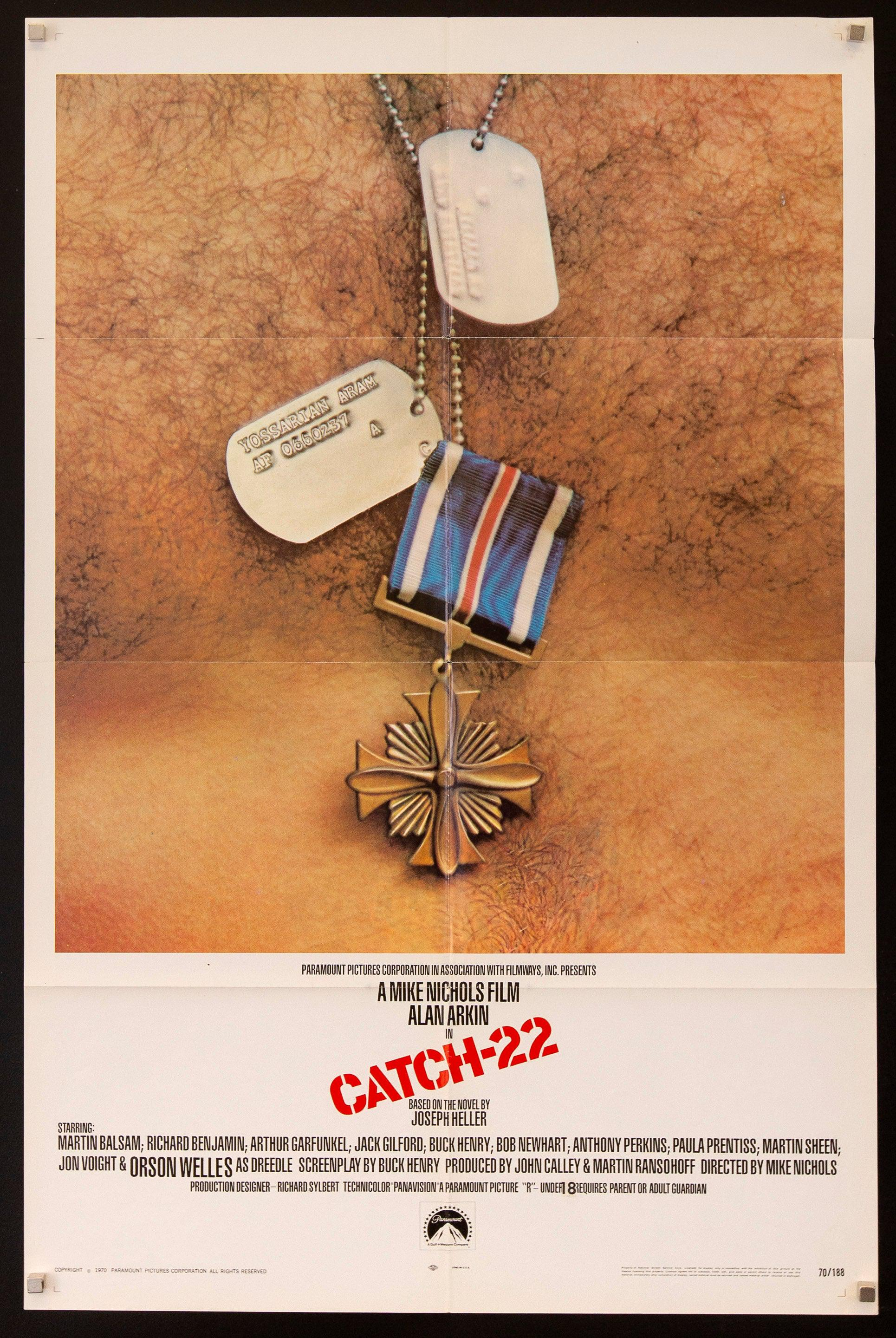
Mike Nichols’ adaptation of Joseph Heller’s dark comic novel is energetically brisk and sometimes entertaining. Tonally, however, the film is an uneven mess, a pointless downer playing bleakness for laughs. 

As the original Corporal Klinger, Alan Arkin’s Captain Yossarian is the engine of the picture, a bombardier stationed in Italy who is losing his nerve and wits. His superiors (Bob Newhart, Buck Henry, and Martin Balsam) vex him by upping the number of bombing missions necessary for a ticket home to curry favor with their commanding officer (Orson Welles). Yossarian’s fellow fliers (including Martin Sheen, Richard Benjamin, Anthony Perkins, Charles Grodin, Bob Balaban, Jon Voight, Art Garfunkel, Jack Gilford and Norman Fell ) all suffer under the same yoke, but with cheerful acceptance or apathy rather than the indignation of Arkin’s whirling dervish.  How the Academy overlooked Arkin astonishes me; whatever the flaws of the picture, his commitment and on-the-edge turn requiring an actor’s entire skill set is unforgettable.        

The film’s main problem is rooted in the see-sawing expanse of the endeavor. Yes, war is FUBAR, and aspects of it are both craven and bizarre. In the world of Nichols and Heller, the poor bombers are riddled with asinine and unctuous leadership, wackadoodle stir-crazy types, suicidal loons, sex-crazed fiends, one murderer, and one uber-capitalist who trades parachutes for commodities on the open market.

When played for laughs, the picture is solid, and no one is begging for verisimilitude. However, when pathos is introduced, such as truly tragic deaths of compatriots (including a particularly brutal death of a young flier) and civilians, the film feels incongruously cruel.

Worse, the picture is more than anti-war. It is anti-American, maybe even anti-everything. As nothing matters, there is no investment in the fates of anyone. A fair juxtaposition is Robert Altman’s M*A*S*H, in which the madness of the endeavor is clear but even in that madness, the professionalism of the medical staff is unquestioned and laudable, the loss of life truly sad. Nichols himself felt M*A*S*H did his picture in: “We were waylaid by MASH, which was fresher and more alive, improvisational, and funnier than Catch-22. It just cut us off at the knees.” All of which is true. But M*A*S*H also had heart and a respect for the craft of combat surgery. Here, there is no respect for anything or anyone and the characters seem more from Looney Tunes than Heller’s book.

Indeed, every hallmark of the American ethos is there for Nichols to malign. The military leaders are insecure dolts, silly and moronic, who care not a whit for the men. The fliers are chumps or burn outs, pawns in the great game, either oblivious or devious in their plans to get out and shirk. Everyone is also an automaton, caring for nothing, even each other. The goal and aim of the war, and this is World War II we are talking about, is at best corrupt and ultimately criminal, as we bomb not only towns with no military significance, but, in a perversion of capitalism, we allow the Germans to bomb our own base for profit. The Italians are victims of the Americans, just as they were victims of the Germans, because, you see, there is no difference between the two. By the end of the picture, the genius behind the corporate conglomerate, Jon Voight, is now close to full Nazi in regalia and trappings.

Hell, even parents who come to Italy to see their dying son are treated as props for a goof.   

Yes, yes. None of this is to be taken literally in a “war is madness” story, and the film is a black comedy grossly overgeneralizing for the laughs. Still, it’s the kind of smart set entertainment that fairly encapsulates the philosophy of the sophisticate, a sneering besmirchment that puts the last torpedo into a sinking ship.

I wonder what Heller made of the movie’s iciness. Obviously, his book was a cynical send-up (I read it in high school, along with Vonnegut’s SlaughterHouse-Five), but Heller also flew 60 combat missions as a B-25 bombardier during the war.

On Amazon Prime.               

I was abandoned this past weekend, and I don’t do well alone. With an empty house and the care of a disinterested 15-year-old cat entrusted to me, I took the time to catch up on a few 70s flicks in my queue, including this strange creature.

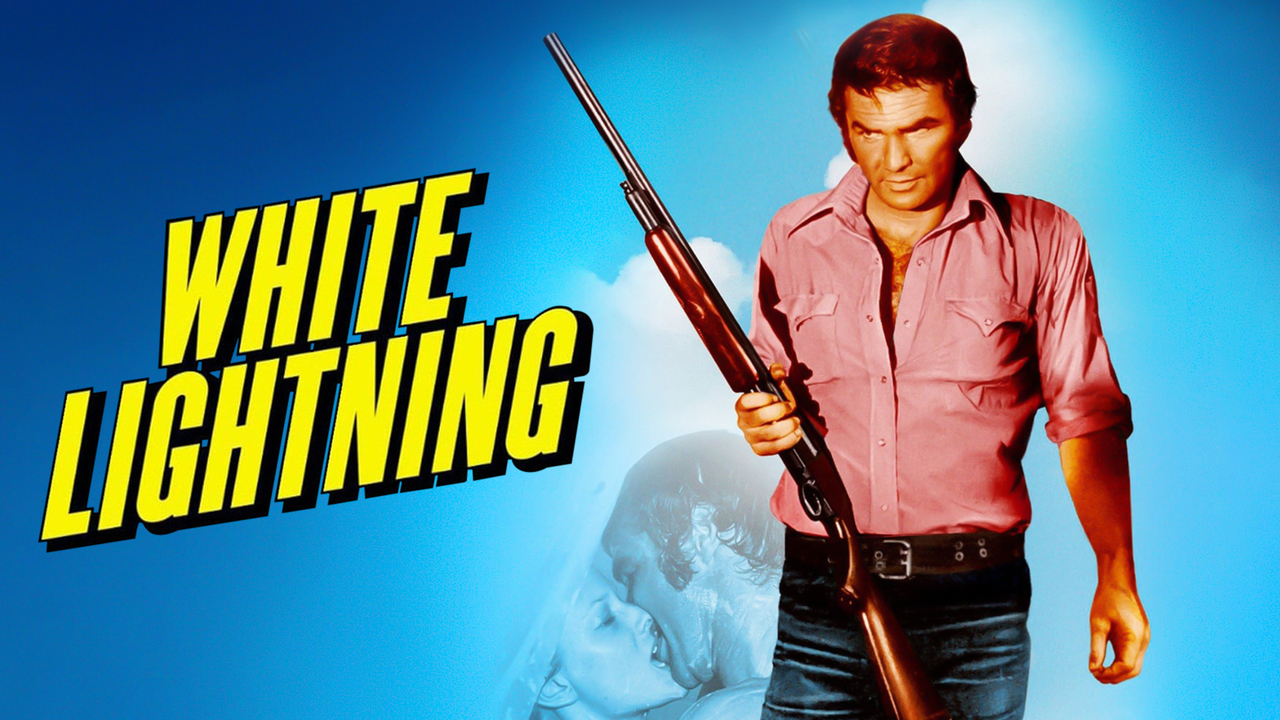
Burt Reynolds – not at the height of his popularity, but post-Deliverance – is Arkansas inmate Gator McCluskey. He’s in the federal pen for illegal liquor running when he learns that a crooked sheriff (Ned Beatty) has murdered his younger brother. Why? Because the brother was a meddlesome hippie, and Beatty does not like hippies. So, Gator gets out, insinuates himself into the county, and exacts his revenge.

There’s a lot bad to meh here.  The “I hate hippies” thing is unexplained – we never really know what the kid did to deserve being dumped in the swamp, and a sit-down between Beatty and Reynolds never happens. And the women of the Arkansas county are so carnal in their attraction to Gator, it seems cartoonish. Worse, there are tons of car chases, but not of the ilk of The French Connection or The Seven-Ups or Bullitt. Just a lot of banal vrooming around dusty country roads. From this demon seed sprouted Smokey & the Bandit and Cannonball Run (Hal Needham was a mere stuntman for the picture, but a few years later, he was second unit director on a reprise, Gator, and then he moved on to directing the slop that was Smokey and the Bandit I & II and Cannonball Run I & II). The first glimpses of Reynolds’ giggling, slapsticky, “I don’t give a fuck” mien can be found in the flick as well.    

There are a few notes on the plus side of the ledger. Reynolds connects. He has movie star gravitas and just enough menace left over from Deliverance to project power and fear. Beatty is also strong, exuding a meanness and lethality in the guise of a portly bureaucrat. The film also takes a few runs at a healthy cynicism.

Fun facts – at the tail end of his career, the picture’s screenwriter, William Norton, did 19 months for ferrying guns to the IRA. After being released from prison, he moved to Nicaragua, where he shot and killed an intruder in his home. He then spent a year living in Cuba, was unimpressed, and was smuggled into the U.S. by his ex-wife.

Where is this film?

On Amazon, not recommended except as a curio.      

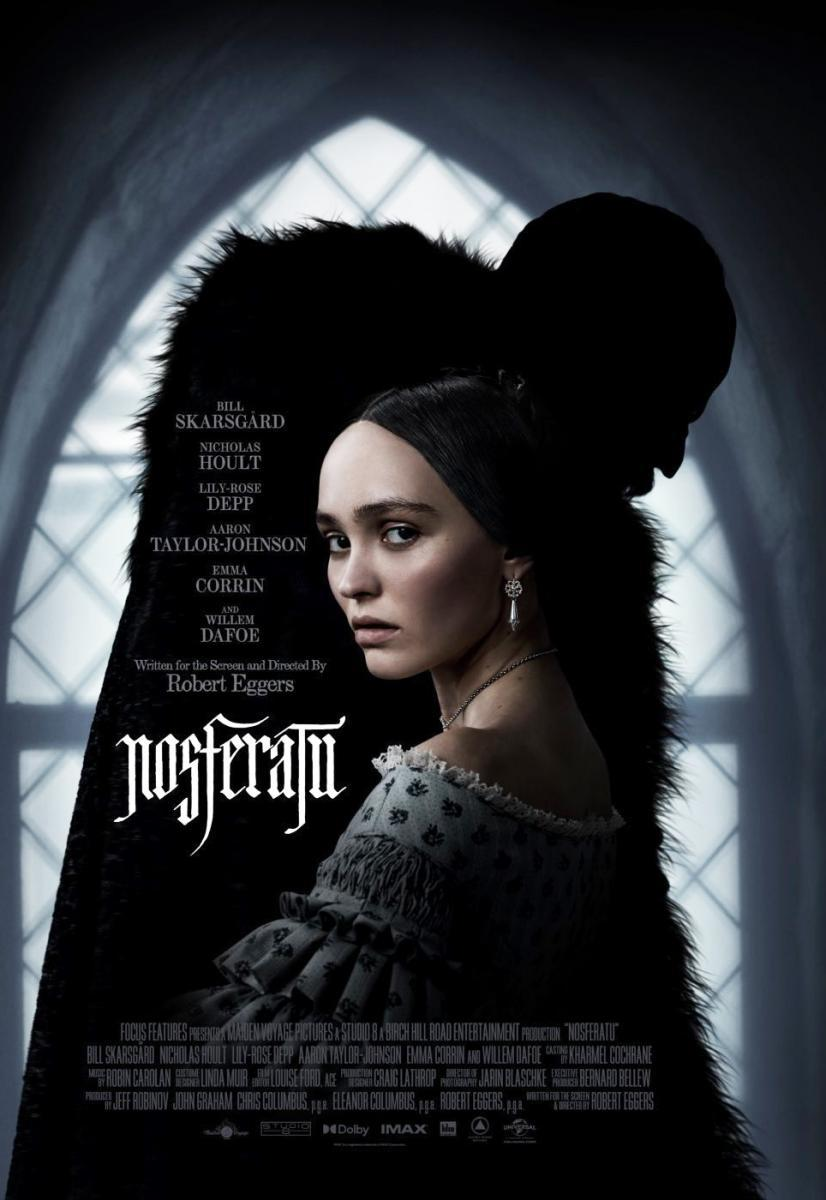
Upon their reunion, Count Orlok/Nosferatu (Bill Skarsgard) tells his intended Ellen (Lilly Rose Depp) that his well-planned travels to capture her are borne of a simple credo: “I am nothing but appetite.”  All the impressive visuals, haunting tableaus, and carefully crafted hues in Robert Eggers’ (The Witch, The Northman) bag of tricks, however, cannot make mere “appetite” all that interesting.

In the modern vampire films, there are rules. When the  creatures are plentiful, they must feed to survive. They are appetite and we are prey and their backstory is subordinated to our survival. But when the film has fealty to Bram Stoker, at center is the relationship between the monster and his beloved, always a doomed romance. In Francis Ford Coppola’s Dracula, Gary Oldman tells Winona Ryder that he has “crossed oceans of time to find you.” Why? Because his damnation as a vampire came at his rage and anger at the death of his true love, whereafter he forswore God himself, and now he has found her again in the present day Ryder. 

Here, the monster just seems to be hungry for an old meal. The two are connected by a cosmic carnal desire that goes way back but is unexplained. It allows for evocative scenes of fever dream passion, spurting and oozing blood, horror, masochism, and even a toe into exorcism. But this isn’t an art gallery, nor a meditation on how far one might go for the most extreme of sensual pleasures. It’s a film, and as gorgeous as it may be, it is also dull and dark and too often not very interesting.  

For example, when the major characters (Nicholas Hoult as Ellen’s betrothed and Willem Dafoe as the Van Helsing stand-in) have sussed out that evil has come to town specifically for her, Nosferatu finally appears to Ellen, and he is quite clear. If you don’t succumb to me in three nights, I will wreak havoc on everyone in your life and then kill your husband. Of note, Nosferatu has also brought plague to the city, so the havoc is widespread. Ellen seems unsympathetic from the get go – jittery to tortured to the throes of near-possession – and though it becomes clear she alone can end the plague, her selfish reticence is unfortunately in keeping with her character.

[Spoilers – as it turns out, Ellen destroys the monster and herself by inviting him to bed on the third night, which makes you wonder, “why the hell did everyone else have to die on nights 1 and 2?” As for the end of that night, it seems a stab at romantic, but boiled down, it has a “You’re gonna’ have to let Nosferatu feed on you so good that he loses all track of time and you literally metaphorically fu&% him to death.”]

There is no doubt, Eggers knows what to do behind the camera. But he is not adept at narrative, and you really don’t invest in any of his characters, who make it worse by over-emoting blocky dialogue. No one seems like a real person, much less a real person who is facing the undead.

Eggers adds little new to the canon but prettier visuals.


This entire review is a spoiler.

As you may or may not know, when Damien Thorn was placed with the American ambassador to the Vatican (Gregory Peck), his own wife (Lee Remick) had just “lost” their baby during childbirth. Mrs. Thorn would have been devastated, but the ingenious Catholics were Luigi-on-the-spot, procuring another baby boy – Damien – for the old switcheroo. Soon, Damien is in America, freaking out baboons, having the temper tantrum of the ages when driven to church, and killing (or having killed) everyone in his way, including, eventually, Mom and Dad.

I’m a huge fan of the original and even like the sequel, where William Holden and Lee Grant have to deal with their devil of a teenage adopted son. I sort of lost track after that but understand there was a third flick, which wasn’t so good.

So now we go back to before Peck and Remick became the unwitting guardians of Satan. It is 1971 and Margaret, a fresh and seemingly innocent nun, comes to Rome, where she is stationed at an orphanage. Before long, she notices strange doings, and is soon approached by a dissident priest, who informs her that this is no ordinary orphanage, but rather a cabal of right-wing radicals within the Church, so desperate to regain power against secularism – gasp! – they are willing to bring Lucifer back in human form, if only to make themselves relevant.

Because evil had been on a real downslope in the century.

As a cultural Catholic, well-versed in the Church’s byzantine rituals and excesses, I have a lot of bandwidth for this kind of silliness. But even for me, this is painfully stupid. And also, I think, a ripoff of Ron Howard’s hideous fireman movie, where an embittered fireman lights a lot of fires in Chicago to avoid budget cuts.

You do not want to steal a lot from Backdraft.

Sure enough, Margaret finds a fake door that brings her to old files of hideously deformed babies.

The orphanage is, in fact, a baby factory, where Satan (in the form of a jackal) impregnates the girls. Most of the grotesque babies die, confirming they are not The One.

But Old Satan keeps at it.

And I think, this is a ripoff of M. Night Shymalan’s Unbreakable, where Samuel L. Jackson blows up every plane, train and automobile he can hoping to find the “unbreakable” Bruce Willis, who will have survived what cannot be survived.

Also stupid, but somehow, it worked for me.

When Margaret rifles the files, there is a missing picture of one of the would-be hosts.

Guess what?

That girl is Margaret.

You see, the whiz kids in the rectory figured out that if Satan mates with his own spawn, and a child is delivered, then the Church will finally get Damien, not a deformity, and the pews will be full again! And when Margaret first got to town, her nun roomie took her out clubbing, like when the Amish get one crazy weekend in New York, and someone slipped Margaret a mickey so the Devil could get at her.

So, Margaret gets a C-section in the creepy catacombs, and Damien is born.

As is his twin sister.

Sigh.

This is not as bad as it reads. There are some very scary touches, and a smart buildup.

But there is no fun in this picture. In the first Omens, there was real dread and investigation as Peck got closer to the truth, and you wanted to know how folks who found out were going to buy it, and if they’d get Damien in the end.

Here, Margaret acts rather than thinks, and she does not need to be persuaded – dawning hits like a blinding light rather than a slow revelation. Why keep any files at all? Lazy lazy lazy.

Worse, we know they don’t get Damien, and how people meet their end is either repetitious (as in the first movie, a priest catches a piece of a church in the skull and a nun hangs herself after announcing, “It’s all for you!”) or just humdrum.

What is built up to is so hurried and confusing, it cannot sustain interest.

Also, if Margaret is necessary for coupling with Satan and producing Damien, why are the evil nuns so mean to her?

Well, I know the answer to that.

Nuns can be mean.

My mother tells people that The Boys in the Boat is a book “every young man must read.” In point of fact, the book has been on the New York Times bestseller list for quite a long time. But I am not a young man, so I settled for taking her to the picture.

She was rightfully disappointed. I was bored to tears or underwhelmed. For the following reasons.

1. The actual boys in the boat were supposed to be destitute, desperate, and worn down from the Depression, lean, hungry, rough boys who found rowing as a way to eat. Unfortunately, they all look like this:

2. The lead, Calum Turner, has all of the character and nuance of a Nilla Wafer.

3. Rowing does not lend itself to film. We don’t learn much about the mechanics of it, so it’s difficult to discern the issue when the boys falter (they just start to bicker at each other and their stoic, forgettable coach merely shakes his head). In races, they start out slow, and through grit, pluck and determination, the boys pick up the pace and win. That’s it.

4. Hitler shows up. But he looks like Charlie Chaplin as The Little Dictator, and I’m not sure that was the effect Director George Clooney was aiming for. 

5. Jesse Owens also shows up. He says one line that is impactful and wise, with the effect being one’s own rumination: “Damn, I wish this movie were about Jesse Owens.”

The film looks classic, but presents as inauthentic. It has a hazy, postcard visage that feels both obligatory and unnatural.

Ultimately, the film is not terrible, but it is instantly forgettable, of no real moment, and about as safe a production as you’ll find.

I took my 93 year old mother to see this flick, thinking it was up her alley. As it stands, the picture is beautiful, the presentation slick, and the intrigue, such as it is, acceptable. But the acting is very weak. In the end, for an Agatha Christie, you know the “reveal” is in the offing and it may or may not be ingenious. It is the dramatization getting to the reveal that is most of the fun.

As Poirot, Kenneth Branagh is overly reliant of the gravitas of the character as played by others.  As played (and directed) by him, he’s bored, even diffident.  If Poirot doesn’t seem roused or energized, why should I be?

As an Agatha Christie mystery writer on the downslope, Tina Fey is her normal self – blasé’, genderless, and snarky. Liz Lemon and “Weekend Update” were her pinnacles.

As for the rest of the cast, they all seem to be straining for airtime, each more bombastic than the next when given the baton. Jamie Dornan and Kyle Allen take the cake in histrionics.

At its worst, the acting is community theatre-esque. At best, it is tolerable.

I asked Mom if she liked it after a week (we are unscientifically testing her memory).  She said she had no real recollection of the picture, so the results are inconclusive.

On the plus side, it’s very pretty. 

I love Anthony Bourdain. And by that, I mean I love his books and shows, because it is the only way I knew the man. The essence of a successful food and travel host is not only to be a great guide but an entertaining, engaging companion, and Bourdain was that and more.

Roadrunner, naturally, offers to give greater insight and attempts to do so through the remembrances of his friends, loves and/or colleagues. But also, through the film of Bourdain himself, which I assume there is quite a lot of, given his long run on TV.

Too bad for him. In a lot of ways, the documentary offered the man behind the curtain, and for the most part, other than demonstrating a frenetic pace, a little benign soul-searching and some introspective gallows humor, the footage is of no real moment. Likewise, his friends confirmed he was fun, obsessive, controlling and a little dark at times.

Regardless, the entire endeavor was such an exercise in post-mortem narcissism, with laser-like focus on the why (did he kill himself?) and the who (was he really, deep inside?), they never got to the best part, the what (impact did he have on others and the world around him?) They have so much footage of Bourdain waxing introspectively just to pass the time, but it lacks verisimilitude and gravitas. And how much can anyone take of a man talking about himself, followed by friends who don’t so much talk about him but about his psyche and his end, in the manner of adults playing Clue?

I was surprised about how bored I became. This is a man whose legacy is what he did at all moments before his end and its impact, and yet, Roadrunner spends itself on why he did it, and the impact of that last impetuous act on the interviewees (newsflash – they were very sad).  Lost is his life as a chef, his impact on others here and abroad (Where is his daughter? Who cares? Let’s devote more time to how confused, rootless and exhausted Bourdain was made by excessive travel!) and the joy he gave people. My God, there is one scene where an interviewee provides us the meanest thing Bourdain said to him and then starts bawling. So very, very small.

Three other problems. The documentarians did not interview his last girlfriend yet posited that his obsession with her was contributory if not dispositive to his undoing. She, Asia Argento, is a loon, but still, not quite cricket to condemn and then omit her. They also computer-generated Bourdain’s voice briefly, with the director saying his widow told him Bourdain would have been “cool” with it. She denies any such coolness and as brief as the gambit was, it is a stain. Finally, there are many references to Bourdain’s heroin addiction but little explanation as to how he overcame it or how it influenced or altered his existence. It’s like saying Patton was a veteran and leaving it that.

On HBO Max.

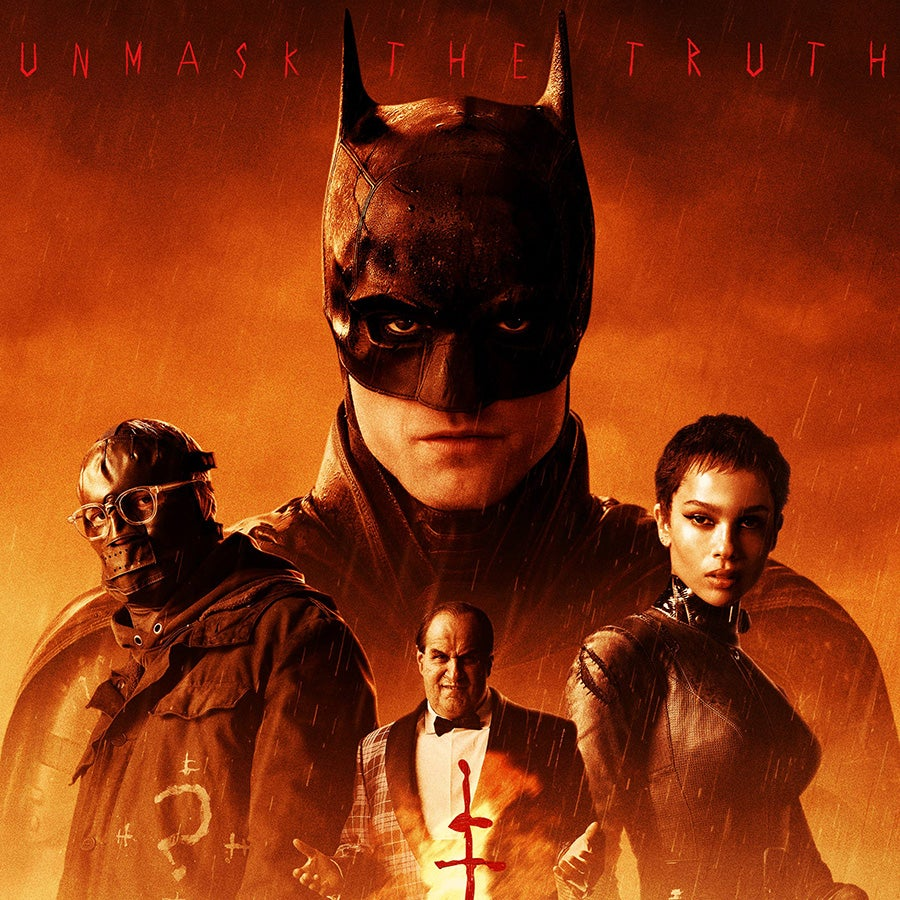
Five things about The Batman

1. I get that Batman is supposed to be spare and mysterious. Here, however, Robert Pattinson plays him whispery, dreary and not only entirely humorless, but dull. Also, whenever Batman enters a room, is it necessary to have him looking down, and then, raising his head dramatically to face … the foyer? 

2. Except for Paul Dano, the villains are forgettable.  And what a waste of Colin Farrell. He might as well have been Michael Chiklis under all that padding and putty, and Chiklis would have been cheaper.

3. The end is laughably schmaltzy “I have met the enemy and he is me” blather. Batman is no longer vengeance. He is Moses, guiding his people through a parted Red Sea on the floor of the Garden. And he wants your vote!!

4. The film is no fun. Beautifully appointed, but zero fun. The Burton Batmans were super fun, the Nolan Batmans were heavy but also had some fun.  This is a mostly unsuccessful meld of Batman and SE7EN.  In fact, Pattinson would have been better served during his face-to-face with Dano by pleading, “What’s in the box!!!” rather than just pounding angrily on the glass. Not that all films have to be fun.  But certainly, films where an adult runs around dressed as a bat should be a little fun.

5.  I get the canon that Batman does not kill people, opting instead to maim, stun, paralyze or concuss them.  But now is the time to take a hard look at how many people have died because of his outmoded reticence.  In the climactic scene, he takes out a slew of snipers with punches and judo chops, kicks and roundhouses, all the while allowing the baddies to shoot significantly more quarry.  And without the intercession of Catwoman, he would have been toast, and Gotham would have suffered grievously.  Hubris, I say.

On HBO MAX.

The Parallax View (1974) - IMDb

A regional reporter (Warren Beatty) stumbles on not so much a plot as an institutionalized corporate conspiracy of assassination.  The closer Beatty gets to the source, the more he realizes that what he initially deemed ludicrous is in fact a chilling reality.  

Alan Pakula’s paranoid thriller was probably more relevant upon its release.  With the shooting of JFK in ’63, Malcolm X in ’65, RFK and MLK in ’68, George Wallace in ’72 (a mere 2 years before the picture’s release), political assassination was preeminent in the mind of your average filmgoer.  And no one does paranoia quite a well as Pakula (Klute, All the President’s Men, Presumed Innocent). 

The picture is creepy and certainly makes the viewer feel anxious,. In particular, the movie potential assassins are required to watch in order to gauge their suitability/brainwash them is in and of itself overpowering.

But the film suffers from two significant handicaps.  First, the Beatty character is a cypher.  He is dogged and cynical, but he is invested with no backstory, motive or any other compelling feature.  Given how things turn out, this may be part of the message, but it makes for some stifled yawns as we travel his route to dawning.  Second, the plot is a mess.  Sure, I fully understand an assassination corporation maybe knocking off a true existential political threat once a decade. The Parallax Corporation, however, kills two United States senators and attempts to kill a third, in the space of three years, and even when they have done the good work of pinning it on a brainwashed loner stooge (the corporation’s m.o.), they threaten their entire operation by wiping out potential witnesses after the deed.  I’m not talking one or two witnesses.  After the film’s opening a scene (a gripping assassination on top of Seattle’s Space Needle), nine “witnesses” (it’s not clear they actually see anything) are taken out, a number extraordinary enough that Beatty is drawn in to dig deeper. In the final assassination, a sniper takes down a senator in front of an entire marching band.  That is going to be one helluva cleanup.

This is no way to run a railroad.