Archive

1 star

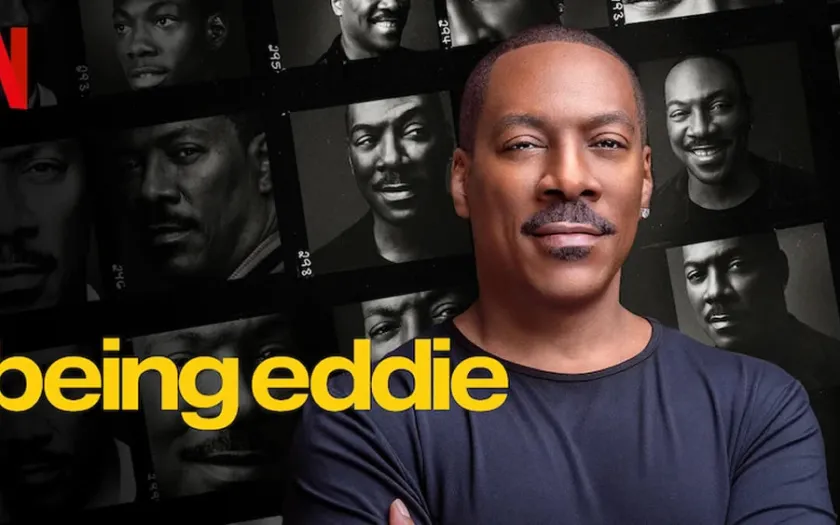
Did you know Eddie Murphy was funny? That he always knew he would be a star? That he inspired many a black comic? That he was angry at SNL when David Spade took a dig at him?

If so, you’re good to go.

If you insist on watching this tepid Netflix documentary, prepare for what seems to be a retrospective about a funny man that inexplicably does not show him being all that funny.

There is no delving into his craft, no in-depth discussion of how he matured in stand-up or established himself in films.

There are no great stories of Hollywood.

There is, really, very little insight at all. 

Rather, Murphy is presented as a pleasant, sensible fellow, a bit of a homebody, guarded but practiced in the art of bland recollection.

It is all very boring, and made more so by the likes of Arsenio Hall, Michael Che’, Dave Chappelle, Kevin Hart, Jerry Seinfeld, Pete Davidson, Jamie Foxx, Chris Rock, and others basically blowing so much elegiac smoke up Murphy’s ass that he seems more demigod than man. Which is weird when you see his oeuvre laid out, and his sermon on the mount is playing so many characters in The Nutty Professor who can fart.

Look, I love Eddie Murphy. When I saw 48 Hours, I was blown away by his presence and the interplay with Nick Nolte, a buddy cop flick with real comedic teeth in the articulation of racial tension. I also thought Murphy was overlooked in Dreamgirls, though I was pleased to see his Best Supporting Actor nomination and was dying to hear him explain how he evoked a true falling star, and one with substance abuse issues, given his own clean living. As for his unheralded classic, Bowfinger, all we get is how it was nice for him to walk to lunch with Steve Martin.

The endeavor is generic, Commissar-approved dreck through and through. Though I give it 1 star for a few clips of Eddie’s hilarious, now deceased brother, Charlie.

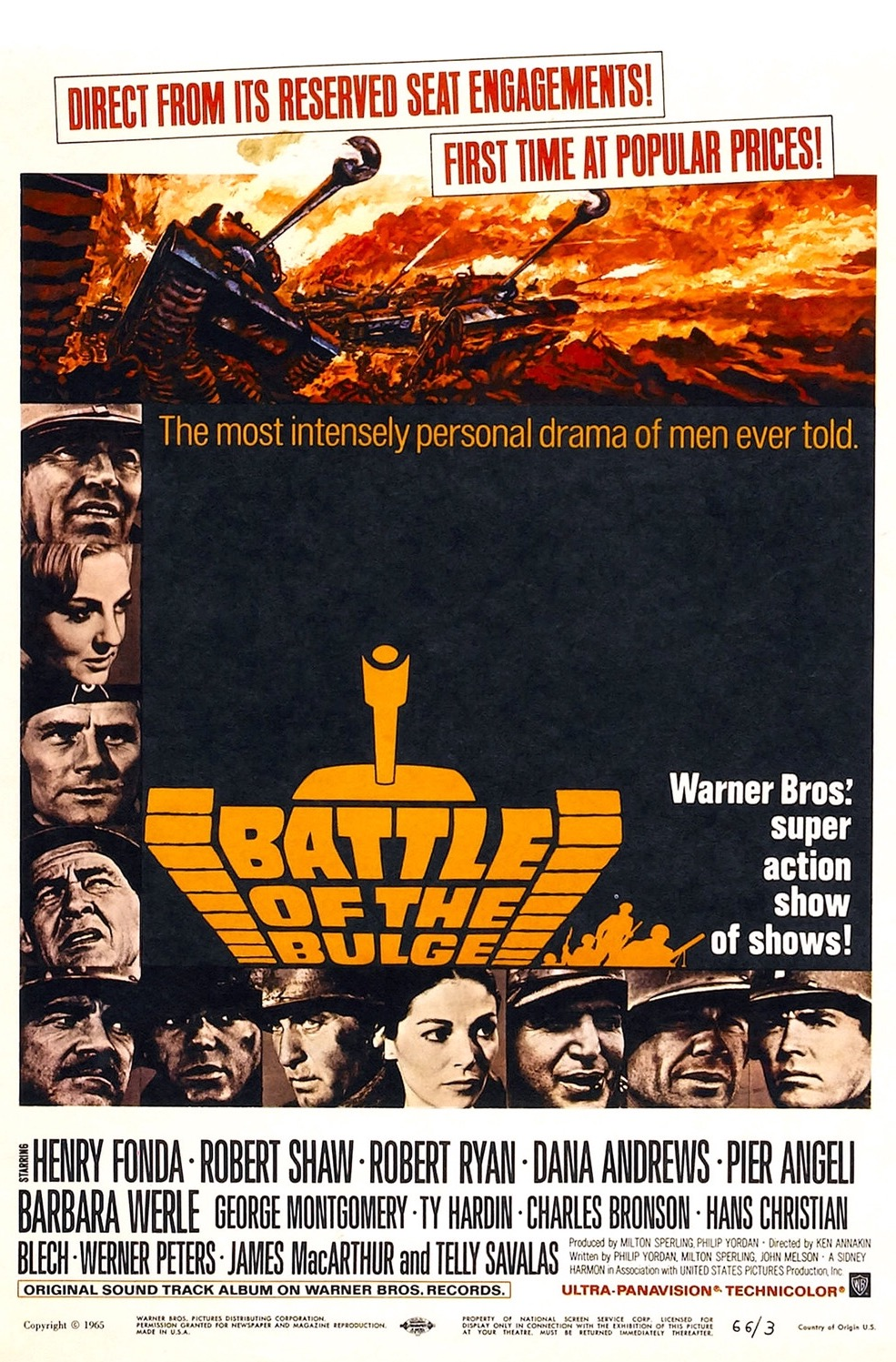
Tediously directed by the same person who helmed The Longest Day, once dubbed “The Longest Movie,” Ken Anankin’s resume’ does not inspire confidence. The picture takes forever to start, and when it gets going, it is permeated with flat ahistorical battle sequences and clunky dialogue. All the actors seem to be taking their cue from Henry Fonda, who plays the lone officer who foresaw the Nazi surprise attack through the Ardennes. Fonda sports a ho hum bemusement that screams, “Did the check cash?” The usual suspects for WWII flicks – Telly Savalas, Robert Ryan, Charles Bronson – make their bank as well, and similarly phone in their personas.

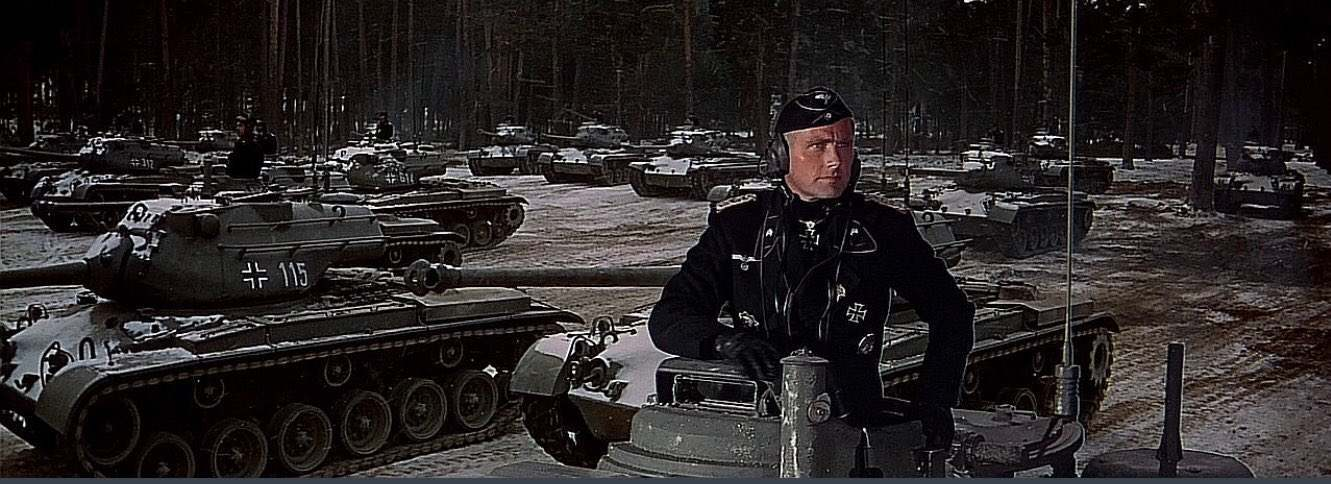
A bore through and through, it looks cheap and inauthentic, particularly when they put the leads in tanks with the actual film footage on a screen behind them.

Very Batman and Robin TV show driving.

Though it maintains a soft spot in this old heart for reasons having nothing to do with artistic merit.

When I was in high school, due to economic strain, my mother was forced to take in boarders. One, Klaus Kristmas (name changed because if my Googling is correct, he’s a rather accomplished German government official) was a smart, ramrod straight, punctilious young man whose father was in the Bundestag. Klaus was great fun, and my mother immediately made him part of the family. He even came to the beach with us, where we recoiled in horror as he pulled down his shorts to reveal a European look, the mini-Speedo.

At home, I would hang out with Klaus and watch TV. One night, sure enough, we watched this flick, which is all Germans kicking ass for the majority of the picture. When Robert Shaw, as the lead Panzer commander, nears the oil depot that will allow his continued advance, however, things have shifted. Shaw burns to death when a fuel drum hits his tank.

Klaus: “Oh nooooooooooooooo,”

14 year old Filmvetter : “USA, USA, USA!!”

On Tubi.

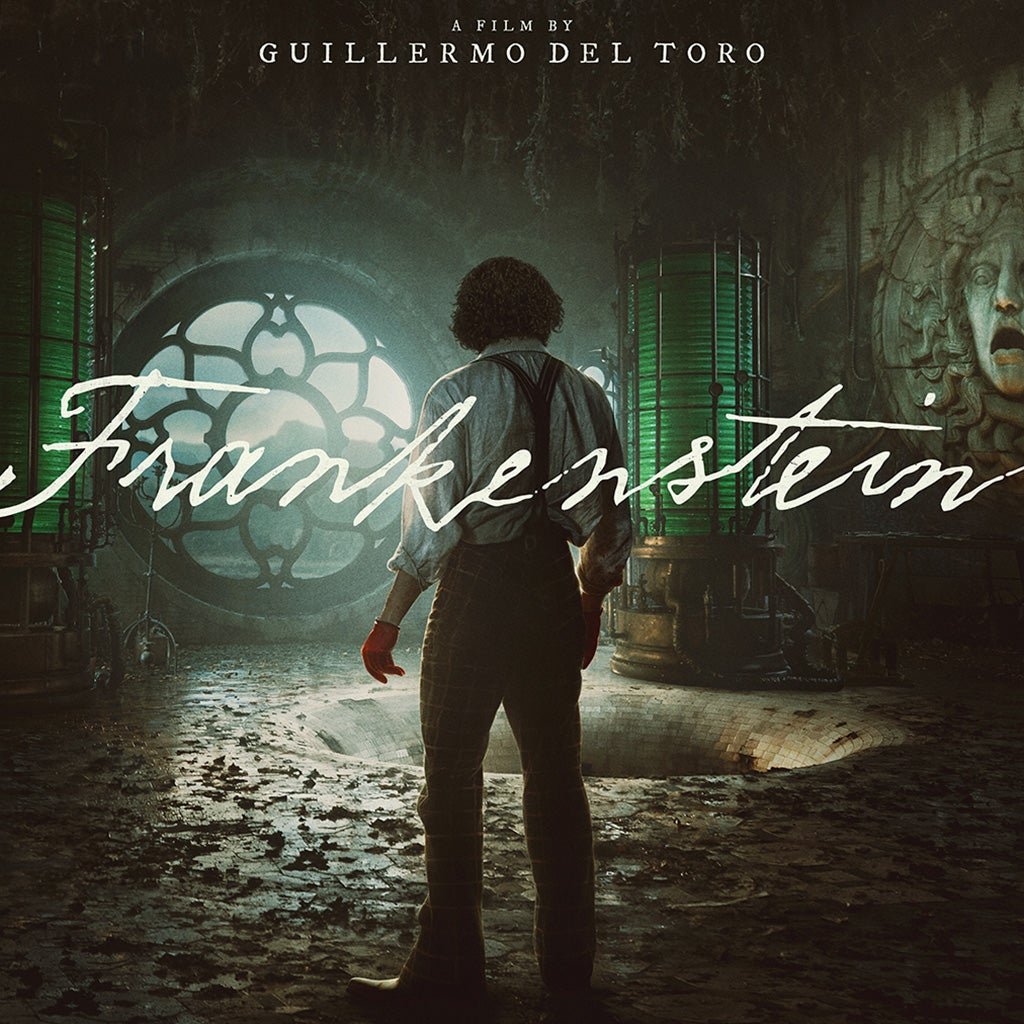
One scene encapsulates the silliness of this film and perhaps of writer-director Guillermo del Toro. The enraged monster crashes a fancy wedding party but before he arrives, we see the dandy of a groom telling the hired hand walking around with a basket of rose petals, essentially, to “keep them coming. No matter what.” The monster busts in and kills two or three people, grabs the bride, and walks out of the party with her draped in his arms, slower-motion.

Amidst a shower of rose petals.

And they say you can’t get good help.

It’s the shot, the look, that consumes del Toro, obliterating pace, story, dialogue or, in the case of the hardest working petal thrower in film history, common sense. As beautiful as his eye may be, The Shape of Water, Crimson Peak, Nightmare Alley, all are gorgeously photographed but empty vessels. No matter how many frames look like paintings, the effect is one of misdirection, not involvement. del Toro keeps larding it on, way past the moment when the Wizard’s curtain is pulled away, and a pudgy bureaucrat with a lot of bells and whistles is revealed.

Yea, the picture is gorgeous. And for the first 45 minutes, it connects, but truth be told, it connects because it is economical and lighter, in a Tim Burtony way. 

When Dr. Frankenstein (Oscar Isaac) begins his work on the monster and descends into madness, the picture becomes absurdist. When the monster (Jacob Elordi) is loose, we move to an uncomfortable mix of turgid and maudlin. When the chase is on, as Dr. Frankenstein must hunt the monster to the outer reaches of the North Pole, if you are not stifling a laugh or making cracks, bully for you.

By the film’s resolution, the monster has transformed into the Hulk and the film packs all of the emotional wallop of a Marvel film.

The movie is also badly acted. Isaac plays Frankenstein like a dude on a speedball. As his brother and the brother’s intended, Felix Kammerer and Mia Goth are as dull as dishwater. They simply do not resonate other than as clotheshorses for del Toro’s unnecessarily ornate costumery. As the financier of the project with a ham-handed agenda of his own, Christoph Waltz is only missing a mustache to twirl. Elordi is just big.

As bad as this whole endeavor is, it is made worse by del Toro’s cringingly infantile script.  His monster is a tortured soul whose transformation from a conglomeration of electrically charged parts to the most erudite Hulk is so ridiculous as to be Mel Brooksian. His Dr. Frankenstein is such a douchebag you can no more invest in him than Bradley Cooper as “Sack” in Wedding Crashers. Indeed, Frankenstein’s primary impetus for his forswearing of his creation is that Goth and the monster got on for a moment and he, coveting his brother’s gal, is now jealous. His secondary factor is that the monster is a lot of work.

Another note. del Toro luxuriates in the gratuitously violent here, yet another brushstroke on his canvas. He can make the monster’s ripping the skin off a wolf’s head super cool looking. But to see such a struggle with mere wolves, followed by Elordi moving an entire ship with a little push at the finale, it just hammers home the director’s ruinous fixation.

A colossal failure that scored an 85% on Rottentomatoes.

Hacks.

On the plus side, if you have Netflix, it is free. 

A big, flashy, visually overwhelming nirvana for speed junkies. But when cars are not going vroom vroom around the cinematic coliseums of the Formula 1 race tour, the film is unoriginal, dull, sexless, and stupid. It is also badly acted (Brad Pitt excepted, as he doesn’t act so much as pose).

Pitt is a journeyman racer, much like Tom Cruise’s Cole Trickle in Days of Thunder, though it is relevant to note Cruise’s silliness as an old “I can race anything with wheels” hand given his youth. Pitt can indeed race anything, be it in NASCAR, Lemans, Formula One, Baja, or, the Sahara, on a camel. Pitt is looking for something transcendent and elusive, like Kwai Chang Caine in Kung Fu. When his old chum Javier Bardem arrives to offer him a spot on his flailing Formula One team, Pitt can’t say no even if it interrupts his unarticulated quest.

The old timer Pitt joins the team arrives and runs into a hotshot younger driver teammate (Damson Idris). Idris is resistant to the grizzled interloper. He makes his mark on social media more than the track.

Pitt teaches him maturity, discipline and self-respect.

Pitt also runs into team car design guru Kerry Condon.

Condon teaches how to be a good teammate.

They also sleep together. Pitt has not had very good chemistry with a woman on screen since Thelma and Louise, and here, he is a stoic. In return, Condon musters all the heat of a flagging sterno cup. With a strongly established “older brother, younger sister” vibe, they have what can only be envisioned as some of the worst sex in history.

Just when you are nodding off, another race will start. You will perk up, because the spectacle is kinetic and exciting. But you can only watch so much racing. These people will have to start talking again, and when they do, it is AI-generated drivel.

The plot then begins to track that of a much better racing film – Talladega Nights. There is corporate skullduggery in the form of Tobias Menzies, who wants control of the entire racing team and schemes to depose and supplant Bardem. Like Ricky Bobby, Pitt must not enter the final race for Menzies’ machinations to succeed.

Pitt, of course, enters the final race and saves the day.

In a withering coup de grace, Pitt texts Menzies an emoji.

It is the finger.

We have just spent an entire film trying to establish that Pitt is a simple, grounded, live-in-your camper, shut-out all of the noise enigma.

Yet, in declaration of his own worth and independence, he texts an emoji.

Yeesh.

The movie is terrible when characters talk, impressive when wheels are turning, a bit of a conundrum, because I can’t imagine it would transfer as well at home.

Use your best judgment. Knowing what I know now, I believe mine would have been to forgo the film and watch the vastly superior Rush.

I pledged to go to the theater Saturday to see the three-and-a-half hour The Brutalist. I begged off at the last minute, but then, the guilt of it made me do penance.

I watched Killers of the Flower Moon, another glaring omission, especially on the part of an unpaid film reviewer. Killers was adapted from David Grann’s best-selling book about a series of murders of Osage Indians in the 1920s, crimes borne of their oil wealth and societal vulnerability.

The good.

Martin Scorsese is no slouch behind the camera, and he ably presents the grandeur and sweep of Osage life and the peculiar opulence that sprouted about it. The film looks and feels like a $200 million picture. The detail is impeccable and the feel authentic (not the garish, silly design of Gangs of New York).

Lily Gladstone. Her job as the stoic sufferer of any number of depredations could have been capably performed with simple solemnity. But she infuses it with charm, passion, and subtle resignation. In a film during which I often found myself stifling a yawn, she was captivating.     

To the bad.

Scorsese seems to be having a late-in-life problem with repetitive scenes. Here, we are treated to at least a half dozen scenes of Robert De Niro (the bad guy) telling Leonardo DiCaprio (his nephew and henchman) what to do, DiCaprio getting more and more upset, and De Niro just yelling at him again and again. Much like The Irishman, the movie is 3.5 hours. In that film, it was “1.5 hours … trying to get Jimmy Hoffa (Al Pacino) either to his senses or a meeting.” Here, it is De Niro and DiCaprio bickering.

Worse, their interminable mugging is to the detriment of more interesting characters and subplots, from the resistance of one white man (played quite ably by Jason Isbell), to the genesis of the federal investigation, to the intervention of an Indian investigator, to the actual murders themselves.  Simply put, no one gives a flying fig about these two one-dimensional, barking characters, but there they are, hogging all the scenery at the trough.

The film is also painfully confused. Is this a testament to a historical wrong? A little. But that factor seems mailed in, with scenes of Osage registering objection, but no real agency. Which is fine.  Most people in history have little to no agency. They are subject to the cruelties of their surroundings. It leaves us the machinations of the criminals. But they are so simple (Osage sheep, whites sheep shearers), they don’t lend themselves to captivating drama. Also, Scorsese’s tie to the Tulsa race massacre seems cheap and manipulative.

Is it a procedural or whodunit? Nope.  We know the villain from moment one, he only lacks a mustache to twirl, and when the case is cracked in the last third, it is by far the best part of the picture. But the way it is solved is mundane. They try to break a guy, he gives a bit of guff but soon talks. The book was very much a whodunit and a procedural, grippingly so.

Is it a love story? Scorsese tries, but there is no real chemistry between DiCaprio and Gladstone, certainly, not enough to sustain his serial abuses, i.e., his central part in the murder of her family and friends. The lovable scamp!

Is it a psychological portrait? Perhaps. DiCaprio is the guilty henchman, no doubt, but he is so glaringly stupid (Scorsese even give him pointless unwieldy teeth, this side of Simple Jack), you wonder if the character’s psychology is worth the inquiry.

The writing is not so much weak as it is misdirected. If you’re going to pay $5 million for adaptation rights to a book, why jettison the most interesting parts? The book really digs into the strange origins and dichotomy of the Osage and their oil wealth, which was borne of their savvy as much as their geographic fortune. Here, they hit oil, and the rest is a surface coverage of their spendthrift ways and the fact that to access the wealth, they need white guardians. Scorsese presents this in a sort of mashed up montage. Similarly, the book covers the birth of the FBI and the investigation of the corrupt locals from a federal agent, a first. Here, the Feds just show up (led by a criminally underutilized Jesse Plemons) and start to brace some dudes.          

Like The Irishman, I felt this would never end, and like The Irishman, the universal plaudits feel like they are being artificially elevated on the vapor of Scorsese’s status and the ennobling of the cause.          

In the Gary Oldman Churchill vehicle, I wrote of, “one of the most cringe-inducing scenes you’ll ever see, when Winston Churchill finds himself on the Underground getting his back stiffened by ‘the people’ [which was] patently ridiculous.  The only thing missing on that subway car is Tiny Tim exclaiming ‘God Bless Us, everyone,’ thereby spurring Churchill to reject appeasement and declare that England would ‘never surrender.’”

In Blitz, near every scene feels as authentic as THAT scene. Darkest Hour meets Sesame Street meets Yo’ Teach. Tired, anachronistic piffle.

If you can get past the Model U.N. in the Tube, you are made of very stern stuff.

Steve McQueen, not the actor but the director of 12 Years A Slave, needs some perspective. This film comes six years after his last, the uneven Widows, and the rust and ennui shows.

A friend put it perfectly: “It is as if he wanted to make a standard racial parable, but knowing how played out that could be, jammed it into a period piece.”  

McQueen did himself no favors in casting either. Saoirse Ronan opts for 90% beatific. Playing her son, Elliott Heffernan just doesn’t register, starting with sullen and eventually advancing to more sullen. When he stretches, it is more miss than hit. As he told Variety, when asked to cry, “I pretended my mom was taking away my PlayStation.” It is Heffernan’s first gig, and yes, it looked like his mom took away his PlayStation. 

I’ll give McQueen the accomplished look. The opening scene of men fighting a post-bombing fire and Heffernan’s journey across the English countryside to escape the terror are arrestingly resonant.

On Apple.

Imagine Gladiator, a fun, glorious, bloody romp. Now, forget about that film. It will only make things worse.

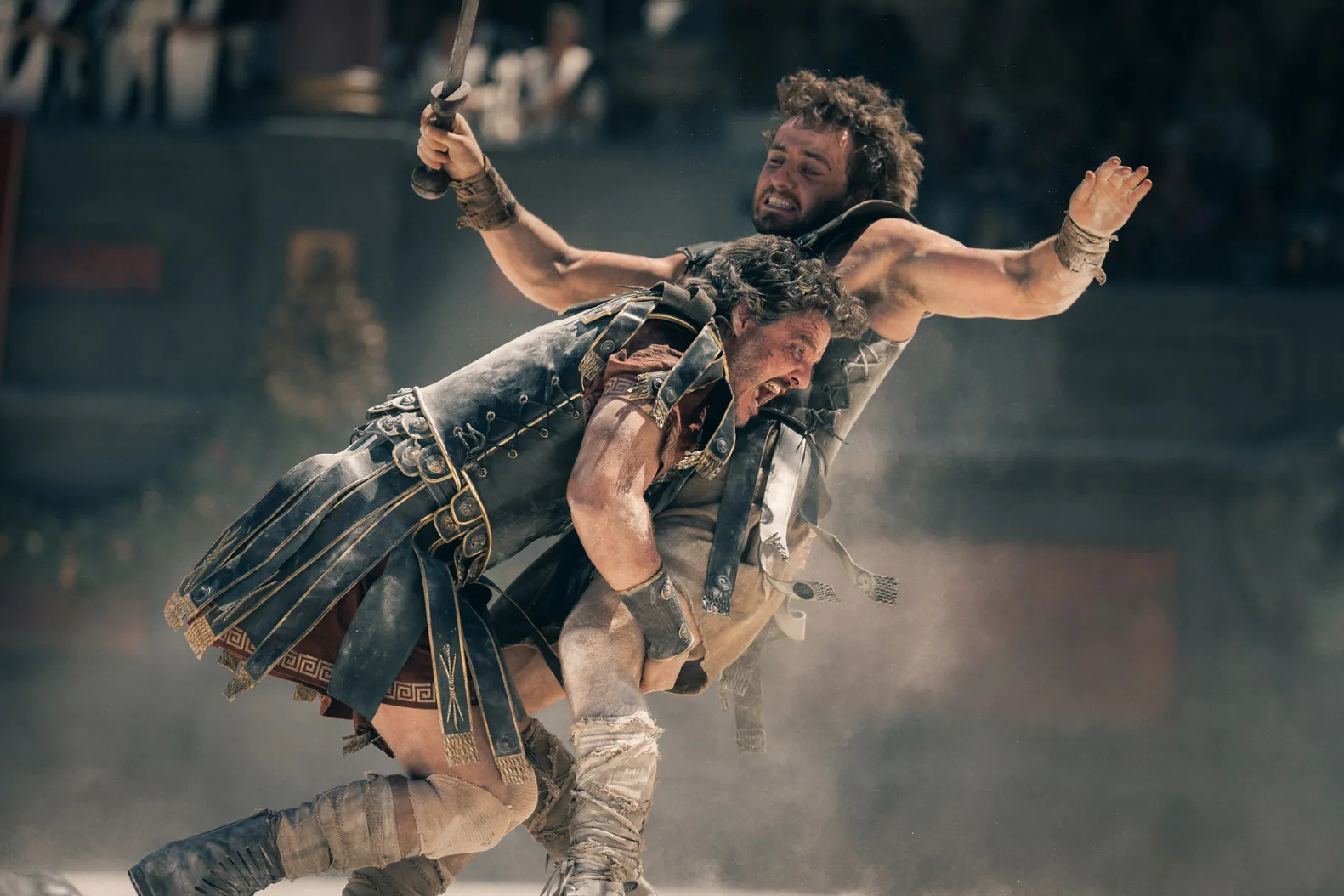
Here, the lead is not the captivating Russell Crowe but rather, the much younger Paul Mescal. Mescal has none of Crowe’s gravitas. He is not a Roman general, weary of war and politics, who just wants to go home to his wife and children. Instead, he’s a happy agrarian bean-picker, kissy-facing with his wife, when a new Roman general (Pedro Pascal) threatens their idyllic, multi-cultural commune in Africa. Mescal and wife strap on their gear and fight side-by-side. Pascal wins. The wife dies. And now, Mescal is a slave, soon to be gladiator, bent on revenge.

So, the same picture, but worse in all respects.

Every smart line in the original is replaced with “up with people” pablum and a dull dispute as to whether there is a “glory of Rome” or a “glory to the idea of Rome”, and every minor character who exuded their own agency and flair in the first film is replaced by cookie cutter figures infused with a boring wisdom that anachronistically presents as spiritually worldly.

While Gladiator II provides more combat than the original, it is juiced with unconvincing CGI monkeys, a big ass rhinoceros, and sharks. Even the hand-to-hand combat seems obligatory. You don’t care and no amount of spraying blood, gutting, and decapitation can involve you.

Our protagonist, Mescal, is supposed to be filled with “rage” but, at his most engaged, seems ironic and perhaps annoyed. The romanticism of the first picture was fueled in no small part by Crowe’s seething hatred at the needless and cruel slaughter of his family. Here, you think, “Maybe Mescal wasn’t so into his wife.”

There is little you don’t see coming. Mescal is the biggest non-mystery man ever and when the film finally gets to someone who can generate interest – gladiator merchant Denzel Washington – his grand plan and motive hit too late and quickly, right when you are nodding off. Washington, however, is at least having fun. Everyone else seems to be in mid-root canal.

And no one seems Roman here. The machinations are more on-the-fly than crafted, the concern for the people preposterous, and the finale – where two armies unite with “Huzzahs!” after an unconvincing “aren’t you sick of death?” speech by Mescal – has the feel of the old Coke ad where everyone wished they could teach the world to sing.

There is no greater dissonance than the emperors. In the original, Joaquin Phoenix was delicious, funny, just chewing scene after scene, but also substantial. Here, we have two emperors, sybaritic brothers who flounce about and exude a “let them eat cake” mien. They have no backstory, no goal, just dull, giggly, face-painted, effeminate schtick.  

Interminable. Avoid. 

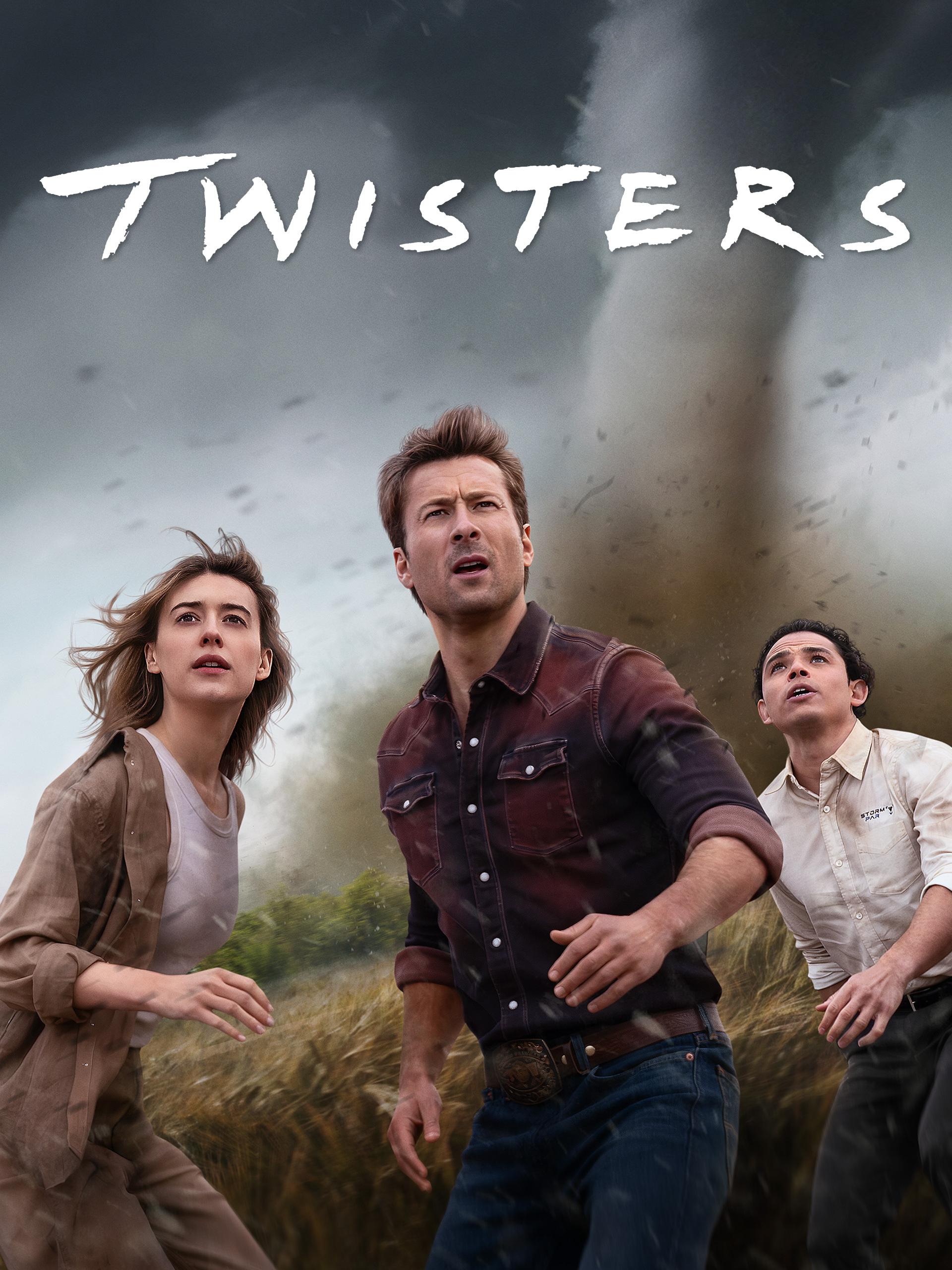
Goddawful, save for the winning Glen Powell and the fact I saw it in 4D, so the chairs moved and rumbled, wind blew on us, and lightning flashed in the theater.

Sensurround updated!

Otherwise, a complete dung heap.

Our story begins in Oklahoma, with one set of DEI/ChatGPT generated, wisecracking, riffing storm chasers, led by the charmless Daisy Edgar-Jones (Where the Crawdads Sing). Their endeavor feels like a Mentos commercial, until catastrophe strikes, and then it feels more like a darker Skittles commercial.

Five years later, after Daisy has run away from her fears to New York City, she is drawn back home, because, well … she’s a tornado whisperer. She can scan the topography, watch the wind disassemble a dandelion, take a deep breath, and she just knows where that pesky sky is gonna’ funnel.

Soon, she runs into Powell, a YouTube sensation who chases, or “wrangles,” tornados for fame and followers. Daisy must overcome her fears. Glen will help.

She also confronts the laziest form of corporate skullduggery one can imagine (so thin it is dropped immediately).

The script is banal and nonsensical. There really is nothing to say other than, “whoa!” given the impressive CGI and pyrotechnics (though someone does say, “be careful out there” – ugh), so you wait on some solid jokes and clever banter to get you to the next tornado, maybe some insight into other characters beyond “quirky” and “loud” and “ostentatiously, individualistically hip.”

Not gonna’ happen. Sure, there are a few spots for Powell to shine. But otherwise, he too has a coterie of kooky storm chasers, and they too look and speak like they’ve been assembled by a DEI/ChatGPT witch doctor, and while they all say “whoa!” differently, they don’t say it in a funny or interesting way (SPOILER – not a one of these wafer thin “characters” dies, which is a huge disappointment).

Powell pretty much has to steer this leaden ship with his impressive charm. God knows he tries, but he is thwarted by his co-star and a script written for dimwits.

Edgar-Jones has two faces – sad and sadder. So, for a rollicking, high octane joyride, one of your hosts is on thorazine, and Powell just can’t get past, into, or through her innate dullness.

And when they bond, there is nothing for them to chew on.  Case in point,  They are at a rodeo. Glen thinks Daisy is from New York City originally, so he is showing her the sights. There is great potential for some fun to be had here, the girl who knows the rodeo like the back of her hand letting the cowboy puff out his chest and wax poetically. But no. The kicker is she gets to say, mournfully, that this is not her first rodeo.

Then they talk about their first tornados. Again, this doesn’t have to be Oscar-worthy, but you can have a decent sexual double entendre or two here. God, anything to break up the verbal monotony. But Daisy demurs, Powell tells a story of how he saw one when he was 8 and realized he was supposed to be scared, she asks if he was scared, and he says . . . “yes.”

This is unintentionally moronic dialogue better suited to Idiocracy. Or Quest for Fire.   

As badly abused as the audience may have been, the people of Oklahoma are sitting on a winning class action suit for defamation. Here they are, living in a hellscape where tornados appear in an instant and ravage their communities. It’s all over the news! But damn if they don’t insist on proceeding with the town fair or the Little League playoffs or the Annual Pie-Eating Contest or running lightweight old-timey trolley cars down their streets.

Those plucky Okies won’t be dictated to by mere weather!

Yet, when the tornados arrive, you’d think these weathered veterans were from New Hampshire. They run around screaming and trying to gather belongings, hiding under metal containers, holding knives and bags of broken glass, doing all the other things people in tornados are advised not to do, until Daisy and Glen show up to remind them to seek shelter.

In a movie theater.

That is playing Frankenstein.

Because they don’t get first run movies in Oklahoma.

They do get a shitty country song about how you can’t spell Oklahoma without “home” and there’s a lot more of those ditties throughout this dog.

Gonna’ have to give a second look at Sharknado after this turd.

Leonard Bernstein was a significant man. But you wouldn’t know it from this film. Bradley Cooper’s labor of love makes Bernstein seem rather humdrum, and as the film progresses, Cooper certifies that reality, eventually discarding Bernstein’s story for that of his wife (Carey Mulligan).

Look, it is clear Cooper reveres Bernstein, but too much is too much. Think of when someone you know introduces you to someone they love. They are already in thrall, and they have explored every nook and cranny of their idol so, in your introduction, you don’t come to your appreciation organically, the way your friend did. You start with, “He is the greatest.” And then, after that, your friend just keeps saying, “Isn’t he? Told you!”

Here, Cooper is so entranced, he glosses over what makes Bernstein Bernstein – his music. Sure, there’s tons of scenes of Cooper directing with the panache and flourish of Bernstein, but Cooper is more interested in having mannerisms down pat than exploring why we’re here. Cooper’s meticulous impersonation cannot substitute character.

Worse, since Cooper has little interest in Bernstein’s craft, we focus on his domestic struggles, which are pedestrian, even for a famous man living a barely disguised double life. He is not denied his pleasures, nor is he punished for them. Rather, they create some marital strife. And that’s what we get to see until cancer closes the story out. No war time concert in Israel in 1948. No silly cocktail party for the Black Panthers (sent up so wonderfully by Tom Wolfe). No concerts after the assassinations of JFK and RFK. No philanthropy for AIDS as it decimated his profession (and killed his longtime lover Tom Cothran, for whom he left his wife). 

We learn very little about what Bernstein should be remembered for.  Hell, he could have been a periodontist.

A well shot chore. On Netflix.


Andrew Dominik’s The Assassination of Jesse James by the Coward Robert Ford is one of the best films of the last 25 years and would rank in my own top 25 of all time.  So, no matter the negative notices, any of his pictures merit a look.

Blonde received scads of poor notices.  Justifiably so.

The picture has much in common with Elvis, and you get the sense that Dominik, like Baz Luhrmann, was behind the eight-ball from the outset.  Both biopics are devoted to broad pop icons with fixed public personas that, when pierced, reveal soft, dull goo.  So, the directors make up for the deficit by untethering the stories from fact, gussying up the visuals, and stretching for a larger point. As with Elvis, we quickly learn a good-looking picture can only get you so far.

Make no mistake.  Blonde is a visual feast. But it has no real narrative. We meet poor Norma Jean as a child brutalized by her mentally ill mother, and then she’s brutalized via casting couch, and then she seeks shelter in a “throuple” with two men, who take advantage of her sexually and financially. Soon, Joe DiMaggio (Bobby Cannavale) shows up out of nowhere, and then Arthur Miller (Adrien Brody), and then JFK, and soon, drugs and death. One calamity after another, one torment replacing another. None of her relationships are developed. Rather, her romantic entanglements just appear, are thunderstruck, and then we move to the next victim/victimizer.

It is all very sad, but watching a film is transactional, and you soon wonder, “Why am I supposed to care?”

Ana de Armas as Marilyn is occasionally effective (in particular, during a riveting audition), but for the most part, she’s a cartoon, cooing “Daddy” (to her own, unknown father and every man she has chosen to replace him) in a breathy, childlike manner at such a rate that you can almost see DiMaggio and Miller thinking, “Yikes! I thought the ditzy bombshell thing was an act? How do I get myself out of this?”

de Armas was nominated for best actress, and much like Natalie Portman in Jackie, the rendition is an over-the-top caricature of a public figure, where their peculiar tics are amplified. When her Cuban accent makes one of many appearances, it doesn’t really bother.  There’s just too much else wrong with the performance, as if someone told de Armas to play Marilyn as a perpetual thirteen year old girl. With a concussion.  

Not that de Armas was given much to work with.  In one scene, she is with the none-too-impressed DiMaggio women, who are making spaghetti, and she lilts, “ooooh … real spaghetti? Like . . . not from a store?”

There’s plenty more where that came from in this ridiculous script. At the premiere of her first big film, as the crowd erupts in thunderous applause for the town’s new star, Marilyn breathily says, out loud, “For this, I killed my baby.”

Hoo boy.

Dominik’s missteps can also be traced to his misunderstanding of Monroe in the American consciousness: “If you spent 70 years enjoying a fantasy of a person; then a movie comes along that says she was not complicit in your enjoyment, it puts you in an uncomfortable position for having enjoyed it. People don’t want to be put in that position; they want her to be the one that created their enjoyment, and was along for the ride, then had a bad year and killed herself. That’s not the way it works. There’s no redemption in suicide. Americans don’t like you to monkey with their mitts too much. They very often want to jump to the solution without looking at any of the trauma.”

I am not unreceptive to some of these observations, but as applied to Monroe, Dominik is just wrong,  He is talking about the Monroe of Elton John’s “Candle in the Wind” which was so long ago (1973, only 11 years after Monroe’s death) the song has been repurposed for Lady Diana (and will eventually be repurposed again when the next pop starlet dies before her time). Americans are not so protective of Monroe that Dominik’s pedestal tipping would elicit a reflexive defense.  Rather, in modern memory, she was a sexy, mentally disturbed, marginal actress who sang a sultry “Happy Birthday, Mr. President!” publicly and privately and then overdosed. Side note: has anyone been taken down further in filmic history than JFK? When I grew up, he was the cool, collected president who saved his mates in PT 109 and stared down the Russians in The Missiles of October. Recently, in The Crown, he was a pill-popping whirling dervish.  Here, he’s a #MeToo emblem, forcefully cajoling Monroe to perform oral sex on him in what has to be the worst scene in the picture.            

I suspect Dominik knows the film fails, but credit him for a stout defense: ”Blonde is a very well worked-out film. Those who don’t think that aren’t watching it. If you sit back and trust that the movie knows what it’s doing, it’ll work.”         

It does not. But if you are hot for a visually impressive, near 3-hour movie about a glamorous, vapid punching bag, Blonde is streaming on Netflix.