Archive

Scary

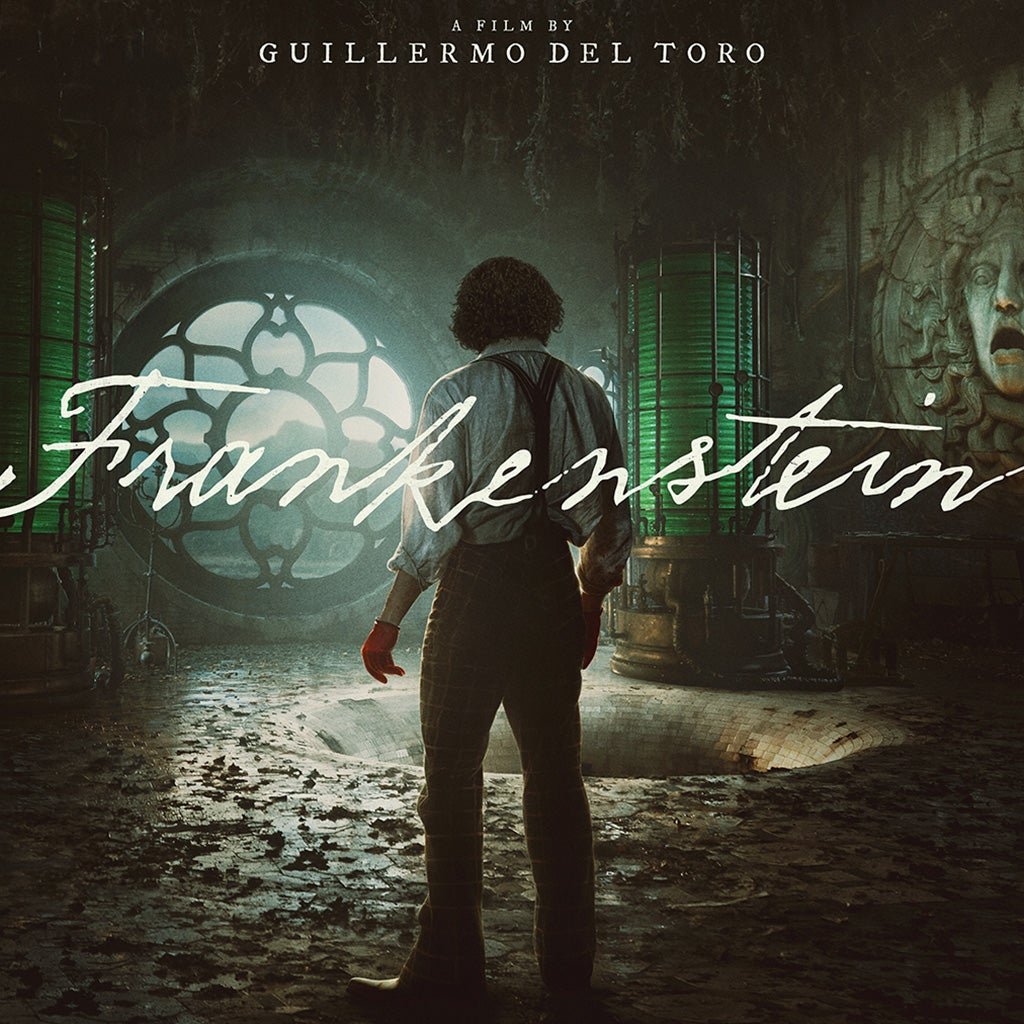
One scene encapsulates the silliness of this film and perhaps of writer-director Guillermo del Toro. The enraged monster crashes a fancy wedding party but before he arrives, we see the dandy of a groom telling the hired hand walking around with a basket of rose petals, essentially, to “keep them coming. No matter what.” The monster busts in and kills two or three people, grabs the bride, and walks out of the party with her draped in his arms, slower-motion.

Amidst a shower of rose petals.

And they say you can’t get good help.

It’s the shot, the look, that consumes del Toro, obliterating pace, story, dialogue or, in the case of the hardest working petal thrower in film history, common sense. As beautiful as his eye may be, The Shape of Water, Crimson Peak, Nightmare Alley, all are gorgeously photographed but empty vessels. No matter how many frames look like paintings, the effect is one of misdirection, not involvement. del Toro keeps larding it on, way past the moment when the Wizard’s curtain is pulled away, and a pudgy bureaucrat with a lot of bells and whistles is revealed.

Yea, the picture is gorgeous. And for the first 45 minutes, it connects, but truth be told, it connects because it is economical and lighter, in a Tim Burtony way. 

When Dr. Frankenstein (Oscar Isaac) begins his work on the monster and descends into madness, the picture becomes absurdist. When the monster (Jacob Elordi) is loose, we move to an uncomfortable mix of turgid and maudlin. When the chase is on, as Dr. Frankenstein must hunt the monster to the outer reaches of the North Pole, if you are not stifling a laugh or making cracks, bully for you.

By the film’s resolution, the monster has transformed into the Hulk and the film packs all of the emotional wallop of a Marvel film.

The movie is also badly acted. Isaac plays Frankenstein like a dude on a speedball. As his brother and the brother’s intended, Felix Kammerer and Mia Goth are as dull as dishwater. They simply do not resonate other than as clotheshorses for del Toro’s unnecessarily ornate costumery. As the financier of the project with a ham-handed agenda of his own, Christoph Waltz is only missing a mustache to twirl. Elordi is just big.

As bad as this whole endeavor is, it is made worse by del Toro’s cringingly infantile script.  His monster is a tortured soul whose transformation from a conglomeration of electrically charged parts to the most erudite Hulk is so ridiculous as to be Mel Brooksian. His Dr. Frankenstein is such a douchebag you can no more invest in him than Bradley Cooper as “Sack” in Wedding Crashers. Indeed, Frankenstein’s primary impetus for his forswearing of his creation is that Goth and the monster got on for a moment and he, coveting his brother’s gal, is now jealous. His secondary factor is that the monster is a lot of work.

Another note. del Toro luxuriates in the gratuitously violent here, yet another brushstroke on his canvas. He can make the monster’s ripping the skin off a wolf’s head super cool looking. But to see such a struggle with mere wolves, followed by Elordi moving an entire ship with a little push at the finale, it just hammers home the director’s ruinous fixation.

A colossal failure that scored an 85% on Rottentomatoes.

Hacks.

On the plus side, if you have Netflix, it is free. 

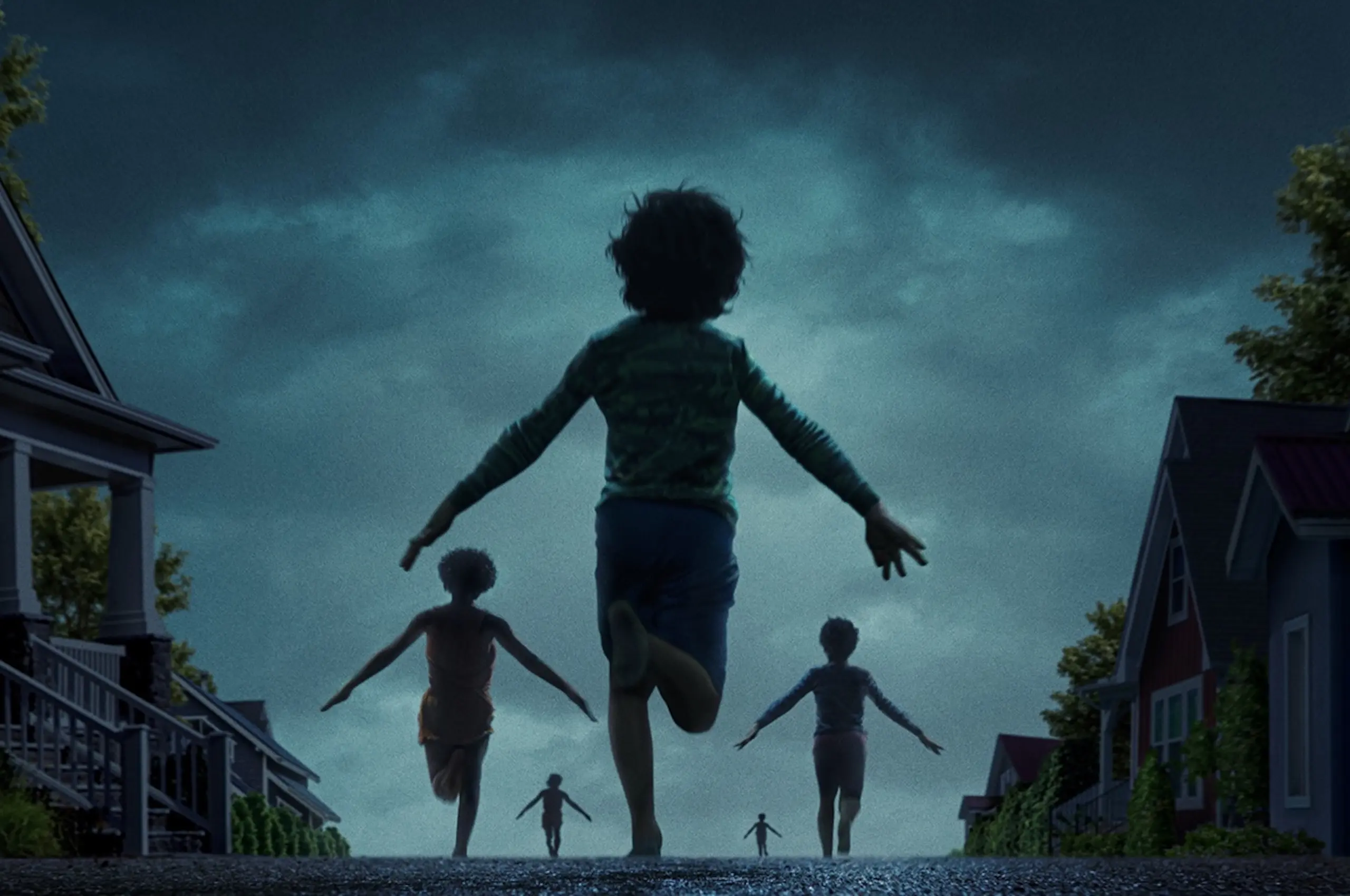
At the film’s outset, you are entranced, and you sense you are in capable hands. Like a scary campfire story, a child’s voiceover explains the disappearance of a slew of grade school children in a mid-size Pennsylvania town. One night, they alight from their beds simultaneously, leave their houses, and simply … disappear. All to George Harrison’s Beware of Darkness, a haunting, beautiful tune, pitch perfect to the moment, reminding you just how important good music is to the filmic moment. It is one of the more impressive film openings I’ve ever seen.

As I mentioned in an earlier review, I suffered from night terrors as a child, which were, unsurprisingly, terrifying. But I also had spates of sleepwalking, and as I saw the children rise and go off into the night, it brought back the visceral feel I had of being that age and traipsing in bitter cold around the block, barefoot, impelled without any autonomy, until I simply drifted back in my house, or that of a neighbor, and went back to a bed, feet dirtied and maybe a bit bloodied, but otherwise not worse for wear.         

The children here are worse for wear, and on that, I can say no more. But we learn their fates through an ingenious approach by writer-director Zach Cregger (Barbarian), a recapitulation of the entire event, front to back, and its aftermath, through the lens of six people – the schoolteacher, a father of one of the children, the school principal, a town police officer, a homeless criminal/drug addict and the one child from the class who did not disappear.   

Josh Brolin is moving as a bewildered father who yearns for his son and just can’t wrap his head around it. As the teacher, Julia Garner is unnerved yet refreshingly feisty, not just willing to lay down and be the town’s sacrificial lamb. She’s no angel either, a bit of an unlikeable pain in the ass, which adds heft to her persona. There is also a bravura turn from a near-unrecognizable Amy Madigan (kudos to me for sussing out that under quite heavy makeup, sure enough, that was Uncle Buck’s girlfriend, Chanise).

I was impressed by Barbarian, and as in that picture, Cregger captures the spooky qualities of the mundane. There, it was decrepit Detroit. Here, it is a hamlet in Pennsylvania, though it could be any town USA exurb. Without being showy, Cregger can make a convenience store, a non-descript alley or even gas station pumps vaguely threatening.

Cregger also has a way of writing like people speak. Stephen King film fare is generally situated in small town venues much like this, and almost always accompanied by dialogue so painfully obvious and hackneyed – be it from the town drunk or floozie or sadistic bully or chummy mayor – you shudder, not from fear, but embarrassment. Cregger is comfortable with the natural exchanges of colleagues, lovers, neighbors, and enemies. His dialogue between the principal and the teacher is an apt example, as he expresses his frustrations with and care for her, and she manipulates him all the same.

Nor has Cregger lost the sharp sense of humor from Barbarian, which is interwoven in the everyday patter of the characters. His final scene is a melange of unbridled terror and tension-cutting, roller coaster ride slapstick.   

So, why the half point deduction?

I am not going to call the picture out on a Longlegs critique, a film that was all feel and little sense. Weapons does not strain credulity to the point of eye-rolling. For the most part, Cregger circles the squares, and he maintains such a taut, engrossing pace you don’t dwell on impracticalities.  Nor is the town one where kids are disappearing on a regular basis, yet people keep populating it and settling down, as in King’s It. This is a one-time event.

That said, there is a glaring hole, and please stop here and return to read later if you intend to see the movie.

**SPOILERS”

It’s not just a few kids who go missing.  It is 17, all from one classroom, in one night, at 2:17 a.m. And when we arrive on the scene, the crime is still fresh, having occurred a mere month or two prior. Yes, Cregger nods to a town in upset, as well as a comprehensive police investigation that, to date, has found nothing. But this case would have been bigger than the Lindbergh kidnapping, and the den of the malefactor would have been torn to pieces in a New York minute with the kind of criminal pathology that would have wrapped it up toot sweet. And even if nothing was found, the place would have been surveilled 24/7 by anyone from the feds to local p.d. to state police to investigators hired by the parents to the National Guard at Trump’s behest. Cregger should have dropped the number to 3 or 4 kids, ala’ Picnic at Hanging Rock and extended the time period.  As it is, when I saw a reward poster for a paltry $50,000, it was a bad moment, as bad as when the weary police chief acted sympathetically but a bit put out by Brolin’s badgering about the case. Frankly, had Cregger set this film pre-internet, at a time of more rudimentary forensics and no Ring cameras, a lot of the film’s troubles are solved. But no one asked me.

Eh, ignore my kvetching. It’s a really great flick.

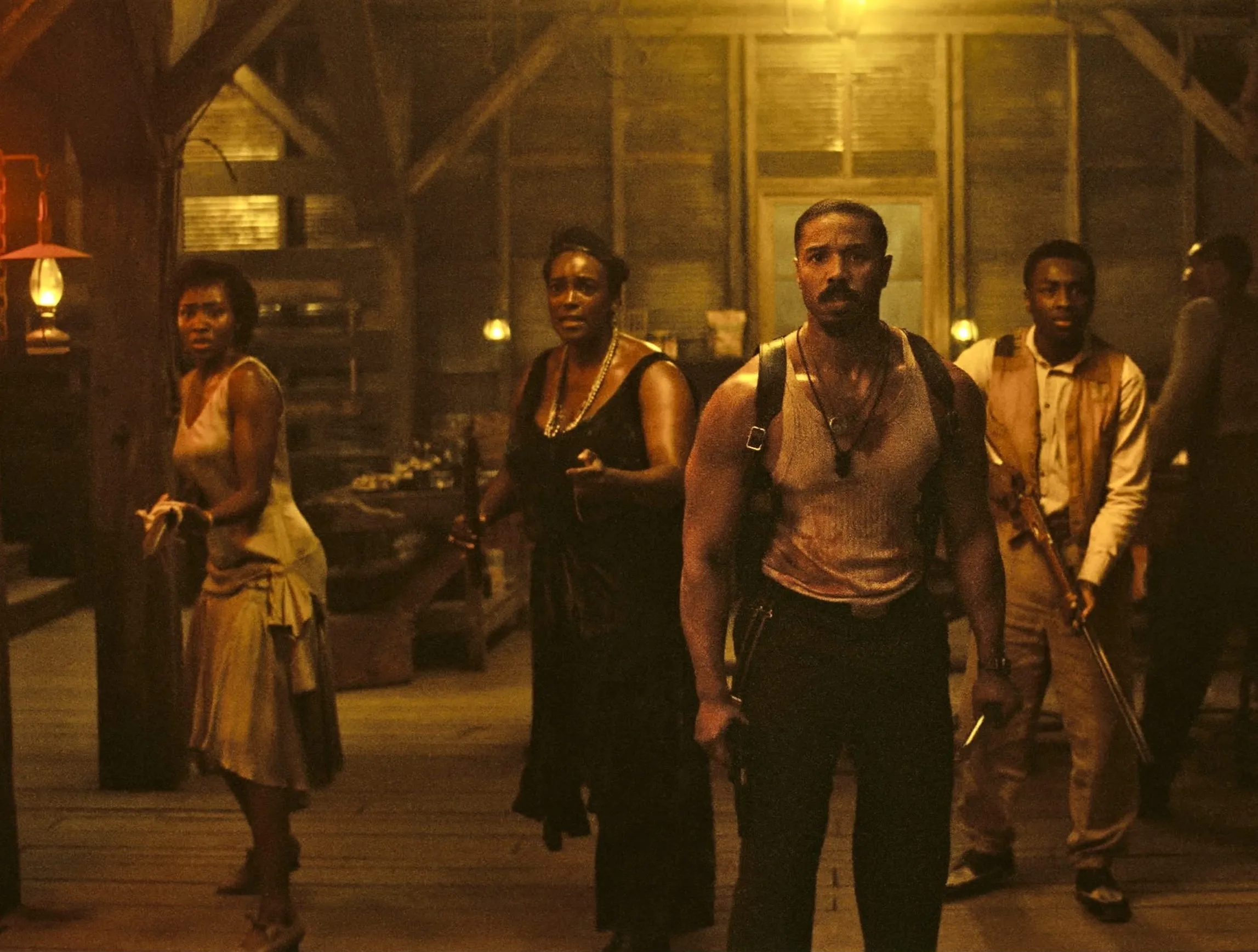
There is a lot going on here, much of which I can’t recount as it would spoil the fun. And oh, what fun. Ryan Coogler’s (Creed, Black Panther) movie is so lovingly textured and expertly paced, when it turns out to be a vampire flick (which is not exactly giving anything away), you’re surprised (it seemed in service of a weightier story) and then delighted (to hell with weighty, this is a blast!)

Coogler’s care pays off handsomely. The audience is primed for something big when he takes us to the final conflict . And though the picture could have devolved into a chaotic, silly comic bloodfest, ala’ the campy and tiring From Dusk ‘Til Dawn, Coogler maintains levity but the movie never winks at you or itself. Nor does it level off on the actual scares, which are enhanced by a truly creepy, deep Southern milieu.

There are great performances all around, with particular kudos to Michael B. Jordan, playing twin brothers with a keen sense of the sameness and personality divergence; Jack O’Connell as the cleverest of nightwalkers, so charming you are almost seduced; and Miles Caton, the man the devil went down to Georgia to find, an actor who sings so mellifluously you can understand why evil would be drawn in. Coogler also soaks the flick in sweaty, redolent sex, a natural heat and lust that feels almost quaint in these times of porn chic domination.

Finally, Coogler’s direction is bravura but not showy, and one particular musical montage is Boogie Nights pool scene worthy, dizzying and captivating.

One nit – the picture has 3 endings. One would have been perfect but too brave, two excellent.  Three was a smidge tiring.      

What to say about Ti West? I quite liked The Innkeepers, an old school, throwback ghost story and was happy to see he’d gotten bigger budgets and a broader canvas.

He’s done little with it.

MaXXXine’s predecessor flick – X – modeled Texas Chainsaw Massacre in set-up (group of young folks go to the wilds of rural Texas where they rent a property on a farm to shoot a porno and are picked off one by one). Charmless, boring, and not even ingenious in how the characters meet their end, the fate of the players was more serial than momentous. The movie also seemed confused. X was not really funny or even ironic, ala’ Scream. It was certainly not scary (there’s a gator in the pond, so, uh … look out). It had the feel of schlock but was not really an homage to drive-in trash. It was just “steady as she goes” vanilla.

One character makes it out of X alive and we find her in MaXXXine, where it is 1985. She has become a porn queen in LA, trying to crossover to serious roles, which ends up being a whole lotta’ nothing in terms of plot development.

As Maxine aspires, her survival in Texas and her trauma catch up with her, the former in the guise of blackmailing private detective Kevin Bacon, and the latter in the form of flashbacks as to what happened that fateful weekend back in Texas.

Meanwhile, Maxine’s friends start dropping like flies.   

Bacon is so over the top Tex-anny – toothpick and drawl and gold orthodontics – he annoys rather than amuses, and Maxine’s flashbacks seem hubristic, an assumption that anyone watching this picture was hanging on the edge of their seat to see what happens to her now.

What does happen to Maxine is so disjointed, disinteresting, and cheezy, you’re tempted to fast forward. There is no reason to care, and with a film as predictably preposterous as this, one cannot be manufactured.

Worse, the look and feel are cheap. How do we know this is 1980s LA? Pointless news clips referencing The Hillside Strangler, a lot of smoking, shiny suits, and men wearing earrings. I guess wardrobe was out of piano key ties.

But West even bollixes up the scenes where he seemingly is trying to take care. For example, our killer visits one of his victims – another porn star – by visiting her performance at a peep show. So, he drops a quarter in the slot and there she is, in an outfit and a room that is $100 bill, not a quarter-a-minute worthy. It seems small but is emblematic of just how lazy the entire endeavor feels.

Most unforgivably, West takes a run at enveloping Maxine’s fate in a parable as to the hypocrisy of Tinsel Town and moral majoritarian finger-waggers.

It falls as flat as everything else in this dog.   

On MAX.

The writers of A Quiet Place (Scott Beck, Bryan Woods) got their own flick, and they delivered. 

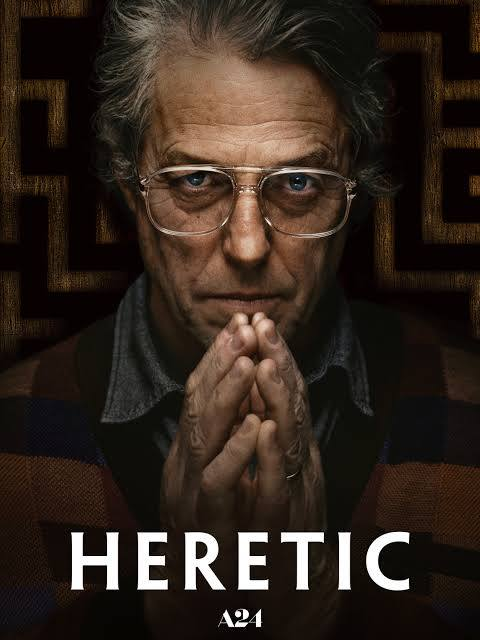
Two Mormon sisters (Sophie Thatcher and Chloe East) on their door-to-door proselytizing tour come to the wrong house, where Hugh Grant engages them on a religious and philosophical level, entraps them intellectually and physically, and then, puts them to the test of faith. Or at least his own perverse version of same.

His house is set up like a religious Chutes and Ladders, with wrong and right doors, hidden coves, timed locks, and, obviously, more horrifying surprises.

The writers make you love these girls, earnest believers but not dolts, so you hope for the best. But dammit, their tormentor is so witty and interesting, you feel guilty for wanting the mental duel to continue.  

Literate, suspenseful, darkly funny, and ultimately, perhaps overly-reliant on Grant’s cheeky, playful and charismatic performance. But oh, what a turn!

A taste.

Eventually, the mental gymnastics must give way to violence (I was hoping Grant would say, “Okay, joke is over! Goodbye, girls!”) but of course, that just wouldn’t do. The film falters just a bit at the bloody end, but [spoiler, sort of – it has a faith-based final act worthy of The Exorcist, and as Grant has been kicking these girls about for most of the movie, Huzzah!].  

$4.99 well spent on Amazon.

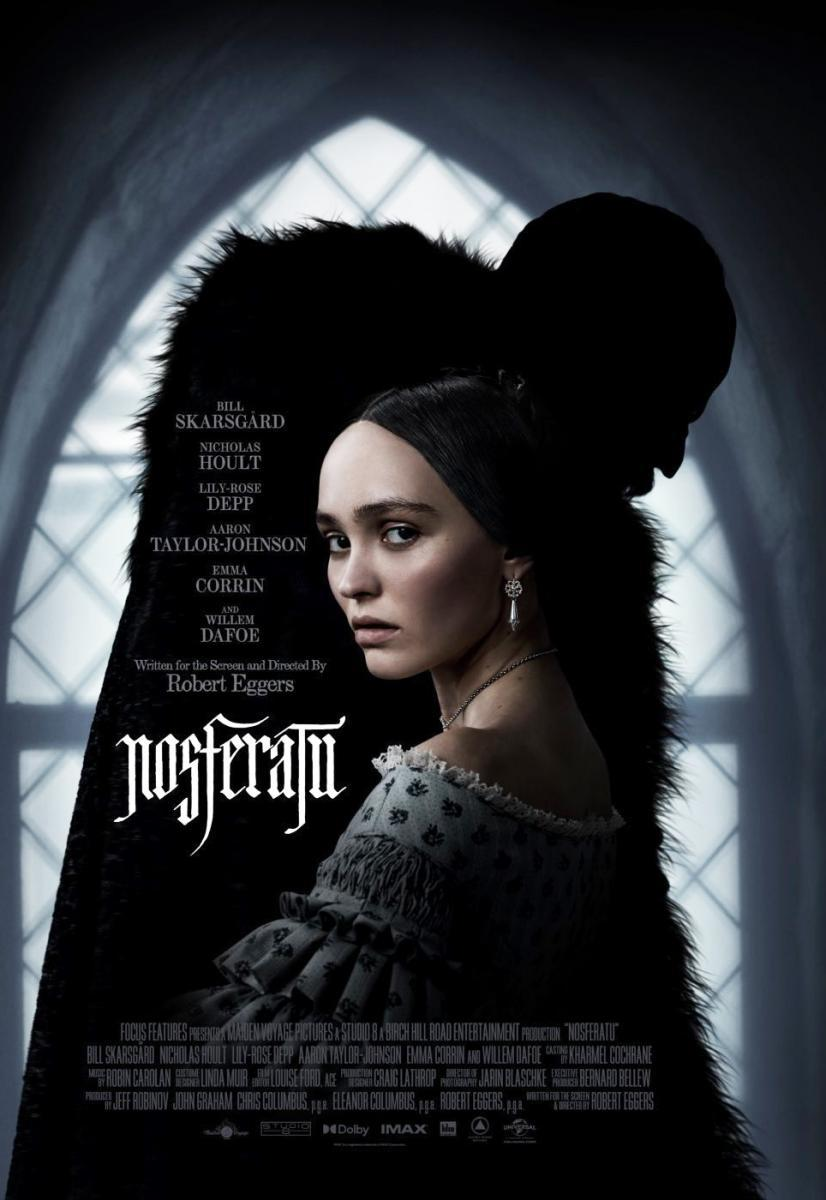
Upon their reunion, Count Orlok/Nosferatu (Bill Skarsgard) tells his intended Ellen (Lilly Rose Depp) that his well-planned travels to capture her are borne of a simple credo: “I am nothing but appetite.”  All the impressive visuals, haunting tableaus, and carefully crafted hues in Robert Eggers’ (The Witch, The Northman) bag of tricks, however, cannot make mere “appetite” all that interesting.

In the modern vampire films, there are rules. When the  creatures are plentiful, they must feed to survive. They are appetite and we are prey and their backstory is subordinated to our survival. But when the film has fealty to Bram Stoker, at center is the relationship between the monster and his beloved, always a doomed romance. In Francis Ford Coppola’s Dracula, Gary Oldman tells Winona Ryder that he has “crossed oceans of time to find you.” Why? Because his damnation as a vampire came at his rage and anger at the death of his true love, whereafter he forswore God himself, and now he has found her again in the present day Ryder. 

Here, the monster just seems to be hungry for an old meal. The two are connected by a cosmic carnal desire that goes way back but is unexplained. It allows for evocative scenes of fever dream passion, spurting and oozing blood, horror, masochism, and even a toe into exorcism. But this isn’t an art gallery, nor a meditation on how far one might go for the most extreme of sensual pleasures. It’s a film, and as gorgeous as it may be, it is also dull and dark and too often not very interesting.  

For example, when the major characters (Nicholas Hoult as Ellen’s betrothed and Willem Dafoe as the Van Helsing stand-in) have sussed out that evil has come to town specifically for her, Nosferatu finally appears to Ellen, and he is quite clear. If you don’t succumb to me in three nights, I will wreak havoc on everyone in your life and then kill your husband. Of note, Nosferatu has also brought plague to the city, so the havoc is widespread. Ellen seems unsympathetic from the get go – jittery to tortured to the throes of near-possession – and though it becomes clear she alone can end the plague, her selfish reticence is unfortunately in keeping with her character.

[Spoilers – as it turns out, Ellen destroys the monster and herself by inviting him to bed on the third night, which makes you wonder, “why the hell did everyone else have to die on nights 1 and 2?” As for the end of that night, it seems a stab at romantic, but boiled down, it has a “You’re gonna’ have to let Nosferatu feed on you so good that he loses all track of time and you literally metaphorically fu&% him to death.”]

There is no doubt, Eggers knows what to do behind the camera. But he is not adept at narrative, and you really don’t invest in any of his characters, who make it worse by over-emoting blocky dialogue. No one seems like a real person, much less a real person who is facing the undead.

Eggers adds little new to the canon but prettier visuals.


This entire review is a spoiler.

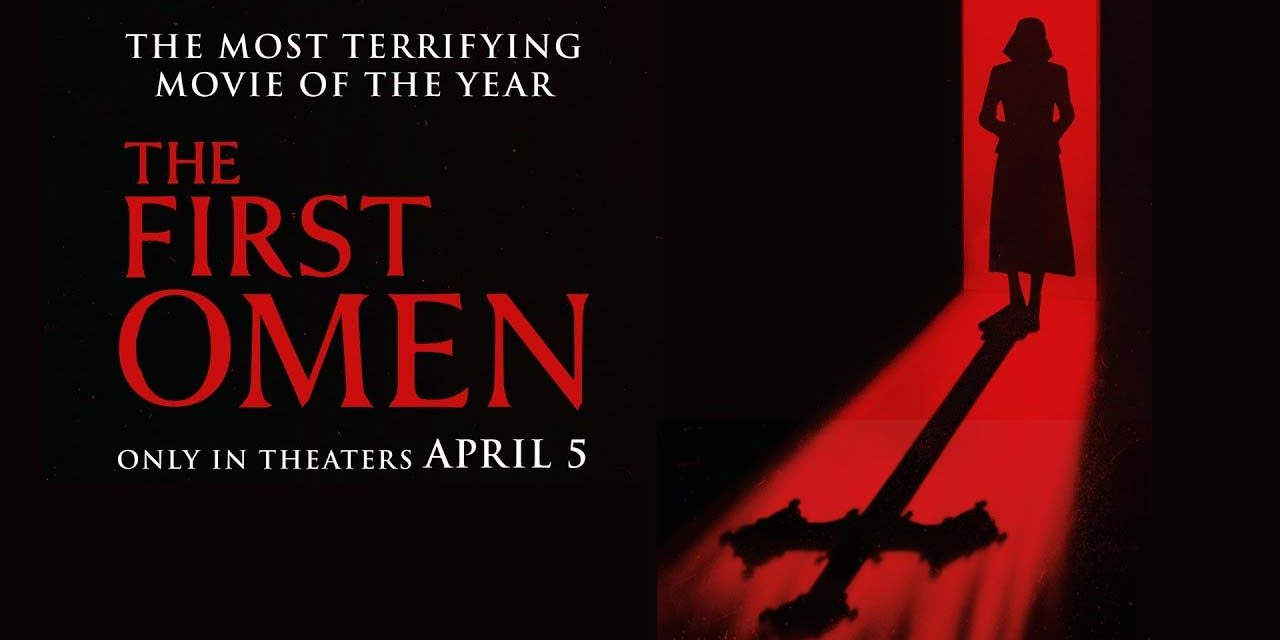
As you may or may not know, when Damien Thorn was placed with the American ambassador to the Vatican (Gregory Peck), his own wife (Lee Remick) had just “lost” their baby during childbirth. Mrs. Thorn would have been devastated, but the ingenious Catholics were Luigi-on-the-spot, procuring another baby boy – Damien – for the old switcheroo. Soon, Damien is in America, freaking out baboons, having the temper tantrum of the ages when driven to church, and killing (or having killed) everyone in his way, including, eventually, Mom and Dad.

I’m a huge fan of the original and even like the sequel, where William Holden and Lee Grant have to deal with their devil of a teenage adopted son. I sort of lost track after that but understand there was a third flick, which wasn’t so good.

So now we go back to before Peck and Remick became the unwitting guardians of Satan. It is 1971 and Margaret, a fresh and seemingly innocent nun, comes to Rome, where she is stationed at an orphanage. Before long, she notices strange doings, and is soon approached by a dissident priest, who informs her that this is no ordinary orphanage, but rather a cabal of right-wing radicals within the Church, so desperate to regain power against secularism – gasp! – they are willing to bring Lucifer back in human form, if only to make themselves relevant.

Because evil had been on a real downslope in the century.

As a cultural Catholic, well-versed in the Church’s byzantine rituals and excesses, I have a lot of bandwidth for this kind of silliness. But even for me, this is painfully stupid. And also, I think, a ripoff of Ron Howard’s hideous fireman movie, where an embittered fireman lights a lot of fires in Chicago to avoid budget cuts.

You do not want to steal a lot from Backdraft.

Sure enough, Margaret finds a fake door that brings her to old files of hideously deformed babies.

The orphanage is, in fact, a baby factory, where Satan (in the form of a jackal) impregnates the girls. Most of the grotesque babies die, confirming they are not The One.

But Old Satan keeps at it.

And I think, this is a ripoff of M. Night Shymalan’s Unbreakable, where Samuel L. Jackson blows up every plane, train and automobile he can hoping to find the “unbreakable” Bruce Willis, who will have survived what cannot be survived.

Also stupid, but somehow, it worked for me.

When Margaret rifles the files, there is a missing picture of one of the would-be hosts.

Guess what?

That girl is Margaret.

You see, the whiz kids in the rectory figured out that if Satan mates with his own spawn, and a child is delivered, then the Church will finally get Damien, not a deformity, and the pews will be full again! And when Margaret first got to town, her nun roomie took her out clubbing, like when the Amish get one crazy weekend in New York, and someone slipped Margaret a mickey so the Devil could get at her.

So, Margaret gets a C-section in the creepy catacombs, and Damien is born.

As is his twin sister.

Sigh.

This is not as bad as it reads. There are some very scary touches, and a smart buildup.

But there is no fun in this picture. In the first Omens, there was real dread and investigation as Peck got closer to the truth, and you wanted to know how folks who found out were going to buy it, and if they’d get Damien in the end.

Here, Margaret acts rather than thinks, and she does not need to be persuaded – dawning hits like a blinding light rather than a slow revelation. Why keep any files at all? Lazy lazy lazy.

Worse, we know they don’t get Damien, and how people meet their end is either repetitious (as in the first movie, a priest catches a piece of a church in the skull and a nun hangs herself after announcing, “It’s all for you!”) or just humdrum.

What is built up to is so hurried and confusing, it cannot sustain interest.

Also, if Margaret is necessary for coupling with Satan and producing Damien, why are the evil nuns so mean to her?

Well, I know the answer to that.

Nuns can be mean.

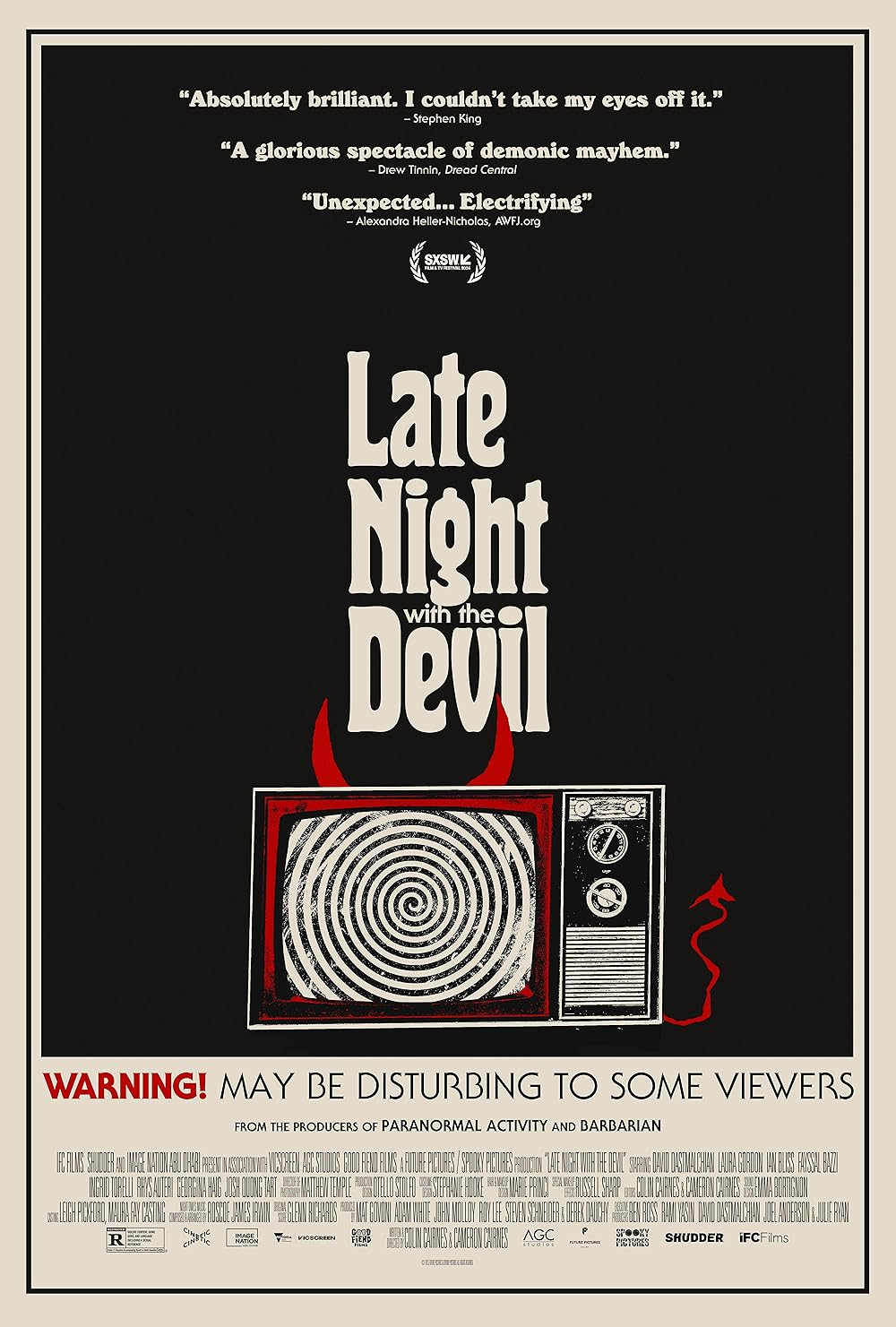
90 minutes of slowly developing terror, cleverly interspersed with humor but never campy. The scariest part is the environment – think a late-night show in the 70s, 10% Howard Beall’s circus in Network and 90% Johnny Carson. The fact that you subliminally feel limits to any horror that might occur – after all, it’s live TV – brings your guard down just enough.

Night Owls with Jack Delroy is having its annual Halloween show, one queued up with promises of a paranormal psychologist, a medium, and a professional magician and now-debunker/skeptic, all followed by a fun costumed Halloween parade. Night Owls is hosted by Jack Delroy (David Dastmalchian) an almost-was Carson, now desperate to keep his program on-the-air. That desperation leads Delroy into taking greater and greater chances as the night’s schedule veers wildly out of control.

Saying more might spoil the fun so, that’s that.

A great creepy ride, crisp and engaging, perfect for the season. On Hulu.

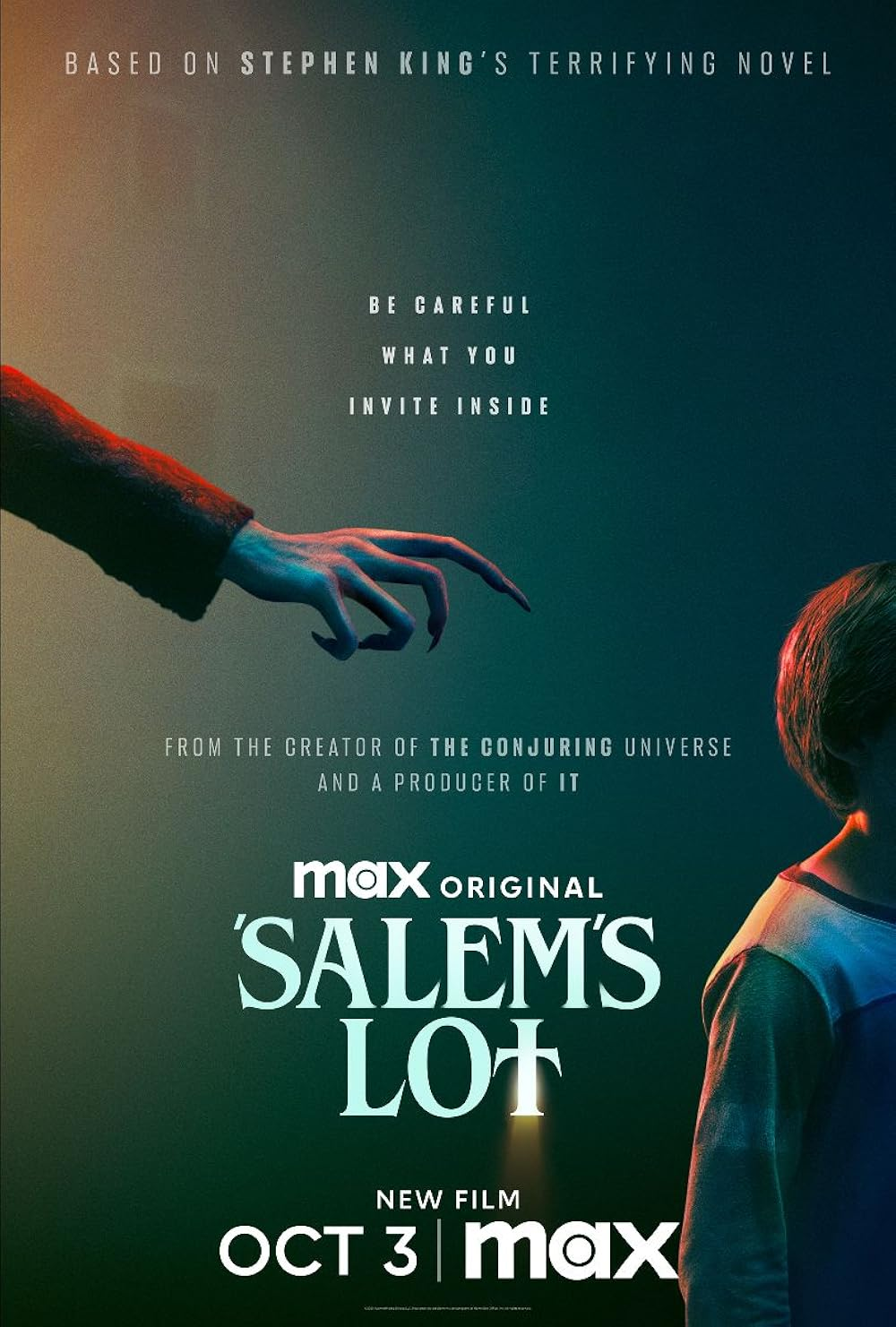
The umpteenth remake of Stephen King’s classic tale of a town feasted upon by a vampire.

A sickness borne of a haunted house in an isolated New England hamlet, a pre-COVID parable for an existential plague, and Halloween approaching? I’m in. I mean, it’s Stephen King, fer crissakes!

Plus, the story lies deep within me. When I saw the original Tobe Hooper miniseries as a kid, it was at my friend Joe’s house on a school night. I had to ride my bike home in the dark alone right after the episode where the first victim – a boy – is killed. I was more than freaked out. I was terrified.

Well, had I seen this version, it would have been me whistling zip-a-dee-doo-da. Not a care in the world.

Hard to settle on any one fault. Just riddled with nonsense and idiocy throughout.

Off the bat, the vampire familiar (a Renfield stand-in) who brings his master to the town is so laughably sinister he should be twirling his mustache. When he steals a little boy to feed him to the Nosferatu, he tells the kid what’s going to happen, so we, the morons, are not confused.

“Master!  Dinnahhhhhhhhhhhhhh!”

And when the little boy goes missing, all signs point NOT to the mustache-twirling Renfield character but to the famous author from New York who has come back to his hometown. Sure, let’s definitely not look at the weirdo who just opened a creepy antique shop and had a big coffin shipped in. What would be the point of taking a closer look at the new guy who also follows kids slowly in his stupid old car practically handing out Werthers? The guy who also bought the old Marston house, which has been haunted for 40 years?

No. It couldn’t be him.

Must be the aaaaaahhhthaaaaaaaah from New York.

Another. When they try to convince the doubting town priest of the infestation (we know he is doubting because when someone asks if he knows the time, he says, “There is no God” and when someone asks when Mass is, he says, “I’ve lost my faith”), they bring him a book.

Dracula.

Swear to God.

Okay. One more. When they try to get at the vampires, it is always-

A) 7:30 am
B) 9 am
C) 10:30 am
D) 6:54 pm

Guess!

The flaws of this execrable flick aside, like a lot of movies based on Stephen King’s work, it also sports the same lazy hallmarks. A town of bullies, dimwits, busy-body caricatures and Baaaaaahhhston accents. A school principaaaaaaaahl who knows the bully but appears powerless to do anything about him. A sheriff who calls pernicious anemia persimmaaaaaahhhn. A place that does not like outsidaaaaaaahhhhs. Everyone just this side of cartoon.

In the original mini-series, there is a beautiful scene between a loner teen son (Lance Kerwin) and his father, the latter unable to connect with his geeky boy who is so into monster mags and magic and all that is spooky. It sets up the later relationship between Kerwin and the returning author (David Soul), who as a little boy was also fascinated and traumatized by the Marston House. The characters have a connection and a backstory and as the town degenerates, they cleave together as, at first, the only two believers.

Here, the Kerwin “character” is an Urkel knock-off able to suss out the vampire infestation with a quick read of a comic book (presumably, because the priest had the sole town copy of Dracula) who is given nothing to work with other than moxie. In fact, everyone kind of lands on “vampire” pretty quick. So quick, I expected someone to say, “Hey, isn’t this what happened to a town in an old Stephen King book?”

Basically, there are no characters. Just targets for the night feeders.

Bad, through and through. Depressing.

On MAX.

There are very real and unsettling moments of dread and terror in this story about FBI agent Lee Harker (Maika Monroe) tracking a serial killer in the rural areas of Oregon, circa 1990s. The film is eerie, creepy, and meditatively brooding. It also commendably avoids gore porn and hackneyed, now seemingly obligatory jump scares, while credibly blending the occult with the manhunt. Director Oz Perkins is deft and ingenious with the camera, particularly in flashbacks to various murders. He, or his editor, know how to cut a film.

But … the picture is loaded with plain dumb choices. Perhaps the dumbest being the selection of Nicolas Cage as the serial killer.

I’m not spoiling anything. He appears in the first scene and he is most definitely the serial killer. Ghostly white, screechy voice, clearly deranged, and yet, comfortably ensconced in the same community that has been suffering mass killings for a significant period of time. He’s almost as bad as Pennywise, the clown in It, who lives in a burg where children have a 43% mortality rate. Okay, the FBI can’t really do anything about a supernatural clown that haunts the sewers, though people inexplicably stay in whatever preposterous New England town Stephen King presents (“But honey, the teacher-to-student ratio in Londonderrychester is to die for!”). But a clearly deranged loon who looks like the adult child of Edgar Winter and Phyllis Diller flipping out when he buys supplies at a hardware store that he frequents, and no call to the police? Too much.

The story also relies on a plot device that could work if some care were given. A little bit of a spoiler does follows in this paragraph. The supernatural force controls individuals, and thus they are possessed, for lack of a better word, into doing the Devil’s work. The explanation of how that possession works, is, shall we say, lacking in elucidation (a trusted film correspondent writes, “The silver ball. WTF? Dumb. Dumb. Dumb”). There is also the problem of how the ball is deposited. Better suited to the 1950s and early 60s in terms of getting a foot in the door. Not in Bill Clinton’s America.

There’s also the issue of Agent Harker, who appears to be on the spectrum and whose own tortured background plays heavily into the story. She just doesn’t seem like an FBI agent. She veers between catatonic and stilted, but Monroe can’t imbue any heart. It is critical you care about her fate, but as presented, she’s often just above a mannequin. Worse, other characters (her boss, Blair Underwood and family) are supposed to somehow warm to her, which, given her clear aberrant mien, is asking way too much. 

And for a picture that in many ways rejects some of the formula and tropes of the genre, are we really going to put a rookie agent on the floor, poring over spread-out photos and reports as she tackles the conundrum of Phyllis Winter, who practically wears a sash emblazoned with, “Been Killin‘ Families Since the 70s!”?

 And light switches. Nobody seems inclined to turn on the lights. That’s Jimmy Carter’s America!  

Okay. I’m being hard on a film that ultimately, I recommend. Because the feel and tone and a lot of the choices are right. And it was directed by Anthony Perkins’ son. Who played this guy in Legally Blonde. Which is, like, my favorite movie ever.