Katia and Maurice Krafft were world-famous scientists who started studying active volcanos up close and personal in the late 60s. She was a meticulous geologist. He was a daredevil who dreamed of riding a lava flow on his own boat. They grew up in the same town, and as depicted by writer-director Sara Dosa, they were in a multi-decade menage-a-trois with the fiery, fracturing earth. “Once you see an eruption, you can’t live without it because it’s so grandiose, it’s so strong,” says Katia. And you believe her.
The footage shot by the Kraffts is incredible. They have no reticence and little fear, often camping for weeks in active volcanos, so they are right up close to everything, two kindred souls in thrall. Their story is lovingly rendered by Dosa, who shows us a union fueled by adventure and enhanced in its last years by a commitment to governmental evacuation plans.
I was reminded of GrizzlyMan in terms of access to the dangers of nature. And indeed, the protagonists of both movies eventually press their luck and nature exacts its toll. But where Tim Treadwell’s immersion in the world of bears seemed fraught with an almost messianic hubris and his own narcissism, the Kraffts seem noble in their bravery and grounded in their devotion to the science. Beautiful and haunting.
On Hulu and Disney and nominated for an Oscar as Best Documentary.
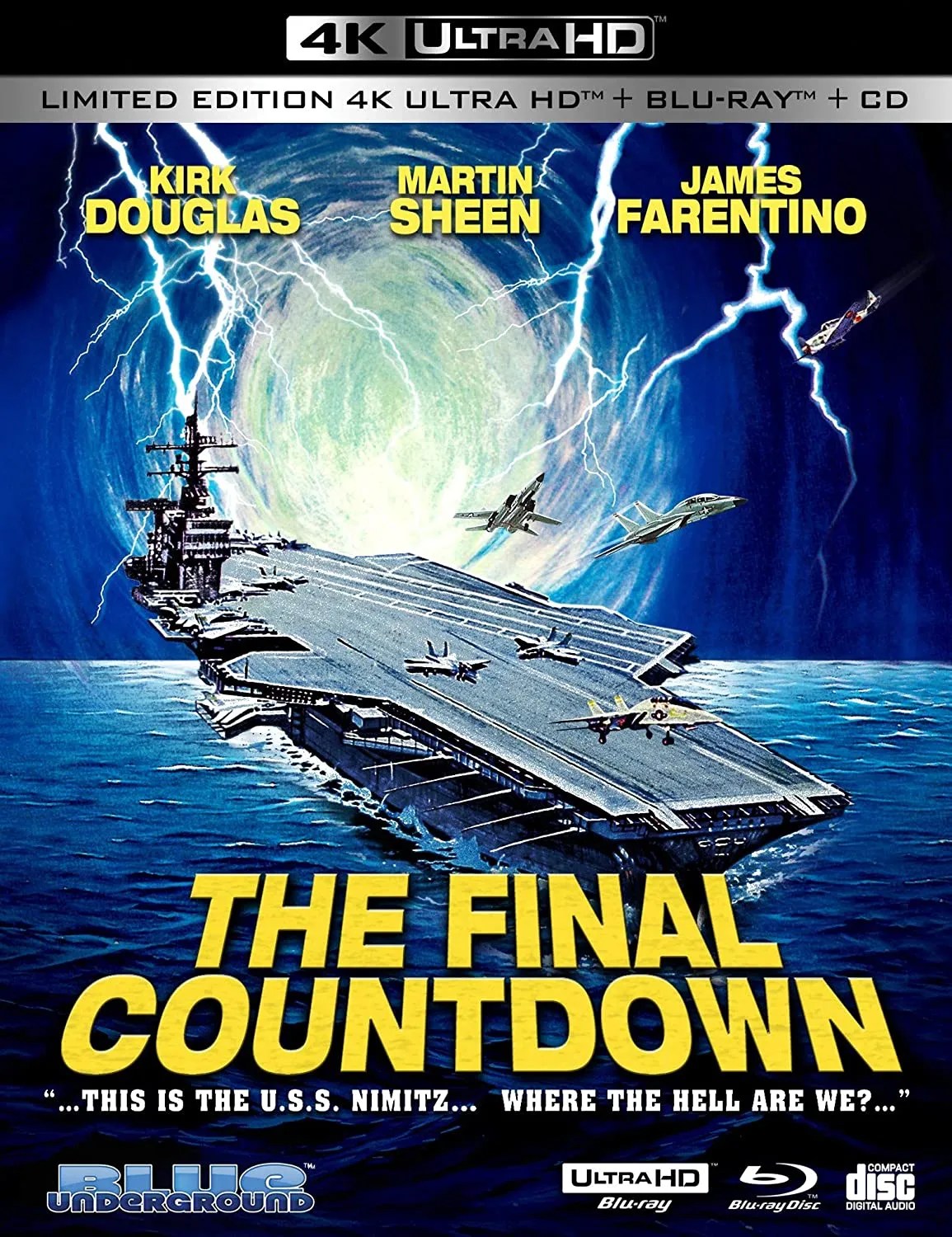
An old Twilight Zone episode depicted three soldiers on National Guard duty in Montana who went back in time and found themselves spectators to the Battle of the Little Big Horn. They struggled with the implications of intervention, essentially foreshadowing Star Trek and violation of the “prime directive” (i.e., never mess with history when time traveling lest you step on a bug and forever alter what is meant to be). They eventually jumped into the fray. This flick is essentially the same concept, but with a modern aircraft carrier being time-portaled back to the day before Pearl Harbor. Kirk Douglas, Martin Sheen, and James Farentino have to contend with the same conundrum.
It’s fun. A little discordant, alternating between whimsy (the commander of the modern USS Nimitz, Douglas, has a certain Disney movie mien to him, but then there are very bloody scenes that punctuate the film). But solid.
It is also clearly a joint effort with the Navy. There is so much aerial footage and extended scenes of flying and taking off that it feels like a recruiting ad, Top Gun sans the volleyball. Curious sidenote. The Department of Defense actually sued the producers for reimbursement, alleging fraud on the reporting of actual flying time. My father’s law firm represented the producers, including Kirk Douglas’ son.
On Amazon.
P.S. There was a big to do in the last several years over a Reddit discussion: “Could I destroy the entire Roman Empire during the reign of Augustus if I traveled back in time with a modern U.S. Marine infantry battalion or MEU?”
A short story followed. Hollywood then bought the short story. Good rundown below. Stay tuned.
For a film about the investigative reporting of a very big story, this picture is about as interesting as assembly line work.
Some may say, “but Filmvetter, this is the reality of the job.” Alas, so is banging out fenders and they don’t make movies about that.
$34 million brought in $5 million domestic, justifiably so. The film is a didactic, repetitive, undramatic, boring 2+ hours of drudgery acted by rote with a sprinkle of washed out dread.
I presumed the picture was a financial flop because of #MeToo fatigue, the lack of a present villain (in the movie, Harvey Weinstein is just a voice on boring phone calls and the back of a head – the most riveting part of the film by miles is the short clip of the actual vicious brute threatening a woman), a lack of stars, and the fact that a movie about reporters, especially in the digital age, would be static. But its problems go deeper. This is less a picture than homework. The great reportorial films (All The President’s Men, Spotlight) place their journalist protagonists in the areas of doubt, indecision and lack of assuredness. Even if they think they have the story cold, they are intrepid, skeptical, tough on each other. They make mistakes. They catch breaks. They are drawn in.
Here, the reporters are emotionally invested in a matter that is a foregone conclusion from the outset. Beyond the sympathy they communicate is a barely contained outrage. Therapeutic enabling takes the place of inquiry, skepticism and the remove of professionalism. They just get a name, make a call or visit, sit down with an emotional, reluctant, and/or scared victim and report back to editors (Patricia Clarkson, Andre Braugher) who support them unreservedly, listening intently as the duo relay facts so elemental you weep for the descent of The New York Times. The newsroom is thus reduced to church and rally (“Let’s interrogate the whole system”). Thank you, oh thank you, the reporters hug and cry when a source confirms. They do this three times.
The two leads (Carrie Mulligan, Zoe Kazan) are as flat as both the material and the portentous strings and piano score. Kazan overlays her dullness with sophomoric earnestness. It also doesn’t help anyone that the film regularly proclaims it is about women at the expense of its female cardboard characters.
The picture is also brutally unsubtle. On numerous occasions, the film has a woman clunkily just pop in and do a solid for women writ large or a creepy man being an oaf or a pig. Discussions between Kazan and her young daughter on the nature of her work and “rape” are so forced and artificial as to be embarrassing. A character actually looks into the mirror to search his soul.
Finally, for what aspires to be a brave expose’, the movie pulls a few punches, ignoring or soft-pedaling some of the great institutional protectors of Weinstein (NBC, scores of Hollywood folk who knew for sure Weinstein was sexually abusive) while highlighting easier targets. Weinstein was Jeffrey Epstein and everyone wanted to be at his party, but we don’t get much on the partygoers.
The film can be moving on occasion. A few of the interviews of Weinstein’s victims have the crackle of the scenes of abuse survivors in Spotlight. But the genuine moments are few and far between in this long, edifying slog, where post-partum depression is the most compelling aspect.
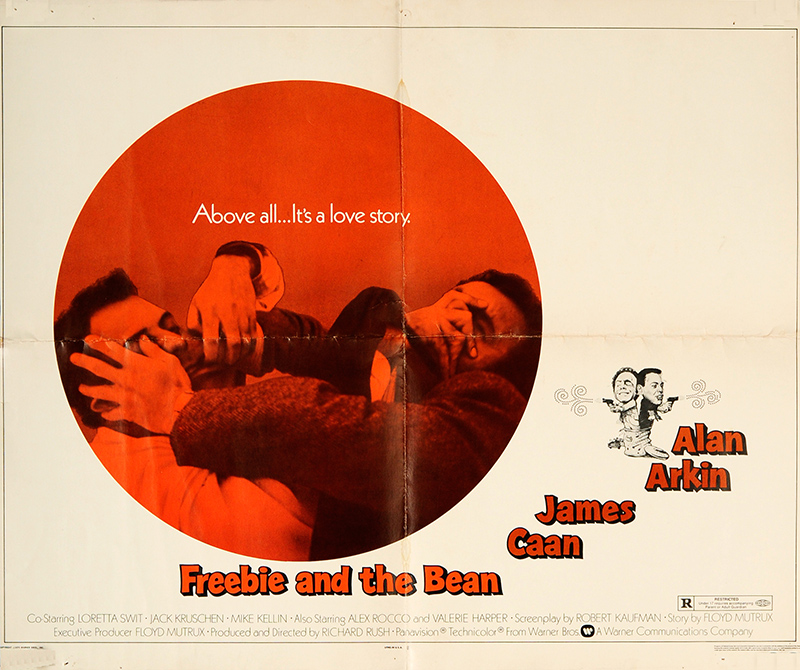
Another of the 70s flicks my Dad took me to when I was probably way too young I remember being so jazzed at the back-and-forth between the manic Alan Arkin and wisecracking, nattily dressed James Caan, two San Francisco detectives trying to take down a mob boss. To make things cooler for a 9 year old, the violence was hilarious yet brutal, the dialogue scabrous, and the car chases relentless and in great supply.
Would it hold up 50 years later?
Yes, and how. Quentin Tarantino has raved, “nothing short of a masterpiece…absolutely brutal…part of the way the film worked was for you to laugh at the brutal violence and then feel bad about yourself for laughing.” That is too much praise, but not by much. Caan and Arkin are a scream, very natural, yet way, way out there in terms of chemistry, perhaps riffing before it became standard, but fully committed, never lazy. I remember cracking up with Dad in the theater and after paying $2.36 for the rental on Amazon this weekend, I laughed out loud a half dozen times and smiled throughout.
It’s a strange duck of a picture, a flimsy cynical story giving way to an entertaining buddy cop yarn (clearly echoing The Odd Couple). Director-writer Richard Rush allows for very long takes of Arkin and Caan needling each other and then, there’s absolute chaos, followed by sweet scenes between Caan and his gal and Arkin and his wife. You get the sense that tonally, no one is steering the ship, and Arkin has remarked that he never really knew what kind of movie Rush was trying to make. Still, Rush makes it more seamless than it has a right to be. Good fun through and through, and The Nice Guys owes a lot to this picture.
Also, wildly offensive. For those keeping count, Arkin of European Jewish descent plays Hispanic (he is “the Bean” – get it?), as does Valerie Harper (“Rhoda”). The script is littered with politically-incorrect jibes that would likely result in a campus protest these days, and the treatment of the villain would require the calling in of the National Guard. So, gird your loins.
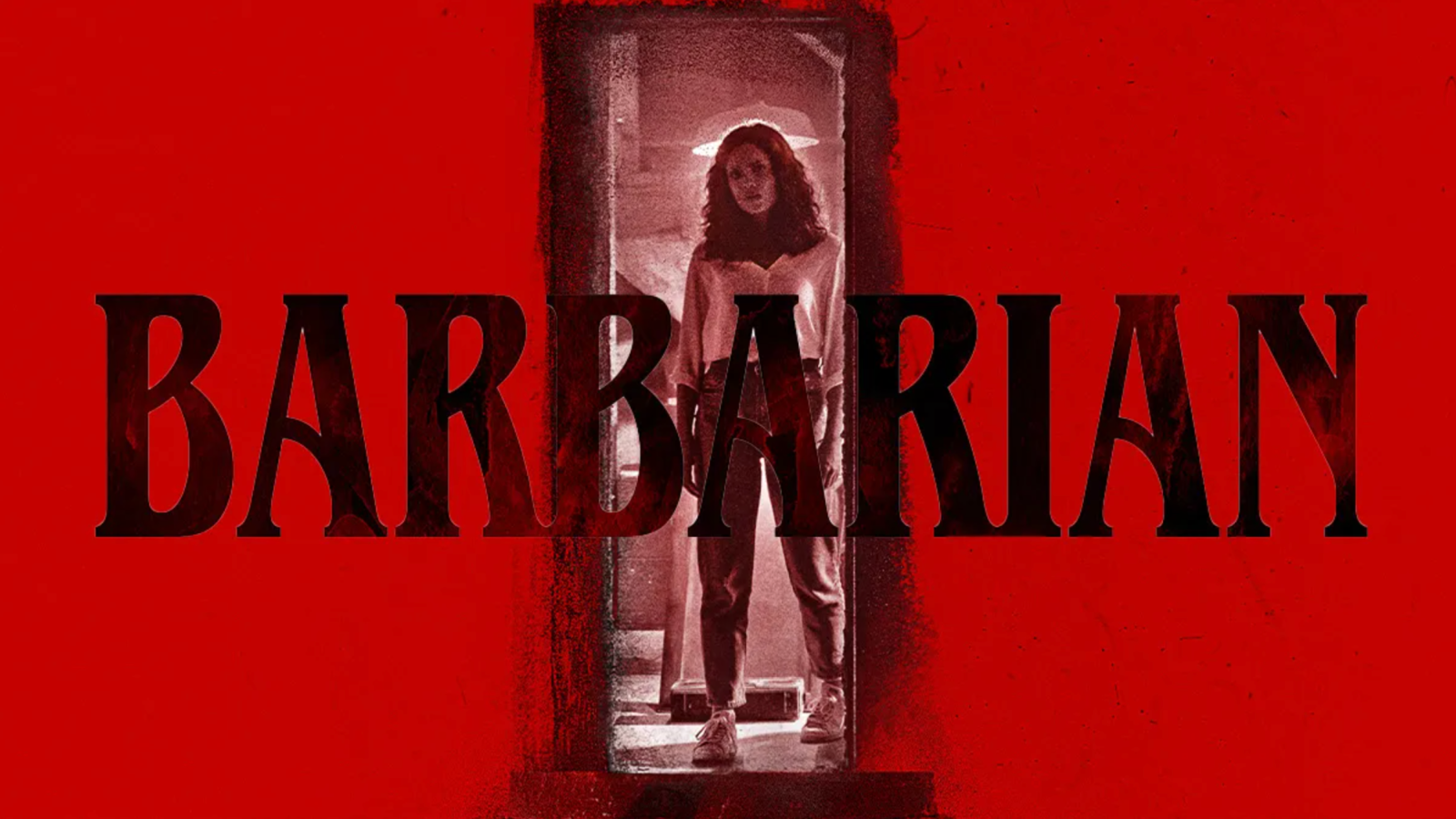
Very clever and funny thriller/horror flick, currently on HBO Max. I’m reticent to say too much and spoil the fun, but can pass on the following–
1) This is a “horror” movie for folks who may not be predisposed to them. The gore is minimal, though the tension is high, and the levity is in abundance.
2) Everyone is good. Justin Long steals the show.
3) Perfect length at 1 hour, 42 minutes.
4) Detroit is a scary place.
5) A surprisingly sweet ending.
6) One reviewer wrote, “it’s ‘about’ stuff — gentrification, abuse, toxic masculinity, taking responsibility”, which, thankfully, is a ludicrous amplification of some elements, but it is a smart picture.
7) It got knocked down to a 4 because of over-reliance on the charity and goodness of one character, a necessity to keep the freight train running, but lazy all the same.
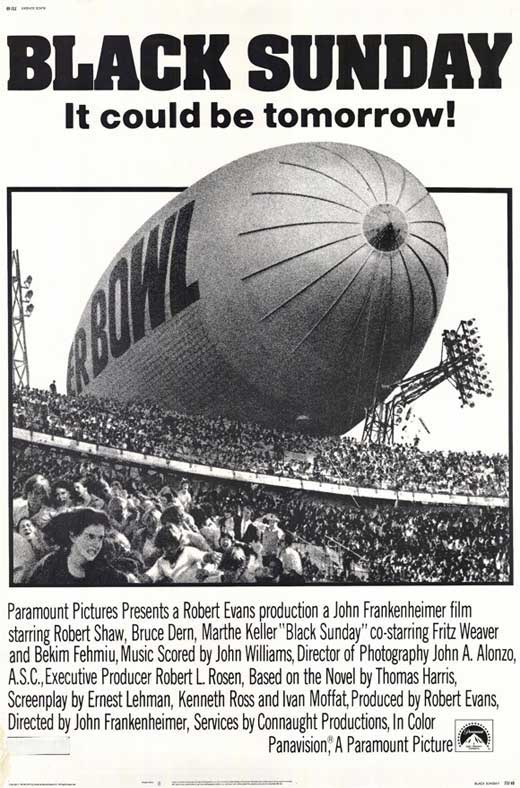
John Frankenheimer (The Manchurian Candidate, Ronin) handles this thriller with crisp professionalism. Proof? My wife, who loathes 70s films, came in for the last 25 minutes and was riveted. I even had to pause to get her up to speed on who was who and what was going on.
Granted, Frankenheimer has some pretty ingenious material to work with – Palestinian terrorists intend to fly the Goodyear blimp into the Super Bowl where they will detonate a massive bomb that will disperse shards of metal for maximum carnage (the film is adapted from Thomas Harris’ only non-Hannibal Lecter book).
The driven mastermind is Martha Keller (so driven because the Israelis have destroyed her entire family) and the psychologically impaired stooge is Bruce Dern (a former POW flyer in Vietnam, stripped of rank for “breaking”, now working for Goodyear flying the blimp). Robert Shaw is the relentless Mossad agent hot on their heels, guilt-ridden because he had a shot at Keller but let emotions engender mercy.
There is a little too much Dern and Keller relationship stuff, and in particular, Dern and his mental breakdowns/quirks, and the film could’ve been cut easily by 20 minutes. But there is much to like here, and in particular, Frankenheimer does the madness of public violence great justice. His insistence in showing just how many innocent people actually get killed if criminals and cops decide they’re gonna’ shoot it out in the streets is welcome, as evidenced by a thrilling Miami Beach sequence.
But the coolest facet is the fact that the NFL let them film the movie at the actual 1977 Super Bowl between the Dallas Cowboys and the Pittsburgh Steelers, and the Goodyear people let them use the actual blimps, almost otherworldly in these days of image consciousness, risk-aversion, and fear of offense. Frankenheimer may have had Goodyear over a barrell. In one of his biographies, Frankenheimer recounted that he helped persuade Goodyear to let him use its blimps because if not, the production would rent a large blimp, paint it silver-and-black, and people would think it was the Goodyear blimp anyway.
The impact truly heightens the tension when we see Shaw and FBI Man Fritz Weaver running around the Orange Bowl past Tom Landry, Franco Harris and even this guy…
Okay, not the real Jimmy Carter, but this is the only shot of him in the film, and though it’s very quick, it is a testament to Frankenheimer’s desire for verisimilitude.
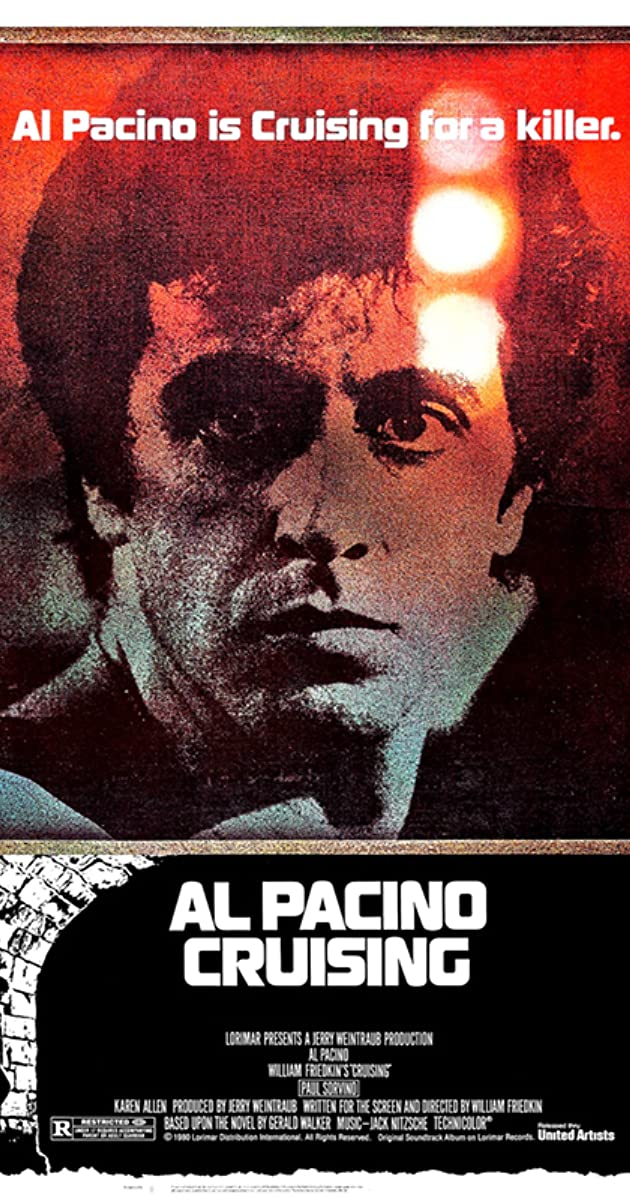
There is no rhyme or reason to William Friedken’s (The French Connection, The Exorcist) serial killer flick, which plays clumsily with both timeline and identity. While the killings are unique, in that gay men in New York City’s S&M scene are the prey, Friedken’s execution is non-existent and the picture is a tiresome. muddled mess.
The year is 1980. Foot patrolman Al Pacino, who we know absolutely nothing about, is brought in by Police Captain Edelson (Paul Sorvino) to go undercover and smoke out a serial killer plaguing the BDSM community in the Meatpacking District. Pacino is chosen solely because he bears a physical resemblance to other victims. That’s it, and when he’s told where he’ll be working, he shows little reticence. You see, he’s bucking for detective.
Pacino is clearly too long in the tooth for the role. In 1980, he was 40, not a very convincing ambitious beat cop. Hell, Pacino was pushing it a bit in 1973, when he was a 33-year-old rookie in Serpico. Friedken would have done better with Richard Gere, his first choice and 10 years younger.
After his perfunctory selection and acceptance, Pacino just goes from club to club, bar to bar, pick up spot to pick up spot, cruising. Pacino is less acting the role of a man than being a worm on a hook. Not a lot of heavy lifting and given no motivation or backstory, Pacino seems particularly disinterested. It is clear the actor has no idea how to convey whatever is happening to him internally.
With barely a story and zero character development, Friedken focuses on the grimy, fetishistic world of leather and sweat, so much so that when word of the picture got around, many in the gay community were outraged to the point of protest against what they thought was a demeaning and offensive portrait of their community. Indeed, the picture had to have its audio almost totally redubbed due to protestors on scene screaming to screw up the sound production.
They need not have worried so much. The movie is a bore and rather than being misled, most audiences likely shrugged. Not that the bones of a good flick aren’t there. There’s a promising subplot of two police officers who are forcing hustlers to dole out sexual favors. Unexplored. There’s a nice friendship that a develops between Pacino and his gay neighbor. Dropped. And there is little done with the pressure on Pacino and girlfriend Karen Allen (the whole of it is that the more he becomes immersed in the lifestyle, if only as a voyeur, the less he wants to be intimate with her).
Is he gay? Is he curious? Shockingly, you don’t care, and neither does the director. Friedken just wants to get to the next dank cellar where the testosterone-soaked steam is rising.
Sure, there is some obligatory, “I’m in too deep” dialogue. But nothing more. Fleshing out the relationship between Pacino and the gay neighbor would have been the smart way to explore whatever was happening internally, allowing Pacino to search and inquire, maybe even to test.
No dice.
The film is also hobbled by a pretty elemental impediment. Pacino is, seemingly, straight. So, it seems less and less possible that he’s ever gonna’ get close to the killer, who murders all of his victims in the process of or after sex.
The whole thing is draggy and confused and more than a little gutless.
If you sally forth, look for a very a young James Remar, Ed O’Neill, and Powers Boothe.
The least sentimental coming of age film I’ve ever seen, James Gray’s (Ad Astra) autobiographical reflection of a middle-class Queens family at the advent of Reagan is evocative, unstinting and spare. Paul (Repeta Banks) is an artistic, unfocused, silly, and obnoxious sixth grader, doted on by his mother Esther (Anne Hathaway), cherished by his wise grandfather Aaron (Anthony Hopkins) and in terror of his father Irving (Jeremy Strong), who can be silly too, but who also sports a volcanic temper.
Paul is a dreamer. He falls in with rebellious black kid Johnny (Jaylin Webb) at the public-school they attend and soon, he is in with this wrong crowd of one. Paul’s rebellion runs smack dab into the instincts and hopes of his extended family, which include elderly immigrant grandparents and an uncle and an aunt.
This is a film about many things, but family is paramount. When Irving beats Paul for getting in trouble at school, the scene is disturbing, but when Paul mutters, “I hate you… [I] hate this family…”, Irving returns and in Strong’s face, registers that there is no greater calumny (I thought for a split second an already brutal strapping was going to escalate). The family is the vehicle for all success and support. They changed their distinct name of “Greizerstein” to “Graff,” and they want Paul out of public school, Esther being the last resistance. Per the aunt, “The class sizes are out of control, and the kids that they have coming in from the neighborhoods from all over. The Blacks, coming in…” eliciting a gasp and rebuke from Esther. These are, after all, traditional liberals (early on, Irving watches Reagan being interviewed, and comments “Sounds like a Class-A schmuck” and the film near-closes with the glum family watching Reagan’s victory and predicting nuclear war). But the facial response to Esther’s objection is a weary capitulation, an “it is what it is.”
They reminisce about their familial, generational struggles and focus on their shared goal of success. Sure, art is great, but an “artist”?
Paul’s behavior lands him in the private school attended by his older brother. The school’s most influential patron is none other than Fred Trump, and soon, Paul is in a new world. When Johnny visits, he is on the other side of the playground fence, as we see Paul awkwardly shying away from his former partner in crime.
Went I went to private Catholic school in ’78, I came with a crew of over a dozen boys from grade school, every one of them white, into a feeder for Catholic parishes all over D.C., Maryland, and Virginia. Until that time, the black kids I knew were the children of diplomats, literally and figuratively, from another country. All of a sudden, there were a lot of black compatriots, kids probably just as scared as I was, but seemingly, not. And in those years, there was casual racism where I (and many others, I am sure) was Paul, keeping my head low, negotiating the moment with assuredly too much regard for my own skin, smirking an endorsement or pretending I didn’t hear. For every decent moment or objection, there were three of cowardice.
Gray does a wonderful job of depicting just how mundane and routinized these negotiations really are. As Irving tells Paul, “When you get older you can change the world. Right now, you just need to get past this and become a mensch. Your friend got the shaft, you feel bad. I understand that.” Modern dramatizations take such vignettes and make them seminal, even momentous. As Gray shows, they are more often than not pedestrian and disposable (“You just need to get past this”) or, in Gray’s most optimistic declaration, per Aaron:
GRANDPA AARON RABINOWITZ
It’s hard to fight. Isn’t it.
PAUL GRAFF (beat)
I tried.
GRANDPA AARON RABINOWITZ
How do you think you did?
TEARS FORM in PAUL’S EYES. He starts to shake his head.
GRANDPA AARON RABINOWITZ (CONT’D)
You’ll have a lot more chances. And it will happen, again and again. It won’t be easy.
It’s hard to overstate Gray’s deftness and restraint (another reviewer nailed it with, “At its most muted, it leaves a respectful distance for the audience to think”). An example. In the hands of a lesser writer, Paul’s matriculation at the Trump school would have been an ordeal through and through. And it is not without its blots. The casually racist kid, the strictures, the cliques. But there is also attention to Paul, the kind that money brings, that every parent wants for their child, the kind where a troublesome kid isn’t immediately discarded as “slow” (the determination of Paul’s public-school principal). At public school, Paul’s “art” is doodling, dummy stuff. At his new private school, it is encouraged, even celebrated.
And the Trumps, in the form of Fred (John Diehl) and Maryanne (cameo by Jessica Chastain), could have been lampooned. In Gray’s hands, they are utilized. Both characters, in talks to the students, revere America in the vein of a zealot. As Fred Trump tells the kids, “Because we have a new president, a new beginning, a return to America’s rightful place in the world. I know speaking for myself personally I couldn’t have more hope than I do at this very moment in our future. So. When I look out, and I see all these beautiful, handsome kids, clean-cut… You’re ready to face the world–you’re being taught all the right things. And you’ll be the leaders. Leaders in business, finance, politics, all aiming to keep our country good and strong.”
Take the reference to “Class-A schmuck” Reagan out, and you can see Paul’s family nodding in reverential assent.
Similarly, Hopkins, as Paul’s soulmate, exhibits the lessons of his past, lovingly supporting Paul’s artistic ambitions while shocking Paul by admitting he was the key vote for the school change (“Because the game is rigged. And we have to do everything we can for you and your brother”).
The rigging of the game and the fate of Johnny coalesce to end the picture, and like everything that came before, there’s no easy lesson or dawning.
The performances are pitch perfect. As Irving, Strong is noteworthy, a man who doesn’t really have control of his house or the respect he thinks he should be afforded, alternating between explosion and understanding. The child actors are natural and Webb in particular evinces an affecting blend of the cynical, the world-weary, and the aspirational.
All the visual gifts in the world, and those of director Robert Eggars (The Witch) are prodigious, can’t make this Viking tale of filial vengeance any less stupid. There are a few joys - massive overacting (well played, Ethan Hawke, but Nicole Kidman wins by a nose), a few impressive scenes of sackings, the beautiful Northern Ireland topography standing in for Iceland - but boredom wins out, and by the end, it isn’t much of a fight.
High and mindless, the picture could have used Game of Thrones’ intelligence or the John Boorman Excalibur’s fun. Instead, we get gory drug trips and silly moments when the film feels closer to RenFest than Valhalla. More hamburger than Hamlet.
I do like how many of the actors try to do Norse and come off Transylvanian.
“Well, that was quite a thing” – my wife, at the end of the movie. Spoiler. Animals die.
About my wife. When that occurs, consider all your slack given.
It is indeed, however, quite a film, one that works as a fable, a meditation, and a beautiful, conflicted, messy tale of the shackles, joys and miseries of isolation, friendship and love.
I have a deep frustration with people who have the kind of depression that blots out the sun and cripples those who love them so much that they become collateral damage. The narcissism. The “I don’t take drugs because they change the essence of meeeeeeeeeeee!” The voracious appetite for the steadfastness of the simpletons who take the kicks and keep coming back for more. Blech. I’m not always proud of it but it is genuine and fixed in my marrow.
Here, a depressed, artistic man in despair (Brendan Gleeson) cuts off his simple, dull pal (Colin Farrell) even though they are lifelong friends on a barren Irish Island. The disassociation is brutal and final and nothing less than an assault from the intellectually superior and more sophisticated of the union. Every instinct I had was to decry Gleeson and champion Farrell, even as I grudgingly respected Gleeson’s stand, cruel and self-abasing as it was. I’m more gravitated to the simple and the banal, the loyal, Particularly when the artist’s excesses, in all their Van Gogh glory, start taking hostages. Taken at face value, it was no contest.
But as the picture progressed, my sympathies for both men equalized. Somewhat. Against all of my internal instincts. And in the struggle, the picture opens up and draws you into a much deeper analysis.
Fecking hell.
Interspersed in this tug-of-war is Martin McDonagh’s (In Bruges,Seven Psychopaths, Three Billboards) alternatively hilarious and mournful dialogue, deeply rooted in the Irish experience, with its strange and compelling fixation on conflict, routine, simplicity, and the Church.







 filmvetter
