Archive

Genre

I’ve seen this film, conservatively, a dozen times. I cannot turn it off. It is flawless, and I never tire of watching. It is not just an exemplary historical drama and period piece, which would appeal to me more than others, but it is one of the finest films ever made. 

Based on a Patrick O’Brian novel, it is 1805, the time of the Napoleonic wars, and we travel with Captain “Lucky Jack“ Aubrey (Russell Crowe), a protégé of Lord Admiral Nelson. Aubrey’s ship, The HMS Surprise, is hunted by, and then pursues, a French privateer with twice her guns and speed. As Aubrey drives his crew and spars with his more humanistic friend and subordinate, ship surgeon Stephen Maturin (Paul Bettany), we are immersed in the customs, allegiances and frailties of the crew.  Director Peter Weir (Witness) provides the feel of an early 19th-century war vessel, a routinized machine held together by the lash, grog, duty, honor, deep-seated universal superstition, and a shared sense of oneness with the sea.

The action sequences are jaw-dropping. The final sea battle is the most effective and stunning rendition of combat on film, save for the opening scene of Saving Private Ryan.  Weir is expert at close quarter action and translating the ebb and flow of a battle that has been explained in its strategy at the outset. What follows is a stunning, intelligible melee’, and the only respite is a brief, awesome aerial tracking shot to provide scope and a quick catch of breath. And then, Weir dives right back in.  The scene is even more impressive given the film’s commitment to authenticity.  As with Spielberg’s triumph, Weir has made, in the opinion of one reviewer, “one of the most historically accurate movies of this century”. 

Yet for all its visual delights and precision, the film is also memorable in its depiction of numerous secondary characters. Yes, the philosophical interplay between Aubrey and Maturin is well-honed, and both actors more than occupy the roles – their engagement is both familial and genuine, with a constant pull between friendship and chain-of-command. But the midshipmen, some as young as 12, and the salty crew, are the true stars. To see the former in such distress, under such pressure, and in the midst of terror and violence is heart rending. When one (Max Pirkis) must have his arm amputated, it is hard to choke back tears, such is his strength and vulnerability (if you have a son, it is doubly difficult). The mental breakdown of another young sailor is equally poignant. These boys, thrown into carnage, still do their duty, and Weir goes to great lengths to portray their bravery in tandem with their innocence. 

The film is also unreservedly old fashioned in its championing not only of manly camaraderie, but valor, pluck, and devotion to country. Most war films follow a certain post-Vietnam philosophy, often clumsily injected into period pieces of prior times. The combatants’ first devotion is to each other and then to the goal, and they are guided by training and solidarity. When the training fails and/or the goal is revealed as corrupt, or bleakness eclipses all, things break down, and atrocity normally follows. Which is all very modern and ignores any sense of longing for the sting of battle or patriotic instinct, both generally derided or characterized as the province of dimwits and cannon-fodder. It is always the smart guy anti-hero who says, “This is hell, we need to get out alive and with our souls intact, and [for the less cynical] the only thing that matters is the man next to you”’ or some such trope. 

Not here, as Weir flatly rejects anachronism save for a few moments with the good ship doctor, but even Maturin’s more liberal stances are suited to his position.  To put a finer point on it, there is a wonderful scene where one of the young midshipman, Calamy, implores Aubrey to share a tale of his service under the great Nelson. At first, Aubrey parries the request with a joke (Nelson once asked him to pass the salt, he laughs). The boy’s disappointment is palpable, and then Aubrey obliges:

Capt. Jack Aubrey The second time… The second time he told me a story… about how someone offered him a boat cloak on a cold night. And he said no, he didn’t need it. That he was quite warm. His zeal for his king and country kept him warm.

[Maturin sighs] 

Capt. Jack Aubrey I know it sounds absurb, and were it from another man, you’d cry out “Oh, what pitiful stuff” and dismiss it as mere enthusiasm. But with Nelson… you felt your heart glow.

[him and Calamy share a smile] 

Capt. Jack Aubrey Wouldn’t you say, Mr. Pullings?

1st Lt. Tom Pullings [sincerely]  You did indeed, sir.

As fewer people know or cherish history, it will become a less desirable vehicle for entertainment. And that just ain’t going to change.  But there will be this film and a few others that stand the test of time. Huzzah!

On HBO Max. 

A WWII thriller and a staple on the Channel 7 four o’clock movie growing up, Steven Spielberg once named it as his all-time favorite war movie. I don’t know about that, but as a kid, I was pretty jazzed.

Richard Burton and Clint Eastwood lead a group of commandos dropped behind enemy lines in Bavaria – where the barmaids are buxom and the enemy plentiful – to kill an American general who has been captured by the Nazis. They must get to the general before the Germans extract critical information from him.

The picture is more than competent (though overlong at nearly 2.5 hours; in the 70s, on TV, it was cut to 90 minutes, and did not suffer for it). The movie is also smart, as much a whodunit as war thriller, and uber-violent to boot. 

One major problem, however, is the setup. The American general is held in a castle fortress accessible only by cable car. Putting aside the suspension of belief necessary to accept ingress and egress, which is right and proper, the castle also houses hundreds of soldiers, heavy equipment, a barracks, a helicopter pad, a radio room, and enough ammo and explosives to blow itself up. All, of which, apparently, was ferried up in two cable cars that hold 8 people a piece. 

Another problem is just a terrible cheat. In The Dirty Dozen, Lee Marvin and Charles Bronson, dressed as German officers, must mingle with the Nazis in the chateau they plan to blow up. The fact that only Bronson knows how to speak German amps up the dread, leaving Marvin to play it stern and taciturn whenever a real Nazi speaks to him at a pre-all-hell-breaks-loose soiree’. Quentin Tarantino does the same thing with Brad Pitt at the film premiere in Inglorious Basterds , though he plays a bit more comic. But Tarantino also utilizes the speaking of German, or, rather, the sign language of a German, to brilliant, suspenseful effect, when Michael Fassbender makes a critical error and is thus found out, which was presaged in The Great Escape:

But I digress. 

Here, as Burton and Eastwood approach a checkpoint, where their papers are to be reviewed, you wonder which one is going to speak German.  I assumed Burton.  Then again, I never assumed Eastwood would sing in a musical, but Lord Almighty, that’s him singing Gold Fever in Paint Your Wagon:

So, who knows, right?  Well, it turns out, neither of them speak German.  Instead, they speak English LOUDLY, and the guards figure they don’t want to interrupt two German officers speaking loudly. Translated? Neither actor wanted to learn a little German, so we are left to believe that the guards heard German, even though we did not. Very lame.

On the plus side, Eastwood is Eastwood cool and he conservatively, single-handedly, kills at least 100 Nazis. At 10 years of age, I was sold. There’s also a fair amount on double-crosses (the picture is written by Alistair MacLean), and while I can’t prove it, I suspect Tarantino saw the picture and it informed his unparalleled French cellar bar shootout in Basterds.

On HBO Max.  

P.S. After writing my suspicions about Tarantino, I Googled a bit and now claim semi-vindication. Tarantino has lauded the picture on numerous occasions, particularly during his promotion of Basterds

Andrew Dominik’s The Assassination of Jesse James by the Coward Robert Ford is one of the best films of the last 25 years and would rank in my own top 25 of all time.  So, no matter the negative notices, any of his pictures merit a look.

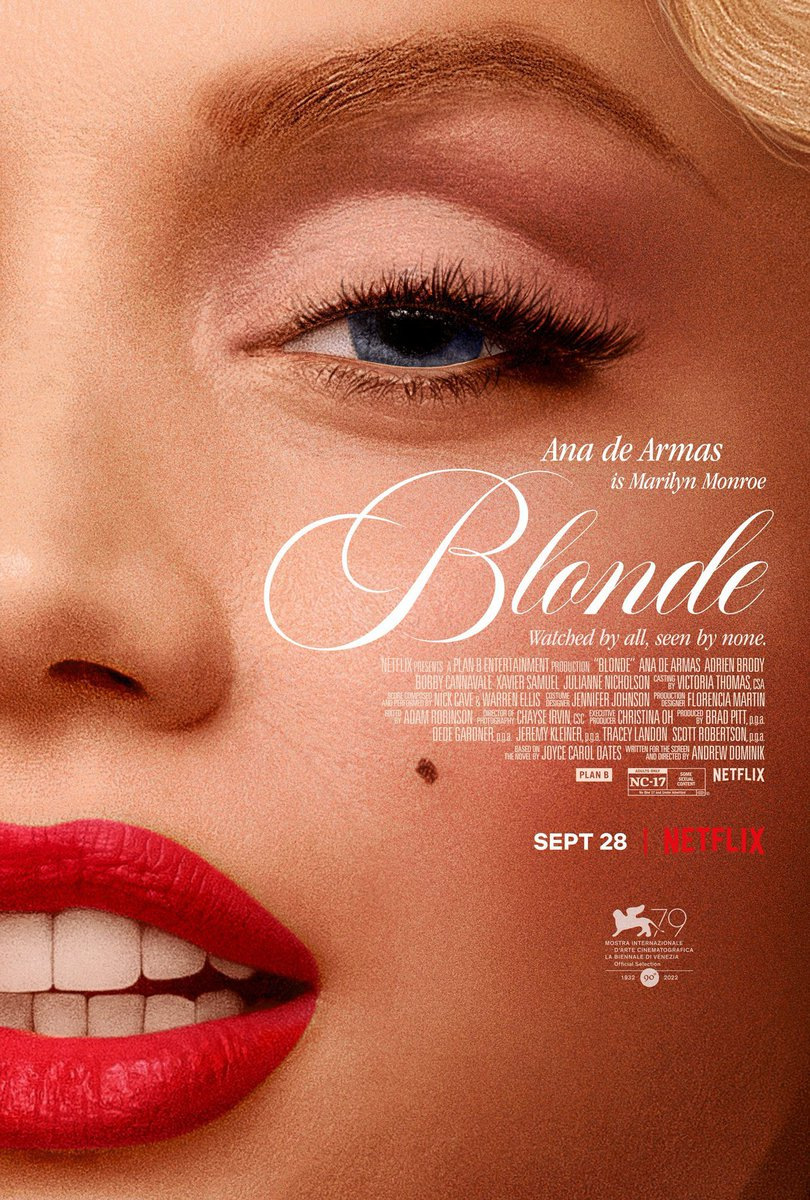
Blonde received scads of poor notices.  Justifiably so.

The picture has much in common with Elvis, and you get the sense that Dominik, like Baz Luhrmann, was behind the eight-ball from the outset.  Both biopics are devoted to broad pop icons with fixed public personas that, when pierced, reveal soft, dull goo.  So, the directors make up for the deficit by untethering the stories from fact, gussying up the visuals, and stretching for a larger point. As with Elvis, we quickly learn a good-looking picture can only get you so far.

Make no mistake.  Blonde is a visual feast. But it has no real narrative. We meet poor Norma Jean as a child brutalized by her mentally ill mother, and then she’s brutalized via casting couch, and then she seeks shelter in a “throuple” with two men, who take advantage of her sexually and financially. Soon, Joe DiMaggio (Bobby Cannavale) shows up out of nowhere, and then Arthur Miller (Adrien Brody), and then JFK, and soon, drugs and death. One calamity after another, one torment replacing another. None of her relationships are developed. Rather, her romantic entanglements just appear, are thunderstruck, and then we move to the next victim/victimizer.

It is all very sad, but watching a film is transactional, and you soon wonder, “Why am I supposed to care?”

Ana de Armas as Marilyn is occasionally effective (in particular, during a riveting audition), but for the most part, she’s a cartoon, cooing “Daddy” (to her own, unknown father and every man she has chosen to replace him) in a breathy, childlike manner at such a rate that you can almost see DiMaggio and Miller thinking, “Yikes! I thought the ditzy bombshell thing was an act? How do I get myself out of this?”

de Armas was nominated for best actress, and much like Natalie Portman in Jackie, the rendition is an over-the-top caricature of a public figure, where their peculiar tics are amplified. When her Cuban accent makes one of many appearances, it doesn’t really bother.  There’s just too much else wrong with the performance, as if someone told de Armas to play Marilyn as a perpetual thirteen year old girl. With a concussion.  

Not that de Armas was given much to work with.  In one scene, she is with the none-too-impressed DiMaggio women, who are making spaghetti, and she lilts, “ooooh … real spaghetti? Like . . . not from a store?”

There’s plenty more where that came from in this ridiculous script. At the premiere of her first big film, as the crowd erupts in thunderous applause for the town’s new star, Marilyn breathily says, out loud, “For this, I killed my baby.”

Hoo boy.

Dominik’s missteps can also be traced to his misunderstanding of Monroe in the American consciousness: “If you spent 70 years enjoying a fantasy of a person; then a movie comes along that says she was not complicit in your enjoyment, it puts you in an uncomfortable position for having enjoyed it. People don’t want to be put in that position; they want her to be the one that created their enjoyment, and was along for the ride, then had a bad year and killed herself. That’s not the way it works. There’s no redemption in suicide. Americans don’t like you to monkey with their mitts too much. They very often want to jump to the solution without looking at any of the trauma.”

I am not unreceptive to some of these observations, but as applied to Monroe, Dominik is just wrong,  He is talking about the Monroe of Elton John’s “Candle in the Wind” which was so long ago (1973, only 11 years after Monroe’s death) the song has been repurposed for Lady Diana (and will eventually be repurposed again when the next pop starlet dies before her time). Americans are not so protective of Monroe that Dominik’s pedestal tipping would elicit a reflexive defense.  Rather, in modern memory, she was a sexy, mentally disturbed, marginal actress who sang a sultry “Happy Birthday, Mr. President!” publicly and privately and then overdosed. Side note: has anyone been taken down further in filmic history than JFK? When I grew up, he was the cool, collected president who saved his mates in PT 109 and stared down the Russians in The Missiles of October. Recently, in The Crown, he was a pill-popping whirling dervish.  Here, he’s a #MeToo emblem, forcefully cajoling Monroe to perform oral sex on him in what has to be the worst scene in the picture.            

I suspect Dominik knows the film fails, but credit him for a stout defense: ”Blonde is a very well worked-out film. Those who don’t think that aren’t watching it. If you sit back and trust that the movie knows what it’s doing, it’ll work.”         

It does not. But if you are hot for a visually impressive, near 3-hour movie about a glamorous, vapid punching bag, Blonde is streaming on Netflix.  

Filmvetter has gaps. Many gaps. Truffaut, Godard, and Bergman come to mind.

And, until now, John Cassavetes.

I knew that Cassavetes was an influential filmmaker. Martin Scorsese credits two films that most informed his career: Orson Welles’ Citizen Kane and Cassavetes’ Shadows.  Quentin Tarantino also cites Cassavetes, which is strange, for, as one writer observed, Tarantino makes films “in which almost no element comes from life,” whereas Cassavetes’ work is infused with realism. Others who refer to his work include Jim Jarmusch, Hal Hartley, and the aforementioned Godard.

But to me, Cassavetes was the nasty, cynical guy in The Dirty Dozen and the husband in Rosemary’s Baby

Until I saw this picture, currently available as part of the Criterion Collection on HBO Max.

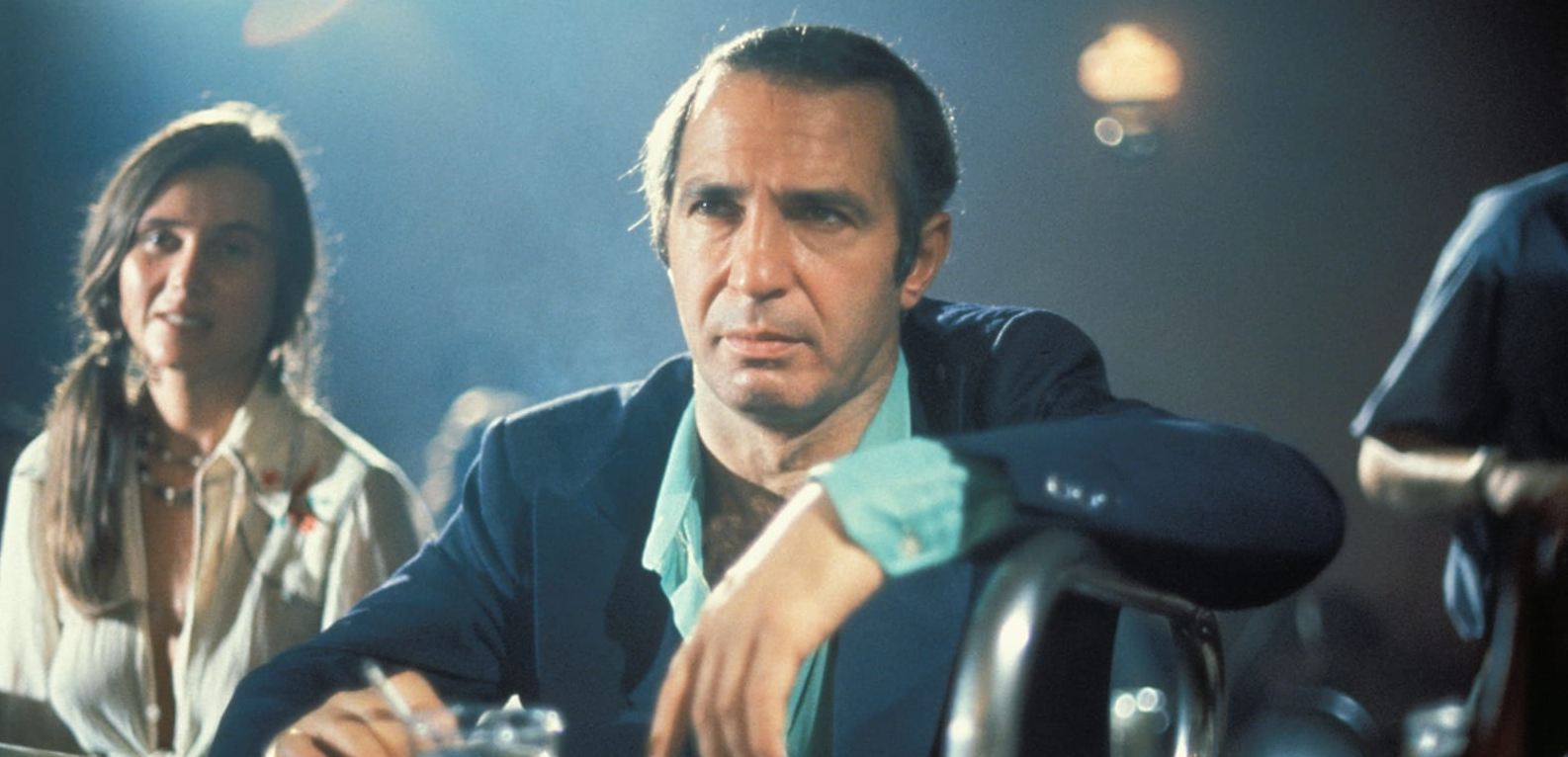
Ben Gazzara (“Cosmo”) plays a strip club/cabaret owner in Los Angeles, when showing some thigh and breast still required the trappings of a “show”. His stage girls are his children, and he is a small fish in a big pond. He just doesn’t know it. Until his big shot routine results in a sizable gambling debt to the local mob, who decide to absolve him of the “loan” in exchange for lethal services.

The film is visceral and immediate yet leisurely.  Cassavetes brings you right in on the actors, often letting the dialogue of others register on the one. I was reminded of Boogie Nights and the long take on Mark Wahlberg right before the drug heist, but while that was showy, if effective, Cassavetes’ style is anything but. Instead, it feels natural, almost a controlled improv. Cassavetes gave his actors maximum room, eschewing the Strasberg Method as tired and narcissistic.  Per Matt Zoller Seitz, reviewing Ray Carney’s Cassavetes on Cassavetes: “Among other things, Cassavetes hoped to offer young actors an alternative to the Method, a sensory- and memory-centered approach that was taught, in personalized form, by Actors Studio founder Lee Strasberg (whose students included James Dean, Robert Duvall, Robert De Niro, Elia Kazan, Shelley Winters and many others). Variants of the Method encouraged actors to draw heavily on their own experiences and feelings, and to treat hesitancy and inarticulateness as gateways to truth rather than obstacles to clear expression. A number of Method actors personalized this approach and had great success. But Cassavetes felt that the Method, and Strasberg’s Studio in particular, had become a different sort of factory, and he was ‘…resentful about the power the Studio exerted over casting directors, which he felt was what had held him back early in his career,’ Carney writes. ‘He was scornful of what he called the guru aspects of the Studio and pointedly described his and Lane’s school as anti-guru. He felt that the Method was more a form of psychotherapy than acting, and believed that although figures like (Montgomery) Clift, (Marlon) Brando and Dean had had a salutary effect on acting in the late ’40s and early ’50s, by the mid-’50s the Method had hardened into a received style that was as rigid, unimaginative and boring as the styles it had replaced ten years earlier. The slouch, shuffle, furrow and stammer had been turned into recipes for profundity. The actor filled the character up with his own self-indulgent emotions and narcissistic fantasies…Normal, healthy, extroverted social and sexual expression between men and women dropped out of drama. Inward-turning neuroticism became equated with truth. The result was lazy, sentimental acting.’”

There is none of that in this film, which feels so authentic as to be revolutionary. The picture is riveting, grounded, and wholly personal, with an L.A. devoid of the well-know landmarks, not purposefully omitted but rather, naturalistically absent. Cassavetes sets up a noir-ish crime pic, but perhaps bored with the endeavor, detours repeatedly into Cosmo’s crisis of identity.

Gazzara is captivating. Cassavetes trains in on Cosmo’s every conceit when playing the big man. Cosmo’s descendant is none other than Burt Reynolds’ Jack Horner in Boogie Nights, a semi-proficient pornographer who makes himself father to the talent and creates his own world, one where he is Fellini. Similarly, Cosmo treats his girls like perpetual prom dates and tells the patrons in his seedy club, “I’m the owner of this joint. I choose the numbers, I direct them, I arrange them. You have any complaints you just come to me and I’ll throw you right out on your ass.”

When his powerlessness is revealed, Cassavetes lingers on Cosmo’s doubt and his insistence on maintaining the veneer of control and aplomb reveals a hollowness that progressively evinces during the film. But there is also decency and honor, one that becomes difficult for even the mobsters to ignore.

Savaged by the critics at the time, a classic.

Taut, rich crime drama about the not very good day of London crime boss Harold Shand (Bob Hoskins). When we meet him, Shand is on the cusp of branching out to global semi-legitimacy. He’s even hosting his would-be U.S. partner when his entire organization comes under assault. Key associates are dispatched and an unknown enemy is blowing up his establishments, and just when he thought he was getting out, they pull him back in.

Hoskins is ferocious, at once charming and gregarious and then lethal, but palpably human throughout. You really root for him but sense that his time may have passed, especially as he waxes on about the greatness of the Brits and attempts to connect his own rise to the glory days of his homeland, which doesn’t seem all that glorious as depicted by director John Mackenzie. His London is grimy, gray, and decidedly tired, like Harold’s organization, and is starkly juxtaposed against Shand’s fantasies.

The film is also slyly funny. Shand, for example, scolds his spooked American partners about empire and declares, “we’re in the common market now, I’m going into business with the Germans, yes the bleedin’ Krauts!” And even in the midst of their potential destruction, Shand and his gang share knowing, even juvenile laughs that speak to their intimacy.

Helen Mirren is his devoted wife, desperately trying to keep him grounded, and his entire crew feels more like a disintegrating family than a dangerous group of cutthroats. As it all goes bad, Shand’s hubris, parochialism, and self-satisfaction conspire against him, but the strongest theme is just how hard it is to keep “family” together. One of Shand’s more endearing qualities is his patience with underlings who disappoint him like wayward sons. He’s always in between slugging and hugging them.

The film works as a character study and, for a time, a whodunit (or, “who is doing this?”). Occasionally, it is a bit arty, and weighted down by a strange, synthy 80s score, but for the most part, it is riveting.

On HBO Max.

Katia and Maurice Krafft were world-famous scientists who started studying active volcanos up close and personal in the late 60s. She was a meticulous geologist. He was a daredevil who dreamed of riding a lava flow on his own boat. They grew up in the same town, and as depicted by writer-director Sara Dosa, they were in a multi-decade menage-a-trois with the fiery, fracturing earth. “Once you see an eruption, you can’t live without it because it’s so grandiose, it’s so strong,” says Katia. And you believe her. 

The footage shot by the Kraffts is incredible. They have no reticence and little fear, often camping for weeks in active volcanos, so they are right up close to everything, two kindred souls in thrall. Their story is lovingly rendered by Dosa, who shows us a union fueled by adventure and enhanced in its last years by a commitment to governmental evacuation plans. 

I was reminded of Grizzly Man in terms of access to the dangers of nature. And indeed, the protagonists of both movies eventually press their luck and nature exacts its toll. But where Tim Treadwell’s immersion in the world of bears seemed fraught with an almost messianic hubris and his own narcissism, the Kraffts seem noble in their bravery and grounded in their devotion to the science. Beautiful and haunting.

On Hulu and Disney and nominated for an Oscar as Best Documentary.

An old Twilight Zone episode depicted three soldiers on National Guard duty in Montana who went back in time and found themselves spectators to the Battle of the Little Big Horn. They struggled with the implications of intervention, essentially foreshadowing Star Trek and violation of the “prime directive” (i.e., never mess with history when time traveling lest you step on a bug and forever alter what is meant to be). They eventually jumped into the fray.  This flick is essentially the same concept, but with a modern aircraft carrier being time-portaled back to the day before Pearl Harbor.  Kirk Douglas, Martin Sheen, and James Farentino have to contend with the same conundrum.  

It’s fun. A little discordant, alternating between whimsy (the commander of the modern USS Nimitz, Douglas, has a certain Disney movie mien to him, but then there are very bloody scenes that punctuate the film). But solid.

It is also clearly a joint effort with the Navy. There is so much aerial footage and extended scenes of flying and taking off that it feels like a recruiting ad, Top Gun sans the volleyball. Curious sidenote. The Department of Defense actually sued the producers for reimbursement, alleging fraud on the reporting of actual flying time. My father’s law firm represented the producers, including Kirk Douglas’ son.

On Amazon.

P.S. There was a big to do in the last several years over a Reddit discussion: “Could I destroy the entire Roman Empire during the reign of Augustus if I traveled back in time with a modern U.S. Marine infantry battalion or MEU?”

A short story followed. Hollywood then bought the short story. Good rundown below. Stay tuned.

For a film about the investigative reporting of a very big story, this picture is about as interesting as assembly line work.

Some may say, “but Filmvetter, this is the reality of the job.” Alas, so is banging out fenders and they don’t make movies about that.

$34 million brought in $5 million domestic, justifiably so.  The film is a didactic, repetitive, undramatic, boring 2+ hours of drudgery acted by rote with a sprinkle of washed out dread.

I presumed the picture was a financial flop because of #MeToo fatigue, the lack of a present villain (in the movie, Harvey Weinstein is just a voice on boring phone calls and the back of a head – the most riveting part of the film by miles is the short clip of the actual vicious brute threatening a woman), a lack of stars, and the fact that a movie about reporters, especially in the digital age, would be static.  But its problems go deeper. This is less a picture than homework.  The great reportorial films (All The President’s Men, Spotlight) place their journalist protagonists in the areas of doubt, indecision and lack of assuredness. Even if they think they have the story cold, they are intrepid, skeptical, tough on each other. They make mistakes. They catch breaks.  They are drawn in.

Here, the reporters are emotionally invested in a matter that is a foregone conclusion from the outset. Beyond the sympathy they communicate is a barely contained outrage. Therapeutic enabling takes the place of inquiry, skepticism and the remove of professionalism. They just get a name, make a call or visit, sit down with an emotional, reluctant, and/or scared victim and report back to editors (Patricia Clarkson, Andre Braugher) who support them unreservedly, listening intently as the duo relay facts so elemental you weep for the descent of The New York Times. The newsroom is thus reduced to church and rally (“Let’s interrogate the whole system”).  Thank you, oh thank you, the reporters hug and cry when a source confirms. They do this three times.  

The two leads (Carrie Mulligan, Zoe Kazan) are as flat as both the material and the portentous strings and piano score. Kazan overlays her dullness with sophomoric earnestness. It also doesn’t help anyone that the film regularly proclaims it is about women at the expense of its female cardboard characters.

The picture is also brutally unsubtle. On numerous occasions, the film has a woman clunkily just pop in and do a solid for women writ large or a creepy man being an oaf or a pig. Discussions between Kazan and her young daughter on the nature of her work and “rape” are so forced and artificial as to be embarrassing. A character actually looks into the mirror to search his soul.

Finally, for what aspires to be a brave expose’, the movie pulls a few punches, ignoring or soft-pedaling some of the great institutional protectors of Weinstein (NBC, scores of Hollywood folk who knew for sure Weinstein was sexually abusive) while highlighting easier targets. Weinstein was Jeffrey Epstein and everyone wanted to be at his party, but we don’t get much on the partygoers.  

The film can be moving on occasion. A few of the interviews of Weinstein’s victims have the crackle of the scenes of abuse survivors in Spotlight. But the genuine moments are few and far between in this long, edifying slog, where post-partum depression is the most compelling aspect.

On Peacock.

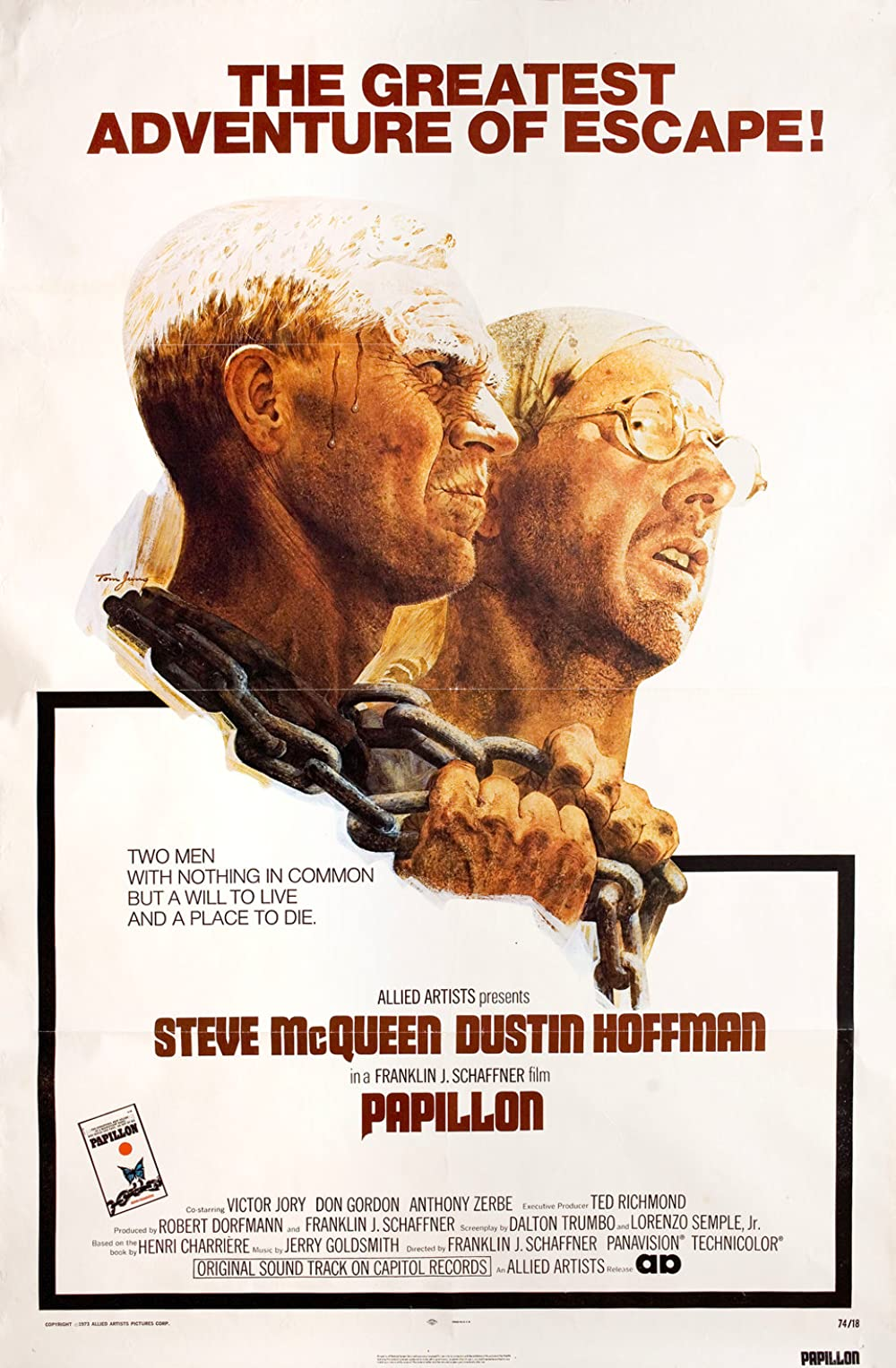
Another of the 70s flicks my Dad took me to when I was probably way too young  I remember being so jazzed at the back-and-forth between the manic Alan Arkin and wisecracking, nattily dressed James Caan, two San Francisco detectives trying to take down a mob boss. To make things cooler for a 9 year old, the violence was hilarious yet brutal, the dialogue scabrous, and the car chases relentless and in great supply.

Would it hold up 50 years later?

Yes, and how. Quentin Tarantino has raved, “nothing short of a masterpiece…absolutely brutal…part of the way the film worked was for you to laugh at the brutal violence and then feel bad about yourself for laughing.”  That is too much praise, but not by much. Caan and Arkin are a scream, very natural, yet way, way out there in terms of chemistry, perhaps riffing before it became standard, but fully committed, never lazy. I remember cracking up with Dad in the theater and after paying $2.36 for the rental on Amazon this weekend, I laughed out loud a half dozen times and smiled throughout.

It’s a strange duck of a picture, a flimsy cynical story giving way to an entertaining buddy cop yarn (clearly echoing The Odd Couple). Director-writer Richard Rush allows for very long takes of Arkin and Caan needling each other and then, there’s absolute chaos, followed by sweet scenes between Caan and his gal and Arkin and his wife. You get the sense that tonally, no one is steering the ship, and Arkin has remarked that he never really knew what kind of movie Rush was trying to make. Still, Rush makes it more seamless than it has a right to be. Good fun through and through, and The Nice Guys owes a lot to this picture.

Also, wildly offensive. For those keeping count, Arkin of European Jewish descent plays Hispanic (he is “the Bean” – get it?), as does Valerie Harper (“Rhoda”). The script is littered with politically-incorrect jibes that would likely result in a campus protest these days, and the treatment of the villain would require the calling in of the National Guard. So, gird your loins.

On Amazon Prime.

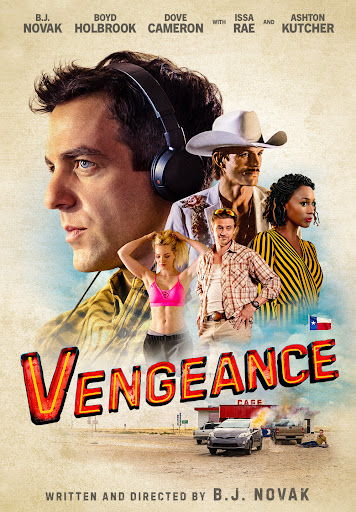
Very clever and funny thriller/horror flick, currently on HBO Max. I’m reticent to say too much and spoil the fun, but can pass on the following–

1) This is a “horror” movie for folks who may not be predisposed to them. The gore is minimal, though the tension is high, and the levity is in abundance.

2) Everyone is good. Justin Long steals the show.

3) Perfect length at 1 hour, 42 minutes.

4) Detroit is a scary place.

5) A surprisingly sweet ending.

6) One reviewer wrote, “it’s ‘about’ stuff — gentrification, abuse, toxic masculinity, taking responsibility”, which, thankfully, is a ludicrous amplification of some elements, but it is a smart picture.  

7) It got knocked down to a 4 because of over-reliance on the charity and goodness of one character, a necessity to keep the freight train running, but lazy all the same.