Archive

Genre

Kevin Costner had a dream.  Four theatrical releases for an ongoing Western. As foretold in the title, a “saga.”

Well, the dream is a bit deferred. Or curtailed. Hard to say.

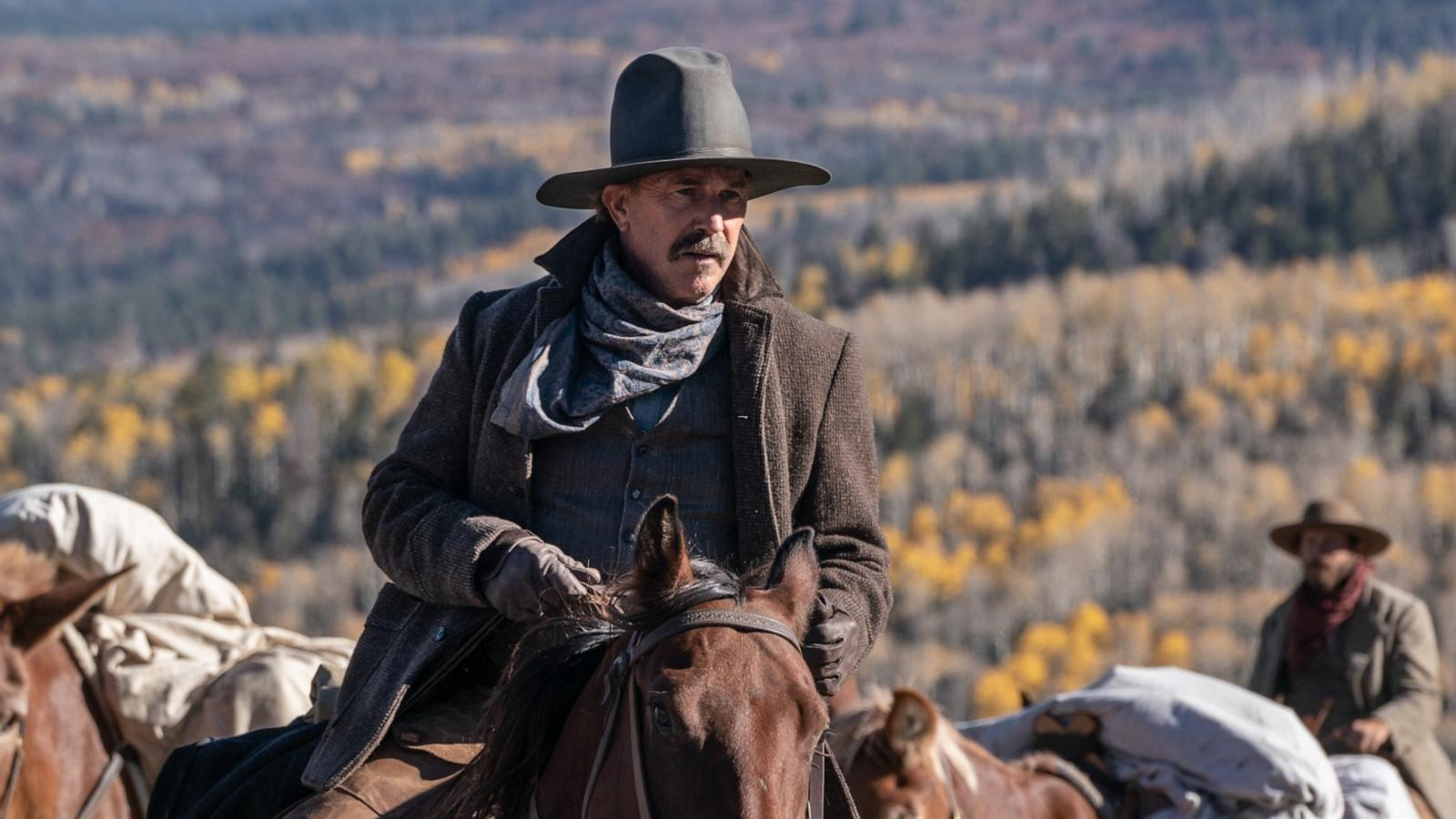
The first picture – Horizon: An American Saga – Chapter 1 – clocked in at 3 hours, cost $50 million, and returned about $30 million, after which, it was quickly deposited on HBOMAX, where I caught it this weekend.

The story is ambitious. Set in the early 1860s, there are four separate threads that will converge, spanning the Montana territory to the San Pedro Valley in Arizona. There is a fair amount of exposition which is strange, given that Costner’s last two westerns (the overpraised Dances with Wolves, and the under-heralded Open Range) were downright laconic. There’s a lot of chatter, and some of it is sharp (Costner and a would-be assassin walking up to the same cabin, neither knowing the aim of the other until they reach their destination, is a master class in tension building), and some of it anachronistically wearying (can we finally let go of the noble Apache, who dresses down his violent son, “for now the white man will come and make us miserable and throw trash at our feet on a highway in the 1970s, which will make us shed a single, terrible tear”?)

Overall, it is fine, and if you like westerns, you’ll like this. You won’t love it. But you’ll like it.

Even if you don’t dig the picture, the film is shot so beautifully, you often thrill to the visuals without a sense or care as to what is going on.

But it ends just terribly. Horizon 2 is in the can and releases in November, thought likely not in theaters.  Horizon 3 is filming.  Horizon 4 – who knows, but Costner is putting on a brave face.

At the end of Horizon 1, there is a long preview of what is to come, no dialogue, just visuals, as if Costner is desperate to keep you engaged. I stopped it because it showed the intersection of characters and violent, maybe lethal encounters, threatening to ruin what may be coming.

But the gambit seemed a bit needy. Poor choice.  

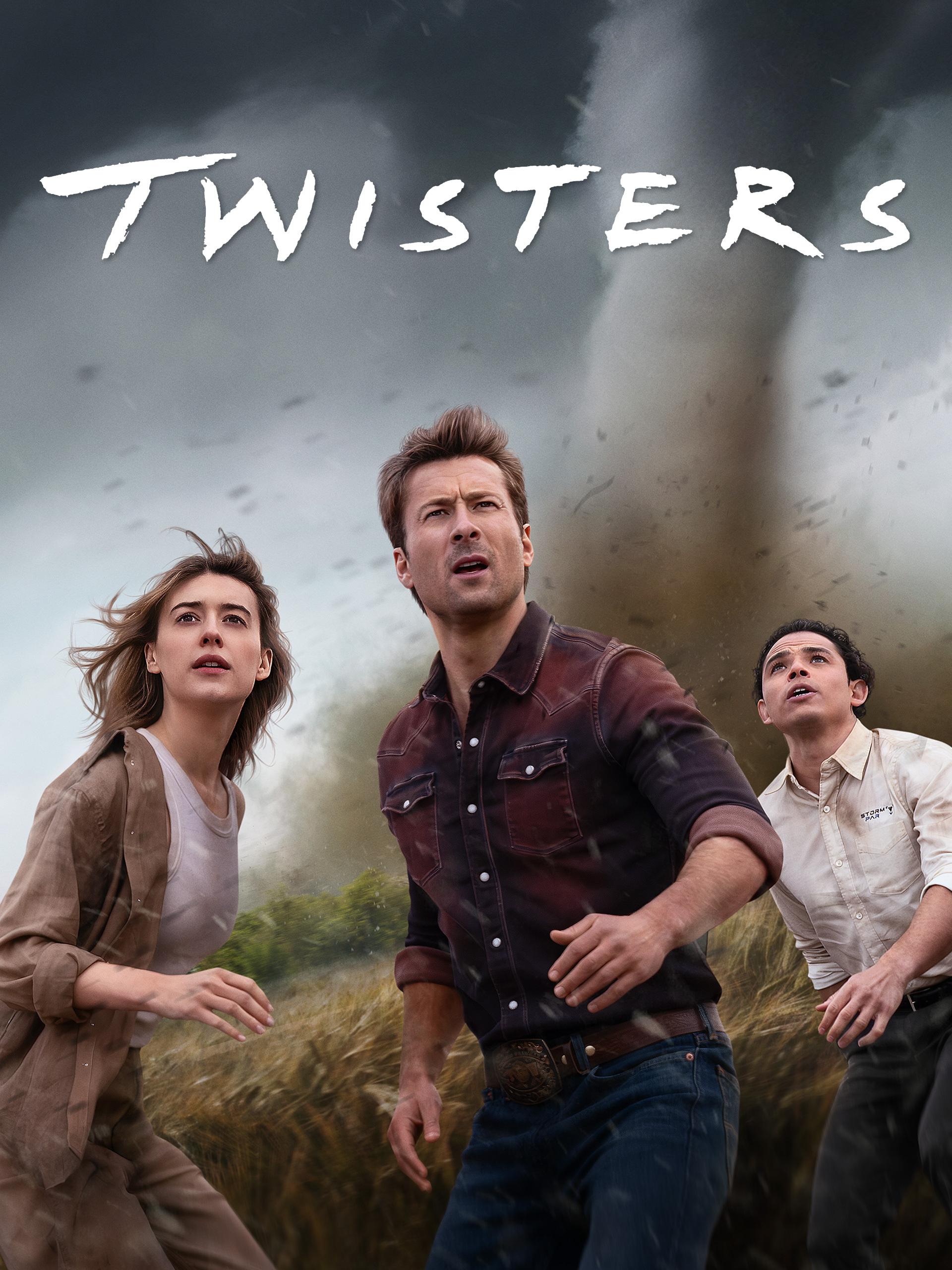
Goddawful, save for the winning Glen Powell and the fact I saw it in 4D, so the chairs moved and rumbled, wind blew on us, and lightning flashed in the theater.

Sensurround updated!

Otherwise, a complete dung heap.

Our story begins in Oklahoma, with one set of DEI/ChatGPT generated, wisecracking, riffing storm chasers, led by the charmless Daisy Edgar-Jones (Where the Crawdads Sing). Their endeavor feels like a Mentos commercial, until catastrophe strikes, and then it feels more like a darker Skittles commercial.

Five years later, after Daisy has run away from her fears to New York City, she is drawn back home, because, well … she’s a tornado whisperer. She can scan the topography, watch the wind disassemble a dandelion, take a deep breath, and she just knows where that pesky sky is gonna’ funnel.

Soon, she runs into Powell, a YouTube sensation who chases, or “wrangles,” tornados for fame and followers. Daisy must overcome her fears. Glen will help.

She also confronts the laziest form of corporate skullduggery one can imagine (so thin it is dropped immediately).

The script is banal and nonsensical. There really is nothing to say other than, “whoa!” given the impressive CGI and pyrotechnics (though someone does say, “be careful out there” – ugh), so you wait on some solid jokes and clever banter to get you to the next tornado, maybe some insight into other characters beyond “quirky” and “loud” and “ostentatiously, individualistically hip.”

Not gonna’ happen. Sure, there are a few spots for Powell to shine. But otherwise, he too has a coterie of kooky storm chasers, and they too look and speak like they’ve been assembled by a DEI/ChatGPT witch doctor, and while they all say “whoa!” differently, they don’t say it in a funny or interesting way (SPOILER – not a one of these wafer thin “characters” dies, which is a huge disappointment).

Powell pretty much has to steer this leaden ship with his impressive charm. God knows he tries, but he is thwarted by his co-star and a script written for dimwits.

Edgar-Jones has two faces – sad and sadder. So, for a rollicking, high octane joyride, one of your hosts is on thorazine, and Powell just can’t get past, into, or through her innate dullness.

And when they bond, there is nothing for them to chew on.  Case in point,  They are at a rodeo. Glen thinks Daisy is from New York City originally, so he is showing her the sights. There is great potential for some fun to be had here, the girl who knows the rodeo like the back of her hand letting the cowboy puff out his chest and wax poetically. But no. The kicker is she gets to say, mournfully, that this is not her first rodeo.

Then they talk about their first tornados. Again, this doesn’t have to be Oscar-worthy, but you can have a decent sexual double entendre or two here. God, anything to break up the verbal monotony. But Daisy demurs, Powell tells a story of how he saw one when he was 8 and realized he was supposed to be scared, she asks if he was scared, and he says . . . “yes.”

This is unintentionally moronic dialogue better suited to Idiocracy. Or Quest for Fire.   

As badly abused as the audience may have been, the people of Oklahoma are sitting on a winning class action suit for defamation. Here they are, living in a hellscape where tornados appear in an instant and ravage their communities. It’s all over the news! But damn if they don’t insist on proceeding with the town fair or the Little League playoffs or the Annual Pie-Eating Contest or running lightweight old-timey trolley cars down their streets.

Those plucky Okies won’t be dictated to by mere weather!

Yet, when the tornados arrive, you’d think these weathered veterans were from New Hampshire. They run around screaming and trying to gather belongings, hiding under metal containers, holding knives and bags of broken glass, doing all the other things people in tornados are advised not to do, until Daisy and Glen show up to remind them to seek shelter.

In a movie theater.

That is playing Frankenstein.

Because they don’t get first run movies in Oklahoma.

They do get a shitty country song about how you can’t spell Oklahoma without “home” and there’s a lot more of those ditties throughout this dog.

Gonna’ have to give a second look at Sharknado after this turd.

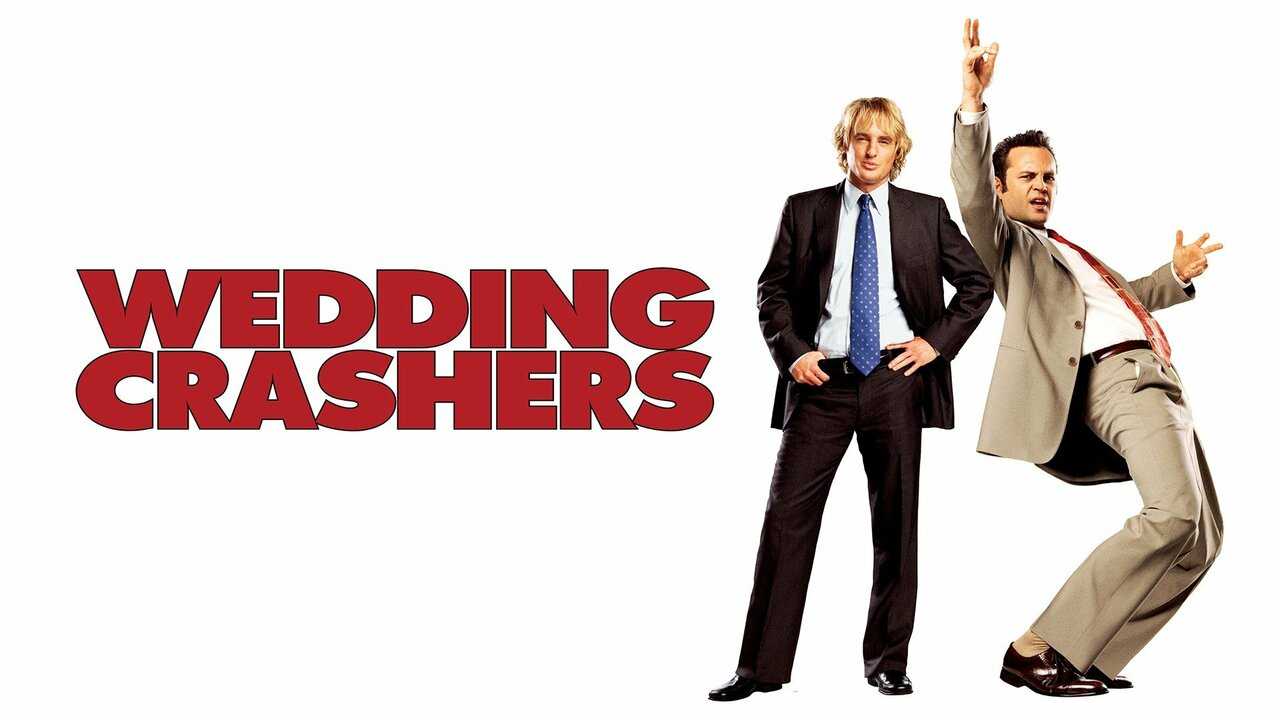
Sunday was a lazy day, watching whatever came on and doing squat. I dusted off the serious tone of Doubt with one of the funniest romantic comedies I’ve ever seen. The nucleus of the hilarity is the relationship between Owen Wilson and Vince Vaughn, two domestic relations mediators who crash weddings, and thereby, rather effortlessly bed the bridesmaids and other female guests with their practiced charms. Sure, the sex is good, but watching them savor the mini-crab cakes, woo the kiddies with balloon animals or cut the rug with granny, feels like an equivalent joy. The moves are practiced, the aim morally questionable, but the love of it all is there.  

They crash the mother of all weddings, that of a daughter of the secretary of the Treasury (Christopher Walken), where Wilson falls head over heels for another daughter (Rachel McAdams) while the third (Isla Fisher, who is somewhere between effervescent and lunacy) takes a shine to Vaughn. Wilson and McAdams flirt madly, and he saves her from a “too-snarky by a million” wedding toast. Vaughn and Fisher expedite matters, as he seemingly deflowers her at a secluded cove near the reception (which, if memory serves, was the Inn at Perry Cabin in St. Michaels, MD). Naturally, Vaughn wants to flee (one of the bazillion rules of wedding crashing is that there be no emotional involvement or connection after the reception), but out of loyalty to his fellow crasher and in their deception as distant family members, both are invited and go to the secretary’s Eastern Maryland home for the weekend. Hijinks ensue.

Wilson and McAdams are really quite convincing and warm. Chemistry goes a long way and they have it in spades. But the real love story is that of Vaughn and Wilson, who have such a genuine and easy connection that their banter elevates above the normal bro’ babble – these guys really love each other, and their interplay is always very funny and strangely moving. My favorite scene:

They elevate an incredibly hilarious and smart comedy where even without their intimacy, it would be hard to pick the scene that makes you laugh the most, be it the over the top family touch football game (Wilson’s nemesis is a young Bradley Cooper, who exerted stardom even then as the eco-friendly, psychotic heavy) or Wilson, having fallen out with Vaughn, hooking up with the Edison of wedding crashing, Chaz (Will Ferrell), who lives with his Mom and has moved on to funerals.

Whenever I see Vaughn in this flick, I think of my oldest and dearest friend, 40 odd years now, my own big guy who wants to bring it in with the big paws and the hug, Leo

Total blast. And a great montage song straight out of the rom-com bin

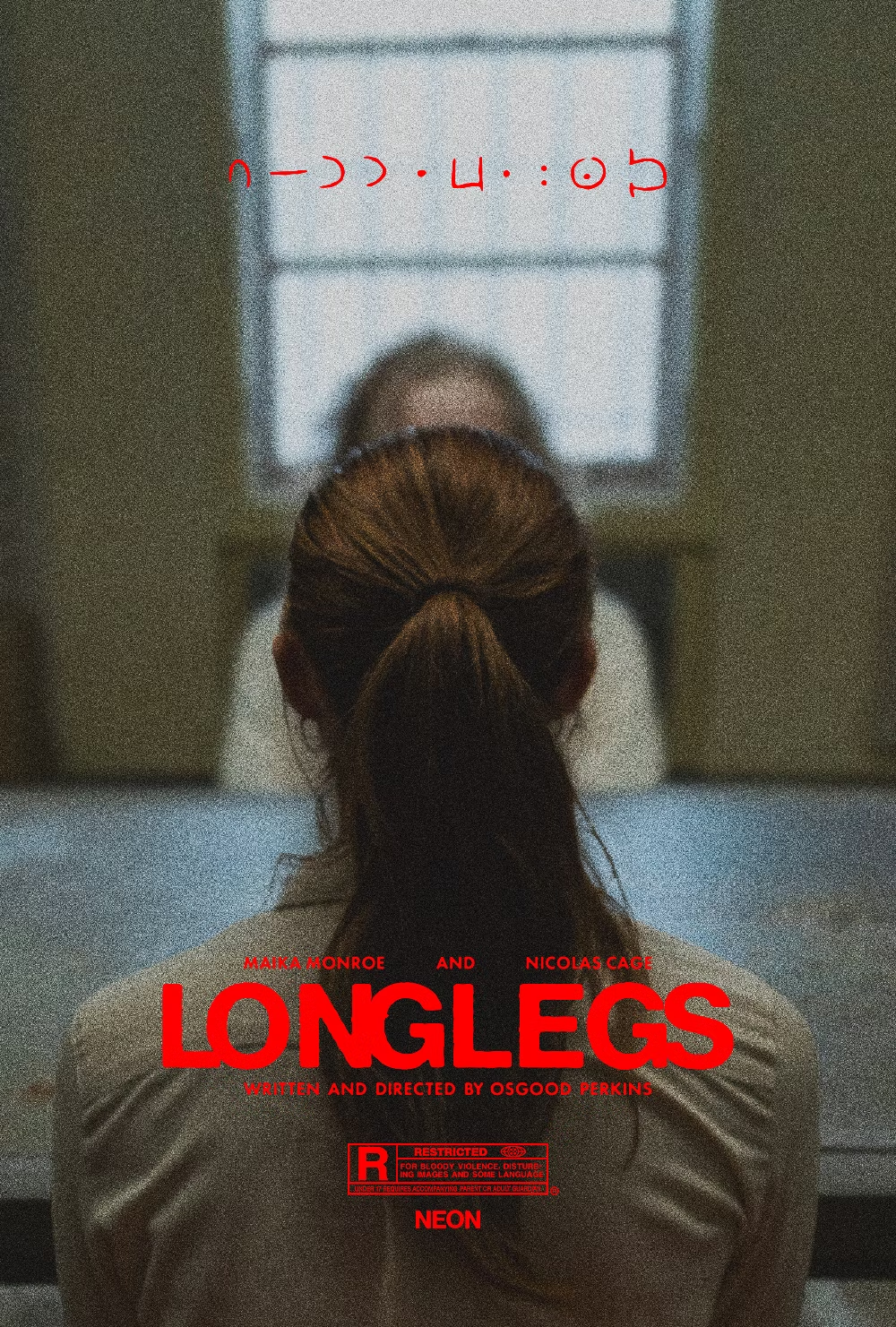
There are very real and unsettling moments of dread and terror in this story about FBI agent Lee Harker (Maika Monroe) tracking a serial killer in the rural areas of Oregon, circa 1990s. The film is eerie, creepy, and meditatively brooding. It also commendably avoids gore porn and hackneyed, now seemingly obligatory jump scares, while credibly blending the occult with the manhunt. Director Oz Perkins is deft and ingenious with the camera, particularly in flashbacks to various murders. He, or his editor, know how to cut a film.

But … the picture is loaded with plain dumb choices. Perhaps the dumbest being the selection of Nicolas Cage as the serial killer.

I’m not spoiling anything. He appears in the first scene and he is most definitely the serial killer. Ghostly white, screechy voice, clearly deranged, and yet, comfortably ensconced in the same community that has been suffering mass killings for a significant period of time. He’s almost as bad as Pennywise, the clown in It, who lives in a burg where children have a 43% mortality rate. Okay, the FBI can’t really do anything about a supernatural clown that haunts the sewers, though people inexplicably stay in whatever preposterous New England town Stephen King presents (“But honey, the teacher-to-student ratio in Londonderrychester is to die for!”). But a clearly deranged loon who looks like the adult child of Edgar Winter and Phyllis Diller flipping out when he buys supplies at a hardware store that he frequents, and no call to the police? Too much.

The story also relies on a plot device that could work if some care were given. A little bit of a spoiler does follows in this paragraph. The supernatural force controls individuals, and thus they are possessed, for lack of a better word, into doing the Devil’s work. The explanation of how that possession works, is, shall we say, lacking in elucidation (a trusted film correspondent writes, “The silver ball. WTF? Dumb. Dumb. Dumb”). There is also the problem of how the ball is deposited. Better suited to the 1950s and early 60s in terms of getting a foot in the door. Not in Bill Clinton’s America.

There’s also the issue of Agent Harker, who appears to be on the spectrum and whose own tortured background plays heavily into the story. She just doesn’t seem like an FBI agent. She veers between catatonic and stilted, but Monroe can’t imbue any heart. It is critical you care about her fate, but as presented, she’s often just above a mannequin. Worse, other characters (her boss, Blair Underwood and family) are supposed to somehow warm to her, which, given her clear aberrant mien, is asking way too much. 

And for a picture that in many ways rejects some of the formula and tropes of the genre, are we really going to put a rookie agent on the floor, poring over spread-out photos and reports as she tackles the conundrum of Phyllis Winter, who practically wears a sash emblazoned with, “Been Killin‘ Families Since the 70s!”?

 And light switches. Nobody seems inclined to turn on the lights. That’s Jimmy Carter’s America!  

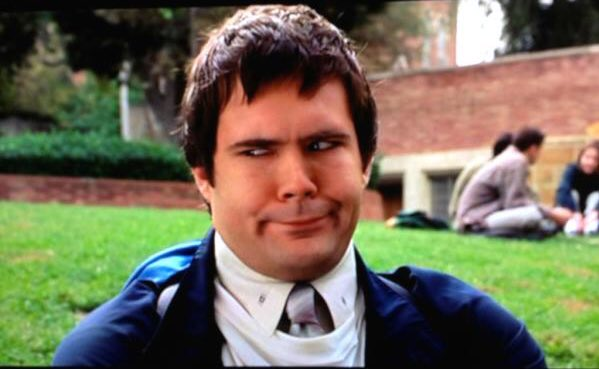
Okay. I’m being hard on a film that ultimately, I recommend. Because the feel and tone and a lot of the choices are right. And it was directed by Anthony Perkins’ son. Who played this guy in Legally Blonde. Which is, like, my favorite movie ever. 

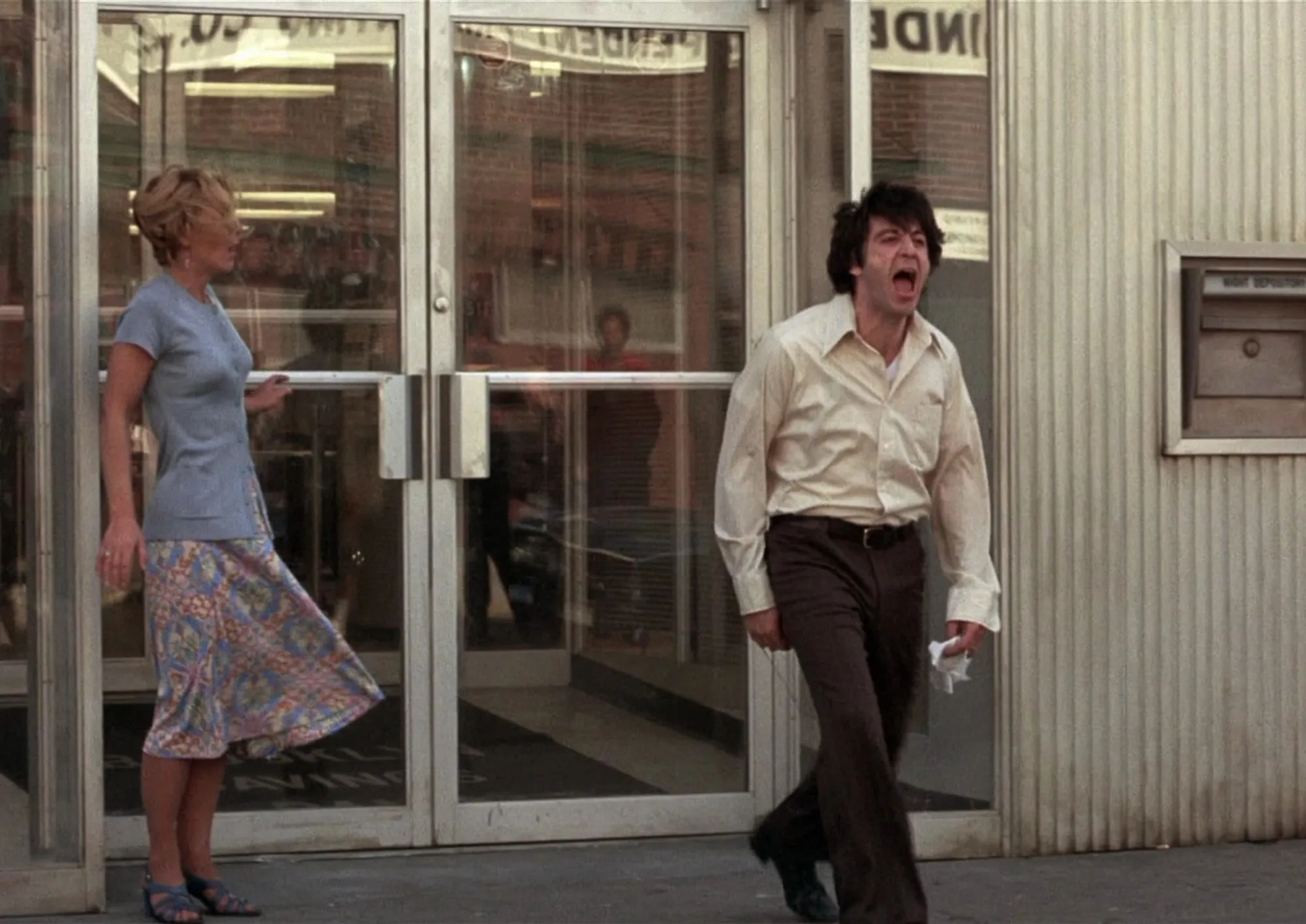
I took my cat to the vet yesterday and had that strange interregnum – too late to go back to work and too early to have a drink. So I flipped on the TV and lo and behold, Dog Day Afternoon was starting.

“Prescient” doesn’t even begin to capture Sidney Lumet’s masterpiece. Sonny (Al Pacino) and Sal (John Cazale) rob a bank in Brooklyn and before you know it, everything goes to shit, it’s a hostage situation, and they are surrounded by 100 cops, led by the overmatched and harried Charles Durning.

This is one of those 70s “New York City seems like hell” flicks. The robbery occurs on a sweltering summer day, and the police seem itching to gun down Pacino if only to get out of the heat. But soon, the TV cameras roll in, the crowds arrive, and before you know it, Pacino is a street-performer, not negotiating so much as whipping everyone up, screaming, “Attica! Attica!” and otherwise savoring the moment and, for lack of a better phrase, sticking it to “the Man.” His rage and theatrics are infectious. The crowd bays, bystanders want “in”, the hostages (plucky New Yorkers all) play-act and become featured cast members, and soon, the cops are the ones being led by the nose. Everybody has their 15 minutes.

But Sonny’s ride must end. Sal is a dimwit (when Pacino asks him what country they should fly to in escape, Cazale responds, “Wyoming”). The origins of the heist – to get money for Sonny’s boyfriend Chris Sarandon’s sex change – become public when Sarandon is sprung from a suicide attempt at Bellevue to come talk some sense into Pacino. The hostages start to lose the fun of it as well, and Cazale’s biggest worry becomes the fact that the networks are reporting “two homosexuals” in the bank. When Pacino is put on the line with his wife, you can see how he could be driven to such extremes and also what an awful person he has been to her. His mantra is, “I’m dying.” He is, in front of us, in slo-motion, but we sense we’ve missed a lot of the decline.

There is a great scene where the manager, having suffered a diabetic episode, is tended to by a doctor, gets his shot and chooses to stay with his employees:

               As Sonny grabs him to try to help him up, Mulvaney wrenches

               away.  A little physical here.

                                     SONNY

                         Hey!  I’m tryin’ to help you.

                                     MULVANEY

                         I stay here.  Damn it.  I just needed the insulin.  I’m used to it.

                         Go on.  Go on.

                                     SONNY

                              (to Doctor)

                         You tell me.  Is he endangering his

                         health, because if you tell me he

                         is, I’ll get him out.

                                     MULVANEY

                         I’ll be God damned if you will.

                                     SONNY

                         Oh, Jesus!  You want to be a martyr

                         or a hero or what?

                                    MULVANEY

                         I don’t wanta be either, I just want

                         to be left alone.  You understand

                         that?  I wish the fuck you never

                         came in my bank, that’s all, don’t

                         try to act like you’re some angel of

                         human kindness!

You can see Pacino’s hurt.  As if maybe he really thought this would work out and that he is a good man.

But soon, the FBI take over, and they are helluva lot more together than poor Durning and company.

Pacino is riveting,  alternately electric and doomed, eliciting your scorn and then sympathy. He’s all furtive energy minus the excess and “hoo ah!” You know this had to go bad, and so does he, and it’s depressing to see him hope, just for a minute, and then know he’s a loser and finished. Sarandon is fantastic (he was nominated for supporting actor), ridiculous and yet, affecting in his affectations, as if he knows he’s absurd but can’t shake the affliction.

It won an Oscar for Frank Pierson’s (Presumed Innocent, Cool Hand Luke) original screenplay, which doesn’t have a false note in it.

Crisp and taut work by the reliable Alan Pakula (Klute, The Parallax View, All the President’s Men), expert enough that you don’t think about the silliness of it all until the end.

And boy is it silly.

Harrison Ford, with a bad haircut, plays a deputy prosecutor (Rusty Sabich) who has an affair with a subordinate colleague, Greta Shacchi. She is young, exciting, a risk taker, and sexually promiscuous/irresistible.

Rusty, however, is a family man with a loving Plain Jane wife (Bonnie Bedelia), a nice suburban brick house, and a lot to lose. When Scacchi is brutally murdered, Rusty is given the task of prosecuting the killer. But the evidence implicates Ford and soon, he is fighting for his life, enlisting top flight defense lawyer Sandy Stern (Raoul Julia) to defend him. Turns out Scacchi slept with pretty much everybody in the entire judiciary system. Rusty just wasn’t all that special and she was no wide-eyed ingenue, despite his own obsession with his young charge.

Then the twist. [SPOILERS ON A 34 YEAR OLD MOVIE FOLLOW]

Bedelia, sensing the younger woman’s threat to her own family, is the killer! But it’s not enough for her to eliminate the competition, she must teach Rusty a lesson, tame him. So she not only killed his lover, but, per Wikipedia, “left enough evidence for Rusty to know that she committed the crime but did not anticipate him being charged.”

How?

She secreted Rusty’s semen and put it in the dead woman!

Jiminey Christmas! That’ll teach him.

[Side note – how depressing – Rusty and wife are clearly past child-bearing age and what, they’re still using condoms? I mean, I supposed she could have saved it another way, but that seems even more diabolically comical].

Thankfully, for Rusty, Stern is a capable defense attorney, the coroner misplaced the semen sample, a mug with Rusty’s prints found at the scene was disappeared by his investigator pal and even better, Scacchi also slept with the judge (Paul Winfield), for whom she was soliciting bribes.

Case Dismissed.

Maybe one of the dumbest whodunnits ever, the flick came on the heels of Fatal Attraction, the lesson of both being, “Don’t cheat on your wife. Seriously. Don’t.”

Still, it was plenty entertaining as long as you didn’t think too much about it.

Or perhaps think about it at all.

They just released a remake of this on Apple with Jake Gyllenhaal playing the role of Ford. We tuned in for the first episode, which was not good. Gyllenhaal is too young, too emotional, and borderline oafish, and the set-up is wearyingly predictable. Plus, the key to Scott Turow’s novel and the first picture is that Rusty is kind of ordinary schlub entranced by a sexpot. Jake Gyllenhaal is no ordinary schlub and can’t play one. Worse, Gyllenhaal’s Rusty is so into the Scacchi character, even post-mortem, he’s in therapy. Which we get to see. Which sucks.

If it is any consolation, apparently, they have taken care of any import of slut-shaming the Scaachi character. Which is kind of dumb, because Scaachi wasn’t slut-shamed in the original. Rather, she was just breezily promiscuous, manipulative, ambitious, and corrupt. Per Vanity Fair, now, she “cares” for Rusty – blech – a fact I don’t have the time or inclination to confirm.

iPhones to films are what mustard is to ice cream.  In the theater, they are pernicious, and I yearn for the day when those who are on their devices during a picture are summarily placed in stocks in front the multiplex where they can be freely pelted with Milk Duds and Cherry Icees.

At home, the impact is no better, but at least you’re only draining your own brain.

That said … the iPhone test is real, and it is reliable.

If you are watching a movie, and you feel the urge to check your texts, a sports score, or social media, or Bumble, you should resist that urge.

But the existence of the urge is telling you something valid.

Well, more than one thing.  Primarily, it is telling you that your attention span has so deteriorated that you lack the capacity to engage singularly with art.  You might think you’re a keen multitasker, or that your capabilities to receive the flow of information from many sources simultaneously makes you special. But you’re wrong.  You’re just mentally degraded, and it will only get worse, until the apocalyptic end, when we are caught flat-footed by Skynet because we are gobbling increasingly dumber morsels of bite-sized shit that has been pre-packaged, pre-engineered, and pre-spiced to scratch the itch Zuckerberg identified and aggravated so we could keep coming back to his mental Calamine.

Speaking of spice, I liked Dune plenty, though it was too dark, too grey and a bit anticlimactic. While it was one of the first movies I saw in the theater post-COVID, I didn’t review it, but I dug it.

Dune: Part Two has hit HBO Max and it is long.  So long, I needed two nights, because I get sleepy.  But I was drawn in and eventually, riveted, and now find myself yearning for the next installment.

Denis Villeneuve has created an epic, grand, sweeping yarn with a lot of truly fine actors, and the world created is adult, forbidding, and intriguing.  A full recap is unnecessary, but there is a Game of Thrones quality, with Great Houses vying for a facsimile of oil (spice) as well as the emperorship and control. There is also sinister magic, geopolitics, religious fanaticism, hand-to-hand fighting, big ass sandworms, and a love that dare not speak thy name (Zendaya and Timothée Chalamet).

Full disclosure: we paused the movie because at my advanced age, I have to pee more than I’d like.  And I did a quick rinse of the dishes because I hate when the food sticks.

But I don’t think I thought about looking at my phone.

One nit – Christopher Walken is now such a caricature, he just doesn’t work outside of quirky, comedic roles.  As an emperor, he shambles in (actually, kind of phones it in), and distracts.

I recently devoured Quentin Tarantino‘s Cinema Speculations, wherein he recounts his childhood and the succession of films his mother’s boyfriends would take him to see when he was a kid. Most of the films he discusses are ones you probably shouldn’t take a kid to see.

When my mother and father got divorced, I was six years old and my father was supposed to take us every other weekend for two nights. That arrangement became a little less frequent over the years, and by later grade school, he was taking me and my brother on a Saturday day and an overnight. We would spend the weekend with him at his apartment and pretty much do the same thing every time: go shopping, do his errands, look for stereo equipment, maybe spend an hour or two at his law office, go Putt Putt golfing, and then to Shakey’s Pizza in Rockville or The Charcoal Grille in Bethesda. Dinner was from Swanson’s, so you got a entree’, two sides, and a dessert.

And movies. We went out to the movies a lot. Or, we stayed in Dad’s apartment, where he had a special key that was hooked up to some kind of internal cable system, and we could watch close to first-run movies there instead of going out. Or just catch what was on TV.

My father loved movies, he loved to talk about movies, he lived for movies. So much so that he would go through a certain kabuki with me where he would let me take a look at The Washington Post and ask what I wanted to see. I would pick a Herbie the Love Bug and he would say, “Nah. I heard about this good movie.” And then, like Quentin Tarantino with his mother’s boyfriends, you went to see a lot of dark, heavy, violent flicks, like The Laughing Policeman, The Silent Partner, Death Wish, or The Taking of of Pelham One Two Three. Or the remake of Farewell My Lovely, Night Moves, or The Eiger Sanction.

And Rolling Thunder. Which I noticed was available, and, as I couldn’t sleep anyway, I watched last night

Tarantino’s book has an entire chapter on the film, one of Paul Schrader’s first screenplays after Taxi Driver. Major Charlie Rane (William Devane) and Sergeant Johnny Vohden (Tommy Lee Jones) return to Texas after seven years of brutal captivity in a North Vietnamese prison camp. The adjustment is fraught, and even greater tortures are brought to bear on Devane, who is being treated by an Air Force psychiatrist (the just recently deceased Dabney Coleman) in his attempt to readjust. Tragedy ensues. Devane snaps. What follows is a classic 70s revenge flick.

The film travels wonderfully. There is a crisp foreboding to Devane’s return. While San Antonio welcomes him with marching bands and celebrations, and he is reunited with his long suffering and loving wife and the son who he last saw as a baby, Devane is damaged, and beneath the cheery gleam of a welcoming Texas, there is rot and danger. His son has anxiety issues. His wife has found another man (Devane says to her evenly, “you’re not wearing a brassiere” to which she replies, “oh, no one wears them anymore”). He cannot sleep in the house, preferring a cot in the garage.

So much is done well in the lead-up to the Death Wish-ian payoff, it goes unnoticed because, after all, this is a shoot ’em up, just desserts pic. Per Tarantino: ““This opening thirty minutes is a grippingly detailed character study, and by the time it’s over the audience doesn’t just sympathize with Charlie Rane, we really do understand him. Apparently better than anybody else in the film. It’s a much deeper depiction of the casualties of war than the [other movies of that era].”

I remember watching the film with my father. It is engrossing, both subtle and visceral, like a lot of pictures we saw together. It is also wildly inappropriate, also like a lot of pictures we saw together. I had trouble wrapping my head around something horrible that happens to Devane; not a spinning, vomiting Linda Blair kind of visual, but a brutality so smartly connected to a mundane part of the household, it just traveled with me, and probably not in a good way. Even last night, I fast-forwarded.

But on Sundays, when we were dropped off, I would not tell my mother about any of these movies, because I felt me and my Dad had this thing, this bond, and it was cemented in our little secret, Jujufruits and Junior Mints in hand.  And perhaps we did, although I’m probably mythologizing it. After all, my father needed to have something to talk to me about. Or at a minimum, just a two hour break from my babbling.

The picture is currently on Amazon Prime. Nostalgic for me but it really holds up.

What can one say? Ahistorical, pointless, very near to spoof, it feels like an expensive practical joke. Napoleon is just . . . there.  Quiet, behatted, very dull, and you have no inkling as to what makes him special.

His torrid love for Josephine is perplexing – she spreads her legs to give him a look see, and he is forever entranced, even after he has to divorce her because she is barren.

That was the first half, before I took a gummie and got to The Battle of Austerlitz, and then, the film was more of a gas. Still terrible, but better attuned to my state.

Joaquin Phoenix gives one of the funniest, most wretched performances I’ve ever seen, defensible only because it seems justified, given director Ridley Scott’s recounting:

 “He’ll come in, and you’re fucking two weeks’ out, and he’ll say, ‘I don’t know what to do,’” Scott said about Phoenix. “I’ll say, ‘What?!’ ‘I don’t know what to do.’ Oh God. I said, ‘Come in, sit down.’ We sat for 10 days, all day, talking scene by scene. In a sense, we rehearsed. Absolutely detail by detail.”      

I kind of doubt there was any rehearsal.  Phoenix did not bother with a generic classical accent, nor Brit nor, God forbid, a French lilt, so he sounds like an assistant manager at the Petaluma Best Buy.

He is either heavy-lidded to the point of napping or he’s gonzo.

Destined to become a cult classic.

I was not a big fan of Yorgos Lanthimos. He is clearly talented, but he also revels in the ugly. The Lobster was inventive, but also, masochistic, even abusive. The Favourite was evocative but also grotesque. Lanthimos traffics in the absurd, but he luxuriates in meanness and the darkly visceral, with all its bleeding, flatulence, fluids, and muck. Yet, here, in this hilarious and charming re-telling of Frankenstein, he allows himself whimsy and some gut-busting hilarity.

The time is Victorian London. Emma Stone (Bella Baxter), a fully grown drowning victim fished from the Thames, is brought back to life by none other than a Dr. Frankenstein (actually, Dr. “God”win Baxter, Willem Dafoe) and given life via the insertion of her own unborn baby’s brain. When we meet her, she’s a mere child, eating like a infant, urinating where she stands, stubborn and defiant. But she grows, quickly, and when she happens upon sexual pleasure, she is out and free, with the assistance of a dandy (Mark Ruffalo) who haughtily acts as her tutor even as he is slowly enslaved. Soon, Bella becomes worldly, and learns a few hard lessons, but she quickly masters (speaking of absurd – this word was tagged by spell check as problematic) the ability to make her own destiny in a world that would normally relegate her to docility and subservience. To see her eat, to come, to dance, it is hard not to be as captivated by Stone’s gifted performance as Bella is by the world. And Ruffalo’s foppish moth to her carnal flame is riotous. Bella’s journey is wondrous, funny and beautifully shot, deftly lifting from the best artistic visions of both Tim Burton and Wes Anderson.

I laughed uproariously and sat in wonderment at Lanthimos’ ingenious world.

Two nits. First, I never really thought I’d say, “Hey, there’s just too much of Emma Stone naked” but the film is 20 minutes too long, and there’s just too much of Emma Stone naked. I think Lanthimos became entranced by Stone’s moxie, but soon, all of the sex seems less like a revelation, and more like an obstacle course.

Second, Jerrod Carmichael makes an appearance and there is no other way to put it – he’s terrible. Stilted, clunky, confused, and aggravatingly amateurish. You kind of feel bad for him, but you brighten when you realize he is gone.       

Otherwise, great, smart fun.

Seven down, three (Past Lives, Killers of the Flower Moon, The Zone of Interest), to go.