Archive

Genre

image

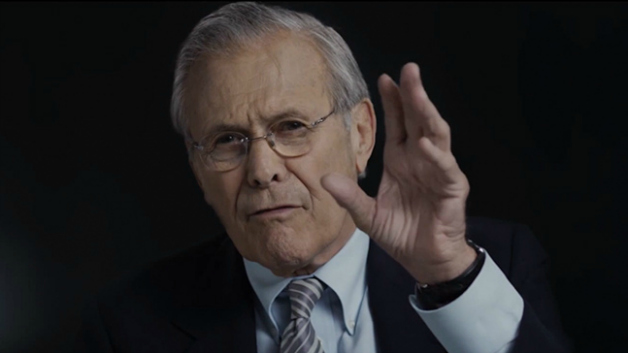
Not an apologia, nor a self serving justification, but rather, an opportunity to listen to the methodology, nuance and capacities of one of the more influential policymakers of our generation. Documentarian Errol Morris is astute enough to let Donald Rumsfeld roll with little interruption, with only occasional prodding, to attempt to reach his core. Unlike with Robert McNamara in The Fog of War, who eventually reached an acknowledgment that seemed near confessional with regard to his failures in Vietnam, Rumsfeld is not of the same mindset. He is not prideful in his cheery resistance to apology: he’s quite capable of admitting error and does so often. But he refuses to accept the premise that in the commission of error, there necessarily lies moral failure or self-serving, political calculation.

Morris is a little cheap on occasion, and with someone who is as careful with his words as Rumsfeld, it is problematic. For example, Morris goes “gotcha!” when he juxtaposes Rumsfeld’s denial that the Bush administration cast Iraq as a major player with al Qaeda in the direct planning of the 9-11 attacks with his statement in a press conference that al Qaeda and Iraq certainly had a relationship.

Mostly, however, Morris is flummoxed by Rumsfeld, which is actually a good thing. Morris approaches Rumsfeld as a provocateur, asking “why obsessed with Iraq?” and “why not just assassinate Saddam?”  He receives answers, albeit answers you can tell he feels are not deception so much as unsatisfactory.

There is no neat wrap-up, no target hit, no successful gotchas, but rather, just a rumination on Rumsfeld’s peculiar process and recollection.

There is a nifty exchange where Morris advances that Shakespeare wrote about large personality-filled power struggles; Rumsfeld replies that those struggles are really just people with different perspectives; Morris counters, “Did Shakespeare get it wrong?”; and Rumsfeld thinks about it, shrugs, and suggests maybe Shakespeare got it right . . . for his time. In that same vein, Morris pushes Rumsfeld for lessons between Vietnam (the end of which Rumsfeld oversaw serving President Ford) and Iraq, and Rumsfeld parries that while one hopes to heed lessons in history, the primary lesson is “some things work out and some don’t.”

Morris wants Rumsfeld to answer, “How do you know when you are going too far?” and Rumsfeld is literally the last person on this earth equipped or inclined to provide him a satisfactory response.  Are you saying, “Stuff just happens?”, Morris asks in exasperation.  Rumsfeld looks back at him with the look of someone who has just been asked “Are you saying you breathe air?”

Morris conceded his agenda, and perhaps the thwarting of same, in an interview: “You’re left with a strange anxiety about [Rumsfeld].  I suppose if I was Mike Wallace or David Frost or whoever, I’d back [him] into a corner. But I love those moments, because I don’t even know where I am anymore. I don’t know whether he’s in any way self-aware, whether he is lying, whether he’s just in some strange alternate universe, the Rumsfeld universe. . . . There’s a ‘j’accuse’ there, but it’s my ‘j’accuse’.”

The consensus from the dummy contingent of film critics is that Rumsfeld was given the rope with which to hang himself, or his artful dodging is in and of itself proof of the indictment as to his treachery, but what Morris has actually accomplished is a demonstration of the incongruity between the needs of artists, or those who see the world through a Shakespearean lens, and policymakers, who take it one memo at a time.


Barton Fink had the Coen Brothers delving into the dark heart of old Hollywood as it crushed the dreams, condescension and verve of the working man’s playwright. The result was a dark and sometimes terrifying comedy that revealed the old film business as an industrial behemoth, plowing over the souls of artists. It is a dour, unpleasant movie, and ironically, so arty and showy that you long for the simplistic Wallace Beery wrestling picture that plagues its protagonist.

It appears the Coen Brothers have lightened up considerably. Hail, Caesar! is a breezy, clever and light love letter to old Hollywood. The studio chief (Josh Brolin) is being wooed by corporate America, and the man sent to Tinseltown to lure him away can’t help but take jabs at the frivolity of Brolin’s work. Indeed, between staging marriages to deal with the unplanned pregnancy of a star (Scarlett Johansson), matchmaking stars to feed to the gossip columnists, squelching rumors about his Clark Gable-esque A lister (George Clooney) and saving that same commodity from kidnappers, it all seems pretty silly. But it is not. It is, as presented by the Coen Brothers, noble work.

This light romp is made glorious by several masterful recreations of old Hollywood scenes, from the massive scale of period pieces to cowboy antics to jaw-dropping swim and song-and-dance numbers. The detail is lovingly rendered, and the humor is always there. This is one of their better films. It prompted Ann Hornaday of The Washington Post to rank her Coen Brothers films, a list that is in many ways beyond stupid. Here is mine:


  1. Fargo
  2. No Country for Old Men
  3. The Big Lebowski
  4. True Grit
  5. Inside Llewyn Davis
  6. Burn After Reading
  7. Miller’s Crossing
  8. Hail, Caesar
  9. Raising Arizona
  10. Oh Brother Where Art Thou
  11. Blood Simple
  12. Intolerable Cruelty
  13. Barton Fink
  14. The Hudsucker Proxy
  15. The Man Who Wasn’t There
  16. A Serious Man

**. The Ladykillers (never saw it)


image

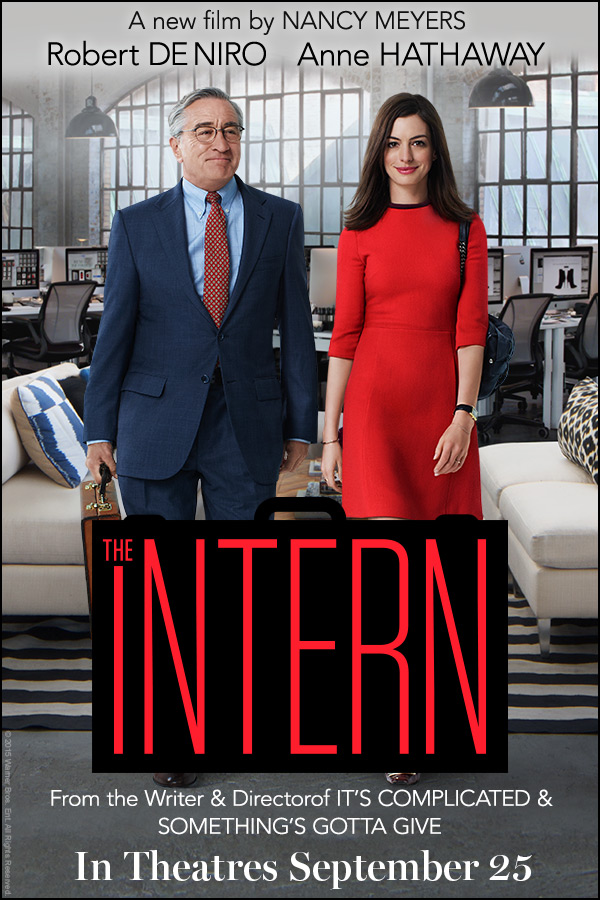
Makes Love, Actually seem like a gritty documentary.  This is a cloying, revolting film about a young entrepreneur (Anne Hathaway), her senior intern (Robert DeNiro) and her struggles to have it all in the fast paced world of tech and fashion.  Hathaway grew up from her stint as a personal assistant in The Devil Wears Prada, and now she runs her own on-line clothing company.  But she works too hard, her marriage is in crisis, she’s mulling bringing in a new CEO and fortunately for her, dapper, impossibly cute DeNiro arrives to provide balance to her life.  That’s the whole thing, which would be bearable, except for the fact that Hathaway is playing her own excruciating “aw, shucks, me?” persona; DeNiro looks bored; the plot is non-existent and the presentation slipshod; Anders Holm (from Comedy Central’s Workaholics) is Razzie-worthy for his clumsy, unconvincing turn as Hathaway’s mushy husband: the film doesn’t know whether it wants to be a comedy or a drama so it settles as a statement on the pressures put on rich professional women who live in impossibly gorgeous and classy Brooklyn brownstones; the score is a maudlin, soapy piano that bores into your skull; and everyone in the thing is just so damned cute, you hope that just maybe, they’ll inject a devastating calamity.  They don’t, unless you consider accidentally sending an email criticizing your mother to your mother of that stripe.

Also, apparently, in Brooklyn and Manhattan, parking isn’t a problem.  Anywhere.

In the immortal words of a review of a Spinal Tap record, shit sandwich.

The Martian - Disney+ Hotstar

Matt Damon anchors this futuristic mash-up of Apollo 13 and Castaway (with a little bit of Gravity thrown in for good measure), and for the most part, the results are positive. Stranded on Mars, Damon must learn to adapt to the planet’s forbidding nature, ingeniously deducing how to grow food, warm himself, and communicate with NASA to effectuate his rescue. This is an Oscar-nominated film and still in the theaters, so I’ll be broad in my comments.

Damon, as usual, elevates a picture. We view him battling the elements and disaster, and he veers between gallows humor, heartfelt wonder when he hits upon an idea that can help him survive, and mental and physical breakdown. He’s a gifted and still, incredibly, underrated actor, too often overlooked. He was the heart of The Talented Mr. Ripley, but everyone was dazzled by Jude Law; he made The Departed tick, but the buzz went to Jack Nicholson, Leonardo DiCaprio and even Mark Wahlberg, who played a stock tough Boston cop and received an Oscar nod for it. In the Coen Brothers re-make of True Grit, Damon near stole the picture, and his smaller part in Contagion was the most affecting.

The film moves rapidly as director Ridley Scott alternates between Damon attempting to survive on Mars and the efforts of NASA to rescue him. While we are with Damon, the picture is consistently compelling. When it reverts to NASA, however, it becomes uneven, pat and pedestrian. It does not help that Jeff Daniels has decided to portray the director of NASA as some sort of mannered Aaron Sorkin archetype. It also does not help that Kristen Wiig is anywhere near this movie (as the director of Public Relations for NASA, she seems to be itching to show us her googly eyes). Finally, Scott is clearly aping Apollo 13 by giving us a picture of the NASA brainiacs as they work to save Damon. Unfortunately, unlike in Apollo 13, the science is less accessible and negatively juxtaposed with what Damon is doing on the planet, where he actually explains to us what he is doing in his daily video logs.

Scott is no stranger to space.  His breakout film, Alien, was set in 2127, where space was industrial, dirty and haunted, and government and corporations conspired to screw the little man. Clearly, he is in a better place today. In 2035, NASA’s kindly counterpart in China subverts its own government to help Damon; the people who work at NASA have a certain blasé “I worked in a Blockbuster and I will never wear a uniform again” mien: and missions to Mars are the kind of endeavors wear crewmates can play kissy face.

My curmudgeonly nits aside, this is very solid entertainment.

image


(Reporting from the Blizzard of ’16)

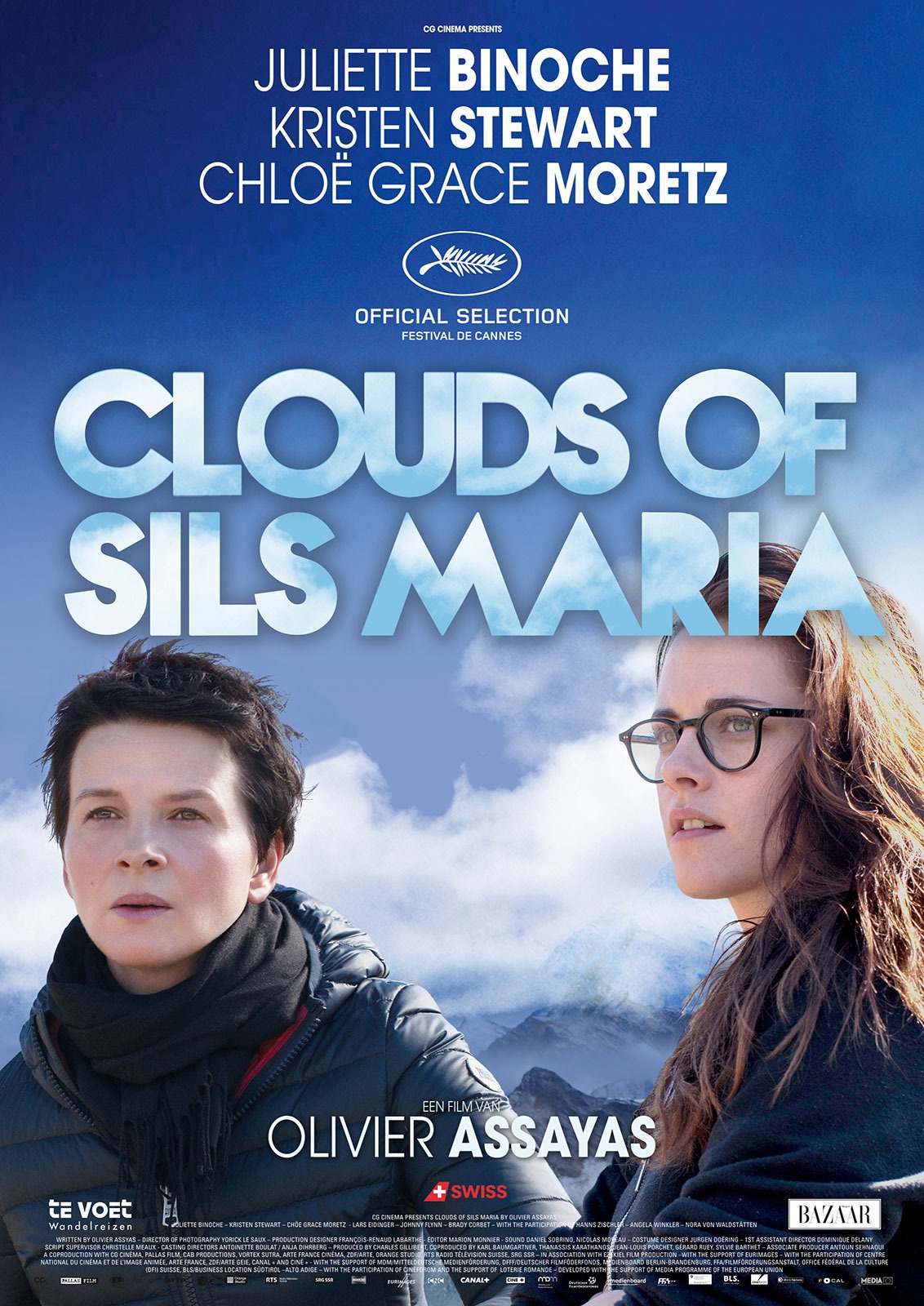
Writer-director Olivier Assayas has created a beautiful character study and meditation on the subjects of stardom, aging and generational disconnect.  Juliette Binoche gives the performance of her career as a world famous actress.  She made her stage debut twenty years earlier as an ingénue who seduces and destroys an older woman. In a revival, Binoche is asked to play the part of the older woman, and she must deal with the passage of time, the change in her viewpoint, the suicide of her old friend the playwright, and her own vulnerability to youth in the guises of her personal assistant (Kristen Stewart) and the young superstar actress playing Binoche’s debut role (Chloe Grace Moretz). Stewart is Binoche’s connection to the world of celebrity and Internet media and must support Binoche as she becomes increasingly nervous about her performance while suffering her neediness and condescension.  Grace Moretz is coming to destroy her

Binoche is noble, fragile, and bravely bears her soul and insecurities in the face of time and the vagaries of celebrity. When we meet her, she is glamorous, beautifully made up for a Chanel photo shoot and a tribute to the playwright. When Binoche makes herself sexually available to an old flame who mistreated her in the past, only to be reduced to the role of the spurned lover waiting in the hotel for the visit that never comes, it is deeply affecting.

Binoche is ambivalent about playing the role because she knows all too well the fragile state of her age, which results in passive aggressive behavior towards Stewart and capitulation to Grace Moretz. As she prepares for the role with Stewart, she is natural, without makeup and the accouterments of the star. It is as if her armor has been discarded.

Grace Moretz is electric as the the new, hot thing, seemingly deferential to Binoche while harried by paparazzi and swirling scandal. Stewart is canny, but her problems as an actress continue. Her appeal has always struck me as inexplicable. At her worst, she is capable of mere sullen boredom, and at her best, a medium cool disaffection. Here, she does a bit better, but she can’t quite elevate her blase’ demeanor to a suggestion of anything deeper.  Still, she’s adept, and does not get in the way here.


image

(Reporting from the Blizzard of ’16)

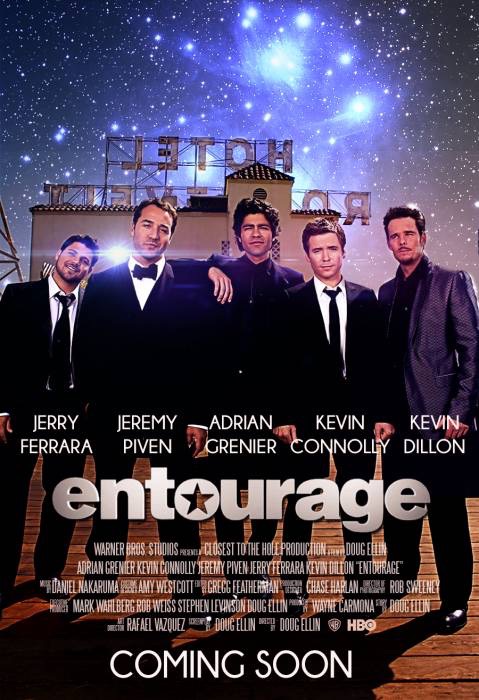
The TV show was two seasons too long but most always amusing, giving you a taste of what it might be like to be young, dumb, affable and famous in the candy dish that is Hollywood. The show’s greatest attributes were its locale, engine (the hyper, high-powered brutal agent Ari Gold played by Jeremy Piven) and length (a brisk 30 minutes). Entourage gave to men what Sex in the City gave to women, though the latter could often seem a conflicted and forbidding place for the female archetypes. Not the sandbox that was Entourage‘s Hollywood. Sure, the fellas had occasional relationship issues or fights with studios, but nothing that could not be wrapped up quickly and remedied by weed, easy sex with nubile ornaments, and kick-ass parties.

The film bollixes up all the critical elements of the TV show. The locale is used solely for a series of unfunny cameos and time-wasting sojourns. The likes of Liam Neeson, Mark Wahlberg (the show’s canny producer) and Armie Hammer (he’s someone?) just show up, which is just weird.

Worse, the Hollywood of now just seems tired and pedestrian. Piven, now a studio head instead of a mere agent, is less antagonistic and biting than weary and beleaguered, and his time is spent making sure the dream film of his pretty boy Eliza Doolittle/Vinnie Chase (Adrian Grenier; he directs!) is financed by mean old Billy Bob Thornton, a gun totin’ Texas kabillionaire and the studio’s primary financial partner. This leaves Piven in the role of supplicant most of the film, not aggressor, and as anyone who watched the series will tell you, Ari Gold is one entertaining combatant.

Two hours in and one gets the feeling that director, writer, and creator Doug Ellin was desperately looking for filler. He does a few pointless things with Vince’s gang, but it is not enough. Like a kid completing a term paper coming in short, we get a lot of driving and walking scenes.  If they are your thing, this is your flick.

The best part of the movie is one aspect of the actual story, which has Thornton’s spoiled son (played by Haley Joel Osment of The Sixth Sense fame, who now sees bored people) coming up to Hollywood and attempting to put the kibosh on Vince’s opus, a futuristic remake of Jekyll and Hyde, because Vince aced him out of a girl.

Even though they are excuses used to cover for being hurt over the girl, Osment’s criticisms are valid.  He explains that Vince’s brother (Johnny Chase, played by Kevin Dillon) is putrid in his four “pivotal scenes” and that Vinnie himself sucks as the lead, and you know he’s probably right. Hell, when Ari nervously screens the picture and we get 2 minutes of it, it has the look and feel of a high-end Sprite commercial.

Alas, Osment is sent packing, and the boys get Golden Globes (ha! Not a People’s Choice?).

Osment, however, gets the last laugh.  He was actually nominated for a real Academy Award.


image

(Reporting from the blizzard of ’16)

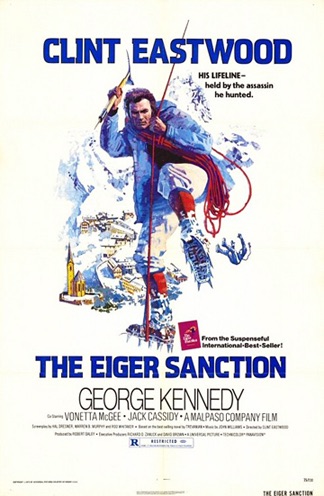
My childhood memories of kick-ass Clint Eastwood are vivid. I think I was first mesmerized by him as the cool, sardonic killer in the World War II drama Where Eagles Dare, and after that, as Dirty Harry Callahan, a cops’ cop, rejecting Miranda and spitting in the eye of pencil-pushing bureaucrats who were the real menace to San Francisco. Somehow, I missed the westerns, catching them in the 80s.

The Eiger Sanction was on the Channel 7 daily movie rotation, and I’m sure I saw it several times. It’s a testament to the sway of Eastwood that I did, because I watched it today, and the impact was decidedly different. Eastwood directed (his fourth feature) and let’s just say he wasn’t at peak form. Very pedestrian, and hum drum, it tells the story or an art professor (Eastwood) who is actually a retired assassin for the government. He is summoned by his former boss, a straight-out-of-early-Bond albino with a Germanic voice who will die if the sun touches him, and cajoled into taking on a contract, an unknown member of a party he is to join attempting to scale the north face of the Eiger mountain. Eastwood’s clue as to the man’s identity? The man has a limp.

The mountain climbing sequences are the best thing about the film. Eastwood performed many of his own stunts, and, certifying the danger, a stunt climber was killed in the filming. But this is a dated flick, not only in its blocky, unimaginative feel, but in its dialogue.  For example, the bizarre line Eastwood gives to a stewardess he is seducing: “You never know. Sometimes people do things…they thought they’d never do again. (pause). Like rape, for instance. I thought I’d given up rape, but I’ve changed my mind.”  And then they kiss and make love by the fire.

This is the second film Eastwood got after Paul Newman passed.  Newman was wrong about Dirty Harry but not this one.

image

(Reporting from the blizzard of ’16)

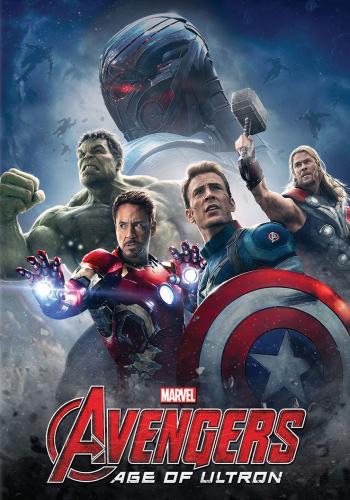
Oof. The first scene demonstrates everything wrong about the movie. Forced patter straight out of How I Met Your Mother, nauseating CGI, dozens of violent acts but no deaths, and not for a minute do you sense that any of the Avengers, outnumbered as they are, are in the slightest bit of danger. Good for kids; good for a parent or adult with a kid who needs a nap; soul-rotting juvenilia for anyone else.

Best part. A friend of Captain America asking if he’s found a place to live in Brooklyn yet and Captain America responding that he doesn’t think he can afford it.  Because what’s missing from these films is the Avengers at a cocktail party.

Full disclosure: turned off at the halfway point.


image

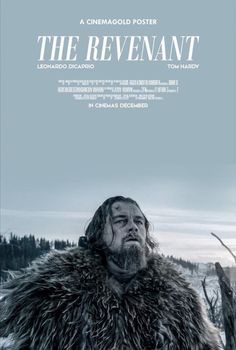
Like Birdman before it, there are scenes in this movie so visually audacious, I gasped. But where that picture hit you like a ton of bricks based on the cumulative effect of its dizzying pace and construction in the close confines of a Broadway theater, Alejandro Inarritu’s The Revenant – which is essentially a lone survivor/revenge flick, with a little spiritual mumbo jumbo thrown in for good measure – presents dazzling set pieces interspersed with awesome portraits of the vastness of nature. The year is 1823, and Leonardo DiCaprio is a guide for a fur trapping expedition in South Dakota beset by a brutal Indian attack, and in escorting the survivors back to the safety of their fort, he is viciously mauled by a bear, a scene so expertly rendered I could not believe it had not happened, yet, of course it had not. DiCaprio seems a committed actor, but no one is that zealous.

After the attack, DiCaprio has many more hurdles before him, including a suspicious and dangerous member of the surviving group (Tom Hardy, channeling Tom Berenger in Platoon, a compliment) and pretty much every calamity the brutal world of the wilderness can provide.  DiCaprio has little to say, but he brings all the physicality he mustered in The Wolf of Wall Street, only this time, during his infirmity, he exudes animalistic fury instead of stoned near-paralysis.

This is one of the most thrilling, visually stunning films I’ve ever seen. Inarritu used natural light and subjected the actors to enormous rigors (some say, “a living hell“).  Like George Miller in Mad Max: Fury Road, Inarritu dispensed with CGI, remarking, “If we ended up in greenscreen with coffee and everybody having a good time, everybody will be happy, but most likely the film would be a piece of shit … When you see the film, you will see the scale of it, and you will say, ‘Wow.'”

Wow indeed.  It all pays off in making the picture visceral, authentic and epic.  My only nits are a bit of anachronistic, stale “you have stolen everything from us” dialogue from the primary Indian and one depiction too many of DiCaprio hallucinating his Pawnee wife welcoming him to death ala’ Russell Crowe in Gladiator. But these are very minor criticisms. This is a great film and certainly one of the best of the year.

Deric Poston on X: "Is the final scene in Sicario the best revenge ending  in a movie ever??? I think so https://t.co/xYUmzFrDzb" / X

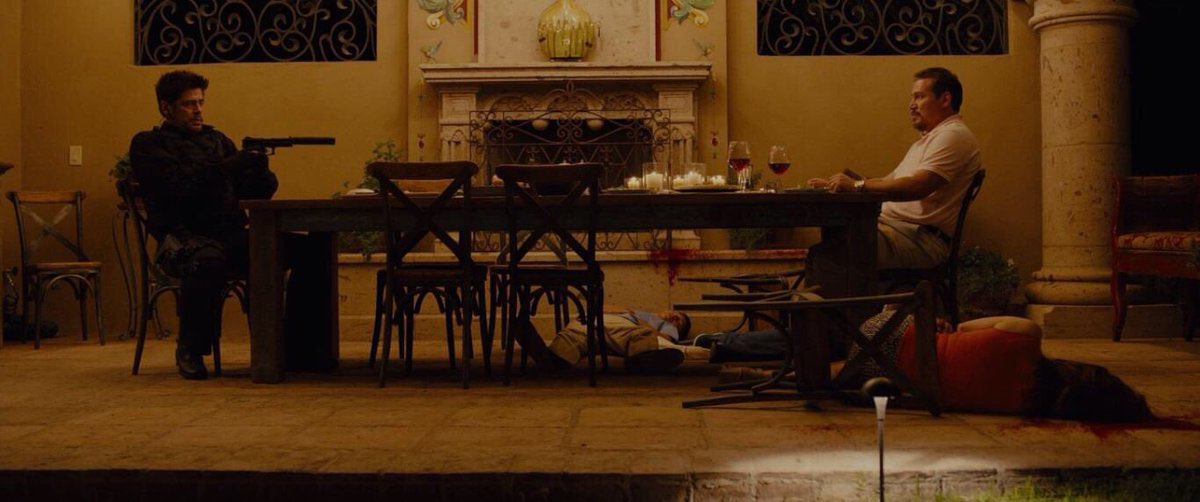
Engrossing, often pulse-pounding, and armed with a realistic sensibility, Sicario tells the story of an FBI agent in the drug war (Emily Blunt) recruited by a U.S. government task force leader and its consultant (Josh Brolin and Benicio del Toro, respectively) to assist with an exfiltration of a drug lieutenant and then a targeting of a Mexican drug lord. As Blunt gets deeper into the mission, the motives of the players and other aims of the endeavor are revealed. Blunt is excellent as a hardened officer who struggles with the seeming futility of her job and the machinations around her. Who would have thought that the arch, bony fashion assistant in The Devil Wears Prada was capable of projecting such strength? But this is the third role where I’ve seen Blunt play a convincing, strong, physical woman (the others are Looper and Edge of Tomorrow).  By that, I mean that she doesn’t shed gender and its attributes, nor does she just merely ape a man in what is a male-dominated role, where she’s chucking dudes around because, hey, that’s equality! She has a scene of physicality where the director demonstrates not only Blunt’s own strength but its limitations when pitted against a strong man. Its’ authenticity melds perfectly with the film, gritty and direct and disinterested in symbol.

On the downside, while Blunt can convey heart and strength, she can’t create a character where one does not exist, and writer Taylor Sheridan’s first screenplay doesn’t really provide her one. There’s nothing that makes you claim or invest in her. The moody, sparse setting of the film and Blunt’s no-nonsense portrayal can only go so far. It’s a testament to the taut pacing of the picture that you don’t recognize its emptiness until afterwards. Still, a good watch.