Archive

Genre

I watched this documentary on Monday night, after Anthony Weiner’s final on-line transgression resulted in the announcement of his separation from his wife, Hillary Clinton handler and confidante Huma Abedin.  The documentary shadows Weiner during his run for the New York City mayoralty, a run he made after resigning from Congress when he was busted for sending a dick pick to a young girl.  The ignominy of that act was exacerbated by the facts of Weiner’s lying about the incident (he was hacked, it might not be his junk, forces opposed to him were at play, “”Maybe it did start being a photo of mine and now looks something different or maybe it is from another account”) and his unfortunate name.

But come back he did, and as relayed by the documentarians, he returned with verve and passion.  Until he got busted again, this time sexting under the nom de plume “Carlos Danger” with a sad, grasping, soon-to-be porn star named Sydney Leathers (the scandal is notable as much for its bizarre nature as the silly names of its participants).  This unfolds before our very eyes, and it is often difficult to watch.  After this second humiliating revelation, Weiner opts for an aggressive, charge forward “this is what we do“ approach, as if to keep moving is to delay facing up to the consequences of his actions.   But you can see him harden and crack, in contentious interviews and encounters with voters.  Abedin, a beautiful, stoic woman, also becomes more brittle, but she retreats inward.  When the camera catches her watching Weiner desperately prattle on, a look not so much of disgust as disbelief is on her face.  The campaign staff, all young and committed to Weiner, are rattled, and you feel for their predicament.

The documentary also illuminates a few other aspects of this entire farce that merit comment.  First, even with all the drama and pain of Weiner’s relationship with Abedin, there is an intimacy between the two that is undeniable, making this national joke a bit harder to laugh at.  The revelation of real love in what you cynically presume is a marriage of convenience is quite unexpected.  Additionally, Weiner and Abedin evince a certain cynicism of their own in the way they operate politically.  It seems perfectly natural to them when Weiner monitors her fundraising calls to friends or uses their child as a shield-in-a-stroller, or she engages in strategic musings to keep his campaign afloat.  But it feels grubby and sad.   Also, the media comes off as nothing short of vile.  Their glee and faux moralizing actually engenders sympathy for Weiner, which, given his hubris and recklessness, would seem impossible.   When Weiner becomes unspooled after being baited by the likes of MSNBC dimwit Lawrence O’Donnell, it’s hard to determine who comes off worse.  At least, for me and Weiner.  There is a  charming moment when Weiner looks back at Abedin after re-watching his interview with O’Donnell and imploringly asks who got the worst of it.  She replies unequivocally that Weiner was loser of the exchange, a fact he can’t quite grasp.   Frankly, to me, it was a close call, but the unctuous O’Donnell was not running for office.   The crazed Weiner was.

Ultimately, what I liked most about the documentary is it didn’t portray Weiner as tragedy.  He is not presented as some promising wunderkind undone by his excesses and a vicious press corps.  While in post-campaign crater sit-down interviews with the filmmakers, Weiner looks beaten, emaciated, like a recently released hostage . . .

image

. . . sad as he looks, you don’t feel that something grand has been lost.  He’s just a guy with a persistent fetish in the wrong business.


One of my favorite films from a few years back was Blue Ruin, writer director Jeremy Saulnier’s moody, crisp, and realistic revenge-gone-wrong drama. That film was completed with a budget of $500,000. I was happy to see Saulnier get a bigger budget follow-up film, Green Room, which was produced for $5 million. Unfortunately, it has only made half of its budget back, a shame, because the picture further demonstrates Saulnier’s obvious talent and ingenuity (don’t just take it from me – it rates at 91% on rottentomatoes.com).

The story is simple: we meet an East coast punk band in the Northwest “on tour”, having just played a Portland gig where they made a whopping $6. To make up for the paltry cut, the quartet is recommended to a club located out in the woods. The pal putting them on to the gig is quick to note that while they may not like the politics of the place, the money is good and assured – $350.   Mind you, the band has been subsisting on junk food and making its way across the country by siphoning gas from other vehicles. They take the gig..

When they arrive, they immediately get a good sense of the politics of the place, what with the odd Confederate flag and Nazi graffiti about in an otherwise survivalist-meets-skinhead environment. It is, however, a pretty professional survivalist/skinhead environment. The club acts like any other club. The band is admonished not to clutter the hallway and to keep their set to time. They do, and all is well.  Until other things go wrong. Terribly wrong.

What ensues is a gripping, occasionally funny, but mainly cold-sweat inducing fight for survival. Saulnier continues to impress with his ability to convey the gritty realities of every day violence.  It almost always goes wrong, it is messy and it is rarely cinematic. He also does a few other things very well. First, his dialogue is grounded and mature. The characters say things to one another you would expect people to say in such a fucked up, dangerous and confusing situation. There are no schmaltzy foxhole confessions or dramatic readings of the riot act. These people are regular folk and they are at the point of a knife. There is no time to whinge on about extraneous bullshit.

Second, Saulnier avoids stereotype without being showy. The band members are as civilian as you can get, but they are not ineffectual. And while the skinheads are terrifying, they are not caricatures nor are they of one stripe.  I was happy to see Saulnier’s lead in Blue Ruin, Macon Blair, cast as a bad guy.  Saulnier manages to subtly convey equivocacy within the ranks of the villains like Blair, which has greater implications as the plot develops.

Look, this is a genre film along the lines of The Purge or the flicks where white kids (and Cuba Gooding) take the wrong turn in LA after a Lakers game and become prey to rappers and cholos, but as it goes, it is at the top of that heap.

image

Paul Rudd lost his young son in an accident and compensates by taking a 6 week caregiving course for the disabled. His first client is a plucky, wheelchair bound Brit named Trevor, who suffers from muscular dystrophy and an over-inflated sense of his own cleverness. For example, to shock Rudd, he pretends he’s choking or having a seizure, a real gut buster. Rudd later pretends he has misplaced Trevor’s lifesaving medicines, so . . . relationship established.

Both parties learn life lessons, but to better cement them, they–

A). Make love
B). Take a road trip
C). Join a white supremacist sect
D). Enter into a suicide pact

Of course the answer is B), but the other answers would have made for a better film, for those options would not have resulted in their meeting bad girl hitchhiker Selena Gomez. How do we know she is bad? She–

A). Smokes
B). Curses
C). Is a white supremacist
D). Smokes while cursing

Oh, if it had only been C).

Gloppy, lazy, hackneyed gruel.

Nick Kroll is a pretty big deal in New York City until his Google-glassish innovation goes busto and he loses all his money and all the money of his so-called friends, so he seeks solace by retreating to the icky suburbs and his childhood home in New Rochelle, NY, currently inhabited by his harried sister (Rose Byrne), her swarthy, down-to-earth home builder husband (Bobby Cannavale) and their charmless 3 year old boy.  There, Nick becomes intertwined in their lives, much like Bill Hader in The Skeleton Twins, who went home to Nyack, NY after a trauma.  Kroll discovers Cannavale is having an affair, much like Hader’s sister Kristen Wiig in The Skeleton Twins.  Coincidentally, in The Skeleton Twins, Wiig was cheating on her husband Luke Wilson, who was also a blue collar guy, just like Cannavale.

Crazily, Kroll reveals the fact of the affair to Byrne, again, like Hader to Wilson in The Skeleton Twins.  And that results in a heartfelt discussion about how Kroll ran out when their mother was dying of cancer, and the discussion is reminiscent of the recriminations and regrets of Hader and Wiig about their father, also dead by suicide.   In The Skeleton Twins.

For a few easy laughs, the town is populated by faintly ridiculous folk from high school who Kroll can look down upon.  Much like Hader in The Skeleton Twins.  And there are places that inexplicably have Christmas lights up even though it is not Christmas.  Just like the town in The Skeleton Twins.

And Kroll grows, growth which is signaled by the fact he chooses the welfare of his sister’s son over his new job.

Just like James Caan in Elf.

Torture that at its best is mildly diverting.

Review: In 'Midnight Special,' on the Run With a Highly Unusual Child - The  New York Times

No one does Americana better than Arkansan writer-director Jeff Nichols. Shotgun Stories and Mud are monuments to understatement and authenticity. He has a unique ability to convey the lazy currents rural life as well as its plain-spoken and direct dialogue. None of it comes off as a posture or a condescension.

These qualities are found in Midnight Special, a story of a boy kidnapped by his father (Michael Shannon) away from the clutches of a religious compound in Texas. Soon, however, the federal government gets involved, and that’s where Nichols loses his way. The story morphs into the supernatural, the genesis of which is never fully explained, and the visual payoff – a world within our own that arises in Louisiana – is jarringly cheesy (I was reminded a little of The Abyss, James Cameron’s gripping underwater yarn, which was undone by the silliest representation of aliens you ever saw).

Still, I recommend the picture for the quiet moments and the care Nichols takes with both characters and milieu.

image

Given the subject matter – reporter Tina Fey gets out of her rut in NYC by going to cover the war in Afghanistan circa 2003 – it’s amazing they managed to make such a boring film. The first error is casting Fey, who can barely get one inch past her Liz Lemon character from 30 Rock. She’s little more than a smirk and a wink, so any transformation in or development of her character is simply impossible, and when she starts an affair with photographer Martin Freeman, she seems as put-off by the experience as the audience. Their love scene is akin to two kangaroos boxing, and further suggestions of coitus are shown the morning after, where Liz Lemon is hungover and horrified she may have slept with Griz.

Taxing her limited dramatic abilities further, the filmmakers ask her to try her hand at being an “action junkie.” You can almost hear the voices in Fey’s head imploring her, “act, damn you, act!”

So, we are left with a culture clash flick, with Fey repeatedly doing things most people in Afghanistan would not like, such as walking around without headcover, and holding hands publicly with Freeman, and filming things surreptitiously under her Islamic garb. Also not very good.

Although it does have the value of being surprisingly politically incorrect – the indigenous folk are primarily used as pratfall props while the Westerners are amused and snide, and in what has become the cardinal sin of Hollywood, non Afghanis are (gasp!) cast as locals – none of it rings true, which is a particular problem with a film based on a true story.

The film closes with a violent lurch to a Bin Laden type rescue of Freeman, orchestrated by the plucky Fey, to “Can’t Live” by Badfinger (or Harry Nilsson) and a treacly visit to a maimed Marine for whom she feels responsible but whose aplomb helps her become more grounded.  It’s just godawful.

The film has two directors, neither of whom knows what he is doing, which they demonstrate repeatedly over the picture’s excruciating two hours.

Billy Bob Thornton is the only saving grace as a gruff Marine officer who shepherds Fey around, but his screen time is limited.


Richard Linklater’s astute command of time and place is forever proven by his masterpiece, Dazed and Confused, which captured a Texas town’s high school circa 1976 in all its bell-bottomed, long-haired, keg-in-the-woods glory. Everybody Wants Some! ain’t Dazed and Confused. Focusing on a young college baseball player’s matriculation at a Texas college, Linklater appears to be satisfying an 80s-era checklist. Mud wrestling. Check. Disco. Check. Mechanical bull. Check.  “Get the Knack!” Check. And while Dazed and Confused gave you insight into the jocks, the stoners, the geeks, the parents, the coaches, the teachers and the townies, Everybody Wants Some! is limited to the hyper-male competitive environment of the baseball team, a group that parties hard, jumps on your Achilles at every opportunity, and challenges each other in all respects, when not dime-store philosophizing about winning, commitment, pot and “pussy.”

Yet, with all its flaws and limitations, I dug the movie. Linklater lovingly recreates the art of male bullshitting, which, granted, is not for everyone; the wonder of all the possibility of college; and the camaraderie of sports, all to an unabashedly “classic rock” soundtrack. it’s an acquired taste, and this is a very light film that at its best is merely charming, but I was smiling throughout.

image

There’s not one thing in Antoine Fuqua’s boxing rise-and-fall epic that even nears original, but cliche’ does not always have to be hackneyed, and through inventive camera work, all-in performances by Jake Gyllenhaal (as the Hell’s Kitchen boxer who loses it all) and Forrest Whittaker (playing the wise and world weary trainer), a captivating turn by the child actress playing Gyllenhaal’s daughter (Clare Foley) and expert pacing, assisted by a jumped up soundtrack, the thing works and works well.  There are problems. Gyllenhaal’s fall is a bit too protracted, and as hard as she tries to be working class, Rachel McAdams simply lacks the necessary grit.  They tried to dirty Amy Adams up in another boxing movie, The Fighter, and that too was a bridge too far.  These actresses don’t evoke the street, unless that street has a cul-de-sac.

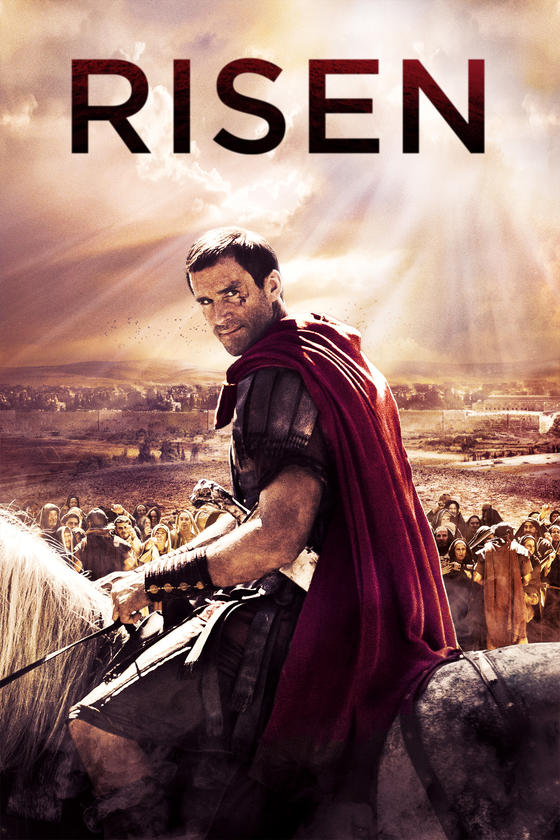
Image result for Risen movie

Kevin Reynolds was a big deal at exactly the same time Kevin Costner was a bankable lead, directing or helping Costner out in massive budget fare like Dances With Wolves and Robin Hood (they fell out over Waterworld, with Reynolds remarking that Costner “should only act in movies he directs. That way, he can work with his favorite actor and director”).   It’s been a decade since Reynolds last helmed a Hollywood feature, but with Risen, he manages several minor victories that amount to a pretty compelling religious/historical procedural.

Jesus is on the cross and Pontius Pilate’s right-hand tribune, Clavius (Joseph Fiennes) is dispatched to hurry the process and smooth out the disposal of the body. When that body disappears, due it seems to the drunken inattention of Clavius’ guards, the politics of the situation (a pressed Pilate, furious Pharisees) finds Clavius embarking on an investigation and a manhunt for the apostles. In an era when big budgets and sweep are expected in “mere” television (see Game of Thrones), Reynolds does a nice job of minimizing the scope of the film while projecting authenticity. Shot on location in Malta and Spain for $20 million, the picture looks right.

Reynolds also effectively communicates the religious message (the previews for Risen include numerous films that share a common Christian theme that God is here, with us, saving kids from illnesses, showing them heaven, etc.) Naturally, Clavius has his own religious conversion, but it is not a momentous, eyes-shimmering thing.  Fiennes is understated and quite moving as he grapples with what he cannot believe. While the end is anticlimactic (Jesus appears to his disciples and then he’s off), it had to be, unless we were going to follow those apostles to their eventual, gruesome ends (11 of the 12 died ugly; only John died of natural causes).

It’s not perfect.  The script is a little thin and the one battle scene between the Romans and the Zealots feels tiny, but all-in-all, this is a game effort.