Archive

Documentary

Image result for They shall Not grow old

Many museums offer documentary films covering the subject matter of the locale and event they memorialize.  The last one I saw was at the Holocaust Museum in a small alcove theater where you could get a respite from the vast tragedy to watch a short, continuously run film (the one I saw was about a particular figure and her trek from liberation to Israel).  At Antietam, a similar re-enactment film runs, explaining the day of battle, narrated by, I am almost certain, James Earl Jones.

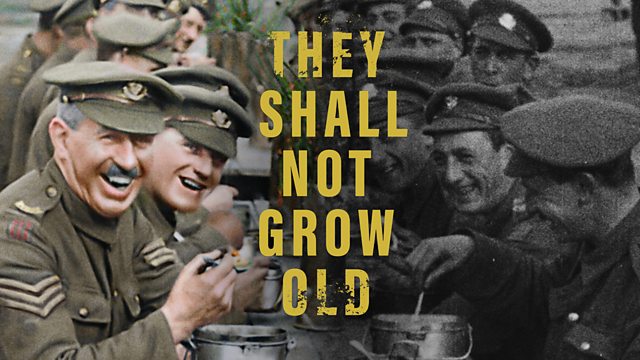
At the outset, They Shall Not Be Forgotten, Peter Jackson’s documentary about the British experience in World War I, has the same feel.  It is simple black-and-white footage overlaid with the voices of those who fought the war recounting their experiences.  There are, however, critical and moving differences.

First, about one fourth of the way in, the black-and-white film comes to life in color, as Jackson has painstakingly restored over 100 hours of footage from the Imperial War Museum.  Jackson even employed lip-readers to approximate what was said by the men in the footage, giving the sense of a sound recording.  The effect is as if ghosts were revealed in the restoration.

Second, the memories are culled from 600 hours of interviews of 200 Great War veterans, who remain anonymous and speak of the every day experience rather than their role in the titanic struggle.  There are no names, and no battle or locale is identified.  You follow no particular individual, though you can discern the British voice in all its forms.  As such, you feel the collective experience without the shackles of a linear, fact-driven recitation.

Jackson’s film is also a generational memorial.  These men haven’t been educated in the ways of individualism and introspection and as you hear from them, you can glean a reluctance to speak, a “what is all the fuss?” mien.  This countenance rarely cracks, even as the horrors of the war pile up in their reminiscing.

As with Apollo 11, there is no historian or pundit or wag telling you what it all means.  These are the unvarnished recollections of men who would have been forgotten more quickly were it not for Jackson’s contribution.   A must watch and a cultural treasure.

B05CE3EC-FDC5-4D44-8E8B-5F6EAE29E3D8

Comprised solely of contemporaneous archival footage updated via high resolution digital scans, there is no commentary or exposition for this documentary of the moon landing mission. It is contemplative and, at times, spellbinding, but can also be somewhat sterile. Still, rather than the standard commentators whinging on about the greater significance, I’ll take it. HBO is currently running a two part documentary on Muhammad Ali that is similar in approach – all archival footage and no commentary – and it too is very good. I hope this is a trend.

47D368E8-C68E-4DA6-AB80-143CC9B34937

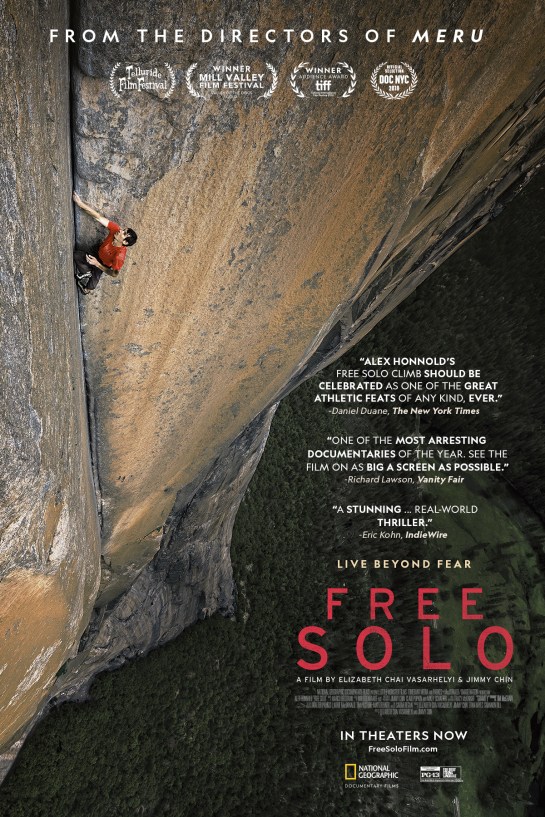
The subject of free soloing (climbing sheer face of rock with no rope) is compelling, more so for me because I didn’t even know it was a thing until I saw this movie.  You travel with Alex Sonnold as he attempts the greatest climb of his life, the 900 meter El Capitan in Yellowstone, which seems particularly reckless in that he’s just weeks off a sprained ankle.

The climb is gripping. The psychological portrait of the climber less so. He appears to be a bit disassociative, almost numb, which lessens your investment in him.  For example, he has the cutest damn girlfriend you’ve ever seen, and she’s clearly crazy about him. As such, his risks in the face of such riches would seem casually cruel if he weren’t a bit of a deadened weirdo.

Indeed, the film is about Alex doing something that may well kill him (free soloists die pretty regularly) and voluntarily having it filmed.   The pre-bout navel-gazing (his family never hugged or used the word “love”) and awkward, searching exchanges with his documentarians feel like artificial injections to elicit empathy. They are only so effective.

Would this be tolerable if he was more human, more flesh and bone?  Should that matter?  Should I feel bad that the movie feels long when it has offered me a “he lives or he dies” finale?

My ethical quandaries aside,  watch this on the biggest TV you have.  The visuals are stunning and the achievement monumental.

Image result for Studio 54 documentary

This received an 89% on Rottentomatoes.  I can’t imagine why, unless the answer can be found in the desire for heartfelt tributes to other trivialities, like Luke Perry.  Or Silly String.

The film is mundane, there is nothing new to learn (“oh look, Andy Warhol . . .oh look, Truman Capote”), and ultimately, the story of a disco nightclub open for less than three years can only be so compelling.  Of course, when the various interviewees fix the heyday of that nightclub into the fabric of our times and who we are as a people, all the coke, sex and disco balls in the world can’t erase that blot.

I will give it this:  I laughed when one of the employees explained that Mick and Keith could get in for free but the rest of the Stones had to pay the cover.

Currently available on Netflix.


Image result for de palma documentary

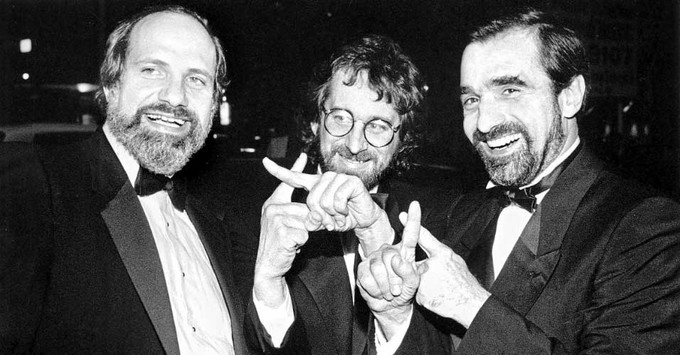
Brian De Palma is a fascinating subject, in many ways, as fascinating a subject as a director. His best work is admittedly and unabashedly derivative, basically a total homage to Hitchcock (Carrie, Dressed to Kill, The Untouchables).  He has also made some atrocious films (Body Double, Casualties of War, Bonfire of the Vanities) and some films you can hate and then love and then hate again (Scarface, Carlito’s Way).

No matter how you feel about De Palma’s work, his recollections of film making in 70s and 80s Hollywood are a blast, and he’s a very easy and open storyteller.  This is an entertaining, comfortable review of his work presented entirely in clips and a single interview.

A few great tidbits: as a teenager, De Palma tailed his own father when he was cheating on his mother; during the execrable Casualties of War, Sean Penn would physically bully Michael J Fox and whisper to him “television actor.”

Good, fun stuff.  I’d take this sort of retrospective over a slathering like HBO’s Spielberg any day of the week.  Currently on Netflix streaming.

image

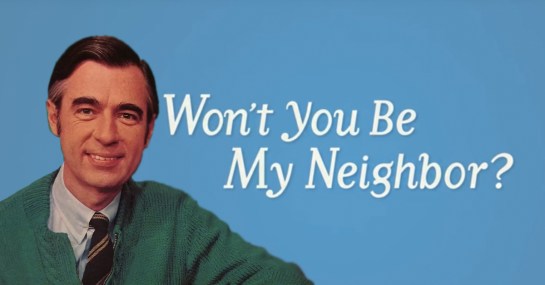
Mr. Rogers should have been right in my wheelhouse when I was a kid. I was around six or seven when he went national. However, public television was not a staple in my Catholic household. The only glimpse I got was when I went to the home of my Jewish friend, whose parents included PBS in their progressivism, but by the time we became pals, Fred Rogers was there to be mocked, not appreciated.

It’s a shame, because watching this documentary and Rogers interacting with little kids, you can see both the wonder in their eyes and the deep connections he developed. There is a vignette with a little boy who is explaining to Mr. Rogers’ most famous hand puppet, Daniel, about how his cat was run over by a car. The boy is being stoic but when Daniel becomes emotional, you can see the boy become protective as well. His concern transfers to the puppet and in the transfer, he creates a beautiful and healthy way to express his grief.  It’s a stunning exchange.

Genuinely sweet, good and largely uncomplicated public figures are a difficult find. This documentary does a great job of telling the story of one such man.  It has faults – it is thin on his background, it over emphasizes some cable noise about his effect on children (i.e., made them soft), and it succumbs a little to the “these dark times” trope – but these are nits. Highly recommended as both entertainment and moral tonic.

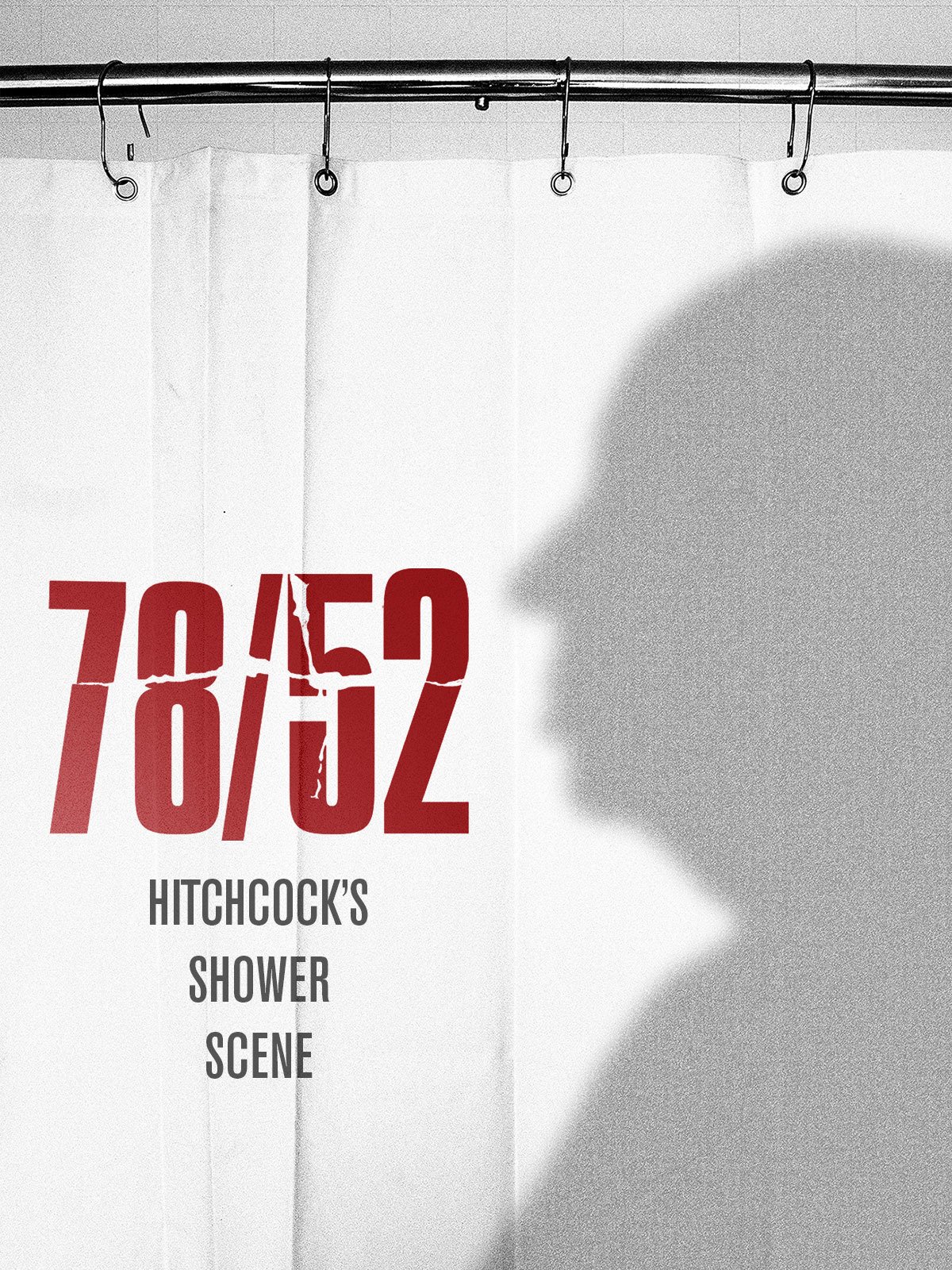
An engrossing documentary which synthesizes the artistic and cultural impact of Alfred Hitchcock’s Psycho, and in particular, the murder of poor Janet Leigh (the title refers to the setups and cuts in the shower scene), with a technical analysis of its construction.  Segments of the interviews of filmmakers, actors, critics, and academics are conducted as those commenting watch the scene.  It’s a neat touch to have them affected and excited as the murder flickers before their eyes, some mesmerized, some providing a play-by-play, all in awe.

Many of the memories of the film’s premier are wildly entertaining.  Peter Bogdanovich’s recounting of the theater erupting in screams that matched Bernard Hermann’s score is particularly vivid.

There is also an impressive amount of film scholarship tying Hitchcock’s technique to previous works of art, and a solid case is made that the picture constitutes “an act of aggression [by Hitchcock] against fans, critics, and actors.”  And if you ever want to know what was stabbed to give the effect of a knife piercing flesh, you will have your answer.

There are some stretches that get a little high-falutin’ (mainly from the film academics, who, naturally, see import in everything).  There are also some questionable participants, including the kid from Lord of the Rings (who has no appreciable connection to the film but seems fan-boyish), while one interviewee, the estimable David Thomson (who wrote the brilliant The Moment of Psycho: How Alfred Hitchcock taught America to Love Murder), gets one comment, which is criminal neglect.

Currently on Hulu.

A brilliant, haunting and meaningful re-creation of the 1966 University of Texas Tower spree shooting that melds old footage, modern day interviews, and animation, the last of which renders the victims, witnesses and heroes in a classic imprint. Gripping and poignant, without a hint of inauthenticity or exaggeration, documentarian Keith Maitland gets you into the head of the terrified people pinned to their spots by fear as well as those who overcame it and risked their own lives to save others and/or ascend the tower and kill the sniper. Maitland has said he opted for animation “to show the geography of the campus” after being told that actual re-creation would not be permitted, but the use of animation to show the interviewees in their younger guise adds to the dreamlike, unreal quality of the event.

The film is stubbornly focused on the terrorized and refreshingly devoid of interest in the murderer, thereby avoiding the grotesque algorithm that revels in the psycho and makes everyone else a statistic. With the exception of a truly discordant and moronic “we have met the enemy and he is us” clip from Walter Cronkite, there isn’t a misstep in this picture. It was premiered for television on PBS Tuesday so it may still be available.

Dark Horse (2015) - IMDb

An uplifting and engaging documentary about a Welsh barmaid and her two dozen working class pub clientele who decide they are going to kick in 10 pounds a month to back a racehorse. And by “back”, I mean, purchase the mare (who had a racing history of “last”, “eighth” and “pulled up”), purchase the semen, inseminate the mare, raise the foal, and then hand it over to one of the more premier training stables – Sandhill – the owners of which are naturally skeptical but happy for the monthly fee. The horse, Dream Alliance, is, of course, loaded with charm, and he leads a racing life ready-made for a Hollywood film, which I cannot believe is not in production as we speak.

This is a sweet, beautifully filmed documentary. It hits the class clash a little hard, and it could have included a little bit more about how racing in Great Britain works (for example, the damn horses don’t have a gate – they just take off in a gaggle – and there are hurdles on the straightaways!), but these are minor nits.

The story is now lore. In 1964, Kitty Genovese was attacked outside her Queens apartment. Her assailant stabbed her, ran, and then returned to rape her and finish the job. 37 witnesses turned away. They looked out the window and saw Kitty being stabbed. They heard her pitiful screams. Fearful, callous and/or a sign of the times in our urban hellholes, they drew their blinds and did nothing.

Turns out it’s all bullshit.  While it appears two people may have seen her and elected not to intervene, one did, screaming at her assailant to get away yet unaware that she had been injured.  A neighbor actually did go down to the street (Genovese died in her arms), many of the “witnesses” who are still alive state that they called the police or the extent of their “witnessing” was merely hearing a scream down on the street and then, not hearing more, thinking nothing more of it.

Ah, but what a story. The first half of documentarian James Solomon’s riveting re-investigation – which utilizes interviews, old documentation, photos, footage and animation to put us on that street or in one of the overlooking apartments – destroys the myth. As relayed by one reporter who had his doubts, “it didn’t make any sense” but because it was being propagated by the powerful and highly influential The New York Times, doubts were shelved because “It would have ruined the story.” That story was under the care and feeding of then-editor Abe Rosenthal, who wrote a book about the murder and jealously protected the myth, even going to the extremes of haranguing reporters decades later when the Times re-investigated and came clean on its excesses. In an interview with Mike Wallace of 60 Minutes fame, who was then a radio reporter, his candor is both laudatory and depressing. Yes, he says cheerfully, the story was shot full of holes, but it is a great story and the Times was pushing it. What’s not to like? From there, the story embedded itself in the national psyche, a development Solomon firmly establishes.

This is an important film.  In an age where one would think, given the plethora of alternative sources of news and investigation, that such a meme could not take hold, it’s just the opposite. When the forces want to deliver you a narrative, be it for perceived social good or simple economic gain in the form of extended play, they can be overwhelming.  I remember reading the UVA  rape story in Rolling Stone and with a daughter at college, being incensed and affected.   I then re-read it, and it just seemed . . . thin. There was not one named source, yet, it was so utterly sensational as to be irresistible. Indeed, there was an entire phalanx of denunciations, movements, calls to action, tut-tutting about rape culture and privilege, etc . . .  And the entire story was a fanciful creation of a disturbed, pathetic woman. It does not stand alone.  Remember every false narrative offered in the MOVE bombing in 1980s Philadelphia, the Matthew Shepard murder, the “rape” by the Duke lacrosse team, the recent Ferguson shooting, and on and on.

The second half of the film centers more on the emotional impact of the murder on the Genovese family. It is her tortured brother Bill who is most affected, and he is our guide back into history, but the shrapnel emanating from her death did damage to every member of the family (both parents suffered early strokes and Kitty’s father died very young). On the hopeful side, as he deconstructs the fable, he revives his sister, replacing the myth with a living, breathing neighborhood barmaid who had roots in the neighborhood, including a female lover.

A must see, the film will instill in you a healthy reserve and skepticism of anything you hear in the heat of the moment.  Or, it should.