Archive

Crime/Mystery

There are precious few good movies about making movies  Tropic Thunder is uproariously funny, a brutal send up of dozens of Hollywood tropes, which get a less raucous going over in Get ShortyThe Player reveals a Hollywood machinery that routinizes art, creating a war of sorts between the suits (Tim Robbins) and the creativity.  A Cock and Bull Story and Adaptation are examples closer to Seven Psychopaths, in that you don’t necessarily know where the movie and the “movie in a movie” begins and ends.

Writer/director Martin McDonagh’s In Bruges was a surprising dark comedy about the philosophical doubts of hitmen as they tracked each other in the beautiful Belgian city.  In  Bruges marked McDonagh as a Quentin Taranatino disciple, but his dialogue was meatier, more complex and less reliant on pop culture diversions.

In Seven Psychopaths, the setting is LA, where McDonagh veers deeper into Tarantino-country.  His characters, however, retain the penchant for discussing deep moral and meditative matters as they negotiate an increasingly circuitous plot.  An actor (Sam Rockwell) tries to motivate his screenwriter friend (Colin Farrell) who is listlessly working on a script entitled “Seven Psychopaths.”  Farrell, despondent over the exploitative, repetive crap of violent pictures, has taken to drink at the thought of writing another.  Rockwell, however, is a proponent of the genre Ferrell seeks to escape, creatively urging a shoot ’em up with a blazing guns finale.  To that end, he puts out an ad in the “LA Weekly” inviting real psycopaths to come see Farrell and provide their stories.  Concurrently, Rockwell and an older gentleman (Christopher Walken) run a scam where they steal dogs and return them for rewards.  When they steal the beloved shih tzu of a real psycopath (Woody Harrelson). the script and reality meld.

I first took note of Sam Rockwell in Galaxy Quest, a very funny ensemble comedy which he completely stole.  He has the face of a supporting player, not quite Steve Buscemi odd, but one is often reminded of a rat gnawing on cheese.  Looks aside, which probably deny him leading status, Rockwell is a kinetic yet soulful actor, either riffing or expressing a heartfelt need to be understood.  Walken brings his trademark quirkiness, Harrelson his jovial menace, and Farrell, playing the straight man, his increasing frustration.  But the movie belongs to Rockwell, who blends psychoses with the LA surface cool of an aspiring actor/writer.  His performance is hilarious.

The preview portrays  the film as zanier than it really is.  There are a bunch of funny set-ups and coincidences, but McDonagh provides a sharp commentary on movies and contemporary LA.  He has also written some clever scenes where the characters toss around their screenplay ideas and in the process, write the movie before our eyes.  It’s a neat, meticulous trick.

If there is a weakness, it is the part of the film where the characters appear to suffer writer’s block, and in response, run off to Joshua Tree National Park to reflect (Walken takes peyote). The movie drags a bit at this point, but not for long.

I’ve had the misfortune of watching this movie twice (I endured it because I remembered a better film).  Mel Gibson had his own cut, which was better than that of director Brian Helgeland (screenwriter for LA Confidential), though still pretty bad. The picture is a loose remake of John Boorman’s 1967 Lee Marvin vehicle Point Blank. The story is uncomplicated. A crook (Gibson) pulls of a heist, is double-crossed by his girlfriend and partner and left for dead. He does not die, but returns, to collect his share of the money. It turns out his partner used that share to buy his way back into “the Syndicate,” so Gibson works his way up the chain, killing folks up a higher level of authority until he gets to the top. The original was arty, tough and noir, and Marvin’s anger convincingly propelled the simplistic plot, which culminated in a cool shoot-out in then-abandoned Alcatraz.

Gibson’s version exchanges San Francisco for Chicago, tough for brutal, and noir for ostensibly hip (which, as defined by Gibson, is taking every opportunity to smack women and crunch bones). While Gibson throws in a touch of humor in the plot, his performance is leaden. He emulates Robocop and The Terminator, not Marvin.

Gibson’s version ends better (he uses a kidnap of the top Syndicate man’s son to get at him, while Helgeland settles for a lame shoot-out on a Chicago train platform), but it’s a pointless endeavor. The only redeeming qualities are some wry performances as criminal lowlifes by Gregg Henry, James Coburn, William Devane, John Glover, David Paymer and Lucy Liu.


It ain’t nearly enough.

marjorie nugent

Richard Linklater offers the story of Bernie Tiede (Jack Black), a gay mortician who companions a significantly older woman, Marjorie Nugent (Shirley MacLaine) and then, in a fit of rage and exasperation at her domineering ways,  shoots her in the back and stuffs her in a freezer, pretending she is still alive (not ala’ Norman Bates).  Tiede is the town Robin Hood, the town being Carthage, Texas, and in many ways, Carthage is the star of the film.  Linklater uses very few professional actors, instead interspersing the dramatic narrative with interviews of real-life Carthage citizens, almost all of whom are squarely on the side of Tiede, and almost all of whom are hilarious.  To them, Nugent was a nasty, wicked old wretch and Bernie Tiede was the man who bought you a nice gift, sang the beautiful song that escorted a loved one to the hereafter, directed the town play or just gave you a nice wave everyday.  And he was driven to it.

Of course, in the presentation, Linklater neglects a few ugly details of the real life Tiede (not all of the vast sums he spent of Nugent’s wealth went to charity), but it appears the basic premise is true – Tiede was well-loved and Nugent well-hated (her own nephew observed, “‘Bernie’s not the first one who thought about killing her.  He’s just the first one who went through with it”).

Black is mesmerizing as Tiede, hilarious, hapless and harried, but uncontainably sweet and just a  little guilty (even before the murder).  MacLaine is effective as an old witch and Matthew McConaghey is amusing as the dogged D.A.  But the stars are the real people of Carthage, who Linklater neither mocks or mythologizes, wisely letting them be.

My only criticism is the choice to make Tiede so sympathetic.  Black does a great job in keeping him from being saccharine, with occasional flashes of guilty pleasure at his newly found wealth, but Linklater keeps away from any real dark heart, opting for a feel-good film.  Which is fine, but I think it could have remained feel-good and still been a little more revealing.

Cinemascope: The Departed [2006]

A meaty, engrossing crime picture, right in Martin Scorsese’s wheelhouse.  Jack Nicholson is a Boston crime boss who has a quasi-adopted son/mole in the Boston PD (Matt Damon).  In that same department, a small unit (headed up by Martin Sheen and Mark Wahlberg) is set up to get Nicholson, and they recruit a police academy trainee (Leonardo DiCaprio) who has one leg in the tough streets of Southie (his dad’s side) and another in the upper crust of Boston (his mom).  Meanwhile, a second task force, headed by Alec Baldwin, is also trying to get Nicholson and can’t get a handle on why they are thwarted at every turn.  DiCaprio is “erased” from police files, purposely gets arrested, and infiltrates Nicholson’s organization, which is populated by colorful, brutal goons (Ray Winstone, David O’Hara), in order to identify the mole.  Meanwhile, Damon keeps screwing Baldwin’s pooch.

A cat-and-mouse hunt ensues, as Damon searches for DiCaprio and vice versa.  Damon is also dating a psychologist (Vera Farmiga) who treats cops and ex-cons, including DiCaprio.

Almost to a person, the performances are rich and rough.  DiCaprio is now in full bloom, grown out of the Titanic baby face and having just previously offered two nuanced and substantial performances in The Aviator and Blood Diamond.  Nicholson is bloody and funny, and, well, Nicholson.

All the supporting characters are strong and natural save for Farmiga (she’s too feminine for the role and when she becomes infatuated by a clearly unstable DiCaprio, it is unconvincing) and Wahlberg, who, ironically, was nominated for best supporting actor.  He yells an awful lot and delivers a few speeches, but volume and line memorization do not deserve a nomination.  Wahlberg seems uncomfortable and masks it with rage.   And once again, Matt Damon does all the heavy lifting and gets none of the credit.  His turn as the fatherless boy who is being manipulated by Nicholson is alternately frightening and heartbreaking, yet he remains a very charming sociopath.

The picture whizzes by.  Scorsese effortlessly paces what could have been a morass of a story, providing his signature quick-cut expositions to perfectly chosen music (The Stones, Badfinger, Allman Brothers).

“I’m not a racist,” says Dave Brown. “I hate all people equally.” Dave Brown is a crooked, brutal, misogynistic L.A. cop who can turn a phrase now and again and, as is evident, can crib from Dirty Harry. Woody Harrelson plays Brown with a growing intensity. Just about every bureaucratic pressure is brought against him after he is caught on tape delivering a Rodney King to an unfortunate citizen. And in many ways, that’s the least of his worries. His ex-wives (Anne Heche and Cynthia Nixon) are sisters and he has a daughter with each, making for a challenging domestic life. He’s also an alcoholic and drug abuser, a thug, a sex fiend, and a murderer. And he’s going broke.

Similar to Bad Lieutenant, Rampart’s greatest virtue is the performance of its lead. There are also some well-written Wire lite exchanges, and director Owen Moverman (following up on his impressive The Messenger) films 1999 Los Angeles in a bleached, dreamy manner. But otherwise, this is a meandering, exhausting tale of the descent of a mildly interesting bully, made even longer by an utterly pointless relationship between Harrelson and a bar pick-up/defense attorney (Robin Wright). His exchanges with the bureaucrats hounding him (Steve Buscemi, Sigourney Weaver, and Ice Cube) are banal, his heart-to-hearts with ex-wives shed no light, and his discussions with his very bitter, uncommunicative older teen daughter are grating. Harrelson does a very effective job of conveying the importance and centrality of his home, especially in his moving scenes with the younger daughter, but that’s all Harrelson. The script offers little assistance (a personal disappointment because it was co-written by one of my favorite crime novelists, James Ellroy).

Not to mention, there is no street cop so well-connected or union protected that he could still be on duty after becoming front page news in a brutal beating and then involved in a deadly force shooting. Of course, were Harrelson suspended, Moverman would have to lose the cool shots of Harrelson in his police cruiser, contemplating his surroundings and his future.

It’s no shock the audience gave this a 38% and the critics gave it a 78% on rottentomatoes.

48 Hrs. Blu-ray (Remastered | Paramount Presents #19)

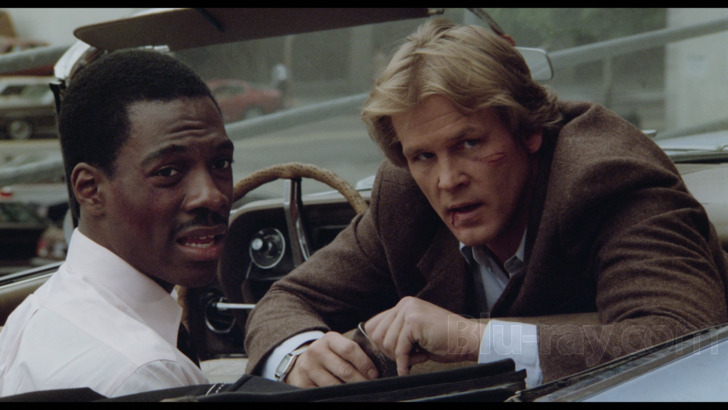
Eddie Murphy kinetically debuts as hustler Reggie Hammond, released from prison for 48 hours under the brutal watch of Detective Jack Cates (Nick Nolte) to hunt for Hammond’s ex-partners, who have gone on a cop-killing spree in San Francisco. The film catapulted Murphy to stardom. It was also the first picture to feature a Saturday Night Live comedian in a raw, crime story and stands as one of the better “buddy cop” pictures ever, though Murphy is really only deputized.

Yes, Murphy is very funny, sometimes side-splittingly so, but he does not treat every scene as an opportunity to do a bit or schtick.  He picks and chooses his moments, trusting in the story directed and mostly written by Walter Hill (The Long Riders). Murphy has one virtuoso scene, when he poses as a cop to roust a redneck bar, but even there, where he puts a knife to a man’s face and tells him, “I’m your worst fu***** nightmare, I’m a ni**** with a badge”, he’s in keeping with the picture’s tough tenor. Nolte’s Cates is brutal, unpleasant and an unrelenting racist, almost shockingly so, given our current advanced ethos, yet, they bond in a manner that feels authentic. Given we’re dealing with tough cops and criminals, the racial dynamic is not off-putting.  It just adds to the tension.

I was also surprised by the gritty brutality of the movie. The body count is high, but rather than explosions and elegant slo-motion, Hill takes more of a Sam Peckinpah approach. The shootings are bloody and awkward, not stylized. And the bad guys – Albert Ganz (James Remar) and Billy Bear (Sonny Landham) – are scary bad.

James Horner’s original music (he’s been nominated 5 times and won for his scoring of Titanic) is apt, a moody mix of jazz and Asian chimes.  Hill also uses San Francisco to his full advantage, mixing the grimy feel of Bullitt and Dirty Harry with a little early 80s glitz.

It has a few weaknesses. Annette O’Toole, for whom I have had my own weakness since Robby Benson’s One on One, is wasted as Nolte’s long-sufferring gal.

And the finale, where Cates and Hammond just “play a hunch.” is a bit lazy.

Still, an uproarious, and assured flick, much more than it seems.


Former police officer Jack Nicholson is haunted by the murder of a little girl, so much so it tests his sanity.  He finds the love of a good woman (Robin Wright Penn), who has a little girl as well, but he remains haunted and, as near as I can tell from this complete mess of a movie, goes insane.

Sean Penn directed this picture, which was released in 2001 (he directed another similarly dark mess of a movie released that same year, The Crossing Guard, so perhaps this was a phase).  The film is clumsy, uninvolving and disconcertingly showy.  Penn can’t just have a cop walk into a room without cross-cuts to the ticking clock and the face of a fat, stupid common clerk telling us something (but what?).  Nicholson can’t drink at a Nevada airport bar without pointless flash cuts to whirring slot machines.  Not only does all this jazz lead to continuity problems (Nicholson’s scotch miraculously becomes a beer), it is annoying.

The Pledge also demonstrates Hollywood’s disdain for the working class.  Set in the flatland of Nevada, Robin Wright Penn, Sean’s then-wife, is a vessel of all Hollywood presumptions about regular folk.  She plays a barmaid.  She has a gnarled front tooth.  She is a little dim.  She wears a lot of flannel.  And when her savior Nicholson comes to love both her and her daughter, we know that they will commune because  . . . Nicholson fixes her tooth!  I mean, let’s not take this working class thing too far.  We can’t expect Jack Nicholson to have sex with woman with a gnarled tooth.

Ewwwwwwwwwwwwwwww.

Another problem?  Penn uses top actors for single scenes, so each feels compelled to ACCCCCCCCCCCTTTTTTTTTTT! like there’s no tomorrow.  Benicio Del Toro, Vanessa Redgrave, Mickey Rourke, Helen Mirren, they all emote for a brief, generally unnecessary scene, and boy do they make the most of it.  Also, the little girl is killed on the day of Nicholson’s retirement party.  If Penn directs a war picture, God help the character who shows his platoon mates a picture of the gal he has at home waiting for him.

That said, I was a big fan of Penn’s more restrained and mature Into the Wild, directed 6 years later, so I chalk The Pledge up to practice.

The Bone Collector is a thriller about a police detective (Denzel Washington) who is paralyzed.  Unfortunately for New York City, a serial killer is on the loose and there is nothing Denzel can do except mentor a rookie cop during the investigation.  The killer dwells in the NYC subway system, so naturally, the rookie cop must be sent in its bowels, with an earpiece and camera, allowing the bedridden Washington to see what she sees and thus guide her.

As implausible as that may seem, try this on for size – the rookie cop is Angelina Jolie.

Those lips, those cheekbones, that gun!
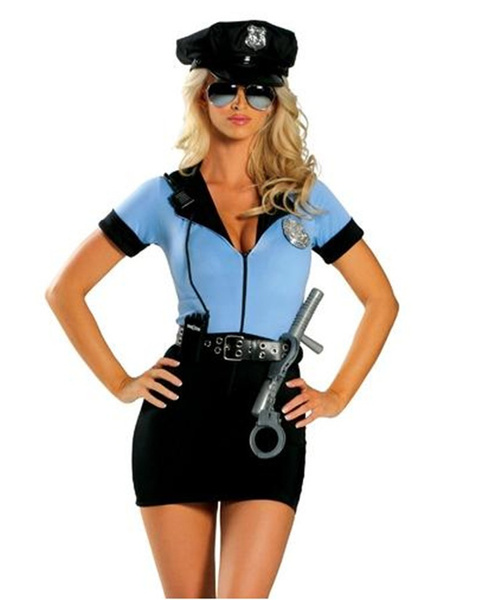
The choice was so inept that the scriptwriter actually wrote in the fact that she is an ex-model.  You half expect her to start disrobing, ala’

Blues, cop, Fashion, Cosplay

Truly, Jolie’s character should set the teeth of all modern womanhood on edge.  When she cries, all the men pat her on the back and tell her she is “terrific” (in fact, Mike McGlone and Denzel Washington actually call her “terrific” within 10 minutes of each other).  And then she bucks up with a pretty smile.  When she is upset, she huffs off the job, although she is a beat cop.  But then the men drop by to see if she is “all right.”

For some reason (and I am guessing “those lips, those cheekbones!”) the men don’t say, “Hey. Where the hell are you going, you piece of sh**.”

Anyone with a rudimentary knowledge of movies and a brain stem will have this figured out in a jif.  That said, New York City is very spooky in this film.  It gave me that same creepy, flesh crawl I felt in “Ghostbusters II.”  Hence the single star.

Matthew McConaughey plays a smarmy, slick, charming southern lawyer . . . in every single movie he makes.  He does it again here, inexplicably drawling his way through a role as a hotshot Los Angeles criminal attorney retained to defend Ryan Phillipe, a rich boy accused of a brutal rape.

The entire film rests on selling you the real possibility that Phillipe is innocent.  And there is not one moment when you believe that Phillipe is innocent.

Look at him.  Guilty, guilty, guilty.

Now that the story is hosed, we’re left with McConaughey’s schtick, a motley crew of character actors without character (dewy-eyed Marisa Tomei, as McConaughey’s ex-wife prosecutor; tough old cop Bryan Cranston; hippie P.I. William H. Macy; and the peripatetic bondsman John Leguizamo) and “twists” so implausible that Director Brad Furman must have assumed the audience had checked out by the time of the reveals.

Clint Eastwood plays a divorced father of two and homicide detective in New Orleans who has a penchant for prostitutes. The prostitutes are murdered, each one shortly after being visited by Eastwood.  Eastwood doesn’t exactly have range, but he is not Dirty Harry in this one (The New York Times dubbed him Kinky Harry).  Rather, he’s a bit of a scared rat, as he realizes that his secret (some form of S&M/bondage; Clint was ahead of his time in these the days of “Fifty Shades of Gray”)  is revealed and worse, he has been unintentionally marking these girls for murder.

Genevieve Bujold is the rape crisis counselor who tries to assist Eastwood professionally in the hunting down of the killer, and emotionally, by turning him from his sexual demons.

It’s a mixed bag.  Eastwood is clearly stretching, which is to be commended, but he never fully commits.  Al Pacino had the same problem in the controversial Cruising, where he was tracking down a killer of gays in the S&M subculture of New York.  Unable to fully get in the skin of their characters, Pacino and Eastwood play it zoned out, which distances the audience.