Archive

2017

image

During WWII, the Germans occupying Denmark laid 2.2 million mines on its coast in anticipation of an Allied invasion. The Danes employed their former occupiers to clean up those mines, the subject matter of this harrowing and haunting film. We follow a group of very young, very scared German soldiers who are given mine-clearing training and then a quadrant containing 45,000 mines. If they clear them at a certain rate, they will be allowed to go home in three months.

The process is nerve wracking. Mind you, these boys have instruction and some support, unlike the Iranian children during the Iran-Iraq war who were simply sent into the mine fields to clear by suicide in some glorious sacrifice. But the toll, both physical and psychological, is brutal, especially when inflicted on ones so young. They are homesick, hungry (their care was not paramount) and under the leadership of an embittered Danish sergeant who is fighting his own demons but is also humanized by their plight.

This is a beautiful picture, enhanced by touching, sensitive performances. There is talk every year of creating an Oscar for an ensemble, and this cast would be a deserving nominee. The film, however, is not for the faint of heart.


Image result for darkest hour

Joe Wright’s (Atonement) film is repetitive, didactic, simplistic, and eventually, in one of the most cringe-inducing scenes you’ll ever see, when Winston Churchill finds himself on the Underground getting his back stiffened by “the people”, patently ridiculous.  The only thing missing on that subway car is Tiny Tim exclaiming “God Bless Us, everyone” and thereby spurring Churchill to reject appeasement and declare that England would “never surrender.”

The picture is also unnecessarily arty (a bombing scene is a particular sin, evoking Michael Bay’s Pearl Harbor, a film you really don’t want to ape in any manner) and annoyingly expositive – we learn about Churchill’s background via random members of the House of Commons speaking to each other as if they – or we – are dunces (“and his father died of syphilis!”  Harumph!)

Churchill was a lion. But he was also a snake. Now, one could argue that his lies were of necessity. But here, they are simply ignored or recast as tactical blunders. Don’t lie to the people, King George VI counsels.  Be straightforward, and they shall corner you in a subway car and show their true mettle.

And, apparently, it was Churchill and Churchill alone who deduced that you could send civilian boats to pick up stranded men at Dunkirk. He is the oracle. Everyone else on his war council is a dimwit, a ninny or a quitter.

Ostensibly, the real reason to see this movie is Gary Oldman‘s performance, and it is not bad. But it is not great. Oldman gets the fussiness, the hidden mirth, and the anger, but his stabs at insecurity come off as petulance, and on balance, the performance feels more like a mimicry.  Recently, John Lithgow (The Crown) turned in much more nuanced and effective turn as Churchill.  The best performance in this film does not belong to Oldman, but to Ben Mendelsohn as King George, who is subtle and moving.

Watch The Crown.  Hell, watch King Ralph.

image

Writer-director Greta Gerwig’s picture is assured, ingenious, and alternatively, hilarious and moving. A coming-of-age story that touches on the themes of leaving home and the mother-daughter relationship is not exactly original, but in Gerwig’s hands, it is fresh. Lady Bird (Saiorse Ronan of last year’s beautiful Brooklyn) is a Catholic school senior in Sacramento navigating her college choices, academic ennui, sexual inexperience, insecurity, and her family’s economic frailty, all while negotiating an increasingly strained relationship with her passive-aggressive (and sometimes, aggressive-aggressive) mother (Laurie Metcalf).

Gerwig stitches a narrative together with brisk and evocative vignettes, and her characters carry the nuance and surprise of real people. Lady Bird’s reach for popularity and desire for something beyond what she deems the stodgy and suffocating Sacramento might normally make her empathetic, but she is of her age, which means selfish and even cruel, in her ambition. This harsh light prevents the film from becoming maudlin. She’s a real girl and her world feels authentic. I watched the film with my wife and daughter, and their knowing glances and nonverbal communication throughout certified the truth of its nature.

I was reminded of different films at different times while watching Lady Bird. Gerwig’s command of pace and sharp timing evokes Wes Anderson’s The Royal Tenenbaums, shorn of his mannered style. Her strong portrayal of the bond of family and place also brought to mind last years’ incredibly under appreciated 20th Century Women. Finally, the mother-daughter dynamic on the eve of separation made me think of Nicole Holofcener’s Enough Said.

I don’t mean to convey that Gerwig’s picture is derivative, only exceedingly accomplished. These are great pictures for purposes of comparison.

This is one of the best of the year, and I expect nominations for best picture, best director and best original screenplay. At a time when Hollywood may very well want to go with films that are smaller and more pure, keep this one in mind when filling out your Oscar ballot.

image

Taylor Sheridan, the writer of Sicario and Hell or High Water, has turned in a stunning directorial debut melding his signature economy of dialogue with an accomplished feel for the ebb and flow of backcountry America and a lyrical visual style. The frozen mountains of Wyoming serve as the locale to a murder investigation where FBI outsider (Elizabeth Olsen) partners with a fish and game tracker (Jeremy Renner) and an Indian reservation sheriff (Graham Greene) to solve the rape and murder of a teen found in the snow.

Sheridan is the nephew of a former U.S. Marshal and a Texas sheriff, and as with his prior films, his replication of the patter of law enforcement feels as if he has spent much time at their knee. His characters avoid the bravado and cliche’ of many movie cops. They inhabit a matter-of-fact world, not cartoonish macho, but one that exudes a professional cynicism. Like Emily Blunt in Sicario, Olsen is not the standard female law enforcement officer who has to “prove” herself in a near-all male world. There is no overcompensation.  She just is.

The performances are understated and genuine, and Renner in particular well renders the pain of a haunted but determined man.

Sheridan is also deftly political, never overt but still seamlessly intertwining some of the cultural realities in rural American with the narrative.  It never gets in the way of the pace, and Sheridan’s handling of the thrill part of thriller is expert.  The crescendo to a violent explosion is damn near excruciating

One of the better films of the year, which admittedly ain’t saying much this year, but that shouldn’t be held against this picture.

image

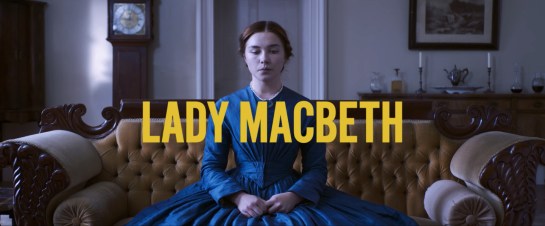
My first thought for a first sentence of this review was “I don’t get it.” But that was at about 1/4 of the way through this sparse (budget – $100,000) and ingenious film that unfolds at its own leisurely pace, with every scene building upon the last.

The story is simple. Casey Affleck and Rooney Mara are a young couple on the verge of a move from their home when Affleck dies in a tragic traffic accident. Rather than ascend to the hereafter, his ghost returns to the home. And that is where we find him. For all ages. Mind you, he is not in a CGI, wispy and elegiac form. He is wearing a sheet with two holes cut out for eyes.  And his rambler (not a creepy Victorian) is the place he haunts, throughout eternity.

Wordlessly.

The film is at first uncomfortable.  It’s hard to adjust to the low-tech representation of ghostdom, and writer director David Lowery’s penchant for lassitude tests, but soon, through the patience of the director and the stoic and sad nature of Affleck’s choice, you invest totally in his journey.

This is an art film. As such, it takes chances other movies would not dream of. Not all of its choices hit the mark, but by the end, it proves to be thoughtful, accomplished, and really intriguing.

I am stil not sure that I get it. But have been thinking and talking about it ever since watching. That alone merits high marks.


image

Much like all of the rest of the DC/Marvel dreck, although this one is plagued by an even higher degree of contempt for the audience. The script is lazy and moronic. The look is cheap (Gal Godot reminded me of Harry Hamlin in Clash of the Titans). The slo-mo seems positively retro. The soundtrack is oppressive and unyielding.  The villain is obvious.  The homily (“only love can truly save the world”) overly earnest even for this kind of popcorn flick.  The Battle Royale finale a snore.

This is a movie you can’t even really fold laundry to.  Though Godot ain’t hard on the eyes and she and Captain Kirk have a few cute moments together, she’s at heart a dolt, wide eyed and stupid or, when she kind of gets it, petulant and stupid.

And the proof is in the historical pudding. After World War I ends, which coincides with the end of the film, she makes it her mission in voiceover to spread peace in our time.  We all know how that turned out.

Image result for Big sick

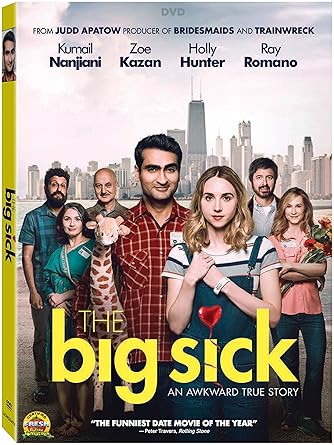
A charming, surprisingly thoughtful film, anchored by co- writer Kumail Nanjiani’s (Silicon Valley) substantial performance and deft support by Holly Hunter and Ray Romano.  Nanjiani is a stand-up comic (a staple in a Judd Apatow produced film) and Uber driver who falls for student Zoe Kazan, a gentle heckler at one of his shows.  The hitch is his family and his cultural background – he is a Muslim from Pakistan and while he is decidedly “American” in most respects, his parents will not countenance his marrying a non-Muslim and per custom, are in the process of arranging his nuptials.  To that end, he is enlisted for ritual family dinners with prospective suitable brides, none of whom do it for him.  But he is both dishonest and weak, keeping his cultural constraints secret from Kazan while feigning devotion to his parents even as he blows off prayers and tantalizes them with the possibility of law school.  When Kazan confronts him, he wilts and does not choose her.

And then she gets sick.  So sick, she is placed in a medically-induced coma, necessitating his attention, not only towards her but her parents (Hunter and Romano).  The experience forces him to reevaluate his station, his choices and his own cowardice.

This could have been played mainly for laughs and it would have worked very well.  And the film is very funny,  Nanjiani has an understated humor, at once self-deprecating and subtle.  Some of the best moments are when he makes a joke to people who are a little slow on the uptake, only to immediately apologize at the moment the jest dawns on them.  Nanjiani is, naturally, surrounded by comedians who relentlessly attack each other, also providing solid humor.

But what elevates the film is Nanjiani’s impressive expression in dealing not only with the culture tug of his family, but with the depth of emotion at the near-death of who he comes to realize is the woman he loves.  And in his support for her parents (Hunter and Romano), from whom he gets both caution and encouragement, he grows.  The movie works on multiple levels, you invest in these people, and the result is a really tight, funny, bittersweet picture.

It has been an atrocious year for films, but this would stand out in a solid one.

Related image

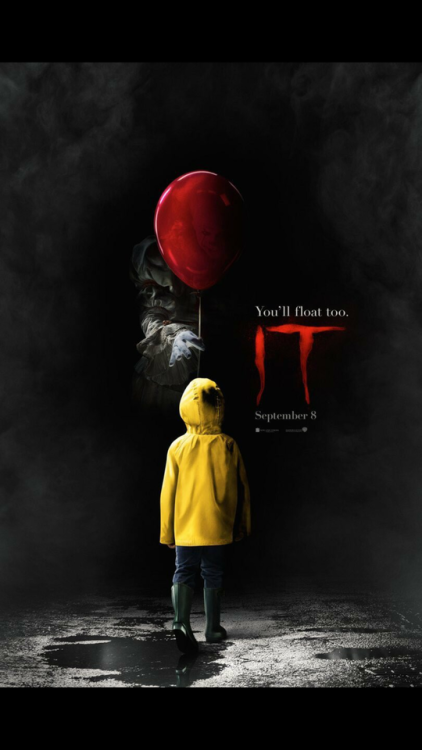
Director Andy Muschietti’s knows his way around a spook story, as evidenced by his very creepy Mama, and with the aid of a troupe of incredibly gifted child actors and the can’t miss image of a clown roaming the sewers, he delivers the goods.  The film rocks you with jump scares and terrifying imagery as Pennywise hunts his prey, and Muschietti covers his doomed Maine town in dread.  Yet, the relationships between the children are authentic and sweet, engendering empathy and bolstering a critical plot point in combating the evil that lurks below.

My orthodontist used to have his walls covered by clowns of every shape and size, a decor choice which contributed to my crooked teeth.   In every clown on that wall was a potential Pennywise, a diabolical trickster and eater of souls with a gift for gab that could entice vulnerable kids to their doom.

But enough about me.  Muschietti’s Pennywise is as indelible and monstrous a film character as I’ve seen.

There are a few weaknesses.  The film is too long, and as my son pointed out, they could have done with one less child character.  There are also a few script clunkers, such as when one of the children mentions that the town has six times the national average in missing people, and a higher percentage for kids.  Such a town would be dead, not seemingly thriving.

Last, Stephen King hates adults.  That is all well and good (who doesn’t?), but the conceit is hackneyed.  As with most King stories centered on kids, in It, every adult is cruel, abusive, distant, crazy and/or a molestor, which is meant to underscore the vulnerability of the children, but really, only serves to cheapen the story.

Still, this is well worth the $235 it currently costs to attend a movie.


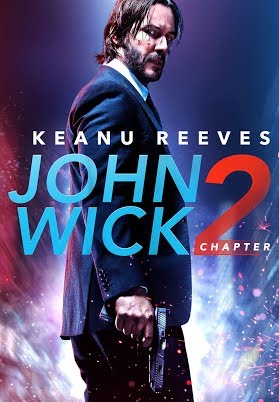
In John Wick, the Mob tried to take the man’s car and they killed his puppy.  In response, he killed all of them.  Hundreds.  Everywhere.  It was gloriously simplistic and fun.

This time around, we delve deeper into John Wick’s criminal world, where he has a debt to pay pursuant to a criminal code, and there is an entire bad guy underworld and ruling structure, with politics, and apparently, 75% of the folks walking the streets of New York City are potential assassins.  More explication makes for a lesser film, and with the shootouts essentially the same as in the first picture, it’s pretty blah.

Spoiler – the new dog does not die.