Archive

Monthly Archives: March 2025

An unheralded gem, powered by the stellar performances of Robert De Niro and Robert Duvall, as brothers Dez and Tom Spellacy. De Niro is a rising monsignor in post-WWII Los Angeles, archbishopship on the horizon. Duvall is a tainted LA homicide cop. De Niro is ambitious and technocratically capable but fast becoming disillusioned with the moral elasticity necessary to keep the church afloat, including being chummy with the likes of a scumbag real estate mogul (Charles Durning, who seeks the church as beard for his corruption and literally sweats menace). Duvall is trying to make up for his past as a bagman. A Black Dahlia-esque murder connects them, and as De Niro wrestles with his faith and station, Duvall agonizes over his past crimes and his attempt to make amends by going after Durning, damage to his brother be damned. We learn about their secrets and upbringing in an L.A. that has a Chinatown-vibe.

One of my favorite fiction authors, John Gregory Dunne, wrote the screenplay with his wife Joan Didion, and it exudes verisimilitude and deftness. The script allows De Niro and Duvall significant space and what they do with the quiet moments is poignant. There is always tension, but also, always an intimacy and a shorthand that speaks to shared happier, or unhappier, times. Their exchange on their uber-Catholic mother is emblematic:

Tom Spellacy: How’s ma? Is she still eating with her fingers?

Des Spellacy: Well, she says the early Christian martyrs didn’t have spoons.

Tom Spellacy: Tell her they didn’t have Instant Cream of Wheat, either.

It’s a cheat to cite a review within a review, but Vincent Canby’s is so dead on and conclusive, I’ll transgress:  the film is a “tough, marvelously well-acted screen version of John Gregory Dunne’s novel, adapted by him and Joan Didion and directed by Ulu Grosbard who, with this film, becomes a major American film maker. Quite simply it’s one of the most entertaining, most intelligent and most thoroughly satisfying commercial American films in a very long time.”

If there is a problem, it is third act, which could have used a few more moves to get to the ultimate revelation. But I’m hesitant even in that criticism for fear that any nod to beefing up the procedural would have taken away from Grosbard’s patience and care with the characters. The film not only showcases De Niro and Duvall, but takes time to establish real connections between De Niro and an older priest (Burgess Meredith), who De Niro puts out to pasture because of the latter’s interference and sermonizing (“I’m not a man of the cloth, I’m a man of the people”); Duvall and a whorehouse madame (Rose Gregorio) with whom he had some sort of ragged relationship until she took the fall for his crookedness and did a stint in jail (“I need you like I need another fuck,” she spits at him); and Duvall and his partner, Kenneth McMillan, who shakes down Chinese restaurants for his retirement motel and tries to keep Duvall out of trouble (“You know who we’re going to pull in on this one? Panty sniffers, weenie flashers, guys who fall in love with their shoes, guys who beat their hog on the number 43 bus. What? Do you think I’m gonna lose any sleep over who took this broad out?”). The blunt and cynical nature of the dialogue aside, Dunne and Didion never stoop to hackneyed tough guy patter, and they counterbalance with real tenderness. The train station scene where the parents of the murdered girl meet with Duvall to take their dead daughter home is one memorably piercing example.       

Just added to Amazon.

William Friedkin’s follow-up to the massive successes of The French Connection and The Exorcist, the film has met with greater favor in recent years, but at the time, it was a dud at the box office. While it has its charms, the tepid response at its release was deserved.

By way of set up, Roy Scheider is part of a 4 man stick-up crew in New York City that robs from the mob. Three are killed in the caper and Scheider goes on the run, to a small town in Chile, There, he works as a laborer under an assumed name on subsistence wages for an American oil company. He is joined by a French financier, an Arab terrorist, and a hit man of indeterminate background, all incognito and under the gun for their own reasons. None has the means to get out of town. Guerillas, however, blow up an oil well 200 miles away, and the four men are hired to ferry highly combustible dynamite containing nitroglycerin in two trucks through a hellacious terrain of winding mountain roads, dismal swamps, and, at times, torrential rain. The dynamite is necessary to cap the well and extinguish the geyser of fire.

The problems.

First, Roy Scheider is not a lead. Never has been. His intensity is unquestioned but his range is limited, and he’s only asked to be wary and furious, which he does fine. He’s just not very interesting.

Second, given the massive jostling and bouncing in the trucks during the expedition, one does wonder, “Why again was a helicopter out of the question?” Assuming it just was because somehow the flight was more unstable than the truck (which when you see the journey, is ludicrous), I’m still with one commenter, and I don’t think this is niggling:

“This big oil company calls in a helicopter and asks the pilot to transport unstable nitro that would be unsafe to handle, but never thinks to ask the helicopter pilot to bring with him some stable explosives that they can use right away. Was it more cost-effective to pay 40000 pesos (plus supplying two large trucks and apparently a bunch of additional new auto parts) and risk a 218-mile land journey than it would have been to just fly in some new explosives?

Third, other than the French financier (Bruno Cremer), with whom we spend a lot of time explaining his backstory, we don’t really get to know these men, and in their journey, they share very little.  

On the plus side, many of the ordeals are stunning (getting the trucks over wooden, swinging bridges is one of the most riveting things I’ve ever seen in movies); the visual grit of the film is palpable, which in the age of sterile CGI, is always welcome; there is also a matter-of-fact lack of sentimentality that melds well with the harshness of the environment; and the picture introduced Tangerine Dream (Thief, Risky Business, Near Dark) and the synthy soundtrack is dissonant but effective, as the environs seem almost otherworldly.    

Bill Burr, Quentin Tarantino, and my son (his biting rejoinder pending) are decidedly more enthusiastic. Hell, Tarantino deems it “one of the greatest movies ever made.”  

On Amazon, for $3.99.

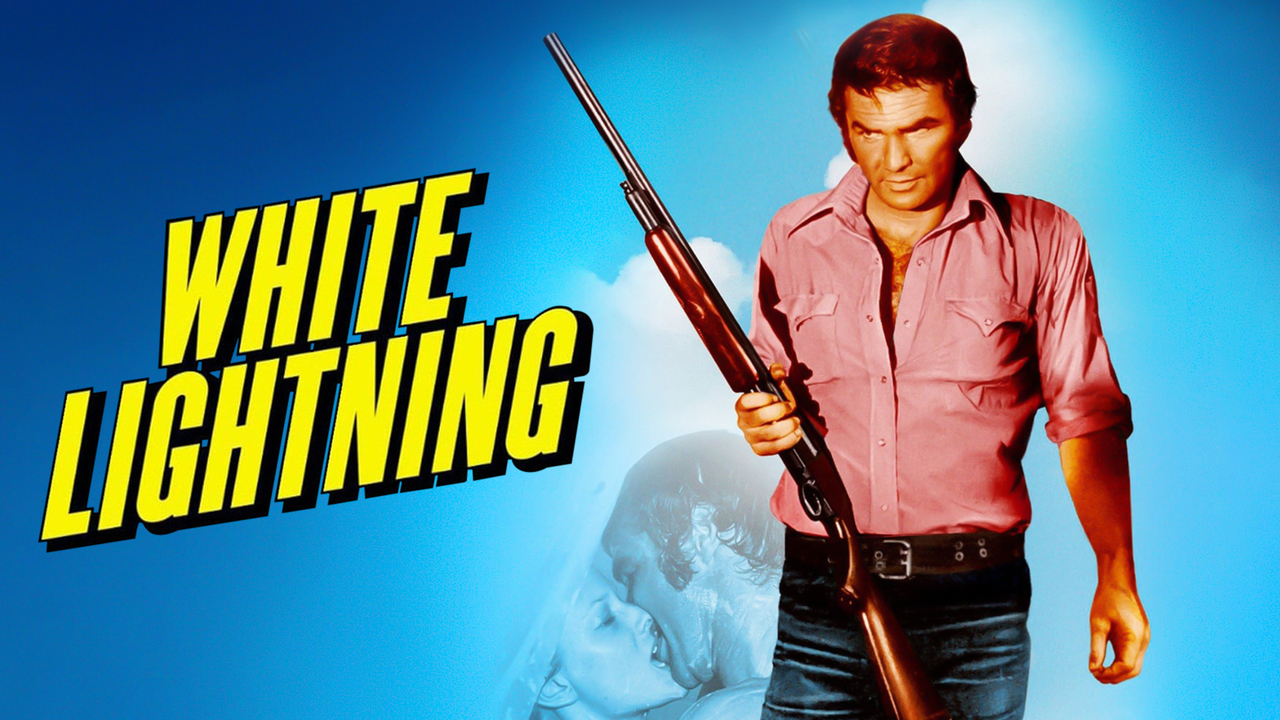
I was abandoned this past weekend, and I don’t do well alone. With an empty house and the care of a disinterested 15-year-old cat entrusted to me, I took the time to catch up on a few 70s flicks in my queue, including this strange creature.

Burt Reynolds – not at the height of his popularity, but post-Deliverance – is Arkansas inmate Gator McCluskey. He’s in the federal pen for illegal liquor running when he learns that a crooked sheriff (Ned Beatty) has murdered his younger brother. Why? Because the brother was a meddlesome hippie, and Beatty does not like hippies. So, Gator gets out, insinuates himself into the county, and exacts his revenge.

There’s a lot bad to meh here.  The “I hate hippies” thing is unexplained – we never really know what the kid did to deserve being dumped in the swamp, and a sit-down between Beatty and Reynolds never happens. And the women of the Arkansas county are so carnal in their attraction to Gator, it seems cartoonish. Worse, there are tons of car chases, but not of the ilk of The French Connection or The Seven-Ups or Bullitt. Just a lot of banal vrooming around dusty country roads. From this demon seed sprouted Smokey & the Bandit and Cannonball Run (Hal Needham was a mere stuntman for the picture, but a few years later, he was second unit director on a reprise, Gator, and then he moved on to directing the slop that was Smokey and the Bandit I & II and Cannonball Run I & II). The first glimpses of Reynolds’ giggling, slapsticky, “I don’t give a fuck” mien can be found in the flick as well.    

There are a few notes on the plus side of the ledger. Reynolds connects. He has movie star gravitas and just enough menace left over from Deliverance to project power and fear. Beatty is also strong, exuding a meanness and lethality in the guise of a portly bureaucrat. The film also takes a few runs at a healthy cynicism.

Fun facts – at the tail end of his career, the picture’s screenwriter, William Norton, did 19 months for ferrying guns to the IRA. After being released from prison, he moved to Nicaragua, where he shot and killed an intruder in his home. He then spent a year living in Cuba, was unimpressed, and was smuggled into the U.S. by his ex-wife.

Where is this film?

On Amazon, not recommended except as a curio.