Archive

Monthly Archives: December 2024

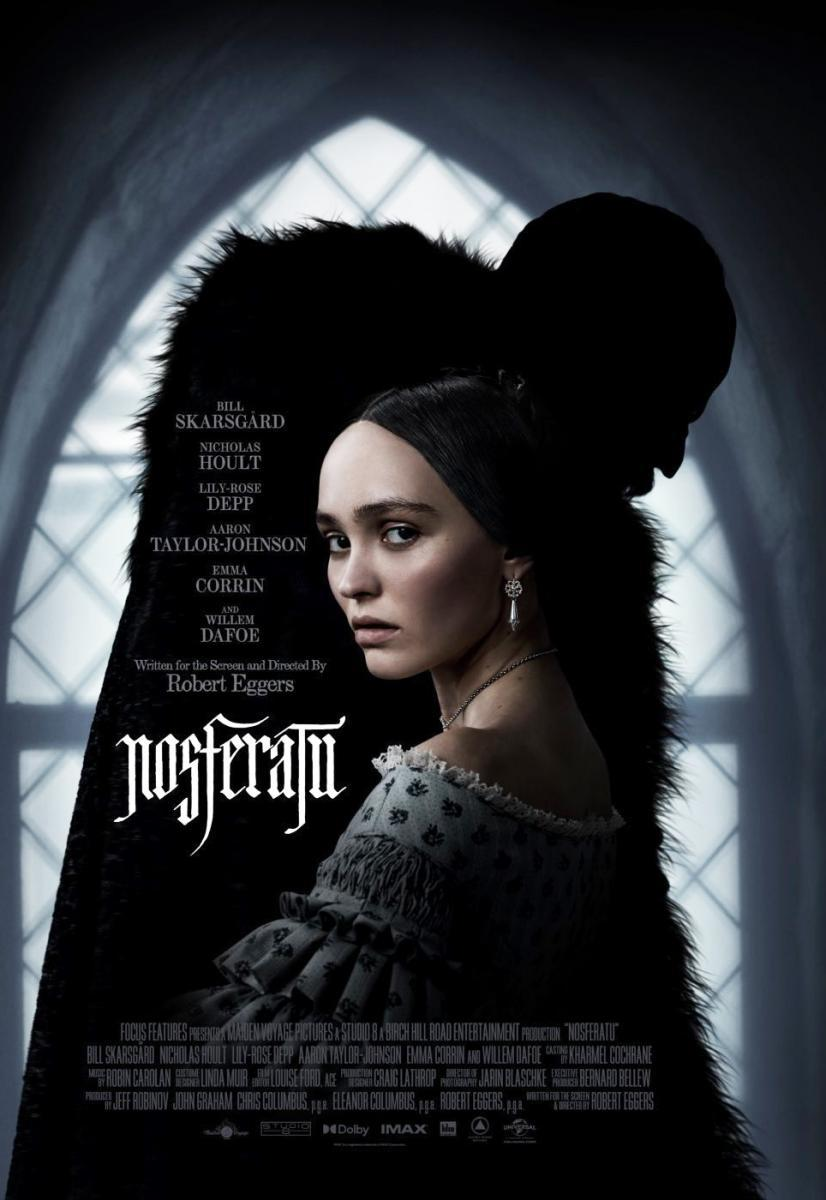
Upon their reunion, Count Orlok/Nosferatu (Bill Skarsgard) tells his intended Ellen (Lilly Rose Depp) that his well-planned travels to capture her are borne of a simple credo: “I am nothing but appetite.”  All the impressive visuals, haunting tableaus, and carefully crafted hues in Robert Eggers’ (The Witch, The Northman) bag of tricks, however, cannot make mere “appetite” all that interesting.

In the modern vampire films, there are rules. When the  creatures are plentiful, they must feed to survive. They are appetite and we are prey and their backstory is subordinated to our survival. But when the film has fealty to Bram Stoker, at center is the relationship between the monster and his beloved, always a doomed romance. In Francis Ford Coppola’s Dracula, Gary Oldman tells Winona Ryder that he has “crossed oceans of time to find you.” Why? Because his damnation as a vampire came at his rage and anger at the death of his true love, whereafter he forswore God himself, and now he has found her again in the present day Ryder. 

Here, the monster just seems to be hungry for an old meal. The two are connected by a cosmic carnal desire that goes way back but is unexplained. It allows for evocative scenes of fever dream passion, spurting and oozing blood, horror, masochism, and even a toe into exorcism. But this isn’t an art gallery, nor a meditation on how far one might go for the most extreme of sensual pleasures. It’s a film, and as gorgeous as it may be, it is also dull and dark and too often not very interesting.  

For example, when the major characters (Nicholas Hoult as Ellen’s betrothed and Willem Dafoe as the Van Helsing stand-in) have sussed out that evil has come to town specifically for her, Nosferatu finally appears to Ellen, and he is quite clear. If you don’t succumb to me in three nights, I will wreak havoc on everyone in your life and then kill your husband. Of note, Nosferatu has also brought plague to the city, so the havoc is widespread. Ellen seems unsympathetic from the get go – jittery to tortured to the throes of near-possession – and though it becomes clear she alone can end the plague, her selfish reticence is unfortunately in keeping with her character.

[Spoilers – as it turns out, Ellen destroys the monster and herself by inviting him to bed on the third night, which makes you wonder, “why the hell did everyone else have to die on nights 1 and 2?” As for the end of that night, it seems a stab at romantic, but boiled down, it has a “You’re gonna’ have to let Nosferatu feed on you so good that he loses all track of time and you literally metaphorically fu&% him to death.”]

There is no doubt, Eggers knows what to do behind the camera. But he is not adept at narrative, and you really don’t invest in any of his characters, who make it worse by over-emoting blocky dialogue. No one seems like a real person, much less a real person who is facing the undead.

Eggers adds little new to the canon but prettier visuals.
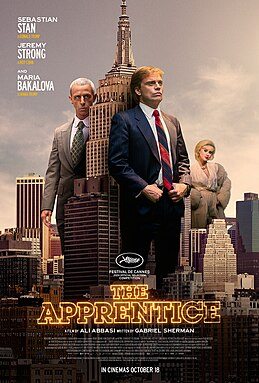
 

There are figures who defy biography. Some are dolts who we lionize because of an electric public persona, but after we peel back the skin, dig in, and nothing but soft goo is revealed, we adorn them with meaning if only to combat the dullness and our disappointment. Some are opaque, having lived a purposefully secretive life that does not lend itself to exposition. Some are so mythic, hagiography follows, lest a god be sullied. And many are just boring through and through, even if their impact was monumental.

How best to approach Donald Trump? I was thinking about why Saturday Night Live has such a problem caricaturing Trump and concluded that it is difficult to lampoon a cartoon. Trump is thuggish, brash, bombastic, ridiculous, and his persona – both before and during his political career – is that of someone who is already playing a part, man as product. Someone once observed that Bill Clinton was the most authentic phony they’d ever encountered, which makes him Trumpian on one level. The persona so effectively swallows the person that the former becomes innate.

Now, I don’t know what Donald Trump (or Bill Clinton, for that matter) is like privately, and Hollywood has yet to take on Clinton in biopic (we’ve had snippets, most recently Ryan Murphy’s rendition of the Lewinsky scandal, but nothing penetrating or overarching). And neither does screenwriter Gabriel Sherman. But he takes a fair stab, and it’s a game effort, for a time.

We meet Trump (Sebastian Stan) in the 70s, an ambitious son of an old-fashioned real estate developer who strives for entrée’ into tony Manhattan clubs while working for Daddy, collecting his rents in cheap New Jersey apartment housing. Donald has a dream – to develop a hotel in the then-hellscape of 42nd Street – something his father (Martin Donovan) considers an ill-advised fantasy. But Trump persists and soon, he meets another father figure, Roy Cohn (Jeremy Strong), who becomes his tutor and mentor. Cohn, a sybaritic fixer, protégé’ of Joe McCarthy, and executioner of the Rosenbergs, blackmails those who attempt to thwart his new charge, facilitating Trump’s rise. We watch Trump ascend, while negotiating the death of his alcoholic brother, eclipsing his father, and falling in love with Ivana (Maria Bakalova), all the while with Cohn in his ear. This is the part of the film that works, as we see a progression, both maturation and degeneration.

When we hit the 80s, Trump is on top, Cohn is crippled by AIDS, and their relationship deteriorates. With what feels like the snap of a finger, Trump is callous and brutal, as he repeats the Cohn mantra (attack, deny, always claim victory). But we don’t really see him ever employ those rules. In fact, he just reappears as a brute, and we are treated to the litany of rumor, concoction or well-known unflattering fact without context or explanation. Trump abandoned his brother, raped and verbally abused Ivana, tried to take financial advantage of his doddering father, gave Cohn fake diamond cufflinks, swung and missed in Atlantic City, took a lot of speed, wrote The Art of the Deal, mused about a political future, got liposuction and a scalp reduction, and is a germaphobe. One box after the other perfunctorily ticked. Just overt capsules, with all character-development jettisoned for dizzying visuals of the corrosive jet set life.

I suppose Sherman was trying to portray the seduction of Trump in concert with the go-go 80s, but it was done much better by Oliver Stone with Bud Fox in Wall Street, and even that movie can be garish and obvious.  

What does work, however, works very well. The Trump-Cohn relationship is beautifully drawn. The elder sees talent and vitality in the son he never had and a young man he refrains from seducing sexually, while the understudy finds the father who truly believes in him. When the former imparts his wisdom, it would have been nice if Sherman could have employed it more directly as the basis for Trump’s rejection, but it is enough that the devil gets his comeuppance from his Frankenstein, and you know it works, because you kind of feel bad for the devil.

Stan and Strong are riveting and I expect both actors to be nominated. Even if they were undeserving, Trump is irresistible bait for the Oscars and given the unflattering vignettes of the film and the fertile environment for decrying the Bad Orange Man, we and the Academy shall not be denied.  

Luckily, the actors are deserving. Strong is quickly becoming one of the most innovative character actors of his generation (I cannot so on enough about his turn in last years’ Armageddon Time, which, ironically, also included a young Trump character), and Stan manages to humanize a cartoon while incorporating the now ubiquitous Trump cadence and physicality, but doing so in a way that shows the features in infancy, so we can envision what they will be when we turn on our TVs today. Per Sherman, “And I think what Sebastian did so brilliantly is that he doesn’t try to impersonate Trump. He finds his own version of the character. And it works in a way where you feel like you’re watching a real person. You’re not watching Sebastian trying to be Donald Trump.” Dead on.

A solid, game, entertaining, very flawed near-hit that peters out.

On demand.

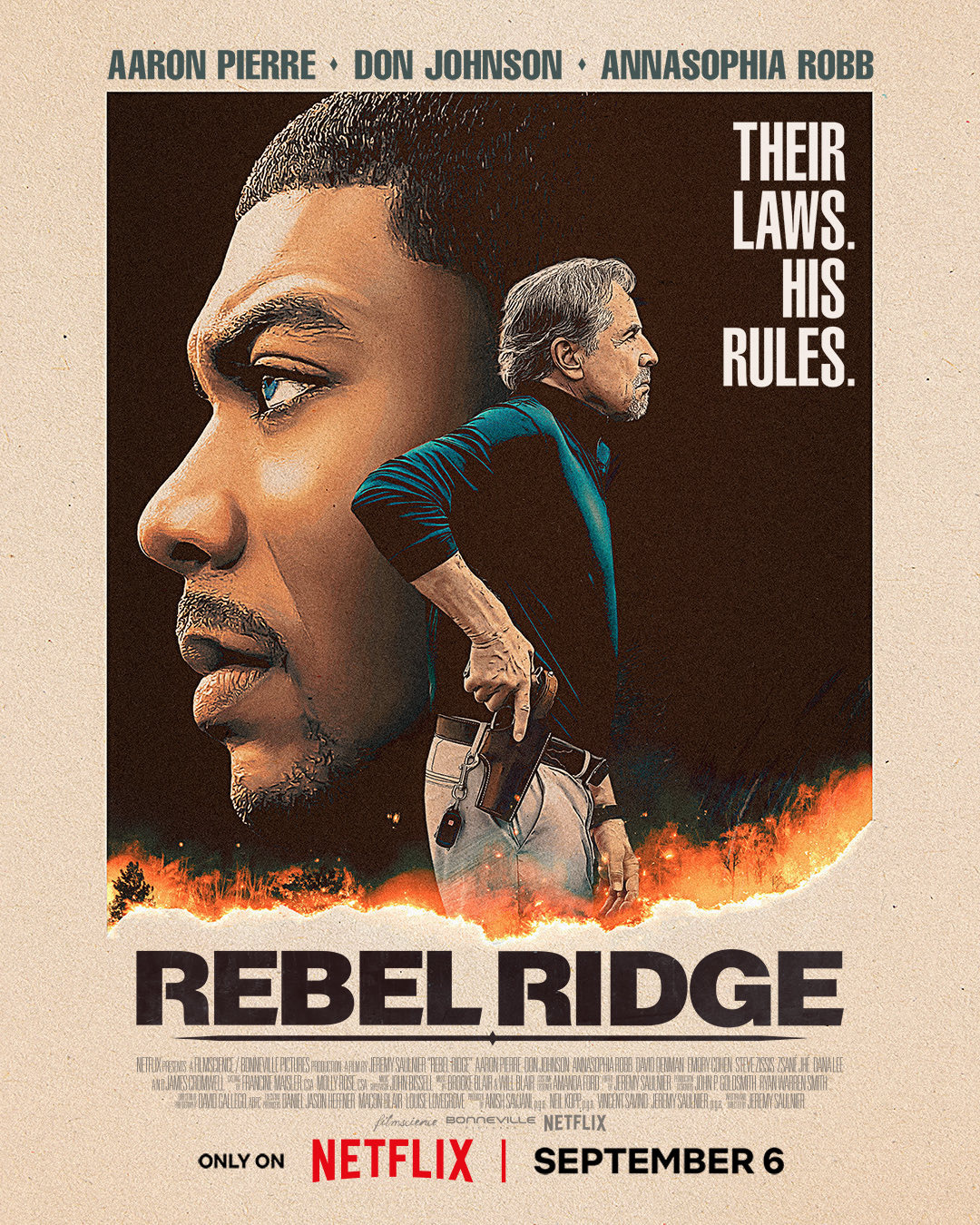
Writer-director Jeremy Saulnier’s Blue Ruin, an earthy, dark meditation on the messy and corroding influence of family blood oath and violence in rural Virginia, was such an assured debut, I was blown away. He followed up with the canny, creepy Green Room – where a band gets the worst gig ever playing for skinheads in the Upper Northwest – a commercial failure, perhaps because it was such a grounded horror film. No unstoppable evil or chop-licking psychos, just nasty, human, unregulated criminals with Swastikas and 12 packs who dig punk rock and live in the deep, deep woods. 

Rebel Ridge again showcases the director’s dead-on familiarity with small town America. No Chevy Truck “backbone of the USA” schmaltz or easy tropes of the rural downtrodden being done in by “the man’s system.”  Saulnier understands that most people are in some form or fashion paid by “the man’s system” and that system is what keeps mortgages current, power boats afloat, and Carnival cruises filled. In the small Southern hamlet that is our setting, graft, skimming, and railroading drifters end up just being part of the fabric, the next logical step for a speed trap town. 

What follows is a gripping, subtle melange of liberal fear of cops and conservative “power of the deep state” fear of the government, good old fashioned small town Walking Tall corruption via asset forfeiture and  … Rambo: First Blood.

No preening, no speeches, a lot of surprises, and a boffo, visceral, satisfying revenge fantasy ending, powered by Aaron Pierce’s reserved, steely leading turn. 

In spots, a bit ragged for Saulnier, and there is an underdeveloped relationship between Pierce and a plucky court clerk (AnnaSophia Robb), but those are nits.

On Netflix. 

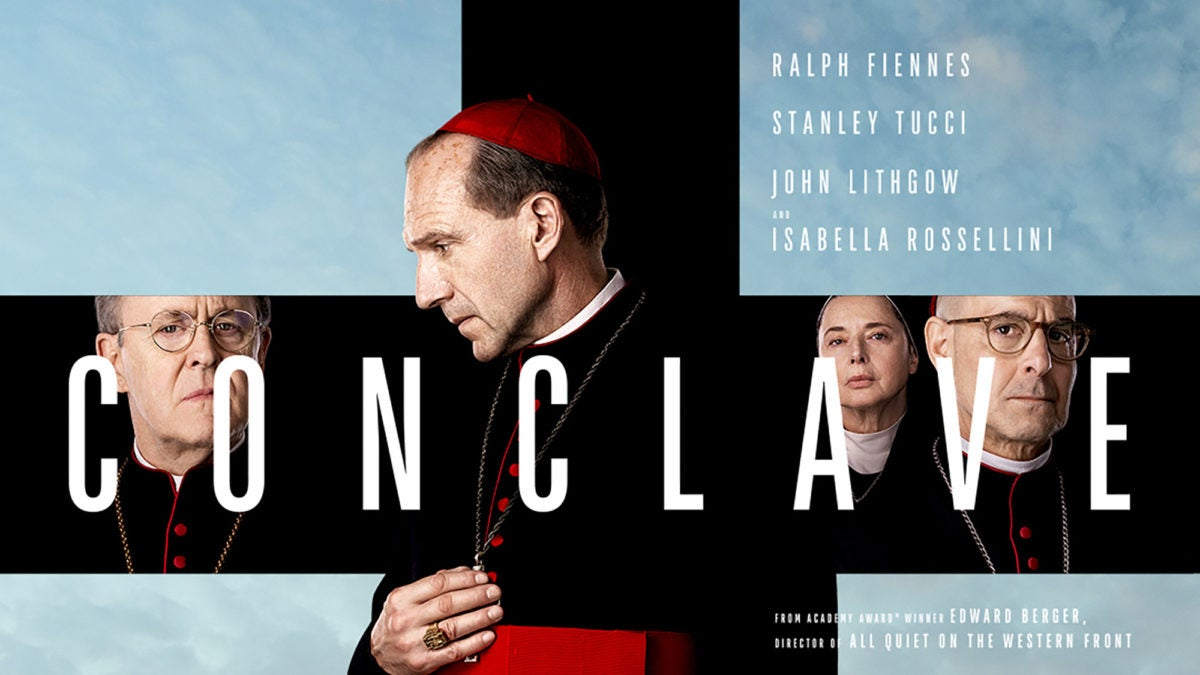
A movie that works beautifully on several levels.  First, if you ever wanted an “inside” look at how a pope is selected, someone did their homework. Just like William Peter Blatty’s research into the ritual seemed so authentic in The Exorcist, and the hierarchy of a late 60s parochial school was nailed by John Patrick Shanley in Doubt, the convening of the cardinals to pick the next pontiff exudes legitimacy. Based on a Robert Harris novel, screenwriter Peter Straughn has a solid feel that comes from some religious experience and curiosity (“It was a world I was interested in. I was brought up Catholic. I was an altar boy, and I went to a Catholic school, so, in some ways it felt like home territory, even though I’m no longer a believer. I had one foot in the world and one foot out, so that interested me”).

Second, and I can’t write much on this, there is a satisfying Sixth Sensian reveal that is confident enough to leave it at that, without delving into the machinations of the ultimate selection. I was concerned we’d recap with a Murder on the Orient Express flashback diagram, but the picture is less about how we got to the selection than what it meant to get there and what it means. Better, the end is the kind of reveal that could have been wielded like a sledgehammer, but Straughn and Director Edward Berger (All Quiet on the Western Front) celebrate subtlety over all else.  

Third, the film is a feast for the actors. Ralph Fiennes is masterful in his portrayal of the manager of the conclave, fighting his own ambition and anger at his designation as a mere facilitator rather than a spiritual leader. Fiennes is ably supported by John Lithgow, Stanley Tucci, Lucian Msamati, Sergio Castellitto, and Carlos Diehz, who represent different future paths for the papacy while vying for the top slot. Isabella Rossellini plays her own game as the sister who, for lack of better title, is the site manager for the election. Her hand may be well hidden and guiding, but given her near vow of silence in the world of men, even though her face tells so much more by necessity, nothing is confirmed. Nominations will be accorded generously and she is a shoo-in.  

Last, the Catholic Church comes out well in this. In and of itself, not necessarily a recommendation, but the movie offers a different view of an institution so maligned of late that another broadside would just feel hackneyed. Sure, there are shenanigans and skullduggery, but there is also great deference to the awesomeness of the task, the mysticism and seriousness of the process, and the weight placed on the jurors. The debate between the “new” and more traditional Church is also given a fair airing and ultimately, without taking a side, the picture elevates a philosophical point to a logical, if arguably heretical conclusion.        

One of the best of the year.

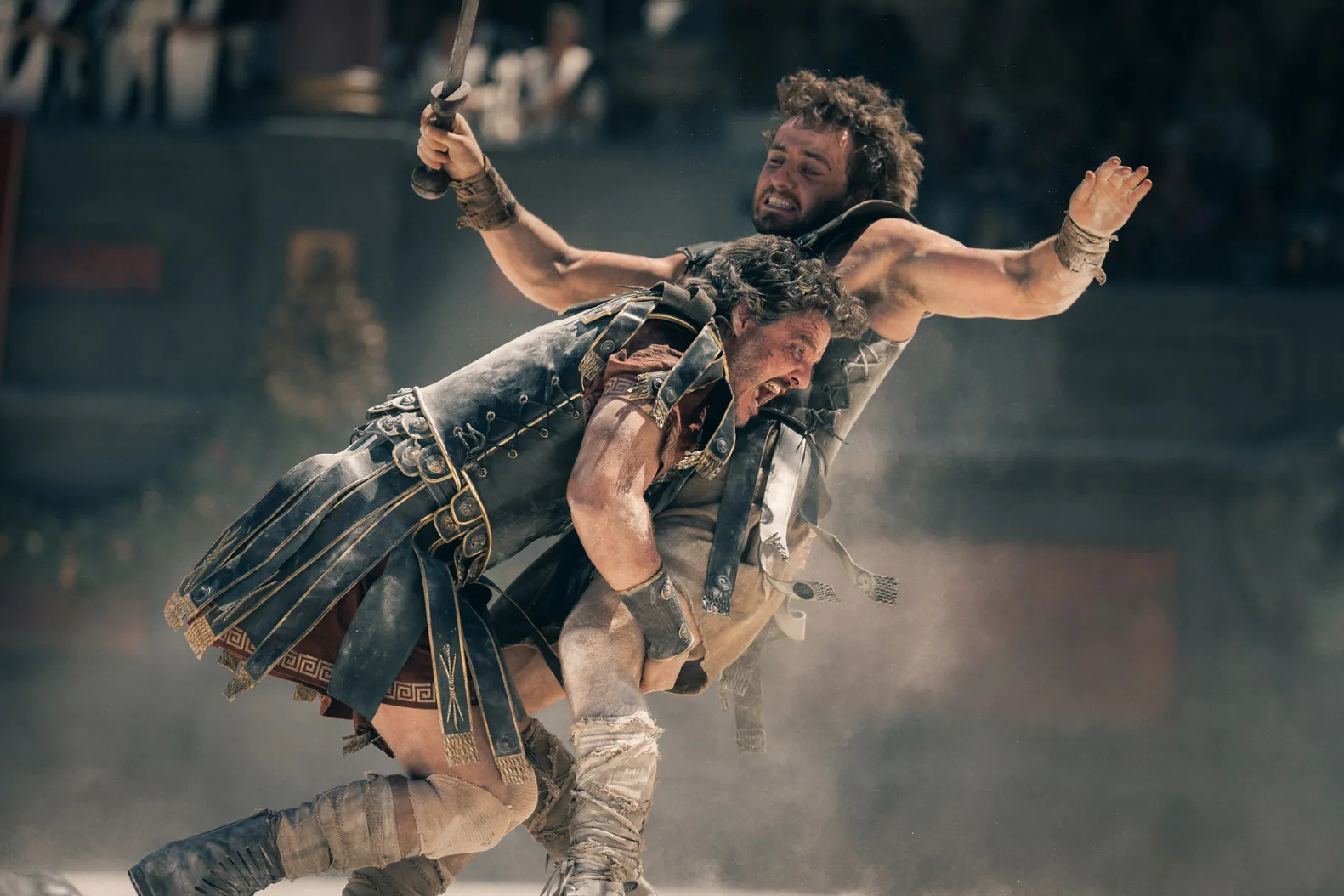
Imagine Gladiator, a fun, glorious, bloody romp. Now, forget about that film. It will only make things worse.

Here, the lead is not the captivating Russell Crowe but rather, the much younger Paul Mescal. Mescal has none of Crowe’s gravitas. He is not a Roman general, weary of war and politics, who just wants to go home to his wife and children. Instead, he’s a happy agrarian bean-picker, kissy-facing with his wife, when a new Roman general (Pedro Pascal) threatens their idyllic, multi-cultural commune in Africa. Mescal and wife strap on their gear and fight side-by-side. Pascal wins. The wife dies. And now, Mescal is a slave, soon to be gladiator, bent on revenge.

So, the same picture, but worse in all respects.

Every smart line in the original is replaced with “up with people” pablum and a dull dispute as to whether there is a “glory of Rome” or a “glory to the idea of Rome”, and every minor character who exuded their own agency and flair in the first film is replaced by cookie cutter figures infused with a boring wisdom that anachronistically presents as spiritually worldly.

While Gladiator II provides more combat than the original, it is juiced with unconvincing CGI monkeys, a big ass rhinoceros, and sharks. Even the hand-to-hand combat seems obligatory. You don’t care and no amount of spraying blood, gutting, and decapitation can involve you.

Our protagonist, Mescal, is supposed to be filled with “rage” but, at his most engaged, seems ironic and perhaps annoyed. The romanticism of the first picture was fueled in no small part by Crowe’s seething hatred at the needless and cruel slaughter of his family. Here, you think, “Maybe Mescal wasn’t so into his wife.”

There is little you don’t see coming. Mescal is the biggest non-mystery man ever and when the film finally gets to someone who can generate interest – gladiator merchant Denzel Washington – his grand plan and motive hit too late and quickly, right when you are nodding off. Washington, however, is at least having fun. Everyone else seems to be in mid-root canal.

And no one seems Roman here. The machinations are more on-the-fly than crafted, the concern for the people preposterous, and the finale – where two armies unite with “Huzzahs!” after an unconvincing “aren’t you sick of death?” speech by Mescal – has the feel of the old Coke ad where everyone wished they could teach the world to sing.

There is no greater dissonance than the emperors. In the original, Joaquin Phoenix was delicious, funny, just chewing scene after scene, but also substantial. Here, we have two emperors, sybaritic brothers who flounce about and exude a “let them eat cake” mien. They have no backstory, no goal, just dull, giggly, face-painted, effeminate schtick.  

Interminable. Avoid.