Archive

Year

Is Will Ferrell ready for a dramatic role? As an alcoholic salesman fired from his job (typically, cruelly, as his boss has to get digs in during the termination meeting just so we know we’re on Ferrell’s side), for the most part, he seems just a spit-take away from breaking into Ron Burgundy or Frank the Tank. A thousand clown roles creates a hearty persona.

He’s fired, bullied at the convenience store, and when he gets home, his stuff is on the lawn, courtesy of his wife, who discovered he had an affair, changed the locks and left town. Ferrell then starts living on his lawn.

His neighbors are quirky, there’s a wise neighborhood child, and the moment I saw Michael Pena in the opening credits, I knew he’d be the Hispanic cop assigned the task of saying, “Dude. You can’t be living on your lawn.” There’s not a character in this who resembles a real person, and no amount of acoustic guitar/piano in the background can change that.

Ferrell is supposed to be endearing or at least sympathetic. For the most part, he’s neither. Rather, he’s bland, one note and when he tries to show depth of feeling, he just looks uncomfortable. He confesses his life and mistakes to an improbable pregnant new neighbor (Rebecca Hall) who, upon moving cross country to a new neighborhood ahead of her husband, naturally takes a shine to a weirdo drunk living on his lawn. Even his confession of what I think was an accused date rape only flummoxes her for a moment. You just keep hoping Vince Vaughn will show.

The film is also sloppy. Ferrell is able to blackmail his neighbor into giving him power from a cord, but in the deep throes of alcohol need, desperate for drink, he downs the backwash from old Pabst cans. With what he has on his neighbor, he’d certainly have been able to wrangle enough for a six pack. And when he’s desperately looking for beer, he checks his mini-frig, and it is empty. The next morning, however, he’s grilling bacon. Where did he get bacon?

Finally, there’s the insipid suburbia bashing as Ferrell decries the mother down the street who “blew her brains out because her daughter didn’t make cheerleading” and preaches, “I’m no different than any of you. I just don’t hide in my house.”

Heavy, man.

“I’m not a racist,” says Dave Brown. “I hate all people equally.” Dave Brown is a crooked, brutal, misogynistic L.A. cop who can turn a phrase now and again and, as is evident, can crib from Dirty Harry. Woody Harrelson plays Brown with a growing intensity. Just about every bureaucratic pressure is brought against him after he is caught on tape delivering a Rodney King to an unfortunate citizen. And in many ways, that’s the least of his worries. His ex-wives (Anne Heche and Cynthia Nixon) are sisters and he has a daughter with each, making for a challenging domestic life. He’s also an alcoholic and drug abuser, a thug, a sex fiend, and a murderer. And he’s going broke.

Similar to Bad Lieutenant, Rampart’s greatest virtue is the performance of its lead. There are also some well-written Wire lite exchanges, and director Owen Moverman (following up on his impressive The Messenger) films 1999 Los Angeles in a bleached, dreamy manner. But otherwise, this is a meandering, exhausting tale of the descent of a mildly interesting bully, made even longer by an utterly pointless relationship between Harrelson and a bar pick-up/defense attorney (Robin Wright). His exchanges with the bureaucrats hounding him (Steve Buscemi, Sigourney Weaver, and Ice Cube) are banal, his heart-to-hearts with ex-wives shed no light, and his discussions with his very bitter, uncommunicative older teen daughter are grating. Harrelson does a very effective job of conveying the importance and centrality of his home, especially in his moving scenes with the younger daughter, but that’s all Harrelson. The script offers little assistance (a personal disappointment because it was co-written by one of my favorite crime novelists, James Ellroy).

Not to mention, there is no street cop so well-connected or union protected that he could still be on duty after becoming front page news in a brutal beating and then involved in a deadly force shooting. Of course, were Harrelson suspended, Moverman would have to lose the cool shots of Harrelson in his police cruiser, contemplating his surroundings and his future.

It’s no shock the audience gave this a 38% and the critics gave it a 78% on rottentomatoes.

When dealing with race and the civil rights era, Hollywood is guilty of many sins.  In Mississippi Burning, blacks were little more than props and corpses.  Return of the Titans and Glory Road gave us treacle, with blacks ennobled and whites edified by the close quarters of the locker room, the baptism of sweat, and each race providing the other the lowdown on their versions of pop culture.  Men of Honor presented Cuba Gooding Jr. not as a man, but as a superman, literally prepared to drown in order to establish his place.  Ghosts of Mississippi was the story of Alec Baldwin’s dogged pursuit and Whoopie Goldberg’s shaming patience and little else.  All of these movies were pat, uninvolving and blandly heart-stirring.

The depiction of ingrained societal racism in Conrack, the surprise of A Soldier’s Story or the depth of character of In the Heat of the Night is a rarity:

Even more rare are civil rights-era films that strike a fair balance between the protagonists yet still feel authentic.  The Help continues the trend.  A much lighter film than most of its ilk, ala’ Driving Ms. Daisy, most of the characters soon bust out of the broad and into the wildly cartoonish.  Unsurprisingly, the center of the film is not really the help, but rather, the hysterical shrieking racist society queen Hily Holbrook (Bryce Dallas Howard).  Hily is so odious as to appear sociopathic.   But the film takes no chances, surrounding her with a coterie of henchwomen who fear her disapproval and endorse every initiative she proposes, including the creation of a separate household bathroom for the help of Jackson, Mississippi.  Perhaps this was necessary because her character, literally, must be so vile as to deserve unknowingly eating sh**, but it doesn’t make for anything beyond grating when Hilly is not biting into that surprise of a pie.

We also have a newcomer to town, Celia Foote (Jessica Chastain).  Celia is shunned by Hily because she’s of poorer West Virginia stock and she married Hily’s former beau.  Celia is a character in the film solely to be ostracised, to wallow in it, and then, to be given strength by her sassy, powerful house maid, Minny Jackson (Octavia Spencer), who had also been abused by Hily.  In Chastain’s big wet eyes of wonder, we see the dawning of racial understanding as she assesses her own station vis-a-vis Minny.  The happy ending?  Minny will be given a job for life, free use of any bathroom in the mansion, and, presumably, stock options.  Both Chastain and Spencer give similar, over-the-top performances (Chastain’s suggests Priscilla Queen of the Desert; Spencer every sitcom housekeeper of the last 30 years).  Both were nominated for best supporting actress.  Spencer won.

But the true triumph of Minny and the rest of the help is the publishing of The Help, a book written anonymously by Skeeter Phelan (Emma Stone).  The book exposes the secrets of Jackson’s households as provided by the maids who serve in them.  At first, naturally, the maids are not interested in the project.  But then Medgar Evers is shot and in a scene as inevitable as dawn, everybody signs up.

Stone is a terrible choice for this role.  She’s an accomplished comedic actress, but she lacks any real depth – the best she can do is a screwed up face that is supposed to suggests emotion but looks more like a pre-sneeze.

Worse, we’re stuck with her uninvolving subplots, as the plight of the whites eventually takes precedence over the humdrum, silent suffering of their servant counterparts.  Those trials include a deep, dark family secret — her mother (Allison Janney) ousted  Skeeter’s childhood nanny (Cicely Tyson) in order to impress a local gaggle of racist women.  The scene is provided in flashback and it is beyond ridiculous.  Tyson is so humiliated you expect the women to start throwing cutlery at her for her menial offense.  Add on Skeeter’s barely fleshed out love affair – her beau is standoffish, then smitten, then furniture, and then, he walks out after Skeeter is no longer anonymous for reasons unexplained.  Granted, this has been deemed a woman’s picture, but I’m not sure the designation requires every male character to be shy of lobotomization.  Regardless, Skeeter’s nonsense takes away from the film’s one good thing . . .

Viola Davis, who I first saw as the mother of a boy molested by a priest in Doubt.  Davis was nominated for best supporting actress in Doubt though she appeared in just one scene, and what a scene it was (alas, she lost), and she was deservedly nominated for best actress in The Help, losing again to Meryl Streep’s Margaret Thatcher.  Her performance as the first of the maids to work with Skeeter is moving and nuanced.  She rises above stereotype and really comes across as authentic, something not one other character in The Help manages.  This scene is an example, where Davis confronts Hilly, showing both rage, confusion and ultimately, compassion:

Other than Davis, there’s little to recommend this movie, a disappointing follow-up by Tate Taylor to his stark and cool Winter’s Bone.

It was kismet that just after watching 1982’s 48 Hours, I’d stumble onto a modern Irish buddy cop picture.  Brendan Gleeson (Boyle) is an Irish policeman in Connemara, content to do his duty while occasionally lifting recreational drugs off of car accident victims or engaging call girls dressed as policewomen for their pleasures.  The FBI, in the form of Don Cheadle (Everett) arrives and they require Gleeson’s assistance in stopping a drug shipment and the brutal gang (led by Mark Strong and Liam Cunningham) facilitating it.

Much more comedic and wry than 48 Hours, The Guard does set up Gleeson as the racist.  When briefed by Cheadle and shown pictures of the white gang, Gleeson goes wide-eyed and says, “I thought only black lads were drug dealers?”  When Cheadle upbraids him for being a bigot, Gleeson responds, “I’m Irish, sure. Racism’s part of my culture.”  But the stronger dynamics are the Cheadle as fish-out-of-water line and a little of Gleeson’s Oscar to Cheadle’s by-the-book Felix.  Gleeson has no real enmity behind his racism and uses it merely to probe Cheadle.  Their interplay gets funnier as they get to know each other.

Best is the depiction of Ireland, which is not so much whimsical as hilariously casual. Gleeson finds some guns meant for the IRA and when delivering them to their contact (the idea of confiscation is never considered), seems bemused that the organization still exists.  The presumption is that almost all the police are on the take, and Gleeson’s explanation as to why he cannot assist Cheadle in the canvassing of potential witnesses to a murder is pitch perfect:

BOYLE:  So what d’ya have planned for the day?

EVERETT:  Well obviously we don’t know who killed McCormick or why. There was no useful forensic evidence found at the crime scene, so I thought we might start by canvassing the area around where the body was discovered. See if anybody heard anything, something they might have thought was relatively insignificant, but which in light of the murder may have a far greater importance. I mean, when I caught that sonofabitch Tyrell Lee Dobbs it was a result of something as seemingly inconsequential as a laundry mark, if you can believe that. The guy had a personal hygiene issue that was almost pathological. The other thing to consider is that McCormick was probably in the process of reconnoitering drop-off points all along the coast. Our friends Sheehy, Cornell and O’Leary are no doubt in other parts of the country doing exactly the same thing. So I’ll liaise with Inspector Stanton and Detective Moody, have them and their men start a coordinated push in all the relevant locations…

He trails off, realizing that BOYLE is concentrating on his food and is not listening to him.

EVERETT:  Sergeant?

BOYLE: I’m sorry, you lost me at “we”.

EVERETT:  We. You and I.

BOYLE:  It’s my day off. Did I not say?

EVERETT:  It’s your day off.

BOYLE:  I’ve had it booked a good while. Ask Stanton.

EVERETT:  We’re investigating a murder and the trafficking of half a million dollars in cocaine–

BOYLE:  Half a billion dollars.

EVERETT: –half a billion dollars in cocaine, and you’re telling me it’s your day off?

BOYLE:  Twenty-four hours won’t make any difference.

EVERETT: Twenty-four hours won’t make any difference

BOYLE:  They’re always saying it does, on those cop shows on the telly, but it doesn’t. Not in my experience, anyways. And why are you always repeating everything I say?

There is also a side story showing Gleeson taking care of his mother (Fionnula Flanagan) in the latter stages of her cancer that is sweet but not distracting.

Finally, the trio of bad guys have a running discussion of philosophy and culture that is Joycean yet Tarantinoesque. It’s rare you’re introduced to crooks in the midst of the following discusssion:

SHEEHY: –Schopenhauer.

O’LEARY:  I’d say Nietzsche.

SHEEHY:  Nietzsche. You haven’t even fucking read any Nietzsche.

O’LEARY:  I have, too. Ah…The Antichrist.

SHEEHY:  Quote me something, then.

O’LEARY:  “What does not kill me–”

SHEEHY:  Ah, for fuck’s sake. Every child knows that one.

CORNELL: Bertrand Russell.

SHEEHY: Bertrand Russell. Will you listen to him. The fucking English. Everything has to be fucking English. Name your favourite philosopher, and lo and behold, he’s fucking English.

CORNELL: He’s Welsh.

SHEEHY: Hah?

CORNELL: Bertrand Russell was Welsh.

SHEEHY: Bertrand Russell was Welsh?

He considers whether or not to take issue with CORNELL’s statement, but then accepts it might be true.

SHEEHY:  You know I never knew that. I didn’t think anybody interesting was Welsh.

CORNELL: Dylan Thomas?

SHEEHY: Like I said, I didn’t think anybody interesting was Welsh.

O’LEARY: “You will not get the crowd to cry Hosanna until you ride into town on an ass.” Nietzsche.

SHEEHY and CORNELL look blankly at O’LEARY. Then —

SHEEHY: Yeah that’s a good one.

CORNELL: Good quote, yeah, nice one.

You might think it showy and contrived, but it’s not. 

 

Moonrise Kingdom

Wes Anderson’s Moonrise Kingdom is the best film of the year and the best of Anderson’s career.  Anderson writes and directs fables, where child-like adults attempt to grapple with the expectations of a grown-up world.  In Bottle Rocket, Owen Wilson’s Dignan wants to be a mythical man of the big heist, not a Texas service worker.  In Rushmore, Bill Murray wants to be young again, to erase his choices and capture a tenth of the wonder and promise of Jason Schwartzman’s Max Fischer.  Gene Hackman’s Royal Tenenbaum won’t grow up but demands the fealty of a family he has abandoned and when it is not forthcoming, he fakes a fatal illness to win them back.  In all of Anderson’s films, the protagonists are stubbornly fleeing from responsibility while demanding the respect accorded responsible people, creating funny and bittersweet scenarios.

Anderson also creates beautiful love stories between those who cannot be together.  Luke Wilson falls immediately in love with the motel worker in Bottle Rocket, yet she cannot speak English. In Rushmore, neither Murray or Schwartzman can have the love of their life, as Murray is too old and Scwartzman too young, and in The Royal Tenenbaums, Gwyneth Paltrow is loved by childhood friend Owen Wilson, who aspires only to be a Tenenbaum; stepbrother Luke Wilson, who exiles himself to lessen the pain; and her husband, Murray, who can only analyze her.  In The Life Aquatic, Murray cannot be with Cate Blanchett, as she sees his b.s. and realizes he can never shed it.  In all his films, Anderson shows us the absurdity of love but he never mocks it or gives in to cynicism.

At root, all Anderson’s films are children’s films for adults, up to and including The Fantastic Mr. Fox.  Moonrise Kingdom is similar but has as its leads two children who meet in the summer of 1964, fall in love and defiantly plan an escape from the confines of their New England island in the summer of 1965.  The girl (Kara Hayward) is the troubled daughter of emotionally estranged lawyers Frances McDormand and Murray.  The boy (Jared Gilman) is an unpopular orphan attending scout camp under the supervision of Edward Norton.  In pursuit are McDormand, Norton and Murray as well as the entire scout troop (a moveable, hilarious “Lord of the Flies” troupe), island police chief Bruce Willis, Tilda Swinton (who has come to retrieve the boy so he can be sent to reform school) and Schwartzman, who is helping the young lovers on the lam (he’s the King Rat of the scout camp).  The film is charming, comic, and often beautiful.  It brings back the childhood moments of a first kiss, escape and adventure.  The scenes between Hayward and Gilman are poignantly funny and then almost heartbreaking, but Anderson also gives us tender scenes between Murray and McDormand as they confront their distance; Willis and the boy as the former explains his loneliness; and Norton and his tape recorder, as he confesses his inadequacies in scoutmaster logs.

The picture features many of Anderson’s touches, including an inspired soundtrack (courtesy of Devo’s Mark Mothersbaugh), a set that presents as a stage play (as in Rushmore, the movie contains an actual stage play), and a narrator (Bob Balaban), though unlike Alec Baldwin in The Royal Tenenbaums, Balaban is on-screen delivering a funny turn as a documentarian.

What transpires is an exciting children’s adventure that will have the same effect on you the adventure book you read under covers with the aid of a flashlight and may transport you to some magical moment in your childhood.  It speaks to those who had a backwoods fort, summer camp spook stories, a secret love to whom you sent letters without a single “LOL” or “OMG”, hidden treasure or, if you were lucky, all of the above.

Steve McQueen’s Shame offers the story of Michael Fassbender, a New York City something or other, who is a sex addict.  We learn this because he flirts with women on the subway, engages prostitutes, and masturbates/watches porn morning, noon and night.  When his unbalanced sister, Carey Mulligan, comes to visit, his equilibrium is shattered, either because she is nude in his apartment, she sleeps with his boss, or she references their childhood.  No matter.  This is the kind of film that is destined to have as a penultimate scene Fassbender on his knees, in the rain, with a “will he or won’t he crawl back into sex addiction?” finale.

Why is Fassbender this way? As Mulligan says, “we’re not bad people. We just come from a bad place.” However, that place is actually identified in the script as either Ireland or New Jersey.  And that is the sum and substance of motivation, backstory or reason.

In place of exposition, McQueen provides pointless, overly showy scenes, including a long, several block Fassbender jog through the streets of NYC; a preposterous nightclub song by Mulligan (she sings “New York, New York” and sports a Marilynesque “Happy birthday, Mr. President” skintight dress); and, a ridiculous threesome with Fassbender and two women that is half Obsession by Calvin Klein, half Showtime soft core.


“I know how you feel, pal.”

My wife summed it up beautifully: “I don’t even think he was a sex addict.” Her comment is akin to watching Raging Bull and declaring, “I don’t even think he was a boxer.”

Also, Hans Zimmer should sue the composer, Harry Escott, who ripped his work off on The Thin Red Line damn near note for note.

The 1.5 stars are awarded because our good friend’s sister is in the picture and the movie looks great.

Related image

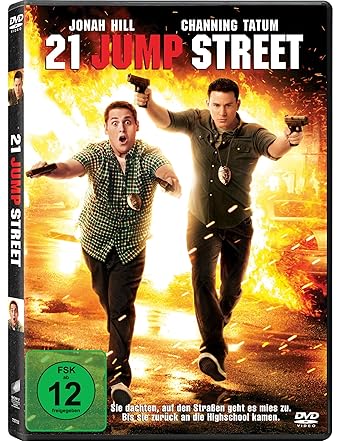
A successful parody of both high school teen flicks and buddy-cop movies (ala’ Hot Fuzz).  A blast of a picture, made better by strong chemistry between Jonah Hill and Channing Tatum.  Hill was the high school geek, Tatum on the top of the social totem pole, but after graduation, they both ended up on the police force, with dreams of car chases, shoot-outs and slo-mo explosions.  Instead, they are assigned as bike patrolmen, and after they screw that up, they are shipped off to the Jump Street division, where their youthful faces land them back in high school, undercover, to break up a drug ring.

So far so good, though not much beyond the formula.  But the material is elevated during their second stint in high school, where Tatum finds himself the geek.  Aggressive jocks, immediate put-downs and a hierarchy are out; tolerance and peace are in; and the main drug dealer (played by James Franco’s brother, Dave, in a very funny, emo/enviro turn) cleaves to the cooler Hill, leaving Tatum as the odd man out.  Hill basks in a high school popularity he always craved, leading to a great exchange where Tatum screams at Hill, “You’re in too deep” after he finds that Hill is filling out college applications in the hopes of matriculating at Berkeley with Franco.

Which brings me to Tatum, who I had unfairly classified as a graduate of the Josh Hartnett school of lobotomized acting.  Indeed, to watch Tatum play Roman period, as he attempted in The Eagle, was cringe-inducing.  But as Clint says, “A man has got to know his limitations.”  Tatum redeems himself and steals this picture with great timing and unexpected sensitivity.  He is also getting very good reviews for Steven Soderbergh’s Magic Mike.

A high school boy (Aaron Johnson, who played a young John Lennon in Nowhere Boy) decides he will simply purchase an outfit and proclaim himself a super hero.  One modest success leads to a knife-in-the-belly and being run over by a car, but he does not lose heart, and returns to the streets with steel-reinforced bones.  Soon, he’s a web-hero, attracting not only the attention of cruel mob boss Frank D’Amico (Mark Strong) and his wannabe son (Christopher Mintz-Plasse) but of the more accomplished super-duo, Big Daddy (Nicholas Cage, doing an Adam West impression), and Hit Girl (Chloë Grace Moretz), Big Daddy’s foul-mouthed, lethal 10 year old daughter.

Funny, clever, and hyper-violent, this is a comic-book movie that engages rather than slams you into a stupor.    Yes, we get some nice, brutal, inspired fight scenes.

But we also get the softer, gentler side of super hero bonding

This is a fun, smart documentary that chronicles the fall of George Lucas in the eyes of his fans and mines their conflicted attitudes towards a man they belove yet revile.  At root, it’s a story about how gods disappoint.

The social impact of Star Wars can be overstated (one fan references Shakespeare), but there is no denying that Lucas’s 1977 film was revolutionary not only in how it changed movie entertainment, but in its creation of a legion of fans dedicated to its ethos.  They just don’t just love Star Wars; they revere it and deem it participatory in their lives.  They wear the outfits, make their own film homages (the clips of these movies are the highlight of the documentary), buy the toys and products and countless DVD releases, and endlessly debate the impact of the film.  And the nature of its creator, who once gave them sun and now provides only darkness.  This goes beyond Spock ears.

The first third of the documentary shows Lucas’s rise from geeky auteur, hostile to the Hollywood machine, to corporate titan, overseeing not just Star Wars but the technical transformation of Hollywood films in general.  And then the fun begins. First, Lucas re-envisions his Star Wars trilogy.  He brightens things up, adds some more incredible effects, and best (or worst, if you’re an acolyte), changes a few scenes.  The ensuing furor is atomic.  Fans are particularly incensed that Lucas changed the character of Han Solo, who in the original picture shot a bounty hunter point blank, but in the “re-envisioning” returned fire only after the bounty hunter shot first (the bounty hunter missed from 2 feet, a failure that makes fans apoplectic).  As one disgruntled fan notes, “It’s as if Martin Scorsese cut out some killing from The Departed because he realized he had an 8 year old son.”

As fun as the collective kvetching is over that change, the roil becomes greater when the fans attack Lucas’s decision to erase the first cut of the trilogy.  I did not know this, but you can’t get a DVD of the original movies.  Lucasfilms even intimates that the original prints are destroyed.  And boy does this make the Star Wars fans nutty.  They point to the hypocrisy of Lucas’s opposition to Ted Turner’s colorization of black-and-white films and say, collectively, “Aha!”  You can almost see Lucas in a dark room, on a throne, wickedly chuckling at their discomfort.

While the outrage over Lucas’s authoritarian control over his original work is pitched, the response to the release of his execrable second set of films is a hilariously bitter pill.  Oh, did these folks want to love those films, having waited sixteen years for them. And their recollections of how they felt when they realized the pictures sucked are almost heartbreaking.  One fan explains that he saw The Phantom Menace over a dozen times hoping he would just get it.

The documentary is really made by the fans who gave the interviews. Their love is pure, their hostility to a Jar Jar Binks poetic, and yet, they all seem to have a good sense as to how ridiculous they look as grown ups incensed, and even enslaved, by George Lucas.

This critically-acclaimed 2011 release purports to be a psychological study of its protagonist, Martha (Elizabeth Olsen), who becomes a member of an upstate New York commune/cult led by the charismatic John Hawkes (nominated for an Academy Award for his role in Winter’s Bone).   The film opens with Martha’s escaping the collective farm, though Hawkes and the other members of the commune (a motley assortment of women who serve him and a few young men) don’t do very much to stop her flight.  Martha ends up 3 hours away, at the Connecticut lake home of her wealthy sister and her new husband.  There, we learn of her ordeal through flashback (sexual abuse, violence, co-opting and subordination to the whole) while she struggles to adapt to life outside the cult.  She provides tension to her sister’s household as she brings bad habits from the commune with her (swimming nude, curling up in the bed of her sister and brother-in-law while they are having sex, condescending to them about their lifestyle) and undergoes post-traumatic stress that manifests itself in panic attacks, wetting herself and refusal to discuss what happened.

All of which makes for a frustratingly monotone of a movie.  Martha is treated with such sensitivity by her sister that you sympathize most with the husband, who has to endure a recalcitrant, moody weirdo in his midst without anyone ever saying, “What the hell happened?”  Worse, while it is clear that Martha undergoes trauma, her behavior after she endures it suggests a person who was under the sway of the commune since childhood.  In fact, Martha was there for two years.  Also, the key to a psychological study is an explication of why Martha was lured into the life, but we get no clue as to what Martha was looking for when she voluntarily allowed herself to be part of Hawkes’ crew and scant information on what the cult is really about.  Martha seemed shallow and dull in flashback and during present-day, she seems shallow, dull and jittery.  Moreover, Martha says some very terrible things about and to her sister (“You’re going to be a terrible mother”), who has the patience of Job, suggesting she was a first-class turd even before she went to the commune.  This is not conducive to empathy.  Finally, the picture reveals a Manson-esque quality to Hawkes very late, which is awkward and unconvincing.

Another problem is Olsen’s performance.  Yes, she does better work than her sisters ever did on television’s “Full House”, but it is still a one-note, amateurish turn.