Archive

Rating

99 Homes' is a foreclosure-fueled drama for our age

In the opening scene, Michael Shannon, a rising Florida real estate broker, walks out of a house where he has just attempted to evict a man. The tenant has blown his brains out in the bathroom. Shannon cares not a whit; he has the lives of many more good, hard-working, decent Frank Capraesque archetypes to ruin, and there are only so many hours in a day. This is the most subtle part of 99 Homes. I get the sense they show this picture to Bernie Sanders volunteers to get them jacked up before they go door-to-door.

Shannon soon moves to the house of Andrew Garfield, a construction worker who is behind on payments for his childhood home, which he shares with his mother (Laura Dern) and son. Garfield gets the boot through the collusion of the courts, the sheriff and indeed, modern American capitalism, but fate brings him back to Shannon, who sees something in the lad. Soon, Garfield is working for Shannon, evicting a passel of George Baileys and making serious bank.

But what does it profit a man to gain the whole world and forfeit his soul? Yup. It’s that kind of movie, a bludgeon. It’s also repetitive (if you want a “how to” on evictions, this is your flick, because we see scads of them) and unwittingly undermines its message. Garfield is a pretty stupid poor person and an even dumber rich person; he equivocates and Hamlets through the entire picture, so much so you actually feel bad for the devil Shannon in having to negotiate the soul of this dimwit.  Also, director Ramin Bahrani obviously knows squat about the Florida police. The film ends with an extended scene where a man resisting eviction fires a rifle out his window at the cops numerous times and yet, miraculously, they don’t shoot him.  Poppycock.

Shannon is the only reason to see the movie; he does his level-best to give real estate Satan some heft and depth, and he is one of the most interesting actors around.

Naturally, the movie was adored by the critics (“makes you understand how this poisonous financial ecosystem thrives” – David Edelstein; “nails the predicament in which so many working-class folks now find themselves. Although they cling to the American dream, for many of them it has become a nightmare” – Calvin Wilson), who – as everyone in the know knows – have for years been in the pocket of the anti-eviction lobby.

It’s difficult not to compare this Academy award-nominated documentary about singer Amy Winehouse with Montage of Heck, the documentary on Kurt Cobain. Both tell the stories of young popular artists who were undone by drug abuse and depression. Both individuals suffered childhood ruptures and significant medical problems (Winehouse suffered from bulimia while Cobain had serious stomach issues). Both killed themselves, Cobain actively, Winehouse as close as you can without actually pulling the trigger.

The comparisons, however, end there. Cobain’s raw talent was nowhere near that of Winehouse. Winehouse’s voice was so powerful, nuanced and unique, it was staggering, and as evidenced by the documentary, she was a beautiful lyricist as well (thankfully, as she sings, we get to see her lyrics in print). Winehouse also comes off as extremely sympathetic, a sweet and vulnerable girl too fragile for this world (pardon the cliché), someone desperately looking for unconditional and protective love in the hard environs of celebrity. Conversely, Cobain was angry, spit at his success and pretty much made drug addiction a career goal, a decision very difficult to pigeonhole into tragedy.

Director Asif Kapadia uses the ample footage of Winehouse to guide us through her rise and fall (the advent of camera phone video gives us the paradox of Winehouse plagued by paparazzi but constantly videotaped even in private), and while he maintains a veneer of dispassion, he ties her self-destruction in part to a passive mother, an absent and then craven father (it is almost unbearably painful to watch him arrive in St. Lucia as she convalesces from an overdose with a camera-crew for his own reality TV show), an opportunistic boyfriend (if you have even an atom of chivalry in your bones, the moment you meet the creepy, clingy Blake Fielder is the moment you want to beat him senseless) and the cruelties of the press. Indeed, Kapadia is so skillful in communicating his thesis that my own bullshit meter senses oversimplification, and in pressing his case, he flirts with casting Winehouse as victim, when, in fact, she was a willing driver of the ills that befell her (she died of alcohol intoxication at 5 times the legal driving limit). Still, the film as portrait of an artist remains vibrant even if the thesis is hokum. Winehouse’s unfairly or accurately maligned father may have said it best, “Half of me wants to say don’t go see it. But then the other part of me is saying maybe go see the videos, put your headphones in and listen to Amy’s music while they’re watching the videos. It’s the narrative that’s the problem.”

Spectre' women are 'fantastic' pair for 007

This may be Daniel Craig’s last Bond, which is a shame, because it is awful, and his turn revived the series. Like Skyfall before it, we again find ourselves delving into Bond’s psyche, but unlike the previous installment, the action sequences in Spectre are humdrum, the plot is even simpler and more obvious, the execution is lazy (at one point, without even a hint of foreshadowing, Bond procures a plane in a matter of 30 seconds, and he ain’t on an airfield), it recycles (an old building collapses in Mexico City, just like an old building collapsed in Venice in Casino Royale) and the bad guy – Christoph Waltz – is barely part of the film.  When Waltz’s true, hilarious motive is revealed, I guess his scarcity makes some sense.  His motive is the only thing that hints at a sense of humor but eliciting chuckles was assuredly unintentional.  Otherwise, we are apparently supposed to take this seriously.

Director Sam Mendes (Skyfall) doesn’t help matters by focusing on visually striking images above all else. Bond seems to simply appear from the mist in every scene, impeccably and nattily tailored, and after enough of these fashionista turns, the movie feels more like a cologne or car commercial than a picture. Bond romances a woman (the underused Monica Bellucci) against a big mirror in the vast open room of a Roman villa, and you can’t believe the scene does not end with “Obsession. By Calvin Klein.”

Spectre is also cursed by the most vacuous Bond girl since Tanya Roberts. Leya Seydoux is the daughter of his nemesis. In, I am guessing, her late 20s, she is a brilliant and accomplished psychologist with inconvenient but lush offices in the Austrian Alps (she actually has Bond fill out a medical questionnaire; oh to have seen his answers under the section “Sexually Transmitted Diseases”). She’s also weightless and dull as dishwater. As if the producers went out of their way to find a French Taylor Swift.

Finally, Mendes has elevated Bond to the status of super hero.  As he escapes Waltz’s lair (Waltz is experimenting on him with drills for reasons that still don’t make any sense to me but harkens uncomfortably back to Dr. Evil), he manages to blow the entire installation up with a gunshot while killing a dozen heavily armed henchmen with a handgun. After taking a vicious beating at the hands of a new thug – Dave Bautista, who one hopes is not a recurring figure ala’ Jaws – Bond and Seydoux are quickly dusted off for a quickie looking no worse for wear; indeed, they actually look better.  And at the end, Bond simply snaps handcuffs off of his wrist, one presumes by the mere force of his personality.  Yes, Bond is an exceptional assassin, but one of the joys of Craig was the return to a gut-level, human 007.  Now, he’s Captain America.  Or Captain England.

Even the Sam Smith song is atrocious, as is its accompanying, bizarre title sequence.  Poorly done all around.

I loved Tower Records and so did my father, a classical music nut.  His apartment was littered with the ubiquitous yellow bags and his visits to its D.C. location (the store was a few blocks from his apartment) were long meanders through the aisles and aisles of inventory.  Colin Hanks has done an admirable job of evoking the nostalgia of Tower, which rose from a small shop selling singles in Sacramento to an international conglomerate in a matter of thirty years.  In the process, he recounts not only an incisive story about the music business from a retail and merchandising standpoint, but of a family business, where all of the early stock boys and clerks who got stoned and drunk in the back grew to become VPs and store and district managers.  The fall –  a combination of technology, overreach and a bit of profligacy – is sad, but not tragic.  Every one of the individuals interviewed extols the organization, its singularly decent and quirky founder Russell Solomon, and the positive impact working there had on them.

image

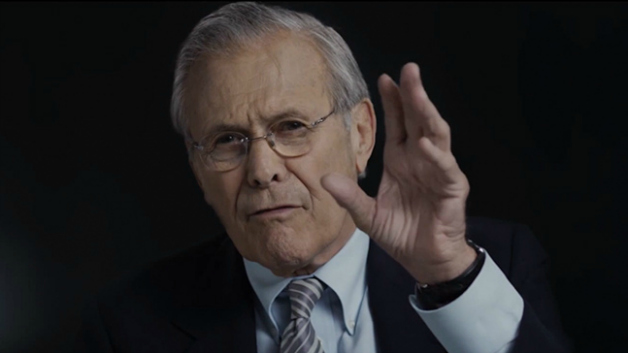
Not an apologia, nor a self serving justification, but rather, an opportunity to listen to the methodology, nuance and capacities of one of the more influential policymakers of our generation. Documentarian Errol Morris is astute enough to let Donald Rumsfeld roll with little interruption, with only occasional prodding, to attempt to reach his core. Unlike with Robert McNamara in The Fog of War, who eventually reached an acknowledgment that seemed near confessional with regard to his failures in Vietnam, Rumsfeld is not of the same mindset. He is not prideful in his cheery resistance to apology: he’s quite capable of admitting error and does so often. But he refuses to accept the premise that in the commission of error, there necessarily lies moral failure or self-serving, political calculation.

Morris is a little cheap on occasion, and with someone who is as careful with his words as Rumsfeld, it is problematic. For example, Morris goes “gotcha!” when he juxtaposes Rumsfeld’s denial that the Bush administration cast Iraq as a major player with al Qaeda in the direct planning of the 9-11 attacks with his statement in a press conference that al Qaeda and Iraq certainly had a relationship.

Mostly, however, Morris is flummoxed by Rumsfeld, which is actually a good thing. Morris approaches Rumsfeld as a provocateur, asking “why obsessed with Iraq?” and “why not just assassinate Saddam?”  He receives answers, albeit answers you can tell he feels are not deception so much as unsatisfactory.

There is no neat wrap-up, no target hit, no successful gotchas, but rather, just a rumination on Rumsfeld’s peculiar process and recollection.

There is a nifty exchange where Morris advances that Shakespeare wrote about large personality-filled power struggles; Rumsfeld replies that those struggles are really just people with different perspectives; Morris counters, “Did Shakespeare get it wrong?”; and Rumsfeld thinks about it, shrugs, and suggests maybe Shakespeare got it right . . . for his time. In that same vein, Morris pushes Rumsfeld for lessons between Vietnam (the end of which Rumsfeld oversaw serving President Ford) and Iraq, and Rumsfeld parries that while one hopes to heed lessons in history, the primary lesson is “some things work out and some don’t.”

Morris wants Rumsfeld to answer, “How do you know when you are going too far?” and Rumsfeld is literally the last person on this earth equipped or inclined to provide him a satisfactory response.  Are you saying, “Stuff just happens?”, Morris asks in exasperation.  Rumsfeld looks back at him with the look of someone who has just been asked “Are you saying you breathe air?”

Morris conceded his agenda, and perhaps the thwarting of same, in an interview: “You’re left with a strange anxiety about [Rumsfeld].  I suppose if I was Mike Wallace or David Frost or whoever, I’d back [him] into a corner. But I love those moments, because I don’t even know where I am anymore. I don’t know whether he’s in any way self-aware, whether he is lying, whether he’s just in some strange alternate universe, the Rumsfeld universe. . . . There’s a ‘j’accuse’ there, but it’s my ‘j’accuse’.”

The consensus from the dummy contingent of film critics is that Rumsfeld was given the rope with which to hang himself, or his artful dodging is in and of itself proof of the indictment as to his treachery, but what Morris has actually accomplished is a demonstration of the incongruity between the needs of artists, or those who see the world through a Shakespearean lens, and policymakers, who take it one memo at a time.


Barton Fink had the Coen Brothers delving into the dark heart of old Hollywood as it crushed the dreams, condescension and verve of the working man’s playwright. The result was a dark and sometimes terrifying comedy that revealed the old film business as an industrial behemoth, plowing over the souls of artists. It is a dour, unpleasant movie, and ironically, so arty and showy that you long for the simplistic Wallace Beery wrestling picture that plagues its protagonist.

It appears the Coen Brothers have lightened up considerably. Hail, Caesar! is a breezy, clever and light love letter to old Hollywood. The studio chief (Josh Brolin) is being wooed by corporate America, and the man sent to Tinseltown to lure him away can’t help but take jabs at the frivolity of Brolin’s work. Indeed, between staging marriages to deal with the unplanned pregnancy of a star (Scarlett Johansson), matchmaking stars to feed to the gossip columnists, squelching rumors about his Clark Gable-esque A lister (George Clooney) and saving that same commodity from kidnappers, it all seems pretty silly. But it is not. It is, as presented by the Coen Brothers, noble work.

This light romp is made glorious by several masterful recreations of old Hollywood scenes, from the massive scale of period pieces to cowboy antics to jaw-dropping swim and song-and-dance numbers. The detail is lovingly rendered, and the humor is always there. This is one of their better films. It prompted Ann Hornaday of The Washington Post to rank her Coen Brothers films, a list that is in many ways beyond stupid. Here is mine:


  1. Fargo
  2. No Country for Old Men
  3. The Big Lebowski
  4. True Grit
  5. Inside Llewyn Davis
  6. Burn After Reading
  7. Miller’s Crossing
  8. Hail, Caesar
  9. Raising Arizona
  10. Oh Brother Where Art Thou
  11. Blood Simple
  12. Intolerable Cruelty
  13. Barton Fink
  14. The Hudsucker Proxy
  15. The Man Who Wasn’t There
  16. A Serious Man

**. The Ladykillers (never saw it)


image

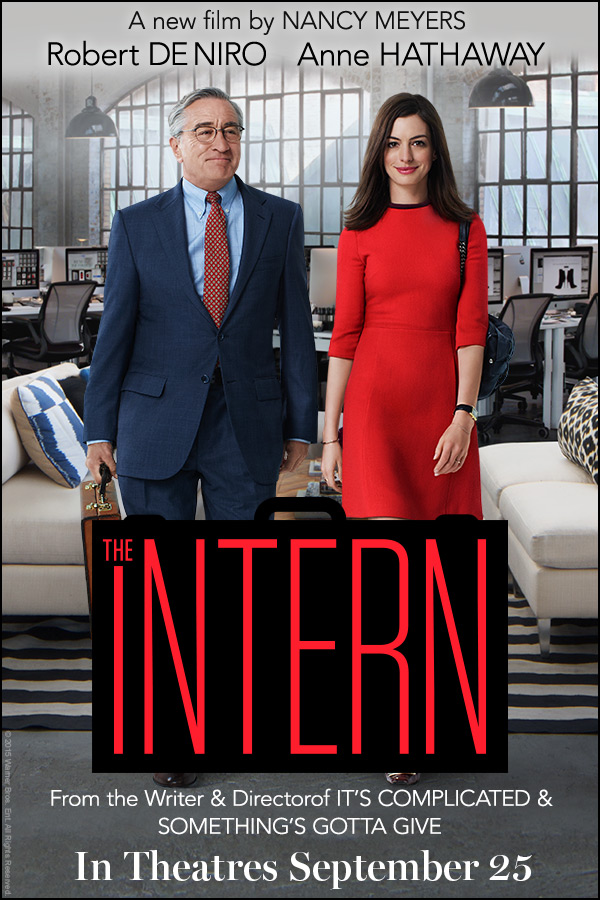
Makes Love, Actually seem like a gritty documentary.  This is a cloying, revolting film about a young entrepreneur (Anne Hathaway), her senior intern (Robert DeNiro) and her struggles to have it all in the fast paced world of tech and fashion.  Hathaway grew up from her stint as a personal assistant in The Devil Wears Prada, and now she runs her own on-line clothing company.  But she works too hard, her marriage is in crisis, she’s mulling bringing in a new CEO and fortunately for her, dapper, impossibly cute DeNiro arrives to provide balance to her life.  That’s the whole thing, which would be bearable, except for the fact that Hathaway is playing her own excruciating “aw, shucks, me?” persona; DeNiro looks bored; the plot is non-existent and the presentation slipshod; Anders Holm (from Comedy Central’s Workaholics) is Razzie-worthy for his clumsy, unconvincing turn as Hathaway’s mushy husband: the film doesn’t know whether it wants to be a comedy or a drama so it settles as a statement on the pressures put on rich professional women who live in impossibly gorgeous and classy Brooklyn brownstones; the score is a maudlin, soapy piano that bores into your skull; and everyone in the thing is just so damned cute, you hope that just maybe, they’ll inject a devastating calamity.  They don’t, unless you consider accidentally sending an email criticizing your mother to your mother of that stripe.

Also, apparently, in Brooklyn and Manhattan, parking isn’t a problem.  Anywhere.

In the immortal words of a review of a Spinal Tap record, shit sandwich.

The Martian - Disney+ Hotstar

Matt Damon anchors this futuristic mash-up of Apollo 13 and Castaway (with a little bit of Gravity thrown in for good measure), and for the most part, the results are positive. Stranded on Mars, Damon must learn to adapt to the planet’s forbidding nature, ingeniously deducing how to grow food, warm himself, and communicate with NASA to effectuate his rescue. This is an Oscar-nominated film and still in the theaters, so I’ll be broad in my comments.

Damon, as usual, elevates a picture. We view him battling the elements and disaster, and he veers between gallows humor, heartfelt wonder when he hits upon an idea that can help him survive, and mental and physical breakdown. He’s a gifted and still, incredibly, underrated actor, too often overlooked. He was the heart of The Talented Mr. Ripley, but everyone was dazzled by Jude Law; he made The Departed tick, but the buzz went to Jack Nicholson, Leonardo DiCaprio and even Mark Wahlberg, who played a stock tough Boston cop and received an Oscar nod for it. In the Coen Brothers re-make of True Grit, Damon near stole the picture, and his smaller part in Contagion was the most affecting.

The film moves rapidly as director Ridley Scott alternates between Damon attempting to survive on Mars and the efforts of NASA to rescue him. While we are with Damon, the picture is consistently compelling. When it reverts to NASA, however, it becomes uneven, pat and pedestrian. It does not help that Jeff Daniels has decided to portray the director of NASA as some sort of mannered Aaron Sorkin archetype. It also does not help that Kristen Wiig is anywhere near this movie (as the director of Public Relations for NASA, she seems to be itching to show us her googly eyes). Finally, Scott is clearly aping Apollo 13 by giving us a picture of the NASA brainiacs as they work to save Damon. Unfortunately, unlike in Apollo 13, the science is less accessible and negatively juxtaposed with what Damon is doing on the planet, where he actually explains to us what he is doing in his daily video logs.

Scott is no stranger to space.  His breakout film, Alien, was set in 2127, where space was industrial, dirty and haunted, and government and corporations conspired to screw the little man. Clearly, he is in a better place today. In 2035, NASA’s kindly counterpart in China subverts its own government to help Damon; the people who work at NASA have a certain blasé “I worked in a Blockbuster and I will never wear a uniform again” mien: and missions to Mars are the kind of endeavors wear crewmates can play kissy face.

My curmudgeonly nits aside, this is very solid entertainment.

image


(Reporting from the Blizzard of ’16)

Writer-director Olivier Assayas has created a beautiful character study and meditation on the subjects of stardom, aging and generational disconnect.  Juliette Binoche gives the performance of her career as a world famous actress.  She made her stage debut twenty years earlier as an ingénue who seduces and destroys an older woman. In a revival, Binoche is asked to play the part of the older woman, and she must deal with the passage of time, the change in her viewpoint, the suicide of her old friend the playwright, and her own vulnerability to youth in the guises of her personal assistant (Kristen Stewart) and the young superstar actress playing Binoche’s debut role (Chloe Grace Moretz). Stewart is Binoche’s connection to the world of celebrity and Internet media and must support Binoche as she becomes increasingly nervous about her performance while suffering her neediness and condescension.  Grace Moretz is coming to destroy her

Binoche is noble, fragile, and bravely bears her soul and insecurities in the face of time and the vagaries of celebrity. When we meet her, she is glamorous, beautifully made up for a Chanel photo shoot and a tribute to the playwright. When Binoche makes herself sexually available to an old flame who mistreated her in the past, only to be reduced to the role of the spurned lover waiting in the hotel for the visit that never comes, it is deeply affecting.

Binoche is ambivalent about playing the role because she knows all too well the fragile state of her age, which results in passive aggressive behavior towards Stewart and capitulation to Grace Moretz. As she prepares for the role with Stewart, she is natural, without makeup and the accouterments of the star. It is as if her armor has been discarded.

Grace Moretz is electric as the the new, hot thing, seemingly deferential to Binoche while harried by paparazzi and swirling scandal. Stewart is canny, but her problems as an actress continue. Her appeal has always struck me as inexplicable. At her worst, she is capable of mere sullen boredom, and at her best, a medium cool disaffection. Here, she does a bit better, but she can’t quite elevate her blase’ demeanor to a suggestion of anything deeper.  Still, she’s adept, and does not get in the way here.


image

(Reporting from the Blizzard of ’16)

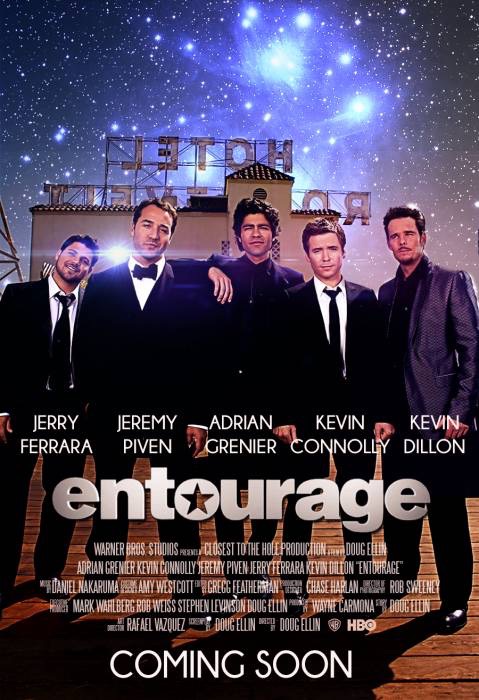
The TV show was two seasons too long but most always amusing, giving you a taste of what it might be like to be young, dumb, affable and famous in the candy dish that is Hollywood. The show’s greatest attributes were its locale, engine (the hyper, high-powered brutal agent Ari Gold played by Jeremy Piven) and length (a brisk 30 minutes). Entourage gave to men what Sex in the City gave to women, though the latter could often seem a conflicted and forbidding place for the female archetypes. Not the sandbox that was Entourage‘s Hollywood. Sure, the fellas had occasional relationship issues or fights with studios, but nothing that could not be wrapped up quickly and remedied by weed, easy sex with nubile ornaments, and kick-ass parties.

The film bollixes up all the critical elements of the TV show. The locale is used solely for a series of unfunny cameos and time-wasting sojourns. The likes of Liam Neeson, Mark Wahlberg (the show’s canny producer) and Armie Hammer (he’s someone?) just show up, which is just weird.

Worse, the Hollywood of now just seems tired and pedestrian. Piven, now a studio head instead of a mere agent, is less antagonistic and biting than weary and beleaguered, and his time is spent making sure the dream film of his pretty boy Eliza Doolittle/Vinnie Chase (Adrian Grenier; he directs!) is financed by mean old Billy Bob Thornton, a gun totin’ Texas kabillionaire and the studio’s primary financial partner. This leaves Piven in the role of supplicant most of the film, not aggressor, and as anyone who watched the series will tell you, Ari Gold is one entertaining combatant.

Two hours in and one gets the feeling that director, writer, and creator Doug Ellin was desperately looking for filler. He does a few pointless things with Vince’s gang, but it is not enough. Like a kid completing a term paper coming in short, we get a lot of driving and walking scenes.  If they are your thing, this is your flick.

The best part of the movie is one aspect of the actual story, which has Thornton’s spoiled son (played by Haley Joel Osment of The Sixth Sense fame, who now sees bored people) coming up to Hollywood and attempting to put the kibosh on Vince’s opus, a futuristic remake of Jekyll and Hyde, because Vince aced him out of a girl.

Even though they are excuses used to cover for being hurt over the girl, Osment’s criticisms are valid.  He explains that Vince’s brother (Johnny Chase, played by Kevin Dillon) is putrid in his four “pivotal scenes” and that Vinnie himself sucks as the lead, and you know he’s probably right. Hell, when Ari nervously screens the picture and we get 2 minutes of it, it has the look and feel of a high-end Sprite commercial.

Alas, Osment is sent packing, and the boys get Golden Globes (ha! Not a People’s Choice?).

Osment, however, gets the last laugh.  He was actually nominated for a real Academy Award.