Archive

4 stars

Richard Linklater’s astute command of time and place is forever proven by his masterpiece, Dazed and Confused, which captured a Texas town’s high school circa 1976 in all its bell-bottomed, long-haired, keg-in-the-woods glory. Everybody Wants Some! ain’t Dazed and Confused. Focusing on a young college baseball player’s matriculation at a Texas college, Linklater appears to be satisfying an 80s-era checklist. Mud wrestling. Check. Disco. Check. Mechanical bull. Check.  “Get the Knack!” Check. And while Dazed and Confused gave you insight into the jocks, the stoners, the geeks, the parents, the coaches, the teachers and the townies, Everybody Wants Some! is limited to the hyper-male competitive environment of the baseball team, a group that parties hard, jumps on your Achilles at every opportunity, and challenges each other in all respects, when not dime-store philosophizing about winning, commitment, pot and “pussy.”

Yet, with all its flaws and limitations, I dug the movie. Linklater lovingly recreates the art of male bullshitting, which, granted, is not for everyone; the wonder of all the possibility of college; and the camaraderie of sports, all to an unabashedly “classic rock” soundtrack. it’s an acquired taste, and this is a very light film that at its best is merely charming, but I was smiling throughout.

image

There’s not one thing in Antoine Fuqua’s boxing rise-and-fall epic that even nears original, but cliche’ does not always have to be hackneyed, and through inventive camera work, all-in performances by Jake Gyllenhaal (as the Hell’s Kitchen boxer who loses it all) and Forrest Whittaker (playing the wise and world weary trainer), a captivating turn by the child actress playing Gyllenhaal’s daughter (Clare Foley) and expert pacing, assisted by a jumped up soundtrack, the thing works and works well.  There are problems. Gyllenhaal’s fall is a bit too protracted, and as hard as she tries to be working class, Rachel McAdams simply lacks the necessary grit.  They tried to dirty Amy Adams up in another boxing movie, The Fighter, and that too was a bridge too far.  These actresses don’t evoke the street, unless that street has a cul-de-sac.

The Witch | Rotten Tomatoes

This is a consistently disturbing and terrifying film, one that explores myth, religion, and the dread of isolation in the cruel and unforgiving setting of pre-colonial America.  Writer-director Robert Eggers is a master of the creepy visual as he tracks a Puritan family, cast out from their community and into the wilderness on the strength of religious conviction. It is there, alone, that the bonds of their faith and family and the limits of their sanity are tested by the supernatural.

This film has a lot in common with The Babadook, invoking both curse, madness and the susceptibility of children, and like that film, there are moments of absolute horror that do not rely on a drop of shed blood.  If there is a weakness (and it is by no means universal, just one of personal taste), it is the simplicity of the threat. In The Witch, the threat is omnipotent and unexplained. It has no backstory, no articulated lore, and no vulnerability. As such, as assured as it presents, there is a decided lack of drama. We quickly learn these folks don’t stand a chance, and while their fate and story is loads more interesting than standard meat grinder fare, I just don’t have much of an interest when the deck is so stacked, no matter how skilled the effort.  Nonetheless, this movie has one of the spookiest feels of any I’ve seen.

I was in school in Philadelphia from 1982 to 1984, during the mayoralty of Wilson Goode, who had taken over from the dictatorial former police commissioner and mayor Frank “I’m gonna’ be so tough as mayor, I gonna’ make Attila the Hun look like a faggot” Rizzo (Rizzo had once bragged that his police department could invade a country, and having seen them in action, I believed it). At that time, the Philadelphia police department was in an intractable standoff with a weirdo cult – MOVE – a back-to-nature, but armed-with-guns, community-based but plague-on-the-surrounding-community organization that melded hippie-life, black militancy and making their neighbors (largely, middle class blacks) miserable. The cops and MOVE had tangled once before, in 1978, leading to a siege where a police officer was killed and numerous cops and fire fighters wounded. Nine MOVE leaders and other disciples received life sentences as a result, but the remainder of the organization’s adherents moved to another neighborhood in West Philadelphia, where the entire scenario played out again years later. I clearly remember the local news reporting on police-MOVE clashes when I was in Philly, but until I saw this documentary, I had actually convinced myself I was in the City of Brotherly Love for the final confrontation.  I was wrong. By then, I had transferred schools and sat in Harrisonburg, Virginia, where the only assault was olfactory, a combination of a dog food plant and turkey slaughter.

Mayor Goode decided he’d had enough of MOVE plaguing yet another neighborhood (MOVE’s parenting was questionable, they had built a row house on Osage Avenue into a fortress, they menaced the neighbors and in particular, blasted obscenity from loudspeakers with regularity at all hours).  The cops came in to serve warrants on several MOVE members, they resisted, gunfire ensued (MOVE shot, and the police responded, if not in kind, as they unloaded 100,000 rounds into the house), another siege ensued, only this time, after a long period of time where they doused the MOVE house with water hoses, the police dropped an incendiary device on their house. And they let it burn. And it did, eventually engulfing the neighborhood, destroying 65 houses and killing 11 of 13 MOVE members, including 5 children.

This documentary is comprised solely of archival footage from the news, the public hearings that took place after the events (two of my former law partners were involved, one as the then-D.A. and the other as a member of the commission), and depositions taken in connection with litigation.  It is riveting, almost dreamlike, and you can’t even imagine that what you are seeing could possibly occur. But it did (and actually, again in the 1990s with the Waco stand-off), and the rendition is gripping, With the exception of some discordant editorializing at the end of the documentary in the aftermath section, it is also fair. On Netflix streaming.

image

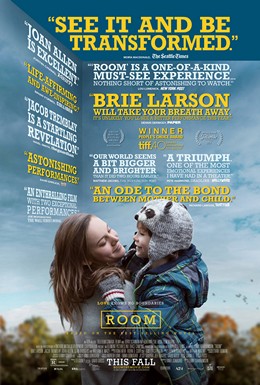
This is a beautiful film, filled with moments of despair, joy, and connection that occur not only between a mother and child, but between older parents and their grown up girl. As in the headlines, Brie Larson plays a woman who has been abducted as a teen and secreted away in the specially constructed back shed/room of her abductor’s suburban Ohio home. He visits regularly to rape her, an encounter she must endure without resistance because she has fathered his child, a little boy (Jacob Tremblay) who must stay hidden in the closet during these visits. When he leaves, she does her level best to raise the boy, who knows nothing of the world around him, a fact she must remedy when she concocts a plan for escape. When the boy is introduced to the world, it plays like a bird pushed out of the nest. You are utterly terrified for him. When he and his mother are back in her childhood home with her grandmother (Joan Allen), your fear becomes concern, at his acclimation and the mental health of his mother, who now has to tend to her long suppressed issues.

This is a film about connection, the rigor of parenthood, and the limits of love and blood. Larson’s determination, Tremblay’s resistance, Allen’s long-suffering courage, all feel immediate and real. There isn’t a hint of melodrama, which is rare thing given its true crime genesis. Larson is mesmerizing, the perfect balance of drive and fragility, and Tremblay delivers one of the most moving child performances I’ve ever seen. William Macy has a small role as Larson’s father, who has divorced Allen and who, in a painfully poignant scene, cannot bring himself to look at the boy, for all he sees if the product of his daughter’s tormentor. It missteps only once – Larson gives an interview to a journalist whose questions are so tasteless that it feels false – but even in this error, the filmmakers show Larson as flawed (you can see in her eyes that she knows she screwed up in agreeing to the exclusive) when in lesser hands we would have seen her resolute, rising against the opportunist reporter in righteous indignation.  One of the best of the year, and the failure of the academy to nominate Tremblay as supporting actor continues the real prejudice of those old fogies at Oscars, against the young.

It’s difficult not to compare this Academy award-nominated documentary about singer Amy Winehouse with Montage of Heck, the documentary on Kurt Cobain. Both tell the stories of young popular artists who were undone by drug abuse and depression. Both individuals suffered childhood ruptures and significant medical problems (Winehouse suffered from bulimia while Cobain had serious stomach issues). Both killed themselves, Cobain actively, Winehouse as close as you can without actually pulling the trigger.

The comparisons, however, end there. Cobain’s raw talent was nowhere near that of Winehouse. Winehouse’s voice was so powerful, nuanced and unique, it was staggering, and as evidenced by the documentary, she was a beautiful lyricist as well (thankfully, as she sings, we get to see her lyrics in print). Winehouse also comes off as extremely sympathetic, a sweet and vulnerable girl too fragile for this world (pardon the cliché), someone desperately looking for unconditional and protective love in the hard environs of celebrity. Conversely, Cobain was angry, spit at his success and pretty much made drug addiction a career goal, a decision very difficult to pigeonhole into tragedy.

Director Asif Kapadia uses the ample footage of Winehouse to guide us through her rise and fall (the advent of camera phone video gives us the paradox of Winehouse plagued by paparazzi but constantly videotaped even in private), and while he maintains a veneer of dispassion, he ties her self-destruction in part to a passive mother, an absent and then craven father (it is almost unbearably painful to watch him arrive in St. Lucia as she convalesces from an overdose with a camera-crew for his own reality TV show), an opportunistic boyfriend (if you have even an atom of chivalry in your bones, the moment you meet the creepy, clingy Blake Fielder is the moment you want to beat him senseless) and the cruelties of the press. Indeed, Kapadia is so skillful in communicating his thesis that my own bullshit meter senses oversimplification, and in pressing his case, he flirts with casting Winehouse as victim, when, in fact, she was a willing driver of the ills that befell her (she died of alcohol intoxication at 5 times the legal driving limit). Still, the film as portrait of an artist remains vibrant even if the thesis is hokum. Winehouse’s unfairly or accurately maligned father may have said it best, “Half of me wants to say don’t go see it. But then the other part of me is saying maybe go see the videos, put your headphones in and listen to Amy’s music while they’re watching the videos. It’s the narrative that’s the problem.”

I loved Tower Records and so did my father, a classical music nut.  His apartment was littered with the ubiquitous yellow bags and his visits to its D.C. location (the store was a few blocks from his apartment) were long meanders through the aisles and aisles of inventory.  Colin Hanks has done an admirable job of evoking the nostalgia of Tower, which rose from a small shop selling singles in Sacramento to an international conglomerate in a matter of thirty years.  In the process, he recounts not only an incisive story about the music business from a retail and merchandising standpoint, but of a family business, where all of the early stock boys and clerks who got stoned and drunk in the back grew to become VPs and store and district managers.  The fall –  a combination of technology, overreach and a bit of profligacy – is sad, but not tragic.  Every one of the individuals interviewed extols the organization, its singularly decent and quirky founder Russell Solomon, and the positive impact working there had on them.

image

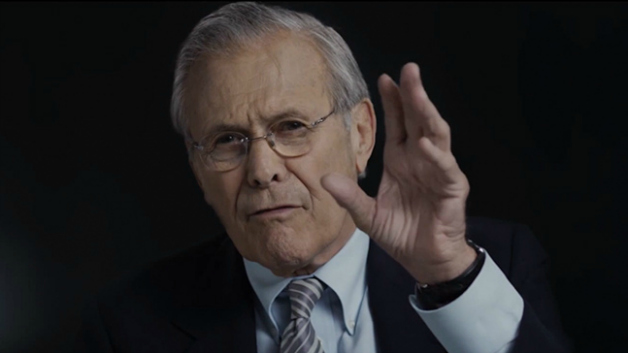
Not an apologia, nor a self serving justification, but rather, an opportunity to listen to the methodology, nuance and capacities of one of the more influential policymakers of our generation. Documentarian Errol Morris is astute enough to let Donald Rumsfeld roll with little interruption, with only occasional prodding, to attempt to reach his core. Unlike with Robert McNamara in The Fog of War, who eventually reached an acknowledgment that seemed near confessional with regard to his failures in Vietnam, Rumsfeld is not of the same mindset. He is not prideful in his cheery resistance to apology: he’s quite capable of admitting error and does so often. But he refuses to accept the premise that in the commission of error, there necessarily lies moral failure or self-serving, political calculation.

Morris is a little cheap on occasion, and with someone who is as careful with his words as Rumsfeld, it is problematic. For example, Morris goes “gotcha!” when he juxtaposes Rumsfeld’s denial that the Bush administration cast Iraq as a major player with al Qaeda in the direct planning of the 9-11 attacks with his statement in a press conference that al Qaeda and Iraq certainly had a relationship.

Mostly, however, Morris is flummoxed by Rumsfeld, which is actually a good thing. Morris approaches Rumsfeld as a provocateur, asking “why obsessed with Iraq?” and “why not just assassinate Saddam?”  He receives answers, albeit answers you can tell he feels are not deception so much as unsatisfactory.

There is no neat wrap-up, no target hit, no successful gotchas, but rather, just a rumination on Rumsfeld’s peculiar process and recollection.

There is a nifty exchange where Morris advances that Shakespeare wrote about large personality-filled power struggles; Rumsfeld replies that those struggles are really just people with different perspectives; Morris counters, “Did Shakespeare get it wrong?”; and Rumsfeld thinks about it, shrugs, and suggests maybe Shakespeare got it right . . . for his time. In that same vein, Morris pushes Rumsfeld for lessons between Vietnam (the end of which Rumsfeld oversaw serving President Ford) and Iraq, and Rumsfeld parries that while one hopes to heed lessons in history, the primary lesson is “some things work out and some don’t.”

Morris wants Rumsfeld to answer, “How do you know when you are going too far?” and Rumsfeld is literally the last person on this earth equipped or inclined to provide him a satisfactory response.  Are you saying, “Stuff just happens?”, Morris asks in exasperation.  Rumsfeld looks back at him with the look of someone who has just been asked “Are you saying you breathe air?”

Morris conceded his agenda, and perhaps the thwarting of same, in an interview: “You’re left with a strange anxiety about [Rumsfeld].  I suppose if I was Mike Wallace or David Frost or whoever, I’d back [him] into a corner. But I love those moments, because I don’t even know where I am anymore. I don’t know whether he’s in any way self-aware, whether he is lying, whether he’s just in some strange alternate universe, the Rumsfeld universe. . . . There’s a ‘j’accuse’ there, but it’s my ‘j’accuse’.”

The consensus from the dummy contingent of film critics is that Rumsfeld was given the rope with which to hang himself, or his artful dodging is in and of itself proof of the indictment as to his treachery, but what Morris has actually accomplished is a demonstration of the incongruity between the needs of artists, or those who see the world through a Shakespearean lens, and policymakers, who take it one memo at a time.

 

The Martian - Disney+ Hotstar

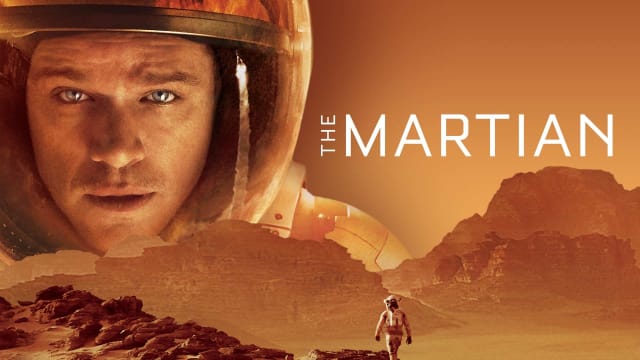
Matt Damon anchors this futuristic mash-up of Apollo 13 and Castaway (with a little bit of Gravity thrown in for good measure), and for the most part, the results are positive. Stranded on Mars, Damon must learn to adapt to the planet’s forbidding nature, ingeniously deducing how to grow food, warm himself, and communicate with NASA to effectuate his rescue. This is an Oscar-nominated film and still in the theaters, so I’ll be broad in my comments.

Damon, as usual, elevates a picture. We view him battling the elements and disaster, and he veers between gallows humor, heartfelt wonder when he hits upon an idea that can help him survive, and mental and physical breakdown. He’s a gifted and still, incredibly, underrated actor, too often overlooked. He was the heart of The Talented Mr. Ripley, but everyone was dazzled by Jude Law; he made The Departed tick, but the buzz went to Jack Nicholson, Leonardo DiCaprio and even Mark Wahlberg, who played a stock tough Boston cop and received an Oscar nod for it. In the Coen Brothers re-make of True Grit, Damon near stole the picture, and his smaller part in Contagion was the most affecting.

The film moves rapidly as director Ridley Scott alternates between Damon attempting to survive on Mars and the efforts of NASA to rescue him. While we are with Damon, the picture is consistently compelling. When it reverts to NASA, however, it becomes uneven, pat and pedestrian. It does not help that Jeff Daniels has decided to portray the director of NASA as some sort of mannered Aaron Sorkin archetype. It also does not help that Kristen Wiig is anywhere near this movie (as the director of Public Relations for NASA, she seems to be itching to show us her googly eyes). Finally, Scott is clearly aping Apollo 13 by giving us a picture of the NASA brainiacs as they work to save Damon. Unfortunately, unlike in Apollo 13, the science is less accessible and negatively juxtaposed with what Damon is doing on the planet, where he actually explains to us what he is doing in his daily video logs.

Scott is no stranger to space.  His breakout film, Alien, was set in 2127, where space was industrial, dirty and haunted, and government and corporations conspired to screw the little man. Clearly, he is in a better place today. In 2035, NASA’s kindly counterpart in China subverts its own government to help Damon; the people who work at NASA have a certain blasé “I worked in a Blockbuster and I will never wear a uniform again” mien: and missions to Mars are the kind of endeavors wear crewmates can play kissy face.

My curmudgeonly nits aside, this is very solid entertainment.