Archive

Genre

David Mamet-speak is one thing.  There is nothing quite like the staccato of the pitiable salesman in Glengarry Glen Ross, and Alec Baldwin’s thunderous sermon to those below him has become so ubiquitous that a generation of frat boys can now recite it – or parts (“coffee is for closers!”) – verbatim.

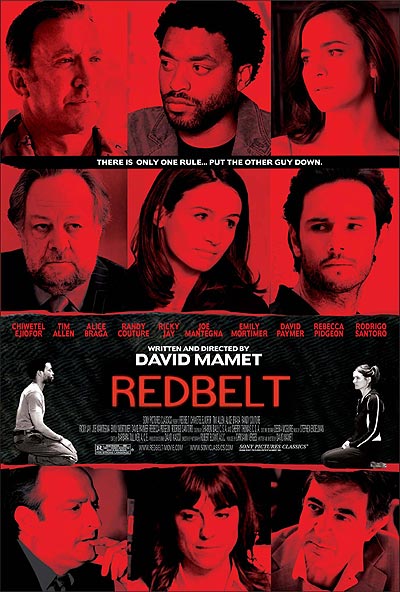
But Mamet-speak has it limits and when coupled with Mamet’s macho honor philosophy, the results can be toxic.  And thus, we have Redbelt, a bizarre modern moral tale about a martial arts enthusiast (Chiwetal Ejiofor) who spouts a lot of Kung Fu b.s. while negotiating through a plot so byzantine and ridiculous that were I to attempt to encapsulate it, I’d have a stroke.

So, I’ll let Wikipedia do it for me:

While closing his Jiu-jitsu studio one evening, Mike Terry (Chiwetel Ejiofor) is approached by attorney Laura Black (Emily Mortimer), who is seeking the owner of the vehicle she accidentally sideswiped. Off-duty police officer Joe Collins (Max Martini), who was receiving a private lesson from Mike, sees that Laura is distressed and tries to take her coat. Startled, Laura grabs Joe’s gun and fires it; shattering the studio’s front window. To avoid having Laura charged with attempted murder, Mike and Joe agree to conceal the event.

Mike’s insurance, however, will not cover his act of God claim that the window was broken by a strong wind. Mike’s wife Sondra (Alice Braga), whose fashion business profits are the only thing keeping the struggling studio afloat, requests that Mike ask for a loan from her brother Ricardo (John Machado), a mixed martial arts champion. At Ricardo’s nightclub, Mike meets with Sondra’s other brother, Bruno (Rodrigo Santoro), and learns that Joe quit as the club’s bouncer because Bruno never paid him. Mike confronts Bruno about the situation but is rebuffed. Mike then declines Bruno’s offer to fight on the undercard of an upcoming match between Ricardo and Japanese legend, Morisaki (Enson Inoue), which could potentially pay out $50,000. Mike believes competitions with money as the incentive are not honorable and weaken the fighter.

Meanwhile, aging Hollywood action star Chet Frank (Tim Allen) enters the nightclub without security and is accosted by a man with a broken bottle. Mike intervenes and subdues three men in the process. The following day, Mike receives an expensive watch and an invitation to dinner from Chet. Mike gives the watch to Joe to pawn in lieu of his unpaid salary at the nightclub. At the dinner party, Chet’s wife Zena (Rebecca Pidgeon) arranges an informal business deal to buy a large amount of dresses from Sondra’s company. Chet, impressed by Mike, invites him to the set of his current film. As Mike and Sondra leave the dinner, Mike explains his unique training method to Chet’s business associate Jerry Weiss (Joe Mantegna). Before a sparring match, each fighter must draw one of three marbles, two white and one black; whoever draws a black marble has to fight with a handicap.

Mike uses his military experience to answer a few technical questions for Chet on the film set and is offered the role of co-producer. That evening, Mike faxes the details of his training methods to Jerry so they can be used in the film. Joe arrives at the studio and informs Mike that he was suspended from duty for pawning the watch, which turned out to be stolen. During their dinner that evening, Mike relays the information to Jerry who excuses himself to handle the matter, but never returns. At home, Mike learns that the phone numbers that Zena gave Sondra have been disconnected. Sondra is panicky, having borrowed $30,000 from a loan shark to order the fabric for the dresses. As he meets with the loan shark to discuss an extension, Mike notices Bruno and Marty Brown (Ricky Jay) on television using Mike’s marble-drawing method as a promotional gimmick for the undercard fights of Ricardo’s match.

Mike hires Laura to sue, but Marty’s lawyer threatens that if they do not drop the lawsuit, he will give the police an empty shell casing with Laura’s fingerprints, as proof that she attempted to kill an off-duty cop. He also threatens Mike as a witness who covered up the crime by bribing the cop with a stolen watch. When told of the situation, Joe feels responsible and kills himself. Mike feels obligated to help Joe’s financially struggling wife and, in desperate need of money himself, decides to compete as an undercard fighter in the upcoming competition.

At the arena, Mike discovers the fights are being fixed via a magician (Cyril Takayama) using sleight of hand to surreptitiously switch the white and black marbles. Disgusted by this revelation, Mike confronts the conspirators: Marty, Jerry and Bruno who confirm that unknown to the competitors, the fights are handicapped by the fight promoters so as to ensure winning bets. They also reveal that Ricardo is intentionally losing the fight to Morisaki so they can make money on the rematch. Jerry tells Mike that Sondra is the one who told them about Laura shooting the window and Bruno justifies her betrayal by explaining that his sister is too smart to stay with someone who cannot provide for her.

As Mike is exiting the arena, he meets Laura. Their conversation is not audible, but it ends with Laura slapping Mike. Mike then re-enters the arena. He incapacitates several security guards trying to stop him and is ultimately engaged by Ricardo. The audience and camera crews take notice as Mike and Ricardo face off in the arena’s corridors. Inspired by the Professor, an elderly martial arts master attending the match, Mike manages to slip a difficult choke hold and defeats Ricardo. He is approached by Morisaki, who awards Mike with his ivory-studded belt, previously referred to as a Japanese national treasure. Mike is then approached by the Professor himself, who awards Mike the coveted Redbelt.

As my Mom might say, “Jeez-o-flip!”

I am not a Mamet hater.  Oleanna, Glengarry, Homicide, State and Main, House of Games, The Spanish Prisoner, these are all very good films, and Mamet displays an authentic American voice in their telling.  His work on films he did not direct, or which did not come from one of his stage plays, such as The Verdict, The Untouchables, The Edge, Hoffa and Ronin, is vivid and accomplished.

Redbelt, however, came out in 2008, about the time someone needed to tell Mamet that his mystical machismo and rat-a-tat dialogue had not only reached their expiration date, but had become as embarrassing as a driver’s hat and leather gloves on a newly divorced man.

Since Redbelt’s release, and critical failure, Mamet has written a few shorts, and episodes for his TV show “The Unit.”  He also wrote a very interesting book explaining his “conversion” from Hollywood liberal to a member of the right, “The Secret Knowledge: On the Dismantling of American Culture,” as fine a read as you’ll get if you want to understand the nuts-and-bolts philosophy and precepts of a modern conservative (beyond the human sacrifices of panhandlers and the ritual rape of the land).  Perhaps he’s done with film writing, but if so, Redbelt is both Mamet’s pathetic coda and a testament to his loss of the gift.

It was kismet that just after watching 1982’s 48 Hours, I’d stumble onto a modern Irish buddy cop picture.  Brendan Gleeson (Boyle) is an Irish policeman in Connemara, content to do his duty while occasionally lifting recreational drugs off of car accident victims or engaging call girls dressed as policewomen for their pleasures.  The FBI, in the form of Don Cheadle (Everett) arrives and they require Gleeson’s assistance in stopping a drug shipment and the brutal gang (led by Mark Strong and Liam Cunningham) facilitating it.

Much more comedic and wry than 48 Hours, The Guard does set up Gleeson as the racist.  When briefed by Cheadle and shown pictures of the white gang, Gleeson goes wide-eyed and says, “I thought only black lads were drug dealers?”  When Cheadle upbraids him for being a bigot, Gleeson responds, “I’m Irish, sure. Racism’s part of my culture.”  But the stronger dynamics are the Cheadle as fish-out-of-water line and a little of Gleeson’s Oscar to Cheadle’s by-the-book Felix.  Gleeson has no real enmity behind his racism and uses it merely to probe Cheadle.  Their interplay gets funnier as they get to know each other.

Best is the depiction of Ireland, which is not so much whimsical as hilariously casual. Gleeson finds some guns meant for the IRA and when delivering them to their contact (the idea of confiscation is never considered), seems bemused that the organization still exists.  The presumption is that almost all the police are on the take, and Gleeson’s explanation as to why he cannot assist Cheadle in the canvassing of potential witnesses to a murder is pitch perfect:

BOYLE:  So what d’ya have planned for the day?

EVERETT:  Well obviously we don’t know who killed McCormick or why. There was no useful forensic evidence found at the crime scene, so I thought we might start by canvassing the area around where the body was discovered. See if anybody heard anything, something they might have thought was relatively insignificant, but which in light of the murder may have a far greater importance. I mean, when I caught that sonofabitch Tyrell Lee Dobbs it was a result of something as seemingly inconsequential as a laundry mark, if you can believe that. The guy had a personal hygiene issue that was almost pathological. The other thing to consider is that McCormick was probably in the process of reconnoitering drop-off points all along the coast. Our friends Sheehy, Cornell and O’Leary are no doubt in other parts of the country doing exactly the same thing. So I’ll liaise with Inspector Stanton and Detective Moody, have them and their men start a coordinated push in all the relevant locations…

He trails off, realizing that BOYLE is concentrating on his food and is not listening to him.

EVERETT:  Sergeant?

BOYLE: I’m sorry, you lost me at “we”.

EVERETT:  We. You and I.

BOYLE:  It’s my day off. Did I not say?

EVERETT:  It’s your day off.

BOYLE:  I’ve had it booked a good while. Ask Stanton.

EVERETT:  We’re investigating a murder and the trafficking of half a million dollars in cocaine–

BOYLE:  Half a billion dollars.

EVERETT: –half a billion dollars in cocaine, and you’re telling me it’s your day off?

BOYLE:  Twenty-four hours won’t make any difference.

EVERETT: Twenty-four hours won’t make any difference

BOYLE:  They’re always saying it does, on those cop shows on the telly, but it doesn’t. Not in my experience, anyways. And why are you always repeating everything I say?

There is also a side story showing Gleeson taking care of his mother (Fionnula Flanagan) in the latter stages of her cancer that is sweet but not distracting.

Finally, the trio of bad guys have a running discussion of philosophy and culture that is Joycean yet Tarantinoesque. It’s rare you’re introduced to crooks in the midst of the following discusssion:

SHEEHY: –Schopenhauer.

O’LEARY:  I’d say Nietzsche.

SHEEHY:  Nietzsche. You haven’t even fucking read any Nietzsche.

O’LEARY:  I have, too. Ah…The Antichrist.

SHEEHY:  Quote me something, then.

O’LEARY:  “What does not kill me–”

SHEEHY:  Ah, for fuck’s sake. Every child knows that one.

CORNELL: Bertrand Russell.

SHEEHY: Bertrand Russell. Will you listen to him. The fucking English. Everything has to be fucking English. Name your favourite philosopher, and lo and behold, he’s fucking English.

CORNELL: He’s Welsh.

SHEEHY: Hah?

CORNELL: Bertrand Russell was Welsh.

SHEEHY: Bertrand Russell was Welsh?

He considers whether or not to take issue with CORNELL’s statement, but then accepts it might be true.

SHEEHY:  You know I never knew that. I didn’t think anybody interesting was Welsh.

CORNELL: Dylan Thomas?

SHEEHY: Like I said, I didn’t think anybody interesting was Welsh.

O’LEARY: “You will not get the crowd to cry Hosanna until you ride into town on an ass.” Nietzsche.

SHEEHY and CORNELL look blankly at O’LEARY. Then —

SHEEHY: Yeah that’s a good one.

CORNELL: Good quote, yeah, nice one.

You might think it showy and contrived, but it’s not. 


Moonrise Kingdom

Wes Anderson’s Moonrise Kingdom is the best film of the year and the best of Anderson’s career.  Anderson writes and directs fables, where child-like adults attempt to grapple with the expectations of a grown-up world.  In Bottle Rocket, Owen Wilson’s Dignan wants to be a mythical man of the big heist, not a Texas service worker.  In Rushmore, Bill Murray wants to be young again, to erase his choices and capture a tenth of the wonder and promise of Jason Schwartzman’s Max Fischer.  Gene Hackman’s Royal Tenenbaum won’t grow up but demands the fealty of a family he has abandoned and when it is not forthcoming, he fakes a fatal illness to win them back.  In all of Anderson’s films, the protagonists are stubbornly fleeing from responsibility while demanding the respect accorded responsible people, creating funny and bittersweet scenarios.

Anderson also creates beautiful love stories between those who cannot be together.  Luke Wilson falls immediately in love with the motel worker in Bottle Rocket, yet she cannot speak English. In Rushmore, neither Murray or Schwartzman can have the love of their life, as Murray is too old and Scwartzman too young, and in The Royal Tenenbaums, Gwyneth Paltrow is loved by childhood friend Owen Wilson, who aspires only to be a Tenenbaum; stepbrother Luke Wilson, who exiles himself to lessen the pain; and her husband, Murray, who can only analyze her.  In The Life Aquatic, Murray cannot be with Cate Blanchett, as she sees his b.s. and realizes he can never shed it.  In all his films, Anderson shows us the absurdity of love but he never mocks it or gives in to cynicism.

At root, all Anderson’s films are children’s films for adults, up to and including The Fantastic Mr. Fox.  Moonrise Kingdom is similar but has as its leads two children who meet in the summer of 1964, fall in love and defiantly plan an escape from the confines of their New England island in the summer of 1965.  The girl (Kara Hayward) is the troubled daughter of emotionally estranged lawyers Frances McDormand and Murray.  The boy (Jared Gilman) is an unpopular orphan attending scout camp under the supervision of Edward Norton.  In pursuit are McDormand, Norton and Murray as well as the entire scout troop (a moveable, hilarious “Lord of the Flies” troupe), island police chief Bruce Willis, Tilda Swinton (who has come to retrieve the boy so he can be sent to reform school) and Schwartzman, who is helping the young lovers on the lam (he’s the King Rat of the scout camp).  The film is charming, comic, and often beautiful.  It brings back the childhood moments of a first kiss, escape and adventure.  The scenes between Hayward and Gilman are poignantly funny and then almost heartbreaking, but Anderson also gives us tender scenes between Murray and McDormand as they confront their distance; Willis and the boy as the former explains his loneliness; and Norton and his tape recorder, as he confesses his inadequacies in scoutmaster logs.

The picture features many of Anderson’s touches, including an inspired soundtrack (courtesy of Devo’s Mark Mothersbaugh), a set that presents as a stage play (as in Rushmore, the movie contains an actual stage play), and a narrator (Bob Balaban), though unlike Alec Baldwin in The Royal Tenenbaums, Balaban is on-screen delivering a funny turn as a documentarian.

What transpires is an exciting children’s adventure that will have the same effect on you the adventure book you read under covers with the aid of a flashlight and may transport you to some magical moment in your childhood.  It speaks to those who had a backwoods fort, summer camp spook stories, a secret love to whom you sent letters without a single “LOL” or “OMG”, hidden treasure or, if you were lucky, all of the above.

Steve McQueen’s Shame offers the story of Michael Fassbender, a New York City something or other, who is a sex addict.  We learn this because he flirts with women on the subway, engages prostitutes, and masturbates/watches porn morning, noon and night.  When his unbalanced sister, Carey Mulligan, comes to visit, his equilibrium is shattered, either because she is nude in his apartment, she sleeps with his boss, or she references their childhood.  No matter.  This is the kind of film that is destined to have as a penultimate scene Fassbender on his knees, in the rain, with a “will he or won’t he crawl back into sex addiction?” finale.

Why is Fassbender this way? As Mulligan says, “we’re not bad people. We just come from a bad place.” However, that place is actually identified in the script as either Ireland or New Jersey.  And that is the sum and substance of motivation, backstory or reason.

In place of exposition, McQueen provides pointless, overly showy scenes, including a long, several block Fassbender jog through the streets of NYC; a preposterous nightclub song by Mulligan (she sings “New York, New York” and sports a Marilynesque “Happy birthday, Mr. President” skintight dress); and, a ridiculous threesome with Fassbender and two women that is half Obsession by Calvin Klein, half Showtime soft core.


“I know how you feel, pal.”

My wife summed it up beautifully: “I don’t even think he was a sex addict.” Her comment is akin to watching Raging Bull and declaring, “I don’t even think he was a boxer.”

Also, Hans Zimmer should sue the composer, Harry Escott, who ripped his work off on The Thin Red Line damn near note for note.

The 1.5 stars are awarded because our good friend’s sister is in the picture and the movie looks great.

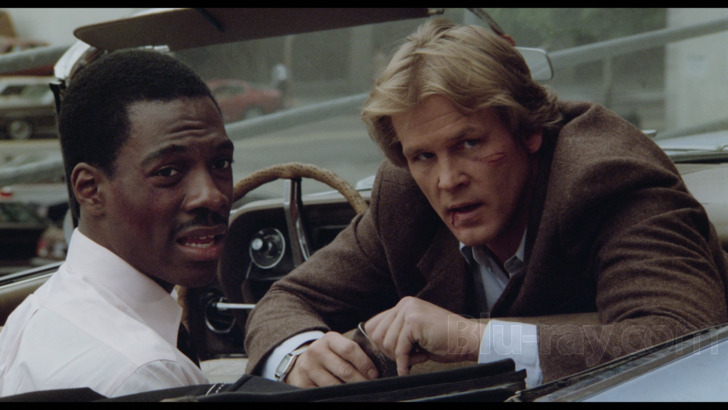
48 Hrs. Blu-ray (Remastered | Paramount Presents #19)

Eddie Murphy kinetically debuts as hustler Reggie Hammond, released from prison for 48 hours under the brutal watch of Detective Jack Cates (Nick Nolte) to hunt for Hammond’s ex-partners, who have gone on a cop-killing spree in San Francisco. The film catapulted Murphy to stardom. It was also the first picture to feature a Saturday Night Live comedian in a raw, crime story and stands as one of the better “buddy cop” pictures ever, though Murphy is really only deputized.

Yes, Murphy is very funny, sometimes side-splittingly so, but he does not treat every scene as an opportunity to do a bit or schtick.  He picks and chooses his moments, trusting in the story directed and mostly written by Walter Hill (The Long Riders). Murphy has one virtuoso scene, when he poses as a cop to roust a redneck bar, but even there, where he puts a knife to a man’s face and tells him, “I’m your worst fu***** nightmare, I’m a ni**** with a badge”, he’s in keeping with the picture’s tough tenor. Nolte’s Cates is brutal, unpleasant and an unrelenting racist, almost shockingly so, given our current advanced ethos, yet, they bond in a manner that feels authentic. Given we’re dealing with tough cops and criminals, the racial dynamic is not off-putting.  It just adds to the tension.

I was also surprised by the gritty brutality of the movie. The body count is high, but rather than explosions and elegant slo-motion, Hill takes more of a Sam Peckinpah approach. The shootings are bloody and awkward, not stylized. And the bad guys – Albert Ganz (James Remar) and Billy Bear (Sonny Landham) – are scary bad.

James Horner’s original music (he’s been nominated 5 times and won for his scoring of Titanic) is apt, a moody mix of jazz and Asian chimes.  Hill also uses San Francisco to his full advantage, mixing the grimy feel of Bullitt and Dirty Harry with a little early 80s glitz.

It has a few weaknesses. Annette O’Toole, for whom I have had my own weakness since Robby Benson’s One on One, is wasted as Nolte’s long-sufferring gal.

And the finale, where Cates and Hammond just “play a hunch.” is a bit lazy.

Still, an uproarious, and assured flick, much more than it seems.


Related image

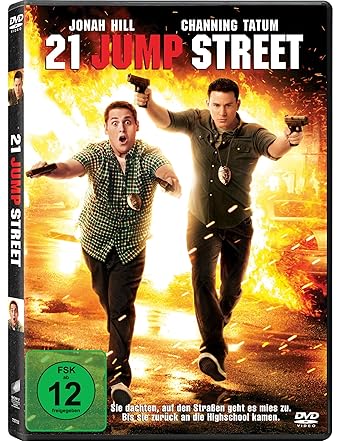
A successful parody of both high school teen flicks and buddy-cop movies (ala’ Hot Fuzz).  A blast of a picture, made better by strong chemistry between Jonah Hill and Channing Tatum.  Hill was the high school geek, Tatum on the top of the social totem pole, but after graduation, they both ended up on the police force, with dreams of car chases, shoot-outs and slo-mo explosions.  Instead, they are assigned as bike patrolmen, and after they screw that up, they are shipped off to the Jump Street division, where their youthful faces land them back in high school, undercover, to break up a drug ring.

So far so good, though not much beyond the formula.  But the material is elevated during their second stint in high school, where Tatum finds himself the geek.  Aggressive jocks, immediate put-downs and a hierarchy are out; tolerance and peace are in; and the main drug dealer (played by James Franco’s brother, Dave, in a very funny, emo/enviro turn) cleaves to the cooler Hill, leaving Tatum as the odd man out.  Hill basks in a high school popularity he always craved, leading to a great exchange where Tatum screams at Hill, “You’re in too deep” after he finds that Hill is filling out college applications in the hopes of matriculating at Berkeley with Franco.

Which brings me to Tatum, who I had unfairly classified as a graduate of the Josh Hartnett school of lobotomized acting.  Indeed, to watch Tatum play Roman period, as he attempted in The Eagle, was cringe-inducing.  But as Clint says, “A man has got to know his limitations.”  Tatum redeems himself and steals this picture with great timing and unexpected sensitivity.  He is also getting very good reviews for Steven Soderbergh’s Magic Mike.

A high school boy (Aaron Johnson, who played a young John Lennon in Nowhere Boy) decides he will simply purchase an outfit and proclaim himself a super hero.  One modest success leads to a knife-in-the-belly and being run over by a car, but he does not lose heart, and returns to the streets with steel-reinforced bones.  Soon, he’s a web-hero, attracting not only the attention of cruel mob boss Frank D’Amico (Mark Strong) and his wannabe son (Christopher Mintz-Plasse) but of the more accomplished super-duo, Big Daddy (Nicholas Cage, doing an Adam West impression), and Hit Girl (Chloë Grace Moretz), Big Daddy’s foul-mouthed, lethal 10 year old daughter.

Funny, clever, and hyper-violent, this is a comic-book movie that engages rather than slams you into a stupor.    Yes, we get some nice, brutal, inspired fight scenes.

But we also get the softer, gentler side of super hero bonding

This is a fun, smart documentary that chronicles the fall of George Lucas in the eyes of his fans and mines their conflicted attitudes towards a man they belove yet revile.  At root, it’s a story about how gods disappoint.

The social impact of Star Wars can be overstated (one fan references Shakespeare), but there is no denying that Lucas’s 1977 film was revolutionary not only in how it changed movie entertainment, but in its creation of a legion of fans dedicated to its ethos.  They just don’t just love Star Wars; they revere it and deem it participatory in their lives.  They wear the outfits, make their own film homages (the clips of these movies are the highlight of the documentary), buy the toys and products and countless DVD releases, and endlessly debate the impact of the film.  And the nature of its creator, who once gave them sun and now provides only darkness.  This goes beyond Spock ears.

The first third of the documentary shows Lucas’s rise from geeky auteur, hostile to the Hollywood machine, to corporate titan, overseeing not just Star Wars but the technical transformation of Hollywood films in general.  And then the fun begins. First, Lucas re-envisions his Star Wars trilogy.  He brightens things up, adds some more incredible effects, and best (or worst, if you’re an acolyte), changes a few scenes.  The ensuing furor is atomic.  Fans are particularly incensed that Lucas changed the character of Han Solo, who in the original picture shot a bounty hunter point blank, but in the “re-envisioning” returned fire only after the bounty hunter shot first (the bounty hunter missed from 2 feet, a failure that makes fans apoplectic).  As one disgruntled fan notes, “It’s as if Martin Scorsese cut out some killing from The Departed because he realized he had an 8 year old son.”

As fun as the collective kvetching is over that change, the roil becomes greater when the fans attack Lucas’s decision to erase the first cut of the trilogy.  I did not know this, but you can’t get a DVD of the original movies.  Lucasfilms even intimates that the original prints are destroyed.  And boy does this make the Star Wars fans nutty.  They point to the hypocrisy of Lucas’s opposition to Ted Turner’s colorization of black-and-white films and say, collectively, “Aha!”  You can almost see Lucas in a dark room, on a throne, wickedly chuckling at their discomfort.

While the outrage over Lucas’s authoritarian control over his original work is pitched, the response to the release of his execrable second set of films is a hilariously bitter pill.  Oh, did these folks want to love those films, having waited sixteen years for them. And their recollections of how they felt when they realized the pictures sucked are almost heartbreaking.  One fan explains that he saw The Phantom Menace over a dozen times hoping he would just get it.

The documentary is really made by the fans who gave the interviews. Their love is pure, their hostility to a Jar Jar Binks poetic, and yet, they all seem to have a good sense as to how ridiculous they look as grown ups incensed, and even enslaved, by George Lucas.

This critically-acclaimed 2011 release purports to be a psychological study of its protagonist, Martha (Elizabeth Olsen), who becomes a member of an upstate New York commune/cult led by the charismatic John Hawkes (nominated for an Academy Award for his role in Winter’s Bone).   The film opens with Martha’s escaping the collective farm, though Hawkes and the other members of the commune (a motley assortment of women who serve him and a few young men) don’t do very much to stop her flight.  Martha ends up 3 hours away, at the Connecticut lake home of her wealthy sister and her new husband.  There, we learn of her ordeal through flashback (sexual abuse, violence, co-opting and subordination to the whole) while she struggles to adapt to life outside the cult.  She provides tension to her sister’s household as she brings bad habits from the commune with her (swimming nude, curling up in the bed of her sister and brother-in-law while they are having sex, condescending to them about their lifestyle) and undergoes post-traumatic stress that manifests itself in panic attacks, wetting herself and refusal to discuss what happened.

All of which makes for a frustratingly monotone of a movie.  Martha is treated with such sensitivity by her sister that you sympathize most with the husband, who has to endure a recalcitrant, moody weirdo in his midst without anyone ever saying, “What the hell happened?”  Worse, while it is clear that Martha undergoes trauma, her behavior after she endures it suggests a person who was under the sway of the commune since childhood.  In fact, Martha was there for two years.  Also, the key to a psychological study is an explication of why Martha was lured into the life, but we get no clue as to what Martha was looking for when she voluntarily allowed herself to be part of Hawkes’ crew and scant information on what the cult is really about.  Martha seemed shallow and dull in flashback and during present-day, she seems shallow, dull and jittery.  Moreover, Martha says some very terrible things about and to her sister (“You’re going to be a terrible mother”), who has the patience of Job, suggesting she was a first-class turd even before she went to the commune.  This is not conducive to empathy.  Finally, the picture reveals a Manson-esque quality to Hawkes very late, which is awkward and unconvincing.

Another problem is Olsen’s performance.  Yes, she does better work than her sisters ever did on television’s “Full House”, but it is still a one-note, amateurish turn.

A precocious Welsh teen narrates his way through what director Richard Ayoade clearly hoped would be his Rushmore.  Submarine is no Rushmorefirst and foremost because, unlike Wes Anderson’s Max Fischer, Ayoade’s protagonist, Oliver Tate, is a charmless, boring, dolt whose observations about the world around him are unconvincing, banal, and strain so hard to be wise that they come off as too cute by half.  I should have seen it coming, as the film opens with an obnoxious written note to American audiences from the character of Tate introducing us to Wales and thanking us for not invading his country.  Thereafter, Tate’s dull voiceover intones that he does not like scenery, he believes his neighbors are ninjas, he can only see himself in a “disconnected reality” and other like observations meant to be charming and insightful.  He’s also monitoring the sexual activities of his parents by checking their bedroom dimmer switch. Full disclosure: my son and I turned it off after 11 minutes.