Archive

Genre

Liam Neeson works in Alaska as a sniper protecting workers from wolves.  He’s at the end of his tether, trapped in a faraway hell where all around him, the dregs do the hard work in a barren wasteland, drinking, drugging and fighting at night.  Near suicidal, Neeson grabs a flight to Anchorage, which goes down in a part of the frozen tundra controlled by a marauding wolf pack. Neeson leads a group of men in their attempt to survive the elements and the wolves.

At first blush, The Grey seems a drearier, heavier The Edge, without the sharpness of a Mamet script or the tension born of a romantic entanglement.  Surprisingly, given the director’s track record, this story of men turns out to be a great deal more than a thriller.  We learn a little about each of the survivors, and Neeson, who was ready to throw his life away, draws purpose from and provides comfort to men suddenly facing death.  There is a beautiful scene after the crash, where Neeson consoles a gravely injured passenger, tells the man he is dying and asks him to think of one he loves to walk him out of this world.  What follows is indeed very thrilling, but also deep and even elegiac.  As characters meet their fate, you find yourself empathizing strongly with them, not only because of their plight but because you have invested in them.

Neeson is strong as a lost man reconnected to humanity through this nightmare. He should be nominated for an Oscar, but given the vehicle, it cannot be. The ensemble cast is also formidable, with special mention to Frank Grillo as an ex-con survivor who naturally resists Neeson’s leadership.

The Grey was directed and co-written by Joe Carnahan, who helmed the excessive and stupid Smokin’ Aces and The A Team, so things are looking up.

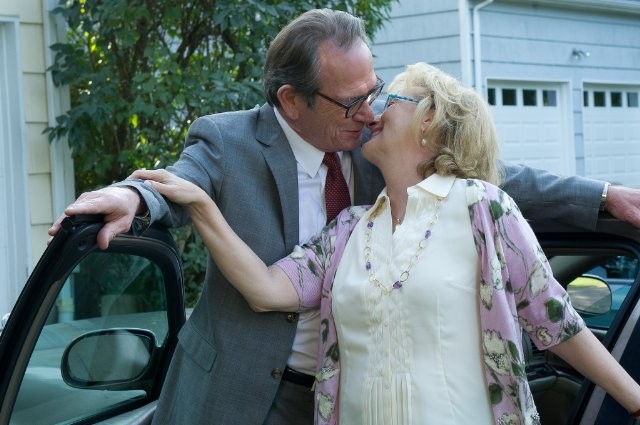
Meryl Streep is incredible, as always, flawlessly and effortlessly inhabiting the character of a repressed, unhappy Nebraska housewife, married to a removed, cantankerous Tommy Lee Jones.  She signs the couple up for a week of couples counseling in Maine under the tutelage of Steve Carell, during which their marriage is analyzed in order to fix it.

Most of their problems stem from intimacy issues.  They haven’t had sex for 4 years.  So that’s where Carell focuses.

The performances are uniformly good and the interplay between Streep and Jones is often genuinely affecting.  The film, however, becomes repetitive and ends in a cloying renewal of vows that is much too much.  The movie also features some of the worst, most intrusive and blaring pop songs to accompany emotional stretches.

Be prepared.  As I said, the central problem for Jones and Streep is sexual.  Which means frank talk about and between people I’d prefer not to think about in sexual situations.  It also has a scene of Streep trying to give Jones a blowjob in a theater, a failed endeavor. Sure, there is some humor in Streep purchasing “Sex Tips for Straight Women by Gay Men.” But watching her put those tips into practice?  Sorry, kemosabe.  Deal me out.

A Christmas Carol (2009) - IMDb

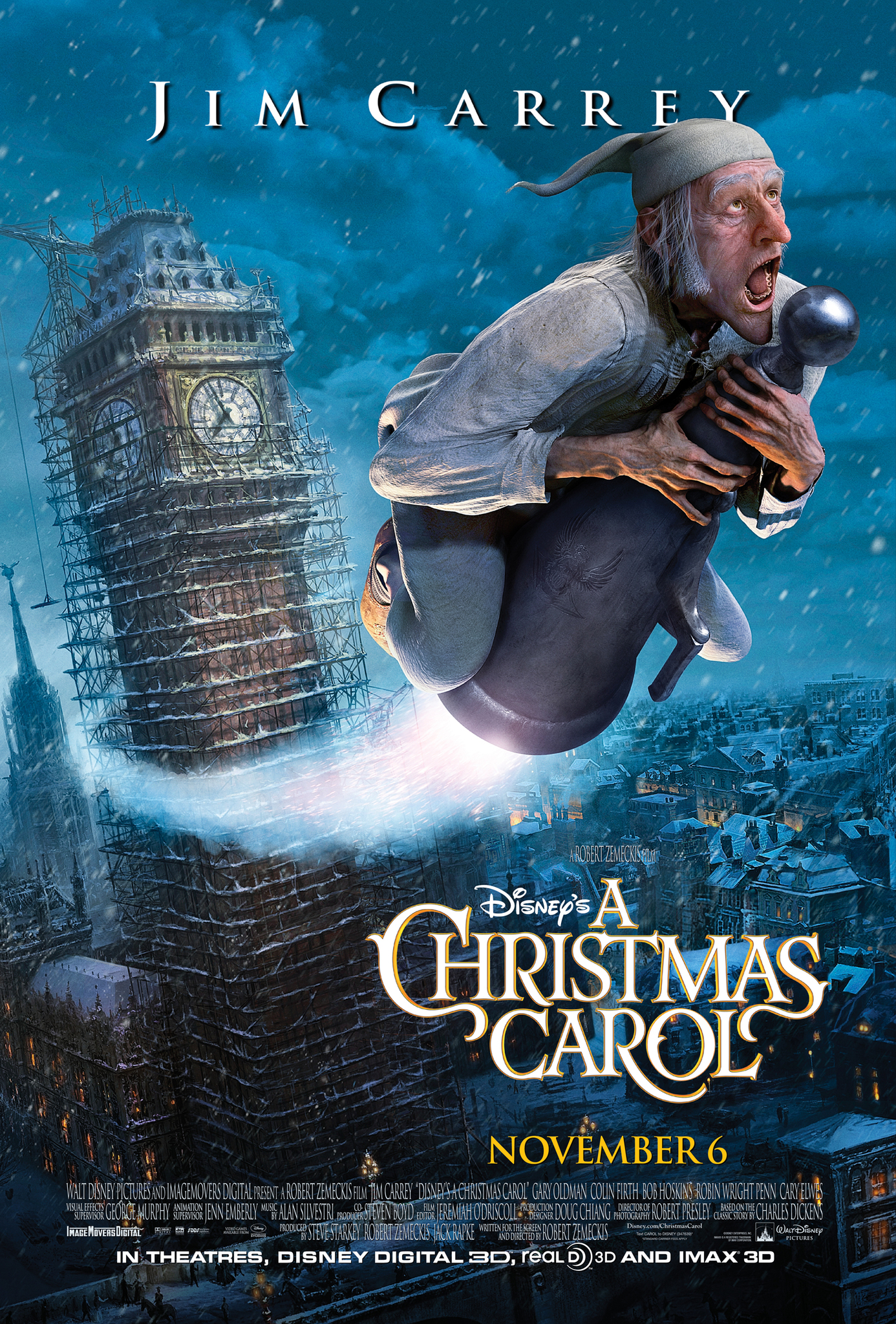
Take a classic Christmas tale, animate it in the creepy Polar Express method, cast Jim Carrey as Ebeneezer Scrooge, drain the tale of any nuance or subtlety, make the ghost of Christmas past child molester creepy and Marley so horrifying his jaw falls off, and dramatize it in such a manner that you fault cartoon characters for overacting, and you have a Robert Zemeckis holiday “classic.”  The only redeemIng feature is the guilty pleasure you’ll get when you imagine how terrified a child in the theater would be during this family film.  Grotesque.

image

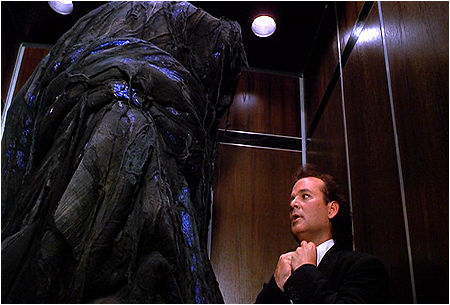
Bill Murray plays the Scrooge character, Frank Cross.  Cross, however, is not in finance, but television.   A child abandoned to the TV by uncaring parents, Cross has become a holy terror as the head of programming for a major network.  His newest achievement is a live broadcast of “A Christmas Carol” on Christmas Eve, with Buddy Hackett as Scrooge.  Cross is so cynical and mean he’s ordered the stapling of tiny antlers on to the heads of mice.  Soon, the ghosts appear.

This is a zany, funny version of the Dickens tale co-written by SNL alum Michael O’Donoghue (he communicated his loathing of the theatrical version before his death at 54) and directed by Richard Donner (who helmed all the Lethal Weapons and various and assorted dreck).  Donner has little skill save for making movies move, and this movie moves.  O’ Donoghue’s complaints aside, it’s also often very clever, propelled by Murray’s manic and humorous descent into madness and his joyous redemption.  It’s big, messy, all-over-the place, and excessive (which is kind of the point) but great fun.

Late Roger Moore Bond films, with the cornball quips and the hideous 80s fashion, obscure the fact that Moore used to be a pretty cool James Bond.  After the confusion of George Lazenby’s bizarre withdrawal from the series having only done one film (On Her Majesty’s Secret Service) Sean Connery was hurried back to woo Jill St. John in Diamonds are Forever for a then-astronomical $1 million.  But Connery was finished, so Moore was signed up (he’d already played a secret agent – Simon Templar – on television’s The Saint) .

Live and Let Die has Bond tracking Dr. Kananga (Yaphet Kotto), the dictator of a small Caribbean nation, after MI6 agents start dropping like flies.  Kananga is into drugs and voodoo, using Solitaire (Jane Seymour) and her gift with tarot cards to his advantage (until Bond deflowers her and she loses her “sight”).  Paul McCartney and Wings produced a rollicking theme (ranked number two here), there is a tremendous cigarette boat race, and Bond effectuates one of his better escapes from a Florida crocodile farm.

The new Bond presents as unflappable, as well as perpetually amused.  He’s also the horniest of the Bonds.  Moore, who just wrote a book on his time as Bond, articulated both his admiration for current Bond Daniel Craig and his own ethos:  “Now they’ve found the Bond—Daniel Craig…. I always said Sean played Bond as a killer and I played Bond as a lover. I think that Daniel Craig is even more of a killer. He has this superb intensity; he’s a glorious actor.”

Moore also identified his principal weakness as Bond: “Quite honestly, I do everything the same and I think everything comes out the same, whether I’m flinching as James Bond or raising my eyebrows as Simon Templar.”  His casualness often borders on disinterest and a certain “mailing it in” approach results.

As for the film, it has two primary faults.  First, an annoying Louisiana good ole’ boy, Sheriff Pepper (Clifton James), brought in for broad, Jerry Lewisesque comic relief.  Second, a very poor finale, with the delightful Kananga dispatched in a manner way beyond the special effects capabilities of the time.  He deserved better.

Daniel Craig’s second turn as Bond is moodier, not as brisk and bracing as Casino Royale.  Coming off the loss of the love of his life (pretending, of course, that George Lazenby and Pierce Brosnan never lost their hearts to Diana Rigg and Teri Hatcher),* Bond is bitter and ultra-violent, and he is made more so after an attempt on M’s (Judi Dench) life.  As he investigates, M upbraids him for killing all his leads, but Bond is driven, uncovering a sophisticated plot by faux-environmentalist Dominic Greene (Mathieu Amalric) to corner the market on a precious resource.

The plot is serviceable, and the film sports three exciting and audacious action sequences – car chase, boat chase, plane chase – and a thrilling shootout finale.  Amalric is also an interesting villain, not quite charming or brilliant, but casually efficient and super-creepy.  And of all the secondary Bond girls, Quantum features my favorite, Gemma Arterton as

Image result for Quantum of Solace Strawberry Fields sexy

Strawberry Fields

There is also a virtuoso surveillance scene during a performance of Tosca at the open air Opera building in Bregenz, Austria, as well as intriguing backstabbing between British surveillance and the CIA, which brings in my favorite Felix Lighter (Geoffrey Wright).

On the downside, after the death of Vesper (Eva Green) in Casino, Bond is perhaps too brooding in this flick, and the angst-level is often very high.  But you could have easily predicted the charge of excessive-seriousness, as if there were some bizarre nostalgia for the bonhomie of Roger Moore and Pierce Brosnan.   Given that director Marc Forster (Monster’s Ball, Finding Neverland, The Kite Runner) doesn’t come from action stock, it is easy to conclude that was perhaps taking itself too seriously.

Phooey.  This is one of the stronger Bonds.  It’s also distinctive.  Especially impressive is Foster’s filming of Bond’s escape from the opera.  There is no jacked-up Bond score, but rather, a dreamlike flight as Tosca dominates the soundtrack.

*  By the way, when Bond becomes emotionally involved with a woman, it’s hard to fault his choices:


Writer/director James Cameron’s blockbuster is lovingly grand and its atmospherics and visuals breathtaking.  But a single scene exemplifies the failure of the picture.

The moment before the lookouts spot the iceberg that would seal their fates, they’re dicking around watching Rose (Kate Winslet) and Jack (Leonardo DiCaprio) smooching on the foredeck.  As a result, a plausible argument can be made that the two leads sank both the ship as well as the film, because their insipid teen love affair is at the heart of this movie.

Rose is unhappily slotted for a marriage to a well-heeled snob (Billy Zane).  She intends to fling herself off the ship, but she is saved by and falls for roustabout Jack.  As the ship continues its doomed voyage, these two chuckleheads moon at each other, while blithely noticing things that are important:

Andrews leads the group back from the bridge along the boat deck.

                                   ROSE
Mr. Andrews, I did the sum in my head, and with the number of lifeboats
times the capacity you mentioned… forgive me, but it seems that there are
not enough for everyone aboard.

                                  ANDREWS
About half, actually. Rose, you miss nothing, do you? In fact, I put in
these new type davits, which can take an extra row of boats here.

                        (he gestures along the eck)

But it was thought… by some… that the deck would look too cluttered. So
I was overruled.

                                    CAL
                       (slapping the side of a boat)
Waste of deck space as it is, on an unsinkable ship!

                              ANDREWS
Sleep soundly, young Rose. I have built you a good ship, strong and true.
She’s all the lifeboat you need.

Not enough lifeboats, you say?

Soon, Rose is posing nude for Jack (he is a portraitist) and shortly thereafter, they’re going at it hot and heavy.  Zane is infuriated and sets his goon (David Warner) on Jack, leading to an implausible  cat-and-mouse chase through the ship while it is going under (Warner is truly Employee of the Century).

There are many, many other problems.  DiCaprio could not be more wrong for the part.  He looks as if he just started shaving, so his turn as a man-of-the-world is laughable.  It’s an Aidan Quinn role given to a near pre-pubescent.
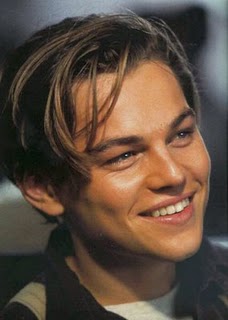
 Rose, did you see where I put my Bubble Yum?

Cameron’s script is also unbearably overt.  He trusts his audience not, as early exposition demonstrates:

HAROLD BRIDE, the 21 year old Junior Wireless Operator, hustles in and
skirts around Andrews’ tour group to hand a Marconigram to Captain Smith.

                                   BRIDE
Another ice warning, sir. This one from the “Baltic”.

                                   SMITH
Thank you, Sparks.

Smith glances at the message then nonchalantly puts it in his pocket. He
nods reassuringly to Rose and the group.

                                   SMITH
Not to worry, it’s quite normal for this time of year. In fact, we’re

speeding up. I’ve just ordered the last boilers lit.

Andrews scowls slightly before motioning the group toward the door. They
exit just as SECOND OFFICER CHARLES HERBERT LIGHTOLLER comes out of the
chartroom, stopping next to First Officer Murdoch.

                                LIGHTOLLER
Did we ever find those binoculars for the lookouts?

                           FIRST OFFICER MURDOCH
Haven’t seen them since Southampton.

Iceberg, speeding up, and no binoculars?  Uh oh.

The film unravels at the end.  The idiocy of Warner hunting Jack and Rose as the ship nears its final peril can no longer be ignored.  Meanwhile, Cameron becomes enamored of what he can do on his broad canvas.  Tragedy becomes an action caper as the director starts bouncing hapless victims off of fantails.

In the final scene, an aged Rose (Gloria Fisher) looks longingly into the icy waters that took her Jack, and throws a massive jewel in.  Leaving your last thought as, “That damned thing could have fed Sub-Saharan Africa for a few months.  What a selfish old hag!”

https://i0.wp.com/3.bp.blogspot.com/-mFvHmYCWyDo/T-NFPL6w4pI/AAAAAAAACmk/W1uhlxULVuA/s1600/Abraham-Lincoln-Vampire-Hunter.jpg

Spielberg’s film was more authentic, but not as much fun.  The plot is simple.  Abe’s mom is killed by a vampire, he vows revenge, is tutored by a vampire hunter, and thereafter lives a double life, rising to power in the day while hunting vampires at night.

It’s a big, flashy, superficial comic book, but it moves, and when Lincoln’s political ambitions intersect with the battle against the undead, the Lincoln story gets going.  If there is to be a war over slavery, it will be brutal and vicious, because, in the words of Lincoln’s mentor, the blood of the slaves “is the only thing that has kept [the vampires] sated for this long.”  Their feed stock threatened, the vampires step up the game, kill Willie (Mary Todd’s insanity is better explained) and bolster the ranks of the Confederates.  Lincoln, however, shows great ingenuity and the tide is turned.

I saw this film’s lead blow the crowd away in Broadway’s “Bloody, Bloody Andrew Jackson” and in his second turn as an American president, Benjamin Walker remains compelling. But this is a broad action pic, heavy on CGI.  The actors aren’t pressed.

The film is also the appropriate length.  Whereas The Avengers has the temerity to run 2 hours and 35 minutes, this popcorn flick is a swift 1.45, which is still a tad long but fine.

It falters when it approaches seriousness.  The writing can also be pedestrian and it lacks a needed sense of humor.  The picture also steals its ending from The Road Warrior.  But when Abe starts swinging that axe, it regains its footing.

Writer/director Martin McDonagh’s first feature is assured, intelligent, and deviously funny.  Two Brit hitmen, Ken and Ray (Brendan Gleeson and Colin Farrell) are exiled to Bruges in Belgium by their crime boss Harry (Ralph Fiennes) after Farrell cocks up his first job (a priest) and accidentally kills an altar boy.  What starts as a languorous wait, with Gleeson fascinated by the history of the town and Farrell bored to tears, becomes tense and edgy after Gleeson is given his next assignment (guess who?) and Farrell becomes more and more despondent over what he has done.  The duo sightsee, drink, do drugs and discuss morality, fate, death, religion, Americans, beer and various and sundry other topics until Fiennes comes to town to force the action.

The three leads are all very good.  Fiennes is a brutal yet charming Cockney, and Gleeson is a stoic solider on the brink of a moral epiphany.  But Farrell’s frenetic, comic-yet-tortured turn is the engine.  He’s barely a man, he’s killed a child, and he is denied any peace, having been placed in “bloody Bruges.”

A taste —