Archive

Genre

Image result for Creed

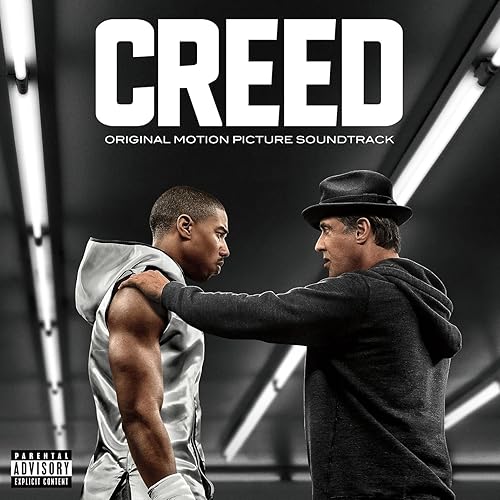
In the hullabaloo about the dearth of people of color represented as Oscar nominees, Creed was identified by some as a glaring omission, not only for director Ryan Coogler (Fruitvale Station) but actor Michael B. Jordan (Fruitvale Station, The Fantastic Four). Sylvester Stallone was also awarded a nomination for best supporting actor and the critics scored the film a 94% on rottentomatoes.

Everyone appears to have lost their fool mind. The movie – which chronicles the son of Apollo Creed as he vies for the title – veers between the deathly dull and the ludicrous. There are four – count ‘em, four! – montage scenes of Jordan training, one of which has him being chased down a Philly street in slo-mo by kids on dirt bikes and trikes, howling outside the window of Rocky, who looks embarrassed by the spectacle.  It’s one of the most bizarre images I’ve seen in a mainstream movie. You really have to see it to believe it. There are also some dizzying fight scenes. That’s all of the recommendations.

Jordan is given the thankless role of the young up-and-comer, plagued by the relationship he never had with his father. Except, he’s a rich kid, plucked from a group home by his mother (Phylicia Rashad) and well-ensconced at Smith Barney or some such firm. It is on the weekend he laces up and goes to Tijuana to box. Why? Who the hell knows? As played by Jordan, Adonis Creed is a medium cool dullard, drawn to Philadelphia to train with Rocky by sheer ennui. He doesn’t seem to care much, so why should we?

When he gets there, he finds ole’ Rock shambling about a restaurant. Rocky won’t train him, but then relents, and then Rocky doesn’t want Adonis to take the big fight prematurely, but then relents, and then Rocky gets cancer and won’t get treatment, but then relents. All this relenting is done in that same barely articulable monotone Stallone has honed over the years. I guess I can see how the protestors at the Oscars felt. If you’re gonna’ award Stallone for this phone in performance, how about all of us for the larger piece of shit?

Along the way, we get such gems as Rocky putting Adonis in front of a mirror, counseling, “That’s the toughest opponent you’re ever going to have to face.” There’s also a unpersuasive love story between Adonis and a Lisa Bonet look-alike – they emit as much spark as siblings.

Stinkeroo.

Steve Jobs [DVD]

It says a lot that director Danny Boyle and screenwriter Aaron Sorkin can hold your attention to a picture consisting solely of conversation. Yes, Sorkin and David Fincher did the same thing in The Social Network, but there, the characters were developing before your very eyes, and things were happening – a revolutionary product was being developed, friendships and rivalries were being established, complaints were being lodged, people were being screwed, and litigation was ongoing. Here, we meet Steve Jobs pretty much fully formed, at the peak of his first rise, as he launches the product that will result in his first fall, and he has already established the defining templates and themes for most of his relationships. He converses with his early collaborator and colleague (a surprisingly forceful Seth Rogen as Steve Wozniak), another colleague (Michael Stuhlbarg), his loyal lieutenant (Kate Winslet) his ex-girlfriend and mother of his child (Katherine Waterston), his CEO (Jeff Daniels) and his daughter (various actresses). With the exception of a few short flashbacks, we repeat these conversations at different points in Jobs’ life, and while the effect is pronounced with regard to the relationship between Jobs and his daughter, the rest is pretty much the same conversation (certainly, with Wozniak, Waterston and Winslet), and it takes all of the gifts Boyle and Sorkin can muster to maintain interest. That’s said, mine was maintained, and as Jobs, a man so driven and disconnected that he can freely renounce his paternity of a little girl to her face, Fassbender is in total control. There is a wonderfully written scene with Jobs and longtime friend and co-worker Stuhlbarg that demonstrates the wit of Sorkin while exhibiting the unique remove and iciness of Jobs. Jobs says “I don’t want people to dislike me. I’m indifferent to whether they dislike me”, Stuhlbarg tells Jobs he’s always disliked him, and Jobs responds “Really? I’ve always liked you a lot. That’s too bad.”

As with The Social Network, Sorkin has also shorn his dialogue of the cutesy, easy patter that often plagues his work (I counted one Sorkinism – where Fassbender smarmily asks Winslet why they haven’t slept together – and that was it). The film clicks and moves, but it does not pause to celebrate its own cleverness. Still, there is not a lot of meat on this bone.  I didn’t learn a great deal more about Jobs from conversation to conversation, nor was I made privy to his genius, unless that genius is solely derived from drive and calculation.

I was in school in Philadelphia from 1982 to 1984, during the mayoralty of Wilson Goode, who had taken over from the dictatorial former police commissioner and mayor Frank “I’m gonna’ be so tough as mayor, I gonna’ make Attila the Hun look like a faggot” Rizzo (Rizzo had once bragged that his police department could invade a country, and having seen them in action, I believed it). At that time, the Philadelphia police department was in an intractable standoff with a weirdo cult – MOVE – a back-to-nature, but armed-with-guns, community-based but plague-on-the-surrounding-community organization that melded hippie-life, black militancy and making their neighbors (largely, middle class blacks) miserable. The cops and MOVE had tangled once before, in 1978, leading to a siege where a police officer was killed and numerous cops and fire fighters wounded. Nine MOVE leaders and other disciples received life sentences as a result, but the remainder of the organization’s adherents moved to another neighborhood in West Philadelphia, where the entire scenario played out again years later. I clearly remember the local news reporting on police-MOVE clashes when I was in Philly, but until I saw this documentary, I had actually convinced myself I was in the City of Brotherly Love for the final confrontation.  I was wrong. By then, I had transferred schools and sat in Harrisonburg, Virginia, where the only assault was olfactory, a combination of a dog food plant and turkey slaughter.

Mayor Goode decided he’d had enough of MOVE plaguing yet another neighborhood (MOVE’s parenting was questionable, they had built a row house on Osage Avenue into a fortress, they menaced the neighbors and in particular, blasted obscenity from loudspeakers with regularity at all hours).  The cops came in to serve warrants on several MOVE members, they resisted, gunfire ensued (MOVE shot, and the police responded, if not in kind, as they unloaded 100,000 rounds into the house), another siege ensued, only this time, after a long period of time where they doused the MOVE house with water hoses, the police dropped an incendiary device on their house. And they let it burn. And it did, eventually engulfing the neighborhood, destroying 65 houses and killing 11 of 13 MOVE members, including 5 children.

This documentary is comprised solely of archival footage from the news, the public hearings that took place after the events (two of my former law partners were involved, one as the then-D.A. and the other as a member of the commission), and depositions taken in connection with litigation.  It is riveting, almost dreamlike, and you can’t even imagine that what you are seeing could possibly occur. But it did (and actually, again in the 1990s with the Waco stand-off), and the rendition is gripping, With the exception of some discordant editorializing at the end of the documentary in the aftermath section, it is also fair. On Netflix streaming.

image

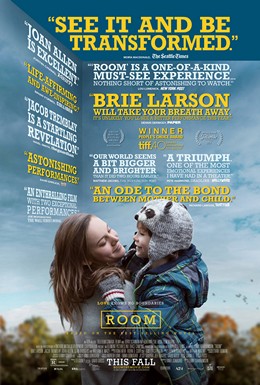
This is a beautiful film, filled with moments of despair, joy, and connection that occur not only between a mother and child, but between older parents and their grown up girl. As in the headlines, Brie Larson plays a woman who has been abducted as a teen and secreted away in the specially constructed back shed/room of her abductor’s suburban Ohio home. He visits regularly to rape her, an encounter she must endure without resistance because she has fathered his child, a little boy (Jacob Tremblay) who must stay hidden in the closet during these visits. When he leaves, she does her level best to raise the boy, who knows nothing of the world around him, a fact she must remedy when she concocts a plan for escape. When the boy is introduced to the world, it plays like a bird pushed out of the nest. You are utterly terrified for him. When he and his mother are back in her childhood home with her grandmother (Joan Allen), your fear becomes concern, at his acclimation and the mental health of his mother, who now has to tend to her long suppressed issues.

This is a film about connection, the rigor of parenthood, and the limits of love and blood. Larson’s determination, Tremblay’s resistance, Allen’s long-suffering courage, all feel immediate and real. There isn’t a hint of melodrama, which is rare thing given its true crime genesis. Larson is mesmerizing, the perfect balance of drive and fragility, and Tremblay delivers one of the most moving child performances I’ve ever seen. William Macy has a small role as Larson’s father, who has divorced Allen and who, in a painfully poignant scene, cannot bring himself to look at the boy, for all he sees if the product of his daughter’s tormentor. It missteps only once – Larson gives an interview to a journalist whose questions are so tasteless that it feels false – but even in this error, the filmmakers show Larson as flawed (you can see in her eyes that she knows she screwed up in agreeing to the exclusive) when in lesser hands we would have seen her resolute, rising against the opportunist reporter in righteous indignation.  One of the best of the year, and the failure of the academy to nominate Tremblay as supporting actor continues the real prejudice of those old fogies at Oscars, against the young.

image


Adam McKay’s The Big Short is ingenious, economical, and expert in translating a difficult subject – the mortgage crisis of 2008 – for non-expert viewers.  McKay makes what could be an arcane and tedious topic move, and his use of characters and celebrities to directly address and instruct the audience is particularly effective. The film is also wildly entertaining, and for the most part, well paced. In adapting Michael Lewis’s book, McKay alternates between keeping a sense of humor and paying appropriate deference to the deadly serious nature of the crash, revealing the seeming lunacy of modern finance and inherent flaws in our system. As we cover the prescient characters who foresaw the collapse of the mortgage market, and created a new financial instrument to short it to their advantage, the film builds to a depressing climax that is educational and even moving.

But one has to remember, McKay tacked on tedious moral lessons about our financial system in, of all things, the moronic buddy comedy The Other Guys. So after watching Will Ferrell and Mark Wahlberg engage in their crazy hijinx, we received a sermon on the ponzi scheme that is Wall Street, though blessedly, only during the credits.  McKay did the same thing for campaign finance reform in the Ferrell/Zach Galifinakis comedy The Campaign, but his jeremiads actually crept into the film, and I’ll bet dollars to donuts he considers Anchorman 2 a modern Network.  Anybody who had to append morality epilogues to these light stinkers clearly was itching for more serious fare.

Unfortunately, when McKay got it, he made a riveting, rip-roaring, true life story, and then . . . he choked. A moral fable was not enough.  McKay wanted a moral scolding.  So, every representative of the establishment – bankers, investors, an SEC investigator, a bond rating company analyst, two Florida real estate brokers, the financial reporter – are to a person grotesque cartoons. As depicted by McKay, they might as well be spit-roasting the homeless. Worse, every single one of our hedge fund manager protagonists, all of whom made a shit ton of money off of the collapse, is presented as a tortured, morally conflicted hero. Profiteer Brad Pitt scolds two characters by reminding them that when unemployment rises 1%, 40,000 people die. They are chastened, though I doubt chastened enough to do much about it. Christian Bale, who made billions for his firm betting on the economy to fail, closes his shop with an email to investors that bemoans the cruelty of the market. And the third genius, Steve Carell, literally apes Christ on the cross as he weighs whether to sell. He is urged to do so by his staff as they call him from the steps of a church! And yes, he too cashes in, but only after much soul searching and many, many lectures. And after all that, McKay adds a coda where he warns us that it is all happening again, no one went to jail for it the last time, and so, we are not absolved.

It was all right there, the deed done with, if not a scalpel, a stiletto.  But McKay couldn’t trust his own narrative and so, he used a butcher knife. The ensuing bludgeoning is gonna’ pay off with an Oscar tomorrow night, followed by, I am sure, a sermon much like the one that kneecapped his own movie.

image

The first half of this biopic whizzes by, introducing the three main characters (NWA founders Easy E, Ice Cube and Dr. Dre) as young pop visionaries who see the future and impact of gangsta’ rap. They rise against the backdrop of racially-charged LA, and director F. Gary Gray gives each their own space and voice. We invest in them individually and collectively, while rooting for their success as they navigate fame, the music industry, the violence of their environment and financial and professional jealousies. Gray also skillfully juxtaposes the raw anger of their music with the brutality of Compton. It’s good, involving fun.  The second half, however, is slower, and the path is well-worn. Excess takes its toll, “the man” (i.e., manager Jerry Heller, the record company, cops and the government) does what he does, and it sure gets lonely at the top.

Overall, this is an entertaining and competent if overlong film. It’s also filled with factual inaccuracies, to be expected when rich men collaborate on the telling of their own rise (and Dr. Dre and Ice Cube are mega-rich). A few, however, are problematic. Gray obviously wants to set a time of rampant police brutality and oppression, so he has Dre arrested for simply talking back to a thuggish Compton cop. All well and good, except Dre was actually arrested for . . . unpaid parking tickets! Ha ha ha. Not very gangsta’.

Similarly, there is a scene where the Detroit police, led by a Bull Connoresque whitey and his phalanx of all-white cops, chase NWA off the stage and beat them viciously, throwing them one by one into a van for processing, for playing “Fuck the Police.”  In fact, while NWA was arrested in Detroit, it wasn’t at the venue, nor were they beaten. Instead, later that evening, they were safely ensconced in their hotel when they went to the lobby to meet some girls.  There the cops took them in with little fanfare, and no body blows.

Oh well.  They still had attitude.

99 Homes' is a foreclosure-fueled drama for our age

In the opening scene, Michael Shannon, a rising Florida real estate broker, walks out of a house where he has just attempted to evict a man. The tenant has blown his brains out in the bathroom. Shannon cares not a whit; he has the lives of many more good, hard-working, decent Frank Capraesque archetypes to ruin, and there are only so many hours in a day. This is the most subtle part of 99 Homes. I get the sense they show this picture to Bernie Sanders volunteers to get them jacked up before they go door-to-door.

Shannon soon moves to the house of Andrew Garfield, a construction worker who is behind on payments for his childhood home, which he shares with his mother (Laura Dern) and son. Garfield gets the boot through the collusion of the courts, the sheriff and indeed, modern American capitalism, but fate brings him back to Shannon, who sees something in the lad. Soon, Garfield is working for Shannon, evicting a passel of George Baileys and making serious bank.

But what does it profit a man to gain the whole world and forfeit his soul? Yup. It’s that kind of movie, a bludgeon. It’s also repetitive (if you want a “how to” on evictions, this is your flick, because we see scads of them) and unwittingly undermines its message. Garfield is a pretty stupid poor person and an even dumber rich person; he equivocates and Hamlets through the entire picture, so much so you actually feel bad for the devil Shannon in having to negotiate the soul of this dimwit.  Also, director Ramin Bahrani obviously knows squat about the Florida police. The film ends with an extended scene where a man resisting eviction fires a rifle out his window at the cops numerous times and yet, miraculously, they don’t shoot him.  Poppycock.

Shannon is the only reason to see the movie; he does his level-best to give real estate Satan some heft and depth, and he is one of the most interesting actors around.

Naturally, the movie was adored by the critics (“makes you understand how this poisonous financial ecosystem thrives” – David Edelstein; “nails the predicament in which so many working-class folks now find themselves. Although they cling to the American dream, for many of them it has become a nightmare” – Calvin Wilson), who – as everyone in the know knows – have for years been in the pocket of the anti-eviction lobby.

It’s difficult not to compare this Academy award-nominated documentary about singer Amy Winehouse with Montage of Heck, the documentary on Kurt Cobain. Both tell the stories of young popular artists who were undone by drug abuse and depression. Both individuals suffered childhood ruptures and significant medical problems (Winehouse suffered from bulimia while Cobain had serious stomach issues). Both killed themselves, Cobain actively, Winehouse as close as you can without actually pulling the trigger.

The comparisons, however, end there. Cobain’s raw talent was nowhere near that of Winehouse. Winehouse’s voice was so powerful, nuanced and unique, it was staggering, and as evidenced by the documentary, she was a beautiful lyricist as well (thankfully, as she sings, we get to see her lyrics in print). Winehouse also comes off as extremely sympathetic, a sweet and vulnerable girl too fragile for this world (pardon the cliché), someone desperately looking for unconditional and protective love in the hard environs of celebrity. Conversely, Cobain was angry, spit at his success and pretty much made drug addiction a career goal, a decision very difficult to pigeonhole into tragedy.

Director Asif Kapadia uses the ample footage of Winehouse to guide us through her rise and fall (the advent of camera phone video gives us the paradox of Winehouse plagued by paparazzi but constantly videotaped even in private), and while he maintains a veneer of dispassion, he ties her self-destruction in part to a passive mother, an absent and then craven father (it is almost unbearably painful to watch him arrive in St. Lucia as she convalesces from an overdose with a camera-crew for his own reality TV show), an opportunistic boyfriend (if you have even an atom of chivalry in your bones, the moment you meet the creepy, clingy Blake Fielder is the moment you want to beat him senseless) and the cruelties of the press. Indeed, Kapadia is so skillful in communicating his thesis that my own bullshit meter senses oversimplification, and in pressing his case, he flirts with casting Winehouse as victim, when, in fact, she was a willing driver of the ills that befell her (she died of alcohol intoxication at 5 times the legal driving limit). Still, the film as portrait of an artist remains vibrant even if the thesis is hokum. Winehouse’s unfairly or accurately maligned father may have said it best, “Half of me wants to say don’t go see it. But then the other part of me is saying maybe go see the videos, put your headphones in and listen to Amy’s music while they’re watching the videos. It’s the narrative that’s the problem.”

Spectre' women are 'fantastic' pair for 007

This may be Daniel Craig’s last Bond, which is a shame, because it is awful, and his turn revived the series. Like Skyfall before it, we again find ourselves delving into Bond’s psyche, but unlike the previous installment, the action sequences in Spectre are humdrum, the plot is even simpler and more obvious, the execution is lazy (at one point, without even a hint of foreshadowing, Bond procures a plane in a matter of 30 seconds, and he ain’t on an airfield), it recycles (an old building collapses in Mexico City, just like an old building collapsed in Venice in Casino Royale) and the bad guy – Christoph Waltz – is barely part of the film.  When Waltz’s true, hilarious motive is revealed, I guess his scarcity makes some sense.  His motive is the only thing that hints at a sense of humor but eliciting chuckles was assuredly unintentional.  Otherwise, we are apparently supposed to take this seriously.

Director Sam Mendes (Skyfall) doesn’t help matters by focusing on visually striking images above all else. Bond seems to simply appear from the mist in every scene, impeccably and nattily tailored, and after enough of these fashionista turns, the movie feels more like a cologne or car commercial than a picture. Bond romances a woman (the underused Monica Bellucci) against a big mirror in the vast open room of a Roman villa, and you can’t believe the scene does not end with “Obsession. By Calvin Klein.”

Spectre is also cursed by the most vacuous Bond girl since Tanya Roberts. Leya Seydoux is the daughter of his nemesis. In, I am guessing, her late 20s, she is a brilliant and accomplished psychologist with inconvenient but lush offices in the Austrian Alps (she actually has Bond fill out a medical questionnaire; oh to have seen his answers under the section “Sexually Transmitted Diseases”). She’s also weightless and dull as dishwater. As if the producers went out of their way to find a French Taylor Swift.

Finally, Mendes has elevated Bond to the status of super hero.  As he escapes Waltz’s lair (Waltz is experimenting on him with drills for reasons that still don’t make any sense to me but harkens uncomfortably back to Dr. Evil), he manages to blow the entire installation up with a gunshot while killing a dozen heavily armed henchmen with a handgun. After taking a vicious beating at the hands of a new thug – Dave Bautista, who one hopes is not a recurring figure ala’ Jaws – Bond and Seydoux are quickly dusted off for a quickie looking no worse for wear; indeed, they actually look better.  And at the end, Bond simply snaps handcuffs off of his wrist, one presumes by the mere force of his personality.  Yes, Bond is an exceptional assassin, but one of the joys of Craig was the return to a gut-level, human 007.  Now, he’s Captain America.  Or Captain England.

Even the Sam Smith song is atrocious, as is its accompanying, bizarre title sequence.  Poorly done all around.

I loved Tower Records and so did my father, a classical music nut.  His apartment was littered with the ubiquitous yellow bags and his visits to its D.C. location (the store was a few blocks from his apartment) were long meanders through the aisles and aisles of inventory.  Colin Hanks has done an admirable job of evoking the nostalgia of Tower, which rose from a small shop selling singles in Sacramento to an international conglomerate in a matter of thirty years.  In the process, he recounts not only an incisive story about the music business from a retail and merchandising standpoint, but of a family business, where all of the early stock boys and clerks who got stoned and drunk in the back grew to become VPs and store and district managers.  The fall –  a combination of technology, overreach and a bit of profligacy – is sad, but not tragic.  Every one of the individuals interviewed extols the organization, its singularly decent and quirky founder Russell Solomon, and the positive impact working there had on them.