Archive

Historical

Image result for Anna Karenina film

Beautiful, sumptuous and deservedly nominated for production design, costume design, and cinematography Oscars, the film is also leaden and dull. There is no burning desire detectable in the icy, mannered Keira Knightley, and her illicit romance with the fey Aaron Taylor-Johnson (Kick-Ass, Nowhere Boy) is unconvincing. The lush production is soulless and a bit gimmicky, replete with a dance sequence that recalls Tony and Maria in West Side Story (minus the passion), and a distracting movie-within-a-play depiction. Very pretty and little else. Knightley is preeternaturally girlish. She cannot convey having lived long and rich enough to put it all on the line for an adulterous love, so she opts for Anna as bipolar.

The first half of Stanley Kubrick’s Full Metal Jacket, based on Gustav Hasford’s novel The Short Timers, is flawless. Marine privates Joker (Matthew Modine), Leonard Lawrence (Vincent D’Onfrio) and others are trained with their class at Parris Island by their Lord and Master, Marine Gunnery Sergeant Hartmann (R. Lee. Ermey). Kubrick depicts the indoctrination and transformation of Marines in a manner that is tragi-comic, lyrical and, at the end of training, deadly. Penned by Kubrick, Hasford, and Michael Herr (Dispatches), the dialogue has the stamp of authenticity (Hasford and Ermey were Marines and Ermey, first hired as a technical advisor, had actually been a drill sergeant at Parris Island during the Vietnam war). The process of creating cohesion and toughness is brutal and efficient, and its unsparing nature produces effective warriors, but it also damages the fragile D’Onofrio.

The second half opens with a concise commentary on the problems of an occupying army, memorably introduced by the sultry voice of Nancy Sinatra. Despite such promise, the film becomes less engaging. Modine is sent to Vietnam as a correspondent for Star and Stripes and he wants desperately to get in “the shit.” He does, during the Tet Offensive, and what he sees is the hard killers from Parris, broken, unmoored and wreaking havoc. The film plays out as a series of barely connected set pieces, which is in stark contrast to the single-mindedness of the first half.

I strongly recommend Matthew Modine’s diary and Herr’s Vanity Fair piece on Kubrick.

Argo (2012 film) - Wikipedia

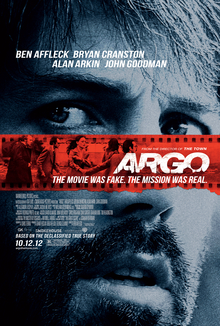
The pace is brisk, the acting for the most part superb, the feel genuine, and the final act white-knuckle. Ben Affleck’s tale of the clandestine evacuation of 6 Americans hiding in Tehran after the storming of the American embassy is almost as incredible as the actor’s improbable rise as a director after a long plummet from the heights of A list actor.

What is true is that 6 Americans made it out of the U.S. embassy into the hands of Canadian embassy personnel and that a fake sci-fi movie was created as cover for their exit posing as the film crew. That’s about the sum total of what is accurate in this movie.  Affleck takes this nifty premise and constructs a gripping yarn around it, one that is lessened only a little by Affleck’s leaden acting as CIA operative Tony Mendez and a shopworn and unnecessary theme built around his family woes. Affleck’s handling of the storming of the embassy (which was very accurate) and the tense escape via the airport (a near complete concoction) is assured, and the creation of an Alan Arkin Hollywood producer for comic effect is savvy.

After Gone Baby Gone, The Town and this film, Affleck is a top 5 director. Imagine that.

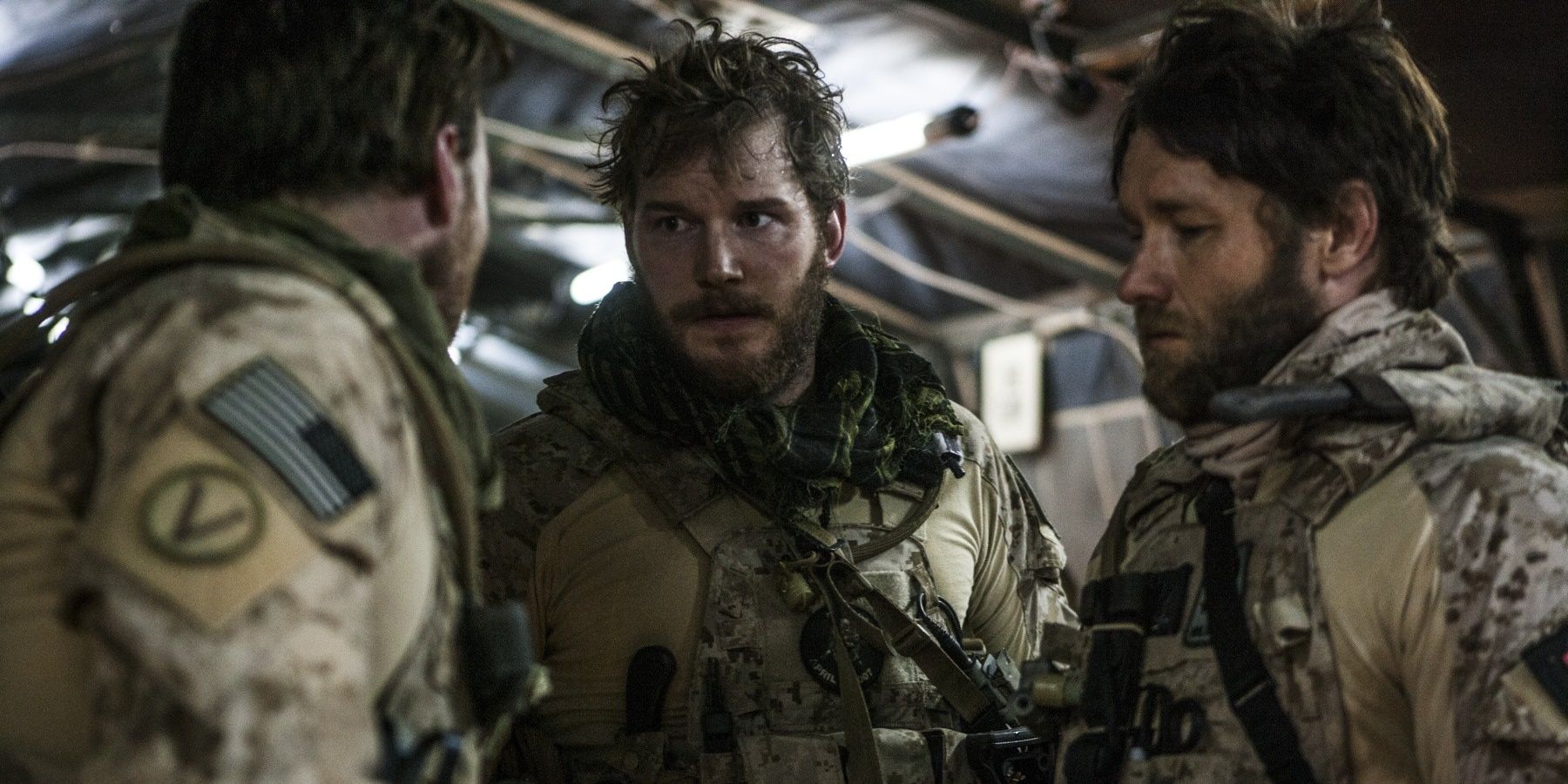
Zero Dark Thirty True Story: Everything The Movie Changed & Left Out

In The Hurt Locker, Kathryn Bigelow exhibited an expert feel for the milieu of a bomb disposal team in early post-Saddam Iraq. While her depiction of the mechanics of the team was the subject of debate, the desolation and immediacy of her scenarios was spot on, evoking the overburdened and overwhelmed sensibility of better-equipped invading/liberating armies since the time of the Romans. What kept The Hurt Locker from being a great film was the simplistic protagonist, Jeremy Renner, a danger freak and little more, with whom we were required to spend too much time.

In Zero Dark Thirty, Bigelow again utilizes a simplistic heroine, CIA officer Jessica Chastain, whose entire persona is a relentless “get bin Laden” zeal. Fortunately, the story Bigelow is telling is an intricate intelligence bureaucracy procedural and Chastain is progressively morphed from the driver of the story to an observer. To her credit, she remains disciplined and does not stray from the confines of her role. Chastain is emblematic of the effort and the desire to fight al Qaeda and eliminate its leader, and the film has refreshingly little interest in what makes her tick, her relationship with men, etc . . . the story is quite enough. This film is much like United 93, authentic, thoughtful, and gripping, even though we know the end.

Two other aspects make this picture extraordinary. First, it deals with politics in a subtle yet effective manner, opening with a clutter of 911 calls on 9-11, which creates the urgency necessary to begin the story, and acknowledging certain political realities (the failure of the CIA on WMD, the changing domestic political tenor on enhanced interrogation, and the Obama administration’s moves with regard to same) without gettng bogged down in their import or advocating for any particular position.

Second, of some controversy, Bigelow shows torture.  Torture assuredly occurred and was also assuredly of value in the war against al Qaeda. Just ask new National Security Advisor John Brennan: “There has been a lot of information that has come out from these interrogation procedures that the agency has in fact used against the real hard-core terrorists. It has saved lives.” The histrionic attacks on Bigelow’s film because it merely shows torture demonstrate the exact false and forced narrative that Zero Dark Thirty eschews. It is depressing that Bigelow had to actually say, “”Experts disagree sharply on the facts and particulars of the intelligence hunt, and doubtlessly that debate will continue. As for what I personally believe, which has been the subject of inquiries, accusations and speculation, I think Usama bin Laden was found due to ingenious detective work. Torture was, however, as we all know, employed in the early years of the hunt. That doesn’t mean it was the key to finding bin Laden. It means it is a part of the story we couldn’t ignore.”

Bigelow’s statement is echoed by Mark Bowden, author of Black Hawk Down: “Torture may be morally wrong, and it may not be the best way to obtain information from detainees, but it played a role in America’s messy, decade-long pursuit of Osama bin Laden, and Zero Dark Thirty is right to portray that fact.”

Juxtapose the statements of Bigelow and Bowden with the criticism of actor and activist David Clennon (“Torture is an appalling crime under any circumstances. ‘Zero’ never acknowledges that torture is immoral and criminal”) and you have the difference between Zero Dark Thirty and the spate of shit message movies that Hollywood churns out every year to show us the right path. The Clennons are terrified. By showing that torture may have gotten certain results, sweet Lord Almighty, we have endorsed torture, which we cannot hope to condemn unless we show it was a masochistic folly of absolutely no intelligence value.

Perhaps we can delete the great line where one interrogator tells Chastain to be careful because the domestic political winds are shifting and she doesn’t want to be “the last one holding a dog collar” and substitute it with, “you know, upon reflection, this stuff we’ve been doing . . . It’s just morally wrong and maybe even criminal.”

Lawless (film) - Wikipedia

I wonder how a movie like this gets made these days.  Tom Hardy, Jessica Chastain, and Shia LeBeouf can’t open it, the milieu (1930s backwoods of Virginia) doesn’t relate, it can’t be cross-marketed with a soundtrack, and the script, which could override all of the above if it were really good, is not.  In fact, there is not a memorable exchange in it. Hardy is colorless (he resonated stronger with a mask in The Dark Knight Rises), Chastain a stock dancer with a heart of gold, and LeBeouf showy, always “acting!”

The Bondurants are bootleggers in Franklin County, Virginia.  On principle, they won’t pay off the authorities, which smacks of stupidity more than honor or savvy business sense.  The authorities hire Guy Pearce to shut them down. Pearce must have sensed what a dreary endeavor this was to be, so he took on the affectation of a sexually dysfunctional dandy/germaphobe.

And he hates hillbillies.

Character developed!

Pearce goes too far, Hardy brings hell and damnation with him, and it ends with an underwhelming shoot-out and an interminable voice-over coda by LeBeouf.

Writer/director James Cameron’s blockbuster is lovingly grand and its atmospherics and visuals breathtaking.  But a single scene exemplifies the failure of the picture.

The moment before the lookouts spot the iceberg that would seal their fates, they’re dicking around watching Rose (Kate Winslet) and Jack (Leonardo DiCaprio) smooching on the foredeck.  As a result, a plausible argument can be made that the two leads sank both the ship as well as the film, because their insipid teen love affair is at the heart of this movie.

Rose is unhappily slotted for a marriage to a well-heeled snob (Billy Zane).  She intends to fling herself off the ship, but she is saved by and falls for roustabout Jack.  As the ship continues its doomed voyage, these two chuckleheads moon at each other, while blithely noticing things that are important:

Andrews leads the group back from the bridge along the boat deck.

                                   ROSE
Mr. Andrews, I did the sum in my head, and with the number of lifeboats
times the capacity you mentioned… forgive me, but it seems that there are
not enough for everyone aboard.

                                  ANDREWS
About half, actually. Rose, you miss nothing, do you? In fact, I put in
these new type davits, which can take an extra row of boats here.

                        (he gestures along the eck)

But it was thought… by some… that the deck would look too cluttered. So
I was overruled.

                                    CAL
                       (slapping the side of a boat)
Waste of deck space as it is, on an unsinkable ship!

                              ANDREWS
Sleep soundly, young Rose. I have built you a good ship, strong and true.
She’s all the lifeboat you need.

Not enough lifeboats, you say?

Soon, Rose is posing nude for Jack (he is a portraitist) and shortly thereafter, they’re going at it hot and heavy.  Zane is infuriated and sets his goon (David Warner) on Jack, leading to an implausible  cat-and-mouse chase through the ship while it is going under (Warner is truly Employee of the Century).

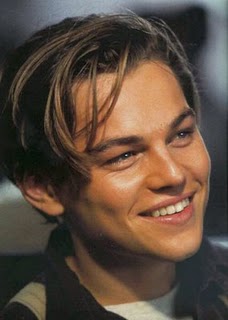
There are many, many other problems.  DiCaprio could not be more wrong for the part.  He looks as if he just started shaving, so his turn as a man-of-the-world is laughable.  It’s an Aidan Quinn role given to a near pre-pubescent.

 Rose, did you see where I put my Bubble Yum?

Cameron’s script is also unbearably overt.  He trusts his audience not, as early exposition demonstrates:

HAROLD BRIDE, the 21 year old Junior Wireless Operator, hustles in and
skirts around Andrews’ tour group to hand a Marconigram to Captain Smith.

                                   BRIDE
Another ice warning, sir. This one from the “Baltic”.

                                   SMITH
Thank you, Sparks.

Smith glances at the message then nonchalantly puts it in his pocket. He
nods reassuringly to Rose and the group.

                                   SMITH
Not to worry, it’s quite normal for this time of year. In fact, we’re

speeding up. I’ve just ordered the last boilers lit.

Andrews scowls slightly before motioning the group toward the door. They
exit just as SECOND OFFICER CHARLES HERBERT LIGHTOLLER comes out of the
chartroom, stopping next to First Officer Murdoch.

                                LIGHTOLLER
Did we ever find those binoculars for the lookouts?

                           FIRST OFFICER MURDOCH
Haven’t seen them since Southampton.

Iceberg, speeding up, and no binoculars?  Uh oh.

The film unravels at the end.  The idiocy of Warner hunting Jack and Rose as the ship nears its final peril can no longer be ignored.  Meanwhile, Cameron becomes enamored of what he can do on his broad canvas.  Tragedy becomes an action caper as the director starts bouncing hapless victims off of fantails.

In the final scene, an aged Rose (Gloria Fisher) looks longingly into the icy waters that took her Jack, and throws a massive jewel in.  Leaving your last thought as, “That damned thing could have fed Sub-Saharan Africa for a few months.  What a selfish old hag!”

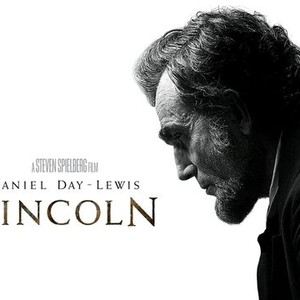
Lincoln - Rotten Tomatoes

The previews for Lincoln filled me with ambivalence.  Stephen Spielberg is a gifted filmmaker, yet his penchant for the glib and over dramatic is well-established, and what was presented in the trailers seemed overly earnest and self-important.

The first scene of the film did not help.  President Lincoln surveys the troops.  Two white soldiers (including, inexplicably, the peculiar looking Lukas Haas from Witness) unconvincingly quote the Gettysburg Address to him while a black soldier ahistorically makes demands on the president, such as equal pay for equal work.  As the white soldiers fail in recitation, the black soldier delivers the full verse.  And courtesy of John Williams, stirring horns blare.

The exchange feels wholly unrealistic.  I was reminded of the great scene in Frost/Nixon where Sam Rockwell, playing the Nixon-hating James Reston, Jr., practices excoriating Tricky Dick upon their meeting, and then when his big moment comes:

Richard Nixon: [Reston swore to Zelnick earlier he would never shake Nixon’s hand] Pleasure to meet you. [Offers Reston his hand]

James Reston, Jr.: [after a pause, he shakily extends his own hand] Mr. President…

Bob Zelnick: [after Nixon leaves] Oh that was devastating, I don’t think he’s ever going to get over that.

James Reston, Jr.: Fuck off.

There’s none of that here.  The black soldier is as comfortable as if he were speaking to his city councilman in 1987.

But Christy Lemire of The Huffington Post gets it right: “For anyone who cringed just a little while watching the trailer for ‘Lincoln’ and worried that it might be a near-parody of a Steven Spielberg film, with its heartfelt proclamations, sentimental tones and inspiring John Williams score, fret not.”

After its inauspicious start, Lincoln settles into a proficient, if overlong, political potboiler having more in common with Advise and Consent than grand, gauzy history.  Lincoln needs to get the 13th Amendment passed in the House, but he is squeezed by moderate Republicans (led by Hal Holbrook as Preston Blair) who seek a negotiated peace with the South; radical Republicans (led by Tommy Lee Jones as Thaddeus Stevens)  who distrust Lincoln’s expedience; and fiery Democrats who look for every advantage to stymie the bill.  Lincoln works the room and the town trying to thread the needle of events and demonstrating not only his keen intellect and gift for homespun stories but a progressive mind that regularly churns.

As Lincoln, Daniel Day Lewis is masterful.  The weight of his worry and the tragedies that have befallen him are etched in his face, yet his Lincoln is not merely an icon.  Day Lewis communicates Lincoln’s anger, his canny sense for politics, his exasperation at his unstable wife (Sally Field), and his physical nature, not only with his children but with others to whom he instinctively feels fatherly.  Field is also noteworthy, fleshing out Mary Lincoln and capturing her irrationality as well as her cunning.

There are some problems.  While the history feels right, and most of it is indeed accurate, some of it is not, and in ways that matter.  For the final vote on the amendment, free blacks pack the galleries and Mary Lincoln observes with her personal dressmaker, played by Gloria Reuben (who I have not seen since ER).  This did not happen and it feels cheezy, part of a clear effort by the filmmakers to give agency where none existed.

Sometimes this works, as when Lincoln has a White House porch discussion with Reuben about the fate of blacks after the war.  It is clearly a concoction but feels legitimate, especially when Lincoln says, “I don’t know you.”

Sometimes it doesn’t work, as in the opening scene.  But you can feel Spielberg and screenwriter Tony Kushner trying mightily, mainly by use of the ennobled, stoic black.

They had to know Kate Masur’s New York Times op-ed about the film’s depiction of the the passivity of its black characters was coming (Masur suggests that perhaps the director could have shown Reuben and Lincoln’s black butler “leaving the White House to attend their own meetings”), but they did the film no favors in trying to head it off.

Tommy Lee Jones is also all wrong as Pennsylvanian Thaddeus Stevens.  He’s either too Western, too Southern, or simply too rugged to play this man in this time.  When he brings home the actual version of the final bill to read to his housekeeper and lover in bed, it was hard to stifle a groan.  And the ending, where Appomattox, the assassination, and an inaugural speech flashback are quickly tacked on, is unwieldy.

Finally, it is time for Williams to hang it up.  The score is a lazy rip-off of his work on Saving Private Ryan.

Criticism aside, The New Yorker dubs the film a civics lesson for children, and indeed it is (I brought both of mine to the movie and we had a great discussion afterwards).  As one of my professors told me, history is in many ways the stories we tell about ourselves, and this is a story about ourselves told fairly well.

Certain films transcend criticism because of the place they hold in the national consciousness.  Saving Private Ryan is a forceful, indelible picture with opening and closing battle scenes so visceral I found myself ducking in the theater as a complete stranger in the seat next to me gripped my arm.  Shorn of the opening Omaha beach sequence and the fight for the town of Ramell, the film is just north of pedestrian.  Robert Rodat’s script is functional but hokey (the constant banter over Tom Hanks’ occupation is an example).  The characters – the intellectual, the caring medic, the goombah, the Southern, bible-loving sniper, the New Yahker, the Jew – are unrealistic archetypes.  The John Williams score is just so much syrup.

Who cares?  The picture means more than its parts and speaks to a certain time and sacrifice.     Every American high school kid should be forced to watch the damn thing the next time they bitch about the trials and tribulations of their lives.

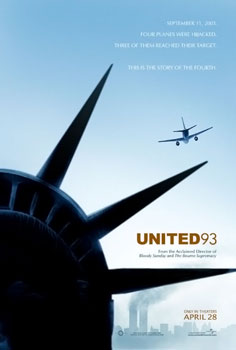
In many ways, 9-11 was much like the day American soldiers alit from their Higgins boats onto Omaha.  We were wholly unprepared for the savagery of the attack, we reeled at its success, and then brave and innovative heroes, ordinary citizens all, adapted, driving one of the planes meant to decapitate the government into a field in Shanksville, saving the lives of hundred and perhaps thousands of others.  Paul Greengrass’s film depicting that day, however, suffers no flaws and accordingly, does not need to transcend criticism.

Greengrass made his mark with a style blending documentary and drama in his depiction of a 1972 Irish civil rights protest march and subsequent massacre by British troops, Bloody Sunday.  As in that film, in United 93, Greengrass keeps us just over the shoulders of the military authorities, the air traffic control personnel, and the passengers of United 93 as the horror of what is occurring dawns on them, paralysis sets in, and then the process of acceptance and adaptation commences.  We’re there, but we are not, and we feel thankful for both the intimacy and the remove.

The casting is brilliant.  A decision was made to use actors who are familiar but who are not stars.   You know you’ve seen many of these people, but they do not bring any recognizable persona, so they feel real.  For the passengers on the plane, Greengrass went out of his way to cast actors who looked like the person they were playing.  Moreover, he wanted people who had a tie to the project.  As explained by Greengrass, “What we did on this film was to gather together an extraordinary array of people wanting to get this film right, aircrew from United Airlines, pilots, the families of the people who were onboard, who gave us a sense of what their family member might have done given the type of person he or she was in any given situation; controllers and members of the military. We had a lot of expertise that in the end allows you to get a good sense of the general shape of events.”

Finally, Greengrass at no point indulges in communicating a larger message.  In Saving Private Ryan, Spielberg, as always, just couldn’t trust his audience.  He had to have Hanks tell Matt Damon “Earn it” even though the story was told skillfully enough to leave it unsaid.  Greengrass is a neutral, not in the ideological struggle of 9-11, but in the explication of evaluating these people at this critical time.  The result, for me, was a clearer vision of just how extraordinary the acts of heroism were.


I’m not much for sports hokum.  The elegiac bunk of The NaturalField of Dreams, or even Any Given Sunday reveals more about the filmmakers’ insecurities than the game being played and the characters who play it.  But even I am not immune from hokum anchored by Gene Hackman and based on the true story of the 1954 Indiana state high school basketball champions from tiny Milan.

Hackman is the new coach with a dark past, bringing a fundamental style of play and stubborn ways to a cloistered small town that does not want him.  Barbara Hershey is the teacher leery of his influence.  Their conversations about what constitutes success are smartly written (she loathes the small town, plans the escape of her students and views Hackman’s” hoop dreams” as an anchor keeping young men from getting out).  Dennis Hopper is the alcoholic assistant coach, redeemed in the eyes of his player son as the team battles adversity.  David beats Goliath, and the music swells along with the heart.

The performances are all strong, and the casting of the fresh-faced team is perfect. The boys, town and milieu feel 1950s, as does the play, and the boys can play.  One only needs to watch the overrated White Men Can’t Jump to realize the foolishness of casting non-players; Woody Harrelson is passable, Wesley Snipes ludicrous.  The film is also chock full of inspiring and exciting vignettes as the boys march forward to victory. 

Hackman is commanding, in his sparring with Hershey, when he confronts the team’s star player, who is in the middle of a 1950s version of a holdout, and in his handling of the overbearing townsfolk.  I also like his simple, homespun speeches:

Ah, Bobby Knight.  

This one is better:

There are a few problems.  The love affair between Hershey and Hackman seems both improbable and awkward.  I no more want to see him kiss a younger woman than Tommy Lee Jones.  The score is also very 80s, stirring but techno infused.  But it’s still one of the better sports films made.

Like Any Given Sunday, a bad movie that is occasionally engaging but makes you feel guilty for being engaged, Oliver Stone’s The Doors is indulgent, dizzying and vapid. The caricature of James Morrison invades Val Kilmer, who gives an embarrassing, showy performance.  Kilmer’s idea of Morrison is little more than a faraway stare and a lycanthropic lope.  So perpetual is Kilmer’s saunter that he presents less Lizard King, more inebriated catwalk model.

The film almost stops dead in its tracks a third in with a ridiculous overlong band “trip” to the desert for some peyote and pretentious native American b.s. The Doors emerge from this interminable detour performing a live version of a song as silly and overlong as the movie, “The End.”  All time taken away from the only story you want to see about a marginal rock talent: rise to fame, drugs, booze, chicks, and then, crash and burn.

Stone is so enamored of his subject he not only photographs him lovingly, he actually takes the singer’s poetry seriously.  Morrison is such an obvious talent Stone felt he could dispense with any back story for him.  We don’t know much about his early life (except he once saw a dead Indian by the road during a family trip) because Stone is in such a hurry to show us this avant garde pioneer, a guy who riffed “mother, I want to f### you” right into the director’s heart.

We get a few fun moments, snapshots of nostalgia from the 60s, like the Ed Sullivan performance.  But even that has to be gussied up and romanticized. The Doors were asked to forego the line “girl we couldn’t get much higher” from their hit, “Light my Fire.” They happily did so in rehearsal, but during a lethargic live performance, Morrison forgot and sang it.   Not good enough for Stone.  In the film,  Kilmer lectures the band on kowtowing to “the Man” and then belts it out as a taunt just to show those suits what for. Then he starts hip swiveling, sending lily-livered execs into apoplexy.

As Morrison descends into the fat, bloated bore he would become, visions of a dour Indian pop up.  In the desert.  During gigs.  Even before meeting Andy Warhol (portrayed by Marty McFly’s father).  When unintentionally funny imagery isn’t on screen, the picture is a crashing bore.  Morrison always was a pompous dick and a medium talent at best.  He never really merited the Stone treatment.  Or maybe that is exactly what he deserved.