Archive

Comedy

Semi-compelling in its melding of the English countryside circa 1812 and brain-eating undead, this film has its moments.   In particular, Matthew Smith (an old Dr. Who) as Parson Collins and Lena Headey (Ceirse Lannister in Game of Thrones) as Lady Catherine de Bourgh get the joke, stealing every scene they are in with wink and nod mugging that acknowledges the levity of this venture. Unfortunately, the rest of the cast actually seems to be struggling with the delivery of Jane Austen in the middle of a zombie outbreak and choose to treat the latter as a catastrophe that demands some degree of solemnity. Worse, director Burr Steers finds it necessary to inject the tiresome physicality of a kung-fu movie, which is one ingredient too many for the stew. Still, this is pretty decent fun.

image

Screenwriter Diablo Cody made a big splash with the clever Juno, and showed real growth with the acid Young Adult. But that was a while ago.  This trite stinker, in the mold of so many dramadies about the travails of rich families as they negotiate the perilous path of monied suburbia, is a massive step backwards.

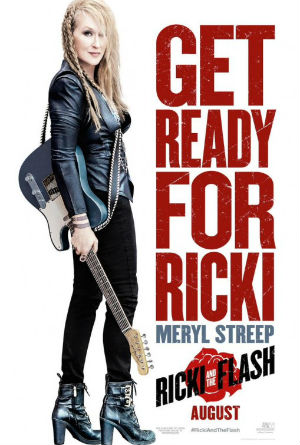
Cody offers Ricki, a talentless front woman for a cover band who has come home to her estranged, affluent ex-husband and adult children after a long hiatus.  She chews with her mouth open, says dirty words, and attends a family wedding.

But hey, it’s Meryl Streep, so we’re okay, right?

Right?

Wrong.  Streep is just terrible, whether slumming as the hip cast-off or leading the worst bar band ever. She’s in-authentically grungy and gratuitously down-to-earth and when she visits her erstwhile family, led by the kind ex-husband (Kevin Kline), it is cringe-inducing, not because of the fish-out-of-water stuff (this is the kind of movie where the denizens of the tony enclave practically say, “Well, I never!”), but because there’s not a word of it that feels real.  There is no way Streep’s character would even be a distant cousin to these people, much less the former matriarch.

Kline has, of course, remarried a protective earth mother type who raised the abandoned children while Ricki honed her craft covering Tom Petty.  Others who Ricki abandoned include a nice son about to get married to the most stuck-up bitch imaginable; a fragile daughter who has had a breakdown because her marriage of three seconds failed (you’d think she’d been a captive of Boko Haram, so extreme is her distress); and a son straight out of gay central casting (he is furious because Ricki called his gayness a phase and voted for W . . . twice!)

All of which would be humdrum but bearable twaddle save for the fact that Ricki and her shit band play about 7 numbers in this picture, including a version of Wooly Boolie so bad we could have won the war on terror years ago had it been utilized at Guantanamo.

Worse, Ricki’s version of Springsteen’s My Love Will Not Let You Down starts more like a Quarterflash tune and ends with your head in a bucket.

After August: Osage County and this, I am not saying Streep is at that Pacino point, where she thinks she can just fart in a bottle and call it potpourri.

But she’s veering to the off ramp.

Least likely sentence I ever expected to write?  Rick Springfield, who plays the lead guitarist for the Flash and Ricki’s love interest, deserved better.


Barton Fink had the Coen Brothers delving into the dark heart of old Hollywood as it crushed the dreams, condescension and verve of the working man’s playwright. The result was a dark and sometimes terrifying comedy that revealed the old film business as an industrial behemoth, plowing over the souls of artists. It is a dour, unpleasant movie, and ironically, so arty and showy that you long for the simplistic Wallace Beery wrestling picture that plagues its protagonist.

It appears the Coen Brothers have lightened up considerably. Hail, Caesar! is a breezy, clever and light love letter to old Hollywood. The studio chief (Josh Brolin) is being wooed by corporate America, and the man sent to Tinseltown to lure him away can’t help but take jabs at the frivolity of Brolin’s work. Indeed, between staging marriages to deal with the unplanned pregnancy of a star (Scarlett Johansson), matchmaking stars to feed to the gossip columnists, squelching rumors about his Clark Gable-esque A lister (George Clooney) and saving that same commodity from kidnappers, it all seems pretty silly. But it is not. It is, as presented by the Coen Brothers, noble work.

This light romp is made glorious by several masterful recreations of old Hollywood scenes, from the massive scale of period pieces to cowboy antics to jaw-dropping swim and song-and-dance numbers. The detail is lovingly rendered, and the humor is always there. This is one of their better films. It prompted Ann Hornaday of The Washington Post to rank her Coen Brothers films, a list that is in many ways beyond stupid. Here is mine:


  1. Fargo
  2. No Country for Old Men
  3. The Big Lebowski
  4. True Grit
  5. Inside Llewyn Davis
  6. Burn After Reading
  7. Miller’s Crossing
  8. Hail, Caesar
  9. Raising Arizona
  10. Oh Brother Where Art Thou
  11. Blood Simple
  12. Intolerable Cruelty
  13. Barton Fink
  14. The Hudsucker Proxy
  15. The Man Who Wasn’t There
  16. A Serious Man

**. The Ladykillers (never saw it)


image

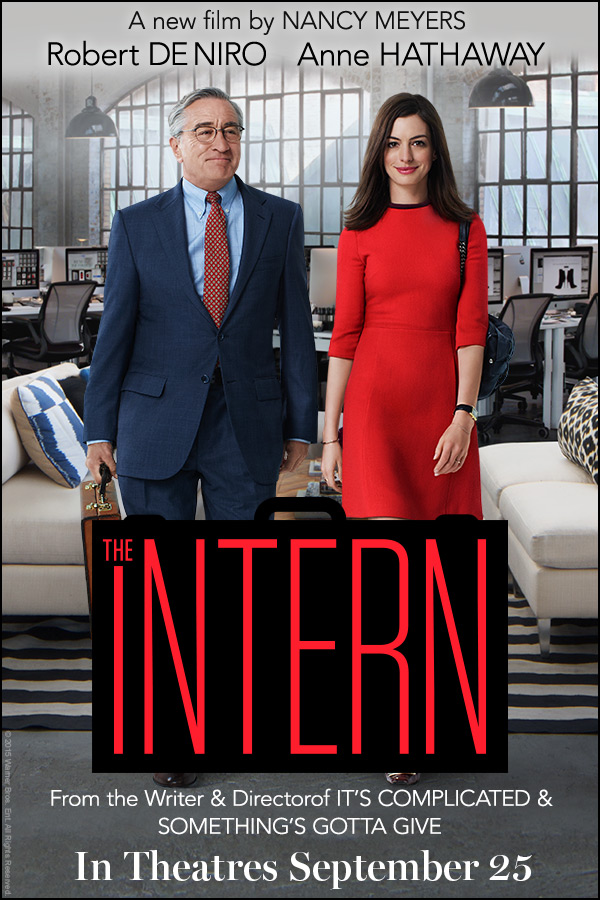
Makes Love, Actually seem like a gritty documentary.  This is a cloying, revolting film about a young entrepreneur (Anne Hathaway), her senior intern (Robert DeNiro) and her struggles to have it all in the fast paced world of tech and fashion.  Hathaway grew up from her stint as a personal assistant in The Devil Wears Prada, and now she runs her own on-line clothing company.  But she works too hard, her marriage is in crisis, she’s mulling bringing in a new CEO and fortunately for her, dapper, impossibly cute DeNiro arrives to provide balance to her life.  That’s the whole thing, which would be bearable, except for the fact that Hathaway is playing her own excruciating “aw, shucks, me?” persona; DeNiro looks bored; the plot is non-existent and the presentation slipshod; Anders Holm (from Comedy Central’s Workaholics) is Razzie-worthy for his clumsy, unconvincing turn as Hathaway’s mushy husband: the film doesn’t know whether it wants to be a comedy or a drama so it settles as a statement on the pressures put on rich professional women who live in impossibly gorgeous and classy Brooklyn brownstones; the score is a maudlin, soapy piano that bores into your skull; and everyone in the thing is just so damned cute, you hope that just maybe, they’ll inject a devastating calamity.  They don’t, unless you consider accidentally sending an email criticizing your mother to your mother of that stripe.

Also, apparently, in Brooklyn and Manhattan, parking isn’t a problem.  Anywhere.

In the immortal words of a review of a Spinal Tap record, shit sandwich.

image

(Reporting from the Blizzard of ’16)

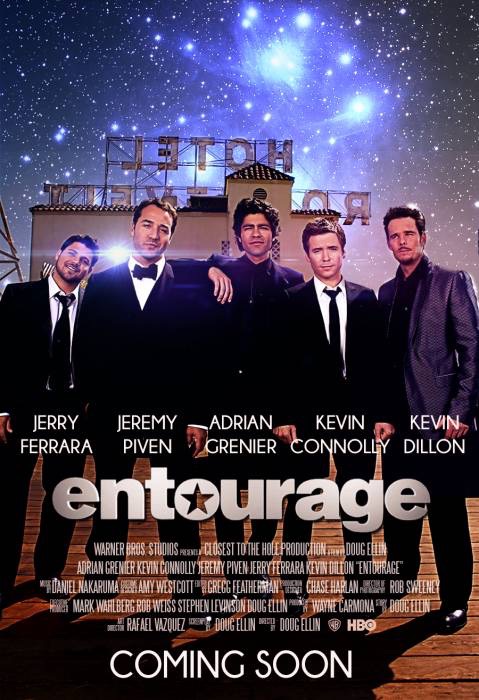
The TV show was two seasons too long but most always amusing, giving you a taste of what it might be like to be young, dumb, affable and famous in the candy dish that is Hollywood. The show’s greatest attributes were its locale, engine (the hyper, high-powered brutal agent Ari Gold played by Jeremy Piven) and length (a brisk 30 minutes). Entourage gave to men what Sex in the City gave to women, though the latter could often seem a conflicted and forbidding place for the female archetypes. Not the sandbox that was Entourage‘s Hollywood. Sure, the fellas had occasional relationship issues or fights with studios, but nothing that could not be wrapped up quickly and remedied by weed, easy sex with nubile ornaments, and kick-ass parties.

The film bollixes up all the critical elements of the TV show. The locale is used solely for a series of unfunny cameos and time-wasting sojourns. The likes of Liam Neeson, Mark Wahlberg (the show’s canny producer) and Armie Hammer (he’s someone?) just show up, which is just weird.

Worse, the Hollywood of now just seems tired and pedestrian. Piven, now a studio head instead of a mere agent, is less antagonistic and biting than weary and beleaguered, and his time is spent making sure the dream film of his pretty boy Eliza Doolittle/Vinnie Chase (Adrian Grenier; he directs!) is financed by mean old Billy Bob Thornton, a gun totin’ Texas kabillionaire and the studio’s primary financial partner. This leaves Piven in the role of supplicant most of the film, not aggressor, and as anyone who watched the series will tell you, Ari Gold is one entertaining combatant.

Two hours in and one gets the feeling that director, writer, and creator Doug Ellin was desperately looking for filler. He does a few pointless things with Vince’s gang, but it is not enough. Like a kid completing a term paper coming in short, we get a lot of driving and walking scenes.  If they are your thing, this is your flick.

The best part of the movie is one aspect of the actual story, which has Thornton’s spoiled son (played by Haley Joel Osment of The Sixth Sense fame, who now sees bored people) coming up to Hollywood and attempting to put the kibosh on Vince’s opus, a futuristic remake of Jekyll and Hyde, because Vince aced him out of a girl.

Even though they are excuses used to cover for being hurt over the girl, Osment’s criticisms are valid.  He explains that Vince’s brother (Johnny Chase, played by Kevin Dillon) is putrid in his four “pivotal scenes” and that Vinnie himself sucks as the lead, and you know he’s probably right. Hell, when Ari nervously screens the picture and we get 2 minutes of it, it has the look and feel of a high-end Sprite commercial.

Alas, Osment is sent packing, and the boys get Golden Globes (ha! Not a People’s Choice?).

Osment, however, gets the last laugh.  He was actually nominated for a real Academy Award.

 

Will Ferrell has seemingly gone to the well too often with his super clueless white dude schtick (as I write this, he dropped another one into theaters with Mark Wahlberg; Ferrell is the super clueless white stepdad to Wahlberg’s bitchin’ cool real dad). There’s nothing new to it, but I have to say, coupled with Kevin Hart, in Get Hard, you have the two hardest working men in show biz peddling standard physical, fish-out-of-water yuks. and they hit more targets than they miss. And by hardest working, I don’t mean they do a lot of movies (although they do), but that they work the ever-loving shit out of a bit, no matter how lame the premise or how Hindenburg-esque it feels. And I have to give them credit. Ferrell, as the super clueless white dude hedge fund manager set up by his boss, and Hart, as the man who washes his car and acts like an ex-felon to prepare Ferrell for hard time, create laughs on the sheer strength of their dedicated efforts. It’s almost as if they’re beating them out of you in their riffs, and it jumps this movie a full 2 stars. Interestingly, what murdered the movie with the critics was the constant refrain of Ferrell fearing forced sex (or otherwise) in prison; those halcyon days of making mirth of prison rape have passed (The Atlantic‘s Christopher Orr gave the film the “Gay Panic Award” and Salon took the time to provide a compendium of reviews deeming it “a racist, homophobic mess”). I’ll leave it to others more sensitive than myself to judge the film’s racism or homophobia, but I confirm it is a mess, albeit one that has some very funny bits (including some centered on Ferrell’s fear of gay sex), made funnier by the blood, sweat and tears of the leads.


image

When Noah Baumbach makes movies about miserable people, they tend to be miserable experiences. Ben Stiller was a depressed, egocentric bundle of nerves in Greenberg. In Margot at the Wedding, Nicole Kidman was a near hysteric mother, so casually cruel to her teen son it set your teeth on edge. And Jeff Daniels’ insecure, superior father in The Squid and the Whale was a textbook narcissist and a gasbag academic to boot. While talent is evident in these films, they are neither enjoyable or incisive. Rather, they are merely intricate portraits of unpleasant people doing awful things to themselves and those around them.

But Baumbach has a breezier side, one that was shown in his writing of Wes Anderson’s The Life Aquatic and Fantastic Mr. Fox, and of late, his films seem less like autopsies and more like entertainment. In Frances Ha and While We’re Young, Baumbach could not quite leave the realm of the neurotic, but at least we had characters to semi-root for. In Mistress America, we have an unqualified heroine, Greta Gerwig (who dates Baumbach and co-wrote the script), a whirling dervish of a climber, all idea and no follow-through, who latches on to a lonely college freshman (Lola Kirke), lifts her spirits and serves as her muse. What follows is a hilarious social and then drawing room comedy, which has a bit of a Whit Stillman nostalgia, but is decidedly more modern in its literate and canny observation of academia, money, status and success. Gerwig is truly a force of nature, and Kirke is genuinely touching as a child adrift in the cold realm of college and New York City. I laughed out loud throughout, one of the best films of the year.

 image

I’m not a big fan of the super hero flicks, and now that they are mixing and matching and packaging ad infinitum, I’m even less enamored.   For the most part, they are CGI Dramamine, and in the wrong hands (like those of Zach Snyder), they add a seriousness that is self-parody (the preview for the new Superman v. Batman, or whatever the heck it is called, is so dour you almost brighten up when Wonder Woman is inexplicably thrown in the mix).

And yes, they are going to pigeonhole Ant Man (Paul Rudd) into the franchise, which will mean we have another wiseacre to compete with Tony Stark, but still . . . I liked this movie very much.  Rudd is charming as an ex-Robin Hood con who is used by Michael Douglas to get miniaturizing technology out of the hands of his evil protégé (Corey Stoll) and the CGI for the transformation is both nifty and ladled out sparingly.  Ant Man seems a nice fella’, as if you dropped an Apatow character into a super hero guise, and he’s aided by a hilarious trio of bumblers, one of whom (Michael Pena) made me laugh out loud repeatedly.

image

A smart, kinetic re-imagining of Risky Business, except instead of Joel from the tony suburbs of Chicago, we get Malcolm, a geek from the decidedly tougher “the Bottoms” of Inglewood.  A lot of good laughs and a few inspired set pieces.  Unfortunately, it shoots itself in the foot at the end with some clunky, preachy Spike Lee homily.  Shame.

Spy (2015) – Jonesing For Films

Melissa McCarthy blew the doors off of Bridesmaids, and that was in a very strong ensemble. Since that time, she’s taken several whacks at a lead or co-lead role (Identity Thief, Tammy, The Heat) and the results have been blah. In the first two of those movies, McCarthy played up the grotesque, as if to say, “Yes, I know I’m fat, but wait until you see me fat and disgusting and humiliated.” It was a complete reversal from her character in Bridesmaids, who acted as if her weight was an advantage, an intriguing sexy charm, only to reveal to a self-pitying Kristen Wiig that her arrival at such self-confidence was no easy road. In this, McCarthy was hilarious and touching. In Tammy and Identity Thief, she was gross, charmless and, unsurprisingly, not funny.

McCarthy should thank the stars for writer-director Paul Feig, who also directed Bridesmaids, because he leads her back to her strengths. As CIA office minder for the James Bondian Bradley Fine (Jude Law), her secret agent exploits are limited to getting Fine out of jams while talking in his earpiece.  Of course, she’s in love with him, a love that is unrequited but deep nonetheless. When Fine is killed, McCarthy goes out into the field to avenge him, tangling with a fellow agent who is dismissive of her skills (a very funny Jason Statham), a horny Italian liaison on the ground (Peter Serafinowicz, who damn near steals the movie), and the arch villain Rayna Boyanov (Rose Byrne, who may be the hardest working woman in show biz). For each of these characters, Feig writes very clever bits, and McCarthy plays off of their barbs beautifully. The result is a bit of Austin Powers and a bit of Bond at its most campy, consistently interspersed with crisp and amusing banter and a few laugh-out-loud set pieces. It’s all held together because you like McCarthy and instead of reveling in her misfortune, she exhibits wit and pluck and you root for her to rise above each indignity (the worst of which are the increasingly disparaging “undercover” personalities she is assigned).  Great fun.