Archive

Decade

There simply hasn’t been a better satire since . . . well, since South Park: Bigger, Longer and Uncut. Matt Stone and Trey Parker carve up American idiocies and icons, and as is their custom, they fear no maven of political correctness nor do they take the easy shot. Of course, they do that sort of thing regularly on South Park, but not with puppets, and not with Broadway-worthy anthems. Offensive on almost every level, from the hilarious spoof of Rent (Lease) and its signature song (“Everybody has AIDS!”) to the jingoistic, red-white-and-blue power chordy

Casting marionette Alec Baldwin as not only the greatest actor ever, but also the head of a subversive Film Actors Guild (yes, F.A.G.) is genius, and if you’ve ever wanted to see the coterie of noxious celebrity dunces portrayed as members of a S.P.E.C.T.R.E.-like organization, only to get their comeuppances in the form of horrifically violent deaths (as marionettes, mind you), you’re in for a special treat.

Susan Sarandon is particularly good:

Apparently, Sean Penn was offended, but Sean Penn was offended when Chris Rock poked fun at Jude Law during the Oscars.

Be warned.  If you supported the ouster of Baldwin from MSNBC because of his homophobic broadsides against paparazzi, or you were hurt and dismayed when that woman on MSNBC made fun of the Mitt Romney family photo, or Rush Limbaugh’s broadsides against just about anyone furrow your brow and get you thinking about “positive action” or “inclusion” and “dialogue”, or the recent South Park where the boys cannot comprehend that anyone would name a psychological condition “Assburgers” made you think, “Where is the FCC in all of this to protect the children?”, this is not the film for you.

Or, it’s a necessity.

Few Stephen King books or short stories are successfully translated on screen, and only one is brilliant – The Shining (it speaks volumes about the author that he felt Stanley Kubrick got it wrong, so wrong he made another version, with one of the two leads from the sitcom Wings in Nicholson’s role).

Carrie, Salem’s Lot, and Misery are very good, and Stand by Me is competent, if treacly. Dolores Claiborne, 1408, Christine, and Silver Bullet are pedestrian, but have their moments.  The Shawshank Redemption is a wildly overrated, ridiculous film, but deserves mention because the great weight of authority deems it a near masterpiece.

Then you have a big pile of crap–

  • 1982 – Creepshow
  • 1983 – Cujo
  • 1984 – Children of the Corn
  • 1984 – Firestarter
  • 1985 – Cat’s Eye
  • 1986 – Maximum Overdrive
  • 1987 – The Running Man
  • 1989 – Pet Sematary
  • 1990 – Graveyard Shift
  • 1990 – It
  • 1991 – Golden Years
  • 1991 – Sometimes They Come Back
  • 1992 – Sleepwalkers
  • 1993 – The Dark Half
  • 1993 – Needful Things
  • 1993 – The Tommyknockers
  • 1994 – The Stand
  • 1995 – The Langoliers
  • 1995 – The Mangler
  • 1995 – Stephen King’s Nightshift Collection
  • 1996 – Thinner
  • 1998 – Apt Pupil
  • 1999 – The Green Mile (yes, this sucks)
  • 1999 – Storm of the Century
  • 2001 – Hearts in Atlantis
  • 2002 – Rose Red
  • 2003 – Dreamcatcher
  • 2003 – The Diary of Ellen Rimbauer
  • 2004 – Secret Window
  • 2004 – Riding the Bullet
  • 2006 – Desperation
  • 2006 – Nightmares and Dreamscapes
  • 2007 – The Mist
  • 2009 – Dolan’s Cadillac
  • 2011 – Bag of Bones 
  • 2013 – The Reaper’s Image
  • 2013 – Cain Rose Up
  • 2013 – Willa

So, where does David Cronenburg’s The Dead Zone fit in?  Three-fourths of this story in about a man who can see your future and your past after he touches you, I’d have ranked it just below The Shining.  Cronenberg creates a creepy atmosphere made even more unsettling by the unique performance of Christopher Walken, and the bleak misery of his existence as a crippled freak stuck in a small town is haunting.  Striking visuals add to the spooky feel:

Then, the damn thing falls apart due to two ridiculous storylines.  First, Anthony Zerbe plays a rich man who hires Walken to tutor his son, knowing full well Walken’s gift of second sight.  So, what does Zerbe do when Walken sees the boy and his friends crashing through the ice during hockey practice and warns him accordingly?  Wounded that his son has rejected his judgment about skating on the pond, Zerbe conducts hockey practice anyhow, and two boys die.  The decision is bananas yet in keeping with King’s low esteem for parents (the father in Stand By Me practically tells poor Will Wheaton, “the wrong kid died” like the father in Walk Hard: The Dewey Cox Story).

Second, Walken is introduced to senatorial candidate Martin Sheen and sees Sheen’s future as a messianic president of the United States, instigating a nuclear conflagration.  Sheen plays the character so oily and low it is hard to imagine anyone would vote for this cretin.  And when Walken thwarts his ambition, the manner in which Sheen self-immolates is so broadly stupid the film is near ruined.

Still, it coulda’ been a contender.

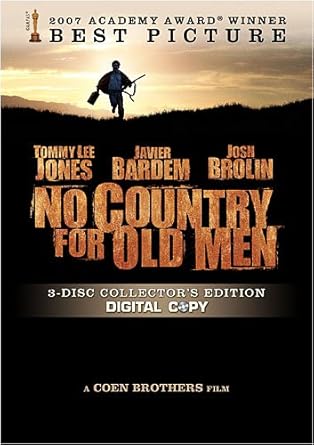
The Coen brothers’ finest film, a gritty, nerve-wracking crime story and an existential horror movie set in the harsh and desperate environs of dusty, bleak Texas.  Josh Brolin takes the wrong money from the wrong drug dealers, victims of a cocaine buy gone bad, after he happens upon their slaughtered bodies while hunting.  Javier Bardem is dispatched by the higher-ups to get it back, killing most everyone he encounters along the way (including rival bounty hunters sent by his employer).  The pacing is taut, the terror near-asphyxiating.   But interwoven in the story is a sense of generational disconnect, rot and the utter bewilderment of an older generation at the brutality and senseless violence of the new.  An observation from a friend is also spot on: “I thought the most important theme in the movie was that older men gradually lose contact with their country, and that this sad fact has nothing to do with the objective reality of what’s happening but is the natural consequence of getting older.”

Set in 1980, the young are depicted as callous and corrupt.  Brolin, shot and desperate to get to Mexico, encounters kids on the border bridge returning to the U.S. after a night of carousing.  He offers to buy a shirt from one of the trio to cover his bleeding, but they quickly demand money, and when he asks for a beer, they want more.  Similarly, at the end of the film, two boys encounter a wounded Bardem and bicker over the share of what he has given them for a shirt.

The Vietnam generation is represented by Brolin and Woody Harrelson, the latter sent to bring Brolin in before Bardem gets to him.  Brolin is not exactly honorable but he still maintains a tie to some principles.  He literally awakes with guilt because he can’t let a dying drug dealer go to his end without water, and it is that charity that brings Bardem his way.  Harrelson, also a Vietnam vet, has a similarly flexible code (he is a killer), but at least there is some code there.  As he says to Brolin about Bardem: “You can’t make a deal with him.  Let me say it again.  Even if you gave him the money he’d still kill you.  There’s no one alive on this planet that’s had even a cross word with him.  They’re all dead.  These are not good odds.  He’s a peculiar man.  You could even say that he has principles.”  When Brolin returns from Mexico, still hobbled but intent on stopping Bardem, a border guard lets him through on the strength of Brolin’s Vietnam service.

Then, there are the old men for whom there is no longer a country.  Tommy Lee Jones and his law enforcement contemporaries just don’t get it.  It’s all gone to hell and a hand basket and while they understand violence, they don’t understand the new violence.  As Jones says, bewildered, reading the paper: “Here last week they found this couple out in California they would rent out rooms to old people and then kill em and bury em in the yard and cash their social security checks.  They’d torture them first, I don’t know why.  Maybe their television set was broke. And this went on until, and here I quote… ‘Neighbors were alerted when a man ran from the premises wearing only a dog collar.’ You can’t make up such a thing as that. I dare you to even try.”

It is not Jones’ world anymore (my favorite Jones musing was from Cormac McCarthy’s book – “She kept on, kept on. Finally told me, said: I don’t like the way this country is headed.  I want my granddaughter to be able to have an abortion.  And I said well ma’am I dont think you got any worries about the way the country is headed.  The way I see it goin’ I dont have much doubt but what she’ll be able to have an abortion.  I’m goin’ to say that not only will she be able to have an abortion, she’ll be able to have you put to sleep.  Which pretty much ended the conversation”).

The film ends with Jones driven to retirement, talking to other older lawmen about what it all means:

Roscoe: It’s all the goddamned money, Ed Tom. The money and the drugs. It’s just goddamned beyond everything. What is it mean? What is it leading to?

Jones: Yes.

Roscoe: If you’d a told me twenty years ago I’d see children walkin the streets of our Texas towns with green hair and bones in their noses I just flat out wouldn’t of believed you.

Jones: Signs and wonders. But I think once you stop hearin’ sir and madam the rest is soon to follow.

Roscoe: It’s the tide. It’s the dismal tide. It is not the one thing.

And the end of the film, Jones has retired (he’s done, “overmatched,” he says) and he sits with an older retired lawman, Barry Corbin, who observes, “All the time you spend tryin to get back what’s been took from you there’s more goin’ out the door.  After a while you just try and get a tourniquet on it.”

And the coda:

Corbin: You’re discouraged.

Jones: I’m… discouraged.

Corbin: You can’t stop what’s comin.  Ain’t all waitin’ on you.

Bardem is what is waiting on us all. Certain, unstoppable, arbitrary death.

This is a beautiful, unrelenting movie, deservedly winning Oscars for best picture and supporting actor for Bardem.

When Dead Again came out in 1991, 31 year old Kenneth Branagh was fresh off his stunning Henry V, and along with Emma Thompson, threatened to be the next big thing. So as a follow-up, why not try a modern Hitchcockian homage set in San Francisco, with Branagh playing the hard-bitten gumshoe who runs across Thompson, a mysterious woman who has lost her memory, is terrorized by nightmares from her past, and needs Branagh to sort it out.

At the time, the film was well-received (Roger Ebert – “I am a particular pushover for movies like this, movies that could go on the same list with Rebecca, Wuthering Heights or Vertigo”) and it holds an 82% on Rottentomatoes. I can’t scoff. In 1991, I thought it was clever and well-conceived.

How wrong I was.  Dead Again just became available on Netflix streaming. It is an atrocious film.  Branagh’s “American” accent is an awful, nasally annoyance; Thompson barely makes an impression; the story (Thompson and Branagh both lived past lives where he, a famous composer in the 40s, was executed for her murder) is a preposterous pile of pure Gouda; and the villain is so obvious and nonsensical that you are offended at the degradation of the fine actor playing him.

He’s also not so good with scissors.

I’ll give credit where credit is due – Robin Williams does a few decent cameo scenes as a disgraced former psychotherapist and a babyfaced Campbell Scott shows off some nifty ninja kicks. 

Jack Nicholson and Helen Hunt won Oscars in this James L. Brooks comedy about a cantankerous romance writer with OCD (Nicholson) and a worn-out, single mother waitress (Hunt) who meticulously serves him at the only Manhattan diner at which he will eat. Nicholson is a holy terror, complaining “there are Jews at my table” when it is occupied. At home, he is no better, throwing the dog of his gay artist neighbor (Greg Kinnear, who won a best supporting actor Oscar) down the trash chute. But Nicholson is soon drawn into the world he loathes out of necessity. Hunt has to leave her job because of the health of her son, and Kinnear is beaten into a wheelchair by local thugs, which leaves Nicholson to take care of his dog. The man has to eat, and he bonds totally with the pooch, so soon, he is arranging for medical treatment for Hunt’s child and acting as support for Kinnear. In the process, he and Hunt begin a relationship that is halting at best.

This picture can be riotously funny, and Nicholson gets all the good lines, including my favorite.

If I have a problem with the movie, it is Hunt’s character. Her harried waitress is overbearing, self-pitying and often bullying, and her demand for control is every bit as off-putting as Nicholson’s knee-jerk rudeness and his fear of cracks on the sidewalk. Yet Brooks denies us any judgment of her – she is presented as plagued, but somehow noble. Mind you, Hunt’s performance is excellent, but her character is unpleasant without the benefit of making me laugh, and my teeth are always set on edge during her scenes.

That’s probably my hang-up.

Rear Window, or the World's Scariest Bottle Episode – Scriptophobic

I just engaged in a donnybrook of a discussion with a few friends over this film, the primary contention being what it was actually about. It was the kind of exchange only the participants could enjoy, but the spirited debate about the film and Hitchock in general led me to re-watch Rear Window this weekend.

Jimmy Stewart is an adventurous photographer who has a broken leg (but he got the shot of the crashing motor car before it hit him). Cooped up in his New York City apartment, he spends the time peeping on his neighbors across the way (he has a splendid view of their windows and courtyards), and in the process, he begins to suspect one (Raymond Burr) of murdering his wife. He enlists his socialite girlfriend (Grace Kelly), whose marriage entreaties he is fending off, in his investigation, leading to a thrilling conclusion.

The film succeeds on three levels. First, it is a witty comedy, with sharp exchanges between Stewart (the confirmed bachelor and super snooper) and Kelly, as well as Stewart’s health care attendant, the brusque Thelma Ritter. The women are pro-marriage and anti-peeping. As these discussions develop, Stewart enlists them in his monitoring of Burr, and thereby, Kelly “proves” herself to Stewart as something more than a rich, pampered girl. At its best, it plays like a David Ogden Stewart or Ruth Gordon battle of the sexes script.

It is also a love story, initially very light, but when Kelly is in harm’s way, Stewart evinces true passion. Stewart has been lampooned so often (“Zu Zu’s petals!”) that one forgets his ability to communicate depth of emotion, but before those petals, there was his haunting breakdown in Martini’s bar. Also, given the 21 year age disparity, it is surprising Stewart and Kelly manage chemistry, but it’s there.  Indeed, the insane idea of rejecting Grace Kelly is made more comprehensible by Stewart’s cranky maturity.

Finally, this is a meticulous thriller with a few dark overtones. Stewart peeps as a lark, but soon, he is obsessed and a little ashamed.  He sheepishly admits to Kelly that they’re viewing “pretty private stuff going on out there.”  She retorts, “We’re two of the most frightening ghouls I’ve ever known.”  And what they see is generally pretty depressing: a suicidal Ms. Lonelyhearts, a composer in despair, newlyweds from shine to routine. And, of course, a killer, nagged by his wife and driven to extremes. It’s not a happy place, as is shown by one neighbor whose dog, sniffing in the wrong garden, meets an untimely end.

I’ll end with the thoughts of someone more distinguished, David Thomson, from his book The Moment of Psycho: How Alfred Hitchcock Taught America to Love Murder:

Hitchcock knew that a system locked into watching and seeing can misread its surroundings and can even lose its identity and ordinary human sympathies because of the pressure of voyeurism. The voyeurism is so heavy, so forceful, it can smother real human nature. Psycho is the conclusion to a set of films beginning with Rear Window, and for me that is Hitchcock’s best film in that the smile of satisfaction at the end covers without hiding the loneliness that affects real people. Rear Window is a romance, a comedy and a thriller, but a portrait of alienation too. The apartments and windows are screens, of course, but they are traps, or cells – in that entire courtyard no one seems to “know” anyone else; neighborliness has not been invented.

Guillermo del Toro’s fairy tale is a rebuke to the taming of the Brothers Grimm.  His story of a young girl, Ofelia, is set at the tail end of the Spanish Civil War.  She has just been brought to the camp of her new father, Nationalist fascist Captain Vidal, by her pregnant mother.  The former is a sadistic, obsessive-compulsive, suicidal and the latter is simply desperate to have found a protector in the new Spain.  Ofelia escapes to the nearby woods of Vidal’s headquarters, and a world of faeries, fauns and monsters who give her arduous, often terrifying tasks that offer her majesty in a fairy tale land.

Unlike del Toro’s The Devil’s  Backbone, the films’s forerunner, the war makes a more pronounced, visceral appearance.  Vidal is cartoonishly vicious, obsessed with the birth of his son and a new Spain, bent on torture and extermination not just of his enemies, but of those who would infect the future. It borders overkill, but with with half of the deaths in the war attributed to executions and murder of the defenseless, the depiction is apt. The fate of Vidal’s son is del Toro’s rebuttal.

The film is visually stunning (it won Oscars for art direction, cinematography and makeup) and movingly juxtaposes the brutality of the war with Ofelia’s hidden place. But del Toro doesn’t make Ofelia’s choice easy.  Her fantasy world can be every bit as treacherous and horrifying as the war she seeks to escape.  In particular, Pale Man, who guards the quarry of Ofelia’s third task, is one of film’s most frightening visions (and has a gait similar to that of Mama, the spook in del Toro’s last film).

And you can be Pale Man at home!


John Woo is an action hack, a Chinese director of minor renown who came to America and never looked back, making several big concept explosion-fests, like Broken Arrow, Mission Impossible II, Windtalkers (a Pacific theater World War II film that looks as if it was filmed in the Hollywood Hills) and Paycheck, which was once thought to be the coda to Ben Affleck’s career. You can only lose people so much money before you get benched, and Woo’s Windtalker‘s had a worldwide gross of $70 million on a budget of $115 million. Paycheck merely broke even domestically and appears to have signalled the end of the line for Woo.

But Woo left something for us, a ridiculous, giddy gem, to show that he had come to America and contributed. Face/Off stars Nicholas Cage as master terrorist Castor Troy. John Travolta is his Javert, Agent Sean Archer. Archer catches Troy, and puts him in a coma, which is fair play given that Troy murdered Archer’s young son. But Troy planted a bomb somewhere in LA before sleeping his deep sleep, and only Troy’s brother Pollox (Alessandra Nivola) knows the location of the bomb.

What to do?

Well, you surgically remove the face of Castor Troy, put it on Sean Archer, Archer goes into the super-max prison where Pollox is housed and elicits the whereabouts of the explosive. Duh.

Except, when Archer is in prison with Troy’s face, Troy wakes up from his coma, forces the doctors to give him Archer’s face, kills everyone who knows about the whole “face/off” plan, keeps Archer in prison, and then reinstates “date night” with Archer’s wife (Joan Allen).

Furious, Archer escapes prison, and then . . . slo-motion doves:

This is an absurd, dizzying, very funny movie, tailor-made for two of the greatest over-actors of our generation. Great film. Road House great.

The World’s End, the third installment of Director/Writer Edward Wright and Writer/Lead Simon Pegg’s Three Flavours Cornetto trilogy, melds their two prior comedies. There is the apocalyptic vision of Shaun of the Dead, as a troupe of 40-something high school mates (led by Pegg) take another shot at an epic pub crawl, only to learn that their pastoral hometown as been infiltrated, not by zombies, but by robots. There is also the town itself, which has become a sterile, cookie-cutter environment, not by the hand of the secret community beautification cult of Sandford, as in Hot Fuzz, but by aliens. All three films feature the great buddy tandem of Pegg and Nick Frost, Wright’s Abbott and Costello, but in The World’s End, Frost is the responsible member of the duo (a barrister, if you can believe it), until Pegg’s jabbering and the tenacity of the robots transform him into an unstoppable robot-killing machine.

These are great joy ride films, with inspired action sequences punctuated by some very funny lines. Forced to choose, I’d have to put Hot Fuzz at the top, if only for the best movie shootout ever, the beginning of which is below:

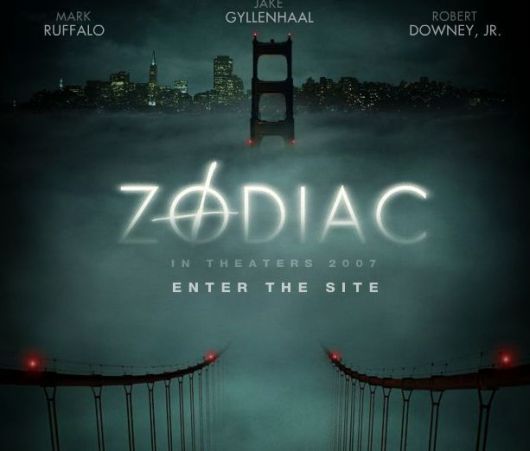
I would have given a great deal to have been at the studio screening of David Fincher’s Zodiac. I wonder who said first, “You mean, this movie is almost 3 hours and we never definitively learn whodunnit?”

The 1969-1970 Zodiac killings are unsolved and at least by serial killer standards, the Zodiac racked up a meager body count (only 5 victims are confirmed as by Zodiac’s hand).  Nonetheless, these narrative infirmities are more than compensated for by the killer’s panache.  Zodiac taunted the police departments of four different Northern California communities with letters to newspapers, including ciphers to be broken which promised to reveal his identity and wild threats (including one to shoot San Francisco kids as they left school buses). Like Jack the Ripper, the Zodiac wanted to lord his superiority over his pursuers.

Fincher takes the Zodiac case and uses it to dramatize exactly how such a crime burrows itself into the marrow of people, altering them profoundly. Jake Gyllenhaal is The San Francisco Chronicle cartoonist Robert Graysmith, who becomes obsessed with the killer the day his first letter to The Chronicle appears. Graysmith would eventually write the definitive book on the Zodiac, and as played by Gyllenhaal, he is sucked into the mystery to the near exclusion of all else. Robert Downey, Jr. plays Paul Avery, the Chronicle crime reporter who covered the case and received a threatening letter from the Zodiac. Avery had labeled the Zodiac a latent homosexual and the Zodiac wrote him a Halloween card warning, “You are doomed” (which resulted in the staff of The Chronicle creating buttons emblazoned with “I Am Not Paul Avery”).  Downey’s Avery is driven from The Chronicle, to drink and drugs and despair, exacerbated by his fear of the Zodiac. The two police officers assigned to the case are also damaged. William Armstrong (Anthony Edwards) eventually transfers to another division while Dave Toschi (Mark Ruffalo) is at one point accused of forging a Zodiac letter (he was cleared of all charges).  There are also the survivors. The Zodiac attacked 3 couples while they were alone and vulnerable, but two men survived, one of whom was the only living person to see the Zodiac. He is a shell, having escaped the country, found at the end of the film to provide one final clue.

The psychological study is encased in a meticulous yet accessible procedural. Screenwriter James Vanderbilt keeps myriad threads intertwined without sacrificing pace, no mean feat given a multi-jurisdictional crime reverberating in the worlds of the police and journalism.

Fincher re-creates those crimes in a manner that communicates their terror and the vulnerability of the victims without being sensationalist or gratuitous. Indeed, the most frightening scene is one where no violence is done. Five months after his last killing, the Zodiac killer pulled over a woman with her baby on a highway, letting her know her back tire was wobbly. He feigned assistance by tightening the lugnuts, but the wheel fell off immediately after she got back on the road. The killer came back, offered to bring her to a service station, but instead drove her around until she was able to escape into a nearby field with her baby (the connection to the Zodiac was made after he referenced the encounter in a letter to The Chronicle a few months later).

It’s hard to imagine that the director of the gruesome Seven made this picture, which is restrained, methodical and to my mind, infinitely scarier. Having to turn away and shut your mind off has less of an effect than when you cannot do so and you’re required to think.

This film has just recently been offered for streaming on Netflix so take advantage.