Archive

80s

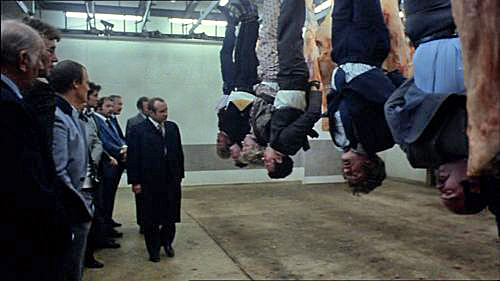
James Foley’s (After Dark, My Sweet) film never really decides what it wants to be, a family drama or a crime picture. Foley eventually throws up his hands and cedes everything to the captivating Christopher Walken.

Not the worst of decisions. Walken plays a minor rural Pennsylvania crime kingpin. He skippers a crew that includes his two brothers and a few other hardened locals. They do heists, car thefts, drugs, and, if necessary, murder, a lethal but merry band of crooks.

Walken’s estranged son, Sean Penn, is a townie still living at home with his mother and grandmother. The women smoke, glare at the TV and otherwise exude the hopelessness of abandonment and near poverty. Penn, seeking something more, falls in at-first-sight love with Mary Stuart Masterson, who looks his way as he cruises at night around the town square. It is for her that he joins up with his father’s crew, to “get out while we’re young … ’cause tramps like us …” 

When Penn realizes murder is part of the gig, he splits from Walken, gets arrested working his own “baby” crew (which includes his brother Chris and a very young Crispin Glover and Kiefer Sutherland), and is incarcerated. There, the cops work on him to fink on his father.

Here, the film becomes ridiculous. Walken, paranoid Penn will flip on him, kills nearly every one of the kids working with Penn, even though Foley does not show them to be integral enough to his operation to be much of a threat. He also rapes Stuart Masterson, which makes even less sense if the plan is to bring Penn back into the fold. Penn comes out of jail, tries to make a run for it with his gal, fails, and in a rushed, abrupt ending, testifies against his father (for 30 seconds).

That’s that.  Lights up.

None of it makes much sense, but the thematic indecision is worsened by gross character underdevelopment. Walken is a charming sociopath, but how did he get here? No clue. We even have his ex-wife moping about, warily eying the establishment of a relationship between Walken and Penn. Foley, however, suffices to use her as a sad totem, so we don’t get any insight into Walken from her. Similarly, Penn needs a Daddy. Then, on a dime, he doesn’t. As he is near mute for most of the picture, we are left to guess as to what he has missed and the basis for his immediate and strong moral stand. Stuart Masterson is looking for something, but as she and Penn prepare to light out for the territories, leaving her house, she is clearly from money. So why is she hanging with these lowlifes? Unexplored.

The film has its strengths. Foley’s feel for rural Pennsylvania is strong. The fields and woods are spooky and forbidding at night. During the day, the crappy cars and houses, the dead-end bars, they all contribute to Penn’s lust for some way to get out. Foley shows just how big and cold this country can be, the kind of place that swallows you up and tells no tales or grinds you down little by little. The murder spree is indelible.

As noted, Walken is the picture, and in every scene, he is riveting. Penn, however, goes low to Walken’s high, and the effect is somnambulant. He’s in with Daddy, then immediately out, then annoyingly internal until his final nose-to-nose with Daddy, all to the conclusion that he needed a better Daddy.

The story is apparently based on a true criminal, Bruce Johnston Sr.

Another note – at the time of the picture, Penn was married to Madonna. She had a song for the picture which then became extended to the soundtrack. It is synthy, mid-80s fare, better suited to Vision Quest or even Risky Business. It has no business being near this gritty movie.  Sure, I joked about Springsteen above, but his music would have been pitch perfect to the film.

On Amazon Prime.
My dive into the crime films of Amazon Prime gets deeper.

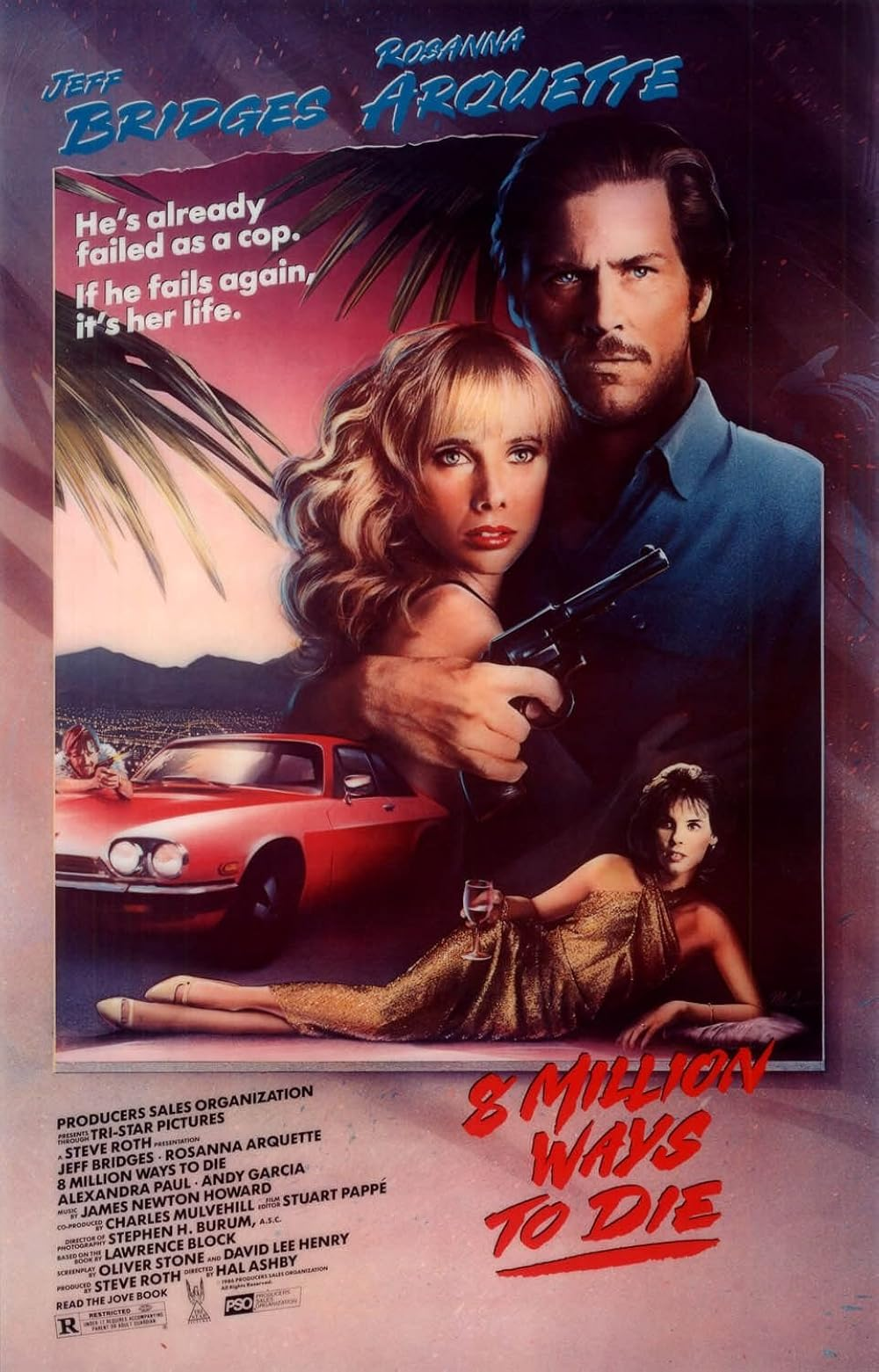
I was intrigued by this flick because I like Jeff Bridges, the movie was an early Oliver Stone screenplay (a co-write), and it was one of last films directed by Hal Ashby (Shampoo, Being There, Coming Home).

I don’t have 8 million reasons to hate this film, but I have 8.

  1. Stone’s writing is garish and ridiculous. In an attempt at modern noir, we actually hear Bridges say, in voiceover, “Yeah, there are eight million stories in the naked city. Remember that old TV show? What we have in this town is eight million ways to die.” A high-priced call girl ups the retch factor, cooing to Bridges, “the streetlight makes my pussy hair glow in the dark. Cotton candy,” as she lays out ala’ Ms. March 1978. Maybe these gems were penned in the source novel by Lawrence Block. I don’t know. It doesn’t land here.
  2. Hal Ashby knows about as much about film action as I do taxidermy. It’s not like Coming Home’s Jon Voight was doing wheelies in his chair. This picture, which involves blackmail and cocaine and kidnapping and gunplay, is as flat and unimaginative as professional bowling.
  3. As the alcoholic ex-cop, Bridges seems as confused by the script as the viewer. There are times you feel, his eyes alone, Bridges is communicating, “What the hell is this thing about, again?” When he’s involved in a bad shooting, and guns down a man in front of his family, he says, “Shit.” Like when you don’t get a good score in Skee Ball. And then, “Fuck,” like when you leave home without your iPhone.
  4.  Bridges is also forced to play an alcoholic who relapses; he does this by reprising his role in Thunderbolt & Lightfoot, after he was thunked on the head.
  5. The plot is inane. Bridges is lured into the entire mess because the girl with the cotton candy pubic hair heard his name from the friend of a friend.
  6. Roseanna Arquette is terribly miscast as the sultry, misunderstood, cynical call girl with a heart of gold. Arquette is cute best friend, quirky neighbor.  She ain’t this.
  7. The supporting turns are execrable.  Andy Garcia is so over the top (see below), it’s hard to stop laughing, as if he saw Scarface and said, “Hmmmm. Pacino seems a bit muted.” Another actor, Randy Brooks, nemesis to Garcia, is also near-lunatic. Brooks scurried off to TV after this flick, only to return as the worst actor in Reservoir Dogs six years later. The cotton candy girl is the badly miscast Alexandra Paul. She is the girl next door. Here, she’s over-the-top coquettish, as erotic and worldly as Georgette in The Mary Tyler Moore show. To be fair, this may not all rest on the actors. From the analysis below, “Ashby’s style of directing, according to Block, involved letting the actors do takes where they exaggerated their emotions, before reining them back in for subsequent takes. Since Ashby did not have final cut, some of these ‘dialed up’ takes were used in the film.” Seems like all of them were.                 
  8. Scenes are interminable. The characters scream the same thing at each other ad nauseum or endlessly posture. Behold, the longest, loudest, most idiotic confrontation scene in film history:

Apparently, I am not alone in my derision and confusion.

An unheralded gem, powered by the stellar performances of Robert De Niro and Robert Duvall, as brothers Dez and Tom Spellacy. De Niro is a rising monsignor in post-WWII Los Angeles, archbishopship on the horizon. Duvall is a tainted LA homicide cop. De Niro is ambitious and technocratically capable but fast becoming disillusioned with the moral elasticity necessary to keep the church afloat, including being chummy with the likes of a scumbag real estate mogul (Charles Durning, who seeks the church as beard for his corruption and literally sweats menace). Duvall is trying to make up for his past as a bagman. A Black Dahlia-esque murder connects them, and as De Niro wrestles with his faith and station, Duvall agonizes over his past crimes and his attempt to make amends by going after Durning, damage to his brother be damned. We learn about their secrets and upbringing in an L.A. that has a Chinatown-vibe.

One of my favorite fiction authors, John Gregory Dunne, wrote the screenplay with his wife Joan Didion, and it exudes verisimilitude and deftness. The script allows De Niro and Duvall significant space and what they do with the quiet moments is poignant. There is always tension, but also, always an intimacy and a shorthand that speaks to shared happier, or unhappier, times. Their exchange on their uber-Catholic mother is emblematic:

Tom Spellacy: How’s ma? Is she still eating with her fingers?

Des Spellacy: Well, she says the early Christian martyrs didn’t have spoons.

Tom Spellacy: Tell her they didn’t have Instant Cream of Wheat, either.

It’s a cheat to cite a review within a review, but Vincent Canby’s is so dead on and conclusive, I’ll transgress:  the film is a “tough, marvelously well-acted screen version of John Gregory Dunne’s novel, adapted by him and Joan Didion and directed by Ulu Grosbard who, with this film, becomes a major American film maker. Quite simply it’s one of the most entertaining, most intelligent and most thoroughly satisfying commercial American films in a very long time.”

If there is a problem, it is third act, which could have used a few more moves to get to the ultimate revelation. But I’m hesitant even in that criticism for fear that any nod to beefing up the procedural would have taken away from Grosbard’s patience and care with the characters. The film not only showcases De Niro and Duvall, but takes time to establish real connections between De Niro and an older priest (Burgess Meredith), who De Niro puts out to pasture because of the latter’s interference and sermonizing (“I’m not a man of the cloth, I’m a man of the people”); Duvall and a whorehouse madame (Rose Gregorio) with whom he had some sort of ragged relationship until she took the fall for his crookedness and did a stint in jail (“I need you like I need another fuck,” she spits at him); and Duvall and his partner, Kenneth McMillan, who shakes down Chinese restaurants for his retirement motel and tries to keep Duvall out of trouble (“You know who we’re going to pull in on this one? Panty sniffers, weenie flashers, guys who fall in love with their shoes, guys who beat their hog on the number 43 bus. What? Do you think I’m gonna lose any sleep over who took this broad out?”). The blunt and cynical nature of the dialogue aside, Dunne and Didion never stoop to hackneyed tough guy patter, and they counterbalance with real tenderness. The train station scene where the parents of the murdered girl meet with Duvall to take their dead daughter home is one memorably piercing example.       

Just added to Amazon.

Taut, rich crime drama about the not very good day of London crime boss Harold Shand (Bob Hoskins). When we meet him, Shand is on the cusp of branching out to global semi-legitimacy. He’s even hosting his would-be U.S. partner when his entire organization comes under assault. Key associates are dispatched and an unknown enemy is blowing up his establishments, and just when he thought he was getting out, they pull him back in.

Hoskins is ferocious, at once charming and gregarious and then lethal, but palpably human throughout. You really root for him but sense that his time may have passed, especially as he waxes on about the greatness of the Brits and attempts to connect his own rise to the glory days of his homeland, which doesn’t seem all that glorious as depicted by director John Mackenzie. His London is grimy, gray, and decidedly tired, like Harold’s organization, and is starkly juxtaposed against Shand’s fantasies.

The film is also slyly funny. Shand, for example, scolds his spooked American partners about empire and declares, “we’re in the common market now, I’m going into business with the Germans, yes the bleedin’ Krauts!” And even in the midst of their potential destruction, Shand and his gang share knowing, even juvenile laughs that speak to their intimacy.

Helen Mirren is his devoted wife, desperately trying to keep him grounded, and his entire crew feels more like a disintegrating family than a dangerous group of cutthroats. As it all goes bad, Shand’s hubris, parochialism, and self-satisfaction conspire against him, but the strongest theme is just how hard it is to keep “family” together. One of Shand’s more endearing qualities is his patience with underlings who disappoint him like wayward sons. He’s always in between slugging and hugging them.

The film works as a character study and, for a time, a whodunit (or, “who is doing this?”). Occasionally, it is a bit arty, and weighted down by a strange, synthy 80s score, but for the most part, it is riveting.

On HBO Max.

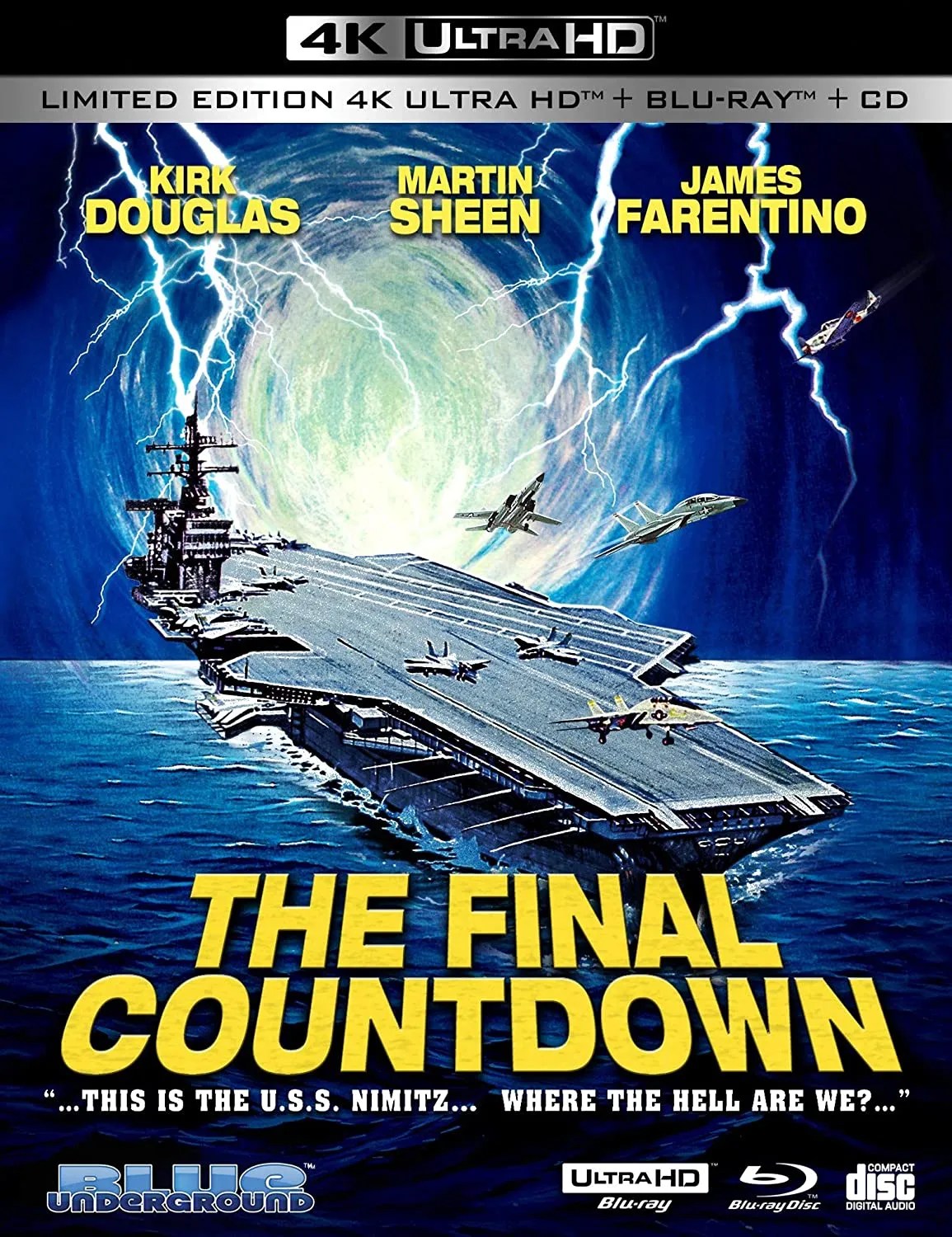
An old Twilight Zone episode depicted three soldiers on National Guard duty in Montana who went back in time and found themselves spectators to the Battle of the Little Big Horn. They struggled with the implications of intervention, essentially foreshadowing Star Trek and violation of the “prime directive” (i.e., never mess with history when time traveling lest you step on a bug and forever alter what is meant to be). They eventually jumped into the fray.  This flick is essentially the same concept, but with a modern aircraft carrier being time-portaled back to the day before Pearl Harbor.  Kirk Douglas, Martin Sheen, and James Farentino have to contend with the same conundrum.  

It’s fun. A little discordant, alternating between whimsy (the commander of the modern USS Nimitz, Douglas, has a certain Disney movie mien to him, but then there are very bloody scenes that punctuate the film). But solid.

It is also clearly a joint effort with the Navy. There is so much aerial footage and extended scenes of flying and taking off that it feels like a recruiting ad, Top Gun sans the volleyball. Curious sidenote. The Department of Defense actually sued the producers for reimbursement, alleging fraud on the reporting of actual flying time. My father’s law firm represented the producers, including Kirk Douglas’ son.

On Amazon.

P.S. There was a big to do in the last several years over a Reddit discussion: “Could I destroy the entire Roman Empire during the reign of Augustus if I traveled back in time with a modern U.S. Marine infantry battalion or MEU?”

A short story followed. Hollywood then bought the short story. Good rundown below. Stay tuned.

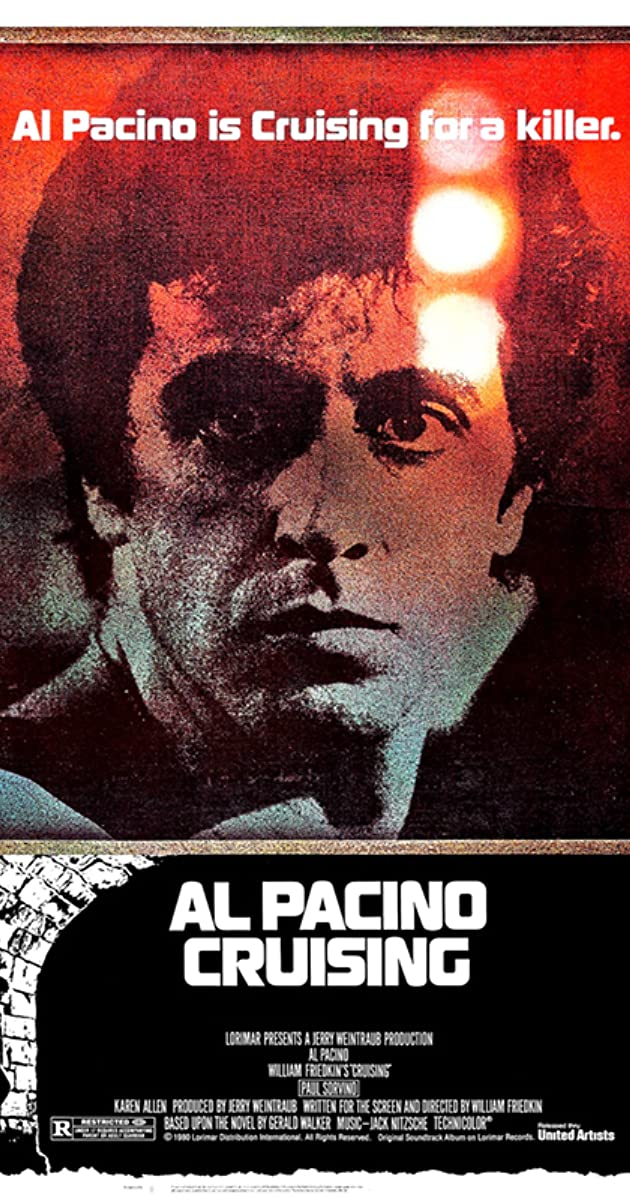
There is no rhyme or reason to William Friedken’s (The French Connection, The Exorcist) serial killer flick, which plays clumsily with both timeline and identity. While the killings are unique, in that gay men in New York City’s S&M scene are the prey, Friedken’s execution is non-existent and the picture is a tiresome. muddled mess. 

The year is 1980. Foot patrolman Al Pacino, who we know absolutely nothing about, is brought in by Police Captain Edelson (Paul Sorvino) to go undercover and smoke out a serial killer plaguing the BDSM community in the Meatpacking District. Pacino is chosen solely because he bears a physical  resemblance to other victims. That’s it, and when he’s told where he’ll be working, he shows little reticence. You see, he’s bucking for detective. 

Pacino is clearly too long in the tooth for the role.  In 1980, he was 40, not a very convincing ambitious beat cop. Hell, Pacino was pushing it a bit in 1973, when he was a 33-year-old rookie in Serpico. Friedken would have done better with Richard Gere, his first choice and 10 years younger.  

After his perfunctory selection and acceptance, Pacino just goes from club to club, bar to bar, pick up spot to pick up spot, cruising. Pacino is less acting the role of a man than being a worm on a hook. Not a lot of heavy lifting and given no motivation or backstory, Pacino seems particularly disinterested. It is clear the actor has no idea how to convey whatever is happening to him internally. 

With barely a story and zero character development, Friedken focuses on the grimy, fetishistic world of leather and sweat, so much so that when word of the picture got around, many in the gay community were outraged to the point of protest against what they thought was a demeaning and offensive portrait of their community. Indeed, the picture had to have its audio almost totally redubbed due to protestors on scene screaming to screw up the sound production.

They need not have worried so much. The movie is a bore and rather than being misled, most audiences likely shrugged.
Not that the bones of a good flick aren’t there. There’s a promising subplot of two police officers who are forcing hustlers to dole out sexual favors. Unexplored. There’s a nice friendship that a develops between Pacino and his gay neighbor. Dropped. And there is little done with the pressure on Pacino and girlfriend Karen Allen (the whole of it is that the more he becomes immersed in the lifestyle, if only as a voyeur, the less he wants to be intimate with her).

Is he gay? Is he curious? Shockingly, you don’t care, and neither does the director.  Friedken just wants to get to the next dank cellar where the testosterone-soaked steam is rising.

Sure, there is some obligatory, “I’m in too deep” dialogue. But nothing more. Fleshing out the relationship between Pacino and the gay neighbor would have been the smart way to explore whatever was happening internally, allowing Pacino to search and inquire, maybe even to test.

No dice.

The film is also hobbled by a pretty elemental impediment. Pacino is, seemingly, straight.  So, it seems less and less possible that he’s ever gonna’ get close to the killer, who murders all of his victims in the process of or after sex. 

The whole thing is draggy and confused and more than a little gutless. 

If you sally forth, look for a very a young James Remar, Ed O’Neill, and Powers Boothe. 

On HBOMax.

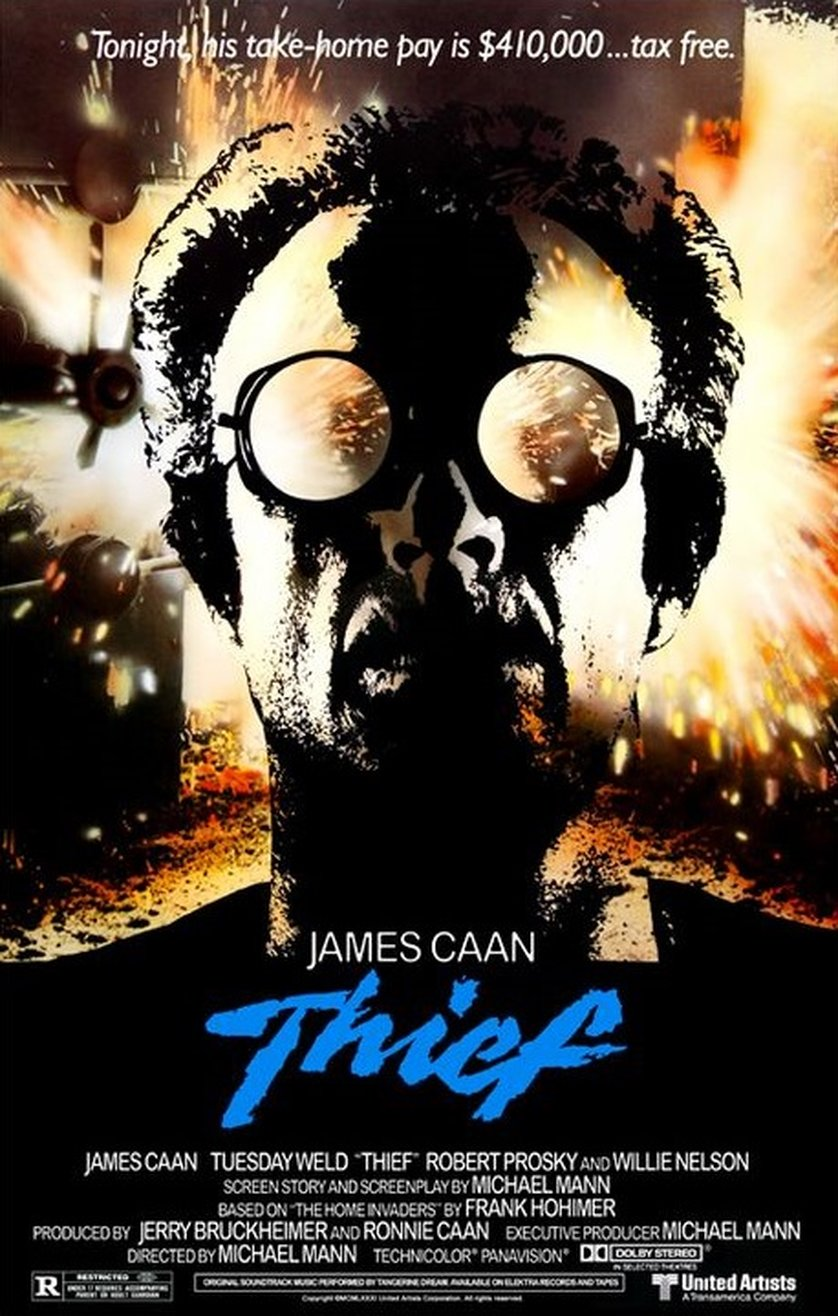
I started watching Michael Mann’s Tokyo Vice on HBO Max, which is excellent, and then I noticed that his big screen directorial debut was on Amazon Prime for free (Mann also wrote the picture).

I remember Thief primarily because the bad guy was Robert Prosky, a then-legend in D.C. theater (I went to high school with two of his sons, both theater kids). As a seemingly civilized crime boss branching out into legitimate investment, Prosky does not disappoint. He’s a sharp mix of warmly urbane and brutal and is at his best when wooing the uber-independent professional thief Frank (James Caan) to join up with his outfit. Prosky offers Caan all the tools necessary for big heists – including the materials, targets and dental – all the while “respecting” Caan’s ability to opt out of the game at his whim.  Simultaneously, Caan is wooing diner hostess Tuesday Weld, dreaming of that last score and getting out.       

Mann’s stylish sequences make great use of a perpetually wet, gray and grimy 1980 Chicago, and the industrial score by Tangerine Dream (an edgier Vangelis, who just died) adds to the noir-ish moodiness.

Sure, it is a little dated. The slo-mo shootout at the end, in particular, does not travel well. But the heist scenes are exciting, and there is a real chemistry between Caan and the several-times-around-the block Weld (their momentous date over coffee, which becomes a lifelong bond, is credible, no mean feat). Caan is riveting as a distrustful loner frantically trying to wrap it all up and get free. He plays Frank at a slow simmer, a man for whom control is so seminal, it devours him.        

Willie Nelson has a very strong turn – one scene – as a desperate convict, and you can also spot Chicago regulars Dennis Farina and William Peterson in small roles (and Jim Belushi in a larger one).   

De Palma a la Mod

A behind-the-scenes vignette from this film distorts its true putrescence. As the story goes, before scenes, serious actor Sean Penn kept whispering to the out-of-place and in-over-his-head small screen star Michael J. Fox the words “television actor”, to either torment him or to rally him.

It didn’t work. 

That said, while there is no question Fox is terrible, his awful performance serves the purpose of obscuring a host of other faults in this debacle.

There are, for example, hideous performances all around. Penn is execrable, delivering a turn of overacting so extreme you can almost smell it. He’s like a whirling dervish of beef, brew and Old Spice. Young John C. Reilly, John Leguizamo, and Ving Rhames are near incompetent and, like most everyone, entirely unconvincing.

But no one was given anything very good to say anyway. The script by playwright David Rabe is so overt it hits like an ABC “After School Special.” A stagey “What are we doing here, Sarge?” is pretty much every line of the picture.

Rabe served in Vietnam as a medic, which just goes to show that experience isn’t always the best progenitor of art.

Watch and see if you can hold your breakfast. 

Brian De Palma’s direction is self-indulgent. I can think of few auteurs less suited for the verisimilitude of a period war picture than a guy who fetishizes Hitchcock. There is a scene where Fox’s fellow soldiers attempt to frag him by putting a grenade in the latrine where, for no reason other than an ostentatious build-up similar to the baby carriage in The Untouchables or the bucket of pig’s blood in Carrie, Fox has gone to attempt to light a cigarette, interminably. Because, when you want to smoke, no place is better than a Vietnam shithouse surrounded by big pails of excrement to enjoy it. His lighter won’t work and after trying it for the umpteenth time (maybe more than 15, he really wants that smoke), Fox drops it, and lo and behold, the grenade is reflected off of the lighter’s stainless steel.

A Vietnam picture is no place for this sort of arty playfulness.

It gets worse. When Fox survives, he sees one of his tormentors, Reilly, peeking at him from behind sandbags, and all I could think of was– 

The film also sports terrible art direction and location scouting. Vietnam looks like Disney’s Jungle Cruise, an incredible feat given some of it was shot in Thailand. Wherever they were, the actors were serviced by some of the best spas and salons available to them. I just never knew the combat experience in Vietnam was so tidy. Fox in particular looks like he was steam cleaned in every scene. Even when he has a head wound, his bandage is so brilliant white, it almost looks like a headband missing a feather. 

Finally, there is Fox’s height. In the old days, an actor’s short stature was taken into consideration. They’d put him on a hidden box, or shoot him from an angle that would favor him. Hell, in a tracking shot, they’d even build a trench for his leading lady as they ambled down the street.

Most film actors are short. 5’7″ seems to be the norm , but at 5’4″, Fox is diminutive, near tiny. Yet De Palma offered him no help. In the scene above, when Fox grabs a taller soldier, a “cherry”, by the lapels to chew him out, he looks like a toddler clinging to an adult’s overalls. Which is fitting, because for most of the film, with his childish, plaintive-comic mien, Fox presents like he lost his Mommy in aisle five of the Long Binh PX.  Yes, he’s short, but that’s not the whole of it. There is not an ounce of gravitas in the actor. “Oh, Jeez” sounds perilously close to “Oh Jeez, Mallory.”

The film is based on an actual war crime. What a woeful remembrance. 

Twilight (1998 film) - Wikipedia
Still of The Night: Amazon.fr: Meryl Streep, Roy Scheider, Jessica Tandy,  Joe Grifasi, Sara Botsford, Richmond Hoxie, Rikke Borge, Josef Sommer,  Irving Metzman, Larry Joshua, Randy Jurgenson, Robert Benton, Meryl Streep,  Roy

Robert Benton was no slouch (Kramer v. Kramer, Places in the Heart). Indeed, he wrote and directed one of my favorite films (Nobody’s Fool), and I could watch Paul Newman sell Tang. Throw in Susan Sarandon, Gene Hackman and James Garner (and super young Reese Witherspoon and Liev Schreiber) in a noir-ish tale of an old Hollywood murder and it seems can’t miss. But miss Twilight does. Sarandon is too young for the role of the former grand dame and the love story between her and Newman is unconvincing. Worse, the mystery is just not that intriguing. Still, the picture has Newman, who is wry and world-weary in that Newman way. Hackman is fantastic, as always, and Garner is just the right mix of folksy and sinister.

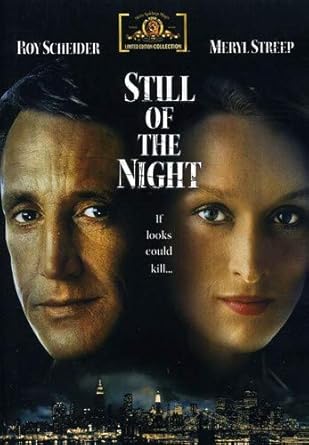
As for Still of the Night, it alternates between psychological thriller and moody, smoldering romance. It is terrible at both and badly cast as well. Roy Scheider is best caustic and as a man of action, a terrible choice for a quiet, introverted psychologist. Meryl Streep as a breathy young ingenue wrapped up in a murder is all wrong. She’s many things, almost all good, but carnal and smoldering ain’t in her bag of tricks. Her performance nears a Saturday Night Live character.

The film is drab and clunky. It has aspirations to be Hitchcockian, but it lacks all of the care.  The romance is preposterous, and the score is sickly sweet. And as a whodunit, the killer can really only be one person.

Both on Amazon Prime.

My Favourite Christmas Movie - Home Alone

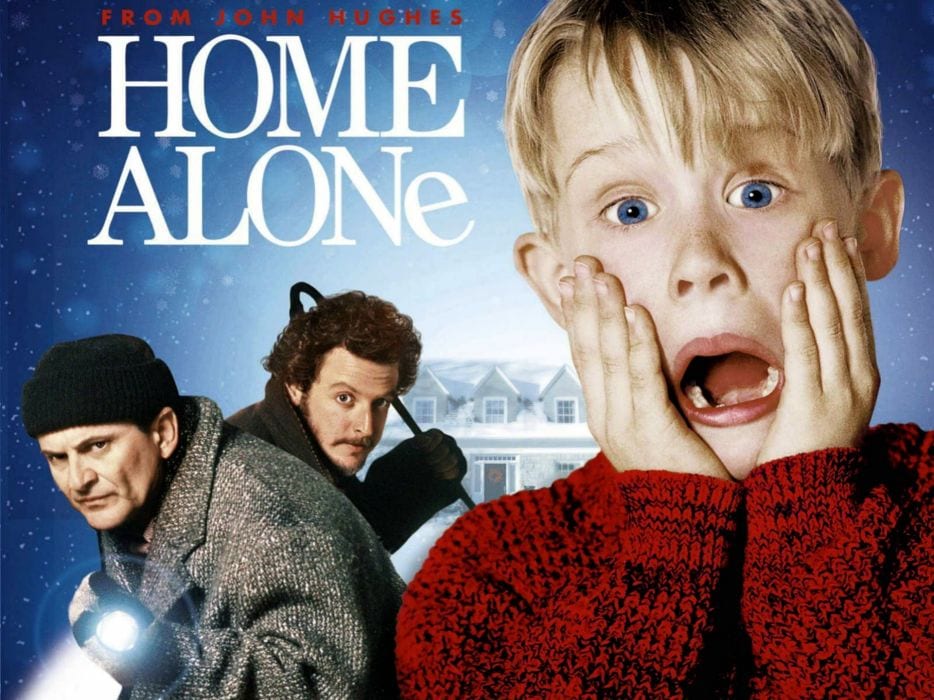
John Hughes produced and wrote this Christmas classic about a kid accidentally left “home alone” for the holiday. Hughes pushes the syrup, but this picture has more of Looney Tunes-Meets-Tarantino vibe.  What little Kevin (Macaulay Culkin) does to burglars Daniel Stern and Joe Pesci is waayyyyyyy beyond enhanced interrogation.  I had to leave the room more than once, such was the barbarity, but I did see Kevin shoot them point blank with a pellet gun (balls and forehead), burn their heads and hands, smash their faces with full swinging paint buckets and a hot iron, cut a rope line so they crashed into brick, and ice the stairs and litter the floor with tiny cars (resulting in perhaps permanent spinal injury to both men). He also placed sharp objects under the windows, and even a nail, which went through Stern’s foot.  I think variations of tar-and-feathering occur as well, and the kid even uses a live tarantula to terrorize the duo. 

Now, I’m generally a “stand your ground” guy; if you stick your fingers inside the facemask, you get bit.  But this is just too much.

When the mayhem is not in session, the movie is a little ho-hum.  Kevin is not that cute, his family are a coterie of monsters (except for his Dad, John Heard, Gonzaga alum and fittingly nonplussed by the abandonment of his child), and as with almost all John Hughes films, almost every adult is a moron or a cretin.