Archive

2022

“Well, that was quite a thing” – my wife, at the end of the movie. Spoiler. Animals die.

About my wife. When that occurs, consider all your slack given.

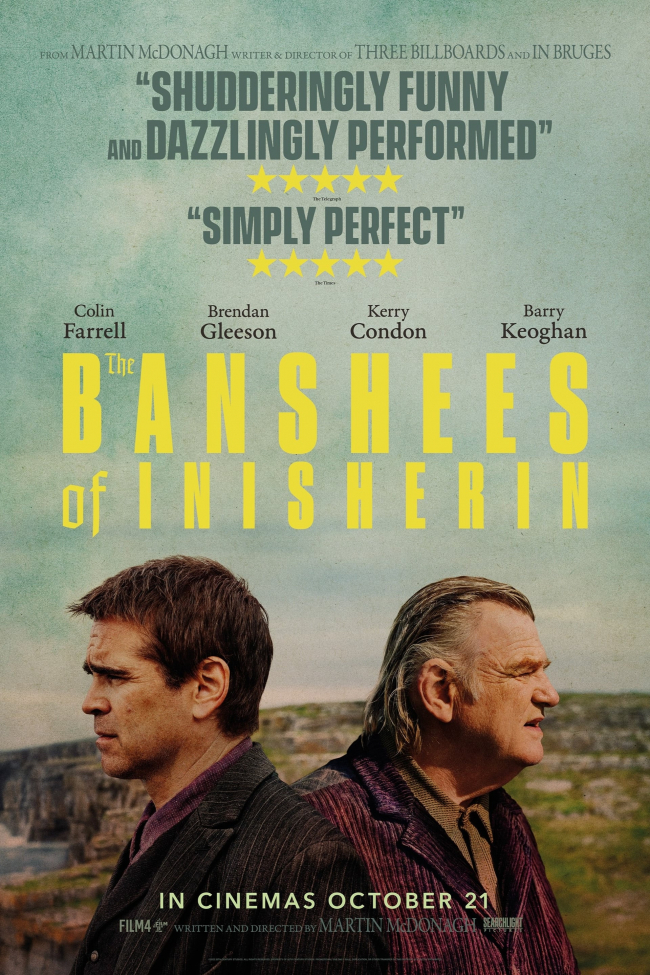
It is indeed, however, quite a film, one that works as a fable, a meditation, and a beautiful, conflicted, messy tale of the shackles, joys and miseries of isolation, friendship and love.

I have a deep frustration with people who have the kind of depression that blots out the sun and cripples those who love them so much that they become collateral damage. The narcissism. The “I don’t take drugs because they change the essence of meeeeeeeeeeee!” The voracious appetite for the steadfastness of the simpletons who take the kicks and keep coming back for more. Blech. I’m not always proud of it but it is genuine and fixed in my marrow.

Here, a depressed, artistic man in despair (Brendan Gleeson) cuts off his simple, dull pal (Colin Farrell) even though they are lifelong friends on a barren Irish Island. The disassociation is brutal and final and nothing less than an assault from the intellectually superior and more sophisticated of the union. Every instinct I had was to decry Gleeson and champion Farrell, even as I grudgingly respected Gleeson’s stand, cruel and self-abasing as it was. I’m more gravitated to the simple and the banal, the loyal, Particularly when the artist’s excesses, in all their Van Gogh glory, start taking hostages. Taken at face value, it was no contest.

But as the picture progressed, my sympathies for both men equalized. Somewhat. Against all of my internal instincts. And in the struggle, the picture opens up and draws you into a much deeper analysis.

Fecking hell.

Interspersed in this tug-of-war is Martin McDonagh’s (In Bruges, Seven Psychopaths, Three Billboards) alternatively hilarious and mournful dialogue, deeply rooted in the Irish experience, with its strange and compelling fixation on conflict, routine, simplicity, and the Church.

A gem I wanted to hate.

On HBOMax.

Visually arresting, wonderfully acted, and almost unbearably bleak (as only a World War I trench drama can be), director Edward Berger has created the filmic equivalent of Erich Maria Lemarque’s language (“We are not youth any longer. We don’t want to take the world by storm. We are fleeing from ourselves, from our life. We were eighteen and had begun to love life and the world; and we had to shoot it to pieces”). The miserable existence of the characters is interspersed with moments of such great humanity – the joy at the theft and cooking of a shared goose and the circulated kerchief of a French girl for sniffing come to mind – the pointlessness of it all is underscored.

But there are problems.

First, the dramatization of a last-ditch attack before the official armistice is over-the-top.  In the book, Paul, our protagonist, dies on a peaceful day, which is in many ways more poignant.  Here, he and his comrades are felled after a foolhardy and hubristic final charge ordered by a madman. The plot change feels insecure. Similarly, the injection of peace negotiations allows for some clunky foreshadowing along the lines of, “If you dictate such harsh terms, Pierre, there’s gonna’ be schnitzel to pay!”                 

Second, Saving Private Ryan has placed such a premium on verisimilitude in war pictures that they seem to one-up each other in conveying both the horror and the disorientation.  Which is normally to the good, save for an overuse of technical wizardry that can often border on the distracting (I am wondering if the drone is the new CGI).  At some point, you feel a little dirty for being exposed to so many new and awful ways to depict death.

On Netflix.

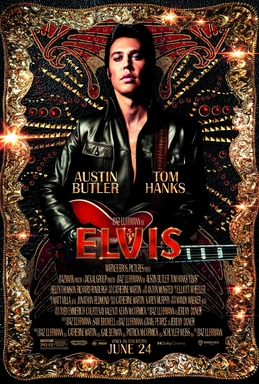
I don’t know a lot about Elvis Presley, but I’ve read enough to know that most of Baz Luhrmann’s film is distorted, if not outright fictional.  It doesn’t matter, because Elvis is a near-inconsequential figure, perhaps proven by the fact that this movie is more about Colonel Tom Parker (Tom Hanks in a fat suit) than poor, boring Elvis. Maybe Luhrmann got bored as well. I can’t say I blame him.

Watching this picture, strangely, I was reminded of Ronald Reagan. He too was a mythic, iconic figure with worshipping acolytes. And as his career wound down and he lapsed into senility, a writer, Edmund Morris, sought to pen the definitive Reagan biography. Morris, however, was stymied by what he perceived as Reagan’s banality, his simplicity, and so, for the book, was forced to invent an American-born Edmund Morris, who as Reagan’s contemporary followed “Dutch” from his near-poverty childhood to Hollywood to the presidency. Here, it feels like Luhrmann realized that Elvis is a dud, so he re-created Parker as Elvis’ dark half, the grotesque sidekick who can provide insight into a wisp. It’s a game effort, but it fails.  

While the picture is admittedly visually arresting, you soon realize several things.

  1. It’s not so much a movie as a series of trailers stitched together. Eye-popping vignettes that, for a time, divert you from the tropes and the utter lack of any character development.
  2. The picture is about 45 minutes too long and repeats the same scene, over and over again. Elvis is an impossibly beautiful, mesmerizing near-wax doll with swiveling hips. He is wooed by wily carnival barker Parker. Elvis gets famous. Then Parker reminds Elvis that it’s all about the money.  Elvis occasionally strays out of his lane. Parker reminds him, again, that it’s all about the money. Elvis quickly gets back in line to keep the money flowing in. Then he strays again, modestly. Parker reminds him that it’s all about the money. And then Elvis does the financially sound thing, but soon, he’s bucking just a bit. Parker reels his boy back in, time after time, and when things are at their most dicey, the Colonel says, “we are the same, Elvis, you and I” (an actual awful line). And Elvis gets back to doing what he does best, making and spending fat stacks of cash.
  3. Luhrmann tries to sell Elvis as a tragic figure who was killed by his overwhelming love for his fans, rather than his affinity for the cash to keep him in deep fried hollowed out loaves of Italian bread stuffed with bananas, bacon and peanut butter.
  4. Just as Austin Powers buried the super-campy version of James Bond, I thought Dewey Cox buried this kind of hackneyed testament. Not so.

Biopics often fall into the same traps.  Hagiography, over-dramatization of mundane events, ridiculous suggestion of significant social impact.

But rarely do they present dullards as their subjects. Here, when you strip away all the glitz, all the quick cuts, all the visual tricks in Luhrmann’s bag, you’re left with the inescapable conclusion that Elvis Presley was a dummy, and that he was manipulated by no Svengali, but rather, someone just a little bit smarter than The King.

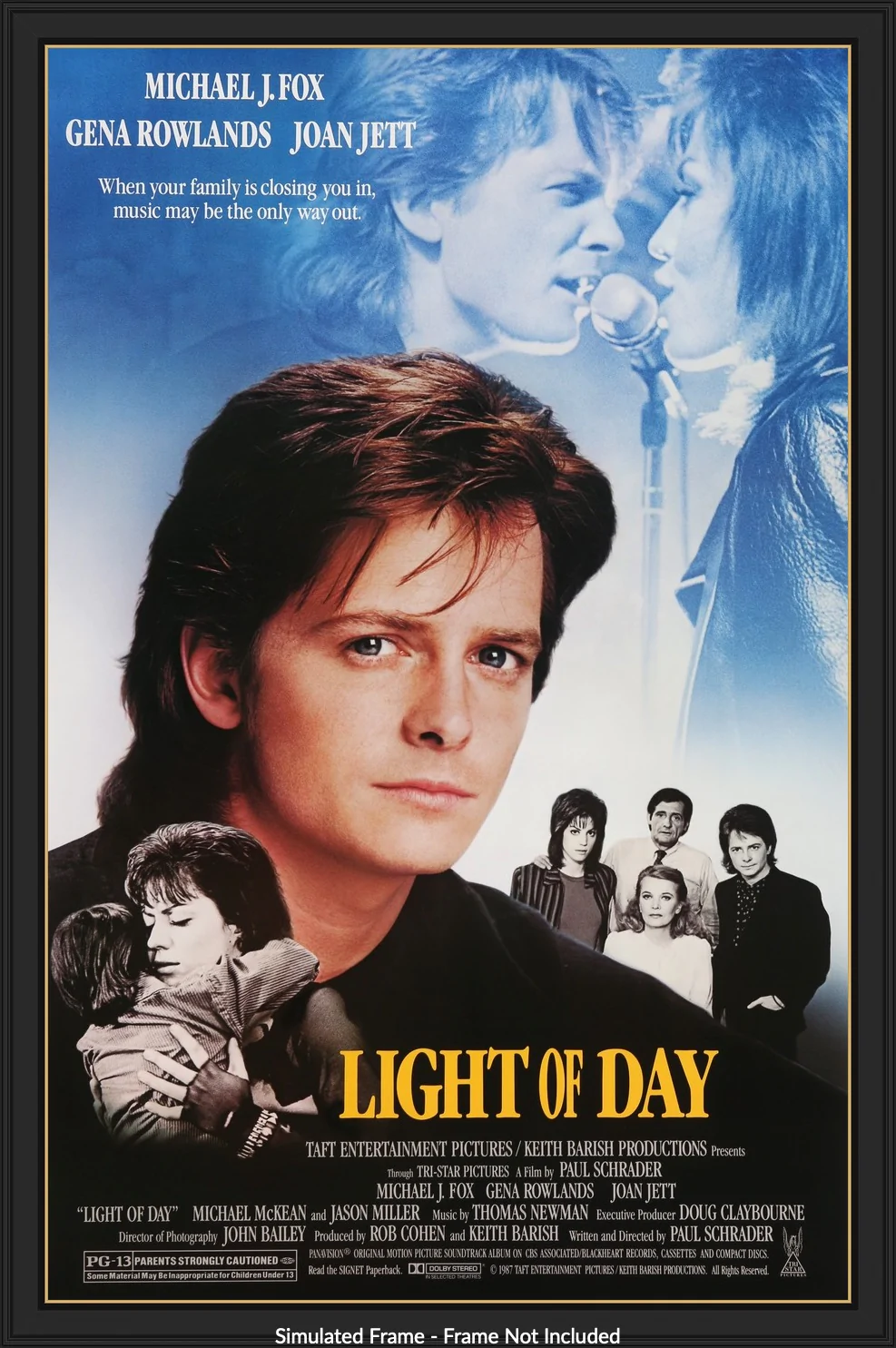
Paul Schrader’s second screenplay, Taxi Driver, was his masterpiece. Robert DeNiro’s ticking time bomb Vietnam vet then gave way to William Devane’s ticking time bomb Vietnam vet in the underrated Rolling Thunder.  Spare, steely scripts followed, including Blue Collar, Hardcore, Raging Bull, The Mosquito Coast, The Last Temptation of Christ, Affliction and Bringing Out the Dead, good quality, but all sharing the same character – loners, tortured souls, beleaguered by their pasts and/or alienation in their presents.  If you put Schrader at the helm, even of material he didn’t write (Autofocus, The Comfort of Strangers) still bears his solitary strain.

Though I really can’t explain this one:

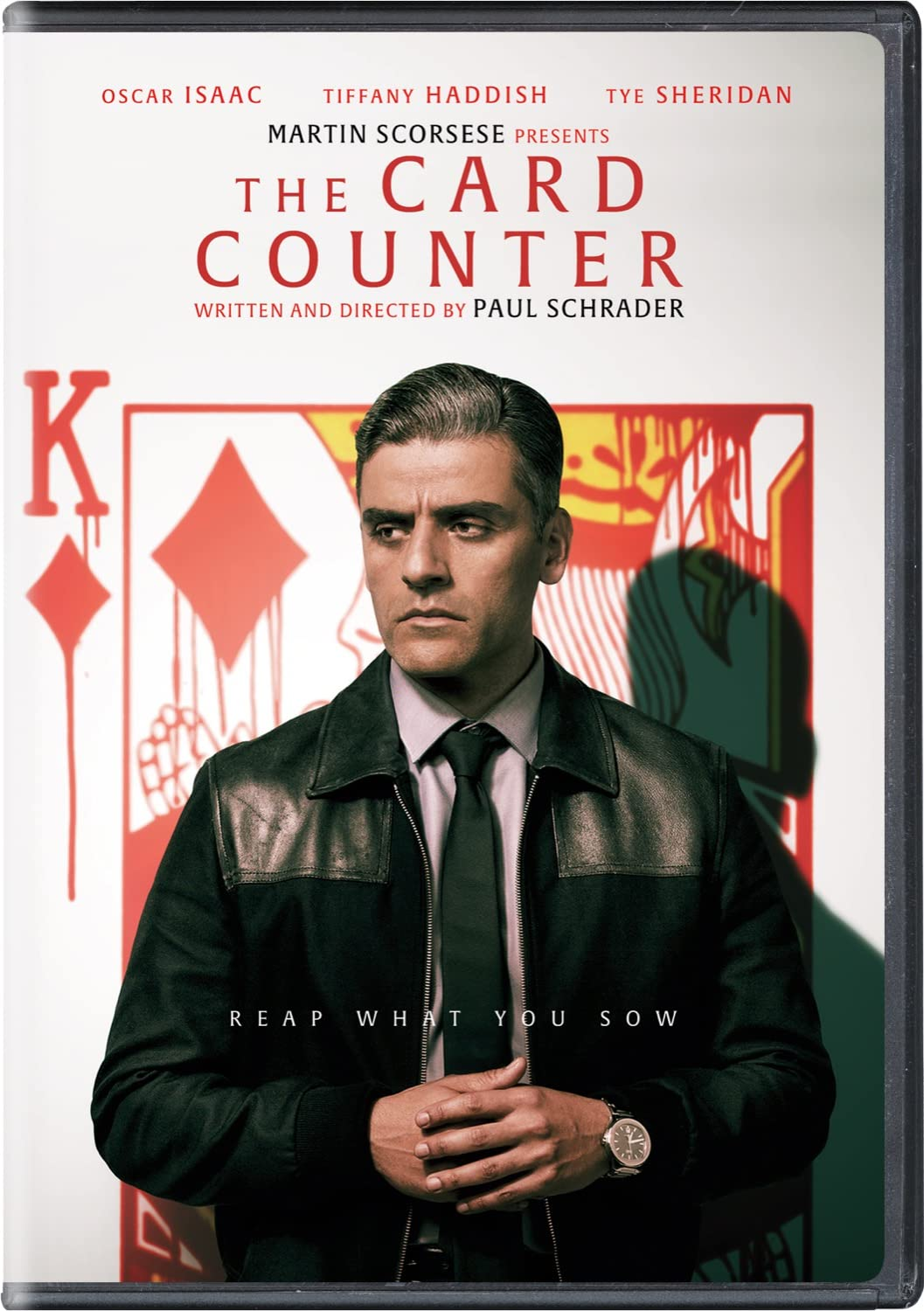
Regardless, The Card Counter is very subpar Schrader. Oscar Isaac is an Iraq War veteran who has a deep dark secret. Upon his release from military prison, he becomes a card counter and poker player, traveling from casino to casino.  He is confronted with an opportunity for redemption (offered by the listless Tye Sheridan) and love (in the form of Tiffany Haddish, who seems a little confused as to what she is doing here), and it all goes rather poorly.

Isaac is the best thing about this pretentious, pointless, somnolent, uneven mess, but he is given the near-impossible task of voicing over such pearls as the essence of card counting:

It was in prison I learned to count cards . . . The count is based on a high low system. High cards, ten, jack, queen, king have a value of minus one. If they are depleted, player’s advantage goes down. The low cards, two, three, four, five, six have a value of plus one. The seven, eight and nine have no count value. The player keeps track of every card and calculates the running count. Then the player arrives at the true count, which is the running count divided by the decks remaining. For example, if the running count is plus nine and there are four and a half decks remaining, nine over four and a half gives you a true count of plus two. As true count increases, the player’s advantage increases. The idea is to bet little when you don’t have the advantage and proportionately more when you do.      

Thank God Schrader didn’t have Isaac work on carburetors in prison.

The end makes no sense, but if you make it there, you won’t be better for it.

On HBO.

Hardworking scout and would-be NBA assistant coach Adam Sandler (Stanley Sugarman) finds himself on the outs with his employer, the Philadelphia 76ers, after the owner (Robert Duvall) dies and Sugarman becomes enamored with an unknown street hoops player in Spain.  Duvall’s son, Ben Foster, who always resented Sugarman’s relationship with his Pop, revokes Sugarman’s elevation to assistant coach and shuns the unicorn Spaniard (real NBA player Juancho Hernangomez) Sugarman has discovered.

What follows is an unoriginal but entertaining sports drama. Nothing trailblazing, but filled with enough good things to elevate the material, such as–.

1. Scads of NBA stars, with speaking and/or playing cameos.  If you’re an NBA fan, this is right in your wheelhouse.

2. Sandler, who, when he is not yukking it up in mostly awful comedies with his pals, can surprise you with a raw vulnerability (Uncut Gems, Funny People, Punch Drunk Love, The Meyerowitz Stories).

3. An acceptance of sports tropes that borders on reverential immersion.  Stanley has a deep dark secret about his playing days, Hernangomez needs a daddy, and daddy gets his hijo in shape with consistent runs up a Philly hill (to be fair, they do reference Rocky, but still) and the longest workout montage in film history (it practically has an intermission). Damned if it doesn’t work.

4. Hernangomez, who has some acting chops, and is surprisingly affecting as a young fish-out-of-water.

There are problems.  Sugarman’s secret is insufficiently recapitulated, his family dynamic is too cute by half, and Hernangomez is tarnished and his stock devalued because he had an assault conviction in Spain (a fight with his daughter’s mother’s boyfriend).

Ha!  Not in this NBA.

It should have been an attempted murder.

Of his father! 

I’ve done much worse with just under 2 hours.  On Netflix.

The Mona Lisa of Stupid, a film so generic and irrepressibly cliche’ the never-fail motor of Tom Cruise almost fails to drive it.

Almost.

I liked it but I’m not proud of it. It is not the peak of genre nor does it defy it. It’s as insipid as elevator music, as banal as a modern country song, as predictable as pollen every spring.

I liked it because Tom Cruise willed it to be so.

I liked it in spite of the following

1) Bavaria appears to be the next potentially lethal nuclear power (again, homogenization and studied inoffensiveness to such a degree that the closest we get to “bad guys” live in Von Trapp territory)

2) The portrait at Val Kilmer at his funeral appears to have been made at Spencer Gifts


3) Every scene with Cruise and Jennifer Connelly is shot-for-shot a Kay Jeweler’s commercial.

4) The strafing run that serves as the centerpiece of the movie is the same strafing run in Star Wars and yes, a version of “the force” is used.

5) Cruise has many gifts. Chemistry with the opposite sex is not one of them. His post-coital moment with Connelly suggests they just engaged in a perfunctory bout of Wordle (K-I-S-S-Y).

Also, one might ask, if Val Kilmer, who cannot speak, was invited to reprise his role as Iceman, whither Kelly McGillis? She explains–

“I mean, I’m old and I’m fat, and I look age-appropriate for what my age is, and that is not what that whole scene is about.”

Hmmm. Connelly plays a bar owner.

I ask, who is more bar owner-ish?

 Alas.

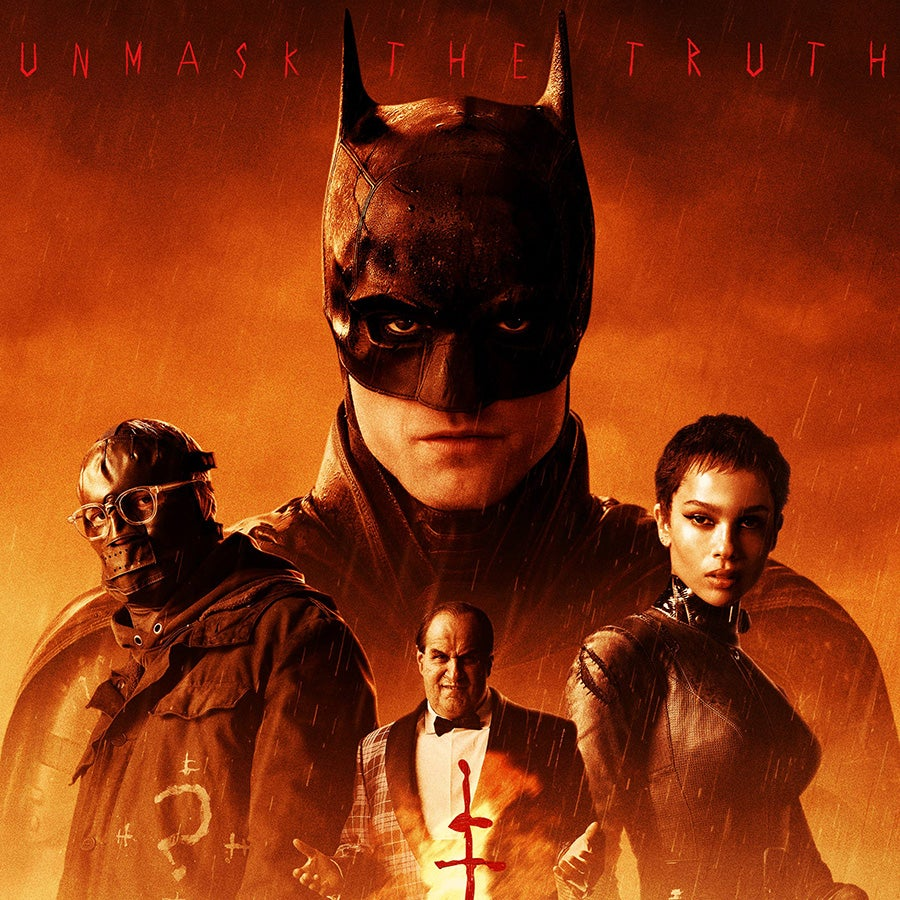
Five things about The Batman

1. I get that Batman is supposed to be spare and mysterious. Here, however, Robert Pattinson plays him whispery, dreary and not only entirely humorless, but dull. Also, whenever Batman enters a room, is it necessary to have him looking down, and then, raising his head dramatically to face … the foyer? 

2. Except for Paul Dano, the villains are forgettable.  And what a waste of Colin Farrell. He might as well have been Michael Chiklis under all that padding and putty, and Chiklis would have been cheaper.

3. The end is laughably schmaltzy “I have met the enemy and he is me” blather. Batman is no longer vengeance. He is Moses, guiding his people through a parted Red Sea on the floor of the Garden. And he wants your vote!!

4. The film is no fun. Beautifully appointed, but zero fun. The Burton Batmans were super fun, the Nolan Batmans were heavy but also had some fun.  This is a mostly unsuccessful meld of Batman and SE7EN.  In fact, Pattinson would have been better served during his face-to-face with Dano by pleading, “What’s in the box!!!” rather than just pounding angrily on the glass. Not that all films have to be fun.  But certainly, films where an adult runs around dressed as a bat should be a little fun.

5.  I get the canon that Batman does not kill people, opting instead to maim, stun, paralyze or concuss them.  But now is the time to take a hard look at how many people have died because of his outmoded reticence.  In the climactic scene, he takes out a slew of snipers with punches and judo chops, kicks and roundhouses, all the while allowing the baddies to shoot significantly more quarry.  And without the intercession of Catwoman, he would have been toast, and Gotham would have suffered grievously.  Hubris, I say.

On HBO MAX.