Archive

Tag Archives: movie-review

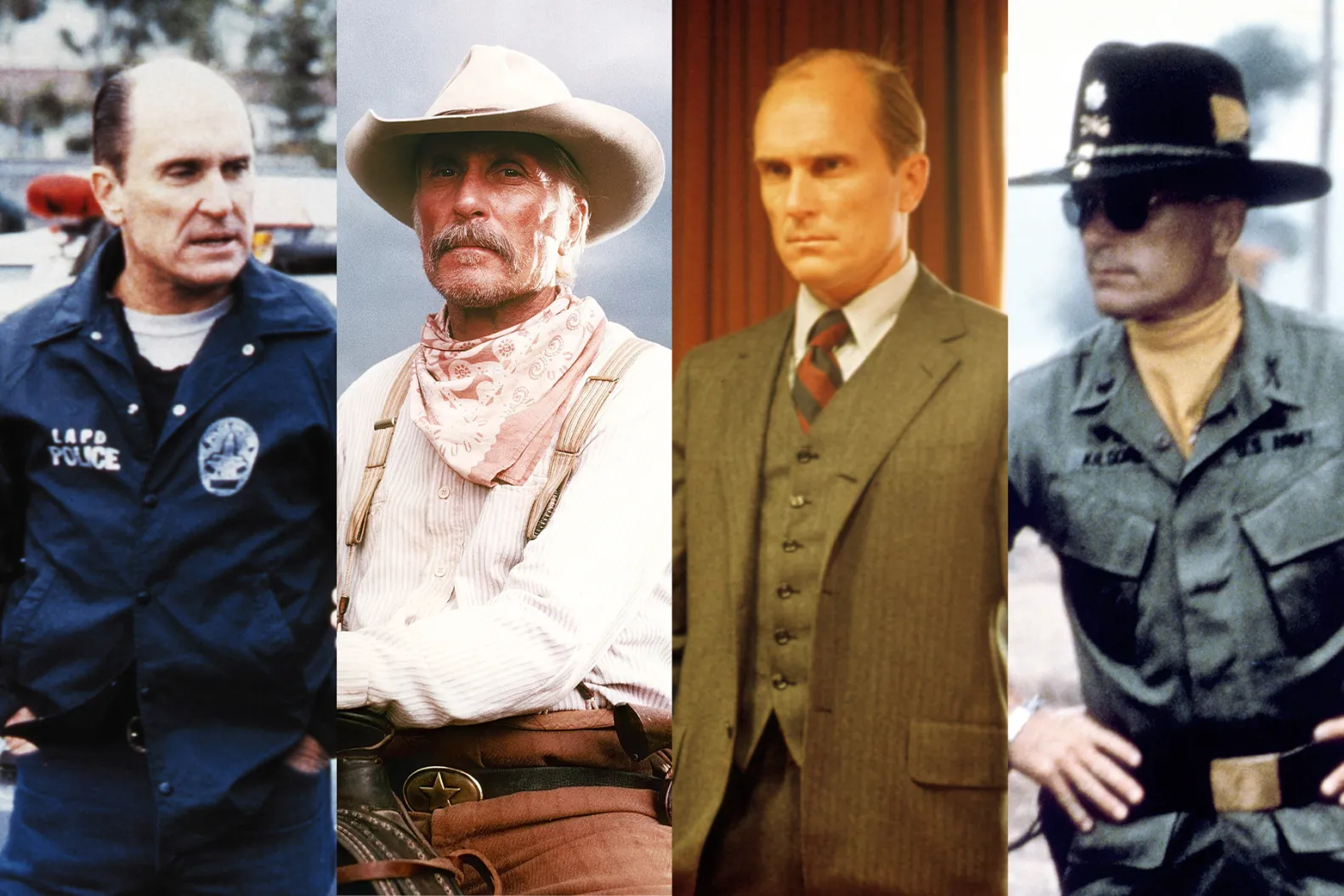
An unheralded gem, powered by the stellar performances of Robert De Niro and Robert Duvall, as brothers Dez and Tom Spellacy. De Niro is a rising monsignor in post-WWII Los Angeles, archbishopship on the horizon. Duvall is a tainted LA homicide cop. De Niro is ambitious and technocratically capable but fast becoming disillusioned with the moral elasticity necessary to keep the church afloat, including being chummy with the likes of a scumbag real estate mogul (Charles Durning, who seeks the church as beard for his corruption and literally sweats menace). Duvall is trying to make up for his past as a bagman. A Black Dahlia-esque murder connects them, and as De Niro wrestles with his faith and station, Duvall agonizes over his past crimes and his attempt to make amends by going after Durning, damage to his brother be damned. We learn about their secrets and upbringing in an L.A. that has a Chinatown-vibe.

One of my favorite fiction authors, John Gregory Dunne, wrote the screenplay with his wife Joan Didion, and it exudes verisimilitude and deftness. The script allows De Niro and Duvall significant space and what they do with the quiet moments is poignant. There is always tension, but also, always an intimacy and a shorthand that speaks to shared happier, or unhappier, times. Their exchange on their uber-Catholic mother is emblematic:

Tom Spellacy: How’s ma? Is she still eating with her fingers?

Des Spellacy: Well, she says the early Christian martyrs didn’t have spoons.

Tom Spellacy: Tell her they didn’t have Instant Cream of Wheat, either.

It’s a cheat to cite a review within a review, but Vincent Canby’s is so dead on and conclusive, I’ll transgress:  the film is a “tough, marvelously well-acted screen version of John Gregory Dunne’s novel, adapted by him and Joan Didion and directed by Ulu Grosbard who, with this film, becomes a major American film maker. Quite simply it’s one of the most entertaining, most intelligent and most thoroughly satisfying commercial American films in a very long time.”

If there is a problem, it is third act, which could have used a few more moves to get to the ultimate revelation. But I’m hesitant even in that criticism for fear that any nod to beefing up the procedural would have taken away from Grosbard’s patience and care with the characters. The film not only showcases De Niro and Duvall, but takes time to establish real connections between De Niro and an older priest (Burgess Meredith), who De Niro puts out to pasture because of the latter’s interference and sermonizing (“I’m not a man of the cloth, I’m a man of the people”); Duvall and a whorehouse madame (Rose Gregorio) with whom he had some sort of ragged relationship until she took the fall for his crookedness and did a stint in jail (“I need you like I need another fuck,” she spits at him); and Duvall and his partner, Kenneth McMillan, who shakes down Chinese restaurants for his retirement motel and tries to keep Duvall out of trouble (“You know who we’re going to pull in on this one? Panty sniffers, weenie flashers, guys who fall in love with their shoes, guys who beat their hog on the number 43 bus. What? Do you think I’m gonna lose any sleep over who took this broad out?”). The blunt and cynical nature of the dialogue aside, Dunne and Didion never stoop to hackneyed tough guy patter, and they counterbalance with real tenderness. The train station scene where the parents of the murdered girl meet with Duvall to take their dead daughter home is one memorably piercing example.       

Just added to Amazon.

This entire review is a spoiler.

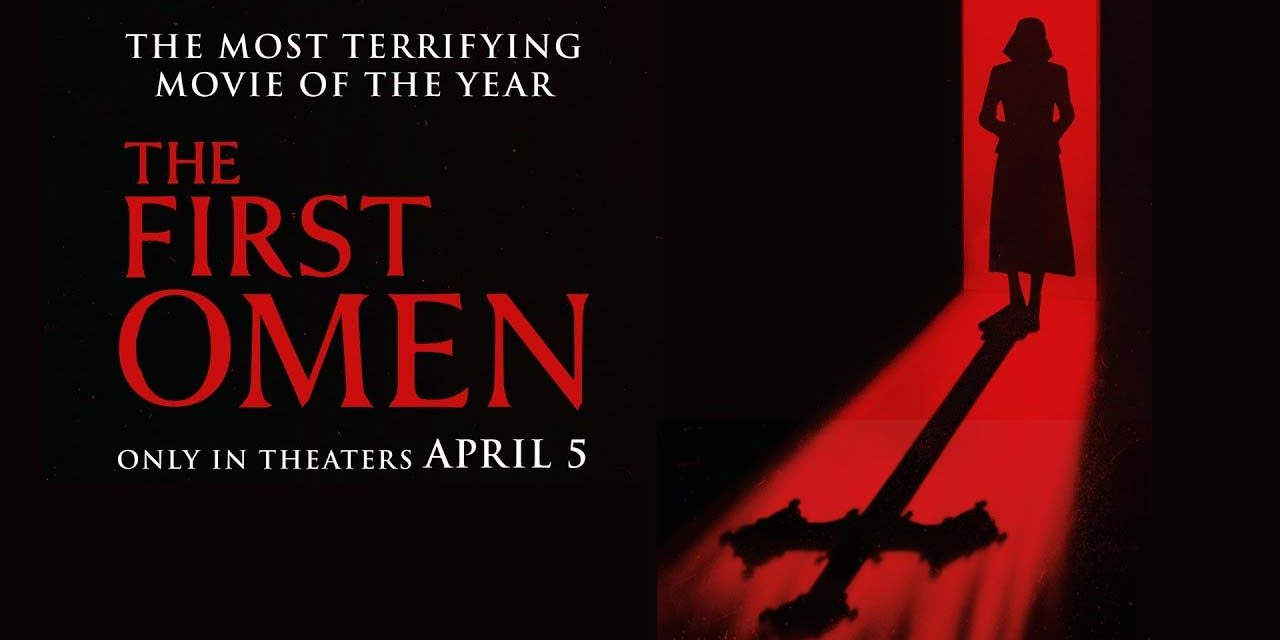
As you may or may not know, when Damien Thorn was placed with the American ambassador to the Vatican (Gregory Peck), his own wife (Lee Remick) had just “lost” their baby during childbirth. Mrs. Thorn would have been devastated, but the ingenious Catholics were Luigi-on-the-spot, procuring another baby boy – Damien – for the old switcheroo. Soon, Damien is in America, freaking out baboons, having the temper tantrum of the ages when driven to church, and killing (or having killed) everyone in his way, including, eventually, Mom and Dad.

I’m a huge fan of the original and even like the sequel, where William Holden and Lee Grant have to deal with their devil of a teenage adopted son. I sort of lost track after that but understand there was a third flick, which wasn’t so good.

So now we go back to before Peck and Remick became the unwitting guardians of Satan. It is 1971 and Margaret, a fresh and seemingly innocent nun, comes to Rome, where she is stationed at an orphanage. Before long, she notices strange doings, and is soon approached by a dissident priest, who informs her that this is no ordinary orphanage, but rather a cabal of right-wing radicals within the Church, so desperate to regain power against secularism – gasp! – they are willing to bring Lucifer back in human form, if only to make themselves relevant.

Because evil had been on a real downslope in the century.

As a cultural Catholic, well-versed in the Church’s byzantine rituals and excesses, I have a lot of bandwidth for this kind of silliness. But even for me, this is painfully stupid. And also, I think, a ripoff of Ron Howard’s hideous fireman movie, where an embittered fireman lights a lot of fires in Chicago to avoid budget cuts.

You do not want to steal a lot from Backdraft.

Sure enough, Margaret finds a fake door that brings her to old files of hideously deformed babies.

The orphanage is, in fact, a baby factory, where Satan (in the form of a jackal) impregnates the girls. Most of the grotesque babies die, confirming they are not The One.

But Old Satan keeps at it.

And I think, this is a ripoff of M. Night Shymalan’s Unbreakable, where Samuel L. Jackson blows up every plane, train and automobile he can hoping to find the “unbreakable” Bruce Willis, who will have survived what cannot be survived.

Also stupid, but somehow, it worked for me.

When Margaret rifles the files, there is a missing picture of one of the would-be hosts.

Guess what?

That girl is Margaret.

You see, the whiz kids in the rectory figured out that if Satan mates with his own spawn, and a child is delivered, then the Church will finally get Damien, not a deformity, and the pews will be full again! And when Margaret first got to town, her nun roomie took her out clubbing, like when the Amish get one crazy weekend in New York, and someone slipped Margaret a mickey so the Devil could get at her.

So, Margaret gets a C-section in the creepy catacombs, and Damien is born.

As is his twin sister.

Sigh.

This is not as bad as it reads. There are some very scary touches, and a smart buildup.

But there is no fun in this picture. In the first Omens, there was real dread and investigation as Peck got closer to the truth, and you wanted to know how folks who found out were going to buy it, and if they’d get Damien in the end.

Here, Margaret acts rather than thinks, and she does not need to be persuaded – dawning hits like a blinding light rather than a slow revelation. Why keep any files at all? Lazy lazy lazy.

Worse, we know they don’t get Damien, and how people meet their end is either repetitious (as in the first movie, a priest catches a piece of a church in the skull and a nun hangs herself after announcing, “It’s all for you!”) or just humdrum.

What is built up to is so hurried and confusing, it cannot sustain interest.

Also, if Margaret is necessary for coupling with Satan and producing Damien, why are the evil nuns so mean to her?

Well, I know the answer to that.

Nuns can be mean.

There are very real and unsettling moments of dread and terror in this story about FBI agent Lee Harker (Maika Monroe) tracking a serial killer in the rural areas of Oregon, circa 1990s. The film is eerie, creepy, and meditatively brooding. It also commendably avoids gore porn and hackneyed, now seemingly obligatory jump scares, while credibly blending the occult with the manhunt. Director Oz Perkins is deft and ingenious with the camera, particularly in flashbacks to various murders. He, or his editor, know how to cut a film.

But … the picture is loaded with plain dumb choices. Perhaps the dumbest being the selection of Nicolas Cage as the serial killer.

I’m not spoiling anything. He appears in the first scene and he is most definitely the serial killer. Ghostly white, screechy voice, clearly deranged, and yet, comfortably ensconced in the same community that has been suffering mass killings for a significant period of time. He’s almost as bad as Pennywise, the clown in It, who lives in a burg where children have a 43% mortality rate. Okay, the FBI can’t really do anything about a supernatural clown that haunts the sewers, though people inexplicably stay in whatever preposterous New England town Stephen King presents (“But honey, the teacher-to-student ratio in Londonderrychester is to die for!”). But a clearly deranged loon who looks like the adult child of Edgar Winter and Phyllis Diller flipping out when he buys supplies at a hardware store that he frequents, and no call to the police? Too much.

The story also relies on a plot device that could work if some care were given. A little bit of a spoiler does follows in this paragraph. The supernatural force controls individuals, and thus they are possessed, for lack of a better word, into doing the Devil’s work. The explanation of how that possession works, is, shall we say, lacking in elucidation (a trusted film correspondent writes, “The silver ball. WTF? Dumb. Dumb. Dumb”). There is also the problem of how the ball is deposited. Better suited to the 1950s and early 60s in terms of getting a foot in the door. Not in Bill Clinton’s America.

There’s also the issue of Agent Harker, who appears to be on the spectrum and whose own tortured background plays heavily into the story. She just doesn’t seem like an FBI agent. She veers between catatonic and stilted, but Monroe can’t imbue any heart. It is critical you care about her fate, but as presented, she’s often just above a mannequin. Worse, other characters (her boss, Blair Underwood and family) are supposed to somehow warm to her, which, given her clear aberrant mien, is asking way too much. 

And for a picture that in many ways rejects some of the formula and tropes of the genre, are we really going to put a rookie agent on the floor, poring over spread-out photos and reports as she tackles the conundrum of Phyllis Winter, who practically wears a sash emblazoned with, “Been Killin‘ Families Since the 70s!”?

 And light switches. Nobody seems inclined to turn on the lights. That’s Jimmy Carter’s America!  

Okay. I’m being hard on a film that ultimately, I recommend. Because the feel and tone and a lot of the choices are right. And it was directed by Anthony Perkins’ son. Who played this guy in Legally Blonde. Which is, like, my favorite movie ever.