Archive

Tag Archives: film

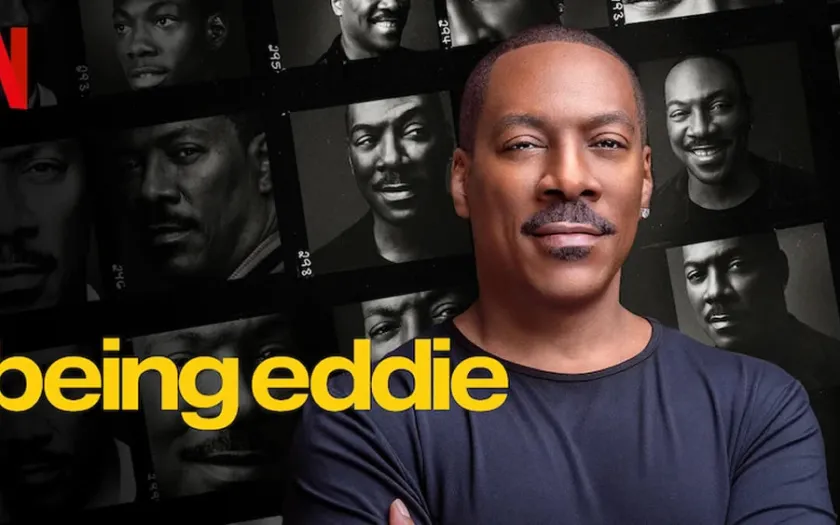
Did you know Eddie Murphy was funny? That he always knew he would be a star? That he inspired many a black comic? That he was angry at SNL when David Spade took a dig at him?

If so, you’re good to go.

If you insist on watching this tepid Netflix documentary, prepare for what seems to be a retrospective about a funny man that inexplicably does not show him being all that funny.

There is no delving into his craft, no in-depth discussion of how he matured in stand-up or established himself in films.

There are no great stories of Hollywood.

There is, really, very little insight at all. 

Rather, Murphy is presented as a pleasant, sensible fellow, a bit of a homebody, guarded but practiced in the art of bland recollection.

It is all very boring, and made more so by the likes of Arsenio Hall, Michael Che’, Dave Chappelle, Kevin Hart, Jerry Seinfeld, Pete Davidson, Jamie Foxx, Chris Rock, and others basically blowing so much elegiac smoke up Murphy’s ass that he seems more demigod than man. Which is weird when you see his oeuvre laid out, and his sermon on the mount is playing so many characters in The Nutty Professor who can fart.

Look, I love Eddie Murphy. When I saw 48 Hours, I was blown away by his presence and the interplay with Nick Nolte, a buddy cop flick with real comedic teeth in the articulation of racial tension. I also thought Murphy was overlooked in Dreamgirls, though I was pleased to see his Best Supporting Actor nomination and was dying to hear him explain how he evoked a true falling star, and one with substance abuse issues, given his own clean living. As for his unheralded classic, Bowfinger, all we get is how it was nice for him to walk to lunch with Steve Martin.

The endeavor is generic, Commissar-approved dreck through and through. Though I give it 1 star for a few clips of Eddie’s hilarious, now deceased brother, Charlie.

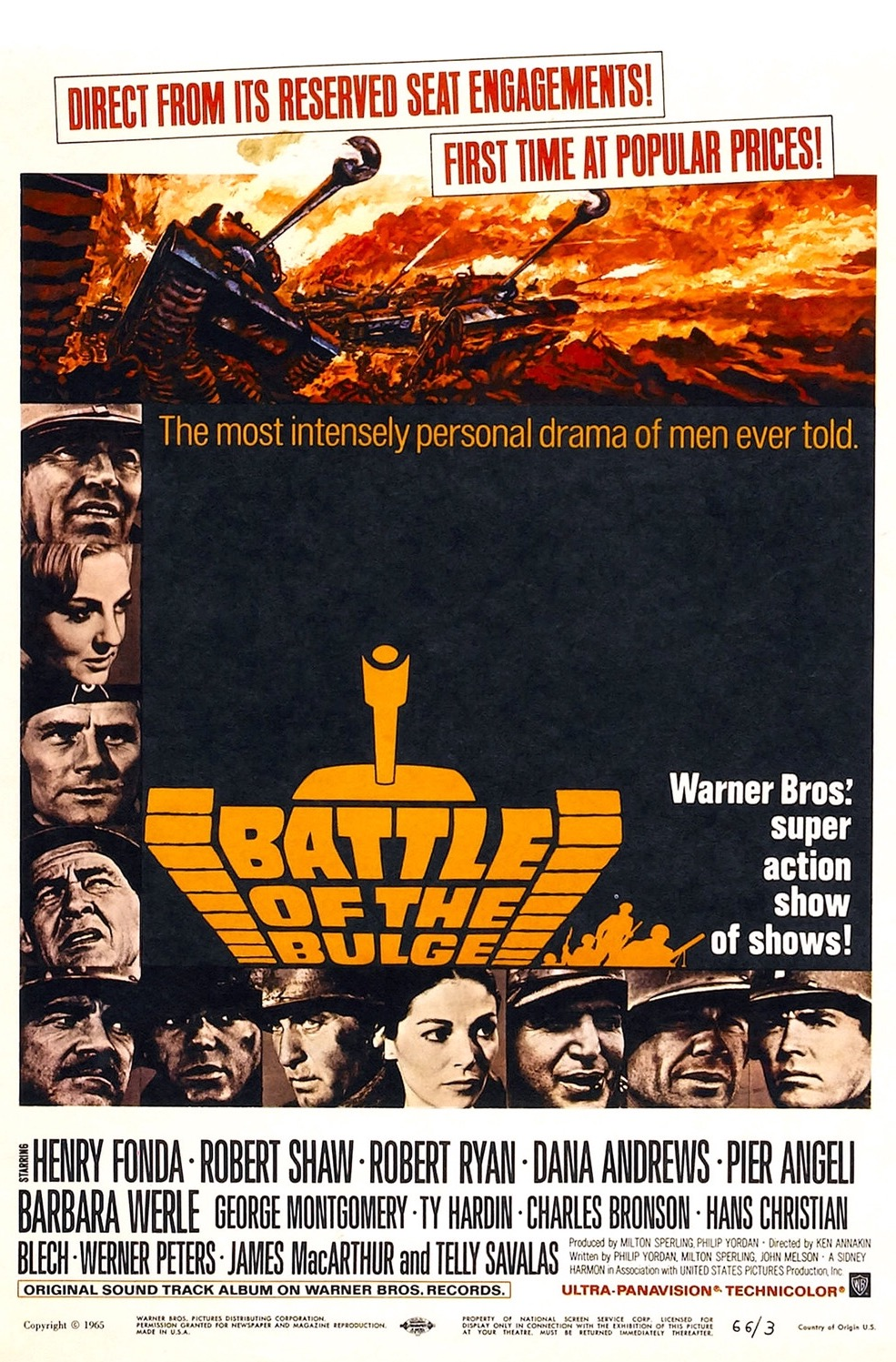
Tediously directed by the same person who helmed The Longest Day, once dubbed “The Longest Movie,” Ken Anankin’s resume’ does not inspire confidence. The picture takes forever to start, and when it gets going, it is permeated with flat ahistorical battle sequences and clunky dialogue. All the actors seem to be taking their cue from Henry Fonda, who plays the lone officer who foresaw the Nazi surprise attack through the Ardennes. Fonda sports a ho hum bemusement that screams, “Did the check cash?” The usual suspects for WWII flicks – Telly Savalas, Robert Ryan, Charles Bronson – make their bank as well, and similarly phone in their personas.

A bore through and through, it looks cheap and inauthentic, particularly when they put the leads in tanks with the actual film footage on a screen behind them.

Very Batman and Robin TV show driving.

Though it maintains a soft spot in this old heart for reasons having nothing to do with artistic merit.

When I was in high school, due to economic strain, my mother was forced to take in boarders. One, Klaus Kristmas (name changed because if my Googling is correct, he’s a rather accomplished German government official) was a smart, ramrod straight, punctilious young man whose father was in the Bundestag. Klaus was great fun, and my mother immediately made him part of the family. He even came to the beach with us, where we recoiled in horror as he pulled down his shorts to reveal a European look, the mini-Speedo.

At home, I would hang out with Klaus and watch TV. One night, sure enough, we watched this flick, which is all Germans kicking ass for the majority of the picture. When Robert Shaw, as the lead Panzer commander, nears the oil depot that will allow his continued advance, however, things have shifted. Shaw burns to death when a fuel drum hits his tank.

Klaus: “Oh nooooooooooooooo,”

14 year old Filmvetter : “USA, USA, USA!!”

On Tubi.

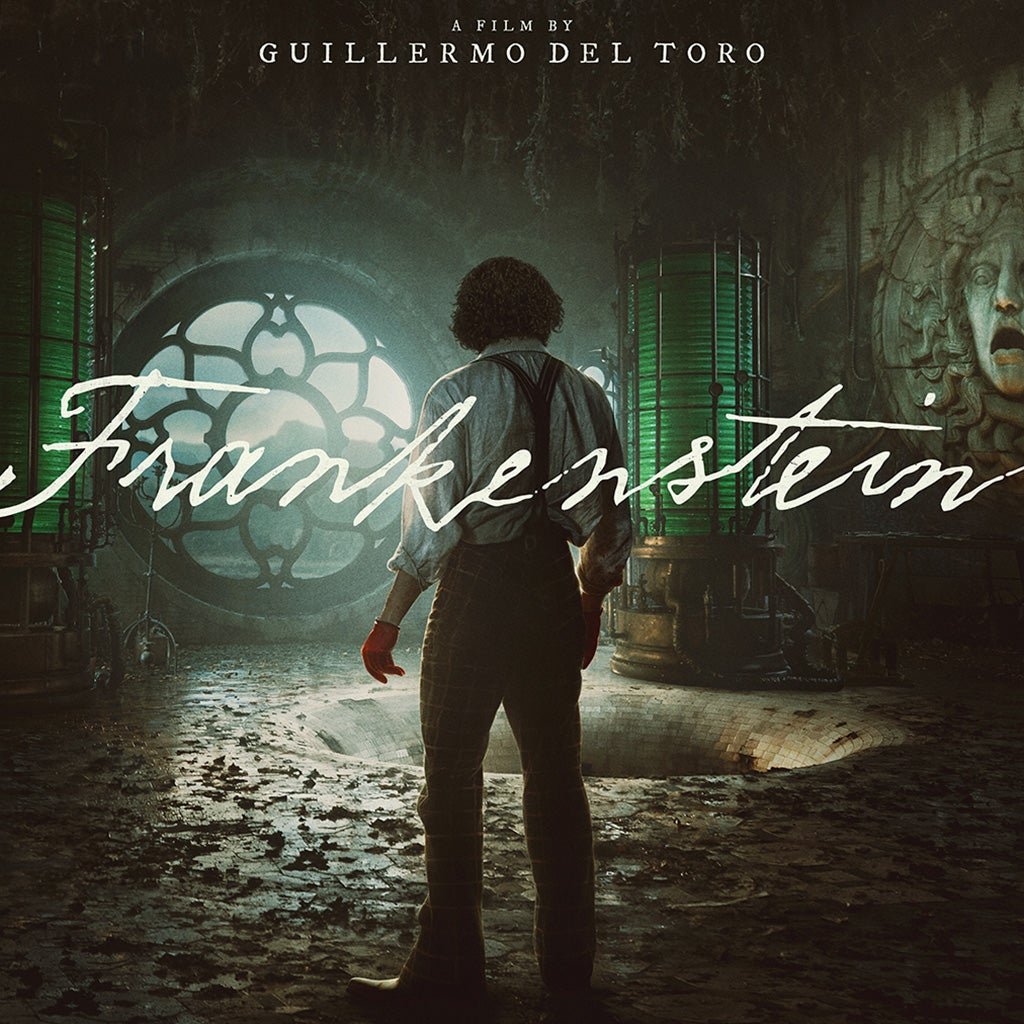
One scene encapsulates the silliness of this film and perhaps of writer-director Guillermo del Toro. The enraged monster crashes a fancy wedding party but before he arrives, we see the dandy of a groom telling the hired hand walking around with a basket of rose petals, essentially, to “keep them coming. No matter what.” The monster busts in and kills two or three people, grabs the bride, and walks out of the party with her draped in his arms, slower-motion.

Amidst a shower of rose petals.

And they say you can’t get good help.

It’s the shot, the look, that consumes del Toro, obliterating pace, story, dialogue or, in the case of the hardest working petal thrower in film history, common sense. As beautiful as his eye may be, The Shape of Water, Crimson Peak, Nightmare Alley, all are gorgeously photographed but empty vessels. No matter how many frames look like paintings, the effect is one of misdirection, not involvement. del Toro keeps larding it on, way past the moment when the Wizard’s curtain is pulled away, and a pudgy bureaucrat with a lot of bells and whistles is revealed.

Yea, the picture is gorgeous. And for the first 45 minutes, it connects, but truth be told, it connects because it is economical and lighter, in a Tim Burtony way. 

When Dr. Frankenstein (Oscar Isaac) begins his work on the monster and descends into madness, the picture becomes absurdist. When the monster (Jacob Elordi) is loose, we move to an uncomfortable mix of turgid and maudlin. When the chase is on, as Dr. Frankenstein must hunt the monster to the outer reaches of the North Pole, if you are not stifling a laugh or making cracks, bully for you.

By the film’s resolution, the monster has transformed into the Hulk and the film packs all of the emotional wallop of a Marvel film.

The movie is also badly acted. Isaac plays Frankenstein like a dude on a speedball. As his brother and the brother’s intended, Felix Kammerer and Mia Goth are as dull as dishwater. They simply do not resonate other than as clotheshorses for del Toro’s unnecessarily ornate costumery. As the financier of the project with a ham-handed agenda of his own, Christoph Waltz is only missing a mustache to twirl. Elordi is just big.

As bad as this whole endeavor is, it is made worse by del Toro’s cringingly infantile script.  His monster is a tortured soul whose transformation from a conglomeration of electrically charged parts to the most erudite Hulk is so ridiculous as to be Mel Brooksian. His Dr. Frankenstein is such a douchebag you can no more invest in him than Bradley Cooper as “Sack” in Wedding Crashers. Indeed, Frankenstein’s primary impetus for his forswearing of his creation is that Goth and the monster got on for a moment and he, coveting his brother’s gal, is now jealous. His secondary factor is that the monster is a lot of work.

Another note. del Toro luxuriates in the gratuitously violent here, yet another brushstroke on his canvas. He can make the monster’s ripping the skin off a wolf’s head super cool looking. But to see such a struggle with mere wolves, followed by Elordi moving an entire ship with a little push at the finale, it just hammers home the director’s ruinous fixation.

A colossal failure that scored an 85% on Rottentomatoes.

Hacks.

On the plus side, if you have Netflix, it is free. 

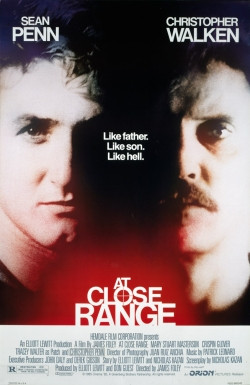
James Foley’s (After Dark, My Sweet) film never really decides what it wants to be, a family drama or a crime picture. Foley eventually throws up his hands and cedes everything to the captivating Christopher Walken.

Not the worst of decisions. Walken plays a minor rural Pennsylvania crime kingpin. He skippers a crew that includes his two brothers and a few other hardened locals. They do heists, car thefts, drugs, and, if necessary, murder, a lethal but merry band of crooks.

Walken’s estranged son, Sean Penn, is a townie still living at home with his mother and grandmother. The women smoke, glare at the TV and otherwise exude the hopelessness of abandonment and near poverty. Penn, seeking something more, falls in at-first-sight love with Mary Stuart Masterson, who looks his way as he cruises at night around the town square. It is for her that he joins up with his father’s crew, to “get out while we’re young … ’cause tramps like us …” 

When Penn realizes murder is part of the gig, he splits from Walken, gets arrested working his own “baby” crew (which includes his brother Chris and a very young Crispin Glover and Kiefer Sutherland), and is incarcerated. There, the cops work on him to fink on his father.

Here, the film becomes ridiculous. Walken, paranoid Penn will flip on him, kills nearly every one of the kids working with Penn, even though Foley does not show them to be integral enough to his operation to be much of a threat. He also rapes Stuart Masterson, which makes even less sense if the plan is to bring Penn back into the fold. Penn comes out of jail, tries to make a run for it with his gal, fails, and in a rushed, abrupt ending, testifies against his father (for 30 seconds).

That’s that.  Lights up.

None of it makes much sense, but the thematic indecision is worsened by gross character underdevelopment. Walken is a charming sociopath, but how did he get here? No clue. We even have his ex-wife moping about, warily eying the establishment of a relationship between Walken and Penn. Foley, however, suffices to use her as a sad totem, so we don’t get any insight into Walken from her. Similarly, Penn needs a Daddy. Then, on a dime, he doesn’t. As he is near mute for most of the picture, we are left to guess as to what he has missed and the basis for his immediate and strong moral stand. Stuart Masterson is looking for something, but as she and Penn prepare to light out for the territories, leaving her house, she is clearly from money. So why is she hanging with these lowlifes? Unexplored.

The film has its strengths. Foley’s feel for rural Pennsylvania is strong. The fields and woods are spooky and forbidding at night. During the day, the crappy cars and houses, the dead-end bars, they all contribute to Penn’s lust for some way to get out. Foley shows just how big and cold this country can be, the kind of place that swallows you up and tells no tales or grinds you down little by little. The murder spree is indelible.

As noted, Walken is the picture, and in every scene, he is riveting. Penn, however, goes low to Walken’s high, and the effect is somnambulant. He’s in with Daddy, then immediately out, then annoyingly internal until his final nose-to-nose with Daddy, all to the conclusion that he needed a better Daddy.

The story is apparently based on a true criminal, Bruce Johnston Sr.

Another note – at the time of the picture, Penn was married to Madonna. She had a song for the picture which then became extended to the soundtrack. It is synthy, mid-80s fare, better suited to Vision Quest or even Risky Business. It has no business being near this gritty movie.  Sure, I joked about Springsteen above, but his music would have been pitch perfect to the film.

On Amazon Prime.

There are many many fine war films, but to a near fault, the pictures are accompanied by moving scores and dialogue that seeks to translate the madness into something articulable as a broader goal. The characters negotiate their horror, sometimes in a simplistic, overly cynical or patriotic manner, often anachronistically. A common fault is too much explication. Think Eric Bana telling Josh Hartnett in Black Hawk Down that the only thing that matters is the man next to you, after which he poetically slips away to do more of God’s work in Mogadishu. Or the often trying banter of Spielberg’s platoon, looking for Private Ryan, with their hopes and dreams too much on their sleeves. Or Charlie Sheen’s overt “what are we doing here, who am I?” voiceovers in Platoon.

Then there’s the misery and degradation in all its forms, seen on Spielberg’s Omaha Beach or in the trench hell of the most recent remake of All Quiet on the Western Front. Hamburger Hill, We Were Soldiers, Hacksaw Ridge, Flags of Our Fathers, and dozens of other combat flicks, all which show us the meat and the grinder and the indomitable or broken spirit of those who survive or die in its gears.  

Warfare, directed by Alex Garland (Ex Machina, Civil War, 28 Years Later) and Navy Seal Ray Mendoza, a veteran who served during the action depicted, is like none of these films. A platoon on a observational mission in 2006 Iraq after the Battle of Ramadi soon becomes the quarry. What ensues is a riveting recreation of their fate as they are besieged on all sides. What is revealed is a professionalism in a real time pressure cooker, less heroism than necessity. There are no speeches, no mournful strings, no hoo-rah. No soul searching or leather strap biting (well, a little, but for before morphine is administered, it is a terrible, pitched screaming).

In the place of such war film hallmarks, there is increasing tension and isolation. As the fear and confusion mount, it is met with collaboration, spine, and ingenuity, all hampered by human foible under great stress. Mistakes are made but they are almost built into the scenario and they are not dwelled upon. Terror abounds but it is revealed subtly. The soldiers, pinned down in an Iraqi home for the entirety of the film, have every weapon and gadget American fighting ingenuity can provision. They have surveillance from above, as well as the ability to call in armor or air support. Yet, the unit seems near overmatched by the persistence of their foes, which enhances a secondary threat, the possibility of panic and loss of discipline. There are no dramatic explosions, not unit uprising, no philosophical meanderings. There is hesitation, the glance of doubt, the zoning out to cope, the “are you fucking serious?” look, the nano-second wait for someone else to step up, the grudging assumption of the task when they do not, and the missteps that would occur in any such maelstrom.

There is a beautifully rendered scene where the besieged platoon is reinforced. The first platoon’s lieutenant says to his newly arrived counterpart, “I’m fucked up.” He is not injured, though concussed and disoriented, but he is spent and incapable of command. His near wordless relinquishment, met by acknowledgement, dawning and the assumption of responsibility, is poignant.

The film is really about the business of war, and the exercise of it as craft when literally and figuratively all is crashing down about you. It’s an original work of art in the genre.

I’ll add one contemporary observation. There has been much talk of late as to the physical standards necessary for combat. This film will educate you as to a basic requirement. If you can’t pull a wounded man from harm’s way, you have no business being in the business.

On MAX.

My dive into the crime films of Amazon Prime gets deeper.

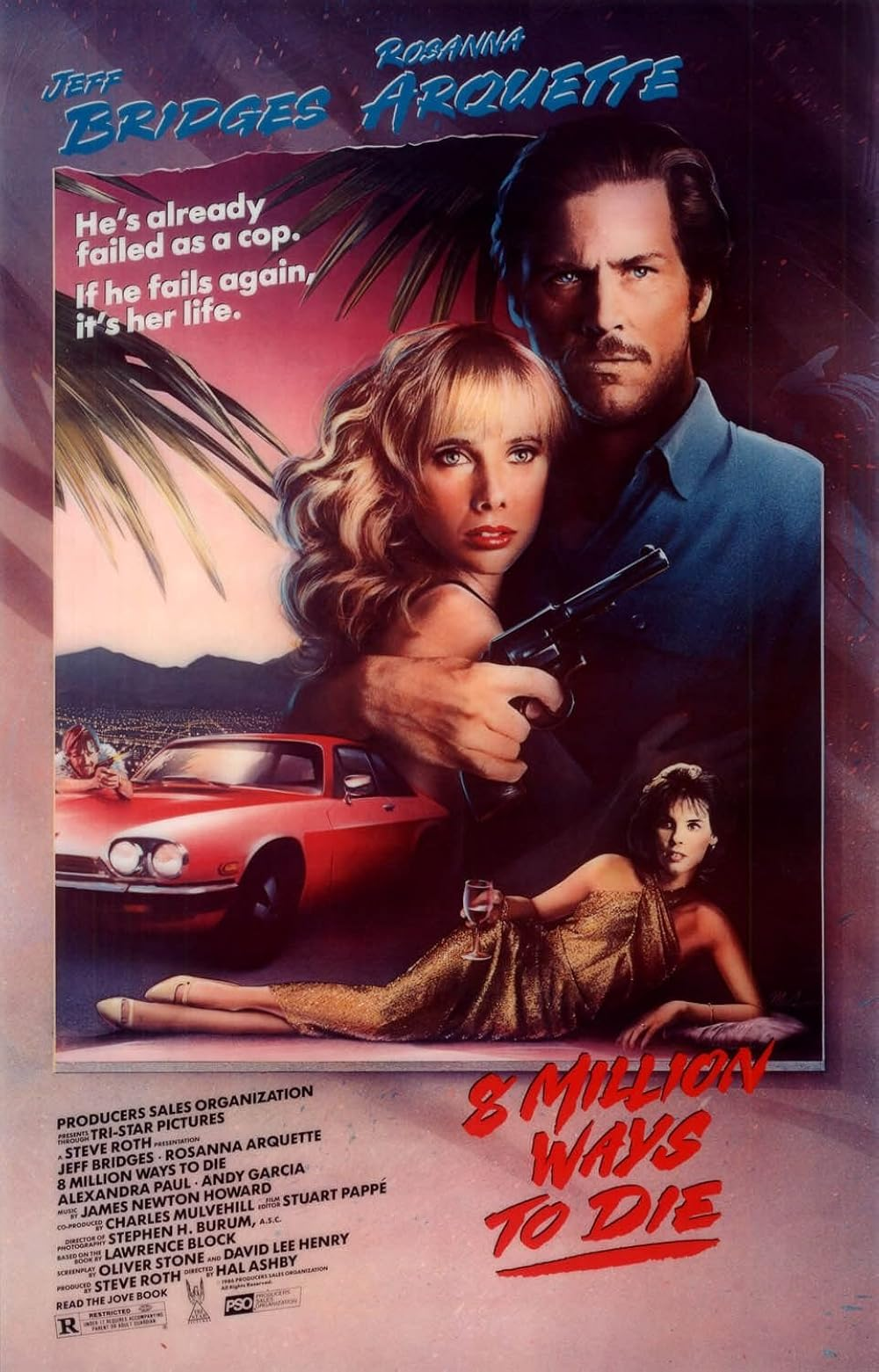
I was intrigued by this flick because I like Jeff Bridges, the movie was an early Oliver Stone screenplay (a co-write), and it was one of last films directed by Hal Ashby (Shampoo, Being There, Coming Home).

I don’t have 8 million reasons to hate this film, but I have 8.

  1. Stone’s writing is garish and ridiculous. In an attempt at modern noir, we actually hear Bridges say, in voiceover, “Yeah, there are eight million stories in the naked city. Remember that old TV show? What we have in this town is eight million ways to die.” A high-priced call girl ups the retch factor, cooing to Bridges, “the streetlight makes my pussy hair glow in the dark. Cotton candy,” as she lays out ala’ Ms. March 1978. Maybe these gems were penned in the source novel by Lawrence Block. I don’t know. It doesn’t land here.
  2. Hal Ashby knows about as much about film action as I do taxidermy. It’s not like Coming Home’s Jon Voight was doing wheelies in his chair. This picture, which involves blackmail and cocaine and kidnapping and gunplay, is as flat and unimaginative as professional bowling.
  3. As the alcoholic ex-cop, Bridges seems as confused by the script as the viewer. There are times you feel, his eyes alone, Bridges is communicating, “What the hell is this thing about, again?” When he’s involved in a bad shooting, and guns down a man in front of his family, he says, “Shit.” Like when you don’t get a good score in Skee Ball. And then, “Fuck,” like when you leave home without your iPhone.
  4.  Bridges is also forced to play an alcoholic who relapses; he does this by reprising his role in Thunderbolt & Lightfoot, after he was thunked on the head.
  5. The plot is inane. Bridges is lured into the entire mess because the girl with the cotton candy pubic hair heard his name from the friend of a friend.
  6. Roseanna Arquette is terribly miscast as the sultry, misunderstood, cynical call girl with a heart of gold. Arquette is cute best friend, quirky neighbor.  She ain’t this.
  7. The supporting turns are execrable.  Andy Garcia is so over the top (see below), it’s hard to stop laughing, as if he saw Scarface and said, “Hmmmm. Pacino seems a bit muted.” Another actor, Randy Brooks, nemesis to Garcia, is also near-lunatic. Brooks scurried off to TV after this flick, only to return as the worst actor in Reservoir Dogs six years later. The cotton candy girl is the badly miscast Alexandra Paul. She is the girl next door. Here, she’s over-the-top coquettish, as erotic and worldly as Georgette in The Mary Tyler Moore show. To be fair, this may not all rest on the actors. From the analysis below, “Ashby’s style of directing, according to Block, involved letting the actors do takes where they exaggerated their emotions, before reining them back in for subsequent takes. Since Ashby did not have final cut, some of these ‘dialed up’ takes were used in the film.” Seems like all of them were.                 
  8. Scenes are interminable. The characters scream the same thing at each other ad nauseum or endlessly posture. Behold, the longest, loudest, most idiotic confrontation scene in film history:

Apparently, I am not alone in my derision and confusion.

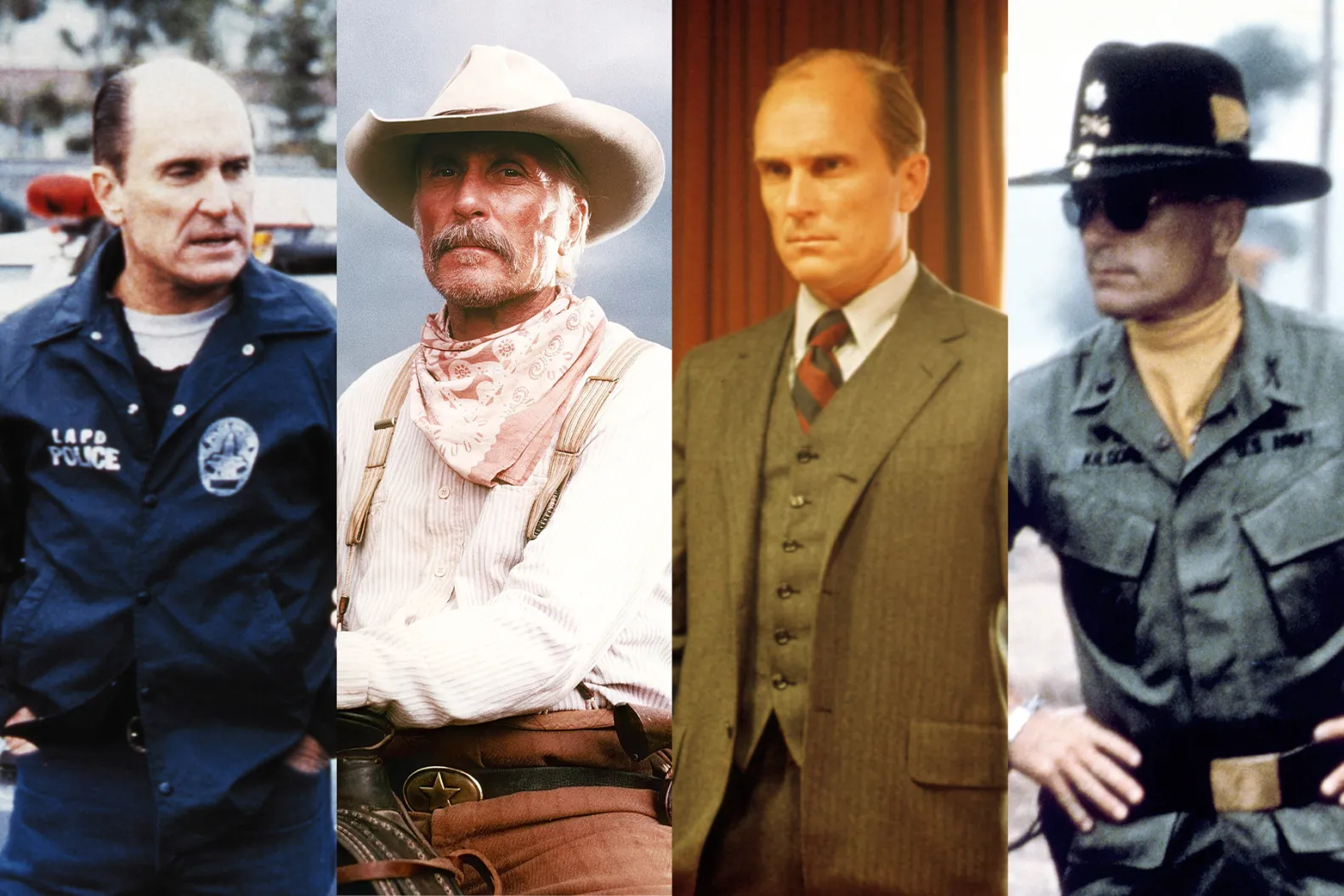
An unheralded gem, powered by the stellar performances of Robert De Niro and Robert Duvall, as brothers Dez and Tom Spellacy. De Niro is a rising monsignor in post-WWII Los Angeles, archbishopship on the horizon. Duvall is a tainted LA homicide cop. De Niro is ambitious and technocratically capable but fast becoming disillusioned with the moral elasticity necessary to keep the church afloat, including being chummy with the likes of a scumbag real estate mogul (Charles Durning, who seeks the church as beard for his corruption and literally sweats menace). Duvall is trying to make up for his past as a bagman. A Black Dahlia-esque murder connects them, and as De Niro wrestles with his faith and station, Duvall agonizes over his past crimes and his attempt to make amends by going after Durning, damage to his brother be damned. We learn about their secrets and upbringing in an L.A. that has a Chinatown-vibe.

One of my favorite fiction authors, John Gregory Dunne, wrote the screenplay with his wife Joan Didion, and it exudes verisimilitude and deftness. The script allows De Niro and Duvall significant space and what they do with the quiet moments is poignant. There is always tension, but also, always an intimacy and a shorthand that speaks to shared happier, or unhappier, times. Their exchange on their uber-Catholic mother is emblematic:

Tom Spellacy: How’s ma? Is she still eating with her fingers?

Des Spellacy: Well, she says the early Christian martyrs didn’t have spoons.

Tom Spellacy: Tell her they didn’t have Instant Cream of Wheat, either.

It’s a cheat to cite a review within a review, but Vincent Canby’s is so dead on and conclusive, I’ll transgress:  the film is a “tough, marvelously well-acted screen version of John Gregory Dunne’s novel, adapted by him and Joan Didion and directed by Ulu Grosbard who, with this film, becomes a major American film maker. Quite simply it’s one of the most entertaining, most intelligent and most thoroughly satisfying commercial American films in a very long time.”

If there is a problem, it is third act, which could have used a few more moves to get to the ultimate revelation. But I’m hesitant even in that criticism for fear that any nod to beefing up the procedural would have taken away from Grosbard’s patience and care with the characters. The film not only showcases De Niro and Duvall, but takes time to establish real connections between De Niro and an older priest (Burgess Meredith), who De Niro puts out to pasture because of the latter’s interference and sermonizing (“I’m not a man of the cloth, I’m a man of the people”); Duvall and a whorehouse madame (Rose Gregorio) with whom he had some sort of ragged relationship until she took the fall for his crookedness and did a stint in jail (“I need you like I need another fuck,” she spits at him); and Duvall and his partner, Kenneth McMillan, who shakes down Chinese restaurants for his retirement motel and tries to keep Duvall out of trouble (“You know who we’re going to pull in on this one? Panty sniffers, weenie flashers, guys who fall in love with their shoes, guys who beat their hog on the number 43 bus. What? Do you think I’m gonna lose any sleep over who took this broad out?”). The blunt and cynical nature of the dialogue aside, Dunne and Didion never stoop to hackneyed tough guy patter, and they counterbalance with real tenderness. The train station scene where the parents of the murdered girl meet with Duvall to take their dead daughter home is one memorably piercing example.       

Just added to Amazon.

I was abandoned this past weekend, and I don’t do well alone. With an empty house and the care of a disinterested 15-year-old cat entrusted to me, I took the time to catch up on a few 70s flicks in my queue, including this strange creature.

Burt Reynolds – not at the height of his popularity, but post-Deliverance – is Arkansas inmate Gator McCluskey. He’s in the federal pen for illegal liquor running when he learns that a crooked sheriff (Ned Beatty) has murdered his younger brother. Why? Because the brother was a meddlesome hippie, and Beatty does not like hippies. So, Gator gets out, insinuates himself into the county, and exacts his revenge.

There’s a lot bad to meh here.  The “I hate hippies” thing is unexplained – we never really know what the kid did to deserve being dumped in the swamp, and a sit-down between Beatty and Reynolds never happens. And the women of the Arkansas county are so carnal in their attraction to Gator, it seems cartoonish. Worse, there are tons of car chases, but not of the ilk of The French Connection or The Seven-Ups or Bullitt. Just a lot of banal vrooming around dusty country roads. From this demon seed sprouted Smokey & the Bandit and Cannonball Run (Hal Needham was a mere stuntman for the picture, but a few years later, he was second unit director on a reprise, Gator, and then he moved on to directing the slop that was Smokey and the Bandit I & II and Cannonball Run I & II). The first glimpses of Reynolds’ giggling, slapsticky, “I don’t give a fuck” mien can be found in the flick as well.    

There are a few notes on the plus side of the ledger. Reynolds connects. He has movie star gravitas and just enough menace left over from Deliverance to project power and fear. Beatty is also strong, exuding a meanness and lethality in the guise of a portly bureaucrat. The film also takes a few runs at a healthy cynicism.

Fun facts – at the tail end of his career, the picture’s screenwriter, William Norton, did 19 months for ferrying guns to the IRA. After being released from prison, he moved to Nicaragua, where he shot and killed an intruder in his home. He then spent a year living in Cuba, was unimpressed, and was smuggled into the U.S. by his ex-wife.

Where is this film?

On Amazon, not recommended except as a curio.      

I pledged to go to the theater Saturday to see the three-and-a-half hour The Brutalist. I begged off at the last minute, but then, the guilt of it made me do penance.

I watched Killers of the Flower Moon, another glaring omission, especially on the part of an unpaid film reviewer. Killers was adapted from David Grann’s best-selling book about a series of murders of Osage Indians in the 1920s, crimes borne of their oil wealth and societal vulnerability.

The good.

Martin Scorsese is no slouch behind the camera, and he ably presents the grandeur and sweep of Osage life and the peculiar opulence that sprouted about it. The film looks and feels like a $200 million picture. The detail is impeccable and the feel authentic (not the garish, silly design of Gangs of New York).

Lily Gladstone. Her job as the stoic sufferer of any number of depredations could have been capably performed with simple solemnity. But she infuses it with charm, passion, and subtle resignation. In a film during which I often found myself stifling a yawn, she was captivating.     

To the bad.

Scorsese seems to be having a late-in-life problem with repetitive scenes. Here, we are treated to at least a half dozen scenes of Robert De Niro (the bad guy) telling Leonardo DiCaprio (his nephew and henchman) what to do, DiCaprio getting more and more upset, and De Niro just yelling at him again and again. Much like The Irishman, the movie is 3.5 hours. In that film, it was “1.5 hours … trying to get Jimmy Hoffa (Al Pacino) either to his senses or a meeting.” Here, it is De Niro and DiCaprio bickering.

Worse, their interminable mugging is to the detriment of more interesting characters and subplots, from the resistance of one white man (played quite ably by Jason Isbell), to the genesis of the federal investigation, to the intervention of an Indian investigator, to the actual murders themselves.  Simply put, no one gives a flying fig about these two one-dimensional, barking characters, but there they are, hogging all the scenery at the trough.

The film is also painfully confused. Is this a testament to a historical wrong? A little. But that factor seems mailed in, with scenes of Osage registering objection, but no real agency. Which is fine.  Most people in history have little to no agency. They are subject to the cruelties of their surroundings. It leaves us the machinations of the criminals. But they are so simple (Osage sheep, whites sheep shearers), they don’t lend themselves to captivating drama. Also, Scorsese’s tie to the Tulsa race massacre seems cheap and manipulative.

Is it a procedural or whodunit? Nope.  We know the villain from moment one, he only lacks a mustache to twirl, and when the case is cracked in the last third, it is by far the best part of the picture. But the way it is solved is mundane. They try to break a guy, he gives a bit of guff but soon talks. The book was very much a whodunit and a procedural, grippingly so.

Is it a love story? Scorsese tries, but there is no real chemistry between DiCaprio and Gladstone, certainly, not enough to sustain his serial abuses, i.e., his central part in the murder of her family and friends. The lovable scamp!

Is it a psychological portrait? Perhaps. DiCaprio is the guilty henchman, no doubt, but he is so glaringly stupid (Scorsese even give him pointless unwieldy teeth, this side of Simple Jack), you wonder if the character’s psychology is worth the inquiry.

The writing is not so much weak as it is misdirected. If you’re going to pay $5 million for adaptation rights to a book, why jettison the most interesting parts? The book really digs into the strange origins and dichotomy of the Osage and their oil wealth, which was borne of their savvy as much as their geographic fortune. Here, they hit oil, and the rest is a surface coverage of their spendthrift ways and the fact that to access the wealth, they need white guardians. Scorsese presents this in a sort of mashed up montage. Similarly, the book covers the birth of the FBI and the investigation of the corrupt locals from a federal agent, a first. Here, the Feds just show up (led by a criminally underutilized Jesse Plemons) and start to brace some dudes.          

Like The Irishman, I felt this would never end, and like The Irishman, the universal plaudits feel like they are being artificially elevated on the vapor of Scorsese’s status and the ennobling of the cause.          

For a music bio, you can max-mythologize a dolt and maybe no one will notice the subject is super boring.  See The Doors. Elvis. Bohemian Rhapsody.

Or you can play it straight and overarching, maybe puncture the myth in parts, but ultimately, tell a big, soup-to-nuts, rags to riches story rather than create more ornament for the church.  See Ray. Straight Outta’ Compton. La Bamba.

But when you add kick-ass performances from people who can really sing, and a thoughtful, tight script, then I’m in.  See The Buddy Holly StoryCoal Miner’s Daughter. Walk the Line.

Luckily for Bob Dylan, the director of the latter, James Mangold, took this picture on.

We meet Dylan as he is deposited in NYC to meet his idol, Woody Guthrie (Scoot McNairy) who, robbed of his voice, is tended to in a New Jersey hospital by Pete Seeger (Edward Norton). Seeger and Guthrie see greatness, Seeger takes Dylan under his wing and we are off to the races, from aspiring folkie in 1961 to superstar in 1965, as Dylan weighs the dilemma of a lifetime:

Willeth I go electric?

“Will he go electric?” is actually a big deal in Dylan’s world, one fleshed out by Mangold and screenwriter Jay Cocks (Silence, Gangs of New York), as the genesis and essence of the folk milieu is revealed to us.

Of course, we want electric, but Cocks makes us understand the instincts of the standard bearers. They are curmudgeons, maybe, but they are earnest. The folk movement is something they built, sure, a lot of it on Dylan’s back, but their protective nature is not ridiculed. Quite the opposite. Cocks gives Seeger a great speech wherein he urges Dylan to stay acoustic in the service of a larger musical aim.

Still, the film doesn’t make the tug larger than that, and Dylan’s switch does not stand in ostentatiously for “bigger” themes.

Similarly, the pressure of going from lauded unknown folkie to superstar is not treated as an excuse for bad behavior or a major unfairness. It’s an annoyance that informs Dylan’s desires, and while we get the pressure he is under, as played by Chalamet, Dylan is made kind of dick because of it, equal parts sympathetic and petulant.

Mangold also has fun with the times. The look is spot-on, particularly of early 60s Greenwich Village, and we get the fun interdiction of Johnny Cash (Boyd Holbrook), a Dylan supporter and pen pal. And Al Kooper just jumping in a studio to hit the organ for the start of “Like A Rolling Stone” because he could not play guitar on the track?

Goosebumps.

Ultimately, as with Walk the Line, the music is the star. Chalamet sinks smartly into the role, traversing the road from wise but sweet neophyte to badgered superstar, but he sings great and quite a lot. All the performances crackle but he really nails it.

Mangold also does a great job with Dylan and his first girlfriend (they have an exchange about the plate-spinners on variety shows that is touchingly smart and Elle Fanning really resonates as the gal who took Dylan in only to see him grow beyond her attentions).

The Joan Baez relationship is more ragged. She just seems like a bitch, angry that Dylan criticized her songwriting (“’Sunsets and seagulls.’ ‘The smell of buttercups…’ Your songs are like an oil painting at the dentist’s office”). Mind you, that would piss most anyone off, but they continue as a couple with no discernible attraction, and the why seems thin.

A minor nit.  Great fun, moving, and impressive. Top 5 of 2024.