
Archive

Tag Archives: fiction

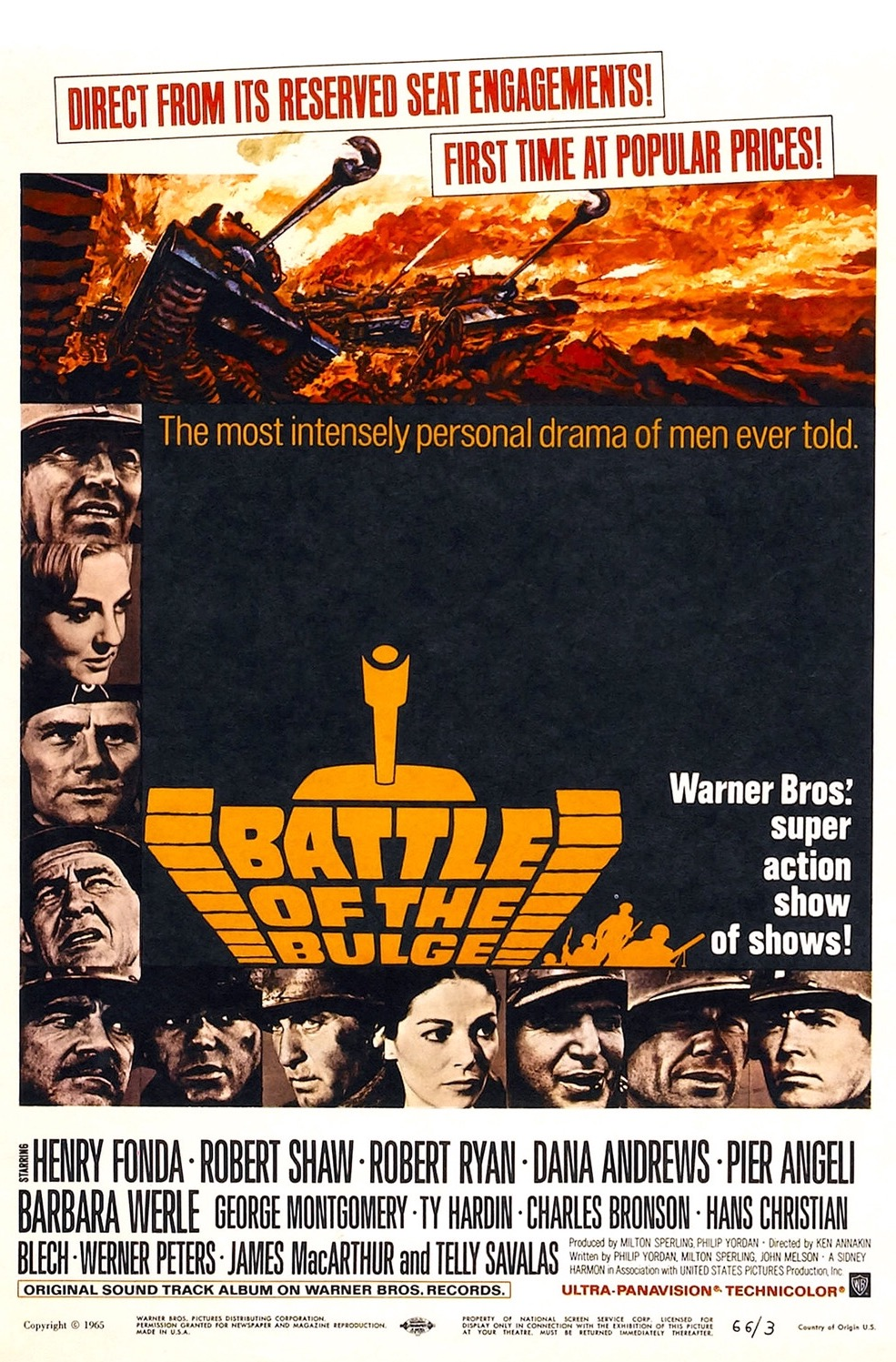
Tediously directed by the same person who helmed The Longest Day, once dubbed “The Longest Movie,” Ken Anankin’s resume’ does not inspire confidence. The picture takes forever to start, and when it gets going, it is permeated with flat ahistorical battle sequences and clunky dialogue. All the actors seem to be taking their cue from Henry Fonda, who plays the lone officer who foresaw the Nazi surprise attack through the Ardennes. Fonda sports a ho hum bemusement that screams, “Did the check cash?” The usual suspects for WWII flicks – Telly Savalas, Robert Ryan, Charles Bronson – make their bank as well, and similarly phone in their personas.

A bore through and through, it looks cheap and inauthentic, particularly when they put the leads in tanks with the actual film footage on a screen behind them.
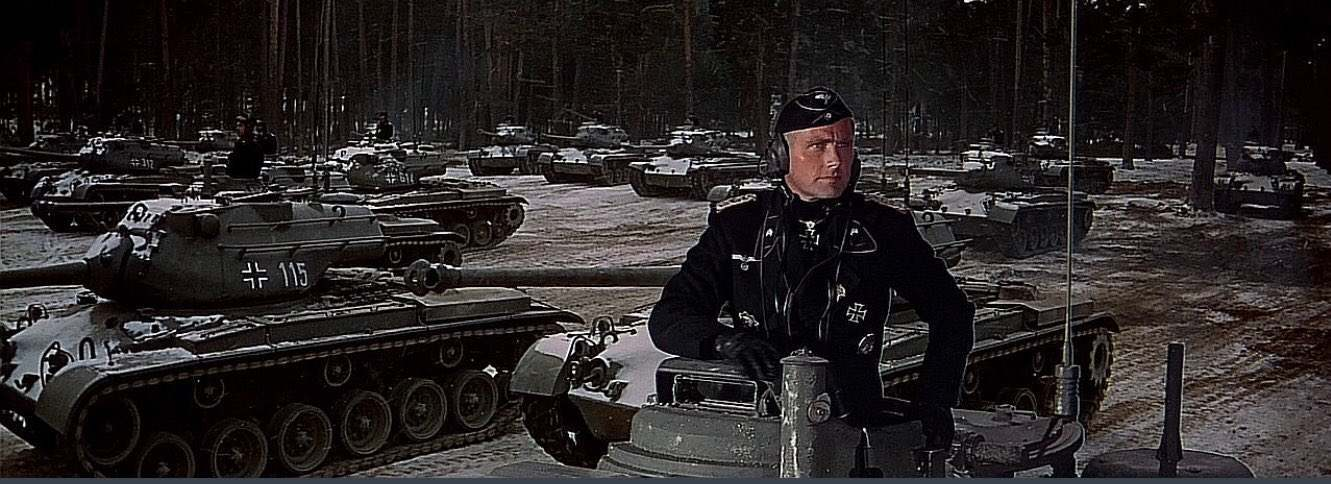
Very Batman and Robin TV show driving.

Though it maintains a soft spot in this old heart for reasons having nothing to do with artistic merit.

When I was in high school, due to economic strain, my mother was forced to take in boarders. One, Klaus Kristmas (name changed because if my Googling is correct, he’s a rather accomplished German government official) was a smart, ramrod straight, punctilious young man whose father was in the Bundestag. Klaus was great fun, and my mother immediately made him part of the family. He even came to the beach with us, where we recoiled in horror as he pulled down his shorts to reveal a European look, the mini-Speedo.

At home, I would hang out with Klaus and watch TV. One night, sure enough, we watched this flick, which is all Germans kicking ass for the majority of the picture. When Robert Shaw, as the lead Panzer commander, nears the oil depot that will allow his continued advance, however, things have shifted. Shaw burns to death when a fuel drum hits his tank.

Klaus: “Oh nooooooooooooooo,”

14 year old Filmvetter : “USA, USA, USA!!”

On Tubi.
There are many many fine war films, but to a near fault, the pictures are accompanied by moving scores and dialogue that seeks to translate the madness into something articulable as a broader goal. The characters negotiate their horror, sometimes in a simplistic, overly cynical or patriotic manner, often anachronistically. A common fault is too much explication. Think Eric Bana telling Josh Hartnett in Black Hawk Down that the only thing that matters is the man next to you, after which he poetically slips away to do more of God’s work in Mogadishu. Or the often trying banter of Spielberg’s platoon, looking for Private Ryan, with their hopes and dreams too much on their sleeves. Or Charlie Sheen’s overt “what are we doing here, who am I?” voiceovers in Platoon.

Then there’s the misery and degradation in all its forms, seen on Spielberg’s Omaha Beach or in the trench hell of the most recent remake of All Quiet on the Western Front. Hamburger Hill, We Were Soldiers, Hacksaw Ridge, Flags of Our Fathers, and dozens of other combat flicks, all which show us the meat and the grinder and the indomitable or broken spirit of those who survive or die in its gears.  

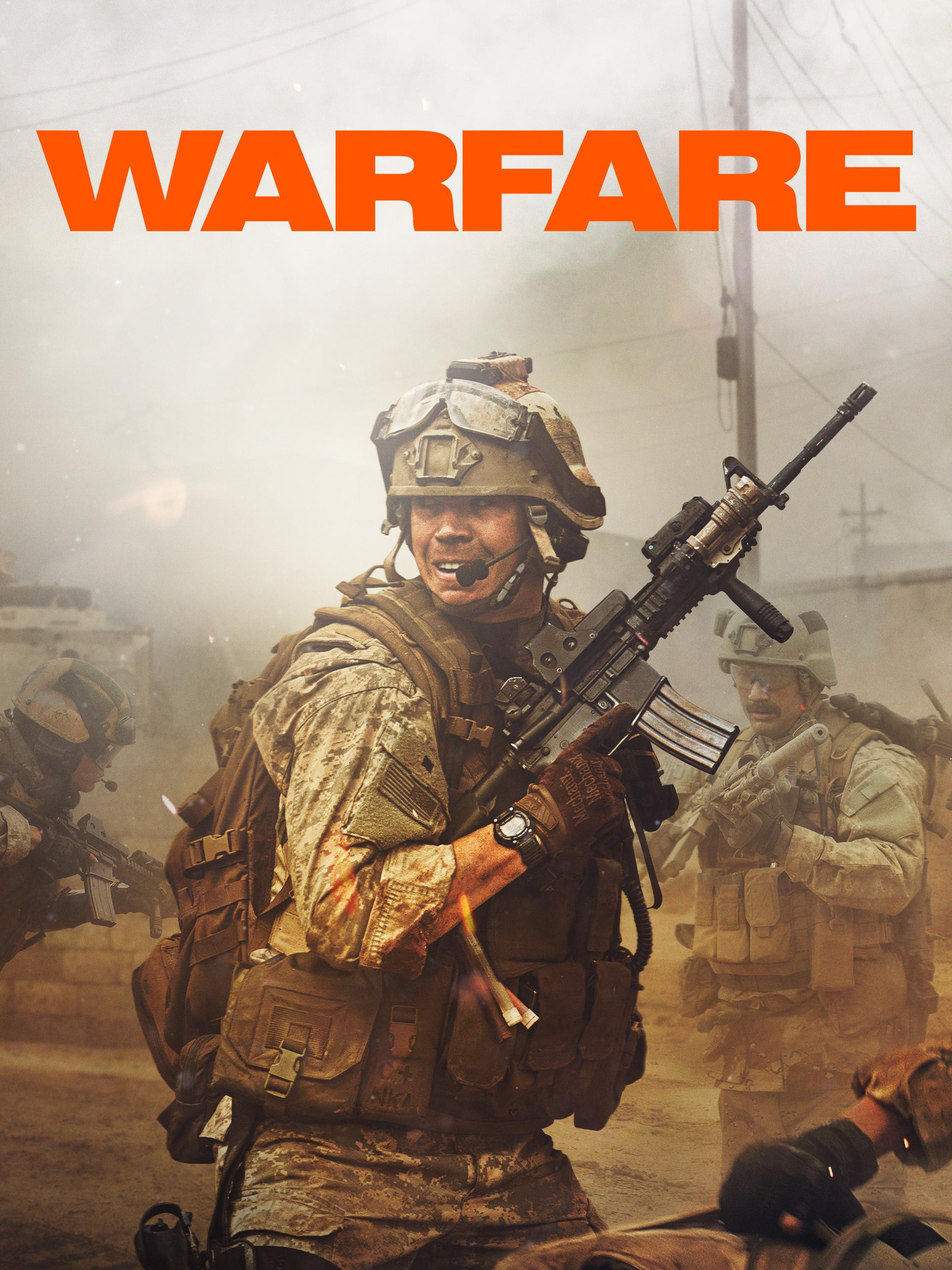
Warfare, directed by Alex Garland (Ex Machina, Civil War, 28 Years Later) and Navy Seal Ray Mendoza, a veteran who served during the action depicted, is like none of these films. A platoon on a observational mission in 2006 Iraq after the Battle of Ramadi soon becomes the quarry. What ensues is a riveting recreation of their fate as they are besieged on all sides. What is revealed is a professionalism in a real time pressure cooker, less heroism than necessity. There are no speeches, no mournful strings, no hoo-rah. No soul searching or leather strap biting (well, a little, but for before morphine is administered, it is a terrible, pitched screaming).

In the place of such war film hallmarks, there is increasing tension and isolation. As the fear and confusion mount, it is met with collaboration, spine, and ingenuity, all hampered by human foible under great stress. Mistakes are made but they are almost built into the scenario and they are not dwelled upon. Terror abounds but it is revealed subtly. The soldiers, pinned down in an Iraqi home for the entirety of the film, have every weapon and gadget American fighting ingenuity can provision. They have surveillance from above, as well as the ability to call in armor or air support. Yet, the unit seems near overmatched by the persistence of their foes, which enhances a secondary threat, the possibility of panic and loss of discipline. There are no dramatic explosions, not unit uprising, no philosophical meanderings. There is hesitation, the glance of doubt, the zoning out to cope, the “are you fucking serious?” look, the nano-second wait for someone else to step up, the grudging assumption of the task when they do not, and the missteps that would occur in any such maelstrom.

There is a beautifully rendered scene where the besieged platoon is reinforced. The first platoon’s lieutenant says to his newly arrived counterpart, “I’m fucked up.” He is not injured, though concussed and disoriented, but he is spent and incapable of command. His near wordless relinquishment, met by acknowledgement, dawning and the assumption of responsibility, is poignant.

The film is really about the business of war, and the exercise of it as craft when literally and figuratively all is crashing down about you. It’s an original work of art in the genre.

I’ll add one contemporary observation. There has been much talk of late as to the physical standards necessary for combat. This film will educate you as to a basic requirement. If you can’t pull a wounded man from harm’s way, you have no business being in the business.

On MAX.