
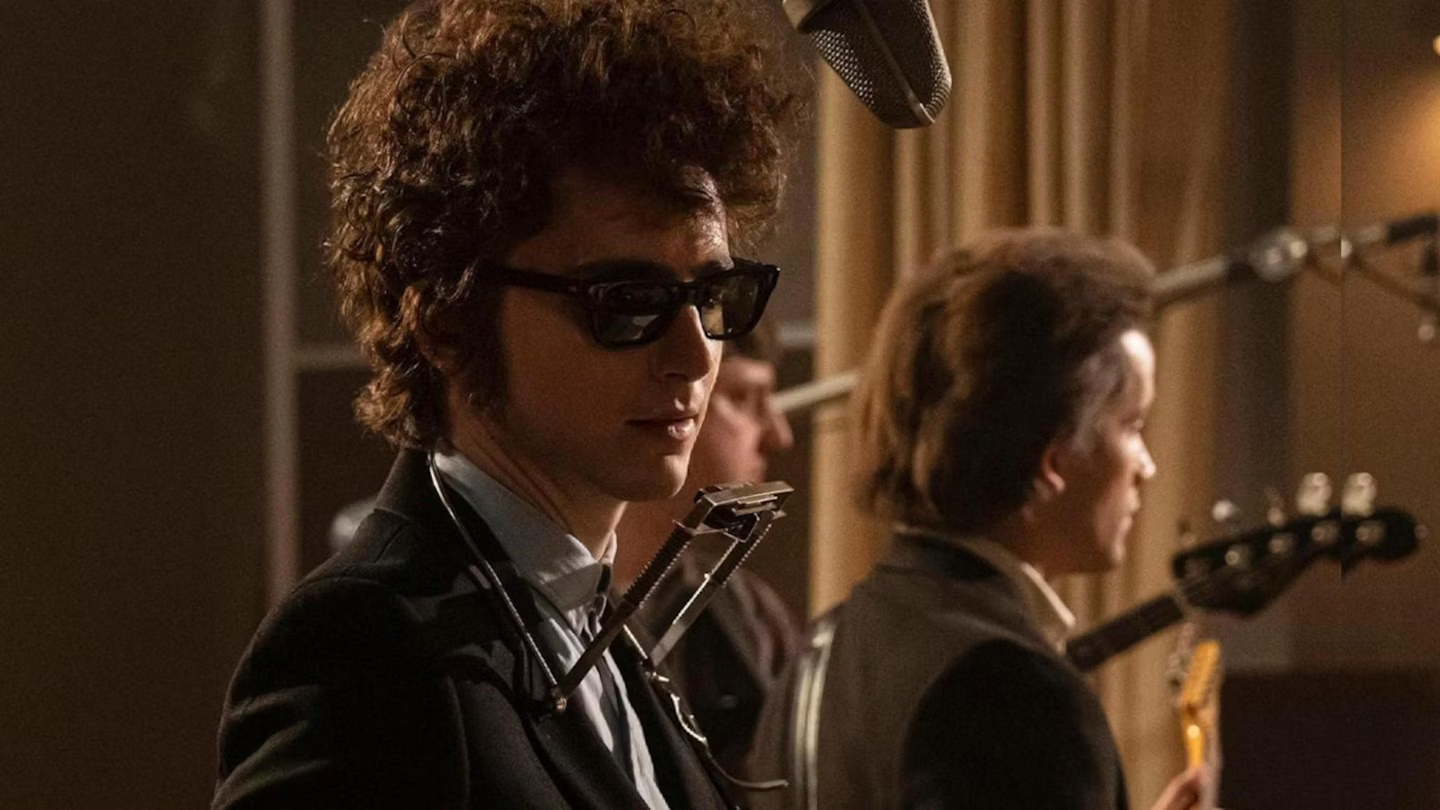
For a music bio, you can max-mythologize a dolt and maybe no one will notice the subject is super boring. See The Doors. Elvis. Bohemian Rhapsody.
Or you can play it straight and overarching, maybe puncture the myth in parts, but ultimately, tell a big, soup-to-nuts, rags to riches story rather than create more ornament for the church. See Ray. Straight Outta’ Compton. La Bamba.
But when you add kick-ass performances from people who can really sing, and a thoughtful, tight script, then I’m in. See The Buddy Holly Story. Coal Miner’s Daughter. Walk the Line.
Luckily for Bob Dylan, the director of the latter, James Mangold, took this picture on.
We meet Dylan as he is deposited in NYC to meet his idol, Woody Guthrie (Scoot McNairy) who, robbed of his voice, is tended to in a New Jersey hospital by Pete Seeger (Edward Norton). Seeger and Guthrie see greatness, Seeger takes Dylan under his wing and we are off to the races, from aspiring folkie in 1961 to superstar in 1965, as Dylan weighs the dilemma of a lifetime:

Willeth I go electric?
“Will he go electric?” is actually a big deal in Dylan’s world, one fleshed out by Mangold and screenwriter Jay Cocks (Silence, Gangs of New York), as the genesis and essence of the folk milieu is revealed to us.
Of course, we want electric, but Cocks makes us understand the instincts of the standard bearers. They are curmudgeons, maybe, but they are earnest. The folk movement is something they built, sure, a lot of it on Dylan’s back, but their protective nature is not ridiculed. Quite the opposite. Cocks gives Seeger a great speech wherein he urges Dylan to stay acoustic in the service of a larger musical aim.
Still, the film doesn’t make the tug larger than that, and Dylan’s switch does not stand in ostentatiously for “bigger” themes.
Similarly, the pressure of going from lauded unknown folkie to superstar is not treated as an excuse for bad behavior or a major unfairness. It’s an annoyance that informs Dylan’s desires, and while we get the pressure he is under, as played by Chalamet, Dylan is made kind of dick because of it, equal parts sympathetic and petulant.
Mangold also has fun with the times. The look is spot-on, particularly of early 60s Greenwich Village, and we get the fun interdiction of Johnny Cash (Boyd Holbrook), a Dylan supporter and pen pal. And Al Kooper just jumping in a studio to hit the organ for the start of “Like A Rolling Stone” because he could not play guitar on the track?
Goosebumps.
Ultimately, as with Walk the Line, the music is the star. Chalamet sinks smartly into the role, traversing the road from wise but sweet neophyte to badgered superstar, but he sings great and quite a lot. All the performances crackle but he really nails it.
Mangold also does a great job with Dylan and his first girlfriend (they have an exchange about the plate-spinners on variety shows that is touchingly smart and Elle Fanning really resonates as the gal who took Dylan in only to see him grow beyond her attentions).
The Joan Baez relationship is more ragged. She just seems like a bitch, angry that Dylan criticized her songwriting (“’Sunsets and seagulls.’ ‘The smell of buttercups…’ Your songs are like an oil painting at the dentist’s office”). Mind you, that would piss most anyone off, but they continue as a couple with no discernible attraction, and the why seems thin.
A minor nit. Great fun, moving, and impressive. Top 5 of 2024.
 filmvetter