
Archive

Tag Archives: books

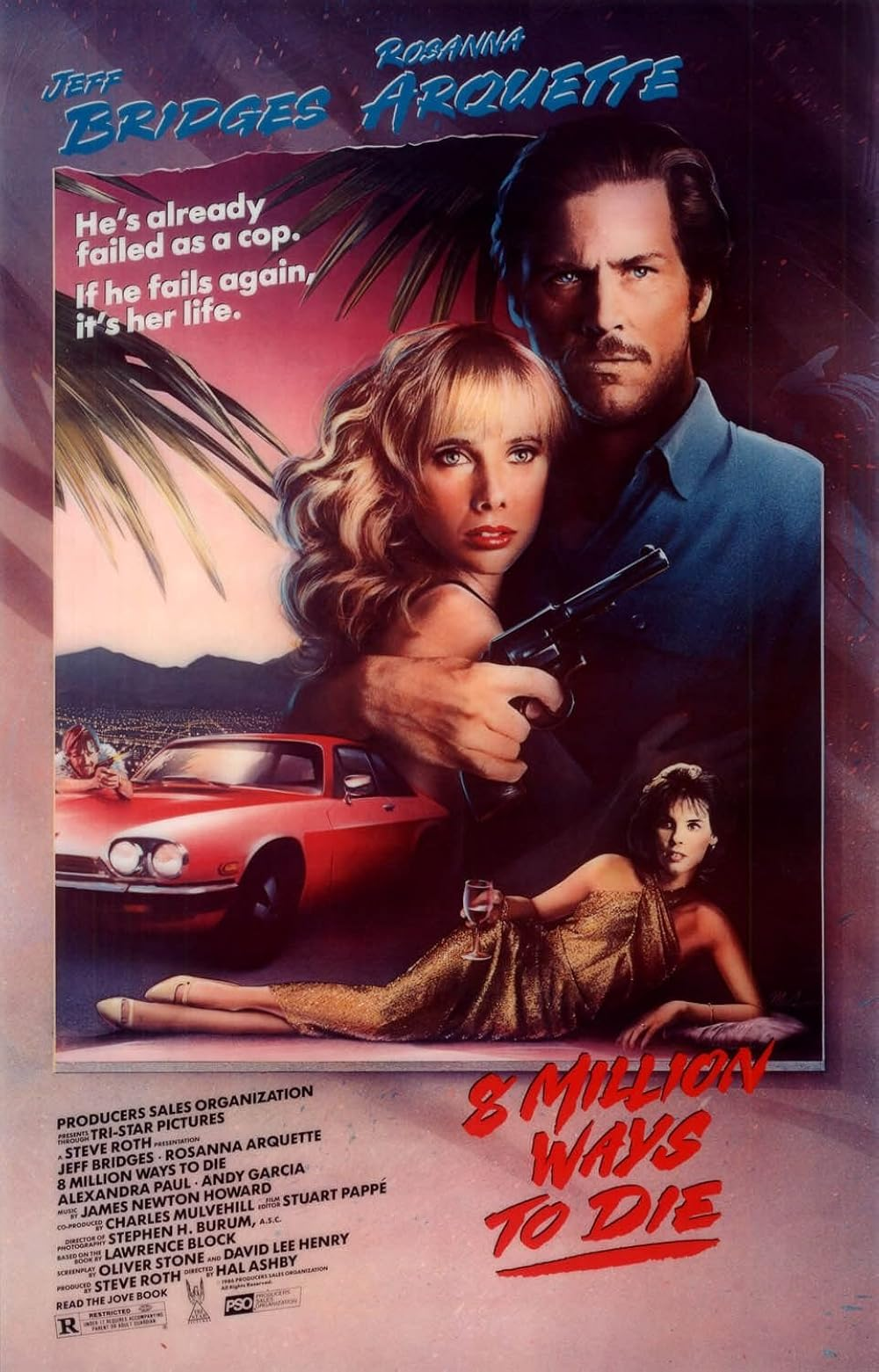
My dive into the crime films of Amazon Prime gets deeper.

I was intrigued by this flick because I like Jeff Bridges, the movie was an early Oliver Stone screenplay (a co-write), and it was one of last films directed by Hal Ashby (Shampoo, Being There, Coming Home).

I don’t have 8 million reasons to hate this film, but I have 8.

  1. Stone’s writing is garish and ridiculous. In an attempt at modern noir, we actually hear Bridges say, in voiceover, “Yeah, there are eight million stories in the naked city. Remember that old TV show? What we have in this town is eight million ways to die.” A high-priced call girl ups the retch factor, cooing to Bridges, “the streetlight makes my pussy hair glow in the dark. Cotton candy,” as she lays out ala’ Ms. March 1978. Maybe these gems were penned in the source novel by Lawrence Block. I don’t know. It doesn’t land here.
  2. Hal Ashby knows about as much about film action as I do taxidermy. It’s not like Coming Home’s Jon Voight was doing wheelies in his chair. This picture, which involves blackmail and cocaine and kidnapping and gunplay, is as flat and unimaginative as professional bowling.
  3. As the alcoholic ex-cop, Bridges seems as confused by the script as the viewer. There are times you feel, his eyes alone, Bridges is communicating, “What the hell is this thing about, again?” When he’s involved in a bad shooting, and guns down a man in front of his family, he says, “Shit.” Like when you don’t get a good score in Skee Ball. And then, “Fuck,” like when you leave home without your iPhone.
  4.  Bridges is also forced to play an alcoholic who relapses; he does this by reprising his role in Thunderbolt & Lightfoot, after he was thunked on the head.
  5. The plot is inane. Bridges is lured into the entire mess because the girl with the cotton candy pubic hair heard his name from the friend of a friend.
  6. Roseanna Arquette is terribly miscast as the sultry, misunderstood, cynical call girl with a heart of gold. Arquette is cute best friend, quirky neighbor.  She ain’t this.
  7. The supporting turns are execrable.  Andy Garcia is so over the top (see below), it’s hard to stop laughing, as if he saw Scarface and said, “Hmmmm. Pacino seems a bit muted.” Another actor, Randy Brooks, nemesis to Garcia, is also near-lunatic. Brooks scurried off to TV after this flick, only to return as the worst actor in Reservoir Dogs six years later. The cotton candy girl is the badly miscast Alexandra Paul. She is the girl next door. Here, she’s over-the-top coquettish, as erotic and worldly as Georgette in The Mary Tyler Moore show. To be fair, this may not all rest on the actors. From the analysis below, “Ashby’s style of directing, according to Block, involved letting the actors do takes where they exaggerated their emotions, before reining them back in for subsequent takes. Since Ashby did not have final cut, some of these ‘dialed up’ takes were used in the film.” Seems like all of them were.                 
  8. Scenes are interminable. The characters scream the same thing at each other ad nauseum or endlessly posture. Behold, the longest, loudest, most idiotic confrontation scene in film history:

Apparently, I am not alone in my derision and confusion.
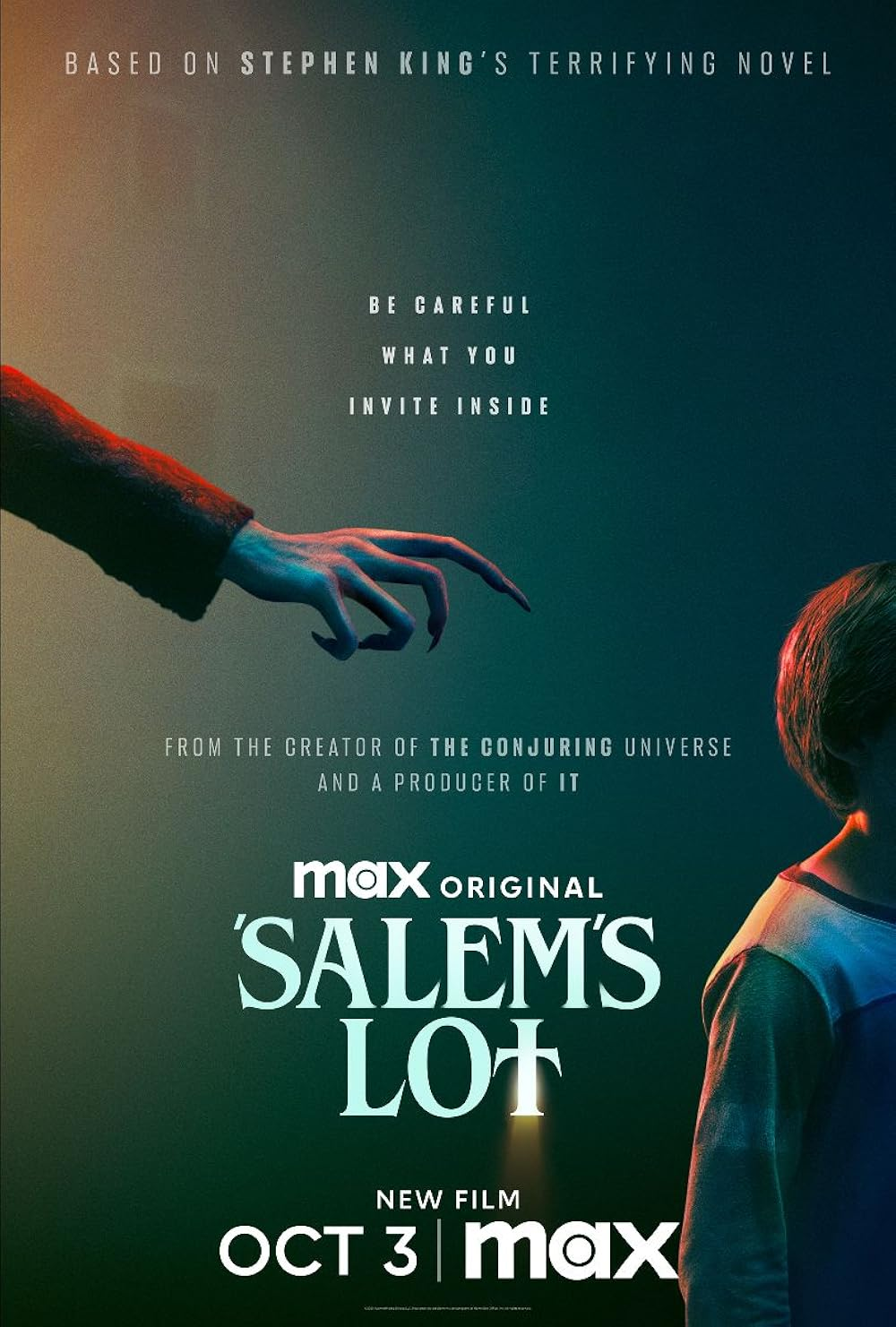
The umpteenth remake of Stephen King’s classic tale of a town feasted upon by a vampire.

A sickness borne of a haunted house in an isolated New England hamlet, a pre-COVID parable for an existential plague, and Halloween approaching? I’m in. I mean, it’s Stephen King, fer crissakes!

Plus, the story lies deep within me. When I saw the original Tobe Hooper miniseries as a kid, it was at my friend Joe’s house on a school night. I had to ride my bike home in the dark alone right after the episode where the first victim – a boy – is killed. I was more than freaked out. I was terrified.

Well, had I seen this version, it would have been me whistling zip-a-dee-doo-da. Not a care in the world.

Hard to settle on any one fault. Just riddled with nonsense and idiocy throughout.

Off the bat, the vampire familiar (a Renfield stand-in) who brings his master to the town is so laughably sinister he should be twirling his mustache. When he steals a little boy to feed him to the Nosferatu, he tells the kid what’s going to happen, so we, the morons, are not confused.

“Master!  Dinnahhhhhhhhhhhhhh!”

And when the little boy goes missing, all signs point NOT to the mustache-twirling Renfield character but to the famous author from New York who has come back to his hometown. Sure, let’s definitely not look at the weirdo who just opened a creepy antique shop and had a big coffin shipped in. What would be the point of taking a closer look at the new guy who also follows kids slowly in his stupid old car practically handing out Werthers? The guy who also bought the old Marston house, which has been haunted for 40 years?

No. It couldn’t be him.

Must be the aaaaaahhhthaaaaaaaah from New York.

Another. When they try to convince the doubting town priest of the infestation (we know he is doubting because when someone asks if he knows the time, he says, “There is no God” and when someone asks when Mass is, he says, “I’ve lost my faith”), they bring him a book.

Dracula.

Swear to God.

Okay. One more. When they try to get at the vampires, it is always-

A) 7:30 am
B) 9 am
C) 10:30 am
D) 6:54 pm

Guess!

The flaws of this execrable flick aside, like a lot of movies based on Stephen King’s work, it also sports the same lazy hallmarks. A town of bullies, dimwits, busy-body caricatures and Baaaaaahhhston accents. A school principaaaaaaaahl who knows the bully but appears powerless to do anything about him. A sheriff who calls pernicious anemia persimmaaaaaahhhn. A place that does not like outsidaaaaaaahhhhs. Everyone just this side of cartoon.

In the original mini-series, there is a beautiful scene between a loner teen son (Lance Kerwin) and his father, the latter unable to connect with his geeky boy who is so into monster mags and magic and all that is spooky. It sets up the later relationship between Kerwin and the returning author (David Soul), who as a little boy was also fascinated and traumatized by the Marston House. The characters have a connection and a backstory and as the town degenerates, they cleave together as, at first, the only two believers.

Here, the Kerwin “character” is an Urkel knock-off able to suss out the vampire infestation with a quick read of a comic book (presumably, because the priest had the sole town copy of Dracula) who is given nothing to work with other than moxie. In fact, everyone kind of lands on “vampire” pretty quick. So quick, I expected someone to say, “Hey, isn’t this what happened to a town in an old Stephen King book?”

Basically, there are no characters. Just targets for the night feeders.

Bad, through and through. Depressing.

On MAX.