Archive

Drama

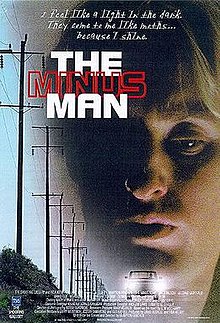
A sweet serial killer film, if such a thing is possible. Owen Wilson plays a drifter who poisons his victims. He is a gentle soul with a horrific secret, a man-child who comes into the lives of several characters in pain (in particular, Mercedes Ruehl and Brian Cox playing parents grieving the departure of what appaers to be their teenage daughter) and provides them what appears ito be support, all the while practicing his craft.

This is an offbeat, even sleepy picture, wholly reliant on Wilson’s quirky, dream-like performance, which I found riveting.

Visually stunning, but ultimately empty, Martin Scorses directs the story of the weekend of an EMS technician in New York City (Nicolas Cage) who has been on a streak of losing patients and is particularly haunted by the death of a young girl. We accompany Cage from call to call with his three partners (John Goodman, Ving Rhames, and Tom Sizemore) to the hell that is bleeding and in-need-of-medical-attention New York. One stop takes Cage to a young woman (Patricia Arquette) whose father has suffered a heart attack. The man is revived by Cage, and in bonding with Arquette, he begins a reconciliation with his guilt. The movie has its moments, but Scorsese’s best work is when his visual ingenuity acts seamlessly with the narrative. For example, in Casino his outstanding shot of Sharon Stone throwing the casino chips into the air suggests her allure and you “get” why De Niro is immediately entranced.

In Bringing Out the Dead, Scorsese’s hyper-drives through the city illustrate Cage’s sense of dread and adrenaline rush. But the rest of the camera work is pointlessly showy and gimmicky, mainly because the narrative has died half-way through. While we know about Cage’s guilt, we want to move on, but the film doesn’t let us.

Cage, however, is very good. I was surprised that he was not talked up as a nominee. I thought his performance connected on the manic, the gentle and the guilt-ridden at the right times, without overplaying his hand. Arquette, on the other hand, is quite awful as the concerned daughter of the comatose father. She simply lacks the heft for the role of recovering and embittered drug addict.

Man on the Moon. Milos Forman wastes a fair amount of his time on minor but bizarre figures (see The People versus Larry Flynt). Fortunately, Andy Kaufman was an inoffensive comic with a streak of ingenuity, as opposed to a pornographer who later wrapped the First Amendment around his gynecological forays. So, the ride is a little more pleasant and accomplished, and there is no false, big issue at stake, as was the case in Flynt.

Jim Carrey’s turn is very good, and the supporting work of Danny Devito (as Kaufman’s agent) and Paul Giamatti (as Kaufman’s sidekick Bob Zmuda) helps to round out the character. Forman, however, goes to the well once to often in casting Courtney Love as the love interest. She worked as a porn mogul’s gal in The People versus Larry Flynt, but here, she’s lost.

Magnolia. Clocking in at 3 hours and 11 minutes, the first half of Paul Thomas Anderson’s follow-up to Boogie Nights is ambitious, engaging, and risky. Sadly, the remainder of the film is self-indulgent, infantile, maddening, and, ultimately, an assault.

Basically a pastiche of several intersecting stories in Los Angeles, Magnolia recounts a day in the lives of earnest galoot cop John C. Reilly, woman-hating television Svengali Tom Cruise, cancer-ridden game show icon Philip Baker Hall, his wife Melinda Dillon, his daughter Melora Walters, cancer-ridden and dying television magnate Jason Robards, his mentally ill wife Julianne Moore, Robard’s nurse Philip Seymour Hoffman, game show child wunderkind Jeremy Blackmon, his father Michael Bowen, and former game show child wunderkind William H. Macy.

The first problem is structural. Anderson has chosen a story with countless characters who are at the point of a knife in their lives. Drug abuse, fear of dying, dying itself, mental illness, abandonment . . . these are but a few of the issues confronting these characters. As such, scene after scene of high-pitched melodrama makes for a trying time.

The first problem leads to the second: overacting. Because the script is in many ways a collection of speeches at emotional high points, the actors tend to dispense with any hint of subtlety (save Hoffman and Hall, who are notable for their restraint), opting to instead screech at the screen. Cruise (who was nominated and was infinitely better in the clunky Eyes Wide Shut), Moore, Walters, and disappointingly, Macy, are the prime offenders. Cruise’s deathbed scene with Robards is damn near unbearable, as is Macy’s “I have love to give” barroom soliloquy.

The third problem is visual. Anderson is clearly comfortable with the camera, and he refuses to see movement as reserved for action and/or exclamation. His world is both fluid and frenetic, and the style has its merits. But very rarely does he simply stop. No shot is so mundane that it cannot be a dolley-shot or a snakelike track. In the end, it is too much.

Finally, Anderson makes two truly awful choices in the second half of the film. First, he besmirches one of the nice things about his film (Aimee Mann’s songs – like those of Elliot Smith in Good Will Hunting, she has produced several simple, literate and haunting tunes that match the mood of the film) by having his characters actually sing some of the lines to one of her ditties. The effect is awkward. I laughed. Literally, we have Jason Robards on death’s door, singing along with Aimee Mann.

The second is unbelievable and just flat out bizarre: frogs fall out of the sky. Not figuratively, but literally. Big, fat, gloppy frogs.

Erin Brockovich. A gaseous, trite star-vehicle wherein Julia Roberts gets to play working class via trashy clothing and a foul mouth. In essence, she reprises her wardrobe from Pretty Woman. But she’s a good gal underneath that rough exterior, a moll bruised by bad men, and a mother who neglects her children only to tend to the people who really need her – Californians who have been poisoned by Pacific Gas & Electric and their evil design to put chromium into their groundwater.

Like Don Quixote dressed for a red light district, Julia teaches us she is smarter than lawyers, heart is what matters, she can get anywhere with a little cleavage, and, everybody who ever crosses Erin Brockovich is a tight, humorless, prig who has underestimated her pluckiness, to their ultimate misfortune.

Naturally, the PG&E people are faceless, stupid drones, who Erin confronts and morally upbraids in a settlement meeting; her co-counsel is the tightest, most frigid of shrews, who Erin bests with her superior knowledge of the case file (and the inelegantly communicated fact that Erin is not frigid); her boss is an addled schmo who is a much better man with the likes of Erin in his corner; her coworkers are mean, fat cows who envy Erin for her lean legs and prominent breasts; and everyone else is just in the sway of her estimable bosom, brawn and benificence.

And the victims, yea God, the victims. Stephen Soderbergh lards this experience with 5 or 6 sit-downs during which Erin learns yet again how many children have been lost, how many tumors have cropped up, and how many chemotherapies have been delivered, so she can empathize and show us all why she does what she does.

These working class hero tales almost always fail because Hollywood demands the canonization of the little folk. Contrast Erin Brockovich and its falsity with A Civil Action, where the little folk still remain humble and stoic (it has Kathleen Quinlan, who has trademarked humble and stoic), but at least we get to see the hubris and idiocy of their lawyer, John Travolta.

The best part?

In real life, Brockovich’s beau (played in the film by Aaron Eckhart), along with one of her ex-husbands, attempted to extort money from her after she hit it big. And those poisoned by PG&E? Many of them (650 in all) are suing their lawyers because their slice of the pie ($333 million) was not, to their mind, large enough. And Brockovich herself is currently investigating the mysterious illness causing facial tics and verbal outbursts that started among 12 teenagers in Le Roy, N.Y.

God I love the little people.

Hamlet. I know when I think of Hamlet, Ethan Hawke comes immediately to mind because if there is one character who needs added slacker sensibility, it is Hamlet.

Actually, Ethan Hawke captures Hamlet as he would be were Elsinore a Manhattan hotel, Denmark a corporation, and Sam Shepard the ghost of a corporate titan now deposed. All the performances are very good, with special note to Liv Schreiber’s riveting Laertes and Bill
Murray’s effortless update of Polonious. You might think the modern, New York City locale would make this Hamlet clunky, but it does not.

The End of the Affair. Ralph Fiennes plays the same brooding, angry, obsessed pain-in-the-ass pathetico he played in The English Patient, only
this time, he’s mooning over the icy Julianne Moore, not the icy Kristin Scott Thomas. Neil Jordan’s film is as grim as WWII era England, Moore nudity is regular but oddly uninspiring, and Stephen Rea steals the picture with his stoic yet growing turn as Moore’s cuckolded yet loving husband. Still, we are stuck with the disturbed Fiennes bemoaning the loss of his love over and
over and over again.

Blood Diamond. A gripping political thriller that does not over-preach to us about the poor, misused Third World (unlike the tendentious The Constant Gardener). It could have been 20 minutes shorter, but the last 45 minutes is white-knuckle. Leonardo DiCaprio and Djimon Hounsou give fantastic performances (this film and The Aviator showed DiCaprio moving beyond peach fuzz) and there is great chemistry between DiCaprio and the stunning Jennifer Connelly.

The Good Girl. Mike White and Miguel Arteta’s Chuck and Buck was a creepy, human story about the loneliness of a boy whose development is arrested by his mother, unfortunately, at the moment he had sex with his childhood pal. When the mother dies, Buck goes to the only other person he’s ever loved, the now grown-up neighbor boy (Chuck) who lives in LA. In The Good Girl, White’s protagonist, small town Texas sales girl Jennifer Aniston, evinces a desolation that is more pronounced. She tells us of her misery, her dead-end job, her stoner but loveable galoot of a husband, her inability to get pregnant, in voice-over. However, she too must decide if and where to go. The story is about Aniston confronting, as opposed to overcoming her surroundings, and making non-Hollywood compromises in the end. The film has several things going for it: Aniston is cooly effective; she alternates between wily/selfish and lost/depressed very well. John C. Reilly (the galoot), Jake Gyllenhaal, and Tim Blake Nelson play the men in her life, and they’re all distinctive and even soulful. Better, The Good Girl neither sanctifies or lampoons small town America. There are things to laugh at, but White writes each of his characters (including his own Bible-reading session advocating security guard) with dignity. No one is sneering, but John Mellencamp’s “Small Town” is not assaulting our sensibilities either. What I liked most was the languid pace (others may find it too sluggish) and its lack of easy, pat lesson.

The Emperor’s New Clothes. A real find with a great concept. Napolean (Ian Holm) sits on St. Helena, but makes his escape to reclaim his Empire by use of the services of a look-alike. The plan: Napolean gets to France, the double declares himself a fake, and Napolean stirs the national passions to his rise once again. Needless to say, things don’t work out that way, and Napolean has to get himself a real job. Holm is pitch perfect. The picture is well-paced and a lot of fun.