
Archive

Monthly Archives: November 2025

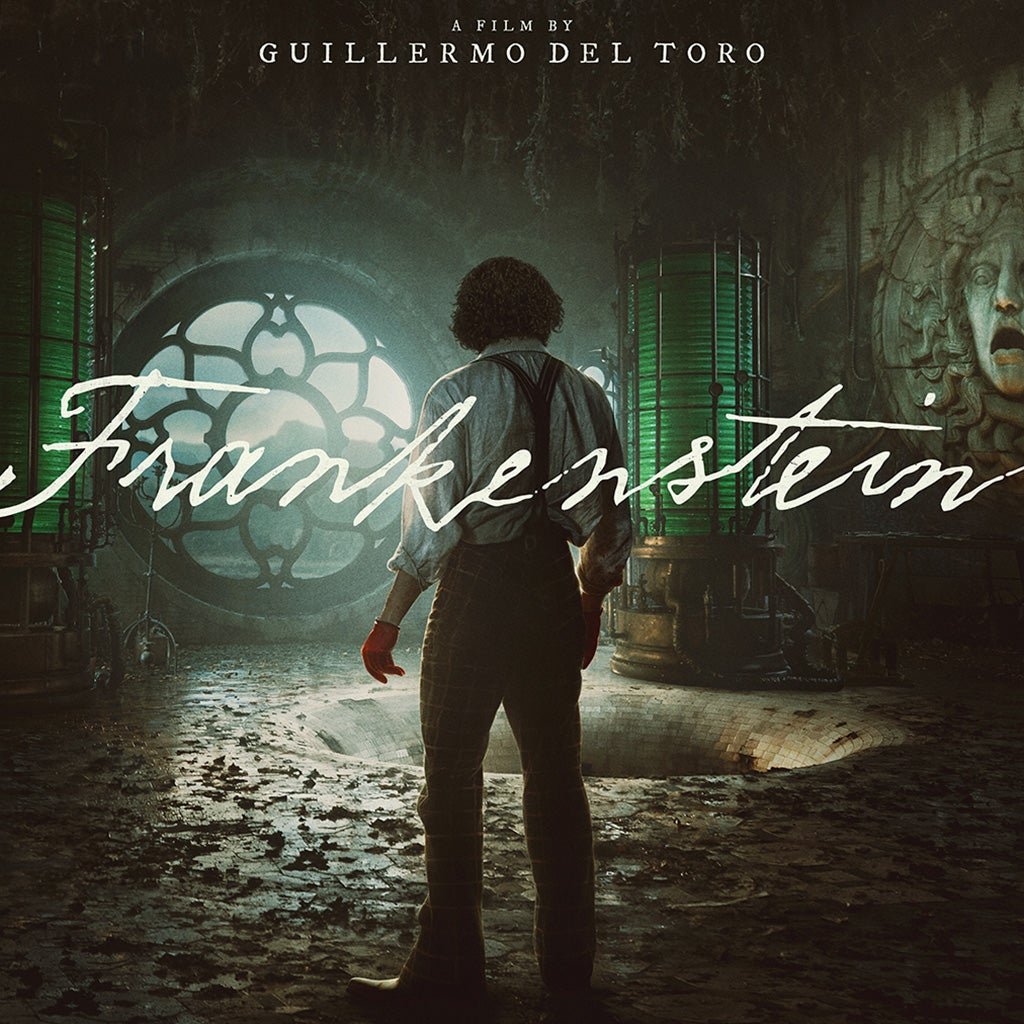
One scene encapsulates the silliness of this film and perhaps of writer-director Guillermo del Toro. The enraged monster crashes a fancy wedding party but before he arrives, we see the dandy of a groom telling the hired hand walking around with a basket of rose petals, essentially, to “keep them coming. No matter what.” The monster busts in and kills two or three people, grabs the bride, and walks out of the party with her draped in his arms, slower-motion.

Amidst a shower of rose petals.

And they say you can’t get good help.

It’s the shot, the look, that consumes del Toro, obliterating pace, story, dialogue or, in the case of the hardest working petal thrower in film history, common sense. As beautiful as his eye may be, The Shape of Water, Crimson Peak, Nightmare Alley, all are gorgeously photographed but empty vessels. No matter how many frames look like paintings, the effect is one of misdirection, not involvement. del Toro keeps larding it on, way past the moment when the Wizard’s curtain is pulled away, and a pudgy bureaucrat with a lot of bells and whistles is revealed.

Yea, the picture is gorgeous. And for the first 45 minutes, it connects, but truth be told, it connects because it is economical and lighter, in a Tim Burtony way. 

When Dr. Frankenstein (Oscar Isaac) begins his work on the monster and descends into madness, the picture becomes absurdist. When the monster (Jacob Elordi) is loose, we move to an uncomfortable mix of turgid and maudlin. When the chase is on, as Dr. Frankenstein must hunt the monster to the outer reaches of the North Pole, if you are not stifling a laugh or making cracks, bully for you.

By the film’s resolution, the monster has transformed into the Hulk and the film packs all of the emotional wallop of a Marvel film.

The movie is also badly acted. Isaac plays Frankenstein like a dude on a speedball. As his brother and the brother’s intended, Felix Kammerer and Mia Goth are as dull as dishwater. They simply do not resonate other than as clotheshorses for del Toro’s unnecessarily ornate costumery. As the financier of the project with a ham-handed agenda of his own, Christoph Waltz is only missing a mustache to twirl. Elordi is just big.

As bad as this whole endeavor is, it is made worse by del Toro’s cringingly infantile script.  His monster is a tortured soul whose transformation from a conglomeration of electrically charged parts to the most erudite Hulk is so ridiculous as to be Mel Brooksian. His Dr. Frankenstein is such a douchebag you can no more invest in him than Bradley Cooper as “Sack” in Wedding Crashers. Indeed, Frankenstein’s primary impetus for his forswearing of his creation is that Goth and the monster got on for a moment and he, coveting his brother’s gal, is now jealous. His secondary factor is that the monster is a lot of work.

Another note. del Toro luxuriates in the gratuitously violent here, yet another brushstroke on his canvas. He can make the monster’s ripping the skin off a wolf’s head super cool looking. But to see such a struggle with mere wolves, followed by Elordi moving an entire ship with a little push at the finale, it just hammers home the director’s ruinous fixation.

A colossal failure that scored an 85% on Rottentomatoes.

Hacks.

On the plus side, if you have Netflix, it is free. 
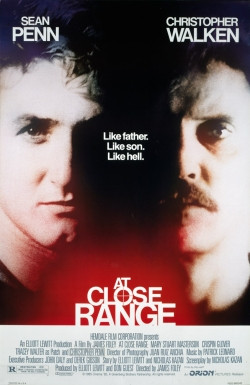
James Foley’s (After Dark, My Sweet) film never really decides what it wants to be, a family drama or a crime picture. Foley eventually throws up his hands and cedes everything to the captivating Christopher Walken.

Not the worst of decisions. Walken plays a minor rural Pennsylvania crime kingpin. He skippers a crew that includes his two brothers and a few other hardened locals. They do heists, car thefts, drugs, and, if necessary, murder, a lethal but merry band of crooks.

Walken’s estranged son, Sean Penn, is a townie still living at home with his mother and grandmother. The women smoke, glare at the TV and otherwise exude the hopelessness of abandonment and near poverty. Penn, seeking something more, falls in at-first-sight love with Mary Stuart Masterson, who looks his way as he cruises at night around the town square. It is for her that he joins up with his father’s crew, to “get out while we’re young … ’cause tramps like us …” 

When Penn realizes murder is part of the gig, he splits from Walken, gets arrested working his own “baby” crew (which includes his brother Chris and a very young Crispin Glover and Kiefer Sutherland), and is incarcerated. There, the cops work on him to fink on his father.

Here, the film becomes ridiculous. Walken, paranoid Penn will flip on him, kills nearly every one of the kids working with Penn, even though Foley does not show them to be integral enough to his operation to be much of a threat. He also rapes Stuart Masterson, which makes even less sense if the plan is to bring Penn back into the fold. Penn comes out of jail, tries to make a run for it with his gal, fails, and in a rushed, abrupt ending, testifies against his father (for 30 seconds).

That’s that.  Lights up.

None of it makes much sense, but the thematic indecision is worsened by gross character underdevelopment. Walken is a charming sociopath, but how did he get here? No clue. We even have his ex-wife moping about, warily eying the establishment of a relationship between Walken and Penn. Foley, however, suffices to use her as a sad totem, so we don’t get any insight into Walken from her. Similarly, Penn needs a Daddy. Then, on a dime, he doesn’t. As he is near mute for most of the picture, we are left to guess as to what he has missed and the basis for his immediate and strong moral stand. Stuart Masterson is looking for something, but as she and Penn prepare to light out for the territories, leaving her house, she is clearly from money. So why is she hanging with these lowlifes? Unexplored.

The film has its strengths. Foley’s feel for rural Pennsylvania is strong. The fields and woods are spooky and forbidding at night. During the day, the crappy cars and houses, the dead-end bars, they all contribute to Penn’s lust for some way to get out. Foley shows just how big and cold this country can be, the kind of place that swallows you up and tells no tales or grinds you down little by little. The murder spree is indelible.

As noted, Walken is the picture, and in every scene, he is riveting. Penn, however, goes low to Walken’s high, and the effect is somnambulant. He’s in with Daddy, then immediately out, then annoyingly internal until his final nose-to-nose with Daddy, all to the conclusion that he needed a better Daddy.

The story is apparently based on a true criminal, Bruce Johnston Sr.

Another note – at the time of the picture, Penn was married to Madonna. She had a song for the picture which then became extended to the soundtrack. It is synthy, mid-80s fare, better suited to Vision Quest or even Risky Business. It has no business being near this gritty movie.  Sure, I joked about Springsteen above, but his music would have been pitch perfect to the film.

On Amazon Prime.