
The Bridge at Remagen – 3 stars
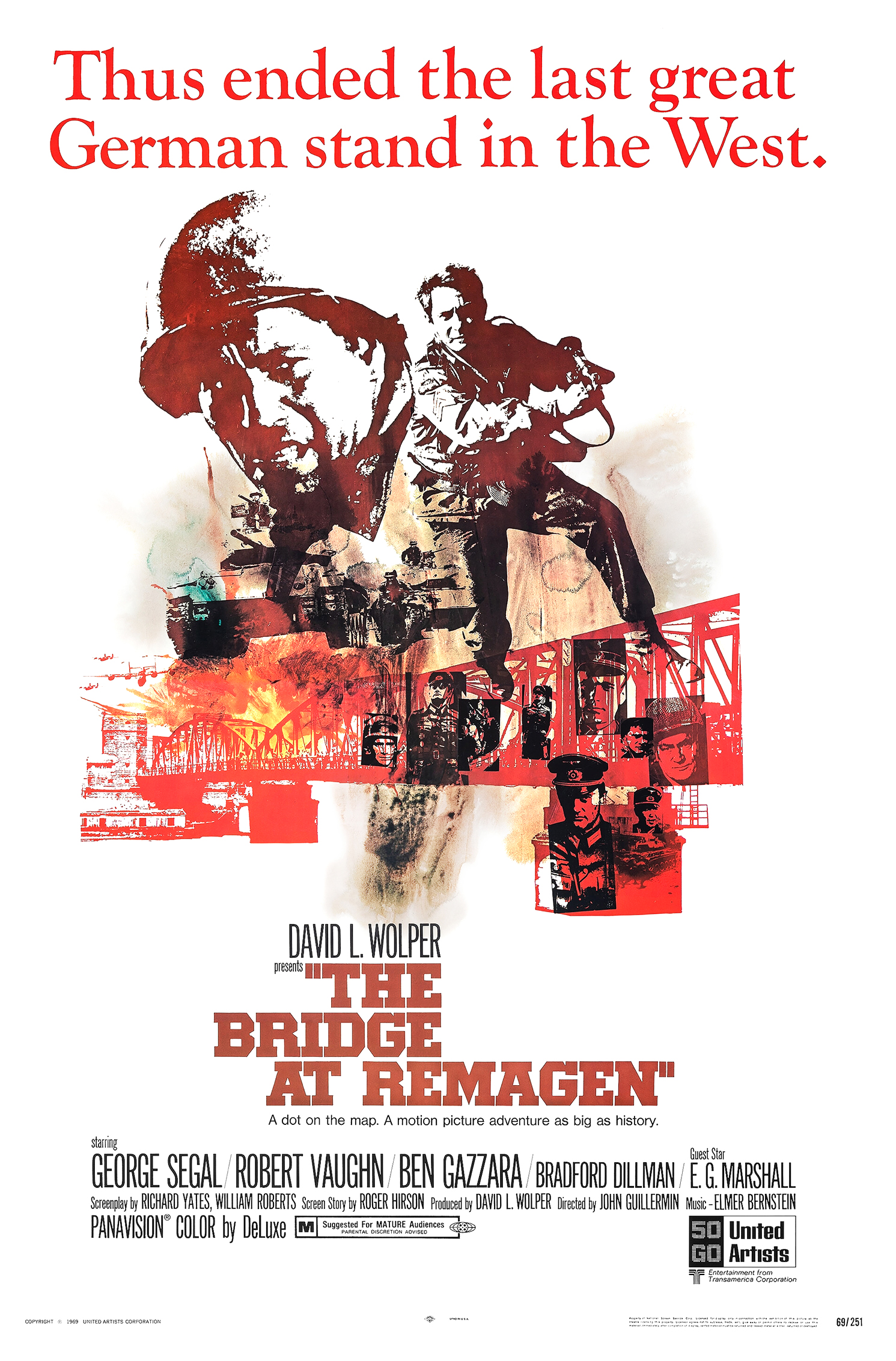
Another war flick I watched in grade school with my Dad. Cynical Lieutenant George Segal is being ridden by gung ho Major Bradford Dillman to save or blow (the mission changes) the last bridge across the Rhine in the waning months of World War II. Segal in turn rides Sergeant Ben Gazzara, who eclipses Segal’s cynicism (he’s a looter of the dead) and then some. On the other side, cynical German Major Robert Vaughn is sent by his superior officer to save or blow (the mission changes) the bridge. All the subordinates are let down by their superiors, and they wear their hard-bitten sensibilities on the bedraggled sleeves of their fatigues (or in the case of Vaughn, his snappy leather trench coat).
The picture is competent if forgettable, with a few interesting facets. This is one of several World War II pictures that carry a Vietnam mentality, where the mission is FUBAR, the line of authority weak, the sense of duty subordinated to the futility and the carnage. Even the coda – that the bridge collapsed 10 days after Segal’s unit gave so much blood to take it – is steeped in Hamburger Hill pointlessness (the filmmakers leave out that in those 10 days, 25,000 American troops crossed and three tactical bridges above and below Remagen were built). The picture is also notable for the introduction of the sympathetic Nazi. Here, it is Vaughn, juxtaposed with the evil SS officers in impeccably tailored outfits who are busily shooting civilians and deserters. The same dichotomy can be found in Peckinpah’s Cross of Iron (James Coburn), as well as The Eagle Has Landed (Michael Caine). The phenomenon petered out (along with WWII films) until years later, in Band of Brothers (the surrender scene and subsequent speech by a German general to his defeated troops), Land of Mine, Das Boot, Stalingrad, and, later, more controversially, Downfall, which rankled many given Bruno Ganz’s commanding performance, which elicited some innate sympathy. Per one reviewer, “the very thought of humanizing Hitler makes me queasy. If he had a good side, I don’t want to know about it.”
Historical note: when the movie was near complete, the Soviets invaded Czechoslovakia, where it was being filmed. Most of cast and crew decamped to a hotel in Prague, where they voted on whether to split or stick it out. They split, to Germany, in a long wagon train of cars, until things simmered down.
On Amazon Prime.
 filmvetter