
Archive

Monthly Archives: May 2025

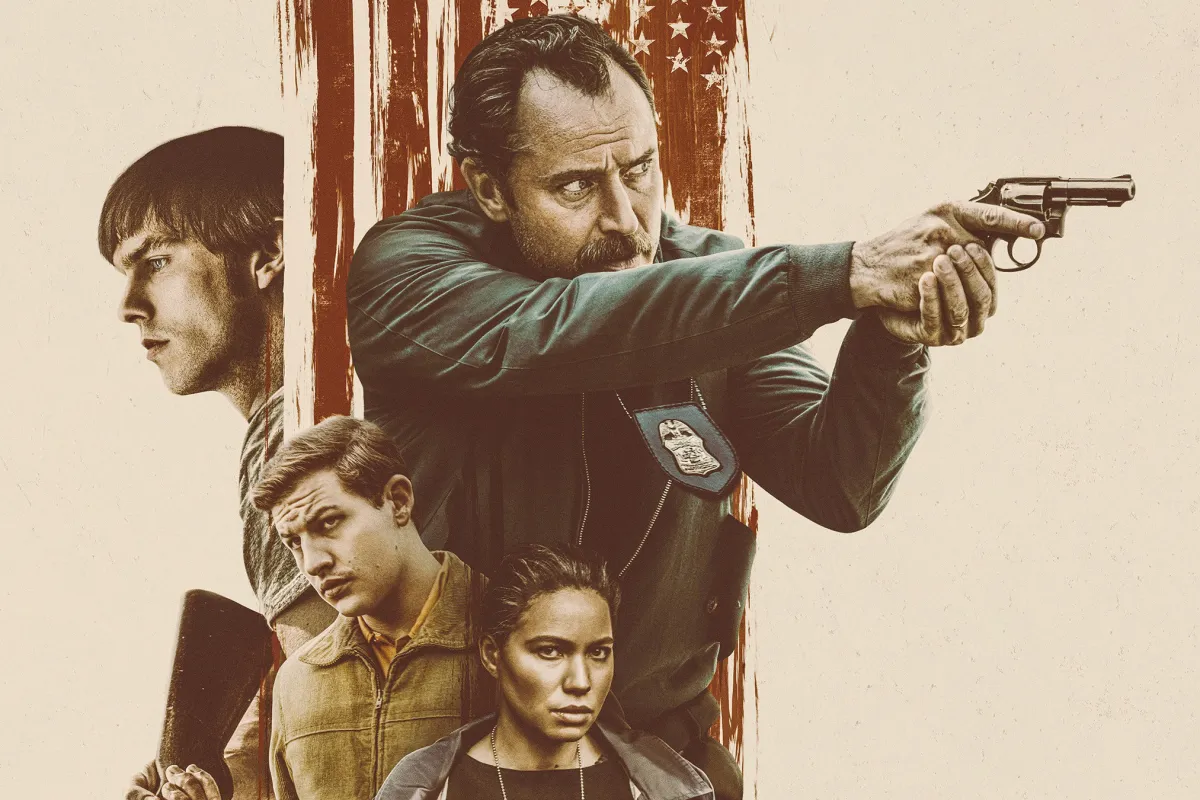
A straightforward procedural based on a true story, broke-down and ailing FBI agent Terry Husk (Jude Law, as unpretty as you’ll find him) arrives at his new desk in Idaho only to stumble upon the rise of The Order, an “action, not words” offshoot of The Aryan Nations in the early 1980s. The Order is led by the charismatic Bob Matthews (Nicholas Hoult), who guides it from counterfeiting to bank robbery to assassination to planned insurrection. As Matthews rises, Husk and the Feds close in, amidst a backdrop of the majestic and haunting Pacific Northwest.

There is nothing new here save for restraint, but restraint is in awful short supply these days. The pace is taut, the acting largely superb, and the photography memorable. In the hands of a lesser director or writer, the temptation to weigh in on the philosophy of The Order, and to jam it into whatever current bugaboo is in fashion, would be too much to resist. Here, writer Zach Baylin shows you what The Order believes and how, attenuated or not, those beliefs are connected to their criminal endeavors. To Law, who we learn has worked undercover on cases from The Klan to The Mob, the “the” doesn’t really matter. They’re all the same. And that keeps the story from stalling on the anticipated wordy handwringing that you expect.

As one article observed, “Ultimately, the hope of slipping an unsparing portrayal of domestic extremism—produced outside of the Hollywood studio system—into the December award season is to reintroduce a discussion of radicalization to American society. ‘If you don’t learn from history, you’re doomed to repeat it—how a guy that, in the way Nick depicted him, could live down anybody’s street,’ says Haas. ‘There are lots of people right now who are hurting and struggling and looking for answers.'”

Thankfully, this kind of easy, didactic tripe is little found in the actual picture.

We also aren’t loaded down with Law’s past. There is a medical issue and familial distress, but Baylin explains just enough to give you a sense as to their effect on Law’s nature and psyche. Husk is not out here for redemption or revenge. Even his obligatory “Let me tell you about this one horrible thing” speech is muted, his explanation almost perfunctory. Much like the father of one of the young men who joined The Order, a man who resignedly tells Husk, basically, “you do the best you can with your kids, but it’s a crapshoot.”

The film could have used a little more exposition (particularly with the doomed local deputy, Tye Sheridan), the tough gal FBI supervisor (Jurnee Smollett) is hackneyed even with the gender change, and maybe there should have been one more turn before reaching resolution.

But otherwise, very solid, entertaining crime flick. Reminded me of the equally impressive Under The Banner of Heaven.

On Hulu.
My dive into the crime films of Amazon Prime gets deeper.

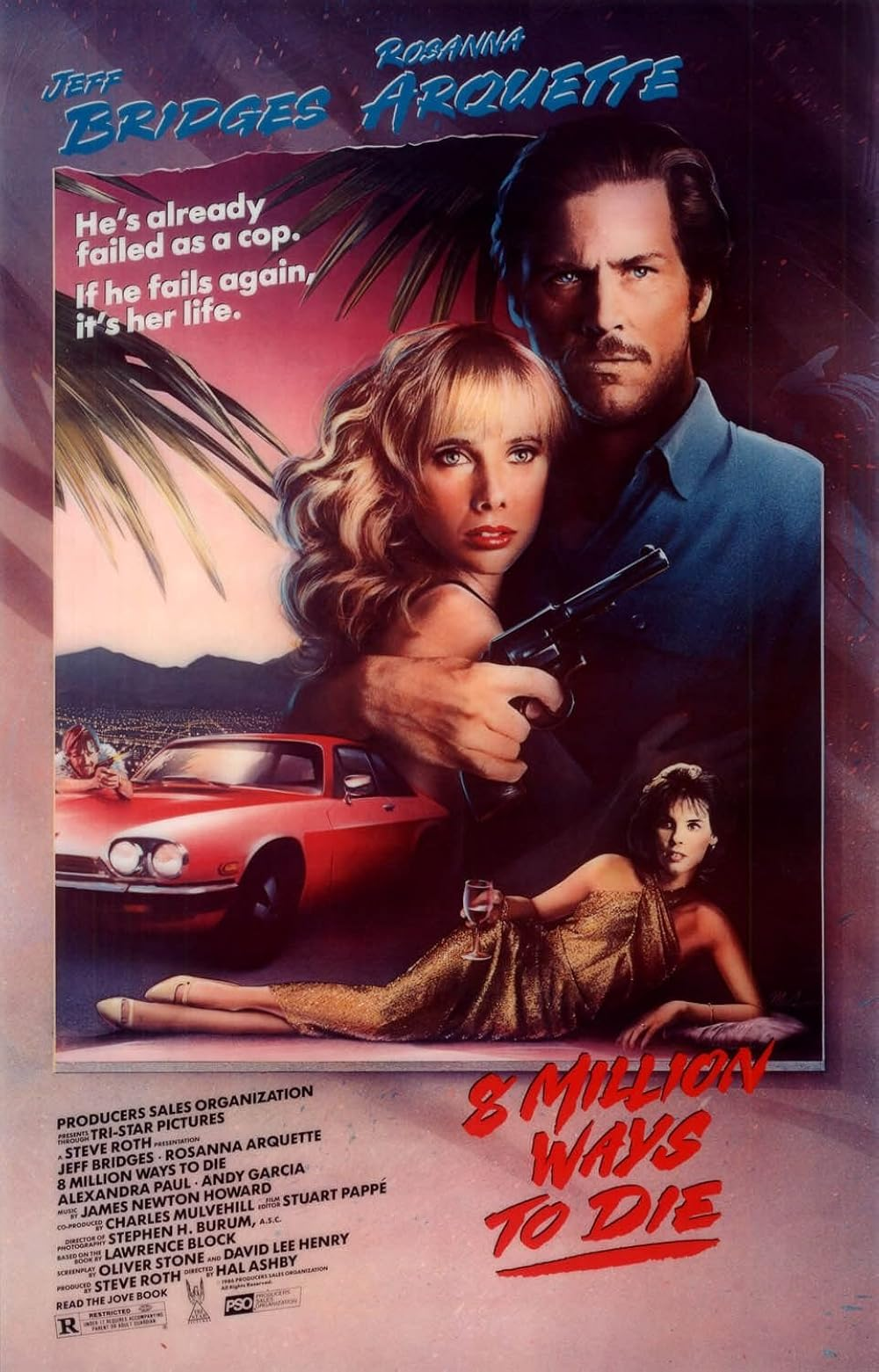
I was intrigued by this flick because I like Jeff Bridges, the movie was an early Oliver Stone screenplay (a co-write), and it was one of last films directed by Hal Ashby (Shampoo, Being There, Coming Home).

I don’t have 8 million reasons to hate this film, but I have 8.

  1. Stone’s writing is garish and ridiculous. In an attempt at modern noir, we actually hear Bridges say, in voiceover, “Yeah, there are eight million stories in the naked city. Remember that old TV show? What we have in this town is eight million ways to die.” A high-priced call girl ups the retch factor, cooing to Bridges, “the streetlight makes my pussy hair glow in the dark. Cotton candy,” as she lays out ala’ Ms. March 1978. Maybe these gems were penned in the source novel by Lawrence Block. I don’t know. It doesn’t land here.
  2. Hal Ashby knows about as much about film action as I do taxidermy. It’s not like Coming Home’s Jon Voight was doing wheelies in his chair. This picture, which involves blackmail and cocaine and kidnapping and gunplay, is as flat and unimaginative as professional bowling.
  3. As the alcoholic ex-cop, Bridges seems as confused by the script as the viewer. There are times you feel, his eyes alone, Bridges is communicating, “What the hell is this thing about, again?” When he’s involved in a bad shooting, and guns down a man in front of his family, he says, “Shit.” Like when you don’t get a good score in Skee Ball. And then, “Fuck,” like when you leave home without your iPhone.
  4.  Bridges is also forced to play an alcoholic who relapses; he does this by reprising his role in Thunderbolt & Lightfoot, after he was thunked on the head.
  5. The plot is inane. Bridges is lured into the entire mess because the girl with the cotton candy pubic hair heard his name from the friend of a friend.
  6. Roseanna Arquette is terribly miscast as the sultry, misunderstood, cynical call girl with a heart of gold. Arquette is cute best friend, quirky neighbor.  She ain’t this.
  7. The supporting turns are execrable.  Andy Garcia is so over the top (see below), it’s hard to stop laughing, as if he saw Scarface and said, “Hmmmm. Pacino seems a bit muted.” Another actor, Randy Brooks, nemesis to Garcia, is also near-lunatic. Brooks scurried off to TV after this flick, only to return as the worst actor in Reservoir Dogs six years later. The cotton candy girl is the badly miscast Alexandra Paul. She is the girl next door. Here, she’s over-the-top coquettish, as erotic and worldly as Georgette in The Mary Tyler Moore show. To be fair, this may not all rest on the actors. From the analysis below, “Ashby’s style of directing, according to Block, involved letting the actors do takes where they exaggerated their emotions, before reining them back in for subsequent takes. Since Ashby did not have final cut, some of these ‘dialed up’ takes were used in the film.” Seems like all of them were.                 
  8. Scenes are interminable. The characters scream the same thing at each other ad nauseum or endlessly posture. Behold, the longest, loudest, most idiotic confrontation scene in film history:

Apparently, I am not alone in my derision and confusion.